In the southeastern reaches of the Brazilian Amazon, where forest gives way to savanna along the great tributaries of the Xingu and Araguaia, lives a people whose name has become a symbol of Indigenous resistance. The Kayapó, who call themselves Mebêngôkre, are known for their dramatic body paint, towering feather headdresses, and above all for the fierce determination with which they have defended a vast territory against loggers, miners, and dam builders. Few Amazonian peoples have made themselves so visible on the world stage.
This is an account of the Kayapó: their origins on the forest-savanna frontier, their Jê language, their warrior traditions and elaborate ceremonies, and the long fight for land that has defined their modern history. It follows a people who turned striking visual power and shrewd political strategy into one of the most effective defenses of Indigenous territory anywhere in the Amazon.
The pages that follow trace this remarkable story, moving from the deep past on the forest-savanna frontier to the frontline struggles of the present, and showing how a people known for warriors and feathers became one of the most effective guardians of the Amazon.
Contents
- A People of the Forest and Savanna Edge
- Kayapó and the Name Mebêngôkre
- A Jê Language of Central Brazil
- A Vast Territory Along the Xingu
- Gardens, Hunting, and the Forest Larder
- Villages, Age Sets, and the Men’s House
- Naming, Spirits, and the Order of the World
- Body Paint and the Art Worn on the Skin
- Feather Work and the Craft of Adornment
- Food From Garden, River, and Forest
- Ceremony, Song, and the Great Gatherings
- Warriors, Frontiers, and the Battle for Land
- The Kayapó in a Contested Amazon
A People of the Forest and Savanna Edge
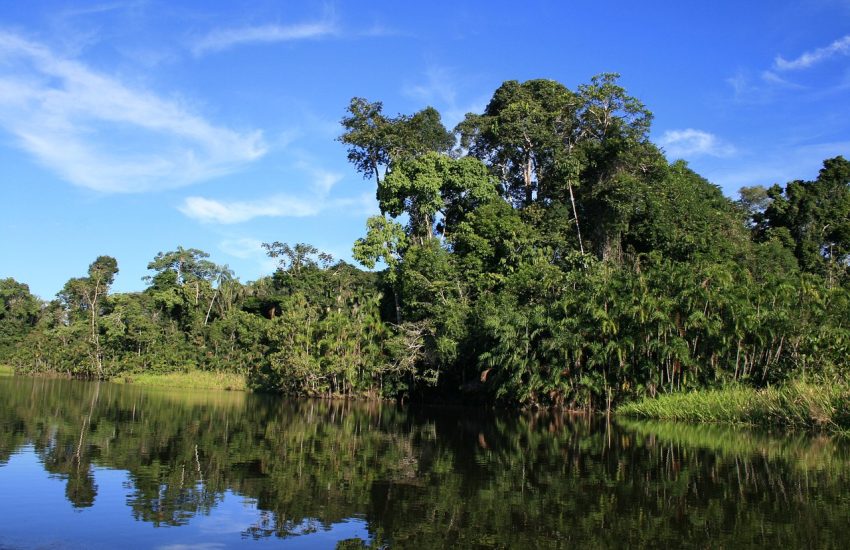
The Kayapó belong to the Jê-speaking peoples of central Brazil, a group whose homelands lie along the transition between dense Amazon rainforest and open savanna. This ecological frontier shaped their way of life from the beginning, giving them access to both the resources of the forest and the game and plants of the grasslands. Living on this edge made them skilled at reading two very different landscapes.
Their history is one of movement and fission, with communities repeatedly splitting and founding new villages as populations grew or disputes arose. This pattern spread Kayapó settlements across an enormous area, so that the people came to occupy a territory far larger than their numbers alone might suggest. Mobility and the readiness to divide and expand are woven into their history.
Unlike the river-focused peoples of the western Amazon, the Kayapó developed as a people at home in the interior, ranging widely on foot across forest and savanna. Their identity took shape around this expansive, land-based existence, and their later reputation as determined defenders of a huge territory grows directly out of that deep-rooted mobility.
Living where two great ecosystems meet gave the Kayapó a versatility that few of their neighbors could match. They could draw on the deep forest and the open grassland alike, and this doubled larder underpinned both their large population and their far-flung network of villages across the interior.
This history of splitting and founding new villages also spread Kayapó identity across a wide area, so that communities separated by great distances still recognized one another as one people. Expansion, rather than concentration, was the Kayapó way.

Kayapó and the Name Mebêngôkre
The name Kayapó, by which the people are known to the outside world, actually comes from neighboring groups rather than from the people themselves. It has been used for generations in Brazilian records and in the wider literature, and it is the name most readily recognized internationally.
Among themselves, the people use the name Mebêngôkre, often translated as something like the people of the wellspring or the people from the water’s source. This self-designation reflects their own sense of origin and place, rooted in their language rather than in the labels applied by others.
As with many Indigenous peoples, the two names serve different worlds. Kayapó functions in dealings with the state, the media, and international supporters, while Mebêngôkre expresses the community’s own understanding of who they are. Both point to the same people, seen from outside and from within.
The gap between the outside name and the inside one is more than a curiosity, for it reflects how much of Kayapó identity has been defined by others and how firmly the people have insisted on defining themselves. To call them Mebêngôkre is to honor that self-definition.
In practice, international campaigns and news reports have made the name Kayapó famous far beyond Brazil, even as the community continues to call itself Mebêngôkre at home. The two names now travel in very different circles.

A Jê Language of Central Brazil
The Kayapó speak a language belonging to the Jê family, one of the major language groupings of central and eastern Brazil. Distinct from the Tupian and Cariban tongues spoken elsewhere in the country, Jê languages are associated above all with the peoples of the interior plateaus and the forest-savanna frontier. The Kayapó language ties them firmly to this central Brazilian world.
The language remains widely spoken across Kayapó communities, learned by children and used in the daily life of the villages. This vitality has helped preserve the oral traditions, names, and ceremonial knowledge that the language carries, giving the people a strong linguistic foundation for their identity.
Contact with Brazilian society has brought Portuguese into Kayapó life, especially among those who deal with authorities, markets, and organizations beyond the villages. Yet the mother tongue holds its ground at home, and the community’s strength in defending its territory has gone hand in hand with the persistence of its language.
The endurance of the language is closely tied to the endurance of ceremony, since the names, songs, and ritual formulas that structure Kayapó life all live within it. A community that keeps its language keeps the keys to its own ceremonial world.
Bilingual schooling has helped some communities give the language a written form and a place in the classroom, adding a new layer of durability to a tongue already strong in daily use. Written and spoken forms now reinforce one another.

A Vast Territory Along the Xingu
The Kayapó hold one of the largest Indigenous territories in Brazil, a vast expanse of protected land in the states of Pará and Mato Grosso, drained by the Xingu and its tributaries. This immense area of forest and savanna, secured through decades of struggle, is central to who the Kayapó are and to their prominence in debates over the Amazon’s future.
Villages are dispersed across this territory, traditionally arranged in a circular layout around a central plaza that serves as the heart of community life. The surrounding forest and rivers provide the resources that sustain each settlement, while the sheer size of the territory has allowed the Kayapó to maintain a way of life that depends on abundant land.
The protection of this territory is not merely a matter of property but of survival, since the Kayapó way of life requires large tracts of intact forest. Guarding the boundaries of this land against intruders has become one of the defining activities of the people, and their success in doing so has made their territory a rare island of standing forest.
The scale of the territory is central to understanding the Kayapó, for their way of life simply cannot be compressed into a small reserve. Abundant land is not a luxury but a precondition of their culture, which is why the defense of every boundary carries such weight.
Aerial views of the region often show a stark contrast, with Kayapó land appearing as a great expanse of green surrounded by cleared and burned country. That image has made their territory a powerful symbol of what Indigenous stewardship can preserve.
The circular village plan, with its central plaza, is itself a kind of statement, placing communal life at the literal center of the settlement and expressing the Kayapó emphasis on collective identity.

Gardens, Hunting, and the Forest Larder
Kayapó subsistence combines gardening with extensive hunting and gathering across their large territory. Gardens are cleared in the forest and planted with sweet potatoes, yams, manioc, bananas, and a wide range of other crops, in a system of shifting cultivation suited to the tropical soils. The knowledge of which plants to grow, and where, is deep and finely tuned.
Hunting is a central activity, drawing on the abundant game of forest and savanna and carrying social as well as nutritional importance. Success in the hunt has long been tied to prestige, and the meat brought back is shared according to rules that bind the community together. Fishing in the rivers adds another reliable source of food.
Gathering rounds out this way of life, and the Kayapó are renowned for their extraordinarily detailed knowledge of forest plants. They cultivate and manage a remarkable variety of species, blurring the line between wild and tended, and their expertise in the uses of plants has drawn the interest of scientists studying the Amazon’s biodiversity.
The Kayapó approach to plants is so sophisticated that researchers have described their managed forests as a kind of living agriculture spread across the landscape. What looks like wild forest to an outsider is often, to the Kayapó, a carefully tended resource.
Hunting also retains a strong link to prestige and manhood, so that success in the chase carries social meaning beyond the food it provides. The hunter who returns with game gains standing as well as sustenance.
Across the seasons, the mix of gardening, hunting, fishing, and gathering gives the Kayapó a flexible and resilient economy, one that leans on whichever resource is most plentiful at a given time.

Villages, Age Sets, and the Men’s House
Kayapó villages are organized with a striking clarity, traditionally laid out as a ring of houses around a central plaza, with a men’s house at the center of communal and ceremonial life. This spatial arrangement mirrors the social order, placing collective affairs literally at the heart of the settlement.
Society is structured in part through age sets, groups of people who pass together through the stages of life and share duties and bonds accordingly. These age-based groupings, along with men’s societies, organize ceremony, labor, and the transmission of knowledge, giving Kayapó social life a distinctive and highly ordered shape.
Leadership traditionally rested with chiefs whose authority came from oratory, generosity, and the ability to rally support rather than from inherited power. In the modern era, prominent leaders have used these same skills on a global stage, and the old emphasis on persuasive, charismatic leadership has translated remarkably well into the politics of Indigenous rights.
The men’s house at the center of the village is more than a building; it is the focus of political and ceremonial life, where decisions are debated and knowledge is passed on. Its central position expresses the priority the Kayapó place on collective affairs.
Age sets bind individuals to their peers for life, creating horizontal ties that cut across families and knit the village together. This layering of age-based and kin-based bonds gives Kayapó society much of its cohesion and resilience.
Charismatic leadership has proven remarkably adaptable, carrying Kayapó chiefs from the village plaza to international summits where the same gifts of oratory and persuasion serve their cause.
Naming, Spirits, and the Order of the World
Kayapó belief is bound up with an elaborate system of names and ceremonies that place each person within the social and cosmic order. The bestowing of names is a matter of great importance, often surrounded by ceremony, and it links individuals to ancestors, spirits, and the wider community in ways that structure their identity.
The world is understood as inhabited by spirits and forces that must be respected and managed, with shamans traditionally serving as mediators between the human community and these unseen powers. Illness, fortune, and the balance of life are seen as connected to this spiritual dimension, which specialists are trained to navigate.
Ceremony ties this worldview to daily life, so that the great festivals are not only celebrations but enactments of the order of the world. Through ritual, naming, and song, the Kayapó reaffirm the relationships between people, ancestors, and spirits that underlie their sense of a properly ordered existence.
The importance of naming in particular sets the Kayapó apart, for a person’s names are treasures that connect them to ancestors and ceremonies. To receive certain names is a matter of great prestige, celebrated with elaborate ritual.
Where shamanic practice survives, it is treated with respect and some caution, concerned as it is with forces that can heal or harm. This spiritual dimension continues to shadow everyday life even amid the pressures of the modern frontier.
Body Paint and the Art Worn on the Skin
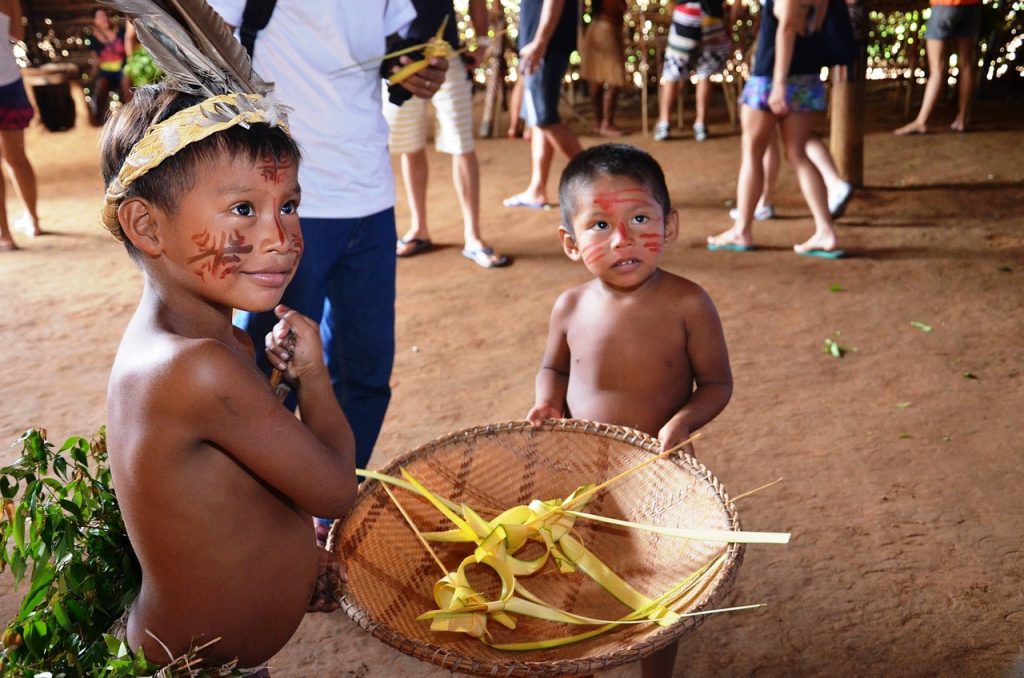
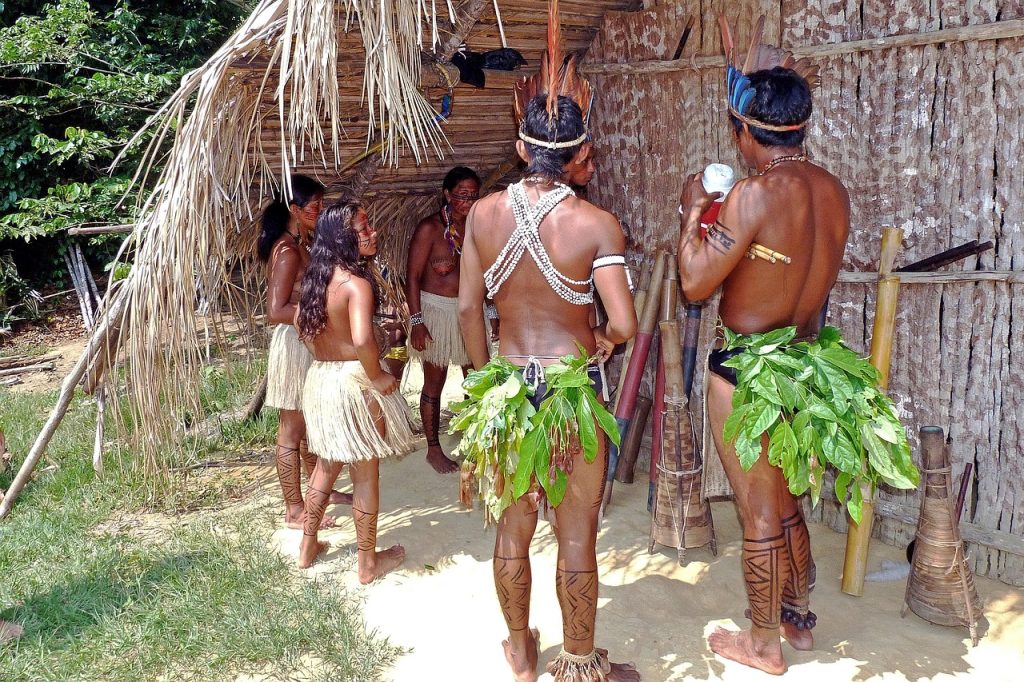
Perhaps the most striking Kayapó tradition is the art of body painting, in which intricate black and red designs are applied to the skin using dyes made from genipap and annatto. These patterns are far more than decoration; they mark stages of life, ceremonial roles, and social identity, turning the body itself into a canvas that communicates a person’s place in the world.
The designs follow established conventions while allowing for skill and variation, and their application is often a social act, with women painting the bodies of others in careful, time-consuming work. Different patterns suit different occasions, from everyday life to the most important ceremonies, and reading them is part of Kayapó cultural literacy.
This tradition has become one of the most recognizable images of Amazonian Indigenous culture, appearing in photographs that have circulated worldwide. For the Kayapó themselves, however, the painted body remains first of all a statement of identity and belonging, a living art carried on the skin rather than a spectacle for outsiders.
Because the designs are learned and applied within the community, the art of body painting is also a means of binding people together, as the act of painting one another creates and renews social ties. The finished patterns are shared knowledge made visible.
Everyday painting differs from ceremonial painting, and a knowledgeable eye can read a great deal from the patterns a person wears, from their stage of life to the occasion at hand. The skin, in effect, carries a running commentary on social life.
The dyes themselves carry meaning, with the deep black of genipap and the vivid red of annatto each playing established roles in the visual language of the painted body. Their combination produces the striking look the Kayapó are known for.

Feather Work and the Craft of Adornment
The Kayapó are famed for their spectacular feather work, above all the great radiating headdresses made from the brilliant plumage of macaws and other forest birds. These headdresses, worn at ceremonies, are masterpieces of craft and among the most iconic objects associated with the people, their bursts of color instantly recognizable.
Beyond headdresses, the Kayapó produce a range of adornments including beadwork, ear ornaments, and other items that mark ceremonial roles and social status. The making of these objects draws on detailed knowledge of materials and design, and the finished pieces play an essential part in the visual drama of Kayapó ceremony.
This tradition of adornment is inseparable from the ceremonies it serves, where painted bodies and feather regalia together create a powerful display. In recent times such craft has also become a means of representing Kayapó identity to the wider world, but its roots lie firmly in the ceremonial life of the villages.
The brilliance of the feather headdresses reflects the Kayapó’s intimate relationship with the birds of their forest, whose plumage they have long prized. Each headdress represents both artistic skill and a deep familiarity with the creatures of their territory.
Museums and collectors around the world now prize Kayapó feather work, yet within the villages these objects remain tied to the ceremonies for which they were made. Their true meaning lies in the dance and song they accompany.

Food From Garden, River, and Forest
The Kayapó diet draws on the full range of their territory, combining garden crops with hunted game and fished protein. Sweet potatoes, yams, manioc, and bananas from the gardens provide the staple carbohydrates, prepared in a variety of ways that anchor the everyday meal.
Game from the forest and savanna, along with fish from the rivers, supplies the protein that has always been central to the diet and to the social life around food. The sharing of meat in particular follows customary rules that reinforce bonds within the community, so that eating is tied to the web of relationships that hold a village together.
Wild fruits, nuts, and other gathered foods add variety and reflect the Kayapó’s deep knowledge of the plants around them. This broad-based diet, rooted in an intact and abundant environment, is one of the clearest expressions of why the defense of their large forested territory matters so much to the people.
The rules governing the sharing of meat reveal how thoroughly food is woven into Kayapó social life, since who gives and who receives expresses the bonds of kinship and alliance. A successful hunt feeds relationships as much as bodies.
Meals in a Kayapó village are communal affairs, and hospitality toward kin and visitors alike reflects an ethic of sharing that runs through the whole society. To eat together is to affirm belonging.

Ceremony, Song, and the Great Gatherings
Kayapó life is punctuated by great ceremonies that bring the community together for days of song, dance, and ritual. These gatherings mark naming, initiation, and the passage through the stages of life, and they are the occasions on which body paint and feather regalia appear in their fullest splendor. Ceremony is the stage on which Kayapó culture displays itself most completely.
Song and dance are at the heart of these events, performed according to traditions that carry deep meaning and reinforce the social order. The central plaza becomes a space of collective performance, where the whole village participates in the enactment of ritual and the celebration of communal identity.
These festivals also serve vital social functions, renewing ties, marking transitions, and transmitting knowledge to the young. In gathering to celebrate, the Kayapó reaffirm the bonds and beliefs that unite them, and the sheer visual power of their ceremonies has made them emblematic of Amazonian ceremonial life.
For a people whose villages are scattered across a huge territory, the great ceremonies serve as vital moments of reunion, drawing distant relatives together. In coming together to celebrate, the Kayapó reaffirm that they are one people despite the distances between them.
Music at these gatherings carries memory and meaning, with songs that belong to particular ceremonies and mark particular moments. To sing them is to keep alive a heritage that outsiders rarely glimpse in full.

Warriors, Frontiers, and the Battle for Land
The Kayapó have a long reputation as formidable warriors, a people who resisted encroachment fiercely and expanded their territory through their own strength. This martial tradition served them well as Brazilian society pressed into the interior, giving them both the will and the organization to defend their land against a rising tide of outsiders.
The twentieth century brought intense pressure from ranchers, loggers, gold miners, and government development schemes that threatened to overrun Kayapó lands. Rather than being pushed aside, the Kayapó responded with a combination of direct action and shrewd political engagement, famously mobilizing to oppose large dam projects on the Xingu and drawing international attention to their cause.
Through these struggles the Kayapó secured formal recognition of an enormous territory and became one of the most prominent Indigenous peoples in the world. Their leaders learned to work with the media, with international allies, and with the levers of Brazilian politics, turning a warrior tradition into a sophisticated modern defense of their homeland.
The lesson the Kayapó drew from these confrontations was that visibility is a weapon, and they learned to wield it with unusual skill. By making the world watch, they turned outside attention into a shield for their land.
Recognition of their territory, when it finally came, rewarded years of struggle and gave the Kayapó a legal foundation for the defense they continue to mount. From that base they built the organizations that speak for them today.
The Kayapó in a Contested Amazon
Today the Kayapó stand as guardians of one of the largest blocks of protected forest in the Brazilian Amazon, a role that places them at the center of global concern over deforestation and climate. Their territory, ringed by advancing agriculture and mining, has become a visible line of defense for the forest itself, and the Kayapó are keenly aware of the significance of what they hold.
The pressures are relentless. Illegal logging and mining constantly test the boundaries of their land, and the temptations and divisions that outside money can bring pose challenges from within as well as without. Balancing engagement with the modern economy against the protection of their forest is a difficult and ongoing negotiation.
Yet the Kayapó continue to assert themselves with remarkable effectiveness, patrolling their borders, taking their case to national and international arenas, and insisting on their right to decide the fate of their land. Their story is one of a warrior people who have adapted their strength to a new kind of battle, defending the forest as both homeland and heritage.
What lies ahead will depend on whether the Kayapó can hold their vast territory intact against mounting pressure, a task that grows harder as the frontier of destruction advances. Their record of resistance offers reason for hope, but the stakes could hardly be higher.
Even amid these pressures, the confidence of the Kayapó is unmistakable, and they engage the outside world as equals rather than victims. Their message is that the forest has owners who intend to keep it, and who have the strength to make that claim stick.
Related Peoples of the Region
- Meꞌphaa Speakers of the Guerrero Mountains and a Language That Stands Alone
- Garifuna Drummers and Cassava Bakers of the Central American Caribbean Coast
- Lenca Potters and River Defenders of the Honduran and Salvadoran Highlands
- Ashaninka: The People Who Drove the Spanish Out of the Forest
- Muisca: The Confederation Behind the Legend of El Dorado
- Yanomami: Guardians of the Amazon’s Deepest Forest