Where the borders of Colombia, Peru, and Brazil dissolve into a single expanse of river and forest lives one of the largest Indigenous peoples of the western Amazon. The Ticuna, who call themselves Magüta, have made their home along the great river and its side channels for centuries, speaking a language that stands alone with no proven relatives and keeping alive an origin story that ties them directly to the water that surrounds them. They are a people defined less by a national border than by the river that ignores it.
This is a portrait of the Ticuna: their beginnings, their singular language, the flooded world they inhabit, and the beliefs, arts, and struggles that shape them today. It follows a community spread across three countries yet bound together by kinship, ceremony, and a shared sense of who they are along the banks of the Amazon.
The account that follows moves from the deep past of the floodplain to the pressures of the present, showing how a single river people has held together across three nations while keeping its language, its myths, and its arts unmistakably its own.
Contents
- A People the River Made
- Ticuna and the Name Magüta
- A Language With No Known Relatives
- A Homeland Spread Across Three Countries
- Fishing, Gardens, and the Flooded Forest
- Clans, Kinship, and the Two Halves of Society
- Immortals, Origins, and the Spirit World
- The Great Coming-of-Age Ceremony
- Bark Cloth, Masks, and Painted Stories
- Manioc, Fish, and the Everyday Table
- Music, Dance, and Communal Celebration
- Missions, Rubber, and the Fight for Land
- The Ticuna in the Modern Amazon
A People the River Made
The Ticuna are among the most numerous Indigenous peoples of the upper Amazon, and their history is inseparable from the river itself. Their ancestors settled the flooded forests and side channels of the Amazon where it braids through the borderlands of what are now three nations, learning over generations to live with waters that rise and fall dramatically with the seasons. This deep familiarity with a shifting landscape lies at the root of everything that follows.
Unlike peoples who built cities of stone, the Ticuna left their mark in patterns of settlement, in oral tradition, and in a way of life finely tuned to the floodplain. Their origins are told less through ruins than through stories that place their emergence in the very waters they still fish. In their own telling, the people were drawn out of the river by a creator figure, a myth that binds identity to place with unusual directness.
What is clear from history and language alike is that the Ticuna are old inhabitants of this stretch of the Amazon, distinct from their neighbors and long established. They were here before the borders that now cross their land were drawn, and their sense of themselves as a single people has outlasted every attempt to divide the region among outside powers.
The very geography that isolated them from distant centers of power also protected a distinct identity. Cut off from the highlands by forest and distance, the Ticuna developed along their own path, which helps explain the singular language and rich mythology that mark them today.
Their neighbors along the river spoke unrelated languages and followed different customs, and yet the Ticuna held their ground as a distinct society, neither absorbed nor scattered. That resilience across centuries is one of the defining features of their long presence on the Amazon.

Ticuna and the Name Magüta
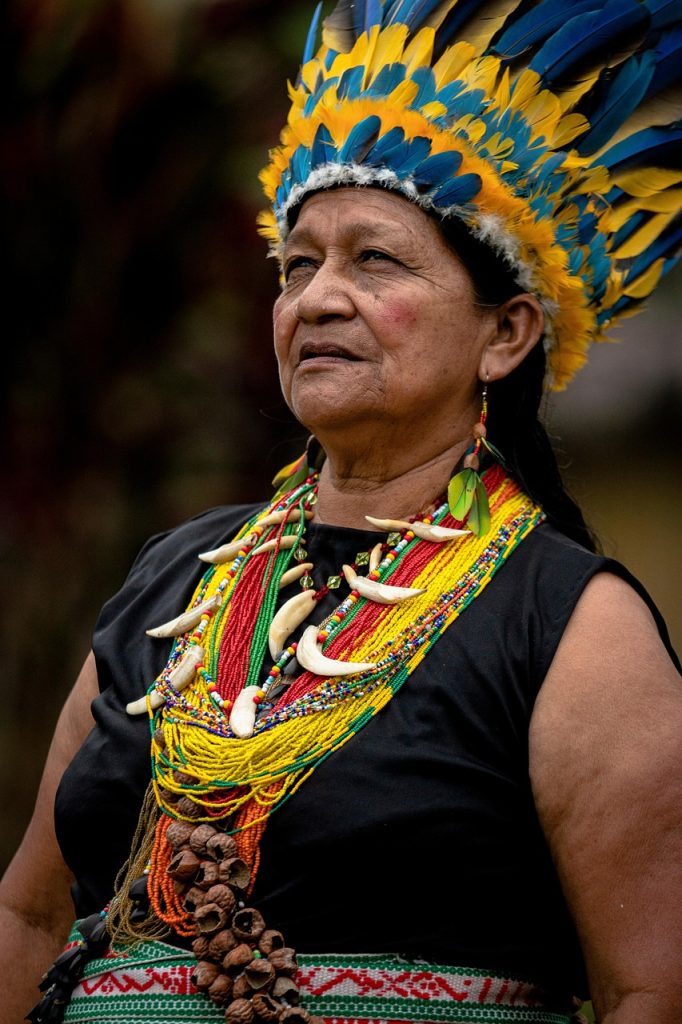
The people are widely known as Ticuna, sometimes spelled Tikuna or Tucuna, a name that has appeared in outside records for generations. It is the term used in most books, maps, and official documents across the three countries where they live, and it is the name by which the wider world recognizes them.
Among themselves, however, many use the name Magüta, a word tied to their origin story and meaning something close to the people fished out of the water. This self-designation carries the weight of myth, linking the community’s very name to the creator who is said to have drawn them from the river with a fishing line.
The two names coexist much as they do for many Indigenous peoples, with an outside label used in dealings with the state and a deeper, self-chosen name reserved for the community’s own sense of itself. To speak of the Magüta is to invoke the origin story; to speak of the Ticuna is to use the name the world knows.
The persistence of the name Magüta shows how tightly the Ticuna bind their identity to their origin story. Where other peoples might treat a myth as background, here it lives in the very word the community uses for itself, keeping the tale of the river ever present.
In everyday practice, which name a Ticuna uses can signal context and audience, with Magüta reserved for moments that touch on heritage and Ticuna serving for the wider bureaucratic world. Both belong to the same people, seen from two directions.
A Language With No Known Relatives
The Ticuna speak a language that fascinates linguists precisely because it fits nowhere. Despite many attempts, no convincing link has been found between Ticuna and any other language family, which makes it a genuine isolate, a tongue that appears to stand entirely on its own. In a region of great linguistic diversity, this isolation is striking.
The language is also tonal, using differences in pitch to distinguish words in a way unusual for the region, adding another layer to its distinctiveness. For a people whose neighbors speak languages of several different families, this singular tongue is a powerful marker of identity, something that sets the Ticuna apart at the most basic level of speech.
Crucially, the language remains very much alive. It is spoken daily by a large population across all three countries, learned by children, and used in community life, giving it a vitality that many isolates lack. Efforts at bilingual education and writing have helped it move into schools without displacing its firm place in the home.
Because the language is an isolate, its survival carries a weight beyond the community itself, since its loss would erase a unique branch of human speech with no relatives to preserve its echo. That knowledge lends urgency to the work of teaching it to the young.
Linguists who study the tongue note how its tones and structures encode a whole way of naming the flooded world, from the behavior of fish to the stages of the rising water. To speak Ticuna is to inherit a precise vocabulary for a very particular environment.

A Homeland Spread Across Three Countries
The Ticuna homeland straddles the point where Colombia, Peru, and Brazil meet along the Amazon, a region sometimes called the triple frontier. Their communities line the river and its tributaries on all three sides of these borders, so that a single people is divided on paper among three states while remaining united in language and kinship. Towns such as Leticia and Tabatinga sit at the heart of this shared world.
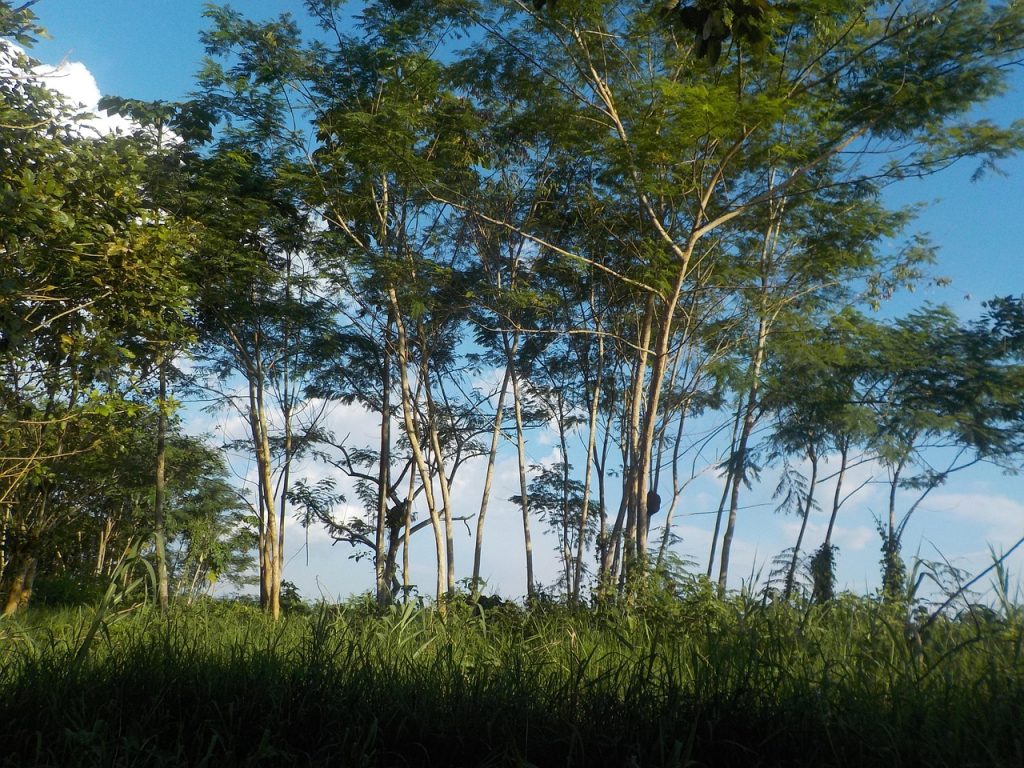
The environment is one of flooded forest, or várzea, where the seasonal rise of the river submerges vast areas and then retreats to expose fertile banks. Villages are positioned with this rhythm in mind, and houses are often raised on stilts or built to cope with water that may reach the doorstep for months at a time. Life here means living with the flood rather than against it.
Because the river carries no regard for national boundaries, the Ticuna have long moved and traded across them, treating the whole stretch of borderland as home. This cross-border existence gives them a distinctive vantage point, at once local to a single village and spread across an international frontier that means far less to them than the river does.
This borderland setting has made the Ticuna unusually visible in regional affairs, since any question of Amazon frontiers touches their communities directly. They live at a crossroads where three nations meet, and their fate is tied to how those states manage a shared and fragile river.
Everyday movement across the frontier remains common, with families visiting relatives, trading goods, and attending ceremonies on the far side of a border that means little to them. The river, not the boundary line, defines the true map of Ticuna life.
The towns of the triple frontier, where three languages and three flags meet within walking distance, form a curious backdrop to Ticuna life, a place where the community’s cross-border reality is on daily display.
Fishing, Gardens, and the Flooded Forest
Fishing stands at the center of Ticuna subsistence, as it must for a people of the flooded forest. The rise and fall of the water shapes the fishing year, concentrating fish in shrinking pools as the flood recedes and dispersing them across submerged forest when it returns. Reading these movements is a core skill, passed down through constant practice on the water.
Alongside fishing, the Ticuna cultivate gardens on the higher ground and exposed banks, growing manioc above all, together with plantains, fruits, and other crops. As with fishing, the timing of planting answers to the flood, with quick-growing crops sown on fresh silt before the next rise. This dual reliance on water and garden spreads risk and keeps the household fed year-round.
Hunting and gathering in the surrounding forest add further variety, supplying game, fruits, fibers, and materials for building and craft. The result is a flexible economy drawing on every layer of the floodplain, from the deep river to the forest canopy, an approach that has sustained the Ticuna through centuries of change.
The seasonal calendar of flood and retreat functions almost as a clock for Ticuna life, telling people when to fish the shrinking pools, when to plant the fresh banks, and when to prepare for the waters to return. Living well means keeping perfect time with that clock.
This intimate knowledge of the flood also underpins the community’s wider resilience, since a people who can read the river so precisely can adapt when conditions shift. It is a form of environmental expertise built up over countless seasons.

Clans, Kinship, and the Two Halves of Society
Ticuna society is organized around clans, each associated with particular animals or plants and inherited through the father’s line. These clans are more than labels; they structure identity, belonging, and the crucial rules about who may marry whom. A person’s clan places them within a wider web that reaches across many villages.
The clans are further grouped into two halves, a moiety system in which one must marry into the opposite half rather than within one’s own. This arrangement weaves the community together, since every marriage links the two halves and binds distant families through obligation. It is an elegant social logic that turns the rule of marriage into the glue of the whole society.
Daily life rests on extended families cooperating in fishing, farming, and ceremony, with respected elders and, increasingly, elected leaders guiding community affairs. The clan and moiety system gives this local life a larger framework, connecting individual households into a people that recognizes itself as one across the borderland.
The clan and moiety system also carries the memory of myth, since many clans trace their identity to beings from the origin stories. In this way the rules that govern marriage and belonging are anchored in the same tales that explain how the people came to be.
When families migrate to border towns for work or schooling, the clan ties travel with them, so that obligations of kinship reach into urban neighborhoods far from the home village. In this way the ancient social structure adapts to a mobile modern life.
Immortals, Origins, and the Spirit World
Ticuna belief centers on a rich body of myth peopled by immortal beings and culture heroes, above all the figure who drew the first people from the river. These stories are not mere entertainment; they explain the origin of the clans, the shape of the world, and the proper way to live within it. To know the myths is to understand the moral order of Ticuna life.
The spirit world is understood as close at hand, inhabiting the forest, the water, and the beings that share them. Shamans traditionally mediated between people and these forces, treating illness and misfortune as matters that reached beyond the purely physical. Much of this outlook persists even where Christianity has taken hold.
As elsewhere in the Amazon, missionary activity has left its mark, and many Ticuna today belong to Christian churches. Yet the older stories and the sense of a spiritually charged landscape have not disappeared, often coexisting with new faith in a layered worldview that keeps the origin myth at its heart.
For the Ticuna, then, belief is not a separate compartment of life but a thread running through fishing, marriage, and ceremony alike. The origin myth in particular ties the practical and the sacred together, grounding everyday existence in the story of the river.
Shamanic knowledge, where it survives, is treated as a serious and sometimes dangerous expertise, concerned with the unseen forces that can heal or harm. Respect for that knowledge persists even among those who now sit in church on Sundays.

The Great Coming-of-Age Ceremony
The most celebrated Ticuna tradition is the elaborate coming-of-age ceremony held for girls reaching maturity, an event that gathers the community for days of ritual, music, and feasting. Far more than a private milestone, it is a public affirmation of clan ties, social order, and the passage of a new generation into adult life.
The ceremony is marked by striking visual elements, including masks and costumes representing spirits and mythic beings who are said to attend the gathering. Bark cloth, paint, and feathers transform participants, and the presence of these masked figures links the human celebration to the world of myth that underlies it.
Through this rite, knowledge, identity, and belonging are transmitted from one generation to the next. It is a moment when the whole society becomes visible to itself, reaffirming the clan system, the ties between families, and the stories that bind the Ticuna together as a single people across the borderland.
The scale and endurance of this ceremony speak to its importance as a pillar of Ticuna culture. Even as outside pressures reshape much of daily life, the coming-of-age rite persists as a moment when the community insists on renewing itself on its own terms.
Preparations for the ceremony can occupy a community for a long stretch, gathering food, brewing drinks, and readying the masks and cloth. That collective effort is itself part of the meaning, drawing everyone into the work of marking a new generation’s passage.

Bark Cloth, Masks, and Painted Stories
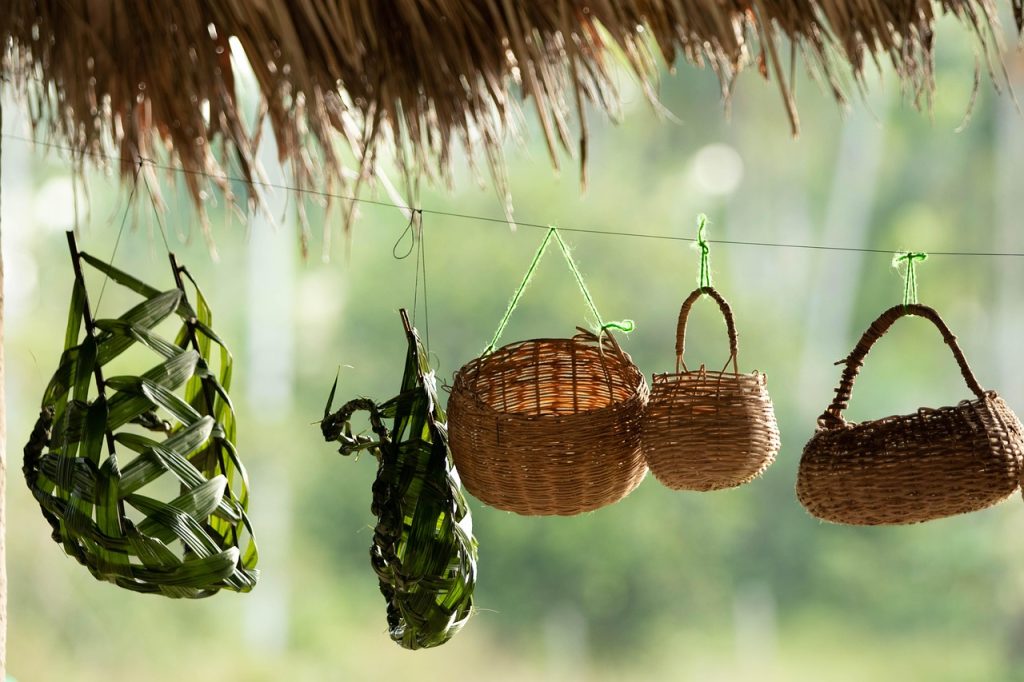
Ticuna craft is famous above all for painted bark cloth, made by beating the inner bark of certain trees into a flexible material that becomes a surface for art. On these cloths the Ticuna paint scenes from myth and daily life, along with the animals and designs tied to their clans, producing works that are both decorative and deeply meaningful.
Masks form another distinctive tradition, crafted for ceremony to represent the spirits and mythic beings central to Ticuna belief. Bold and expressive, these masks bring the world of myth into the physical space of the gathering, and they have become among the most recognizable objects associated with the people.
In recent decades, bark-cloth paintings and carvings have found buyers beyond the Amazon, turning traditional skill into a source of income. This trade has helped keep the art alive and visible, even as it raises the familiar challenge of meeting outside demand without hollowing out the meaning the work carries at home.
Each painted cloth is in a sense a document, recording myths, clan identities, and scenes of a world that outsiders rarely see from within. To read one is to glimpse the Ticuna imagination laid out in pigment on beaten bark.
The masks in particular have become emblematic of the Ticuna in the eyes of outsiders, appearing in museums and collections far from the Amazon. Yet within the community they remain first of all ceremonial objects, tied to the spirits they represent.
Manioc, Fish, and the Everyday Table
The Ticuna diet rests on the twin foundations of fish and manioc, the pairing that anchors so much of Amazonian cooking. Fish drawn from the river and its lakes provide the main protein, prepared grilled, smoked, or in hearty stews according to the season and the catch. The abundance of the water makes it the most dependable source of food.
Manioc, grown in the gardens, is processed into flour, flatbreads, and fermented drinks that appear at nearly every meal and gathering. The labor of turning the root into food is a daily rhythm of village life, and the drinks made from it play a social role at celebrations as well as a nutritional one at home.
Fruits, game, and forest products fill out the diet, varying with what the season offers. As is common across the region, food is bound up with sharing and hospitality, so that a good catch or harvest is distributed among kin, strengthening the ties that hold the community together.
The daily labor of fishing and processing manioc also binds households together, as the work is shared and its fruits distributed among kin. In this sense the Ticuna table is as much a social institution as a source of nourishment.
Meals tend to be communal and generous, extended readily to visitors and kin alike, reflecting an ethic of hospitality that runs deep in Ticuna life. To be fed at a Ticuna household is to be drawn, however briefly, into its web of relationships.

Music, Dance, and Communal Celebration
Ticuna gatherings are filled with music and dance, from the songs that accompany the great coming-of-age ceremony to the everyday rhythms of communal work and festivity. Wind and percussion instruments, along with voice, carry both sacred and social meaning, and music is woven through the most important moments of collective life.
Celebrations bring scattered families together, renewing the ties of clan and kinship that stretch across many villages and even across borders. In coming together to sing, dance, and feast, the community reaffirms the bonds that a dispersed, cross-border existence might otherwise wear thin.
These festive occasions are also moments of transmission, when younger people absorb the songs, dances, and stories that carry Ticuna identity. In a world of growing outside pressure, the gathering remains a vital space where the culture renews itself through shared celebration.
For a people divided among three countries, the gathering carries a special charge as an assertion of unity. To celebrate together, across the lines drawn on maps, is itself a quiet statement that the Ticuna remain one people regardless of the borders.
Music also serves as a vessel of memory, carrying songs whose words recall myths and events that bind the community to its past. In a gathering full of song, the Ticuna are in effect rehearsing and renewing their shared history.

Missions, Rubber, and the Fight for Land
The arrival of Europeans set in motion centuries of disruption along the upper Amazon. Missionaries gathered communities into settlements and sought to reshape their beliefs, while disease took a heavy toll. The Ticuna, like their neighbors, found their world reordered by forces reaching in from far beyond the river.
The rubber boom brought a harsher era still, as demand for labor drew Indigenous people into a brutal extractive system marked by coercion and violence. The upheaval of those years scarred communities across the region and left a lasting wariness of outsiders who arrived promising work or salvation.
In the twentieth century the Ticuna organized to defend their land and rights, securing recognized territories and a stronger collective voice across the three countries. A notable episode of violence against the community became a rallying point in this struggle, helping to galvanize efforts that turned a history of imposition into a platform for self-defense.
The memory of these hardships shapes how the Ticuna engage with outside institutions to this day, combining a readiness to organize and negotiate with a caution born of long and painful experience. Rights, they learned, are kept only by those willing to defend them.
Recognition of Indigenous territories, when it came, gave communities a legal foothold they had long been denied, and from that base later generations built the organizations that speak for the Ticuna today.

The Ticuna in the Modern Amazon
Today the Ticuna are one of the largest Indigenous peoples of the western Amazon, numbering in the tens of thousands across Colombia, Peru, and Brazil. Their cross-border homeland gives them a distinctive presence in a region where national frontiers cut through a single cultural world, and their language and ceremonies remain strong markers of who they are.
The pressures they face are considerable. Deforestation, illegal activity along the rivers, the pull of towns, and the challenges of belonging to three states at once all test the community. Young people weigh life on the river against opportunities in border towns and cities, and families navigate an economy that values their art while straining their environment.
Yet the Ticuna continue to assert themselves, defending their territories, teaching their language, and carrying their bark-cloth art and ceremonies into the present. Their story is that of a river people who have outlasted borders drawn across their land, meeting the modern Amazon while holding fast to the origin that names them.
What lies ahead will depend heavily on the health of the river and forest that sustain them, and on whether three separate states can be persuaded to respect a people who belong to all of them at once. The Ticuna face that future with the confidence of a community that has already outlasted much.
Even so, the assertiveness of the Ticuna is clear. They present their culture publicly, defend their land through organization, and step into national conversations as a people with a distinctive voice, refusing the role of a community merely waiting to fade.

Related Peoples of the Region
- Meꞌphaa Speakers of the Guerrero Mountains and a Language That Stands Alone
- Garifuna Drummers and Cassava Bakers of the Central American Caribbean Coast
- Lenca Potters and River Defenders of the Honduran and Salvadoran Highlands
- Ashaninka: The People Who Drove the Spanish Out of the Forest
- Muisca: The Confederation Behind the Legend of El Dorado
- Kogi: The Elder Brothers Watching Over the Mountain


