In the heart of the Brazilian interior, where the vast savanna of the cerrado stretches across the state of Mato Grosso, live the Nambikwara, a people whose way of life was shaped by one of the more demanding landscapes of lowland South America. Divided into many local groups and speaking a distinctive family of languages, they adapted for centuries to a country of open grasslands, seasonal drought, and heavy rains, moving with the seasons in a semi-nomadic rhythm all their own.
This article explores who the Nambikwara are, from their ancient roots and unique languages to their beliefs, crafts, food, and their remarkable survival through a devastating twentieth-century encounter with the expanding Brazilian nation. Their story offers a window into the rich and often overlooked indigenous heritage of central Brazil and into the resilience of a people who refused to vanish.
Contents
- Origins of the Nambikwara in the Brazilian Interior
- The Name Nambikwara and Its Many Groups
- A Language Family Unlike Any Other
- Homeland on the Cerrado and Forest of Mato Grosso
- The Old Semi-Nomadic Way of Life
- How Nambikwara Society Was Organized
- Beliefs and the Spirit World of the Nambikwara
- Traditions Carried Through the Generations
- Crafts of Fiber, Wood, and Body Adornment
- Food from Gardens, Hunting, and Gathering
- Festivals, Music, and Seasonal Gatherings
- A History of Contact and Survival
- The Nambikwara People Today
Origins of the Nambikwara in the Brazilian Interior
The Nambikwara are one of the indigenous peoples of the Brazilian interior, living in the state of Mato Grosso where the vast savanna of the cerrado meets patches of forest and winding rivers. Their presence in this land reaches back long before the arrival of Europeans, and their way of life was shaped by one of the more demanding environments of lowland South America, a country of open grasslands, seasonal drought, and heavy rains.
For centuries the Nambikwara occupied a large territory across the plateau and valleys of western Brazil, living in small, mobile groups that moved with the seasons. Unlike the peoples of the deep Amazon forest to the north, the Nambikwara adapted to a landscape that was drier and more open, developing a distinctive culture suited to the rhythms of the cerrado. This adaptation set them apart from many of their neighbors.
The story of the Nambikwara came to wider attention in the twentieth century, in part through the writings of anthropologists who lived among them and described their society in detail. Those accounts helped make the Nambikwara one of the better-documented peoples of interior Brazil, even as the community itself endured enormous pressures. Their origins lie in a deep history of adaptation to a challenging land that they knew intimately.
The detailed record left by twentieth-century observers gives the Nambikwara a particular place in the study of indigenous South America. Their society, their leadership, and their way of moving through the seasons became reference points for anthropologists trying to understand how people adapted to the savanna. Yet behind the scholarly interest stood a living community whose deep knowledge of the cerrado had been built up over countless generations of trial and observation.
Even the name of the state that holds their homeland, Mato Grosso, meaning thick woods, hints at the wild and remote character of the country the Nambikwara long had to themselves, far from the coastal cities where Brazil’s history is usually written.

The Name Nambikwara and Its Many Groups
The name Nambikwara is not a single self-designation but a label applied to a cluster of related groups who share a common linguistic and cultural heritage. The people are not one unified nation but a collection of local groups, each with its own name, territory, and identity, bound together by language and custom. Outsiders grouped them under one name, though the reality on the ground was far more varied.
This diversity within the Nambikwara has sometimes confused outside observers, who expected a single coherent tribe and instead found a patchwork of communities spread across a wide region. Some groups lived on the open savanna, others in the valleys and gallery forests, and their dialects and customs varied accordingly. What united them was a shared linguistic family and a broadly similar way of life adapted to the interior.
The name has been recorded in various spellings over the years, reflecting the difficulty of writing sounds foreign to Portuguese. For the people themselves, identity was rooted in the local group and its particular land rather than in a broad collective label. Only in more recent times, as they have had to deal with the outside world collectively, has the wider Nambikwara identity taken on greater practical importance.
For the many local groups gathered under the single label, the differences among them mattered a great deal. A group of the open plains might have little in common, in daily terms, with one of the wooded valleys, even though both were counted as Nambikwara. Recognizing this internal variety is essential to understanding a people who were never a single tribe but a family of communities linked by a shared origin.

A Language Family Unlike Any Other
The Nambikwara languages form a distinct family that has long fascinated linguists because it stands apart from the major language groups of South America. The relationships among the different Nambikwara varieties, and their connection to any wider grouping, have been the subject of much study. This linguistic distinctiveness is a clue to the deep and separate history of the people in the Brazilian interior.
Within the Nambikwara family there are several languages and many dialects, reflecting the division of the people into distinct local groups spread over a large area. Speakers of one variety could not always easily understand another, and this diversity was part of what made the Nambikwara a mosaic rather than a single unified nation. The sounds and structures of these languages carry knowledge of the environment and culture found nowhere else.
Like many indigenous languages of Brazil, the Nambikwara varieties face pressure from Portuguese and from the social changes that have swept through the region. Some varieties remain spoken by communities, while others are more endangered. Efforts to document and support the languages are part of the wider struggle of the Nambikwara to maintain their identity in a country where indigenous tongues have often been marginalized.
Because the Nambikwara family does not fit easily into the larger classifications of South American languages, it has become an important piece in the puzzle of how the continent was peopled. Each distinct variety preserved within it offers evidence about ancient migrations and separations, making the survival of these tongues a matter of interest far beyond the community itself.
Homeland on the Cerrado and Forest of Mato Grosso
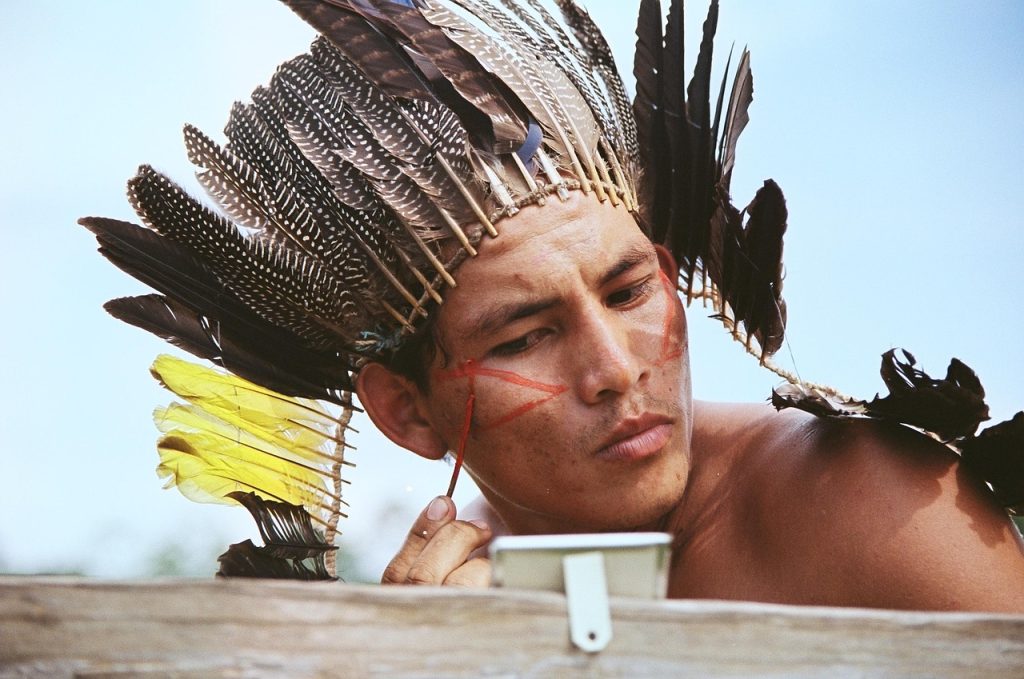
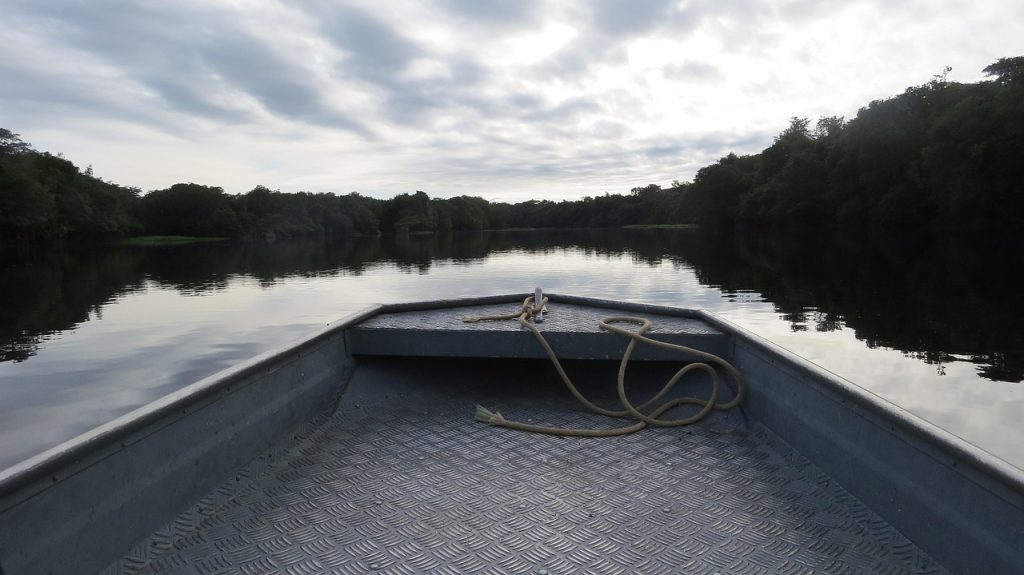
The Nambikwara homeland lies in the interior of Mato Grosso, a region defined by the cerrado, the vast tropical savanna that covers much of central Brazil. This is a landscape of open grassland dotted with twisted trees and shrubs, cut by rivers and streams lined with denser forest. The seasons swing between a long dry period and a season of heavy rains, and life adapted to this powerful rhythm.
This environment shaped every aspect of Nambikwara life. In the dry season the groups often dispersed across the savanna to hunt and gather, while in the rainy season they settled to tend gardens and take shelter. The rivers and gallery forests offered fish, game, and plant foods, while the open cerrado provided its own resources for those who knew how to find them. Reading the land and its seasons was essential to survival.
Much of the traditional Nambikwara territory has come under pressure from the expansion of agriculture, ranching, and roads that transformed the Brazilian interior over the twentieth century. Protected indigenous lands now safeguard part of the homeland, but the wider region has changed dramatically. Defending what remains of the land has become central to the survival of the Nambikwara as a distinct people.
The gallery forests that lined the rivers were especially important, offering shade, water, and a concentration of plant and animal life within the wider dryness of the savanna. These green corridors threaded through the open country were lifelines, and the Nambikwara knew their every turn, drawing on them heavily when the dry season made the open plains harsh.

The Old Semi-Nomadic Way of Life
Traditional Nambikwara life followed a semi-nomadic pattern closely tied to the seasons of the cerrado. During the rainy season, groups gathered in more settled villages to cultivate gardens of manioc and other crops. When the dry season came, they broke into smaller bands and moved across the savanna, hunting, fishing, and gathering the wild foods that the land provided at that time of year.
This flexible way of life allowed the Nambikwara to make the most of an environment where resources shifted dramatically with the seasons. Shelters ranged from simple structures during the wandering dry season to more substantial dwellings in the rainy-season villages. Material possessions were kept few and portable, suited to a people who spent much of the year on the move across open country.
The demands of this life required deep knowledge and constant effort, but it also gave the Nambikwara a remarkable self-sufficiency. Every group could feed and shelter itself from the land, combining the harvest of its gardens with the bounty of the hunt and the gather. This balance between settled cultivation and mobile foraging was the foundation of their traditional world.
The contrast between the two seasons gave Nambikwara life its distinctive shape, a yearly cycle of gathering and dispersing that few outside peoples fully understood. To settle in one place year-round would have exhausted the resources of the cerrado, and so movement was not restlessness but a careful strategy for living within the limits of a demanding land.

How Nambikwara Society Was Organized
Nambikwara society was built around small groups led by chiefs whose authority rested on persuasion, generosity, and skill rather than on force. A chief was expected to provide for his people, to lead well during the difficult dry-season wanderings, and to represent the group in dealings with others. His position depended on the continued support of the group, which could dissolve or reform around a new leader.
The anthropological accounts of the Nambikwara paid particular attention to this style of leadership, which offered a striking example of authority based on service rather than coercion. A chief who failed to provide or to lead wisely could lose his followers, and the fluid nature of the groups meant that people could attach themselves to a leader they respected. Power was thus tied closely to responsibility.
Kinship and marriage linked the scattered groups into a wider social world, and alliances between bands were important in a landscape where each group was small and often on the move. This decentralized structure gave the Nambikwara flexibility, but it also meant there was no central authority. In the modern era they have had to build new organizations to represent their many groups together.
The willingness of followers to leave a poor leader and gather around a better one kept chiefs accountable in a way that many outside political systems lacked. This meant that Nambikwara leadership was a constant negotiation, earned again and again through action rather than claimed once and held by right. It was a model of authority rooted in reciprocity.

Beliefs and the Spirit World of the Nambikwara
The spiritual world of the Nambikwara was woven into their understanding of the land, the seasons, and the living things around them. Like many peoples of the interior, they saw the natural world as filled with powers and spirits that had to be respected and understood. The changing of the seasons, the success of the hunt, and the health of the community were all bound up with these unseen forces.
Ritual specialists and elders held knowledge of how to deal with the spirit world, to heal illness, and to maintain the balance on which life depended. Ceremonies marked important moments in the life of the community and the passage of the seasons, connecting the people to their ancestors and to the powers that governed their world. This spiritual knowledge was closely tied to the land and to the language.
As with so much of Nambikwara culture, these beliefs and practices came under strain during the difficult decades of contact and disruption. The loss of population and the pressures of the outside world threatened the transmission of spiritual knowledge from elders to the young. Yet elements of these traditions endured, part of the deep cultural inheritance that the Nambikwara have worked to preserve.
The seasonal ceremonies did more than mark time; they reaffirmed the group’s bond with the land and with one another, gathering people who had spent the dry months apart. In singing and ritual the community renewed itself, reminding each member that they belonged to something larger than a single wandering band.

Traditions Carried Through the Generations
Nambikwara traditions were passed down through the spoken word, through daily practice, and through the guidance of elders rather than through writing. The knowledge needed to survive in the cerrado, the stories that explained the world, and the customs that governed social life all moved from one generation to the next through example and shared experience. This oral inheritance was the memory of the people.
Storytelling and song carried the history, myths, and values of the community, teaching the young how to live and how to understand their place in the world. Specific songs and ceremonies belonged to particular occasions and seasons, marking the rhythm of Nambikwara life. Through these forms the people maintained a shared identity across their many scattered groups.
The disruptions of the twentieth century, including devastating losses of population, placed enormous strain on this chain of transmission. When so many elders died and communities were scattered, much traditional knowledge was at risk. The survival of Nambikwara traditions into the present is a testament to the determination of the community to hold on to what makes them who they are.
Elders held a place of deep respect as the living libraries of the group, and the loss of an elder was felt not only as a personal grief but as the erasure of irreplaceable knowledge. This gave the transmission of tradition an urgency that the community understood well, especially in the difficult years when so many were lost.

Crafts of Fiber, Wood, and Body Adornment
Nambikwara crafts made use of the materials available in their savanna and forest environment, transformed into tools, containers, and adornments through skill and knowledge. Fiber from plants was woven into baskets and other useful objects, while wood was worked into implements for hunting, cultivation, and daily tasks. These objects reflected a practical mastery of the resources at hand.
Body adornment held an important place in Nambikwara culture, with ornaments made from natural materials used to mark identity, occasion, and belonging. Such decoration was not merely decorative but carried social meaning, signaling a person’s group and status. The making and wearing of these ornaments was part of the wider expression of Nambikwara identity.
The knowledge required to produce these crafts was itself a form of inheritance, learned through observation and practice over years. As with language and story, this knowledge faced disruption during the hard decades of contact. Encouraging the continued practice of traditional crafts has become part of the effort to keep Nambikwara culture alive for future generations.
The simplicity and portability of Nambikwara material culture reflected the mobile life of the dry season, when everything a family owned might have to be carried across the savanna. Nothing was made that could not serve a real purpose, and this economy of possessions was itself a kind of wisdom shaped by the land.

Food from Gardens, Hunting, and Gathering
Food for the Nambikwara came from a combination of gardening, hunting, fishing, and gathering, a mixed strategy suited to the seasonal swings of the cerrado. In the rainy season they cultivated gardens of manioc and other crops in their settled villages, providing a store of staple food. Manioc was a central part of the diet, prepared in various forms as it is among many peoples of lowland South America.
During the dry season, when groups dispersed across the savanna, hunting and gathering took on greater importance. The Nambikwara hunted the animals of the cerrado and forest, fished the rivers and streams, and gathered wild fruits, roots, honey, and insects. Their detailed knowledge of where and when different foods could be found allowed them to draw sustenance from a demanding environment throughout the year.
This seasonal alternation between the settled harvest of the gardens and the mobile bounty of the hunt and gather defined the Nambikwara food economy. Sharing food within the group was an important social act, binding the community together and expressing the values of generosity that also underpinned their style of leadership. The way they fed themselves was inseparable from the rhythm of their whole way of life.
The gathering of wild honey held a special place, prized both as food and for its role in social life, and finding a rich bees’ nest was a moment of real fortune. Such small abundances, scattered through the seasons, rewarded the deep environmental knowledge that every Nambikwara group carried.

Festivals, Music, and Seasonal Gatherings
Gatherings and celebrations brought the scattered Nambikwara groups together, especially during the settled rainy season when villages formed and people came together in larger numbers. These occasions were a chance to renew social ties, arrange marriages, resolve disputes, and share in the pleasures of feasting, music, and dance. In a society spread thinly across the land, such gatherings were precious.
Music and dance lay at the heart of these events, with songs and rhythms tied to particular ceremonies and moments in the seasonal cycle. Celebrations reinforced the shared identity of the community and passed on the songs and stories that carried the culture forward. They were moments when the wider Nambikwara world became visible to itself, strengthening the bonds between groups.
In the modern era, communal gatherings and celebrations have taken on added importance as expressions of Nambikwara identity and pride. Events that honor the language, traditions, and heritage of the people help younger generations connect with their roots and assert their place in contemporary Brazil. These occasions blend old forms with new meaning, keeping the culture vital in a changing world.

A History of Contact and Survival
The modern history of the Nambikwara is marked by the dramatic and often painful encounter with the expanding Brazilian nation. For much of the colonial period the interior of Mato Grosso remained beyond the reach of outside powers, and the Nambikwara lived largely undisturbed. That began to change in the early twentieth century as roads, telegraph lines, and settlers pushed into their territory.
Contact brought disease, conflict, and disruption on a devastating scale. Epidemics of introduced illnesses swept through the Nambikwara groups, killing a large portion of the population within a few decades. The loss was catastrophic, reducing once-numerous groups to small remnants and shattering the social fabric of communities. The twentieth century was, for the Nambikwara, a time of profound crisis.
Despite these enormous losses, the Nambikwara endured. Survivors held on to their identity, their languages, and their connection to the land, even as the world around them was transformed by agriculture and development. The recognition of indigenous rights in Brazil in later decades, including the demarcation of protected lands, gave the Nambikwara a foundation on which to rebuild and defend their future.
The building of the telegraph line across their territory in the early twentieth century became a symbolic turning point, opening the interior to a wave of outside contact whose consequences the Nambikwara could not have foreseen. What followed was one of the sharpest population collapses recorded among the peoples of interior Brazil, a loss whose shadow still falls over the community.
The Nambikwara People Today
Today the Nambikwara live in a number of communities across their traditional territory in Mato Grosso, organized into distinct groups that together make up the wider Nambikwara people. Protected indigenous lands safeguard part of their homeland, and organizations now represent them in dealings with the government and in the defense of their rights. From the depths of twentieth-century crisis, the Nambikwara have worked to rebuild.
The challenges they face remain serious. The surrounding region has been heavily transformed by agriculture and ranching, and pressures on indigenous land and resources continue. Some of the Nambikwara languages are endangered, and passing culture and language on to the young is an ongoing struggle. Yet the community’s determination to survive as a distinct people has carried it through decades of hardship.
The story of the Nambikwara is one of adaptation, catastrophe, and resilience. Having thrived for centuries in a demanding land, they endured a devastating encounter with the outside world and refused to disappear. As they look to the future, the Nambikwara carry forward a heritage rooted in the cerrado of central Brazil, insisting on their right to remain who they are.
Younger Nambikwara now navigate two worlds, learning the skills needed to defend their rights in Brazilian society while holding on to the language and knowledge of their elders. This balancing act is difficult, but it is also a sign of a community actively shaping its own future rather than simply enduring the pressures placed upon it.
International attention to indigenous rights and to the fate of the Brazilian interior has helped bring the Nambikwara story to a wider audience, adding weight to their own efforts to secure their land and their future against continuing pressure.

Related Peoples of the Region
- Purepecha Empire Builders of Michoacan and Their Language Without Kin
- Embera River Weavers of the Darien Rainforest and Their Jagua-Painted World
- Qom People of the Gran Chaco and Their Fierce Independence on the Argentine Plains
- Tucano Peoples of the Vaupes Rivers and Their World of Many Languages
- Shawi People of the Peruvian Foothill Forests and Their World of Masato and Rivers
- Zaparo People of the Upper Amazon and Their Language on the Edge of Silence
You May Like
The Damara, an Ancient People of Namibia


One thought on “Nambikwara People of the Mato Grosso Savanna and Their Seasonal Wandering World”