On the great eastern horn of Africa, the jutting peninsula that reaches out toward Arabia between the Gulf of Aden and the Indian Ocean, lives one of the most distinctive peoples of the continent. They are the Somali, a nation of camel-herders, traders, and poets who spread across a vast and arid land and who share, to a degree rare among African peoples, a single language, a single faith, and a single sense of themselves as one nation. Bound together by word and belief, they made a rich civilisation out of one of the harshest environments on earth.
This is the story of the Somali and the world they built on the Horn. It is a story of the camel that is the measure of their wealth, of the clan genealogies and the customary law of xeer that ordered a society without kings, of an Islam so deep it became one with their identity, and above all of the poetry that made them famous as a nation of poets. It is also a story of ancient trade, of a land divided by foreign powers, of the collapse of a state and a scattering across the world, told by a people whose unity has outlasted every trial.
Contents
- A Nation on the Horn of Africa
- Somali, the People of the Great Peninsula
- Somali, the Tongue of the Poets
- The Dry Land Between the Deserts and the Sea
- Camels, Clans, and the Nomad Republic
- The Clan, the Elders, and the Law of Xeer
- Islam Across the Whole of Somali Life
- The Camel, the Poem, and the Customs of the Nomad
- Weavers, Woodworkers, and the Incense of the Coast
- Camel Milk, Rice, and the Spices of the Indian Ocean
- The Two Eids and the Gatherings of the People
- From the Ancient Coast to the Modern Struggle
- The Somali of the Homeland and the Diaspora
A Nation on the Horn of Africa
On the great eastern horn of Africa, the jutting peninsula that reaches out toward Arabia between the Gulf of Aden and the Indian Ocean, lives one of the most distinctive peoples of the continent. They are the Somali, a nation of camel-herders, traders, and poets who spread across a vast and arid land and who share, to a degree rare among African peoples, a single language, a single faith, and a single sense of themselves as one people. Few nations of Africa are so culturally unified across so wide a territory.
The Somali are a Cushitic people of the Horn, related in language and ancient origin to their neighbours the Oromo and the Afar, yet marked out by their own strong identity as pastoral nomads and devout Muslims of the desert edge and the sea coast. Their homeland spreads across Somalia and reaches into Djibouti, eastern Ethiopia, and northern Kenya, a great swathe of dry country where the herding of camels, sheep, and goats has been the way of life for uncounted generations.
Their story is one of a proud and mobile people who mastered a harsh land, built a rich civilisation of oral poetry and Islamic learning, traded across the Indian Ocean from ancient times, and in the modern age suffered the collapse of their state and scattered across the world, all while keeping their language, their faith, and their fierce sense of nationhood. To understand the Somali is to understand a people bound together by word and faith across a wide and difficult land.

Somali, the People of the Great Peninsula
The name Somali is ancient, and its origin is debated, though a favourite folk explanation ties it to the words meaning go and milk, an invitation to a guest to milk a beast and drink, capturing the pastoral hospitality at the heart of the culture. Whatever its true root, the name has for centuries marked out the people of the Horn who herd camels, speak the Somali tongue, and follow Islam, and it binds them together across the many clans into which they are divided.
The Somali are organised into a great structure of clans and clan-families, the Darod, the Hawiye, the Isaaq, the Dir, the Rahanweyn, and others, each tracing descent from a common ancestor and each subdivided into ever smaller lineages. This genealogical framework is fundamental to Somali identity, for a person locates themselves in the world by reciting their line of forefathers, and the clans structure alliance, marriage, and the sharing of both duty and blame across the whole society.
Yet above and through the divisions of clan runs the deep unity of the Somali nation, one of the most homogeneous in Africa in language, faith, and culture. The dream of gathering all Somali-inhabited lands into a single state gave rise to the five-pointed star on the national flag, each point standing for one of the territories where Somalis live. In the single name Somali, the many clans of the Horn recognise themselves as one people, bound by blood, tongue, and faith.

Somali, the Tongue of the Poets
The Somali speak Somali, a Cushitic language of the Afroasiatic family, and it is one of the great unifying facts of their nation, spoken by nearly all Somalis as a mother tongue across the whole of their wide land. Unlike many African peoples divided among several languages, the Somali share this single tongue almost universally, and it stands at the very centre of their identity, carrying their poetry, their proverbs, their history, and their sense of themselves as one people.
The Somali are famous above all as a nation of poets, and their language is the vehicle of one of the richest oral literatures in the world. For a people who long committed nothing to writing, poetry was the great art, the newspaper, the court of opinion, and the memory of the nation all at once, composed and recited and passed from mouth to mouth with astonishing skill. Master poets held enormous prestige, their verses could move clans to war or peace, and the intricate alliterative forms of Somali verse are admired as a supreme achievement of the culture.
For most of their history the Somali language had no standard written form, and learning was conducted in Arabic, the language of the faith. Only in 1972 was an official Latin-based script adopted, and a great campaign spread literacy in written Somali across the land, giving the ancient oral tongue a new written life. Today Somali flourishes in print, radio, and song, still carrying the poetry that is the pride of the nation, the living voice of a people united by their words.
The Dry Land Between the Deserts and the Sea
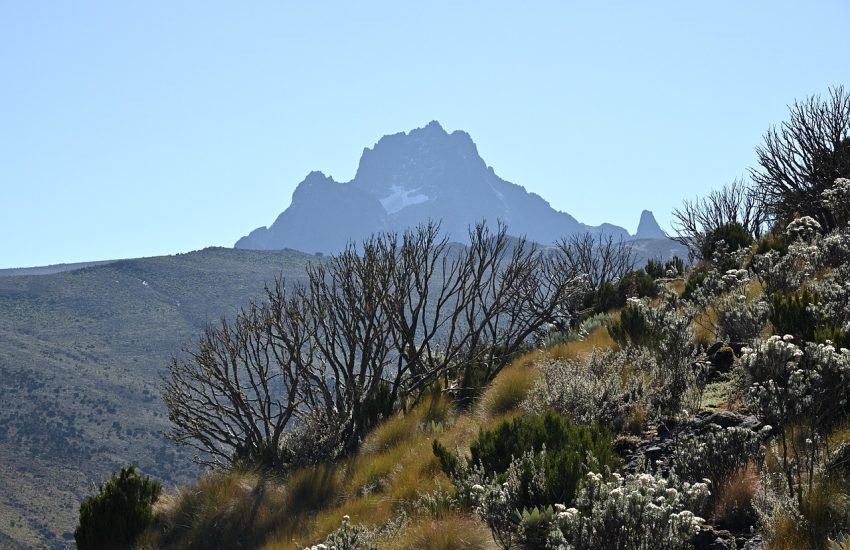
The Somali homeland is a great dry expanse at the eastern tip of Africa, a land of savanna, scrub, and semi-desert stretching along thousands of kilometres of coast on the Gulf of Aden and the Indian Ocean. It is for the most part a hot and arid country, where rain is scarce and uncertain and where the vegetation thins to thorn bush and grass, a land that demands of its people constant movement in search of pasture and water. Only in the south, between the Jubba and Shabelle rivers, is there enough water for settled farming on any scale.
This is a land shaped by drought and by the rhythm of two rainy seasons on which all life depends. When the rains come the desert greens and the herds grow fat, and when they fail the people face hunger and must drive their animals ever farther in search of survival. The camel, above all, is suited to this country, able to go long without water and to browse the thorn, and it became the foundation of Somali pastoral life. Along the coast, the sea offered fish and, more importantly, the highways of trade.
For all its harshness the Somali coast has been a place of contact and commerce since ancient times, its harbours drawing the ships of the Indian Ocean world, and its position on the routes between Africa, Arabia, and India made it a crossroads of trade in incense, hides, and the goods of the interior. Between the demanding interior of the herders and the trading towns of the coast, the Somali built a way of life adapted with great skill to one of the more difficult environments in which any people has thrived.

Camels, Clans, and the Nomad Republic
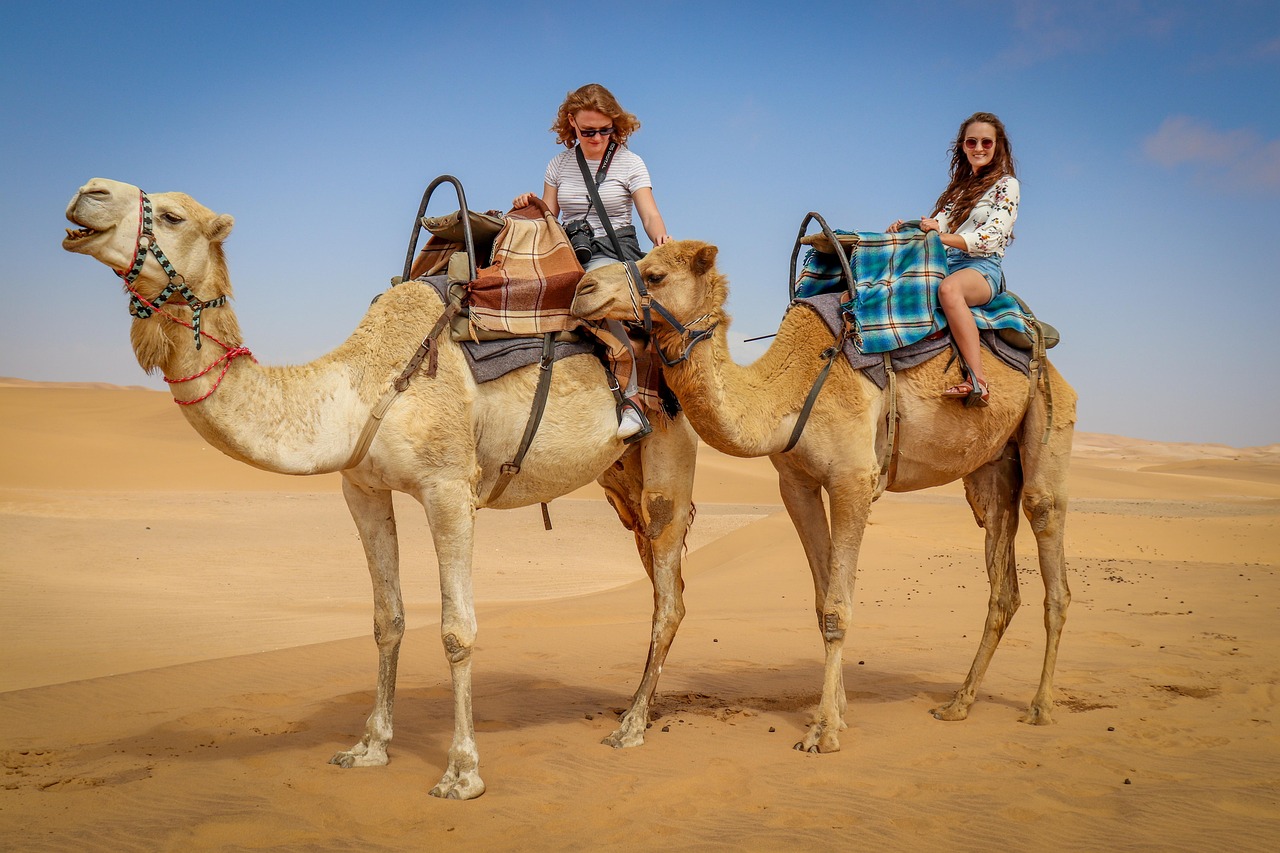
The classic way of Somali life was nomadic pastoralism, the herding of camels above all, along with sheep, goats, and in some regions cattle, across the dry rangelands of the Horn. Families moved with their animals in search of grazing and water, living in portable homes of bent poles and woven mats that could be packed onto camels and carried to the next camp. In this mobile world wealth was measured in livestock, and the camel was the supreme prize, a source of milk, meat, transport, and prestige, and the currency of compensation and bride-wealth.
This was a society without kings or central states across most of its history, ordered instead through the clan and through custom rather than through any throne. The nomads governed themselves through the councils of their elders and through a body of customary law, and disputes between groups were settled by negotiation, by the payment of compensation, and when these failed by the feud. It was a fiercely independent and egalitarian world, in which no man was born to rule another and every adult male had a voice in the affairs of his group.
Alongside the herders of the interior lived the farmers of the southern rivers and the merchants of the coastal towns, giving Somali society more variety than the image of the pure nomad suggests. The coastal cities, some of them ancient, were centres of trade and Islamic learning with their own urban life, while the riverine south supported settled agriculture. Yet the ethos of the whole nation was shaped above all by the camel-herding nomad, whose values of independence, hospitality, and eloquence set the tone for Somali culture.

The Clan, the Elders, and the Law of Xeer
Somali society is organised, above all, by the clan, the great genealogical framework through which every person locates themselves and their obligations. A Somali knows and can recite a long line of forefathers, and this lineage places them within a nested structure of ever larger groups, from the immediate family up through the sub-clan to the great clan-family. These are not mere labels but living structures of alliance and obligation, determining whom one may marry, whom one must support, and who shares responsibility for one another deeds.
A distinctive institution binds these groups together, the diya-paying group, a body of closely related men who collectively pay and receive the compensation, known as diya or mag, owed when one of their number kills or injures a member of another group. This collective responsibility for blood-payment is the practical heart of the clan system, for it makes each group answerable for its members and gives every man a powerful stake in the conduct of his kin. Order is maintained not by police or courts but by this web of mutual liability.
Governing all of this is xeer, the body of Somali customary law, an unwritten but sophisticated code administered by the elders who mediate disputes, negotiate compensation, and keep the peace between groups. Under xeer the elders assemble to hear cases, weigh evidence, and pronounce settlements according to precedent and principle, and their authority rests on wisdom and consent rather than force. In clan, diya-group, and xeer, the Somali built a stateless order of remarkable subtlety, governing a wide society without kings.
Islam Across the Whole of Somali Life
Islam is woven into the whole of Somali life, and the Somali are among the most devoutly and uniformly Muslim of all African peoples. The faith reached the Somali coast very early, carried across the narrow seas from Arabia in the first centuries of Islam, and it has been the religion of the whole nation for many hundreds of years. To be Somali and to be Muslim are, in the common understanding, one and the same, and the mosque, the daily prayers, and the fasting month order the rhythm of life from the coastal city to the nomad camp.
Somali Islam has long been shaped by the Sufi brotherhoods, the orders whose sheikhs and holy men brought the faith into the interior, founded centres of learning, and won deep reverence among the people. The tombs of revered saints became places of pilgrimage, and the annual celebrations at these shrines drew the faithful in their thousands. The religious teachers, the wadaad, stood alongside the warriors and poets as pillars of Somali society, learned in the Arabic scriptures and entrusted with law, teaching, and the rites of life.
This deep faith gave the Somali both a common bond that transcended the divisions of clan and a powerful source of identity and resistance. Religious leaders rallied the people in times of crisis, and Islamic learning provided the written culture that the oral society otherwise lacked. Through all the upheavals of their modern history, Islam has remained the one constant that unites the Somali, a faith held with a devotion and a uniformity that mark them out among the peoples of the continent.

The Camel, the Poem, and the Customs of the Nomad
At the centre of Somali tradition stands the camel, an animal so bound up with the life and imagination of the people that a great part of their poetry, their wealth, and their pride revolves around it. A man standing counts his camels, love songs and praise poems are composed for prized beasts, and the camel provides milk that is the staple of the nomad diet as well as transport across the waterless land. To understand the Somali is to understand their bond with this animal, the measure of wealth and the companion of the desert.
The supreme art of the Somali is poetry, and the composition and recitation of verse is a tradition unmatched in its prestige and reach. Poems are the vehicle of praise and satire, of courtship and mourning, of political argument and philosophical reflection, composed according to strict and demanding rules and carried across the land by memory and performance. A great poet wields real power, and famous verses can spread from camp to camp across the whole nation, shaping opinion and preserving the memory of events.
Dress, dance, and the customs of hospitality complete the traditional world. Men and women wear flowing garments suited to the heat, and for celebration the finery, the henna, and the gold come out. The generous reception of the guest, offered milk and shelter without question, is a sacred value in a land where travellers depend on it for survival, and the songs and dances of weddings and festivals express the joy of the community. In camel, poem, and welcome, the Somali keep the customs of the nomad alive.
Weavers, Woodworkers, and the Incense of the Coast
The crafts of the Somali reflect their mobile pastoral life and their coastal trade. The nomads produced above all the goods of their portable world, the woven mats of grass and fibre that covered the frames of the aqal, the collapsible dwelling, along with the ropes, milk-vessels, and containers of wood and woven root that the herding life required. Women wove the mats and vessels with skill and pattern, and the making of the fine milk-containers, carved and decorated, was an honoured art of the camp.
Woodworking and the carving of the tall wooden headrests, vessels, and utensils were widespread, and among the settled and coastal Somali there developed finer crafts, the weaving of cloth, the working of leather into sandals and bags, and the making of gold and silver jewellery prized by the women. The old coastal towns had their own urban artisans, and the carved doors and plasterwork of the ancient trading cities showed the influence of the wider Indian Ocean world with which the Somali had long traded.
The greatest treasures of the Somali coast, however, were not manufactured but gathered, for this was the ancient land of frankincense and myrrh, the fragrant resins tapped from trees that grow in the dry northern hills. These aromatics were traded across the ancient world and made the Horn famous in antiquity as a source of incense, and their gathering and trade remained an important craft and commerce of the region. In mat and vessel, jewellery and incense, the Somali crafts served the nomad camp and the ocean trade alike.

Camel Milk, Rice, and the Spices of the Indian Ocean
The food of the Somali is shaped by the herding life and by the long contact with the Indian Ocean world. The great staple of the nomad is milk, above all camel milk, drunk fresh and soured, a food so central that a person may live on it for long stretches, supplemented by the meat of the herds on days of plenty and by ghee and butter. This pastoral diet of milk and meat is the ancient foundation of Somali eating, suited to a life spent moving with the animals across the dry land.
From the trade of the coast and the farms of the south comes the other great element of Somali food, grain, and above all rice, cooked with spices in the dish called bariis that graces festive and everyday tables alike. The long centuries of commerce across the Indian Ocean brought the spices of the East, cardamom, cumin, cloves, and cinnamon, deep into Somali cooking, and pasta arrived through more recent contact with Italy, so that the Somali table blends African, Arab, Indian, and Mediterranean flavours in a distinctive way.
Meat grilled or stewed, flatbreads and pancake-like breads, sorghum and maize in the farming regions, and the sweet spiced tea drunk through the day complete the picture. Bananas from the southern plantations, dates, and the produce of the rivers add variety, and the offering of food and drink to the guest remains a sacred point of honour. In its milk and meat, its spiced rice and its ocean-borne flavours, Somali food unites the pastoral interior and the trading coast in one rich cuisine.

The Two Eids and the Gatherings of the People
The great festivals of the Somali are the feasts of Islam, shared with the whole Muslim world and kept with devotion across the nation. The two Eids are the high points of the year, the celebration at the end of the fasting month of Ramadan and the feast of the sacrifice, when families slaughter an animal, dress in their finest, and gather to pray, feast, and exchange visits and gifts. After the long discipline of the fast, the Eid brings joy, generosity, and the renewal of the bonds of family and community.
Beyond the Islamic calendar the Somali kept festivals tied to the seasons and the herding year, and in some regions an old new-year fire festival called Dabshid survived from before Islam, marked by the lighting of fires and the sprinkling of water. The celebrations at the tombs of revered Sufi saints drew pilgrims in their thousands to honour the holy dead with prayer, recitation, and feasting, blending devotion with the great social gathering of the community.
The passages of family life are themselves occasions of celebration, above all the wedding, a grand affair filled with poetry, song, dance, and feasting that can gather a wide circle of kin and last for days. Births and homecomings too are marked with joy, and the composing and reciting of poetry graces every great gathering. Whether at the Eid, the saints festival, or the wedding, the Somali come together in celebration bound by the faith and the poetry that are the twin glories of their culture.

From the Ancient Coast to the Modern Struggle
The Somali coast has been part of the wider world since deep antiquity, for this was very likely the fabled Land of Punt with which the ancient Egyptians traded for incense and gold, and its harbours drew the ships of the Indian Ocean for thousands of years. Islam came early to these shores, and over the centuries a string of Muslim sultanates and trading cities rose along the coast and in the interior, some of them powerful states that fought the Christian empire of the highlands and traded across the seas to Arabia and India.
In the nineteenth century the Somali lands were carved up among foreign powers, the British, the Italians, and the French, along with the Ethiopian empire, dividing the single nation among several rulers, a division against which Somali resistance rose again and again, most famously in the long struggle led by the religious leader known to his enemies as the Mad Mullah. The dream of uniting all Somali lands into one state, symbolised by the five-pointed star, became the great aspiration of the modern nation as it moved toward independence.
British and Italian Somaliland joined at independence in 1960 to form the Somali Republic, but the hoped-for union of all Somali territories was never achieved, and the young state fell in time under military rule and then, in 1991, into a catastrophic collapse and civil war that shattered the country for a generation. From this long ordeal emerged a stateless land, a self-declared republic in the north, and a vast diaspora, as the Somali nation entered one of the hardest chapters of its long history.

The Somali of the Homeland and the Diaspora
Today the Somali are a nation both at home and scattered across the world, their homeland slowly recovering from the long collapse of the state while a vast diaspora carries Somali life to cities across Africa, the Middle East, Europe, and North America. In the Horn, the Somali people are found not only in Somalia but in Djibouti, in the wide Somali region of eastern Ethiopia, and in northern Kenya, and the self-declared republic of Somaliland in the north has built its own peace and order even without international recognition.
The decades of conflict brought terrible suffering, drought and famine, the shattering of institutions, and the flight of millions, and the rebuilding of a functioning state remains a hard and unfinished task beset by division and insecurity. Yet through it all the deep unity of the Somali, their common language, their Islamic faith, and their fierce national pride, has endured, and the diaspora has become a source of remittances, ideas, and energy flowing back to the homeland, tying the scattered nation together across continents.
The living culture of the Somali remains vibrant wherever they are. The poetry that is the glory of the nation still flourishes, now in song, in broadcast, and online as much as in the recited verse of the camp, the camel still stands as a beloved emblem, and the faith still orders the year. A people bound by word and belief across a wide and difficult land, the Somali carry their unity and their proud identity through the trials of the present toward the hope of a rebuilt future.

Related Peoples of the Region
- Amhara of the Ethiopian Highlands and Their Empire That Never Bowed
- Oromo of the Ethiopian Highlands and Their Ancient Democracy of the Generations
- Maasai of the East African Plains and Their Cattle Given by the Sky God
- Swahili of the East African Coast and Their Civilisation Made by the Ocean
- Kikuyu of Mount Kenya and Their Land Given by God to the Children of Mumbi
- Baganda of the Great Lake and Their Kingdom on the Hills of Buganda