Across the great savannas of the East African Rift, in the grasslands where the wildebeest migrate and the acacia trees stand against the sky, live one of the most instantly recognisable peoples on earth. They are the Maasai, the tall, cattle-herding warriors of Kenya and Tanzania, whose red cloaks, dazzling beadwork, and soaring leaping dances have become, fairly or not, an image of Africa itself. Behind the famous picture lies a real and remarkable people, pastoral nomads who built a proud and ordered civilisation on the open plains.
This is the story of the Maasai and the world they made around their cattle. It is a story of the sky god Enkai who gave them all the cattle of the earth, of the age-sets that turned their young men into warriors and their elders into rulers without any king, of the red shuka and the beaded collar and the jumping dance, and of a diet of milk, meat, and blood drawn from the living herd. It is also a story of lost lands and hard change, told by a people who kept their proud identity through the taking of their plains.
Contents
- The Cattle-Herders of the Great Rift
- Maasai and the People Who Speak Maa
- Maa, the Tongue of the Plains
- The Savannas of Kenya and Tanzania
- Warriors, Elders, and the Age-Set System
- The Age-Grades and the Bonds of the Enkang
- Enkai, the Sky God, and the Sacred Cattle
- The Red Shuka, the Beads, and the Jumping Dance
- Beadworkers, Smiths, and the Makers of the Camp
- Milk, Blood, and the Cattle of the Maasai
- The Eunoto and the Great Rites of the Warriors
- From the Migration South to the Loss of the Lands
- The Maasai Between the Cattle Camp and the City
The Cattle-Herders of the Great Rift
Across the great savannas of the East African Rift, in the grasslands where the wildebeest migrate and the acacia trees stand against the sky, live one of the most instantly recognisable peoples on earth. They are the Maasai, the tall, cattle-herding warriors of Kenya and Tanzania, whose red cloaks, beaded ornaments, and leaping dances have become, fairly or not, an image of Africa itself in the eyes of the world. Yet behind the famous image lies a real and remarkable people, pastoral nomads who built a proud culture on the open plains.
The Maasai are a Nilotic people, part of the great family of cattle-keeping peoples whose ancestors moved down over centuries from the valley of the Nile into the highlands and plains of East Africa. Speakers of a Nilotic language and herders to the core, they came to occupy a vast stretch of the Rift Valley grasslands, and for a time in the nineteenth century they were the dominant power of the region, feared warriors whose herds and whose spears commanded the plains from Mount Kenya to central Tanzania.
Their whole world was built around cattle, which were to them not merely wealth but the very centre of life, religion, and identity, a gift they believed the sky god had entrusted to them alone. Around the herd they organised their society into the famous age-sets, their young men into warriors, and their lives into a sequence of grand rituals. To understand the Maasai is to understand a people who made of the cattle and the open savanna a complete and enduring civilisation.

Maasai and the People Who Speak Maa
The name Maasai means, in effect, those who speak Maa, for it derives from the name of their language, and it is by this shared tongue that the people define themselves. To be Maasai is to speak Maa and to live by the customs and the cattle-keeping way of the plains, and the name binds together the many local sections into which the people are divided across their wide territory. It is a name that has travelled far, becoming one of the best-known of all African peoples names.
The Maasai are divided into a number of territorial sections, each with its own name and its own stretch of country, from the sections of the Kenyan highlands and the Rift to those of the Tanzanian plains, and beyond the Maasai proper stand related Maa-speaking peoples such as the Samburu of northern Kenya, who share the language and much of the culture. These sections were largely independent, cooperating and sometimes competing, yet united by the common language, the common customs, and the shared institution of the age-sets.
The wider family of Maa-speakers reflects the long history of the Nilotic migrations that brought these peoples into East Africa, spreading a related language and a common pastoral culture across a great region. Within this family the Maasai became the most famous and, in the nineteenth century, the most powerful, and their name came to stand for the whole world of the red-cloaked cattle warriors of the Rift. In the single name Maasai, the many sections of the plains recognise their common speech and their common way of life.
Maa, the Tongue of the Plains
The Maasai speak Maa, a language of the Nilotic branch of the great Nilo-Saharan family, related to the tongues of other cattle-keeping peoples of the region such as the Samburu, with whom the Maasai can largely understand one another. It is a language of the plains and the herd, rich in the vocabulary of cattle, of colour and marking and age, for a people to whom the naming and knowing of their animals is a fine and detailed art. Maa is spoken across the Maasai lands of Kenya and Tanzania by perhaps a million or more people.
For most of their history the Maasai committed nothing to writing, and their language lived entirely in the spoken word, in the naming of cattle, the recitation of the ages and sections, the blessings of the elders, and the songs of the warriors and the women. The oral culture carried in Maa is rich, from the praise and courtship songs sung at gatherings to the deep knowledge of grazing, weather, and stock that the herding life demanded. The distinctive chanting songs of the Maasai, with their deep rhythmic drones, are famous the world over.
As the Maasai have entered the wider life of Kenya and Tanzania, most now also speak the national languages, Swahili and English or Swahili alone, using them in school, in trade, and in dealings with the state, while keeping Maa as the language of home and community. The tongue remains a strong marker of Maasai identity, carried by a people determined to hold their own even as they engage with the modern nations around them, the living voice of the cattle-herders of the Rift.
The Savannas of Kenya and Tanzania
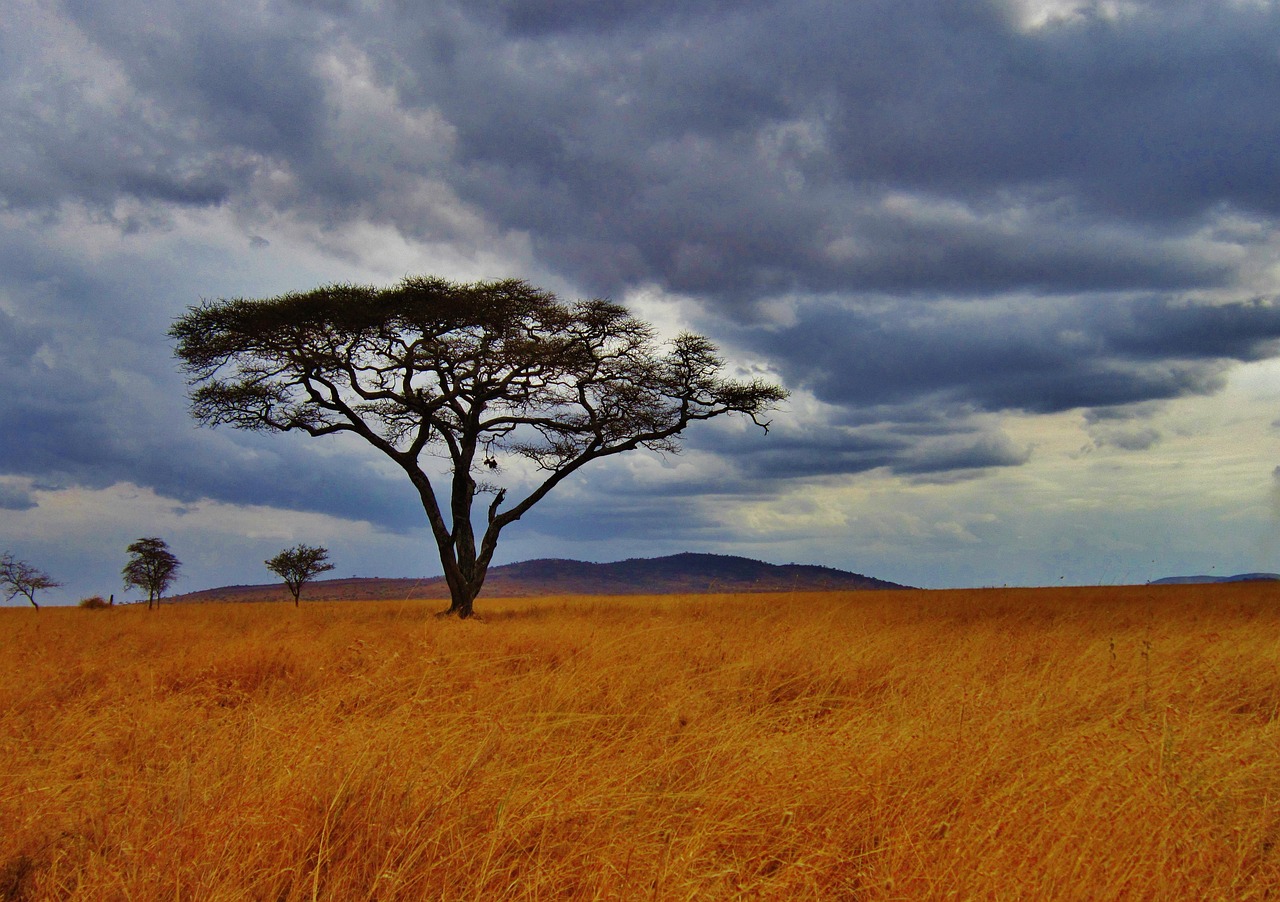
The Maasai homeland lies across the great savannas of southern Kenya and northern Tanzania, in and around the eastern arm of the Great Rift Valley, a country of wide grasslands, scattered acacia trees, and dramatic volcanic highlands. This is some of the most famous wildlife country on earth, embracing the plains of the Serengeti and the Maasai Mara, the crater of Ngorongoro, and the foot of the great mountains Kilimanjaro and Kenya, a land where vast herds of grazing animals move with the seasons across the open plains.
It is a land shaped by the rhythm of the rains and by the need to move. The Maasai and their herds followed the grass and the water across the plains and between the highlands and the lowlands, seeking pasture in the wet season and falling back on reliable water in the dry, in a pattern of movement finely tuned to the land. For centuries the Maasai shared these grasslands with the great herds of wild game, grazing their cattle alongside the wildebeest and zebra without destroying the wildlife on which the fame of the region rests.
The very qualities that made this land a paradise for cattle and game also made it coveted by others, and much of the best of it has been taken from the Maasai over the past century, enclosed as farms, ranches, and famous game parks from which the herders were often excluded. Yet the Maasai remain the people most identified with these plains, their cattle still moving across the grasslands in the shadow of the acacia and the mountain, at home in one of the great landscapes of the world.
Warriors, Elders, and the Age-Set System
The old Maasai world was ordered not by kings but by the remarkable system of age-sets, through which every man passed with his generation from boyhood to warrior to elder. Boys herded the calves and lambs near the camp, and then, at a great ceremony of circumcision, a whole age-set of young men was initiated together and became morans, the warriors on whom the defence of the community and the raiding of cattle depended. For years the morans lived apart in their own encampments, growing their hair long, adorning themselves, and forming the bonds of a lifelong brotherhood.
After their years as warriors the men graduated in another grand ceremony into the status of junior and then senior elders, and it was the elders, not the warriors, who truly governed. The senior elders held the wisdom, the authority, and the ritual power of the community, settling disputes, making decisions, and pronouncing the blessings and curses that carried real weight. Power thus rested with age and experience, and each man knew that his time to rule would come as his age-set advanced through the grades.
Binding the whole system together was a figure of great spiritual authority, the laibon, a ritual expert and prophet drawn from a particular lineage who blessed the warriors, foretold the future, and provided the medicines and rituals on which success in war and life depended. The laibon did not rule as a king, but his spiritual power gave a measure of unity to the otherwise independent sections. In the age-sets, the elders, and the laibon, the Maasai built an ordered society without any state.

The Age-Grades and the Bonds of the Enkang
Maasai society is structured by the twin principles of the age-set and the family, woven together into the life of the enkang, the encampment or homestead ringed with a thorn fence to keep the cattle safe from lions by night. Within the enkang live an extended family, often a man with his several wives, each with her own house, and their children and cattle, and around the daily life of the herd and the home the society is built. The women build the houses of branches and dung, milk the cattle, and raise the children, while the men and boys tend and defend the herds.
The age-set binds the men of each generation into a brotherhood that lasts for life, so that a man moves through the world in the company of those initiated with him, sharing the status and the duties of each grade in turn. This horizontal bond of the age-set crosses the divisions of family and section, tying the whole society together, while marriage links families and sections in alliance. A man may take several wives as his herds allow, and cattle given as bride-wealth flow between families to seal each marriage.
The values of this society are those of the pastoral warrior world, courage, endurance, and skill with cattle, respect for the elders and their blessing, and the generous sharing of milk and meat. Hospitality is a duty, and the bonds of age-set and kin bring support in times of need, for a man who loses his herd to drought or disease may be helped to rebuild by his fellows. Through the enkang, the age-set, and the ties of family, the Maasai wove a resilient society fitted to the demands of the herding life.

Enkai, the Sky God, and the Sacred Cattle
At the heart of Maasai religion stands Enkai, also called Engai, the single God who is identified with the sky and the rain and who created and sustains the world. Enkai has two aspects in Maasai thought, a benevolent black god who brings the rain and the grass and blessing, and a vengeful red god of drought and misfortune, and the people pray and sacrifice to win the favour of the one and turn away the wrath of the other. This sky god is the giver of life, and above all the giver of cattle, which are the very sign of the divine gift.
Central to the faith is the belief that Enkai gave all the cattle of the world to the Maasai at the beginning, a conviction that made cattle sacred and that, in the old days, justified the taking of the herds of others as the recovery of what was rightly theirs. Cattle thus stand at the meeting point of religion, economy, and identity, and the milk and the blood and the beasts themselves are woven into the rituals of blessing, sacrifice, and the great ceremonies that mark the passage of the age-sets.
The mediators between the people and Enkai are the elders, whose blessings and curses carry spiritual force, and above all the laibon, the prophet and ritual expert who reads the will of God, provides protective medicine, and blesses the great undertakings of the community. Sacred sites, holy trees, and the mountains, above all the great volcano the Maasai call the Mountain of God, are places where the divine is felt. In this faith of sky, rain, and sacred cattle, the Maasai found the meaning of their pastoral world.

The Red Shuka, the Beads, and the Jumping Dance
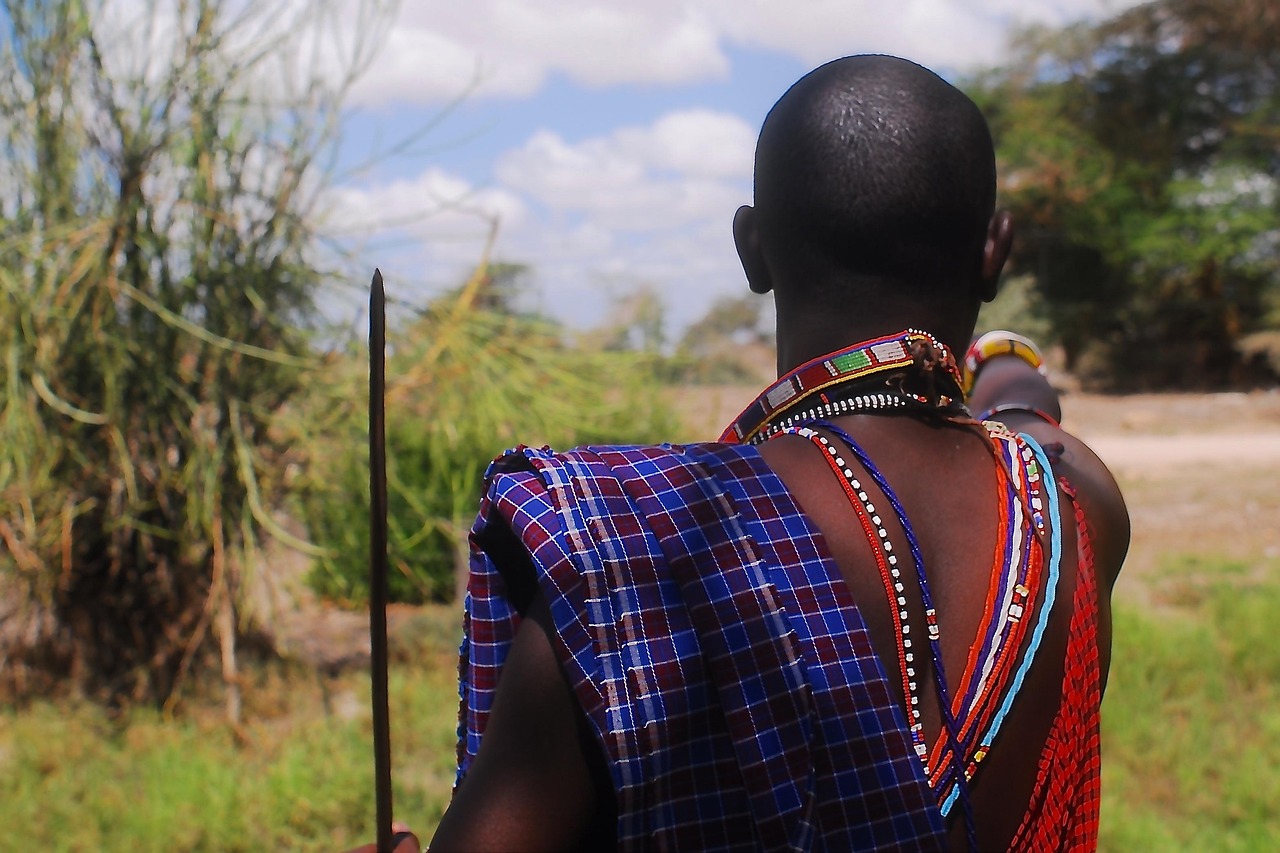
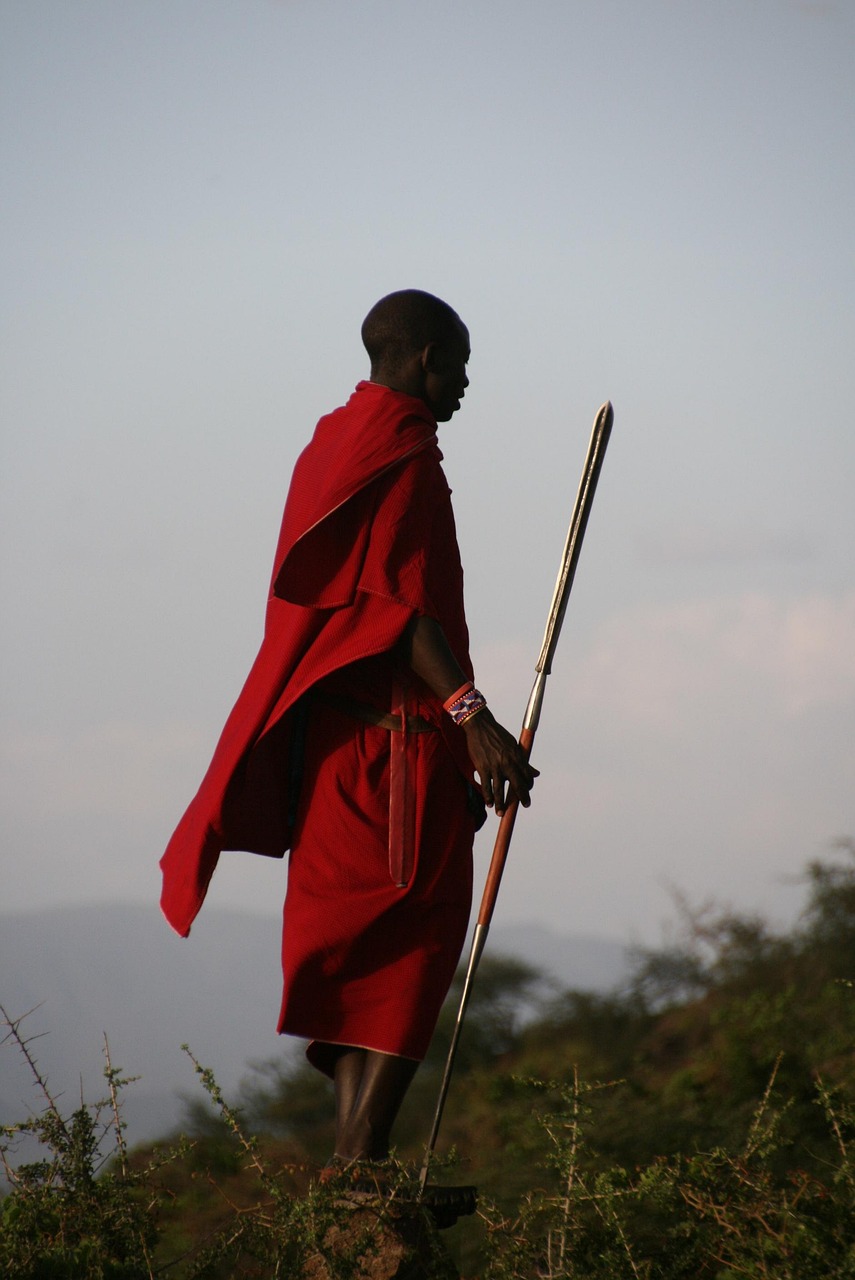
The most famous of all Maasai traditions is their dress, above all the shuka, the red cloth wrapped about the body that has become the very emblem of the people. Red is the favoured colour, bold against the tawny plains and believed to signal strength and to ward off wild animals, though cloths of blue, striped, and checked patterns are worn as well. Both men and women stretch and adorn their earlobes, and the warriors in the old days dressed their long hair with red ochre and fat into elaborate styles, presenting a striking and deliberate beauty.
Beadwork is the great art of the Maasai women, who fashion the broad, flat collars, the bracelets, the earrings, and the headbands of brilliantly coloured beads that adorn every person at a gathering. The colours and patterns of the beads carry meaning, marking age, status, and occasion, and the making and giving of beadwork is woven into courtship, marriage, and ceremony. A Maasai in full ornament, draped in red and ablaze with beads, is one of the most striking sights in all of Africa.
The dances of the Maasai are as famous as their dress, above all the adumu, the jumping dance of the warriors, in which young men leap straight into the air from a standing start, higher and higher, while their fellows sing and chant around them in a deep rhythmic drone. This display of strength and endurance, performed at celebrations and courtships, has become an image known around the world. In shuka, beads, and the leaping dance, the Maasai express a proud and deliberate aesthetic that is theirs alone.

Beadworkers, Smiths, and the Makers of the Camp
The crafts of the Maasai serve the mobile, cattle-centred life of the plains, and none is more celebrated than the beadwork of the women. From tiny glass beads, obtained through trade, they string and sew the collars, bracelets, and ornaments that clothe the people in colour, each pattern and hue carrying its meaning of age and status and occasion. This beadwork is at once a craft, an art, and a language, and it has become one of the most admired of African decorative traditions, sought by collectors around the world.
The women are also the builders of the home, for it is they who construct the loaf-shaped houses of the enkang from a frame of branches plastered with a mixture of mud, grass, ash, and cattle dung, weatherproof and cool, and it is they who make the gourds and vessels for milk and the leather garments and straps of daily use. The making and decorating of the milk gourds, and their cleansing with cattle urine and charcoal, is a domestic art essential to the pastoral diet.
The men and the smiths supply the other necessities of the warrior world. Blacksmiths, often a group somewhat set apart, forge the spears, swords, and knives that were the weapons and tools of the Maasai, and the making of the great spear that marked the warrior was a craft of importance. Others carve the wooden clubs, the herding sticks, the stools, and the containers of the camp. In beadwork, house, gourd, and spear, the crafts of the Maasai clothed, sheltered, and armed a people always ready to move with their herds.

Milk, Blood, and the Cattle of the Maasai
The traditional food of the Maasai comes almost entirely from their cattle, and in the purest form of the old way the people lived on the products of the herd alone. Milk is the great staple, drunk fresh and soured, and from it butter is made, while meat is eaten on days of ceremony and celebration when a beast is slaughtered. Most famously, the Maasai drew blood from the living animal, opening a vein in the neck with a small arrow and drawing off a measured amount before closing the wound, mixing the blood with milk to make a nourishing drink.
This diet of milk, meat, and blood, drawn from the herd without destroying it, allowed the Maasai to live off their cattle across the dry plains, and it stood at the centre of a way of life in which the beasts were valued alive far more than dead. The pure pastoral diet was held to be the proper food of the Maasai, and the eating of the flesh of wild game, of fish, or of the produce of farming was traditionally scorned as beneath a true cattle-keeper, a mark of the deep pride the Maasai took in their herding identity.
In practice, and increasingly in modern times, the Maasai diet has broadened to include the grains and other foods of their farming neighbours, and maize meal, beans, and tea with milk and sugar have become common fare, especially as the old pastoral life has come under pressure. Yet milk remains the honoured and preferred food, and the sharing of milk and, on great occasions, of roasted meat still expresses the values of a people for whom the cattle are the source of life, wealth, and food alike.

The Eunoto and the Great Rites of the Warriors
The great ceremonies of the Maasai are the rites of passage that carry each age-set through the grades of life, and the most important of all is the Eunoto, the ceremony in which the warriors graduate from the status of moran into that of junior elder. Held after years of the warrior life, the Eunoto gathers a whole age-set for days of ritual, feasting, singing, and dancing, when the warriors shave their long ochred hair, receive the blessing of the elders, and put aside the freedoms and duties of the moran to take up the responsibilities of the married elder. It is one of the grandest occasions of Maasai life.
Around this central rite stand the other great ceremonies, the initiation of boys into warriorhood through circumcision, the naming and blessing of the new age-set, the rituals of marriage, and the ceremonies that confer the full authority of elderhood. Each is marked by the gathering of the community, the slaughter of cattle, the wearing of the finest ornaments, and days of song and dance, and each moves the generations forward through the ordered stages of the age-set system.
Alongside these rites of the age-sets stand the ceremonies tied to the cattle and the seasons, the blessings for rain and pasture, the rituals to protect the herd, and the sacrifices to Enkai in time of need. Weddings and the celebrations of the community bring the people together in colour and song, and the deep chanting and the leaping dances fill the gatherings. Through the Eunoto and the great rites of the warriors, the Maasai renew the bonds of the age-set and the generations that hold their society together.

From the Migration South to the Loss of the Lands
The Maasai came to their present lands through the long southward migration of Nilotic cattle-keepers, moving over centuries down from the region of the southern Nile into the Rift Valley, and by around the seventeenth and eighteenth centuries they had spread across the plains of what is now Kenya and Tanzania. As they came they displaced or absorbed earlier peoples, and by the nineteenth century the Maasai were at the height of their power, their warriors dominating a vast stretch of the Rift and their herds grazing from central Kenya deep into Tanzania, feared by neighbours and by the caravans of traders alike.
Then, in the later nineteenth century, catastrophe struck. A cascade of disasters, epidemics of cattle disease that destroyed the herds, together with drought, famine, and smallpox, devastated the Maasai and broke their power at the very moment when the European colonisers were arriving. Weakened and divided, the Maasai were in no position to resist as the British took control of their lands, and through a succession of treaties and forced moves the colonial government seized much of the best Maasai grazing country for European settlement.
Through the colonial period and after independence the Maasai continued to lose land, as their grazing grounds were carved into farms, ranches, and the famous game parks from which they were often excluded, and as governments pressed them to abandon their nomadic ways and settle. Marginalised and romanticised in equal measure, the Maasai nonetheless held to their cattle and their culture with remarkable tenacity, entering the modern nations of Kenya and Tanzania as a people who had lost much of their land but kept their proud identity.

The Maasai Between the Cattle Camp and the City
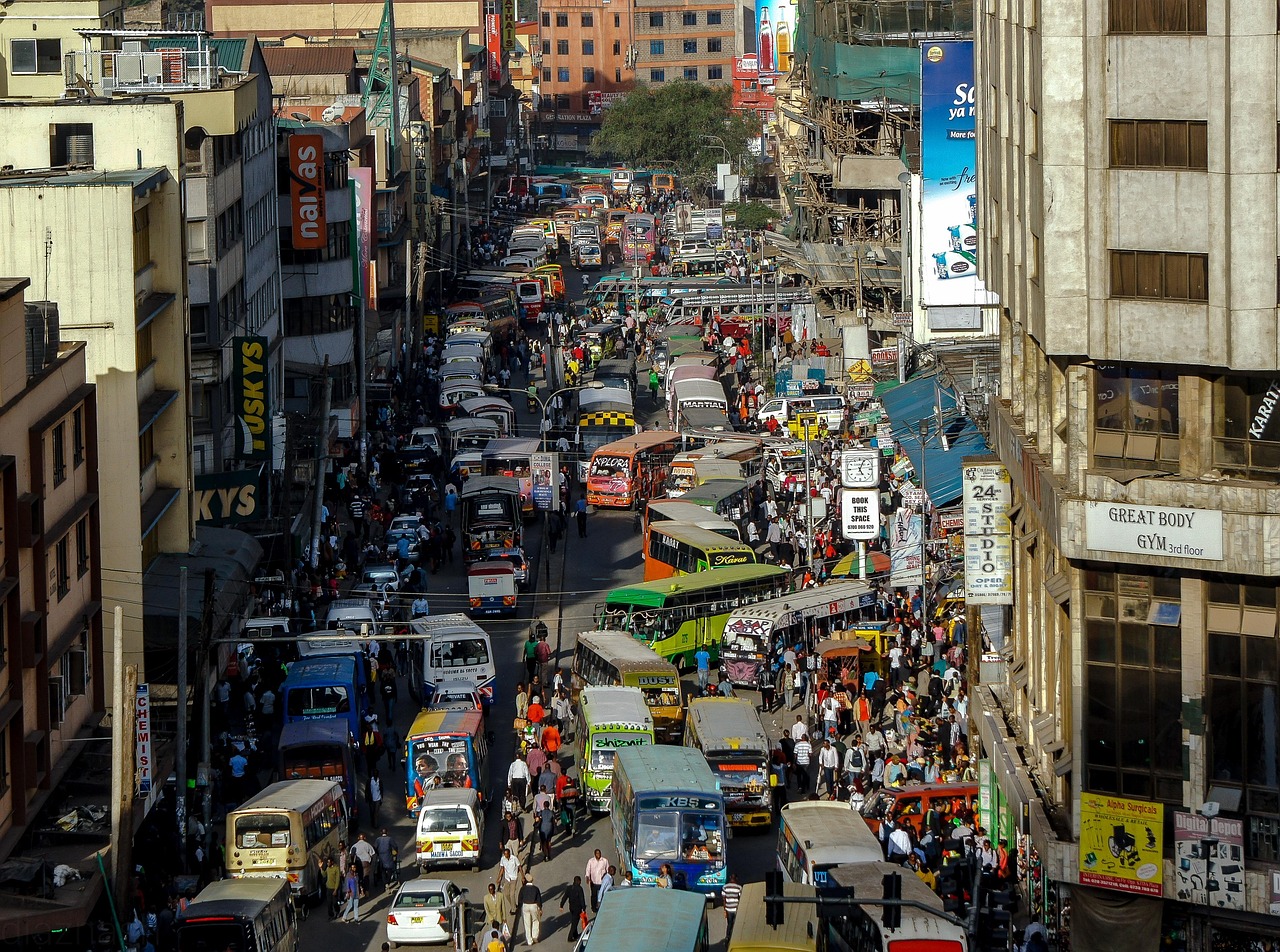
Today the Maasai live between two worlds, the cattle camp of the plains and the modern nations of Kenya and Tanzania that have grown up around them. Many still herd cattle in the old way, moving with their animals across the grasslands and keeping the age-sets, the ceremonies, and the language of their ancestors, while others have taken up farming, settled in towns, gone to school, and entered the professions, the tourist trade, and the political life of their countries. The Maasai have proved able to hold their identity while adapting to great change.
The pressures on the old way of life are severe. The loss of grazing land to farms, ranches, conservation areas, and expanding towns has squeezed the pastoral economy, and drought, population growth, and the fencing and dividing of the once-open plains make the herding life ever harder to sustain. Governments have long pressed the Maasai to settle and to give up their nomadic ways, and disputes over land, especially around the famous game parks, remain bitter and unresolved, as the herders struggle to keep a place on the plains that bear their name.
Yet the Maasai remain one of the most vital and admired of African peoples, their culture a source of deep pride and, through tourism, of income and fame. The red shuka and the beadwork, the leaping dance and the deep chant, the cattle and the age-sets endure, and Maasai communities work to secure their land rights and to shape their own future on their own terms. Caught between the herd and the city, the Maasai carry their proud pastoral heritage forward into the modern life of East Africa.
Related Peoples of the Region
- Amhara of the Ethiopian Highlands and Their Empire That Never Bowed
- Oromo of the Ethiopian Highlands and Their Ancient Democracy of the Generations
- Somali of the Horn of Africa and Their Nation Bound by Word and Faith
- Swahili of the East African Coast and Their Civilisation Made by the Ocean
- Kikuyu of Mount Kenya and Their Land Given by God to the Children of Mumbi
- Baganda of the Great Lake and Their Kingdom on the Hills of Buganda
- Luo of Lake Victoria and Their Nilotic Journey Down the Nile to the Great Water
- Tigrayans of the Northern Highlands and Their Ancient Empire of Axum
More Peoples of the World
You May Like
The Zaza, a Mountain People of Eastern Anatolia


2 thoughts on “Maasai of the East African Plains and Their Cattle Given by the Sky God”