The largest desert on earth looks empty on the map, and for a thousand years that emptiness had owners. The Tuareg, veiled Berber camel lords of the central Sahara, taxed the caravans of gold and salt, wrote their own alphabet on the rocks, and built a society where men cover their faces and descent runs through women. Five modern borders cut their country into pieces, and they remain, defiantly, one people.
This portrait follows the Kel Tamasheq, the free people of the veil: the drying Sahara that made them, the Tifinagh letters the women kept alive, the salt caravans and drum-group federations, Islam carried lightly on the saddle, the smiths of the Agadez cross, three glasses of tea, and the rebellions and guitars of a nation still negotiating with five states for the right to its own desert.
Contents
- Camel Lords Born of a Drying Sahara
- Imazighen of the Veil, the Many Names of the Tuareg
- Tamasheq and the Alphabet the Women Kept
- A Country of Mountains Hidden in the Desert
- Salt Caravans and the Order of the Drum Groups
- Matrilineal Descent Behind the Warriors’ Veil
- Islam Carried Lightly on the Saddle
- The Tagelmust, Courtship Songs, and the Tende Drum
- Silversmiths of the Cross and Workers of Leather
- Milk, Millet, and Three Glasses of Tea
- Cure Salee and the Festivals of the Nomads
- Resistance, Borders, and the Rebellions of the Sahel
- Blue Men on Motorbikes in a Divided Desert
Camel Lords Born of a Drying Sahara
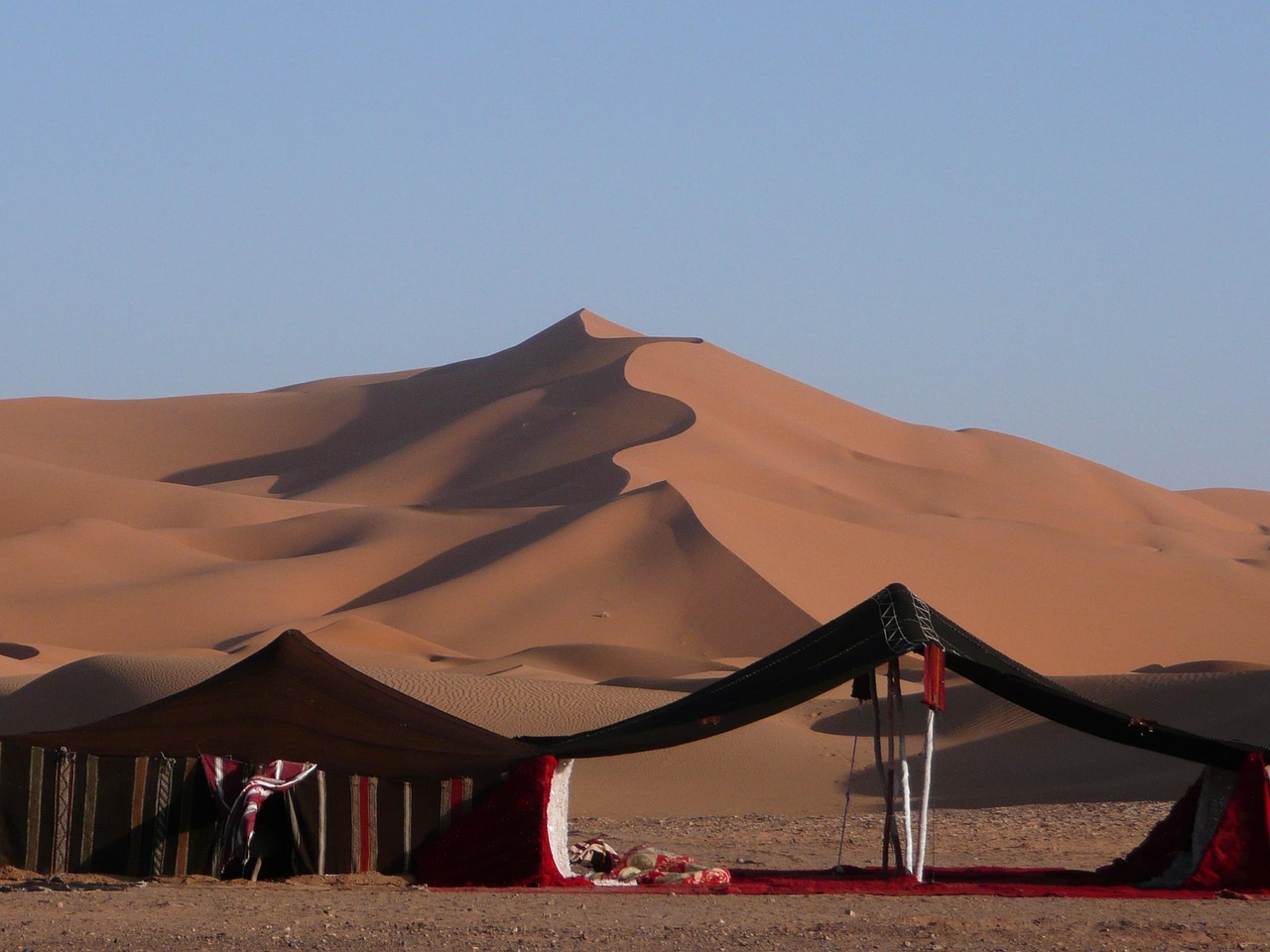
The Tuareg are the Sahara’s southern Berbers, descendants of the Amazigh pastoralists who rode the great desert’s drying millennia southward from North Africa. As the grasslands painted at Tassili n’Ajjer withered into sand, their ancestors followed the herds into the mountains of the central Sahara and made aridity itself a homeland.
Tradition begins the nation with a queen: Tin Hinan, the matriarch who came south from the Atlas by camel to the Hoggar mountains, and whose fourth-century tomb at Abalessa, excavated with its jewelry intact, is the rare case of a legend with an address.
The camel, arriving in the Sahara around the start of our era, completed the formula: with it the Tuareg could cross between the desert’s islands of pasture and command the trade that had to pass between the Mediterranean and the lands of gold.
By the Middle Ages the veiled riders controlled the central crossings, founded Timbuktu as a seasonal camp, and taxed the caravans of gold, salt, and books; the desert’s emptiness on the map was, in fact, their country, fully owned and administered.
The rock walls of Tassili and the Acacus archive the whole descent: herds and dancers painted in the Sahara’s green age, then chariots, then the camel and the first Tifinagh letters, a continuous gallery running from the wet millennia to the ancestors the Tuareg name; they live, in effect, inside their own museum.

Imazighen of the Veil, the Many Names of the Tuareg
Tuareg is an outsiders’ name, Arabic in origin and argued in meaning, abandoned of God in one hostile reading, people of the Targa valley in a kinder one. The people call themselves by their language, Kel Tamasheq, or Imuhagh and Imajeghen, the free and the noble.
Europeans called them the Blue Men, for the indigo of their veils that rubs into the skin, and the romance of the name has sold a century of travel books; the Tuareg themselves rank indigo cloth as wealth, the deeper the shade the greater the standing.
Their confederations carry the proper names of the nation: Kel Ahaggar and Kel Ajjer of the mountains, Kel Air, Kel Adagh, Iwellemmedan of the southern reaches, drum groups under amenokal chiefs whose federations were the desert’s actual states.
Across five modern countries, Algeria, Libya, Niger, Mali, and Burkina Faso, they remain one people of perhaps three million, divided by borders they never drew and joined by a language, a veil, and a memory of moving freely.
Tamasheq and the Alphabet the Women Kept
Tamasheq, with its dialects Tamahaq and Tamajaq, is the southern branch of the Berber family, sister to the Amazigh tongues of Morocco and Algeria, carried into the desert’s heart and kept remarkably pure of Arabic by distance and pride.
Its treasure is its script: Tifinagh, descended from the ancient Libyco-Berber alphabet, angular letters suited to carving on rock and etching into leather, and preserved through the centuries largely by women, who taught children the characters and used them for love notes, camp messages, and inscriptions on jewelry.
That an alphabet survived among nomads without schools or scribes is one of Africa’s quiet literacy marvels; modern Berber activists across North Africa adopted revived Tifinagh as their emblem, borrowing the desert’s letters for the whole Amazigh renaissance.
Tamasheq today is spoken across the five states with radio and rap keeping it current, the guitar poetry of the ishumar generation carrying it further than any caravan; its scripts are now three, Tifinagh, Arabic, and Latin, and its poets use whichever the audience reads.
Linguists prize Tamasheq for its conservatism, verb forms and vocabulary that illuminate the whole Berber family’s history, and for the sociolinguistic rarity of a script transmitted by mothers; a Tuareg proverb calls a man without verses a tent without poles, and the language’s poetic registers are graded as finely as its greetings.
A Country of Mountains Hidden in the Desert
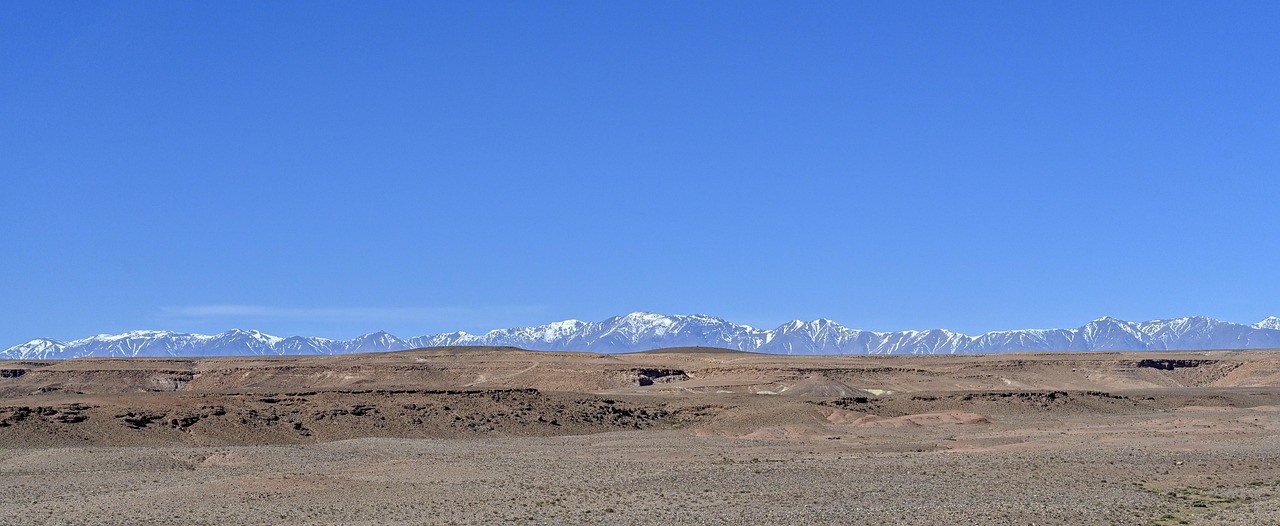
The Tuareg homeland is the Sahara’s mountainous spine: the Hoggar of Algeria rising to nearly three thousand meters, the Tassili n’Ajjer plateau with its ten thousand rock paintings, the Air massif of Niger, the Adrar des Ifoghas of Mali, and the Fezzan of Libya, islands of pasture, guelta waterholes, and shade in an ocean of stone and sand.
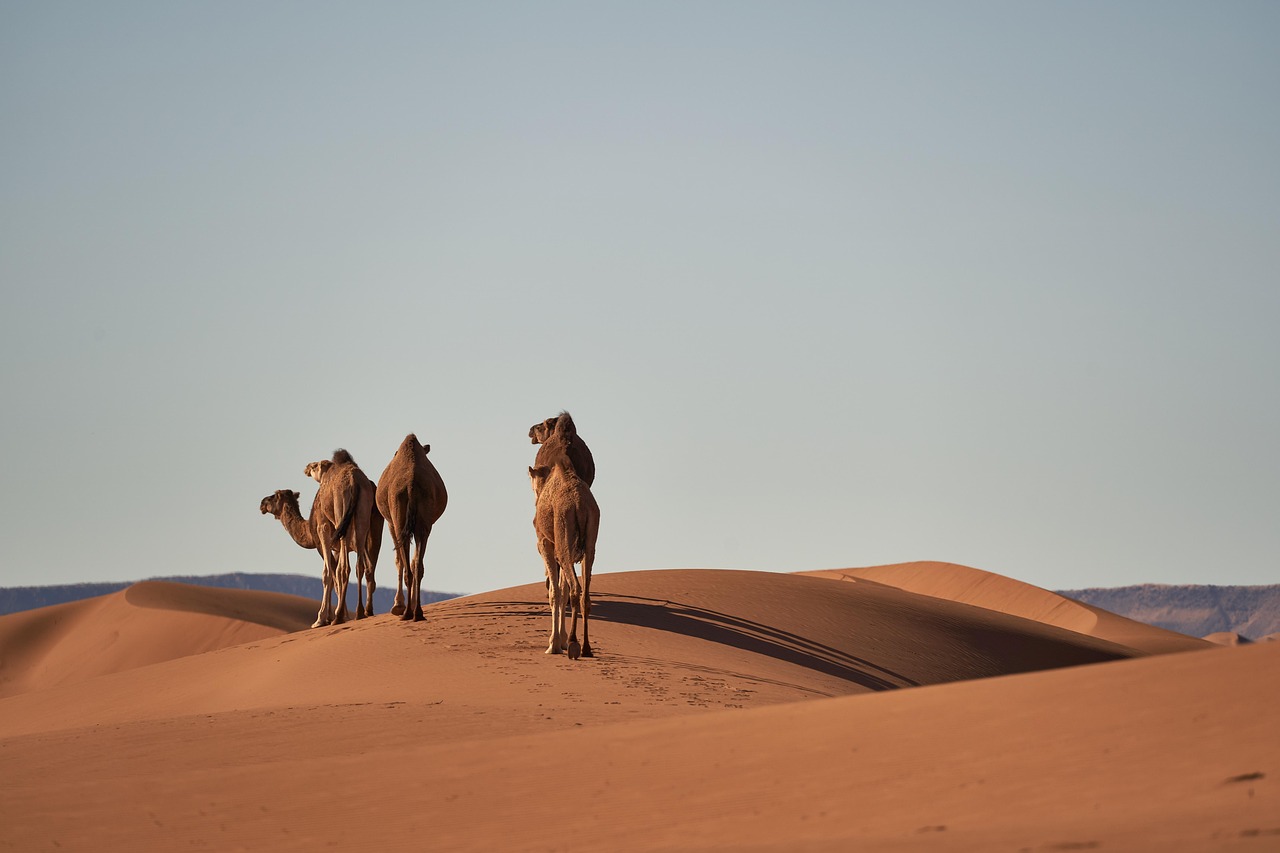
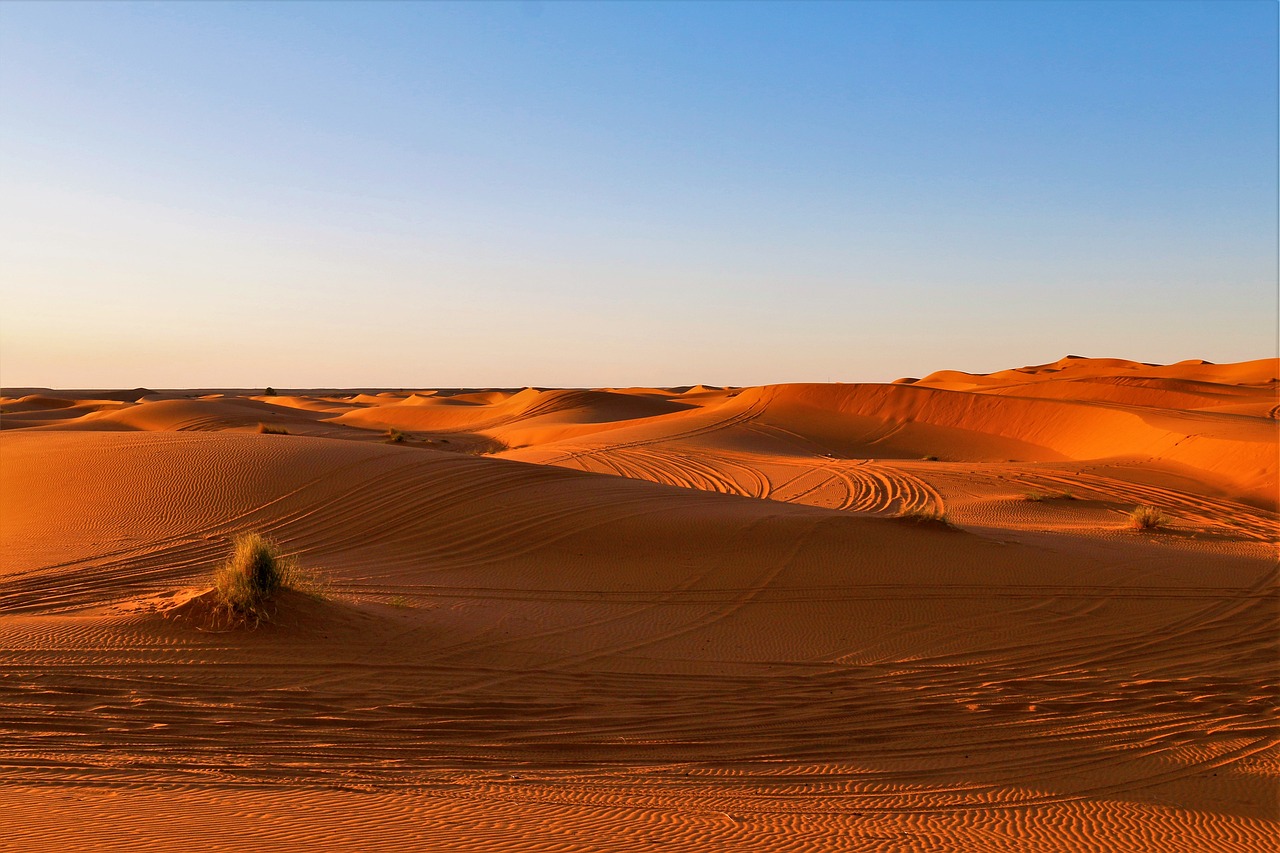
Between the mountains run the tenere, the empty quarters, crossed by named routes from well to well; to own the desert is to know it, and Tuareg geography is a curriculum of stars, dunescapes, and water depths taught from childhood.
South of the sand the homeland shades into the Sahel, the shore, where the herds winter and the millet markets sit; the annual swing between desert and Sahel pasture is the nation’s oldest calendar.
Drought is the homeland’s recurring catastrophe: the great Sahel droughts of the 1970s and 80s killed the herds by the million and drove families to the cities and the coast, wounds that fed every rebellion since.
The mountains hold the nation’s sanctuaries: gueltas where herds and gazelles share the last water, cypress trees older than Islam in the Tassili’s gorges, and the cool heights of Assekrem where even the hermit Foucauld chose Tuareg country for silence; the desert’s reputation for emptiness is, as ever, a stranger’s error.
Salt Caravans and the Order of the Drum Groups
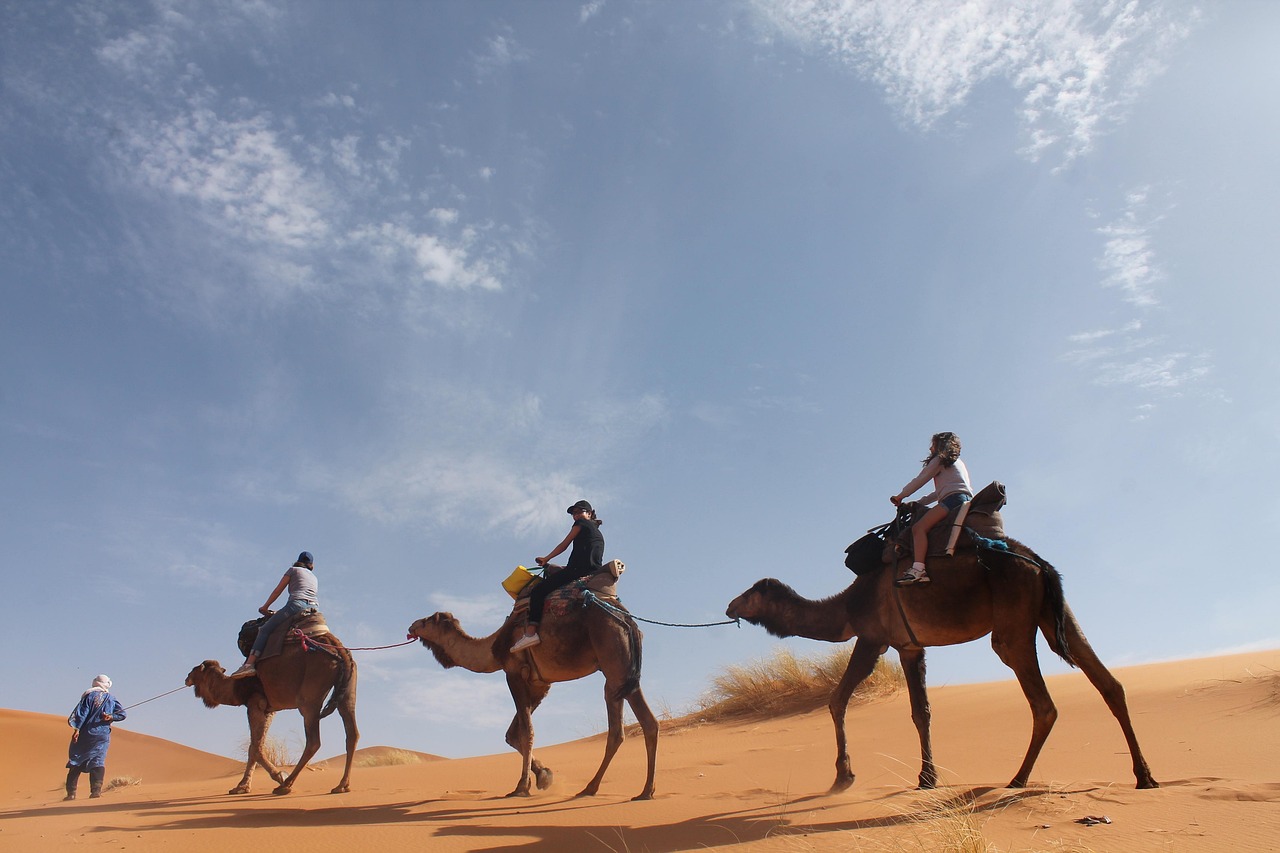
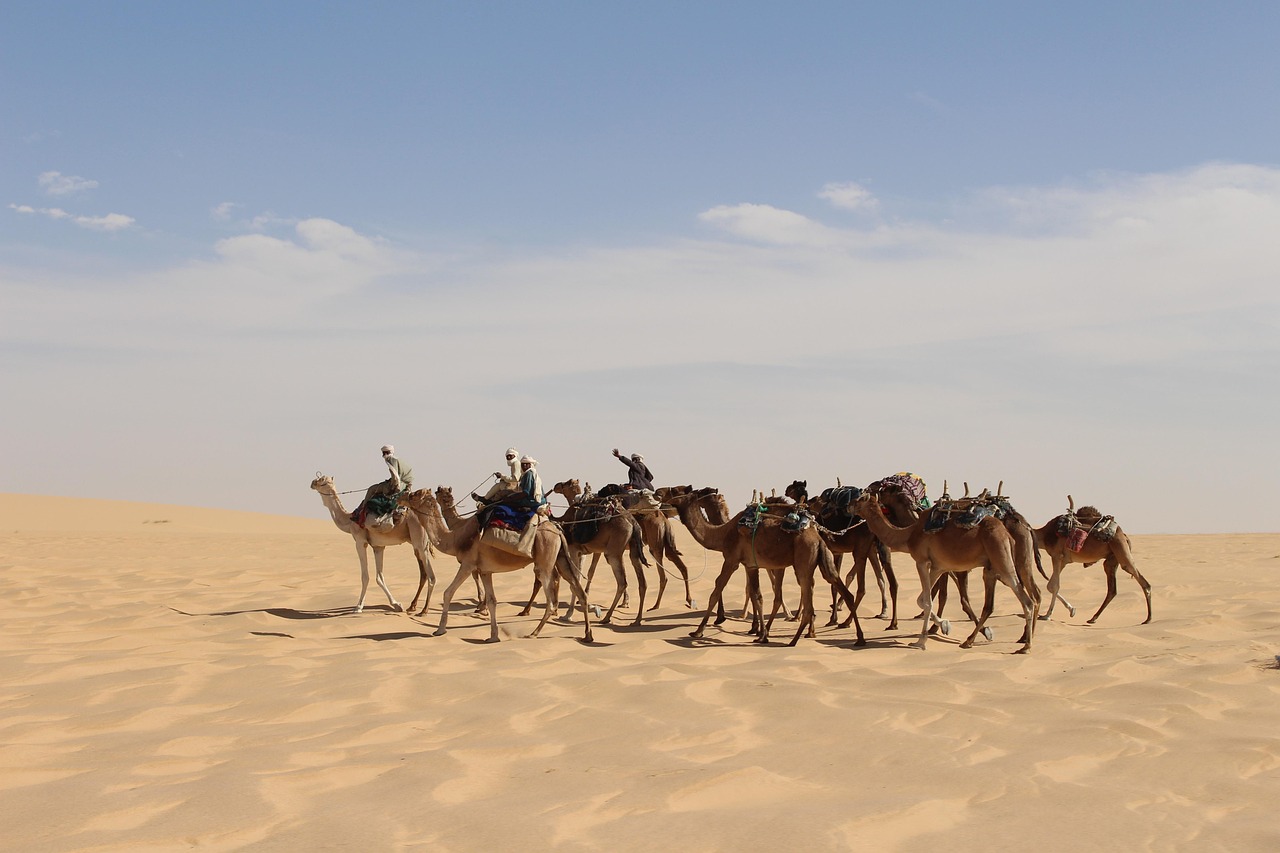
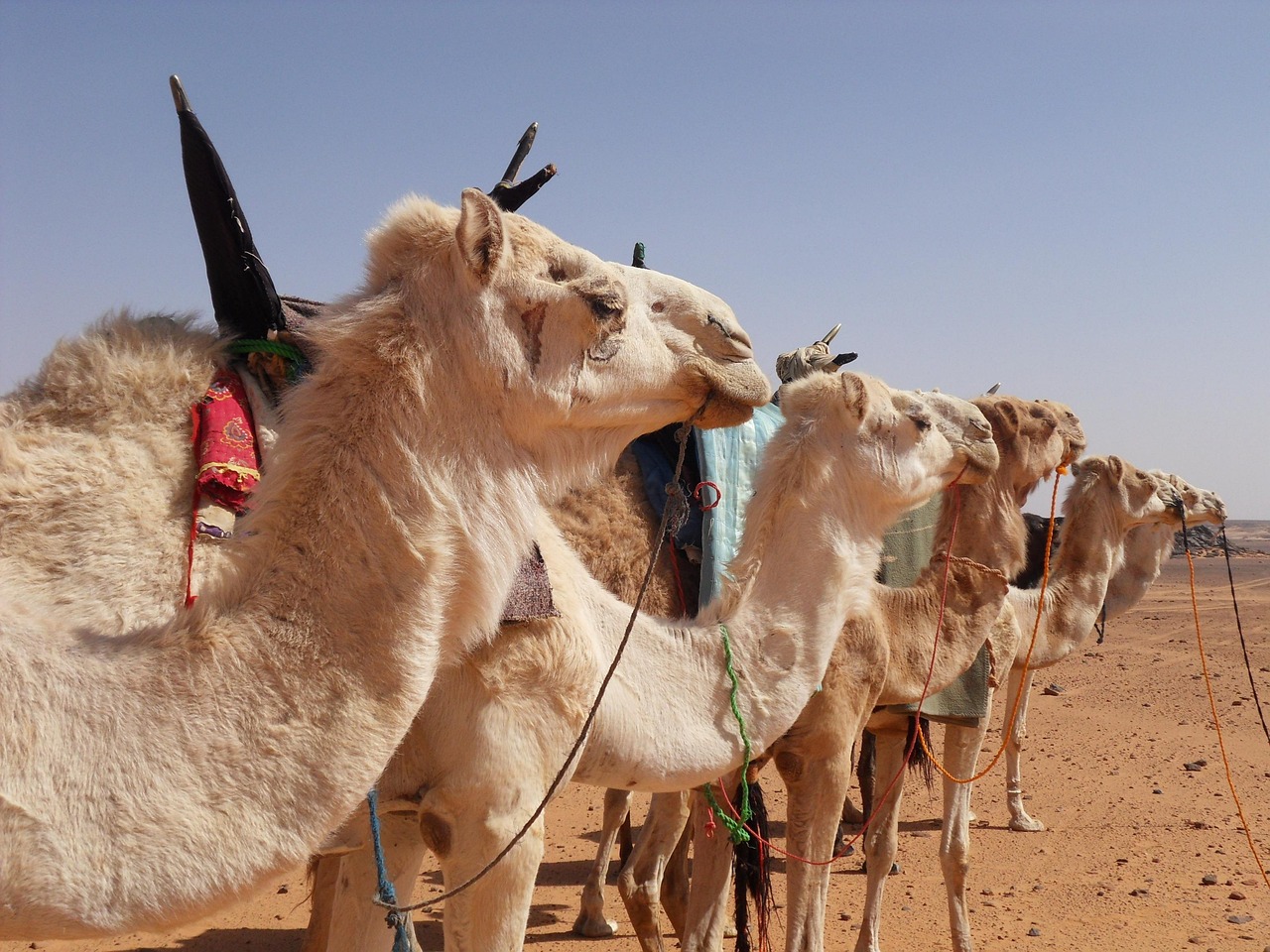
The old economy ran on the azalai, the salt caravans: camel trains a thousand strong swinging between the salt pans of Bilma and Taoudenni and the millet towns of the Sahel, weeks across the open tenere navigated by memory and stars. Salt bought grain, and the caravan masters’ knowledge was worth more than the cargo.
Around the trade lay the pastoral base: camels for prestige, transport, and milk, goats and sheep for the daily pot, herds moved between named pastures by season and negotiated right.
Society was ordered in ranks: the imajeghen warrior nobility, vassal herding tribes, religious ineslemen lineages, client artisans, and the iklan, the enslaved and their descendants, a hierarchy the modern era has legally abolished and socially not yet finished dismantling.
Raiding and protection were the nobles’ trade, tribute the desert’s tax system, and the drum group, the ettebel, was the state: the amenokal’s war drum summoned the confederation, and its possession was the constitution itself.
A caravan’s discipline was naval: watches kept, loads balanced to the kilo, wells rationed by rank, and the madugu, the caravan master, obeyed like a captain at sea; the tenere forgave nothing, and the old men who led triple crossings in a season are remembered by route the way admirals are by battles.
Matrilineal Descent Behind the Warriors’ Veil
Behind the warriors’ veil, Tuareg society runs through its women to a degree unique in the Muslim Sahara: descent and clan membership pass through the mother, the tent and its contents are the wife’s property, and divorce sends the husband home to his mother with his camel and little else.
Women own herds, hold and transmit the Tifinagh letters, preside over the evening ahal gatherings of music and courtship, and speak in council; the monodic songs and the tende mortar-drum are theirs, and a noblewoman’s opinion of a suitor’s poetry is a verdict.
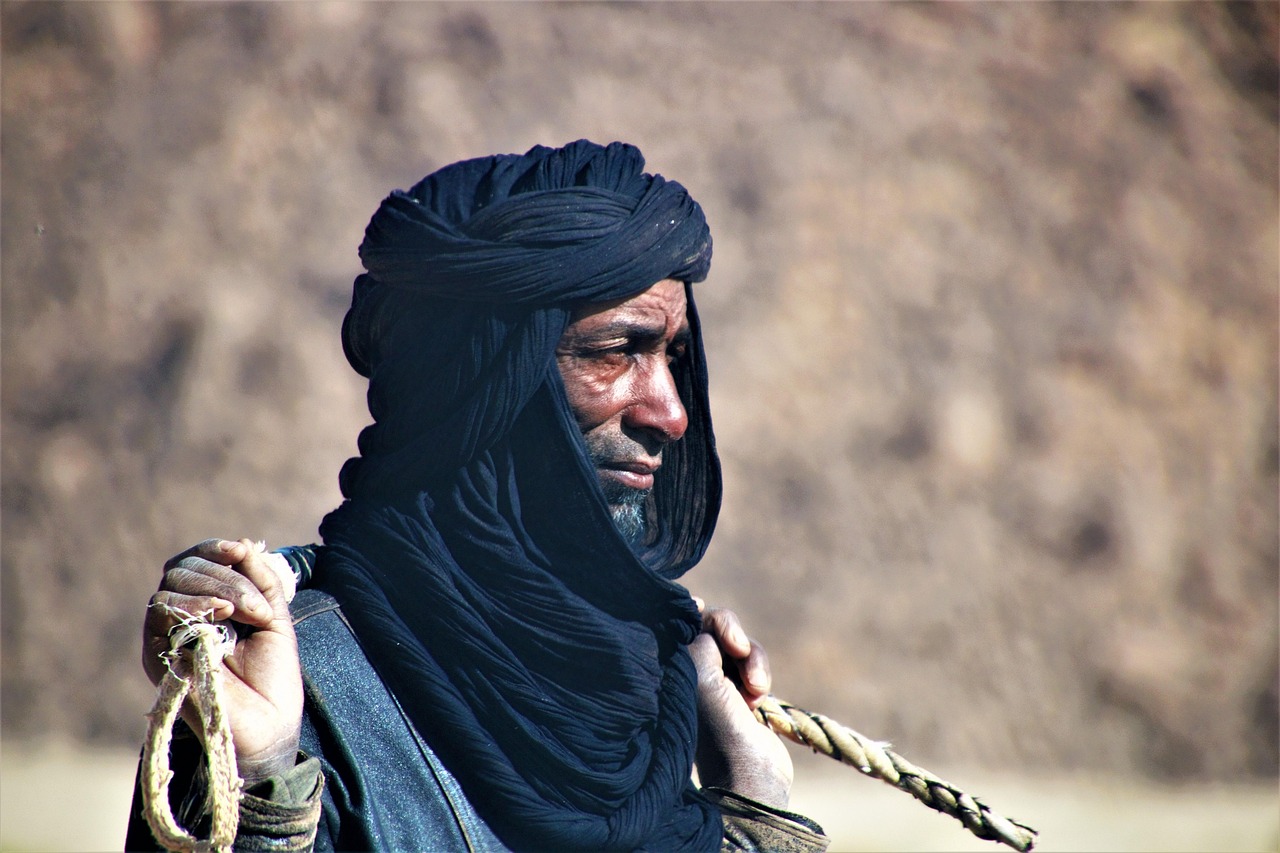
It is the men who veil: from adolescence the tagelmust wraps head and face, worn before elders, in-laws, and strangers, raised higher as respect deepens, a mobile architecture of reserve.
The cross-cousin marriage, the joking relationships between clans, and the elaborate greetings that can run minutes before news is exchanged complete a social order built for distances: kin must be recognizable, and honor portable, across five hundred kilometers of sand.
The ranks’ afterlife is the society’s hardest conversation: descendants of the iklan, the Bella and Buzu communities of the Sahel, assert their own histories within and against the Tuareg world, and the nation’s activists increasingly argue that the free people’s name must be earned by all of it being free.

Islam Carried Lightly on the Saddle
The Tuareg are Muslims of long standing, Islam having traveled the caravan routes with the traders and the ineslemen religious lineages who serve the camps as teachers, judges, and amulet makers; the Sufi orders of the Sahara wove the faith into the desert’s rhythms.
They carry it, as the saying goes, lightly on the saddle: prayer is kept where water allows, Ramadan bends to the herds’ needs, and the sharia of the towns has always negotiated with the customary law of the tents, especially where women’s freedoms are concerned.
The pre-Islamic substrate persists in the Kel Essuf, the spirits of the empty places, in divination and the evil eye, and in the protective amulets, leather-bound verses and silver, that hang on every neck and camel; the marabout who writes them is as essential as the smith who forges their cases.
Religious authority never unseated the drum groups: the ineslemen advised and arbitrated, but the amenokal ruled, and the balance between mosque and tent remains a Tuareg specialty, piety without surrender of custom.
The ineslemen tradition produced its own scholars and manuscript libraries, Tuareg hands copied and carried much of Timbuktu’s famous paper, and the desert’s Islam has repeatedly refused the jihadists’ version of itself, the camps’ verdict being that men who burn manuscripts and ban music understand neither God nor the desert.

The Tagelmust, Courtship Songs, and the Tende Drum
The tagelmust is the nation’s flag worn on the head: five meters of cloth, indigo for wealth, wound so that only the eyes show, marking manhood, respect, and distance from shame; a man adjusts it constantly, a semaphore of the social weather.
The ahal, the evening gathering of unmarried men and women with music, verse, and wit, is the desert’s courtly institution, presided over by women, where reputations in poetry are made and marriages seeded, a courtship culture that startled every Arab and European visitor who expected seclusion.
Poetry remains the highest art: praise songs, war epics, and love verse composed in Tamasheq meters, once accompanied by the imzad, the women’s one-stringed fiddle, whose revival schools in the Hoggar now rescue the instrument’s repertoire.
The camel completes the ceremonial register: the ilugan parade gallops at festivals, riders in full indigo racing past the drummers, remain the Tuareg image the whole Sahara recognizes.
Weddings gather the register entire: a week of tende drumming, races, and poetry, the bride’s tent raised by the women as the contract is sealed, indigo gifted by weight, and the couple’s new household inventoried in cushions, saddles, and silver before the whole camp as witness.

Silversmiths of the Cross and Workers of Leather
Tuareg craft belongs to the inadan, the smith caste, married into no other rank, feared a little and indispensable always: they forge the swords and camel saddles, carve the tent posts and bowls, work the leather cushions and saddlebags the women decorate, and serve besides as go-betweens, praise singers, and masters of ceremony.
Their signature is silver: the Cross of Agadez and its twenty-one sister crosses, one for each town of the Air, geometric pendants handed father to son with the blessing I give you the four corners of the world, because a man cannot know where he will die.
Women’s leatherwork answers the metal: dyed, fringed, and appliqued bags and cushions that are the tent’s furniture and the family’s shipped wealth, art designed to fold onto a camel.
The inadan now supply the world’s fair-trade counters and the tourist markets of Agadez and Tamanrasset, and Tuareg silver has gone global while its makers still hammer beside the forge their grandfathers carried on a donkey.
The inadan’s ambiguous rank, outside the noble hierarchy yet essential to it, gave them a jester’s license: they alone may tease an amenokal, demand gifts with songs, and speak the unspeakable at negotiations, the desert’s smiths doubling as its diplomats and press.
Milk, Millet, and Three Glasses of Tea
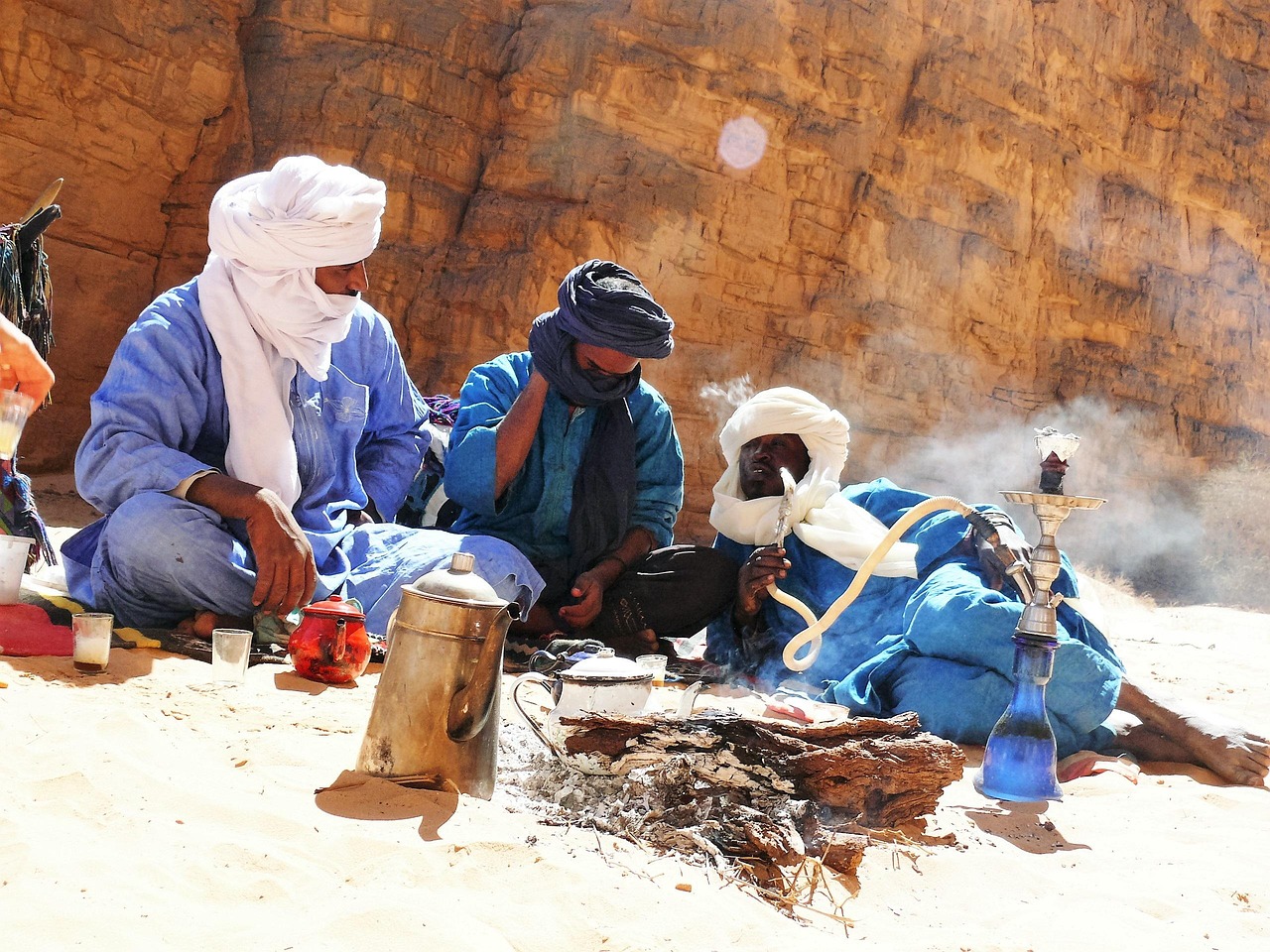
The desert table is austere and exact: camel and goat milk fresh or curdled as the daily base, millet porridge and taguella, the flatbread baked in the sand under coals, eaten from a common bowl with milk or a sauce of dried vegetables and, on occasions, meat.
Dates, cheese dried to stone for the road, and wild desert grains and fruits complete the pantry; meat is festival food, a slaughtered goat honoring a guest, a camel marking a marriage.
The ceremony is the tea: three glasses poured high and sweet from the enamel pot, the first bitter as life, the second sweet as love, the third gentle as death, an obligatory hour of hospitality no haste excuses.
Drought and settlement have added rice, macaroni, and the aid sack to the register, and town Tuareg eat as the Sahel eats; but a guest at any tent still gets the milk bowl first, the old law of the desert served cool.
Hospitality is jurisprudence: a stranger who has shared a tent’s milk is under its protection by law older than the states, and the worst name a lineage can earn is stingy, a verdict remembered for generations along the routes.
Cure Salee and the Festivals of the Nomads
The great gathering is the Cure Salee, the salt cure, each September at Ingall in Niger: the herds converge on the mineral springs after the rains, and with them the nation, weeks of camel races, ilugan parades, courtship, marriages, and the year’s news exchanged at the wells.
Festival culture has gone international without leaving the sand: the Festival au Desert near Timbuktu carried Tuareg guitar to the world until war exiled it, and the Sebeiba at Djanet, a masked drum ceremony a thousand years older than its explanations, still dances an ancient truce each year.
Islamic feasts are kept camp-style, Eid prayers on the open sand and a slaughtered animal shared down the ranks, and the mawlid brings the ineslemen lineages their season of recitation.
Every festival doubles as an economy: bride wealth negotiated, camels traded, silver commissioned, and the drum groups’ politics conducted in the shade, the desert’s parliament sitting wherever the herds gather.
At Ingall the modern states attend their nomads for a week, ministers and NGOs pitching tents beside the drum groups, and the Cure Salee’s mix of veterinary fair, election rally, and courtship season makes it the least boring government event in the Sahel.
Resistance, Borders, and the Rebellions of the Sahel
France conquered the Sahara last and hardest: the Tuareg destroyed the Flatters expedition in 1881, rose under Kaocen in 1916-17 in a revolt that besieged Agadez for months, and were broken by artillery, hostage-taking, and the confiscation of herds; the confederations were decapitated and the drums silenced by decree.
Independence in 1960 delivered the nation to five new states and none of its own: borders cut the pasture cycles, southern governments distrusted the nomads, and the droughts of the 1970s and 80s destroyed the herding base while aid flowed elsewhere.
The ishumar generation, drought exiles working Libya’s oil towns, came home with guitars and Kalashnikovs: rebellions in Mali and Niger in the 1990s, again in 2007-09, and in 2012 the MNLA’s seizure of northern Mali, a Tuareg state of Azawad declared and then hijacked within months by jihadist movements the rebels could not control.
Peace accords, decentralization, and integration of fighters have alternated with new wars since; the Tuareg question, autonomy, dignity, and a share of the desert’s uranium and routes, remains the Sahel’s oldest unfinished file.
Kaocen’s revolt and the earlier defeat of Flatters are sung as the resistance’s classical age, and the colonial archive returns the compliment: French officers’ memoirs describe the Tuareg with the fascinated respect of men who had conquered everything except the desert’s opinion of them.
Blue Men on Motorbikes in a Divided Desert
Perhaps three million Tuareg live across Niger, Mali, Algeria, Libya, and Burkina Faso, with Niger’s Air region and Mali’s Kidal the demographic hearts; diaspora communities trade and study from Nouakchott to Paris, and exile is now a Tuareg profession with generations of seniority.
The herds and caravans persist at reduced scale, the Bilma azalai still runs with camels beside the trucks, while the young ride motorbikes between wells, guide tourists where security allows, and dig in the artisanal gold fields that have replaced raiding as the desert’s quick fortune.
Tuareg guitar has become the nation’s embassy: Tinariwen, founded in the rebel camps, carried the desert blues to Grammy stages, and a generation of bands after them sings the tenere into headphones worldwide, the ahal gone electric.
The Sahel’s wars grind on around them, jihadists, juntas, mercenaries, and drones crossing the old caravan country, and the Tuareg navigate as they always have, by kinship and horizon; the veil still goes up, the tea still pours three times, and the free people still call themselves free.
Climate presses the old question in new form, the Sahel’s rains failing southward as the desert’s edge moves, and Tuareg herding knowledge now consults for adaptation programs; the people who managed the last great drying of the Sahara find themselves professionally relevant to the next one.
Related Peoples of the Region
More Peoples of the World
You May Like
The Zaza, a Mountain People of Eastern Anatolia


2 thoughts on “Tuareg of the Central Sahara and Their Veiled Nation of the Free”