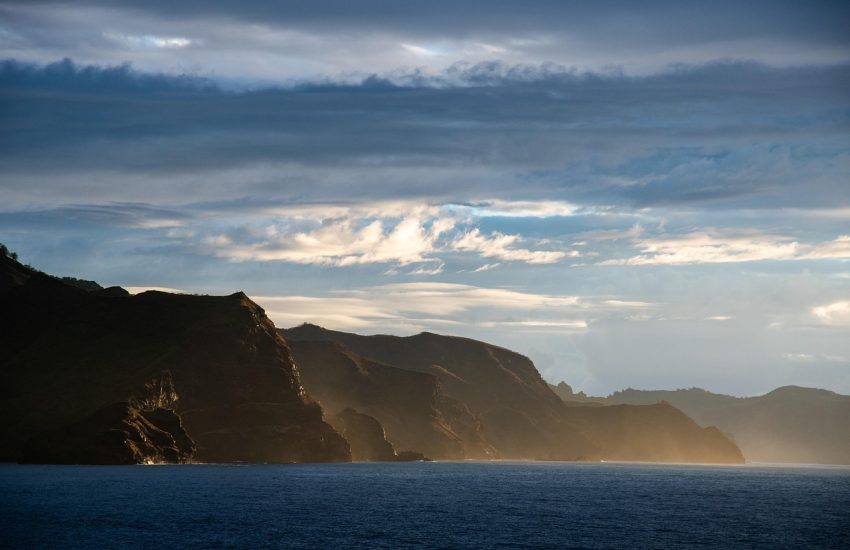
In the western Carolines lies the island that taught economics what money is: limestone discs quarried four hundred kilometers away in Palau, sailed home on rafts, and banked forever along village paths where everyone knows each stone’s story. The Yapese built the Pacific’s most elaborately ranked society, ran a tribute empire of atolls by canoe, and wrote their chiefs into a modern constitution, making Yap the most tradition-fast state in Micronesia.
This portrait follows the people of Waab: a language on its own branch of the Oceanic family, the rai money and the sawei tribute sea, villages ranked like treaties and councils of chiefs with constitutional power, the standing dances that archive history, taro patch etiquette and the betel basket, and a state that examined the modern world’s offers and accepted them selectively.
Contents
- First Settlers of the Western Carolines
- Waab Behind the Map Name Yap
- Yapese, an Island Apart in Its Own Family
- Four High Islands and an Empire of Atolls
- Stone Money Voyages and the Sawei Tribute Sea
- Villages in Rank and the Council of Chiefs
- Spirits, Taboo, and the Late-Arriving Missions
- Standing Dances, Betel, and the Grass Skirt Kept
- Rai Carvers, Canoe Wrights, and the Woven Wealth
- Taro Patch Etiquette and the Reef’s Portion
- Yap Day and the Dances That Rank the Villages
- Empires by Purchase and the Money That Stayed
- The Most Traditional State of Micronesia
First Settlers of the Western Carolines
Yap was settled early, likely more than three thousand years ago, and not from the direction its neighbors were: its language descends from an old branch of Oceanic distinct from the Chuukic chain around it, evidence of a separate ancient arrival in the western Carolines.
On four clustered high islands the settlers built a landscape of engineering: stone-paved paths still thread the villages, taro patches terrace the valleys, and the stone platforms of houses and meeting houses rank the shoreline, works whose age the Yapese count in named generations.
Yap’s reach grew with its seamanship: the outer atolls for a thousand kilometers eastward entered the sawei system, the tribute-and-protection exchange that made Yap the metropole of the coral islands, the longest-running maritime polity in the Pacific’s record.
Oral tradition and archaeology agree the essentials: a deep, layered occupation, contact with Palau to the southwest, source of the famous stone money, and a society that was already old, ranked, and networked when the first European sails crossed its reef.
The linguists’ verdict, Yapese alone on its branch, matches the archaeologists’ early dates and the traditions of separate origin, and Yap’s position at the crossroads of Palau, the Marianas, and the Chuukic atolls made it a hinge of the western Pacific long before the stone money voyages made the connection famous.

Waab Behind the Map Name Yap
The Yapese call their homeland Waab; Yap is what survived of that name in visitors’ mouths and on Spanish charts. Both names now serve, Waab in oratory and Yap on the flag of the state.
The state’s emblem is unmistakable: a rai stone money disc flanked by a canoe, the two objects that carried Yap’s name around the world, and the state flag’s white outrigger on blue says the rest.
Yap Proper’s people distinguish themselves from the Outer Islanders of the state’s atolls, Ulithians, Woleaians, Satawalese, Chuukic-speaking peoples with their own proud navigator traditions, joined to Waab by the old sawei and the modern statehouse.
Within the Federated States of Micronesia, Yap is the western star of the four on the national flag, and its reputation is fixed regionwide: the state where custom holds strongest, and where the chiefs’ word still stands beside the written law.

Yapese, an Island Apart in Its Own Family
Yapese is an Oceanic language that fits no neat box: it stands apart from the Chuukic languages of its own state’s atolls and from Palauan and Chamorro to its west, usually classed alone on its own branch, the linguistic signature of Yap’s separate settlement.
Its sound system is among the richest in Micronesia, glottalized consonants that trip outsiders, and its counting and respect registers carry the society’s rank consciousness into grammar.
The state is bilingual by necessity: Yapese on the high islands, the Chuukic tongues of Ulithi, Woleai, and Satawal in the outer islands, English between them and in school; radio and church print serve all of them.
Yapese remains the language of village council and home for its several thousand speakers, healthy though small, and the state’s culture office records chants and place names with the urgency small languages teach.
The state’s two-language reality is managed with Yapese pragmatism: legislature interpreters, church services doubled, and schoolchildren who switch mid-sentence, while the culture office’s recordings preserve the chant registers that only ceremony now employs.
Four High Islands and an Empire of Atolls
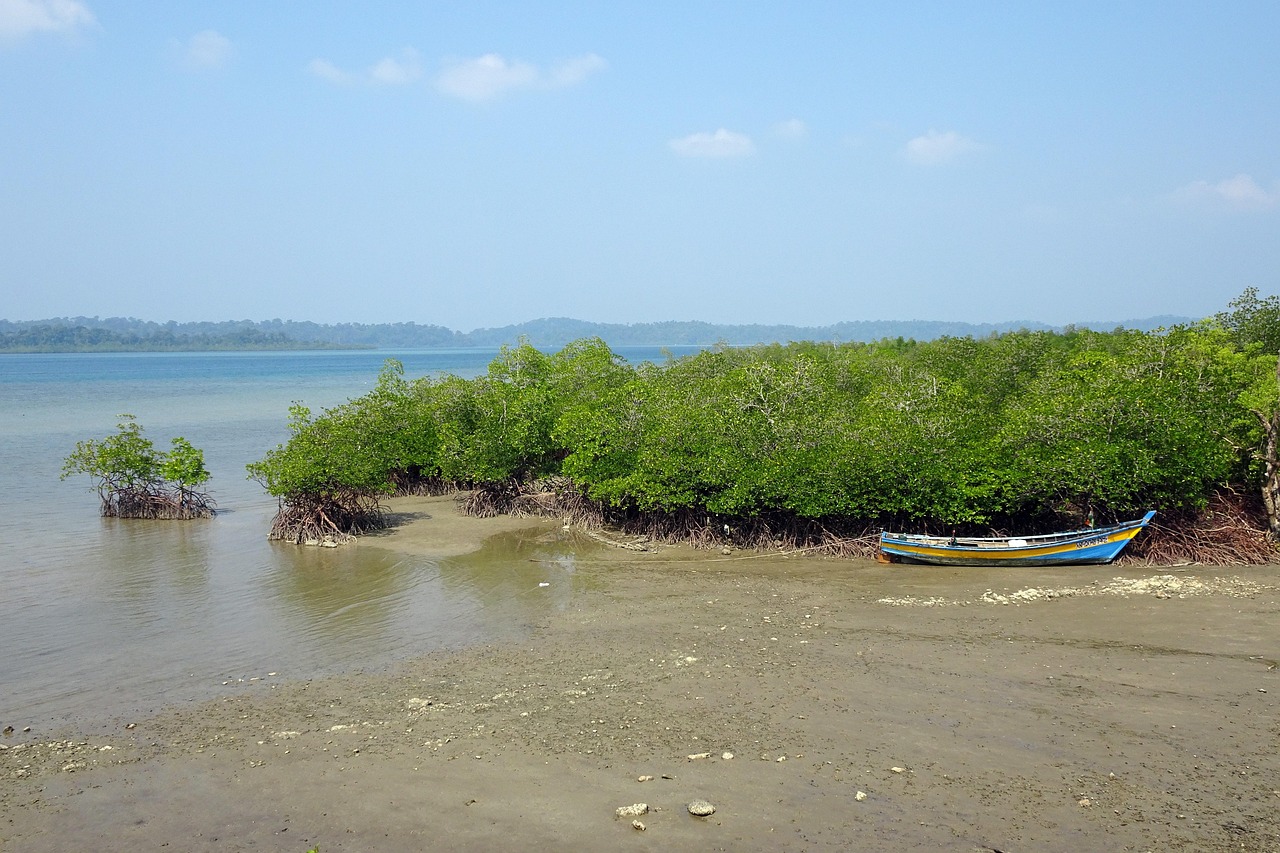
Yap Proper is four high islands stitched together by bridges and reef, Yap, Gagil-Tomil, Maap, and Rumung, rolling green hills rather than volcanic peaks, ringed by mangrove and a barrier reef, with Colonia the small capital on the central lagoon.
The state spreads east across a thousand kilometers of ocean: Ulithi’s huge atoll, wartime anchorage of the American fleet, Fais’s raised phosphate island, Woleai, Lamotrek, and Satawal, home of the master navigators, fifteen inhabited outer islands in all.
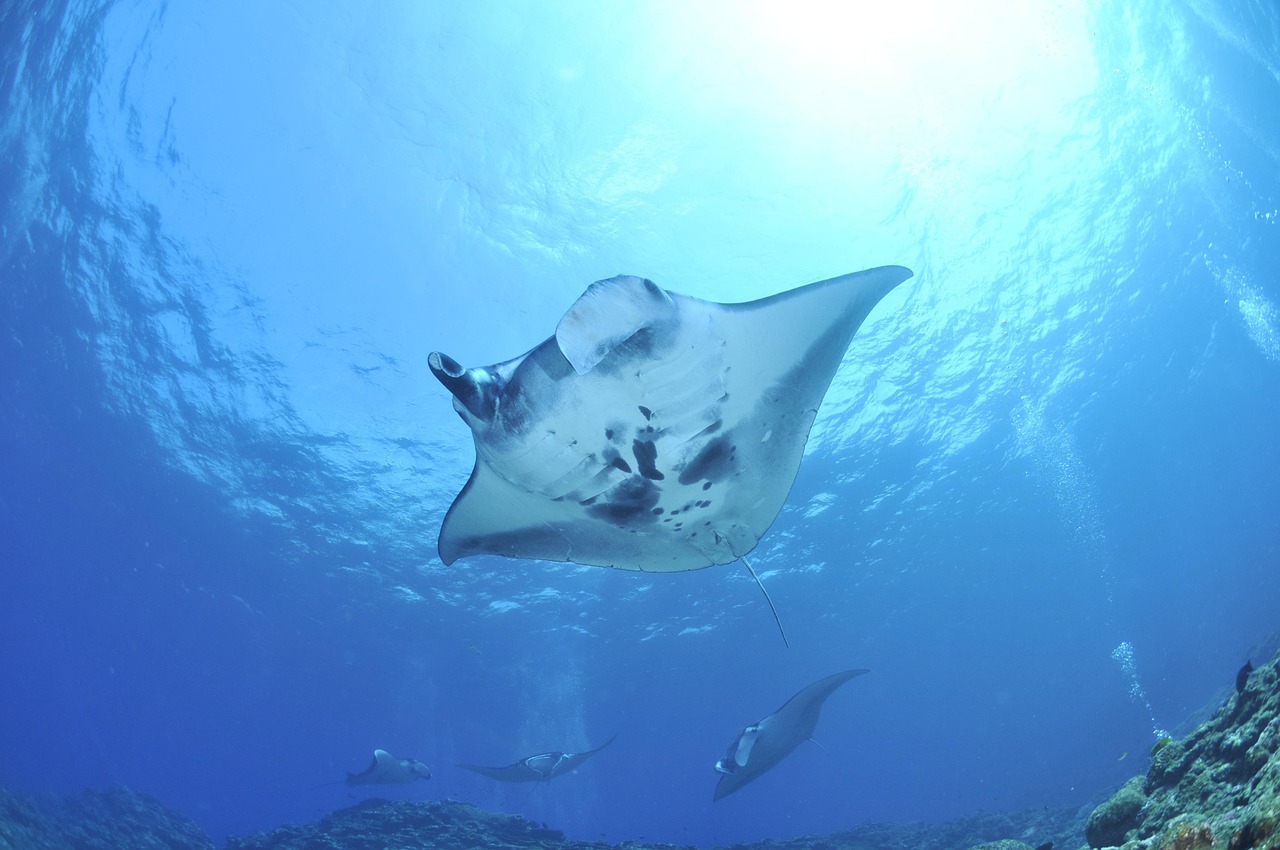
The channels are the wildlife draw: resident manta rays circle cleaning stations in Mi’il and Goofnuw, and Yap’s reefs, seagrass, and mangroves remain among Micronesia’s healthiest, guarded by customary marine tenure that predates every conservation acronym.
Typhoons cross the state’s sea like scheduled tests, and the outer islands’ low profiles put them on the climate frontline; the sawei’s old logic, high island sheltering low, is being rewritten as state disaster policy.
Ulithi’s war chapter deserves its line: for months in 1944-45 the atoll’s lagoon held more ships than any port on earth, a fleet city of fifteen thousand vessels’ calls, and its people, relocated for the duration, returned to an atoll that had hosted history and kept its custom anyway.

Stone Money Voyages and the Sawei Tribute Sea
Yap’s fame rests on the strangest money in economic history: rai, limestone discs quarried in Palau, four hundred kilometers away, and sailed home on rafts and canoes, some pieces taller than a man. A stone’s value counted its size, its stone, and its story, who quarried it, who died bringing it, and the great discs leaning along village paths were wealth no one needed to move.
Ownership traveled by word: a rai could change hands, dowries, apologies, alliances, while never leaving its path-side berth, and one famous stone, sunk at sea in transit, remained good money for generations because everyone agreed it existed. Economists cite Yap when explaining what money actually is.
Beneath the money ran the sawei: the outer atolls sent woven cloth, sennit, and shells up the chain to Gagil’s chiefs and received food, timber, and typhoon refuge in return, a tribute empire administered by canoe and genealogy for centuries.
Village life ran on rank and works: paved paths, stone fish weirs, the great faluw men’s houses on the shore and the pebaey meeting houses inland, and the taro terraces whose upkeep was the measure of a village’s order.
The money’s economics still astonish: rai appreciated with age and provenance like art, debts settled in fractions of a named stone, and the arrival of O’Keefe, the American trader who mass-shipped rai with iron tools and a schooner in the 1870s, produced history’s clearest case of monetary inflation by technology, new money too easily made was worth less, and the old stones held their premium.
Villages in Rank and the Council of Chiefs
Yapese society is the Pacific’s most elaborately ranked: every village holds a rank in a hierarchy of named classes, high villages speaking for low in the councils, and the paths of exchange between them, tha’, are remembered like treaties.
Two great chiefly councils crown the system, and the modern state constitution seats them formally: the Council of Pilung for Yap Proper and the Council of Tamol for the outer islands, with power to review legislation touching custom, chiefs as a constitutional chamber.
Land and sea tenure run through estates: named house foundations carry rights and titles, reef sections belong to villages, and the state’s courts share the field with village settlements that most Yapese prefer.
The system’s discipline is verbal: rank governs who speaks, apologizes, and accepts, and the machib, the formal apology with gifts, still closes conflicts the modern law never hears about.
Anthropologists made Yap a classic case study, of rank, of land-persons, of the demography of a declining and recovering island, and Yapese reviewers have corrected them for a century, the society examining its examiners with the same rank-conscious care it applies to everything.
Spirits, Taboo, and the Late-Arriving Missions
Old Yap’s cosmos ran on ancestor ghosts, place spirits, and the great tale of Yalafath the sky father; taboo ordered rank, gender, and the calendar, and specialist magicians held weather, war, and healing as estate property.
The machi priests read omens and kept sacred precincts whose stone platforms still stand in the villages, respected and largely left alone, and the old eating and menstrual taboos structured daily life into living memory.
Missions arrived late by Pacific standards, Spanish Capuchins in the 1880s, and conversion moved slowly and incompletely for decades; Yap today is Catholic in the main, with the church’s calendar folded into village rank rather than replacing it.
The result is Micronesia’s most visible religious layering: Mass in the morning, a chiefly council under the meeting house in the afternoon, and the old sacred sites honored with distance, a settlement between faiths that Yap negotiated on its own terms.
Yap’s late conversion preserved what early mission fires elsewhere consumed: the sacred platforms, the dance texts, the taboo vocabulary, all crossed into the Catholic era intact enough to study and, more importantly, to use.

Standing Dances, Betel, and the Grass Skirt Kept
Yap keeps what neighbors relinquished: grass skirts and thu’ loincloths remain ordinary ceremonial dress, not costume, betel nut stains every conversation, and a basket of chewing kit under the arm is the island’s briefcase.
The dances are the archive: bamboo dances clashing staves in precision lines, the standing and sitting dances whose chanted texts carry history village by village, each dance owned, performed by right, and exchanged between villages like the valuables they are.
Custom regulates entry itself: a visitor crossing a village asks leave, a leafy branch carried in hand signals peaceful passage, and the paths’ etiquette, who walks where, who greets first, is taught with the alphabet.
Rites of passage, first birth ceremonies, mourning exchanges, chiefly installations, run on the tha’ paths with mats, shell valuables, and rai moving in the old directions, the stone money still doing its quiet ceremonial work.
The tattoo revival draws on the old full-body styles the German ethnographers photographed, and a Yap Day arm bearing the traditional patterns beside a rosary tattoo summarizes the island’s settlement with the centuries in one image.
Rai Carvers, Canoe Wrights, and the Woven Wealth
The rai carvers’ craft was quarrying at expedition scale: crews lived months in Palau’s caves cutting discs with shell and later iron tools, hauled them to rafts through the Rock Islands, and sailed them home across four hundred kilometers of open water, the most labor-priced currency ever minted.
Canoe building remains a living lineage art: the state’s outer islands launch true voyaging canoes, and Satawal’s builders and navigators, Mau Piailug the most famous, taught the Hawaiian renaissance its star courses, Yap State’s gift to the whole Pacific revival.
Weaving is the daily register: lavalava cloth on backstrap looms in the outer islands, hibiscus and grass skirts layered like tapestry, pandanus sails once and mats always, with shell belts and necklaces as the fine wealth of exchanges.
The men’s houses’ architecture, high-prowed roofs on stone platforms, remains the building craft’s summit, raised by village labor under master builders, and every restoration is a curriculum in lashing, thatch, and rank.
The navigators’ school at Satawal remains the state’s proudest export: pwo initiations have resumed, students from across the Pacific sit its star compass sessions, and the state’s canoe festival launches hulls whose lines Mau Piailug would recognize at a glance.
Taro Patch Etiquette and the Reef’s Portion
Yap eats from the taro patch and the reef: swamp taro from terraced patches tended with inherited etiquette, breadfruit and yam in season, bananas and coconut everywhere, and the lagoon’s fish taken by right of village reef.
Meals carry rank’s fingerprints: certain fish and portions belong to chiefs, food from the wrong hands once could not be eaten, and feast distributions still follow the paths that carry all Yapese exchange.
The outer islands add the atoll pantry, preserved breadfruit, pandanus, and the tuna runs, and Colonia’s stores add the imported shelf with its familiar regional costs.
Betel closes every meal and opens every meeting, lime and pepper leaf in the basket, and offering the basket is Yap’s handshake; declining well is a skill visitors learn early.
The taro patch is women’s titled domain here as in Palau, plots named and inherited, and a village’s patches’ condition is read as its moral report card, weeds being a matter for comment in council.
Yap Day and the Dances That Rank the Villages
Yap Day, the first of March, is the state’s great stage: two days of dances performed by village right, tattoo and craft demonstrations, canoe launches, and the young in full ceremonial dress, an annual public examination of custom that villages prepare for months.
The dances exchanged at Yap Day carry politics: a village granted another’s dance receives an honor and a debt, and the councils’ seating at the festival maps the whole rank order for anyone who can read it.
Homecoming and church feasts, first communions at village scale, the outer islands’ own canoe festivals, and the FSM’s national days fill the rest of the calendar, each with its mat-and-basket exchanges.
Sport adds its modern register, but even the state track meet opens with chiefs, betel, and protocol; on Yap the festival and the constitution are visibly the same machinery.
Yap Day’s origins as a trust-territory holiday have been thoroughly digested: the villages took the date and filled it with the rank system’s own content, the colonial calendar colonized in return.

Empires by Purchase and the Money That Stayed
Spain claimed Yap and was bought out by Germany in 1899; the German decade cut copra roads and, in the famous episode, tried to tax the stone money by painting claim marks on the rai, teaching economists that a currency’s ledger lives in people, not objects.
Japan’s thirty years made Yap a fortified backwater; the war’s great events happened offshore, Ulithi’s lagoon becoming the US Navy’s vast forward anchorage in 1944, while Yap Proper was bypassed and bombed lightly, its stone money surviving where Palau’s quarries had already closed.
The American trusteeship brought schools and slow change to the Pacific’s most custom-fast island; Yap joined the Federated States of Micronesia at its founding, its chiefs writing their councils into the state constitution as a condition of the modern.
The compact era’s migrations touched Yap least of the four states, and its history since is the quiet kind: custom adjudicated, reefs defended, and the councils reviewing legislation beside an elected legislature, the old dual government running in daylight.
The German tax episode is retold with relish: the painted marks changed nothing, ownership living in village memory, and when the administration relented, the paint wore off the stones as the claim had worn off the ledger, a parable Yap lends every monetary economist who visits.
The Most Traditional State of Micronesia
Yap State counts around 11,000 residents, Yap Proper’s villages and the outer atolls together, with a modest diaspora on Guam, in Hawai’i, and the U.S. mainland under the compact; it remains the FSM’s least emigrated and most custom-governed state.
The economy is small and deliberate: fishing licenses, a boutique dive tourism built on the mantas and the stone money villages, government employment, and the perennial debate over how much development Yap wants, a Chinese resort mega-proposal was examined and largely rebuffed by the councils and villages in the 2010s.
Climate policy runs through custom: village marine tenure anchors conservation areas, the outer islands drill wells and raise houses against the tides, and typhoon response still moves along sawei lines, canoe solidarity with satellite phones.
Yap enters the century as the Pacific’s standing demonstration that custom and constitution can share one island: the rai still lean along the paths with their owners known, the councils still read the legislature’s bills, the navigators still teach the stars, and Waab remains, by its own steady choice, itself.
The mantas and the money now share the brochure, and Yap’s tourism pitch is its restraint: a few hundred beds, village permission built into every dive site, and the promise, kept so far, that Waab will not sell what makes it Waab.

Related Peoples of the Region
- Rapa Nui People of Easter Island and Their Ancestors Carved in Stone
- Marshallese Wave Pilots of the Coral Atolls and Their Two Meters Above the Sea
- I-Kiribati of the Equatorial Atolls and Their Republic of the Maneaba
- Palauans of the Rock Islands and Their Republic Ruled by Clans and the Sea
- Chuukese People of the Great Lagoon and Their World of Breadfruit and Ghost Ships
- Tuvaluans of the Nine Atolls and Their Nation That Refuses to Sink
- Cook Islands Maori of Rarotonga and the Fifteen Islands That Launched Aotearoa
- Nauruans of the Lone Phosphate Rock and Their Nation That Counted Itself Back