In the folded green valleys and dry highland basins of southern Mexico, a people has been farming, weaving, building, and speaking the same family of languages for roughly two and a half thousand years. They call themselves Be’ena’a, “the people,” though most of the world knows them by a name given to them by outsiders: Zapotec. Long before Spanish ships reached the Gulf coast, and long before the Aztec empire rose to dominate central Mexico, Zapotec builders had already raised one of the first true cities in the Americas atop a leveled mountain called Monte Alban, and their descendants still live across the state of Oaxaca today, from the Central Valleys to the Isthmus of Tehuantepec to the rugged northern sierra.
What makes the Zapotec story remarkable is not simply its age but its continuity. Empires rose around them, a colonial order was imposed upon them, and a modern Mexican state absorbed their territory into its map, yet somewhere close to half a million people still speak a Zapotec language at home, and Zapotec communities still govern many of their own towns through assemblies rooted in pre-Hispanic custom. This is not a people frozen in the past. It is a living, adapting nation within a nation, one that has produced one of Mexico’s most consequential historical figures, a former president, while also keeping alive artisan traditions, culinary techniques, and religious practices that reach back well before recorded history.
This article traces that long arc in thirteen parts: the Zapotec origins, the meaning of their name, the language they still speak in dozens of variants, the homeland that shaped them, their old way of life, the structure of their society, their religious world, their traditions, their crafts, their food, their festivals, their history, and where the Zapotec stand today.
- Origins
- Name
- Language
- Homeland
- Old way of life
- Society
- Religion
- Traditions
- Crafts
- Food
- Festivals
- History
- Today
Origins
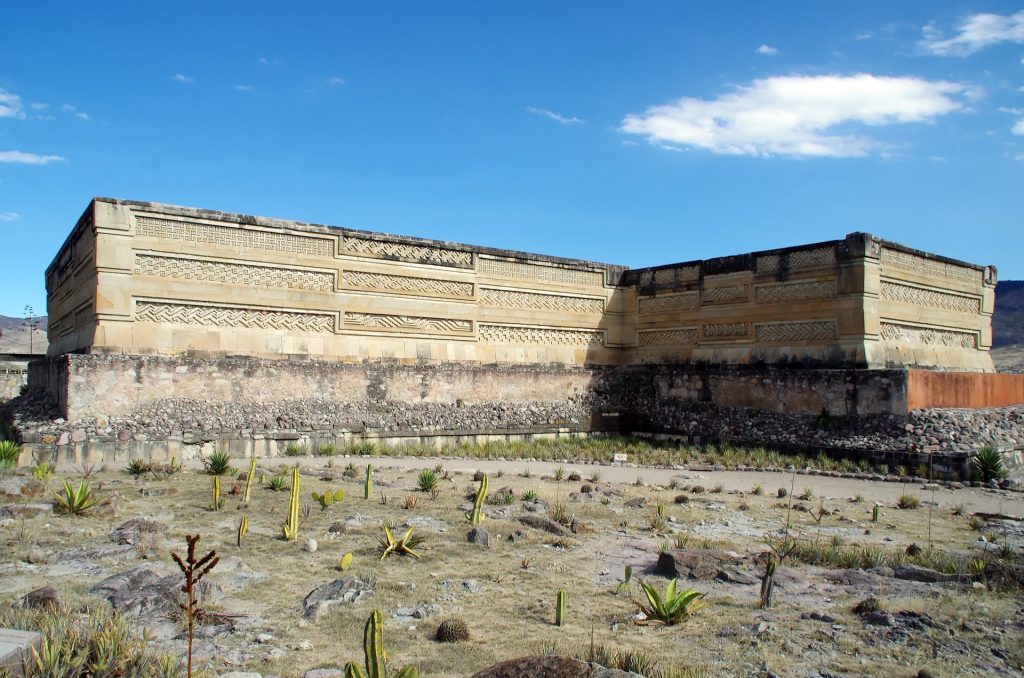
Archaeologists trace the beginnings of Zapotec civilization to around 700 BCE, when scattered farming villages in the Oaxaca Valley began to consolidate into larger settlements. By 500 BCE, a remarkable decision was made: rather than expand any one existing village, three rival communities apparently agreed to build a new capital together on a mountaintop rising nearly 1,300 feet above the valley floor. That site became Monte Alban, and its founding is often cited as one of the earliest examples of a planned political capital anywhere in the ancient Americas.
Monte Alban grew for over a thousand years, eventually housing tens of thousands of residents at its height and serving as the political, religious, and economic center of a Zapotec state that extended influence across much of what is now Oaxaca. Its builders carved the earliest known writing system in Mesoamerica into stone monuments, developed a sophisticated calendar, and tracked astronomical cycles with an accuracy that still impresses researchers today.
Zapotec oral tradition offers its own account of origins, one that does not always match the archaeological timeline but carries its own deep truth. Many Zapotec communities have long described their ancestors as having emerged directly from the earth, from caves, or from trees, rather than having migrated from elsewhere the way many other Mesoamerican peoples describe their own beginnings. This self-conception, of being native to the land in the most literal sense, has remained a source of identity for Zapotec people through every subsequent upheaval.
By the time the Aztec empire began expanding into Oaxaca in the 15th century, the Zapotec state was already ancient by the standards of central Mexico. Aztec forces clashed repeatedly with Zapotec rulers, most famously around the fortress of Guiengola near present-day Tehuantepec, and while tribute relationships were sometimes established, Zapotec territory was never fully absorbed into the Aztec empire the way many neighboring regions were.
What Does Zapotec Mean
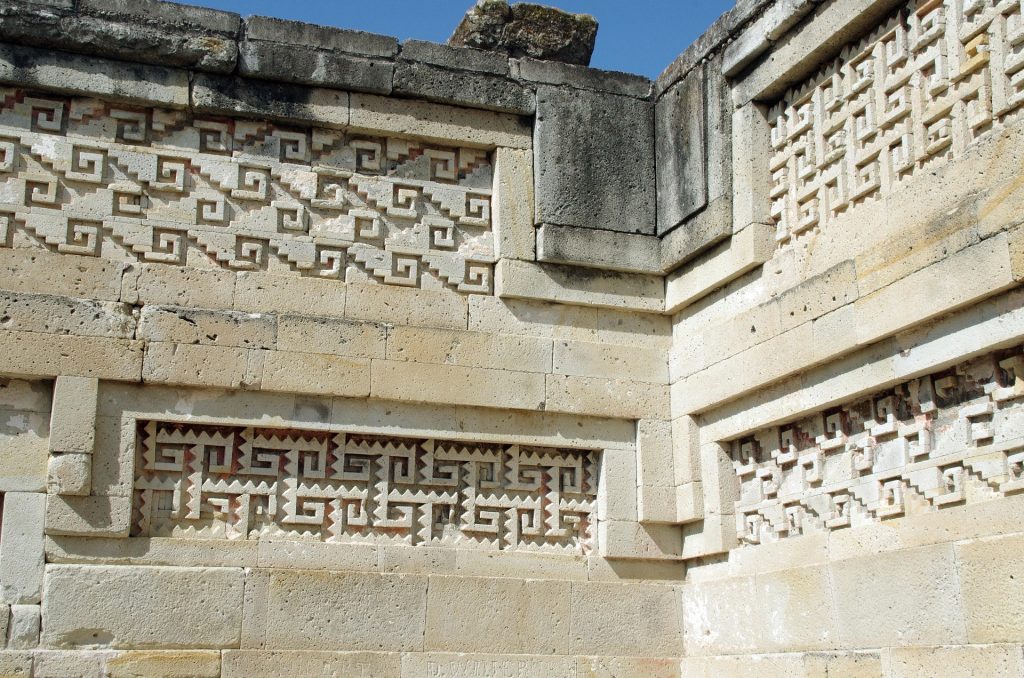
The word “Zapotec” did not originate with the people it names. It comes from the Nahuatl word tzapotecatl, meaning roughly “people of the place of sapote,” a reference to the sapote fruit trees the Aztecs associated with the region. Like so many ethnonyms across the Americas, it was a label applied by outsiders and later adopted into Spanish and eventually into English, rather than a term the people themselves originally used to describe their own identity.
In their own languages, Zapotec communities generally refer to themselves as Be’ena’a or close variants of it, a phrase that translates simply to “the people” or “the true people.” This pattern, in which a group’s internal name for itself is a modest, almost universal phrase while outsiders use a more specific and sometimes exoticizing label, appears again and again among Indigenous nations of the Americas, and the Zapotec case is a clear example of it.
Because Zapotec identity was never centralized under one single ruler or one single town, the name also conceals considerable internal diversity. A resident of the Isthmus of Tehuantepec and a resident of the northern Sierra Norte might both be called Zapotec by outsiders, yet historically they were part of distinct political communities with their own rulers, their own dialects, and their own local customs, unified more by shared language roots and cultural practices than by any single government.
Today, many communities have begun publicly foregrounding their own local names alongside or instead of the externally imposed label, part of a broader movement across Oaxaca to reclaim Indigenous terminology in official documents, road signs, and school curricula.
A Language Family, Not One Language
One of the most striking facts about Zapotec is that it is not a single language at all but a family of related languages, comparable in its internal diversity to the Romance languages of Europe. Linguists count somewhere between forty and sixty distinct Zapotec variants, some of them mutually unintelligible, spoken across the mountains and valleys of Oaxaca. Mexico’s National Institute of Indigenous Languages recognizes dozens of these as separate languages in their own right, not mere dialects of one another.
Zapotec belongs to the Oto-Manguean language family, one of the oldest and most diverse language families in the Americas, and it is a tonal language, meaning that pitch changes the meaning of a word much as they do in Mandarin or Vietnamese. This tonal complexity, combined with the sheer number of variants, has made Zapotec languages a rich subject for linguistic research, and several universities in the United States and Mexico maintain ongoing documentation projects for lesser-known variants that have only a few thousand speakers remaining.
Census figures suggest that around 400,000 to 500,000 people in Mexico still speak a Zapotec language, making it one of the most widely spoken Indigenous language families in the country, trailing only Nahuatl, Maya, and Mixtec in total speaker numbers. Speaker communities are concentrated in Oaxaca but extend into Zapotec migrant communities in Mexico City, Los Angeles, and other cities where economic migration has taken families over the past several decades.
Efforts to keep the language alive include bilingual education programs in parts of rural Oaxaca, Zapotec-language radio broadcasts, and a growing body of literature written directly in Zapotec variants rather than translated from Spanish. Still, UNESCO classifies several Zapotec variants as endangered or severely endangered, and community organizers describe language transmission to children as one of the most urgent challenges facing Zapotec towns today.
The Land That Shaped Them

Zapotec homeland spans three principal regions of Oaxaca, each with a distinct geography and, correspondingly, a distinct cultural flavor. The Central Valleys, where Monte Alban and the modern city of Oaxaca de Juarez sit, form a relatively fertile basin surrounded by mountains, historically the political heartland of Zapotec civilization. The Sierra Norte and Sierra Sur are steep, forested mountain ranges where isolated communities developed distinct local customs shaped by terrain that made travel between towns genuinely difficult. The Isthmus of Tehuantepec, a hot lowland corridor between the Gulf of Mexico and the Pacific, produced its own distinctly matriarchal Zapotec culture centered on towns like Juchitan.
This geographic diversity is not incidental to Zapotec identity, it is central to it. Because travel between mountain valleys was slow and difficult before modern roads, Zapotec communities developed strong, semi-independent local identities even while sharing broad cultural and linguistic roots. A Zapotec town in the Sierra Norte might have more in common linguistically with a town many valleys away than with a Zapotec town just a day’s walk over a mountain ridge, simply because of which ancient migration and settlement patterns reached which valley first.
The Oaxaca Valley’s natural features also directly shaped the ancient economy. Reliable seasonal rains supported maize agriculture, while the surrounding hills provided access to obsidian, and later routes connected Zapotec territory to Gulf coast trade networks that brought cacao, feathers, and other prestige goods into the valley. Hierve el Agua, a striking site of petrified mineral waterfalls formed by calcified spring water, sits within traditional Zapotec territory and was used in antiquity for irrigation engineering, evidence of sophisticated water management dating back over two thousand years.
Today, the state of Oaxaca remains one of the most biodiverse and topographically varied states in Mexico, and Zapotec communities are distributed across nearly all of its distinct ecological zones, from cool pine-oak forest in the highlands to hot, dry scrubland in the isthmus.
Life Before the Conquest
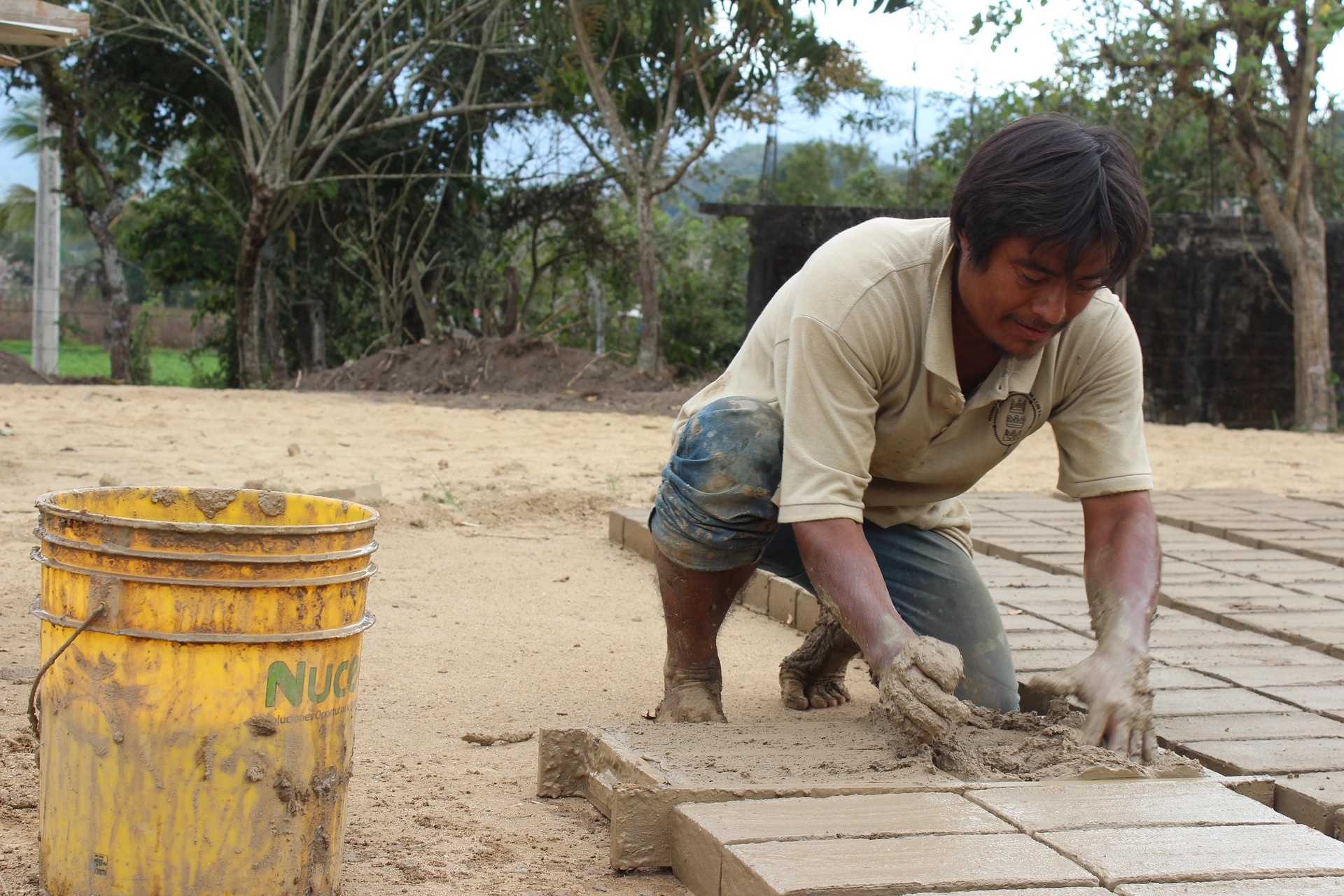
Long before Spanish contact, Zapotec daily life centered on maize agriculture supplemented by beans, squash, chili peppers, and a wide variety of local fruits, following a farming calendar that dictated much of the yearly rhythm of village life. Terracing and irrigation canals allowed farmers to work steep hillsides that would otherwise have been unsuitable for cultivation, and archaeological surveys have identified extensive networks of ancient agricultural terraces still visible in the hills around the Central Valleys.
Households typically organized around extended family compounds, with multiple generations living in close proximity and sharing labor for planting, harvest, and craft production. Cotton and maguey fiber were spun and woven into cloth, pottery was shaped and fired for both everyday use and ceremonial purposes, and specialized artisans produced the finely worked jade, shell, and greenstone ornaments that have been recovered from elite burials at Monte Alban.
Markets played a central economic role, much as they still do in Oaxaca today. Periodic market days rotated among towns, allowing goods, information, and social ties to circulate across the region even in the absence of a unified currency, with cacao beans and cotton cloth often serving informal exchange functions. This market rhythm, in which different towns host their principal market on different fixed days of the week, survives essentially unchanged in much of rural Oaxaca in the present day.
Warfare, tribute, and diplomacy also shaped daily life, particularly along contested borders with Mixtec neighbors to the north and later with Aztec forces pressing in from the central highlands. Fortified hilltop sites, elaborate gift exchange, and strategic marriage alliances between elite families were all tools Zapotec rulers used to manage these pressures across the centuries before European contact.
How Zapotec Society Was Organized
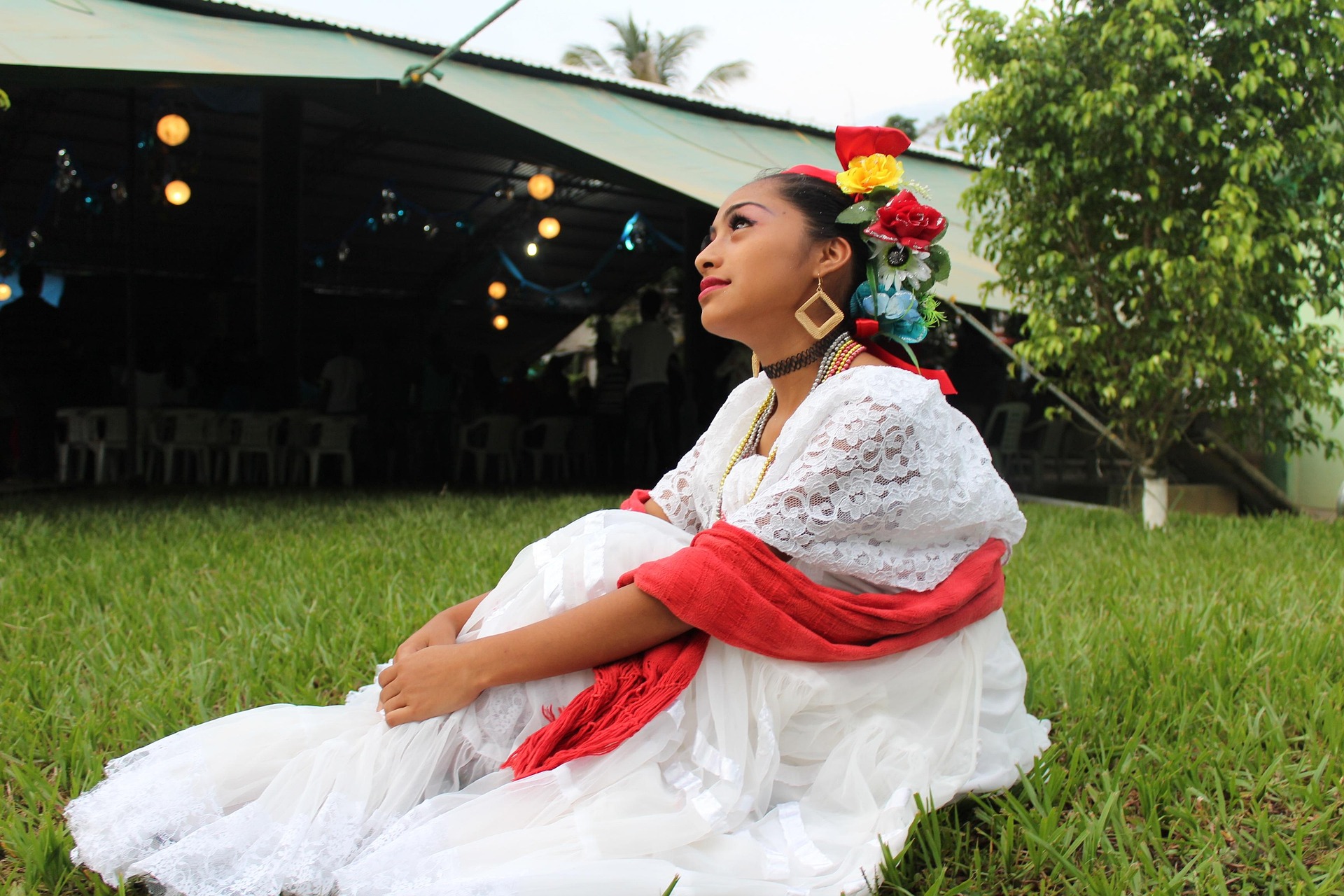
Ancient Zapotec society was organized around a hereditary nobility headed by a ruler often referred to in Spanish colonial records by the borrowed title cacique. Below the ruling elite sat a class of nobles who administered outlying towns, followed by commoners who farmed, produced crafts, and performed labor obligations, and at the base a class of servants or laborers bound to elite households. Monte Alban’s monumental architecture, including its ball court, plazas, and palace complexes, reflects the resources a centralized elite could command from this layered society.
What distinguishes Zapotec social organization from many of its Mesoamerican neighbors, and what still distinguishes it today, is the strength of the community-level governance structure that operated beneath and alongside elite rule. Many Zapotec towns maintained their own local councils and civil-religious hierarchies, a system in which men advanced through a ladder of unpaid community service and religious sponsorship roles to earn standing as respected elders, a structure known in Oaxaca as the sistema de cargos.
This cargo system proved remarkably resilient. It survived Spanish colonization largely intact because colonial administrators found it convenient to work through existing local leadership structures rather than replace them outright, and it survives in modified form in hundreds of Oaxacan municipalities today, where it underlies a system of Indigenous customary law known as usos y costumbres, legally recognized by the Mexican state since 1995.
The Isthmus of Tehuantepec developed a notably different social pattern, one in which women historically held prominent roles in market trade, household finance, and public ceremonial life, a pattern anthropologists have studied extensively and that Isthmus Zapotec communities, particularly around Juchitan, continue to take visible pride in today.
Religion, Old and New
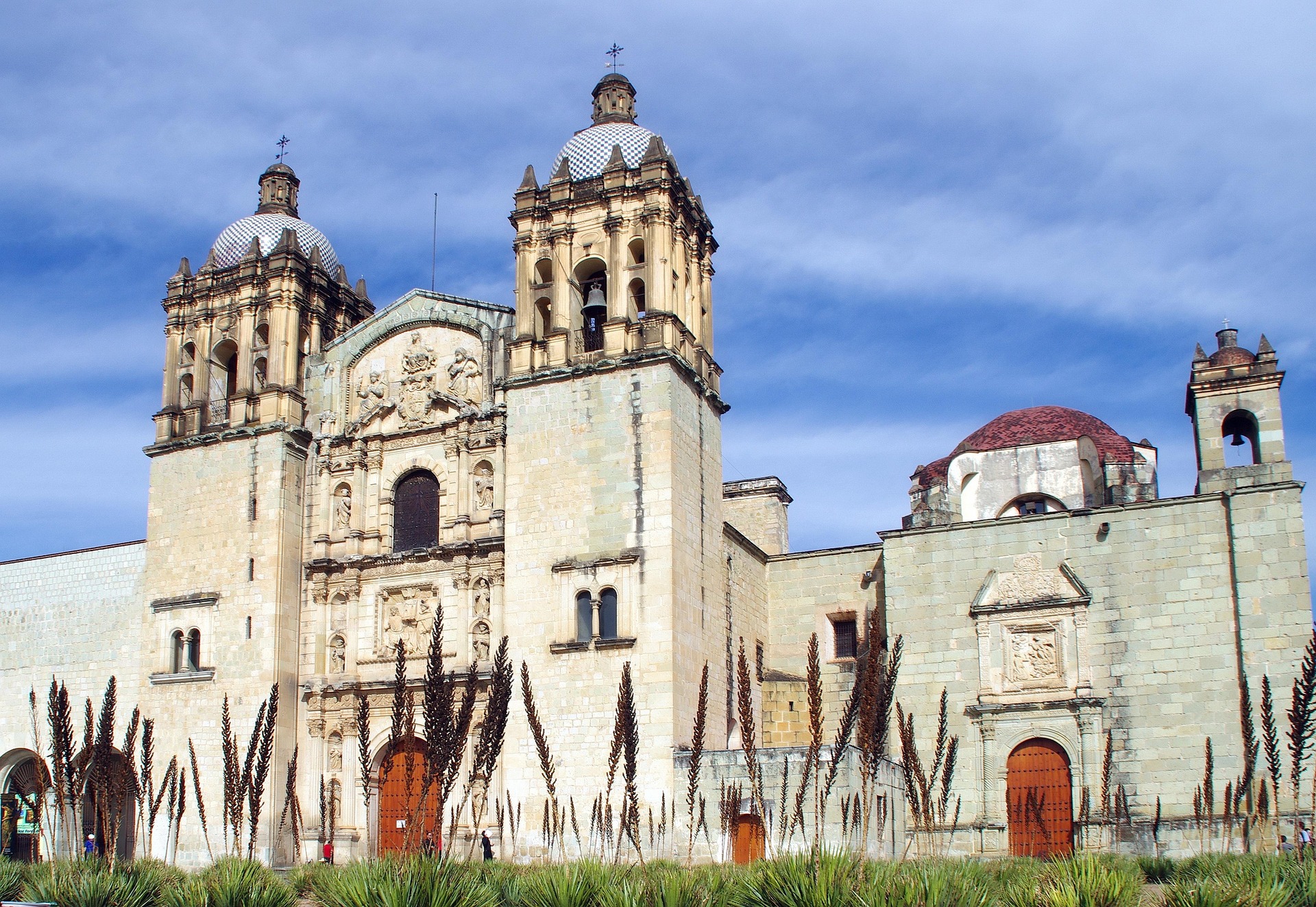
Pre-Hispanic Zapotec religion centered on a pantheon of deities associated with rain, lightning, maize, and the earth, most prominently a rain god commonly identified in the archaeological literature as Cocijo, whose imagery appears repeatedly on ceramic urns recovered from tombs at Monte Alban and elsewhere. Ancestor veneration was deeply important, elite tombs were built to be reopened and used across generations, and elaborate funerary urns depicting deities and ancestral figures were placed with the dead as companions in the afterlife.
Zapotec priests maintained a sophisticated ritual calendar, the 260-day count shared in modified form across much of Mesoamerica, used to determine auspicious days for planting, warfare, marriage, and other significant undertakings. Temple complexes atop Monte Alban and other regional centers served as the stage for public ceremonies, bloodletting rituals, and offerings intended to maintain balance between human communities and the forces believed to govern rain, fertility, and the changing seasons.
Spanish missionaries arriving in the sixteenth century worked to suppress these practices and impose Catholicism, and formal conversion proceeded steadily across the colonial period. Yet as in much of Mesoamerica, conversion did not erase older beliefs so much as layer Catholic saints and calendar observances over pre-existing ritual structures, producing a distinctly Oaxacan folk Catholicism in which patron saint festivals, ritual sponsorship obligations, and older beliefs about the earth and mountains coexist within a nominally Catholic framework.
In some Zapotec communities, particularly in more remote sierra towns, ritual specialists continue practices with roots reaching back centuries, including ceremonies conducted at sacred springs, caves, and mountains understood to house powerful spirits, alongside full participation in the Catholic liturgical calendar. Rather than existing in contradiction, these two spiritual systems have coexisted in Oaxaca for nearly five hundred years.
Traditions Carried Forward

Among the most important living Zapotec traditions is the concept of guelaguetza, a Zapotec-rooted term referring to a system of reciprocal obligation in which families and communities exchange labor, goods, or support at weddings, funerals, house building, and other major life events, with the understanding that the favor will be returned in kind when the giver’s own turn comes. This ethic of mutual aid underlies much of rural Oaxacan social life and has given its name to the region’s most famous public festival.
Compadrazgo, the ritual kinship created through godparenthood at baptisms, confirmations, and weddings, remains a vital institution binding Zapotec families together into wider networks of mutual obligation and support that often matter as much in daily life as blood relation. A family might call on several sets of compadres for help with anything from harvest labor to advice on a child’s education.
Life-cycle ceremonies retain distinctly Zapotec elements even where the surrounding form is Catholic. Weddings in many Isthmus communities, for instance, involve days of celebration, specific ritual foods, and public displays of family wealth and generosity that draw on pre-Hispanic patterns of reciprocity as much as on Catholic sacramental requirements. Funerary customs likewise blend Catholic ritual with older beliefs about honoring and feeding the dead.
Handloom weaving, natural dye knowledge passed from mother to daughter, and oral storytelling traditions, some preserving pre-Hispanic narrative motifs about the origin of maize or the behavior of mountain spirits, continue to be transmitted within families in many Zapotec towns, even as younger generations increasingly split their time between village life and work in Oaxaca city or abroad.
Crafts of the Valley

Oaxaca is often described as Mexico’s craft capital, and much of that reputation rests directly on Zapotec artisan traditions. In the town of San Bartolo Coyotepec, potters produce barro negro, a distinctive black clay pottery burnished to a lustrous shine using a technique refined over generations, now recognized internationally as a signature Oaxacan art form. In Teotitlan del Valle, weavers produce wool rugs and textiles dyed with natural materials including cochineal insects, indigo, and pericone flowers, using upright looms and techniques passed down within families for centuries.
Alebrijes, the brightly painted fantastical wooden creatures now recognized around the world, originated in Oaxaca through Zapotec and Mixtec woodcarvers working primarily in copal wood, building on an older tradition of carving ceremonial and decorative figures. Workshops in towns like San Martin Tilcajete and San Antonio Arrazola have turned alebrije carving into both an art form and a significant source of household income, with pieces exported internationally and displayed in museum collections.
Embroidery is another area of deep Zapotec craft knowledge, particularly in the Isthmus of Tehuantepec, where elaborately embroidered huipiles, the traditional women’s tunics, feature floral motifs whose designs have become so iconic that they influenced international fashion houses, most famously inspiring pieces attributed to designer Frida Kahlo’s own wardrobe and later a controversial international fashion collection that Oaxacan artisans publicly protested for borrowing their designs without credit or compensation.
Basketry, gold filigree jewelry making in Oaxaca city, and the production of mezcal itself, considered by many practitioners as much a craft as an agricultural product, round out a craft economy that today provides income for tens of thousands of Zapotec and other Oaxacan families and draws visitors from around the world specifically seeking work made using techniques with centuries of history behind them.
What Ends Up on the Table
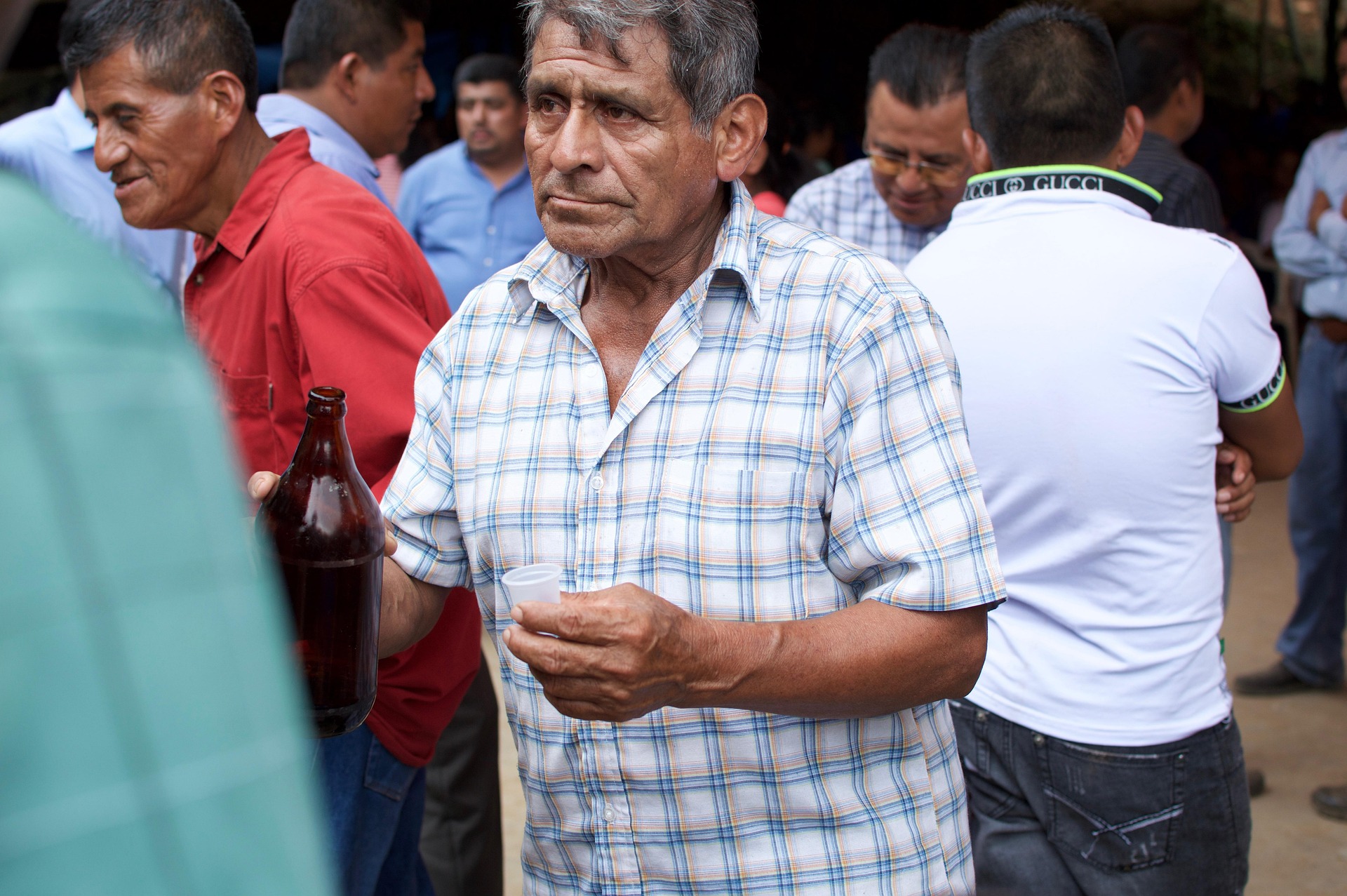
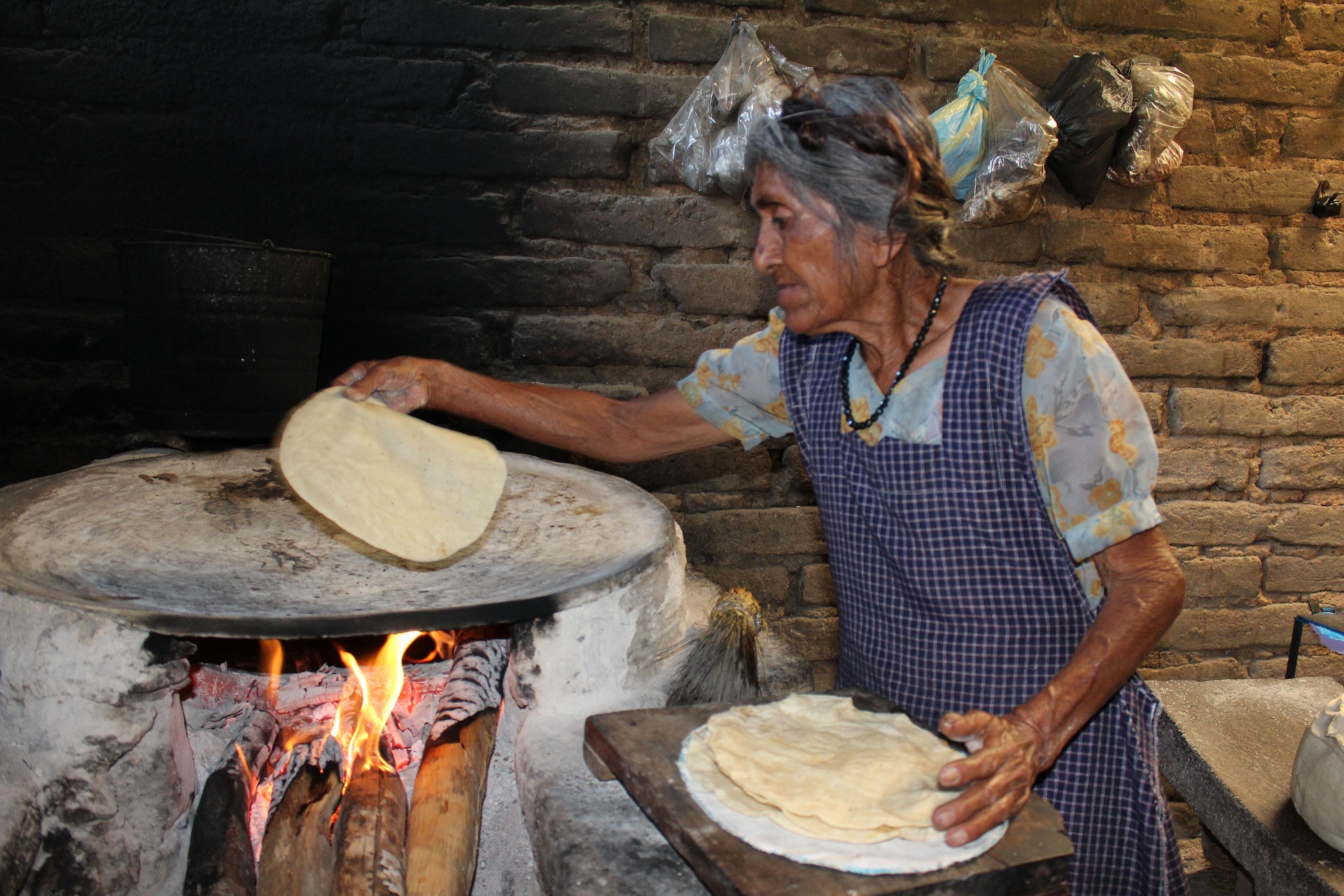
Zapotec cuisine, inseparable from broader Oaxacan food culture, rests on the Mesoamerican trilogy of maize, beans, and squash, prepared in techniques that reach back centuries. Tortillas made from nixtamalized corn form the base of most meals, alongside tlayudas, large crisp tortillas topped with beans, cheese, and meat that have become one of Oaxaca’s most recognizable regional dishes both within Mexico and increasingly abroad.
Mole, the complex sauce blending chilies, spices, chocolate, and dozens of other ingredients depending on the recipe, reaches one of its most celebrated regional expressions in Oaxaca, which is sometimes called the land of the seven moles for the range of distinct mole varieties prepared across its communities, from the dark, chocolate-rich mole negro to the bright, herbaceous mole verde. Each variety typically involves hours of preparation and represents significant culinary knowledge held largely by Zapotec and other Oaxacan women who prepare it for both everyday meals and major celebrations.
Mezcal, the smoky spirit distilled from the roasted heart of the agave plant, has deep roots in Zapotec and broader Oaxacan territory, where small-scale palenques, traditional distilleries, continue to produce it using clay or copper stills and techniques passed down across generations. Unlike its more famous cousin tequila, which is restricted to blue agave, mezcal can be made from dozens of agave species, and Oaxaca remains the center of both traditional production and the spirit’s recent global popularity.
Chapulines, toasted grasshoppers seasoned with chili, lime, and salt, remain a popular protein-rich snack across Oaxaca, sold in markets by the cupful, alongside regional specialties like tamales wrapped in banana leaf rather than corn husk, and chocolate prepared the traditional way, ground by hand with cinnamon and sugar on a stone metate and whipped into a frothy drink.
Festivals That Fill the Calendar
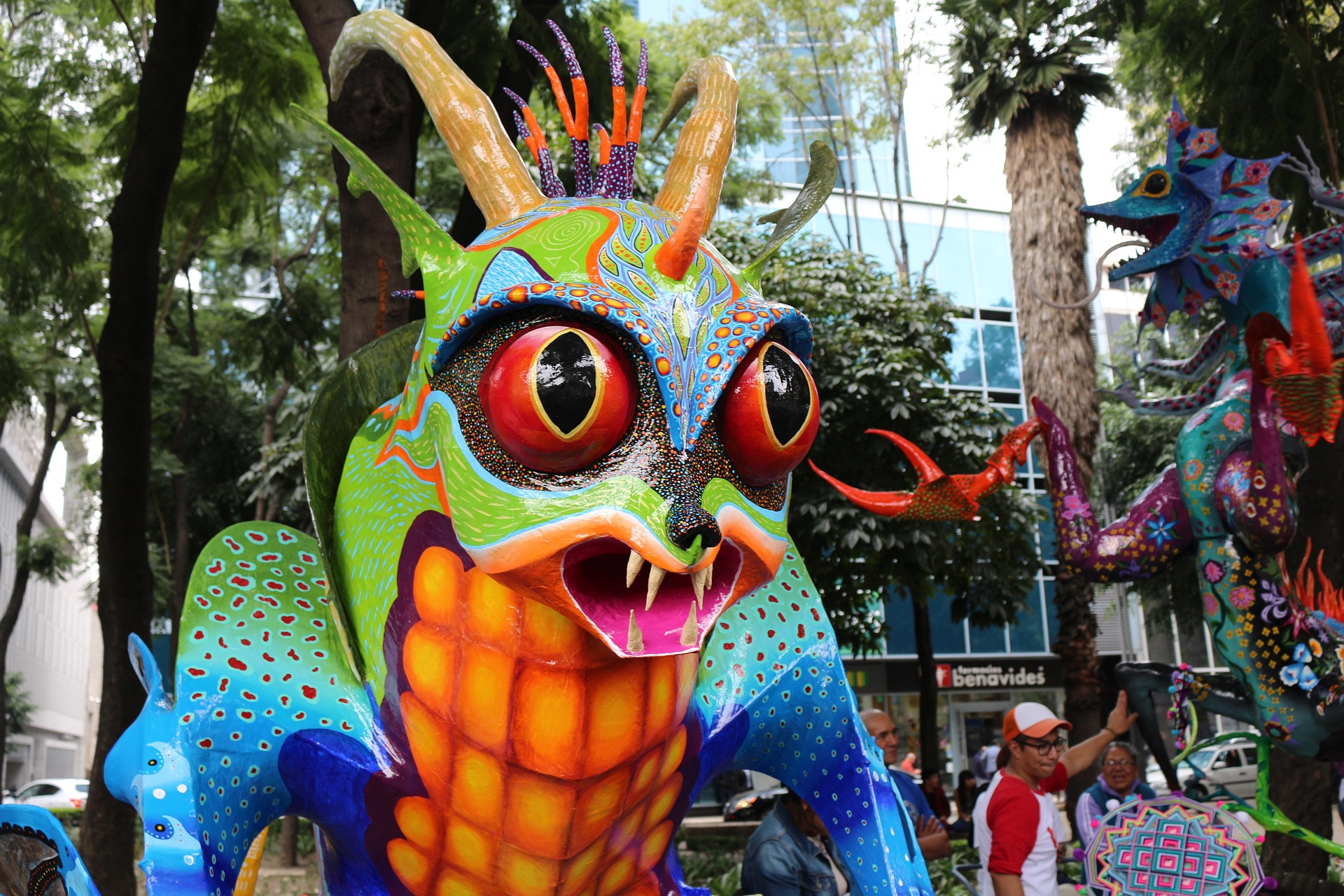
The best-known Zapotec-rooted festival is the Guelaguetza, held each July in Oaxaca city, in which delegations from across the state’s regions perform traditional dances in regional dress before large public audiences, an event that grew out of older harvest and reciprocity customs and has since become both a genuine cultural celebration and a major tourism draw for the state. Despite its commercialization in recent decades, many participating communities continue to treat their performance as a meaningful expression of regional identity rather than simply a show for outsiders.
Day of the Dead, observed at the end of October and beginning of November, takes on particularly elaborate form in Oaxaca, where families construct home altars, decorate graves with marigold petals and candles, and spend the night at cemeteries in vigil for deceased relatives, a practice blending Catholic All Souls observance with older beliefs about the return of ancestral spirits that predate the conquest by centuries.
Village patron saint festivals, held on the feast day of whichever saint a given town has adopted as protector, remain the most frequent and locally significant celebrations throughout the Zapotec region, often involving processions, fireworks, brass bands, ritual sponsorship by community members taking on the cargo of organizing the event, and days of shared food that draw on the same guelaguetza ethic of reciprocity described earlier.
In Juchitan and other Isthmus towns, the velas, all-night festivals featuring music, dancing, and elaborate flower crowns and dress worn by women, celebrate specific social groups, guilds, or neighborhoods and are considered some of the most vibrant expressions of Isthmus Zapotec culture, drawing participants back from migration in Mexico City or the United States specifically to take part.
From Conquest to Constitution

Spanish forces under Hernan Cortes reached Oaxaca in 1521, and while some Zapotec rulers negotiated accommodation with the newcomers rather than face destruction, resistance and disease together devastated the population over the following century. Colonial administrators established the encomienda system, extracting labor and tribute from Zapotec communities, while Dominican friars built churches, several directly incorporating stones taken from pre-Hispanic temples, across the region through the sixteenth and seventeenth centuries.
Despite conquest, Zapotec communities retained more local governance autonomy than many other conquered Indigenous groups in Mexico, partly because Oaxaca’s mountainous terrain made direct Spanish administrative control difficult, and partly because colonial officials found it practical to govern through existing local structures. This relative autonomy helps explain why Zapotec language, customary law, and community governance survived colonization more intact than in many other regions of Mexico.
Oaxaca’s most consequential historical contribution to modern Mexico came in the nineteenth century with Benito Juarez, a Zapotec man born in the small mountain village of San Pablo Guelatao who rose from poverty to become a lawyer, state governor, and ultimately President of Mexico, leading the country through foreign invasion and championing liberal reforms that reshaped the Mexican state. Juarez remains one of the most revered figures in Mexican history and a source of particular pride for Zapotec communities today.
The twentieth century brought land reform, expanded road access, and eventually the 1995 legal recognition of Indigenous customary governance, usos y costumbres, allowing hundreds of Oaxacan municipalities to elect local officials through traditional assembly methods rather than Mexico’s standard political party system, a landmark acknowledgment of the very community structures that had persisted since long before the conquest.
The Zapotec Today

Today, an estimated 800,000 to 1 million people in Mexico identify as Zapotec, making them one of the largest Indigenous nations in the country, concentrated in Oaxaca but present in significant migrant communities in Mexico City, Los Angeles, and elsewhere in the United States. Economic pressure continues to push younger Zapotec people toward migration for work, even as many maintain strong ties to home villages through remittances, festival participation, and eventual return.
Zapotec artisans have found new international markets for barro negro pottery, Teotitlan rugs, and alebrije carvings, with fair trade cooperatives and direct online sales helping some families capture more value from their work than older middleman arrangements allowed. At the same time, cultural appropriation controversies, including the unauthorized use of Zapotec textile designs by international fashion brands, have pushed communities to organize more assertively around intellectual property and cultural recognition.
Zapotec activists and scholars have also been central to Oaxaca’s broader Indigenous rights movement, pushing for stronger protections for Indigenous languages in education and media, greater recognition of usos y costumbres governance, and resistance to mining and infrastructure projects perceived as threatening communal land and water resources, particularly in parts of the Isthmus of Tehuantepec affected by wind energy development in recent years.
The mountain communities that gave Mexico its most famous president, the potters of San Bartolo Coyotepec, the weavers of Teotitlan del Valle, and the Isthmus towns that still hold their velas each year are all part of the same long Zapotec story, one that stretches back to Monte Alban and shows no sign of ending. To the north, across the border into Chiapas and beyond into Central America, another people whose homeland straddles a Caribbean coastline and two modern nations, the Miskito, carry forward their own equally resilient history, one worth turning to next.
More Peoples of the Americas
This piece is part of an ongoing collection profiling Indigenous and other peoples across the Americas. Readers curious about other nations covered so far can explore the profiles below.
- The People Who Emerged Into This World, the Story of the Navajo
- The People Who Never Left the Mountains, the Story of the Quechua
- The People Who Never Vanished, the Story of the Maya
- The People of the Seven Council Fires, the Story of the Lakota
- The People of the Land Who Were Never Conquered, the Story of the Mapuche
- The People of Ice and Sea, the Story of the Inuit
- The Islands of the People, the Story of the Haida
- The Four Directions People, the Story of the Cree
- The Principal People, the Story of the Cherokee
- Aymara: A People Whose Words Refuse to Die
- Guarani: The Language That Became a Nation
- Tehuelche: Giants of Patagonia’s Windswept Plains
- Diaguita: A Nation Chile Forgot, Then Remembered
- Likan Antai: Life at the Edge of the Driest Desert on Earth
- Wayuu: The Desert People an Empire Could Never Conquer
- Guna: Islanders Who Govern Their Own Corner of Panama
- Yanomami: Guardians of the Amazon’s Deepest Forest
- Taino: The People Declared Extinct Who Never Left
- Kogi: The Elder Brothers Watching Over the Mountain
You May Like
The Damara, an Ancient People of Namibia


2 thoughts on “Zapotec: A People Older Than the Aztec Empire”