At the westernmost edge of the African continent, where the Sahel savanna runs down to meet the Atlantic surf, lives a people whose name has become almost synonymous with their country. The Wolof are the largest ethnic group of Senegal and a major presence in the Gambia, and their language has spread so widely that it now serves as the everyday speech of nations far larger than themselves. From the kingdoms of Cayor and Jolof to the booming streets of Dakar, they have carried a culture of hospitality, faith, and music that gives Senegal much of its famous character.
This is the story of a people who turned the meeting of desert and ocean into a civilisation of farmers, fishermen, traders, and holy men. It is a story of proud kingdoms broken by conquest and remade by the Sufi brotherhoods, of griots who guard the memory of families, of drummers and wrestlers who fill the stadiums, and of an ethic called teranga that welcomes the stranger as an honoured guest. To understand the Wolof is to understand the warm and open spirit that Senegal offers to the world.
Contents
- Kingdoms Between the Desert and the Sea
- Wolof and the Speech That Named a Nation
- Wolof, the Language of the Street and the Song
- The Coast and Savanna of Senegal
- Kingdoms, Castes, and the Great Villages
- Nobles, Griots, and the Bonds of Teranga
- The Sufi Brotherhoods and the Marabouts
- The Sabar Drum, the Boubou, and the Wrestling Ring
- Weavers, Goldsmiths, and the Glass Painters
- Thieboudienne and the Bounty of the Sea
- The Magal, the Grand Magal, and the Wrestling Season
- The Wolof States, the French, and Independence
- The People of a Model Republic
Kingdoms Between the Desert and the Sea
The Wolof are the largest people of Senegal and the dominant nation of the far west of the African continent, farmers, fishers, and city-dwellers whose language and culture define the modern Senegalese state. They live where the Sahel meets the Atlantic, on the coast and savanna between the Senegal River and the Gambia, and their history reaches back to a cluster of medieval kingdoms.
They emerged in the region between the desert and the sea, and by the fourteenth century had built the empire of Jolof, a confederation of Wolof states that dominated the area, and which later fractured into the independent kingdoms, Kayor, Baol, Walo, and the rest, whose rivalries and courts filled Wolof history until the French conquest.
Positioned on the Atlantic coast, the Wolof were among the first West African peoples to meet the Europeans who came by sea from the fifteenth century, and their coast, with its islands and river mouths, became a hub of the Atlantic trade, drawing the Wolof states into the commerce and the tragedy of the age of the slave trade.
From this base the Wolof grew into the core of modern Senegal: their kingdoms gave way to French colonial rule and then to an independent republic in which the Wolof language and culture, though the state’s official tongue is French, became the true national identity, the lingua franca and the cultural center of the nation.
Wolof and the Speech That Named a Nation
The name Wolof, sometimes written Ouolof in the French manner or Jolof after the old empire, names both the people and their language, and it is by this name that they are known across Senegal, the Gambia, and Mauritania, where the Wolof form significant populations.
The old empire of Jolof gave its name to the wider people and, famously, to a dish: jollof rice, the celebrated one-pot rice of West Africa over which nations now happily quarrel, carries in its name the memory of the Wolof empire from which it is said to have spread.
The Wolof are closely related to their neighbors, the Serer and the Lebou, sharing the coast and much of the culture, and the Lebou, the fishing people of the Cap-Vert peninsula where Dakar stands, are often counted as a Wolof subgroup, keepers of the coast’s oldest communities.
Today Wolof identity is bound up with Senegal itself: to be Wolof is to belong to the largest and most influential people of a nation whose culture, language, music, and famous ethic of teranga, hospitality, are in large measure Wolof, the national character of one of Africa’s most admired republics.
Wolof, the Language of the Street and the Song
Wolof is a Niger-Congo language of the Atlantic branch, and although it is the mother tongue of the Wolof people it has become far more than that. In Senegal it is the language of the street, the market, and the bus, spoken as a first or second tongue by the overwhelming majority of the population regardless of their ethnic origin. A Serer farmer, a Fulani herder, and a Lebanese shopkeeper in Dakar will very often settle on Wolof as the common ground between them, and in this way the language has quietly become the true national speech of the country even though French remains the official one on paper.
The sound of Wolof is shaped by a system of noun classes marked not by prefixes on the noun itself but by a set of small words and consonants that agree with it, a feature that puzzles newcomers and delights linguists. Its vocabulary has absorbed centuries of contact, carrying Arabic words that arrived with Islam, French words that arrived with the colony, and more recently a layer of English drawn from music and the internet. Yet the grammar underneath has stayed stubbornly its own, bending these borrowings to its own rules rather than surrendering to them.
To speak Wolof well is to command a whole repertoire of proverbs, greetings, and teasing exchanges that can stretch a simple hello into a long and pleasurable ritual. The famous cousinage joking relationships, in which members of certain families and ethnic groups are licensed to insult one another in good humour, are conducted largely in this shared tongue, and they act as a social glue that defuses tension with laughter. In the songs of the mbalax bands and the verses of the griots the language shows its full musical range, sliding between the sacred and the streetwise without missing a beat.
The Coast and Savanna of Senegal
The Wolof homeland lies in the far west of the African mainland, in the low savanna and coastal plains of what is now Senegal and the Gambia, a land that leans out into the Atlantic at the continents westernmost point. It is a country of wide horizons where the Sahel thins the vegetation to scattered acacia and baobab, and where the dry season bleaches the grass to gold before the rains return each summer to green it again. The great baobab, with its swollen trunk and root-like branches, stands over this landscape as a natural monument, a tree so bound up with local life that stories and even the dead were once entrusted to its hollows.
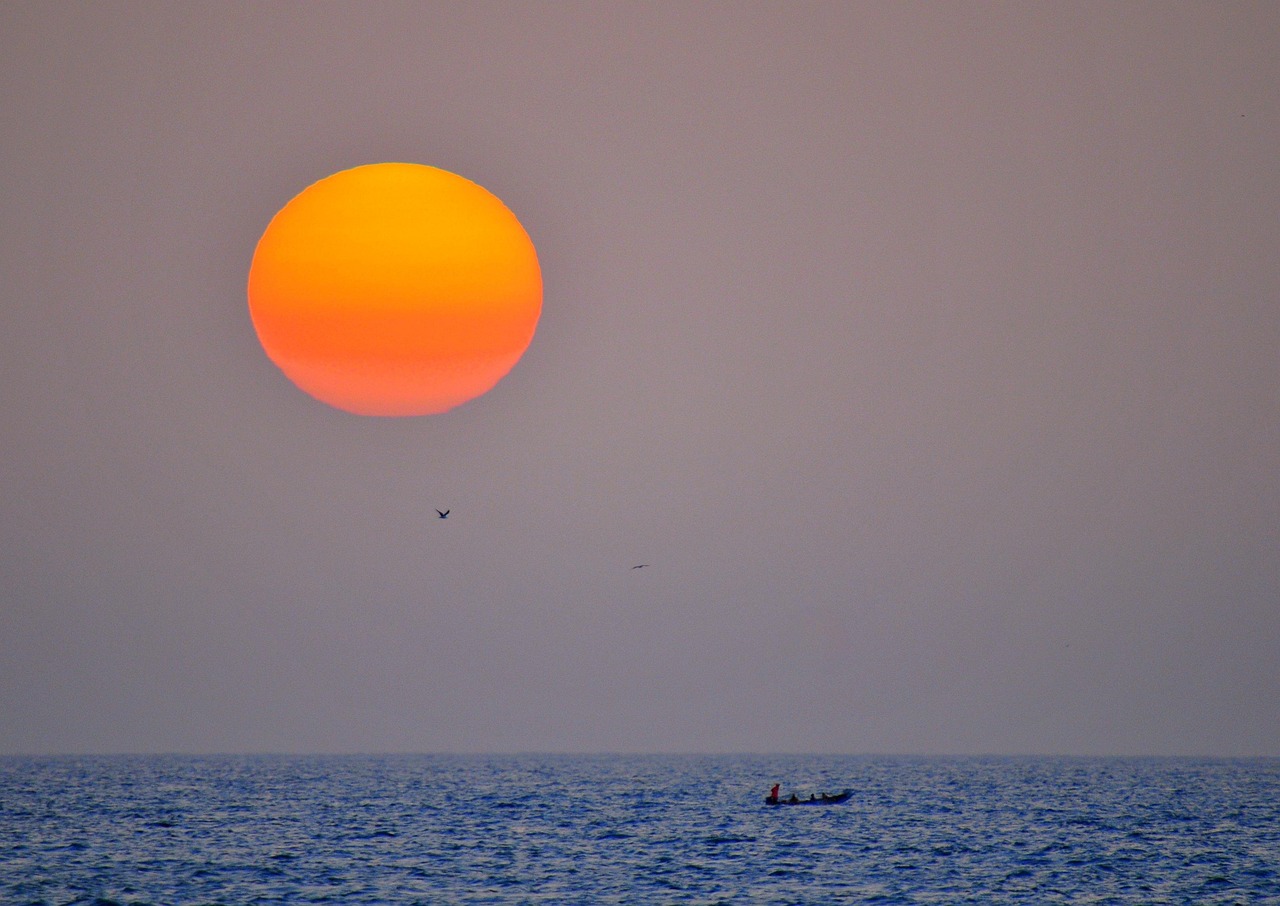
Water shapes the edges of this world. To the west the ocean rolls in against long beaches and the rocky Cap-Vert peninsula where Dakar now sprawls, while inland the Senegal River traces the northern border and the Gambia River cuts its green ribbon through the south. Between these rivers the country is mostly flat, an open plain of farms and villages where groundnuts have grown as the great cash crop for well over a century. The pink waters of Lac Rose, coloured by salt-loving microbes, lie only a short drive from the capital and mark one of the strange and lovely faces of this coast.
This is a land of two sharp seasons rather than four gentle ones. For most of the year the dry harmattan wind blows down from the Sahara, hazing the sky with fine dust, and then in a few brief months the rains arrive with sudden force to fill the fields and swell the rivers. The Wolof learned long ago to live by this rhythm, planting with the first storms and harvesting before the land dried out again, and to read the coast and the savanna as a single provider that gave fish from one hand and grain from the other.

Kingdoms, Castes, and the Great Villages
Before the colonial age the Wolof lived within a set of kingdoms that rose on the ruins of the older Jolof empire, states such as Cayor, Baol, Walo, and the small but proud Jolof heartland. Each was ruled by a king whose title varied from place to place, the Damel of Cayor being the most famous, and each was held together by a court of nobles, warriors, and religious men. These were not loose tribes but organised polities with taxes, armies, and diplomacy, and their rivalries and alliances filled the pre-colonial centuries with the drama of ambition and betrayal that the griots still recount.
Society within these kingdoms was arranged into a system of orders that assigned every person a place at birth. At the top stood the free-born nobles and the royal lineages from whom kings were chosen, below them the great mass of free peasants who farmed the land, and among them the specialised castes of griots, blacksmiths, leatherworkers, and weavers who carried particular crafts and knowledge from parent to child. At the bottom were people held in various forms of servitude, some of them warriors of the crown who could rise to great power despite their unfree status. This order was rigid in theory yet full of exceptions in practice.
The great villages of the old countryside were dense clusters of round thatched houses gathered around the compound of a headman, surrounded by the fields that fed them. Life turned on the farming year, on the herding of cattle and goats, and on the obligations that bound each family to its neighbours and its lord. Authority flowed downward from the king through a chain of local chiefs, but it was balanced by the councils of elders and by the moral weight of the griots and holy men, so that even a powerful ruler had to govern with an ear to the voices around him.
Nobles, Griots, and the Bonds of Teranga
At the heart of Wolof social life sits the ideal of teranga, a word usually translated as hospitality but reaching far beyond the offer of food and shelter. Teranga is a whole ethic of generosity, warmth, and mutual obligation, the sense that a guest must be honoured, a neighbour must be helped, and a stranger must be received with open hands. It is the quality the Senegalese are proudest of and the one they most often name when asked what makes their country itself, and it shapes everything from the sharing of a single bowl of rice to the elaborate courtesies of a first meeting.
The griots, known locally as gewel, occupy a place unlike any other. As the hereditary keepers of memory they hold the genealogies of noble families, sing the praises of the living, and recite the deeds of the dead, and their words can lift a person up or cut them down. At weddings, namings, and political gatherings they are indispensable, and the gifts showered on them can be lavish. Blacksmiths, leatherworkers, and weavers likewise pass their trades within their lineages, so that skill and identity are woven together in a way that outsiders often find hard to grasp.
Binding all of this is a thick web of family, marriage, and neighbourly duty. Extended households share resources and raise children in common, elders are treated with deep deference, and the joking cousinage relationships between families and ethnic groups keep the whole system supple by allowing tension to be released as laughter. Money and gifts circulate constantly through ceremonies, so that a wedding or a naming becomes not only a celebration but a great redistribution of wealth that reaffirms who owes what to whom.
The Sufi Brotherhoods and the Marabouts
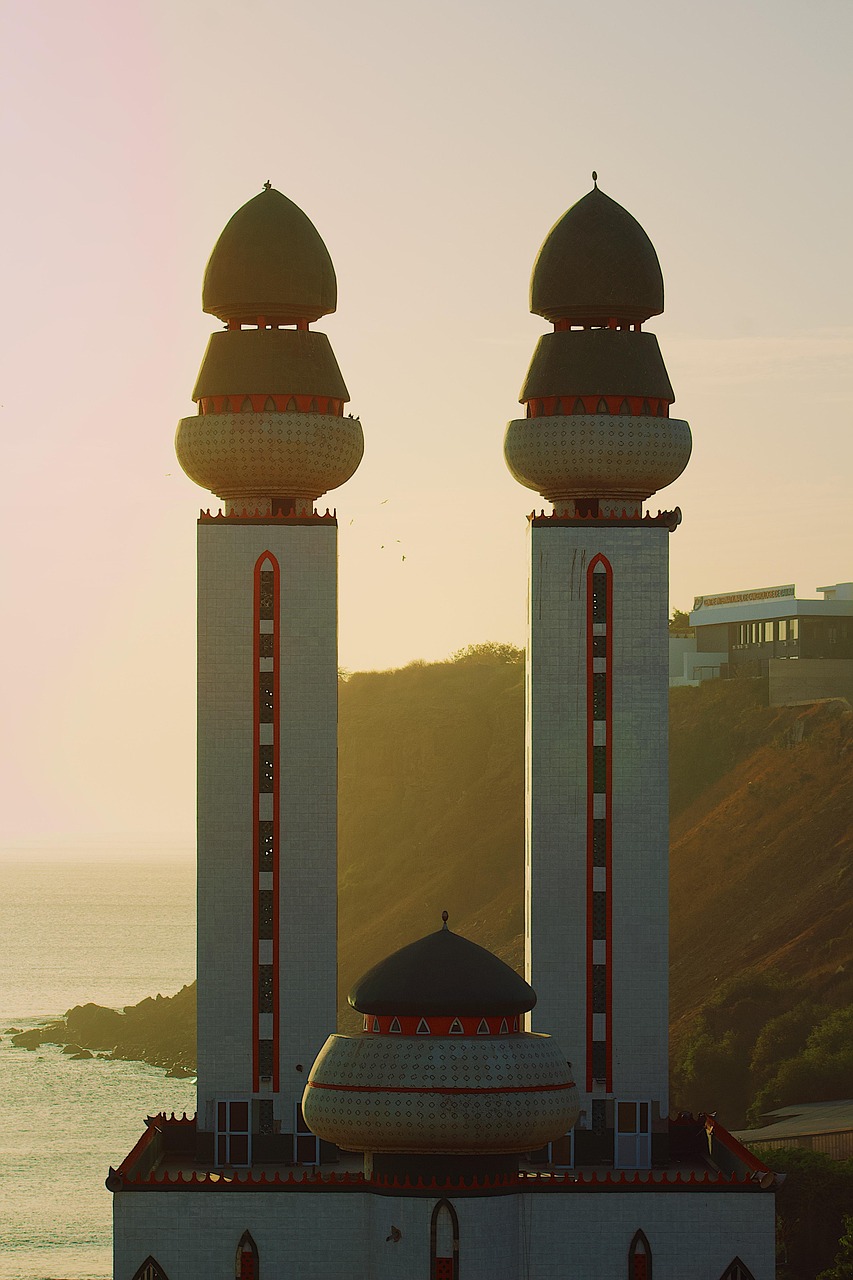
The Wolof are overwhelmingly Muslim, and Islam among them is lived above all through the Sufi brotherhoods that have shaped Senegalese faith for well over a century. The two greatest are the Tijaniyya, the most widespread, and the Mouride order founded by Cheikh Amadou Bamba, whose influence radiates from the holy city of Touba. To belong to a brotherhood is to attach oneself to a chain of spiritual masters reaching back to the Prophet, and to place oneself under the guidance of a living marabout who offers blessing, counsel, and a sense of belonging that ordinary mosque attendance alone does not provide.
The marabouts, the religious guides at the head of these orders and their many branches, wield an authority that is at once spiritual, social, and economic. A great marabout may command the devotion of hundreds of thousands of disciples who work his fields, fund his projects, and follow his counsel on matters far beyond prayer, including how to vote. This relationship of disciple and master, built on service and reciprocal blessing, is one of the defining features of Wolof society, and it has given Senegalese Islam a distinctive shape that is peaceful, deeply rooted, and organised around personal loyalty as much as doctrine.
Beneath and alongside this orthodox faith runs an older current of belief in spirits, protective charms, and the power of the unseen. Amulets stitched with Quranic verses are worn for health and luck, dreams and blessings are taken seriously, and certain places and trees still carry an aura of the sacred. Rather than warring with Islam, much of this older world has been folded into it, so that a devout Mouride may pray five times a day and still keep a marabouts amulet close, seeing no contradiction between the mosque and the charm.

The Sabar Drum, the Boubou, and the Wrestling Ring
No sound is more Wolof than the sabar, the tall single-headed drum played with one hand and a thin stick, whose cracking rhythms drive the dances of weddings, namings, and neighbourhood gatherings. Around it a whole culture of movement has grown, from the whirling energy of the sabar dance to the explosive steps that women trade in a ring of clapping onlookers. The drum language is precise enough to call specific rhythms and even names, and a great drummer is a local celebrity whose patterns everyone knows and whose arrival turns an ordinary afternoon into an event.
Dress is another proud tradition, and nothing shows it better than the grand boubou, the flowing wide-sleeved robe worn over matching trousers or a long skirt, cut from richly dyed and embroidered cloth. For a celebration the Wolof dress with a splendour that turns a courtyard into a display of colour, and the art of looking magnificent, of sanse, is admired as a social accomplishment in its own right. Women wrap their heads in elaborate scarves and pile on gold, so that the whole gathering becomes a moving gallery of textile and ornament.
Then there is laamb, traditional wrestling, which has grown from a village test of strength into the most popular spectacle in the country. A bout mixes raw grappling with a theatre of mystical preparation, the wrestlers arriving amid drumming, chanting, and the pouring of protective potions, their bodies hung with amulets prepared by marabouts. Great champions become national heroes who fill stadiums and command huge purses, and the season of the big fights grips the country in a way that blends sport, faith, and showmanship into a single overwhelming drama.
Weavers, Goldsmiths, and the Glass Painters
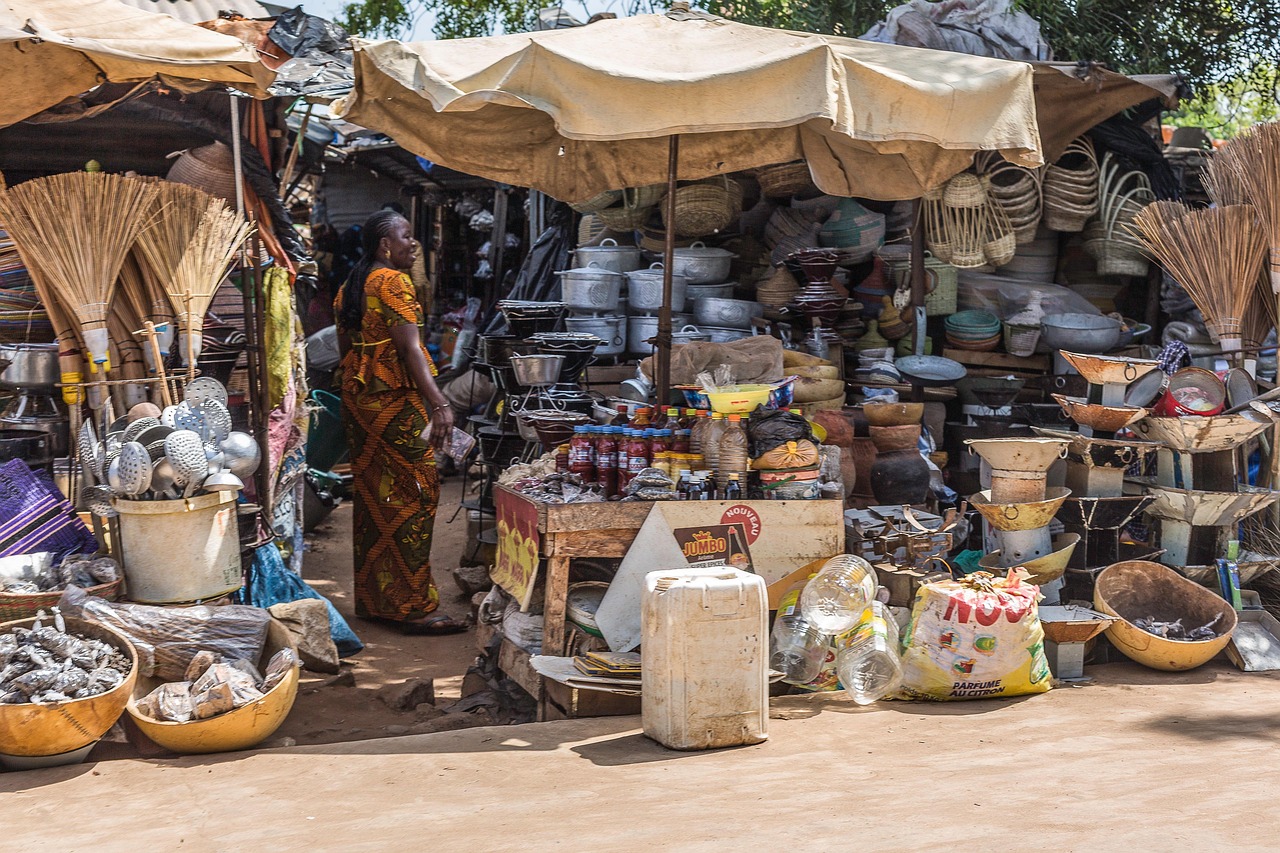
Wolof craft is carried by the caste lineages who have guarded their trades for generations, and among them the weavers hold a special place. On narrow horizontal looms they produce long strips of cotton cloth that are then sewn edge to edge into blankets and robes, their geometric patterns carrying meaning and prestige. The dyers, working with indigo and increasingly with brilliant industrial colours, turn plain cloth into the deep blues and vivid patterns that clothe a whole society, and the tie-dyed fabrics of Senegal have become known well beyond its borders.
The goldsmiths and metalworkers form another proud lineage, hammering the heavy earrings, bracelets, and pendants that women wear at every celebration. Gold is not merely ornament here but stored wealth and social statement, displayed on the body at weddings and namings as proof of a familys standing, and the finest smiths are sought out for the delicacy of their filigree. Alongside them the leatherworkers cut and stitch the sheaths, sandals, cushions, and amulet cases that fill daily life, tanning and tooling hides with skills handed down within their families.
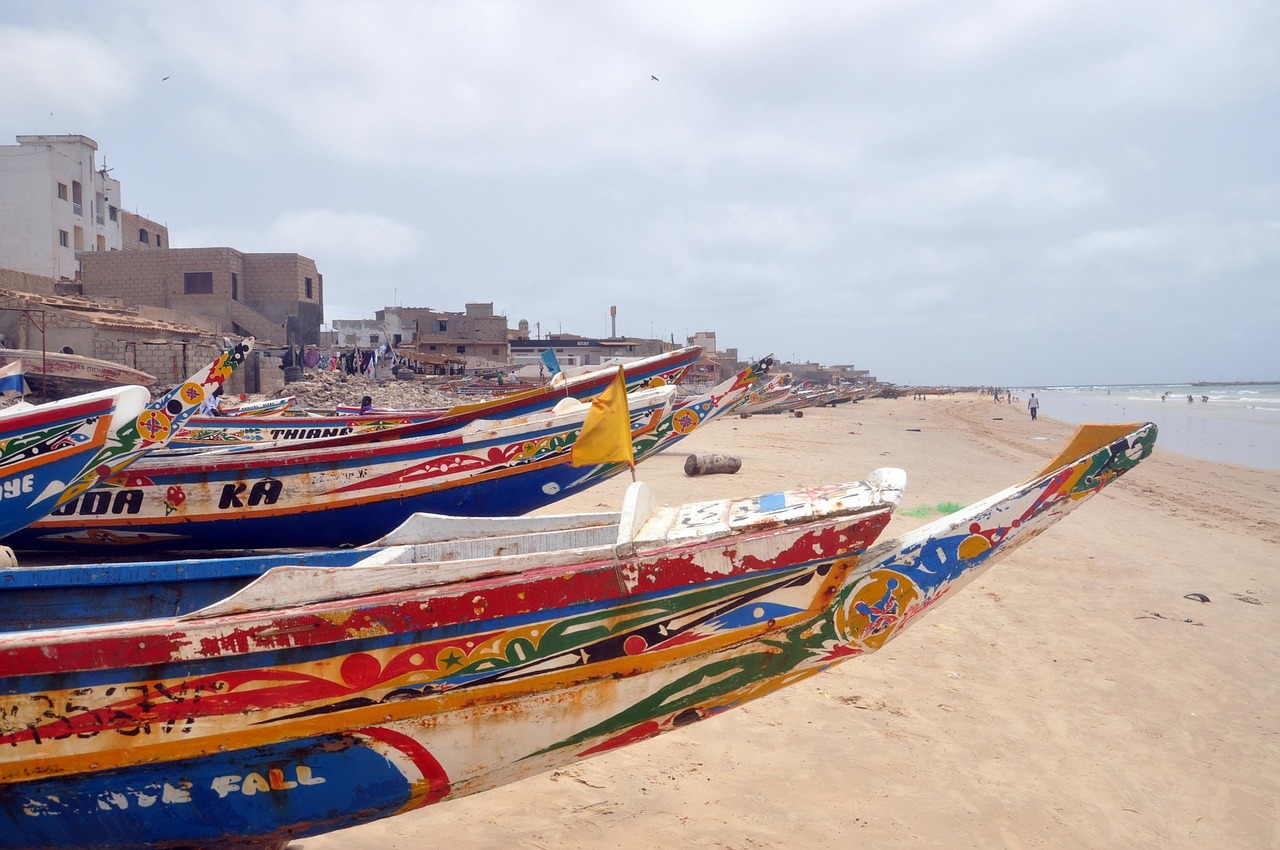
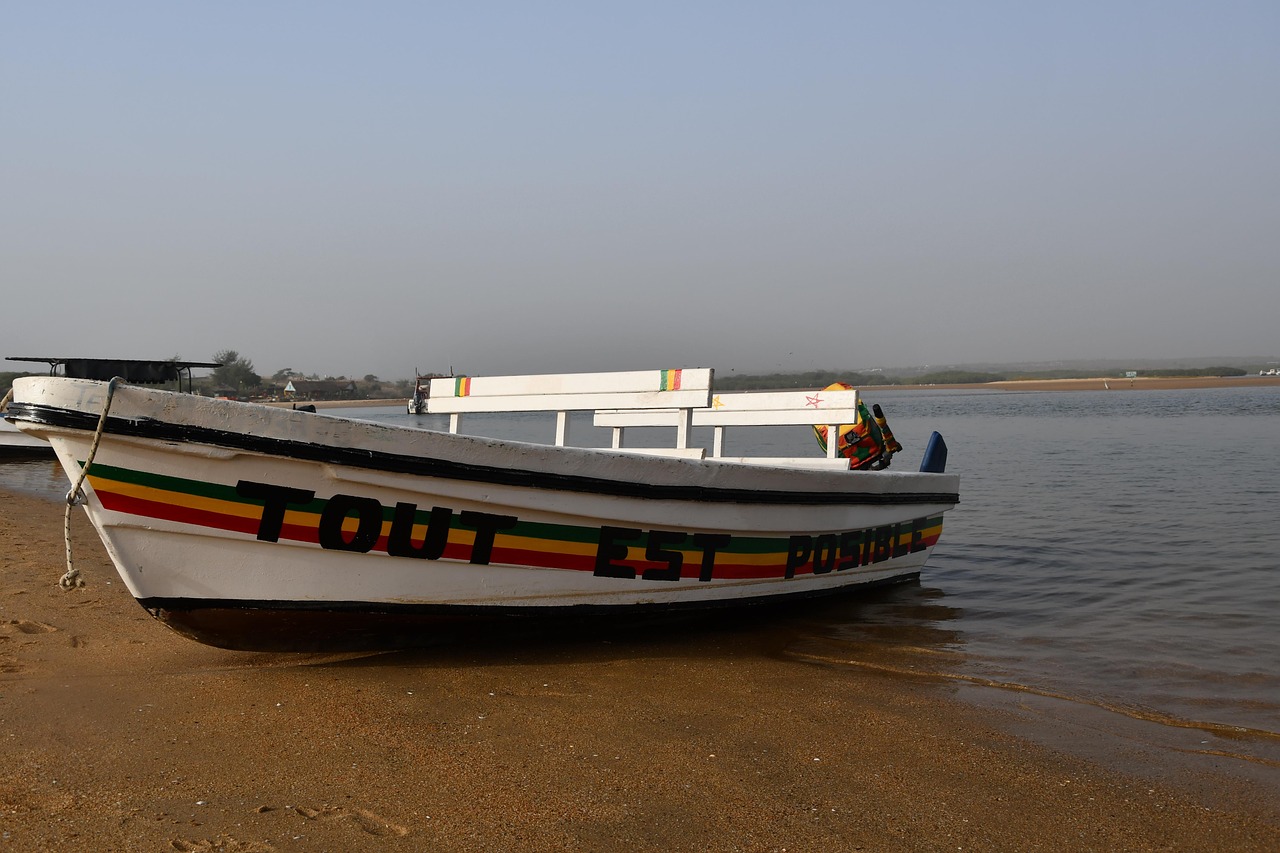
A newer but now famous art is the reverse-glass painting of Senegal, the souwere, in which images are painted on the back of a pane of glass so that they show through the front in glowing colour. Once devoted mainly to religious subjects and portraits of the great marabouts, this popular art has spread to scenes of daily life and gentle satire, and it hangs in homes and shops across the country. Woodcarvers, potters, and boat-builders round out the picture, the last of these shaping the long painted pirogues that put out from the coast each dawn.
Thieboudienne and the Bounty of the Sea
At the centre of the Wolof table stands thieboudienne, the great dish of fish and rice that is often called the national dish of Senegal and from which, some say, the word for rice-and-fish dishes across the region descends. It is built by simmering firm fish stuffed with a green herb paste in a rich tomato sauce, then cooking the rice in that same broth until it takes on a deep reddish colour, and serving it heaped on a wide platter crowned with vegetables. Around this platter the family gathers, eating together from the common dish in the way that best expresses the spirit of teranga.
The sea is a constant provider, and grilled and fried fish, shellfish, and the small dried fish used to flavour sauces run through the everyday cooking of the coast. Inland the groundnut, grown across the plains as the great cash crop, returns to the kitchen as oil and as the base of the mafe, a thick peanut stew poured over rice. Other beloved dishes include yassa, chicken or fish marinated in onions, mustard, and lime and then slow-cooked into something tangy and golden, a dish now carried by Senegalese cooks to kitchens around the world.
Meals are punctuated by the ritual of tea, the strong sweet green attaya poured from a height into small glasses over three successive rounds, each said to have its own character from bitter to sweet. Making attaya is a slow and sociable art, an excuse to sit and talk that can fill an entire afternoon. Millet porridges, baobab-fruit drinks, and hibiscus juice complete a table that draws on both the ocean and the savanna to feed a people who take great pleasure in eating well together.
The Magal, the Grand Magal, and the Wrestling Season
The greatest gathering in the Wolof year is the Grand Magal of Touba, the vast Mouride pilgrimage that draws millions of the faithful to the holy city to mark the exile of Cheikh Amadou Bamba. For days the roads fill with buses and the city swells beyond recognition as pilgrims pray, recite, and share enormous meals in a display of devotion and generosity that is among the largest religious gatherings on the continent. To take part is both an act of faith and a renewal of belonging to the brotherhood, and the hospitality shown to travellers on the way is teranga raised to a sacred scale.
The Tijani community keeps its own great gatherings, above all the Gamou, the celebration of the birth of the Prophet centred on the city of Tivaouane, when nights are given over to chanting and the recitation of praise. Alongside these Sufi festivals the whole country observes the universal Muslim feasts, the Tabaski sacrifice above all, when families buy and slaughter a ram, dress in their finest new clothes, and move between households sharing meat and greetings in a burst of colour and abundance.
Woven through the calendar are the ceremonies of private life that function as festivals in miniature, the naming of a baby a week after birth, the great weddings, and the wrestling season that grips the country during the dry months. Each of these draws crowds, drummers, and griots, sets money and gifts flowing, and turns a family occasion into a neighbourhood event. Together the sacred pilgrimages and the domestic celebrations give the Wolof year its rhythm of gathering, feasting, and display.
The Wolof States, the French, and Independence
The Wolof story begins with the Jolof empire, a confederation that gathered the Wolof states under a single paramount ruler from around the fourteenth century. Over time its member kingdoms, Cayor, Baol, Walo, and the others, grew strong enough to break away, and by the sixteenth century the empire had fractured into the rival states that would define the region. These kingdoms traded with the Portuguese and later other Europeans who came to the coast, exchanging goods and, tragically, captives, as the Atlantic slave trade drew the region into a violent Atlantic economy centred on islands like Goree.
The nineteenth century brought the slow, contested conquest of these kingdoms by France, whose expansion from the coastal trading posts met fierce resistance from figures such as the Damel Lat Dior, remembered as a national hero for his long fight and his death in battle. As the old warrior aristocracy fell, it was the Sufi brotherhoods, and the Mourides in particular, that rose to organise Wolof society under colonial rule, turning their disciples to the cultivation of groundnuts and giving the people a new source of order and identity beyond the vanished kings.
Senegal came to independence in 1960 with Leopold Sedar Senghor as its first president, and the Wolof, as the largest group and the speakers of the common language, stood at the centre of the new nation. Dakar, once the capital of French West Africa, became the capital of a country that has since become known for its stability, its unbroken tradition of civilian rule, and its peaceful transfers of power. Through all these changes the brotherhoods, the language, and the ethic of teranga have carried the Wolof sense of themselves from the age of kingdoms into the age of the republic.

The People of a Model Republic
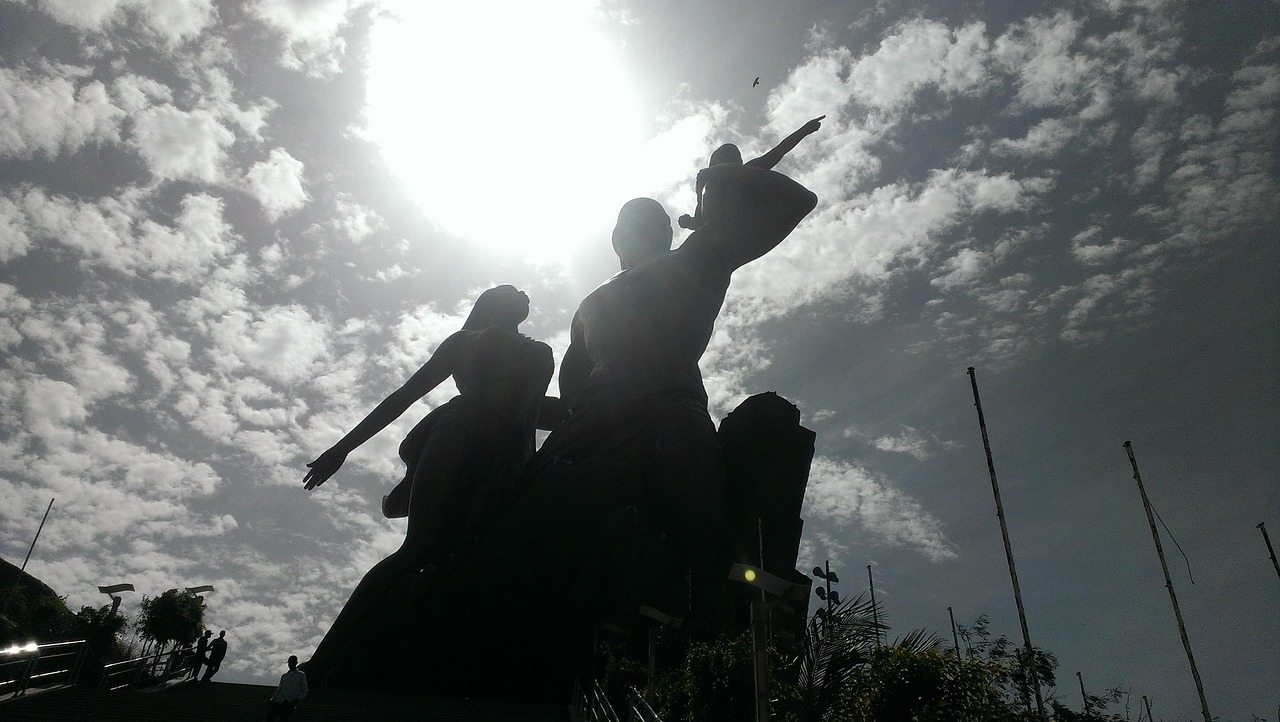
Today the Wolof live at the heart of one of West Africas most admired democracies, a country that has never suffered a military coup and that has handed power peacefully from one elected president to the next across the decades. Dakar, their great coastal capital, is a booming city of markets, music, and universities that serves as a cultural and diplomatic hub for the whole region, its skyline crowned by the towering African Renaissance Monument that looks out over the Atlantic. From this city Senegalese fashion, film, and above all music reach audiences far beyond the countrys borders.
The Wolof language has only grown in reach, spreading through radio, television, and popular music until it is understood almost everywhere in Senegal and the Gambia and carried abroad by a large and energetic diaspora. Senegalese communities in France, Italy, Spain, and the United States keep close ties to home, sending back money that sustains whole neighbourhoods and returning with new ideas, so that the culture is now lived across two continents at once. The mbalax music of stars rooted in the sabar tradition has become the countrys great export of sound.
Modern life brings its pressures, the pull of the city, the temptations and dangers of migration, the strain on old certainties, yet the deep structures of Wolof society have proved remarkably durable. The brotherhoods still gather their millions, the griots still sing at every wedding, the wrestling stadiums still fill, and the ethic of teranga still greets the stranger at the door. In blending a proud past with an open and confident present, the Wolof offer one of the continents clearest examples of a people who have carried their traditions intact into the modern world.
Related Peoples of the Region
- Fulani Herders of the Sahel and Their Nation Scattered Across a Continent
- Hausa City-Builders of the Northern Savanna and Their Thousand-Year Market Civilization
- Yoruba of the Forest Cities and Their Gods That Crossed the Atlantic
- Igbo of the Republican Villages and Their Nation That Crowned No King
- Ashanti of the Golden Stool and Their Forest Empire of Gold
- Dogon of the Bandiagara Cliffs and Their World Carved Into the Rock
- Bambara of the Upper Niger and Their Antelope Dance of the Farming Cults
More Peoples of the World
You May Like
The Zaza, a Mountain People of Eastern Anatolia