Among the Indigenous nations of the American Northwest, few are as widely remembered as the Nez Perce, a people whose name is bound up with legendary horsemanship, a heartbreaking flight for freedom, and an enduring bond with the rivers of the Columbia Plateau. Yet behind the famous history lies a far older and richer story of a people who call themselves the Nimíipuu.
This article traces the world of the Nez Perce from their ancient origins through their language, homeland, spiritual life, and remarkable traditions, down to the thriving nation they remain today. It is a story of deep roots, painful loss, and a resilience that has carried the Nimíipuu through more than two centuries of upheaval.
Contents
- Origins and the Ancient Roots of the Nimíipuu
- The Name Nez Perce and What the People Call Themselves
- A Sahaptian Language of the Columbia Plateau
- Homeland Across the Rivers and High Prairies
- The Old Way of Life Through the Seasons
- Bands, Leaders, and Plateau Society
- Spirit Power and the Guardian Quest
- Horses and the Rise of the Appaloosa Nation
- Beadwork, Cornhusk Bags, and Fine Crafts
- Salmon, Camas, and Foods of the Plateau
- Gatherings, Trade Fairs, and Ceremony
- A History of Treaties, War, and Exile
- The Nez Perce Nation Today
Origins and the Ancient Roots of the Nimíipuu
Long before European maps carried any name for the interior Northwest, the people who call themselves the Nimíipuu had already made the rivers and high prairies of the Columbia Plateau their home. Archaeological traces along the Snake and Clearwater rivers show human presence stretching back many thousands of years, and the Nez Perce see themselves as the direct heirs of those first plateau dwellers.
Their origin stories tie the people intimately to the land itself, telling of a time when animals and monsters walked the earth and Coyote, the great transformer, shaped the world into its present form. In one of the most cherished accounts, the beating heart of a slain monster gave rise to the Nez Perce, rooting them forever in the country between the mountains.
This deep sense of belonging was not abstract. Every ridge, spring, and salmon pool carried a name and a story, forming a living map that generations memorized and passed on. To be Nimíipuu was to know this country intimately and to understand one’s place within its long web of relationships.
That ancient foundation gave the Nez Perce a confidence and cohesion that would later carry them through some of the most turbulent chapters in the history of the American West. Their story begins not with contact, but with countless generations of life already lived along these waters.
Scholars and tribal historians alike emphasize just how long this occupation of the plateau has lasted, with some sites in the region ranking among the oldest continuously inhabited places in North America. For the Nez Perce, this is not merely a matter of archaeology but of identity, confirming what their own traditions have always maintained about their belonging to this country.
In this sense the Nez Perce origin story and the archaeological record tell the same truth in two different languages, one sacred and one scientific. Both point to a people whose presence in this land is measured not in centuries but in the deep time of the earth itself.

The Name Nez Perce and What the People Call Themselves
The name most familiar to outsiders, Nez Perce, comes from French-Canadian fur traders and translates roughly as pierced nose. Curiously, nose piercing was never a widespread custom among these people, and the label seems to have arisen from a misunderstanding or a confusion with neighboring groups.
The people’s own name for themselves is Nimíipuu, often rendered as the people or the real people. It reflects a common pattern among Indigenous nations, whose self-designations emphasize their humanity and their belonging rather than any trait imposed from outside.
Despite its inaccurate origins, the name Nez Perce became firmly established in treaties, histories, and popular memory, and today many tribal members use both terms with pride. The endurance of Nimíipuu alongside the French label speaks to a people who have held onto their own voice.
Understanding this distinction matters, because it reminds us that much of what the wider world thinks it knows about the Nez Perce was filtered through the assumptions of newcomers. The people themselves have always known exactly who they are.
This gap between the imposed name and the true one is a small window into a much larger history of misunderstanding between Indigenous peoples and newcomers. Restoring and honoring the name Nimíipuu, alongside the familiar Nez Perce, is part of a wider movement across Native nations to reclaim the right to define themselves on their own terms.
A Sahaptian Language of the Columbia Plateau
The Nez Perce language belongs to the Sahaptian branch of the wider Plateau language world, closely related to the tongues of neighboring peoples such as the Umatilla and Yakama. It is a rich and complex language, well suited to the detailed descriptions of land, weather, and season that plateau life demanded.
Like many Indigenous languages of North America, Nez Perce carries knowledge that cannot be fully translated. Names of places, plants, and ceremonies hold layers of meaning that reflect centuries of accumulated understanding about how to live well in a demanding environment.
The twentieth century brought severe pressure on the language, as boarding schools and assimilation policies punished children for speaking their mother tongue. By the late 1900s the number of fluent first-language speakers had fallen dramatically, placing Nez Perce among the many endangered languages of the continent.
In response, the Nez Perce Tribe has invested heavily in language revitalization, developing dictionaries, classes, and immersion programs to pass the language to new generations. For the Nimíipuu, keeping the language alive is inseparable from keeping their identity whole.
Elders often describe the language as the very container of Nez Perce thought, holding concepts about respect, reciprocity, and the sacred that lose something when forced into English. Every recovered word is therefore treated as a small victory in the larger struggle to keep an entire way of understanding the world alive.
Homeland Across the Rivers and High Prairies
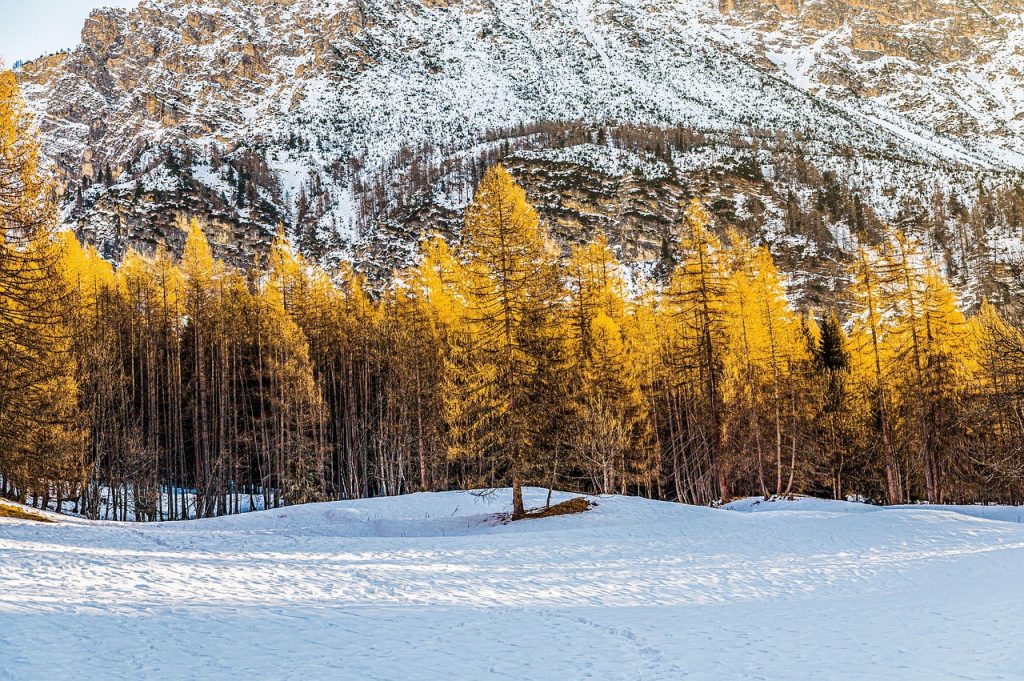
The traditional Nez Perce homeland was vast, covering a sweep of country across what is now central Idaho, northeastern Oregon, and southeastern Washington. It embraced the canyons of the Snake River, the forested slopes of the Bitterroot and Wallowa mountains, and wide camas prairies where the people gathered each year.
This was a land of dramatic contrasts, from deep river gorges to high alpine meadows, and the Nez Perce moved through it with an intimate knowledge of its rhythms. Different elevations offered different resources at different times, and life was organized around following that seasonal abundance.
Rivers were the arteries of this world. The Snake, Clearwater, Salmon, and their tributaries provided fish, travel routes, and gathering places, and the people’s villages clustered along their banks. Water shaped not only where the Nez Perce lived but how they understood the whole geography of home.
The Wallowa Valley in particular held deep meaning, remembered as the beloved country of Chief Joseph’s band. The loss of that valley would become one of the most painful episodes in Nez Perce history, a wound tied directly to this cherished landscape.
Seasonal camps dotted this enormous territory, and the people knew the safest fords, the richest fishing eddies, and the most productive root grounds across hundreds of miles. This detailed geographic memory functioned like an unwritten library, passed down through stories, songs, and the shared experience of travelling the land together.
The rhythm of moving between these landscapes gave the Nez Perce a breadth of experience few other peoples could match, at home equally in the salmon canyons and on the buffalo plains. This versatility became one of the defining strengths of their culture.

The Old Way of Life Through the Seasons
Traditional Nez Perce life followed the turning of the seasons in a carefully timed round of movement and harvest. In spring the people gathered along the rivers for the return of the salmon, in summer they climbed to the prairies to dig camas roots, and in autumn they hunted game and prepared for winter.
Winter villages sat in sheltered river valleys, where families lived in long mat-covered lodges that could house several related households. These gatherings were times of storytelling, craft, and ceremony, when the community drew close against the cold and shared the accumulated food of the warmer months.
Every season demanded specific knowledge and skill, from reading the timing of the salmon runs to knowing exactly when the camas was ready to dig. This deep environmental literacy was the foundation of survival and was carefully taught to each new generation.
The seasonal round was not merely economic but woven through with ceremony and meaning. The first salmon and first roots of the year were honored with rituals of gratitude, expressing the belief that the land gave its gifts freely and deserved respect in return.
Children learned by doing, accompanying their elders on fishing trips and root digs until the vast body of practical knowledge became second nature. In this way the seasonal round was not only a means of survival but also a school, shaping each new generation into capable and responsible members of the community.
Bands, Leaders, and Plateau Society
Nez Perce society was organized into autonomous bands, each associated with a particular river drainage or district and led by respected headmen. There was no single overarching chief in the way outsiders often imagined; instead, authority rested on wisdom, generosity, and the ability to build consensus.
Leaders earned their standing rather than simply inheriting it, and a headman who lost the trust of his people would find his influence fading. Decisions of importance were reached through discussion in council, where the voices of experienced men and women carried weight.
Kinship tied the bands together into a broader people, and marriage, trade, and shared ceremony knit the scattered communities into a common identity. In times of crisis the bands could act together, but in daily life each retained a large measure of independence.
This decentralized structure gave the Nez Perce great flexibility and resilience, though it also made unified response to outside pressure difficult. Different bands would ultimately make very different choices when confronted with treaties and encroachment.
Women held significant influence within this society, managing the crucial work of gathering and processing roots and often holding property and voice in community affairs. The balance between the roles of men and women reflected a practical recognition that the survival of the whole depended on the contributions of all.
Councils could last for days, with speakers given full opportunity to make their case, because a decision imposed without genuine agreement was understood to carry little real authority. This patient, deliberative style of governance reflected a deep respect for individual autonomy that outsiders, accustomed to rigid hierarchies, often failed to understand.
Spirit Power and the Guardian Quest
At the heart of Nez Perce spiritual life lay the search for wéyekin, a personal guardian spirit whose power guided and protected an individual through life. Young people, especially, undertook the vision quest, going alone into the mountains to fast and pray until a spirit revealed itself.
The wéyekin might come in the form of an animal, a natural force, or another being, and it granted specific abilities, songs, and protections. This intimate bond between a person and their guardian spirit was deeply private, rarely spoken of directly, yet it shaped a person’s entire sense of purpose.
The wider spiritual world was alive with power, and the people maintained careful relationships of respect with the land, the animals, and the forces of nature. Ceremony marked the great turning points of the year and the great passages of human life.
Later, new religious currents such as the Washat or Seven Drums religion and, for some, Christianity would weave into this spiritual landscape. Yet the ancient reverence for guardian power and for the sacred land has never disappeared from Nez Perce life.
The vision quest was undertaken with great seriousness, often after careful preparation and instruction from elders, and its outcome could shape a person’s role in the community for the rest of their life. A powerful guardian spirit might mark someone as a future leader, healer, or warrior, while the failure to receive one was felt as a genuine loss.
Horses and the Rise of the Appaloosa Nation
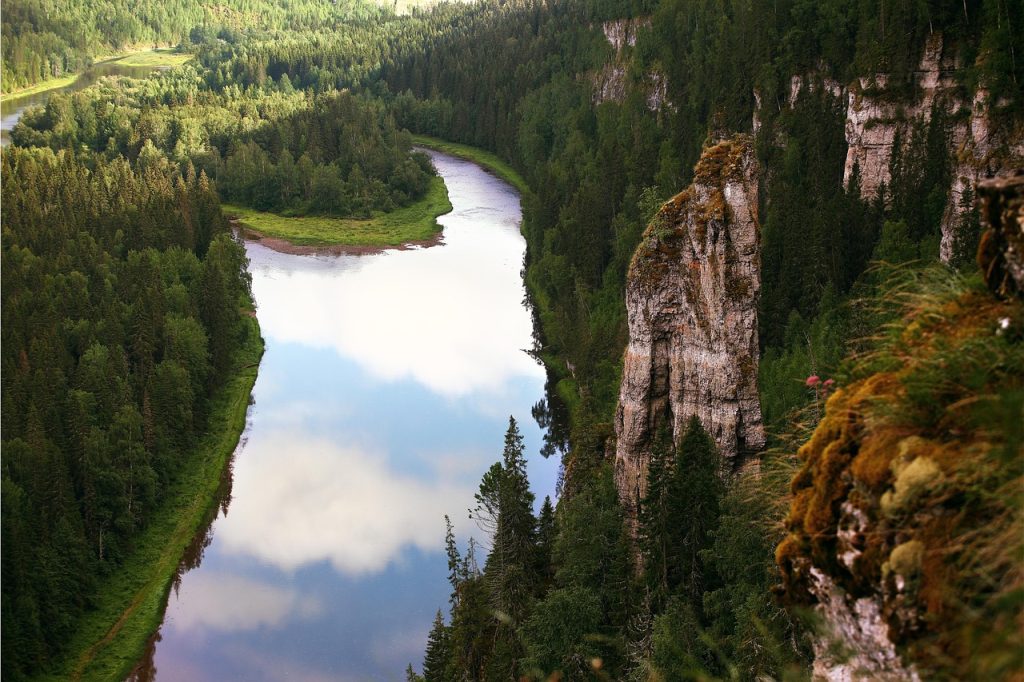
No transformation in Nez Perce history was more dramatic than the arrival of the horse in the early 1700s. Within a few generations the people had become renowned horsemen, and the animal reshaped their economy, their travel, and their reach across the wider West.
The Nez Perce are especially remembered for their careful breeding of horses, and they are closely associated with the striking spotted breed known today as the Appaloosa. Unlike many groups, they practiced selective breeding, gelding lesser animals and building herds famous for their quality and endurance.
Horses allowed the Nez Perce to cross the mountains to hunt buffalo on the plains, bringing them into contact and trade with peoples far to the east. This mobility enriched their culture, adding plains-style clothing, tipis, and customs to their plateau foundation.
The bond between the Nez Perce and their horses became legendary, and during their later flight from the U.S. Army it was their horsemanship that allowed them to travel astonishing distances. The horse remains a powerful symbol of Nez Perce identity to this day.
When the herds were threatened during the conflicts of the late nineteenth century, the loss of these carefully bred horses was felt as a wound to the entire people. In recent decades the tribe has worked to revive its horse culture, reconnecting young people with the animals that once defined Nez Perce life.
For visitors and neighbors alike, the sight of Nez Perce riders on their spotted horses became an unforgettable emblem of the plateau world. That image endures today wherever the tribe gathers to celebrate the heritage that horses helped to build.

Beadwork, Cornhusk Bags, and Fine Crafts
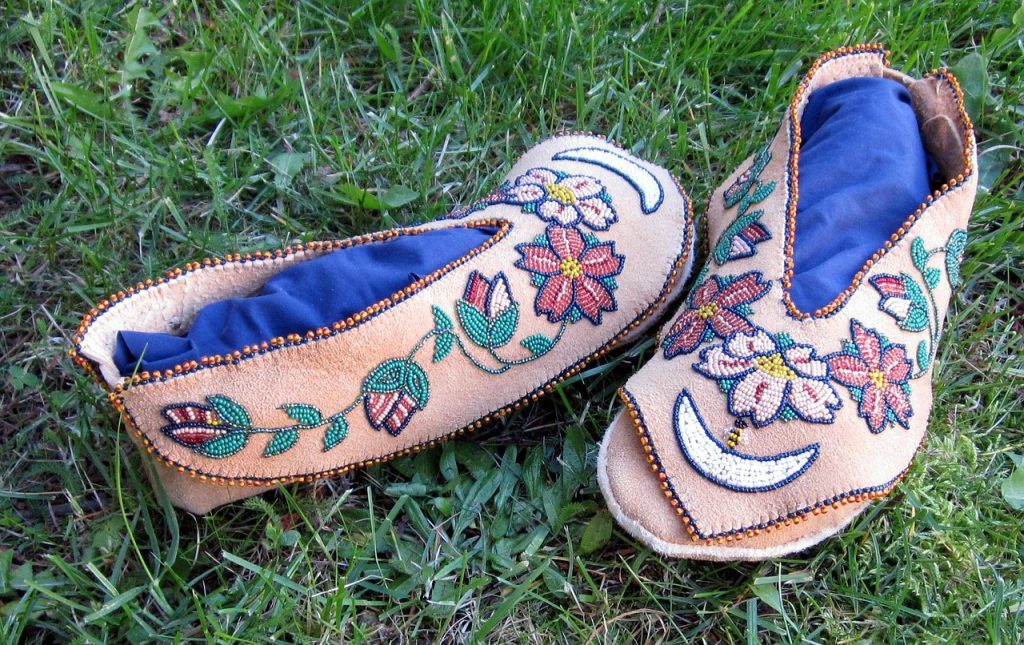
Nez Perce artistry found expression in a range of fine crafts, from intricate beadwork to the distinctive twined cornhusk bags for which the people are especially known. These flat, flexible bags, woven from hemp and cornhusk and decorated with bold geometric designs, were both practical containers and treasured works of art.
Beadwork adorned clothing, bags, horse gear, and ceremonial regalia, often in vivid floral and geometric patterns. The skill required to produce such work was considerable, and fine pieces marked both the artistry of the maker and the standing of the wearer.
Everyday tools and clothing were crafted with equal care, from tanned hide garments to woven baskets and carved implements. Nothing was purely utilitarian; even the most functional object might carry decoration that expressed identity and pride.
These craft traditions were passed carefully from one generation to the next, and many continue today. Contemporary Nez Perce artists keep the old techniques alive while also bringing them into dialogue with the present, ensuring the visual language of their people endures.
Museums and collectors long prized Nez Perce cornhusk bags and beadwork, and today these historic pieces serve as invaluable references for artists reviving the old designs. By studying the work of their ancestors, contemporary makers recover patterns and techniques that had nearly been lost, weaving the past directly into the present.
Salmon, Camas, and Foods of the Plateau
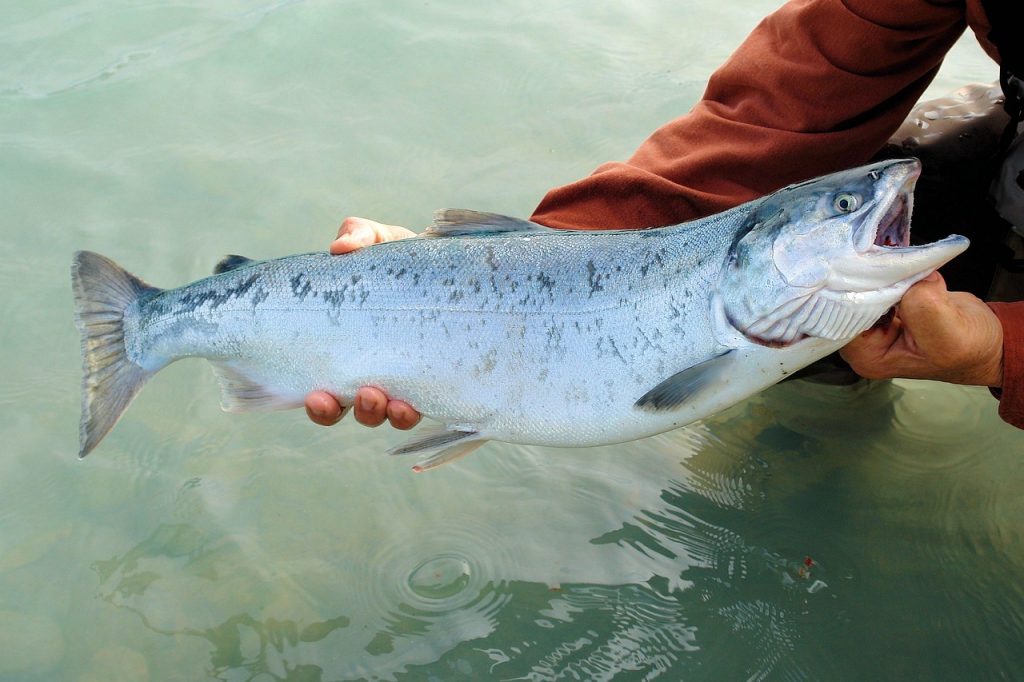
Salmon stood at the center of the Nez Perce diet, and the great runs that surged up the rivers each year were the foundation of plateau life. The people caught the fish with spears, nets, and weirs, then dried great quantities for storage through the lean winter months.
Equally important was the camas, a starchy blue-flowered root that the people dug from the high prairies in early summer. Baked slowly in earth ovens, camas provided a sweet, nourishing staple that could be preserved and traded across the region.
The Nez Perce rounded out their diet with other roots such as kouse, with berries gathered from the hills, and with game including deer, elk, and, after the coming of the horse, buffalo from the eastern plains. This varied menu reflected the richness of their homeland.
Food was never taken for granted. The first salmon and first roots of the season were honored with ceremonies of thanks, expressing the belief that these gifts came from a generous world that must be treated with respect and gratitude.
The importance of these foods went far beyond nutrition, for salmon and camas were woven into the people’s sense of who they were and how they related to the land. To this day, first-food ceremonies remind the community that these gifts must be protected, and that the health of the rivers and prairies is inseparable from the health of the people.
Gatherings, Trade Fairs, and Ceremony
The seasonal round brought the Nez Perce together for great gatherings that mixed harvest, trade, ceremony, and celebration. The camas prairies in particular drew families from many bands, turning the summer dig into a festive social season.
Trade fairs linked the Nez Perce into a vast network reaching from the Pacific coast to the buffalo plains, and gatherings such as the great rendezvous at places like Weippe Prairie were occasions for exchanging goods, arranging marriages, racing horses, and renewing bonds.
Ceremony marked the sacred rhythm of the year, from first-food rituals honoring the salmon and camas to dances that expressed the people’s relationship with the spirit world. These occasions reaffirmed the shared identity that tied the scattered bands together.
Many of these traditions continue in modern form. Powwows, root feasts, and commemorative gatherings keep the spirit of the old assemblies alive, offering the Nez Perce a chance to celebrate their heritage and welcome the wider community.
For scattered bands who spent much of the year apart, these gatherings were essential to maintaining a shared identity and a common store of stories, songs, and news. The friendships and alliances renewed at the summer camps helped hold the wider Nez Perce world together across great distances.

A History of Treaties, War, and Exile
The Nez Perce famously welcomed the Lewis and Clark expedition in 1805, offering food and guidance to the exhausted travelers. That early friendship, however, gave way over the following decades to mounting pressure as settlers, missionaries, and government agents pushed into the plateau country.
Treaties in the 1850s and 1860s drastically reduced Nez Perce lands, and a controversial later agreement, signed only by some bands, stripped away the Wallowa Valley of Chief Joseph’s people. Those who refused to accept the loss of their homeland became known as the non-treaty Nez Perce.
In 1877 tensions erupted into open conflict, and rather than surrender their freedom, several bands undertook an extraordinary fighting retreat of some fifteen hundred miles toward Canada. Their skill and courage astonished the pursuing army, but they were halted just short of the border.
Chief Joseph’s surrender speech, with its resolve to fight no more forever, became one of the most famous moments in American history. The survivors were exiled far from home, and only after years of hardship were some allowed to return to the Northwest.
The years of exile in the hot lowlands far from the plateau proved devastating, and many died of disease and heartbreak before survivors were finally permitted to come north again. Even then, some were sent to a reservation apart from their old homeland, a separation whose echoes are still felt in Nez Perce communities today.

The Nez Perce Nation Today
Today the Nez Perce Tribe is a sovereign nation centered on a reservation in north-central Idaho, with tribal members also living among related communities in the region. After generations of loss, the people have rebuilt strong institutions of self-government, education, and cultural life.
The tribe has become a leader in natural resource management, particularly in the effort to restore the salmon runs that are so central to Nez Perce identity. Fisheries programs, habitat restoration, and legal advocacy reflect a determination to heal the rivers for future generations.
Language revitalization, cultural education, and the arts all flourish alongside economic development, as the Nez Perce work to ensure that young people grow up knowing who they are. The memory of the 1877 flight is honored, but the focus is firmly on a living, continuing people.
The story of the Nez Perce is not one of a vanished past but of endurance and renewal. Rooted in an ancient homeland and carried forward by a proud people, the Nimíipuu remain very much a nation of the present, shaping their own future along the rivers that have always been home.
Partnerships with state and federal agencies, universities, and neighboring tribes have made the Nez Perce influential far beyond the boundaries of their reservation. Their leadership in salmon recovery in particular has drawn national attention, positioning the Nimíipuu as stewards not only of their own heritage but of the wider health of the Northwest.
Looking ahead, the Nez Perce continue to insist that their treaties be honored and their voice respected in decisions about the lands and waters they have always called home. Their persistence stands as a reminder that the history of this people is still being written.
Related Peoples of the Region
- Coast Salish Canoe Nations of the Salish Sea and Their Cedar Longhouse World
- Tanoan Pueblo Peoples of the Rio Grande and Their Thousand-Year Adobe Villages
- Keresan Sky City Dwellers of Acoma and a Language With No Known Kin
- Kwakwaka’wakw and Nuu-chah-nulth Whalers of the Wakashan Coast and Their Masked Dances
- Tsimshian Clans of the Skeena and Nass Rivers and Their World of Crests and Grease
- Mojave People of the Lower Colorado River and Their World of Dreams