Along the storm-lashed chain of the Aleutian Islands, where the Pacific meets the Bering Sea, live the Unangax̂, better known as the Aleut. For thousands of years they mastered one of the harshest seas on earth, hunting seals, sea otters and whales from swift skin kayaks in a world of fog, wind and volcanoes.The coming of Russian fur traders after 1741 brought devastation and the Orthodox faith that endures among them still, while the Second World War drove them into internment far from home. Renowned for their fine grass baskets and their sea-hunting skill, the Aleut carry a resilient island heritage into the present.
The Aleut on Film
Contents
- Origins
- The Name
- The Language
- The Homeland
- The Old Way of Life
- Society and Community
- Religion and Belief
- Traditions
- Crafts
- Food
- Festivals
- History
- Today
Origins
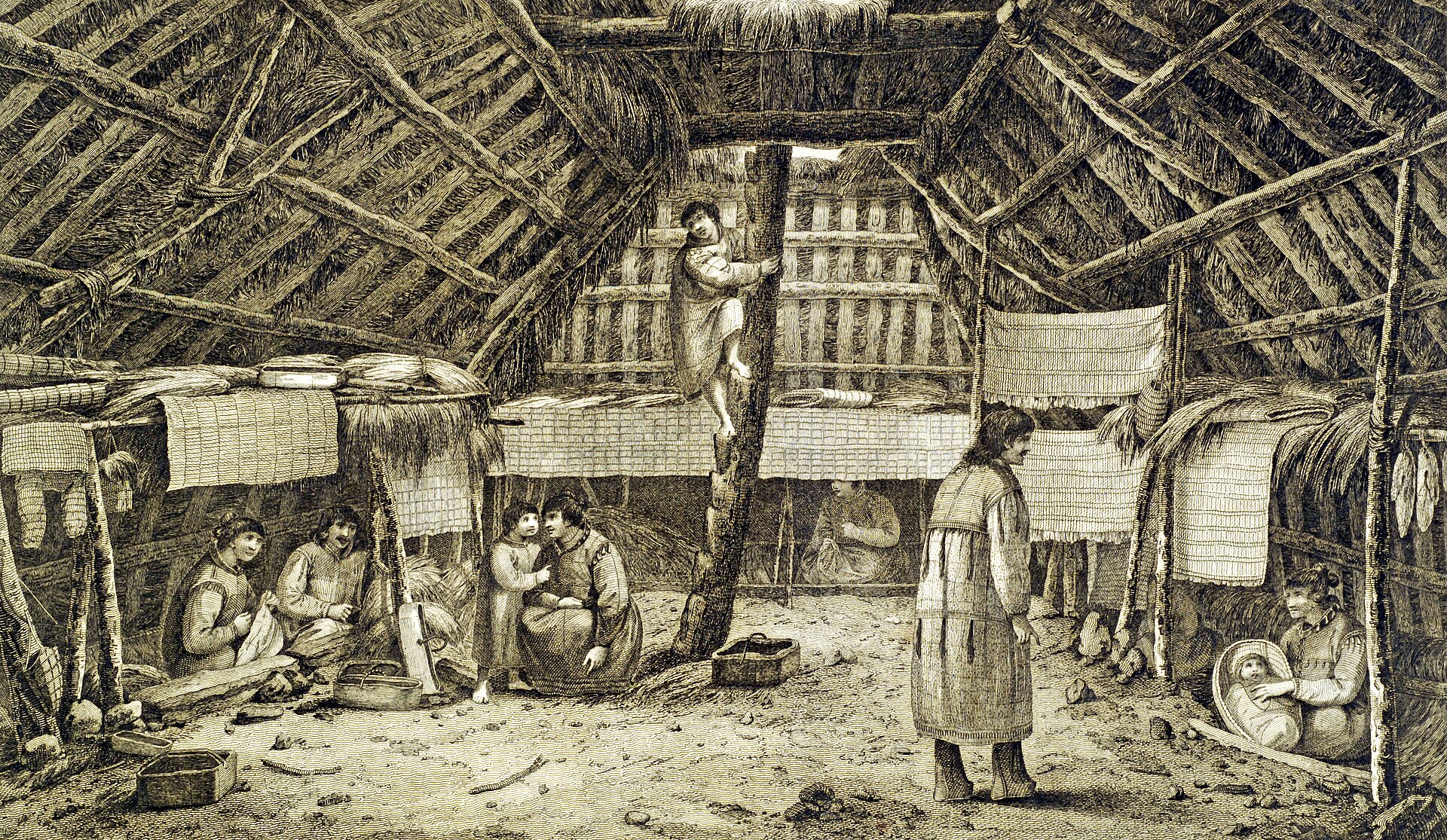
The Aleut, who call themselves Unangax̂, are the Indigenous people of the Aleutian Islands, the long chain of volcanic islands that stretches from the tip of the Alaska Peninsula toward Asia across the stormy North Pacific. They also inhabit the Pribilof and Shumagin Islands and, through later resettlement, the Commander Islands on the Russian side.
For thousands of years the Unangax̂ lived as masters of one of the harshest maritime environments on earth, a treeless world of fog, wind and sea. From the ocean around them they drew nearly everything they needed, developing one of the most sophisticated sea-hunting cultures of the northern world.
The Name

The people call themselves Unangax̂ in the singular and Unangan or Unangas in the plural, meaning the people of the seaside. The name Aleut, by which they are widely known, was given to them by Russian traders in the eighteenth century and remains in common use.
The Unangax̂ homeland centres on the Aleutian Islands, with communities on islands such as Unalaska, Atka and the Pribilofs. The town of Unalaska, with its port of Dutch Harbor, is the largest settlement of the region and a hub of Aleut life.
The Language
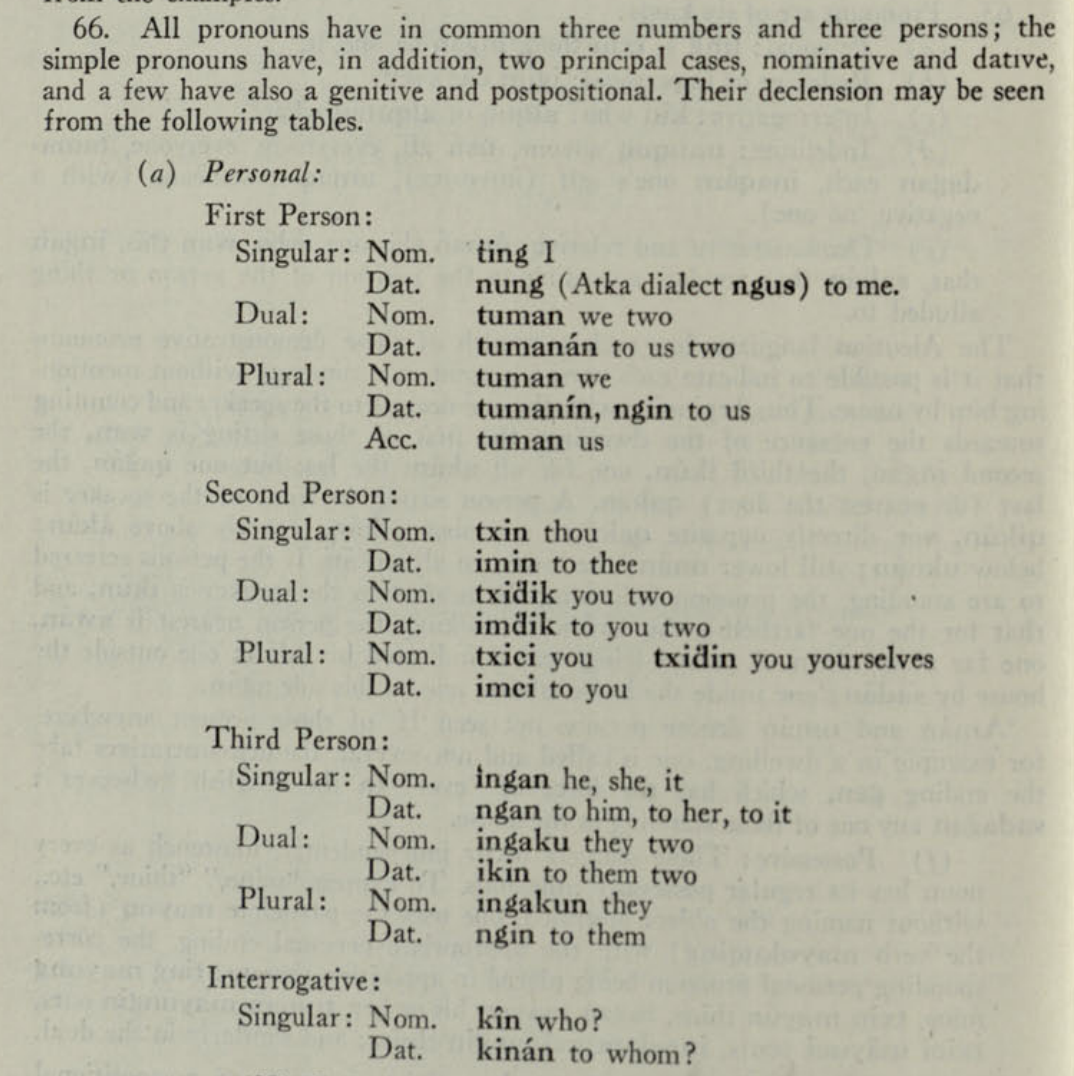
The Aleut speak Unangam Tunuu, a language that forms one branch of the Eskimo-Aleut family, distinct from the Yupik and Inuit languages of the north. It exists in eastern and western dialects, reflecting the great length of the island chain.
Russian traders and Orthodox missionaries wrote the language down, and it acquired a literature, but generations of pressure reduced the number of speakers. Today Unangam Tunuu is endangered, spoken by a small number of elders, and efforts are under way to teach and revive it as a cornerstone of Aleut identity.
The Homeland

The Aleut homeland is the Aleutian archipelago, a chain of over a hundred islands formed by a line of volcanoes where the Pacific meets the Bering Sea. Treeless, wind-swept and often shrouded in fog, the islands are ringed by rich waters teeming with fish, sea mammals and seabirds.
It is a land of dramatic beauty and great danger, of active volcanoes, sudden storms and powerful currents. Yet these same seas made the Aleutians one of the most productive environments in the north, and the Unangax̂ built their whole way of life around the bounty and the perils of the ocean.
The Old Way of Life
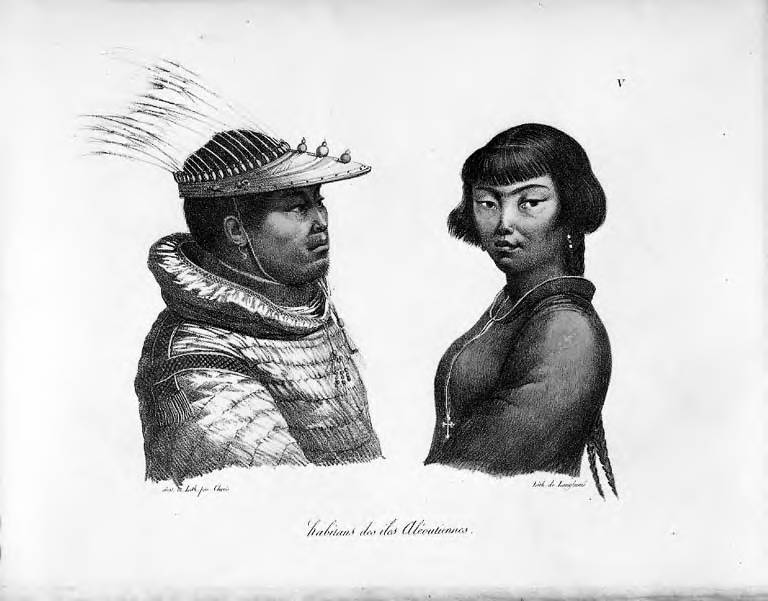
The Aleut were consummate maritime hunters, taking seals, sea lions, sea otters, whales, fish, seabirds and shellfish from the waters around their islands. Their great instrument was the iqyax, or baidarka, a swift and seaworthy skin kayak, from which hunters struck sea mammals with harpoons hurled by a throwing board.
On land they lived in the barabara, a semi-subterranean house roofed with sod and driftwood against the fierce weather. This life, poised between the storms of the sea and the shelter of the earth, demanded extraordinary skill and knowledge, and the Aleut were among the finest sea-hunters of any people.
Society and Community

Aleut society was organised into villages of related families, with chiefs and a ranked order that included nobles, commoners and, in earlier times, slaves. Wealth, standing and skill in hunting brought prestige, and elaborate wooden hunting hats and visors marked the rank and prowess of their wearers.
The coming of the Russians in the eighteenth century shattered this order, as the Unangax̂ were forced into the sea-otter hunt and their society was devastated by violence and disease. Yet the people survived, rebuilding their communities under new conditions and preserving a strong sense of who they were.
Religion and Belief

Traditional Aleut belief centred on the spirits of the animals and the forces of the sea and sky, honoured through ritual, amulets and the skill of shamans, in a world where the hunt was a sacred as well as a practical act. Respect for the sea mammals on which life depended lay at the heart of this worldview.
From the late eighteenth century the Aleut embraced Russian Orthodox Christianity, which became, and remains, central to their identity; among their own was the sainted priest Jacob Netsvetov. The onion-domed churches of the Aleutian villages, such as the cathedral at Unalaska, stand as enduring symbols of Aleut Orthodox faith.
Traditions

Aleut tradition is expressed in dance, song and the wearing of festival dress, occasions on which the community gathers to celebrate and to honour its heritage. Masked dances and ceremonies once marked the ritual life of the villages, accompanied by drumming and chant.
The making and wearing of the painted bentwood hunting hats and visors, adorned with sea-lion whiskers, carved ivory and paint, was itself a proud tradition, marking status and skill. Through dance, dress and ceremony the Aleut sustain and celebrate their distinctive island culture.
Crafts

The Aleut are world-renowned for their basketry, weaving exceptionally fine baskets from beach rye grass in tight, delicate stitches, above all in the villages of Attu and Atka. These grass baskets, some so finely woven as to resemble cloth, are prized among the masterpieces of Indigenous art.
Aleut craftsmen also carved the bentwood hunting hats, worked bone, ivory and wood, sewed waterproof parkas from the gut of sea mammals, and built the elegant baidarka kayaks. This material culture, drawn wholly from the sea and shore, reflects the ingenuity of a people living at the edge of the ocean.
Food

The Aleut diet came almost entirely from the sea: seals, sea lions, sea otters and whales, fish such as salmon, cod and halibut, seabirds and their eggs, shellfish, sea urchins and edible seaweeds. Little grew on the treeless islands, so the ocean was the pantry of the people.
Meat and fish were dried and stored against the long winters, and every part of the sea mammals was used, for food, clothing, tools and shelter. This marine diet, rich in the fat and protein needed to survive the cold, sustained the Aleut for countless generations.
Festivals

Aleut communal life is marked by gatherings that blend older tradition with the festivals of the Orthodox calendar, from Christmas and Easter celebrations to the honouring of saints. These occasions bring the villages together for worship, feasting, song and dance.
Dances in festival dress, the sharing of traditional foods and the renewal of community and family ties mark such gatherings. Through them the Aleut celebrate both their ancient island heritage and the Orthodox faith that has become inseparable from their identity.
History
The Aleut way of life was transformed by the arrival of Russian fur traders after 1741, who forced the Unangax̂ to hunt sea otters and, through violence, enslavement and disease, reduced their population catastrophically. Under Russian rule the survivors adopted the Orthodox faith and were drawn into the fur economy, and after 1867 the islands passed to the United States.
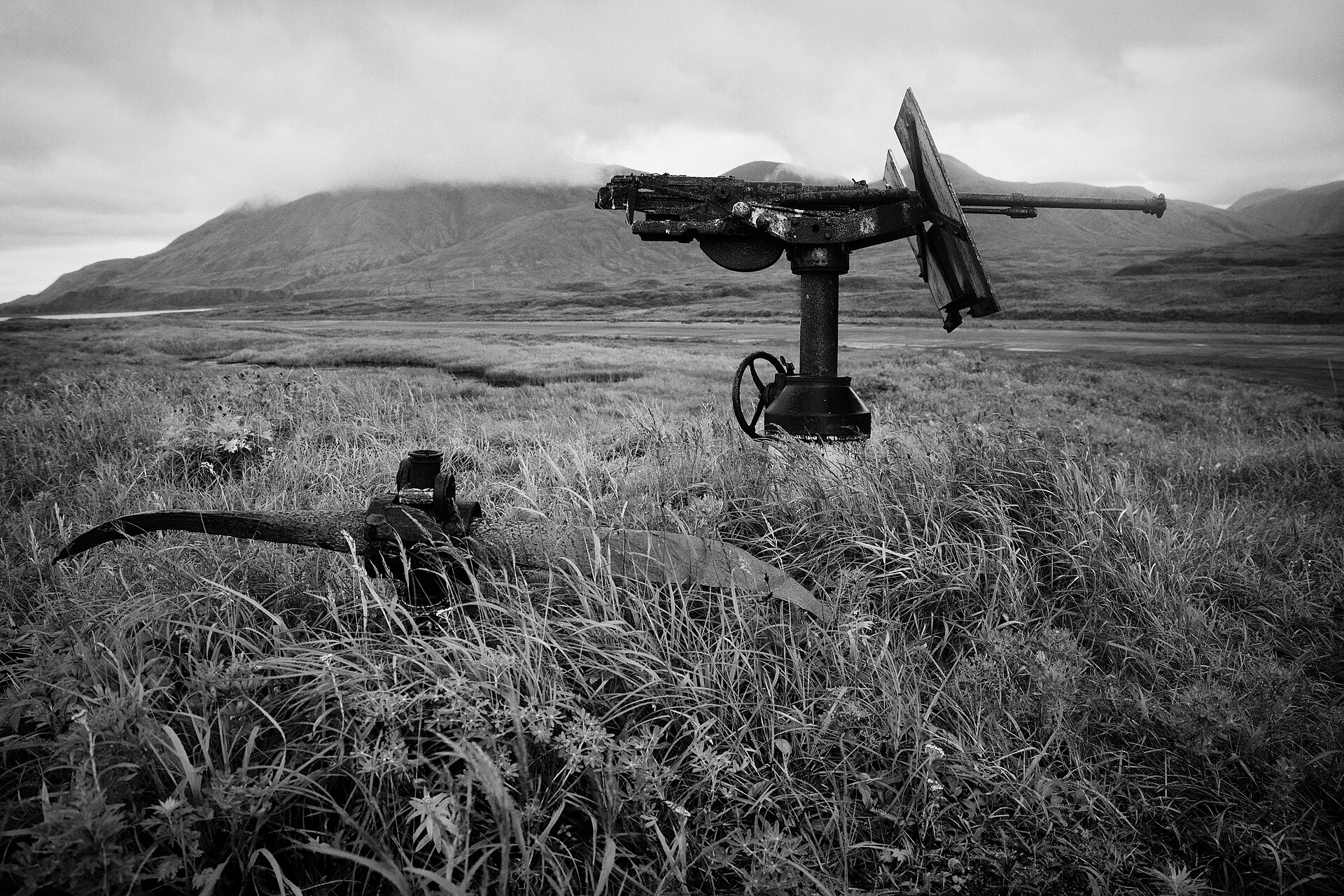
The Second World War brought fresh tragedy, as Japan invaded the western Aleutians and the United States evacuated hundreds of Aleut to internment camps in southeastern Alaska, where many died in poor conditions. Decades later, in 1988, the United States formally apologised and made restitution, and the Aleut rebuilt their communities and reasserted their rights.
Today

Today the Aleut live in the villages of the Aleutian and Pribilof Islands and in the wider Alaskan and Russian worlds, sustained by commercial and subsistence fishing, for Unalaska’s port of Dutch Harbor is among the busiest fishing ports in the United States. They manage their own regional organisations and corporations.
The Orthodox faith, the grass-weaving tradition, the memory of the baidarka and the effort to revive the Unangam Tunuu language continue to anchor Aleut identity. Masters of one of the world’s harshest seas, the Unangax̂ carry a resilient and remarkable heritage into the modern age.
Related Peoples of the Region
- Inside the Haudenosaunee Confederacy and Its Great Law of Peace
- The Nation That Never Surrendered: Inside Seminole Country
- Muscogee Creek Towns, Councils, and the Long Road to Oklahoma
- Ojibwe Anishinaabe Life Around the Great Lakes and Wild Rice Waters
- The Metis, the Buffalo Hunters of the Red River
- The Choctaw, People of the Sacred Mound
- The Mikmaq, First People of the Atlantic Coast
- The Wampanoag, People of the First Light
More Peoples of the World
- A Fifth of Humanity, the Story of the Han Chinese
- How the Maori Sailed Across the Pacific to Reach New Zealand
- Zulu of the Green Hills and Their Kingdom Forged by Shaka
- The People Who Never Vanished, the Story of the Maya
- Long Before the Arabs Came, North Africa Belonged to the Amazigh
- The People Who Emerged Into This World, the Story of the Navajo
- Meet the Ainu, an Indigenous People at Japan’s Northern Edge
You May Like
The Damara, an Ancient People of Namibia