On the northern plains of Canada, where the fur trade met the buffalo range, a new people took shape: the Métis. Born of unions between First Nations women and European traders, they became neither wholly Indigenous nor European but a distinct nation of their own, centred on the Red River.Hunters of the buffalo, makers of pemmican, masters of the fiddle and the arrow sash, and famed for their floral beadwork, the Métis twice rose under Louis Riel to defend their homeland. Long denied and later recognised as one of Canada`s Indigenous peoples, they carry a proud and distinctive heritage.
The Metis on Film
Contents
- Origins
- The Name
- The Language
- The Homeland
- The Old Way of Life
- Society and Community
- Religion and Belief
- Traditions
- Crafts
- Food
- Festivals
- History
- Today
Origins

The Métis are one of the three recognised Indigenous peoples of Canada, alongside the First Nations and the Inuit. They arose in the seventeenth and eighteenth centuries from the unions of First Nations women, chiefly Cree, Ojibwe and Saulteaux, with European fur traders of French and Scottish descent, and over time they coalesced into a distinct people with their own culture and identity.
The heart of the Métis nation lay in the Red River valley of what is now Manitoba, where a new society took shape around the fur trade and the buffalo hunt. Neither wholly European nor wholly First Nations, the Métis forged something new on the northern plains, a people of the frontier and the trade routes.
The Name

The name Métis comes from a French word meaning mixed, and it came to denote not simply people of mixed ancestry but a specific nation with its own language, customs and sense of itself. The Métis distinguish themselves both from their First Nations and their European forebears.
The Métis homeland, sometimes called the Métis Nation Homeland, centres on the Red River and spreads across the Canadian prairies of Manitoba, Saskatchewan and Alberta, reaching into Ontario, British Columbia and the northern United States. The city of Winnipeg grew from their heartland at the Forks of the Red and Assiniboine rivers.
The Language

The Métis developed a language of their own, Michif, a remarkable mixed tongue that combines Cree verbs with French nouns, reflecting the dual heritage of the people. Other Métis spoke French, varieties of Cree or Bungi, a Scots-influenced dialect, according to their community.
Michif is today an endangered language, spoken fluently by only a small number of elders, but it is cherished as a unique emblem of Métis identity, and efforts are under way to record and revive it. Alongside it, French and English serve the Métis in daily life.
The Homeland

The Métis homeland is the country of the northern Great Plains and the parkland and forest that border them, a land of prairie, river valley and lake stretching across the Canadian West. The Red River and the Assiniboine, and the great buffalo ranges beyond, shaped the Métis way of life.
This was a land of long horizons and hard winters, crossed by the cart trails and river routes of the fur trade. The Métis knew it intimately as hunters, traders and guides, and their attachment to this homeland lies at the centre of their identity and their historic struggles.
The Old Way of Life
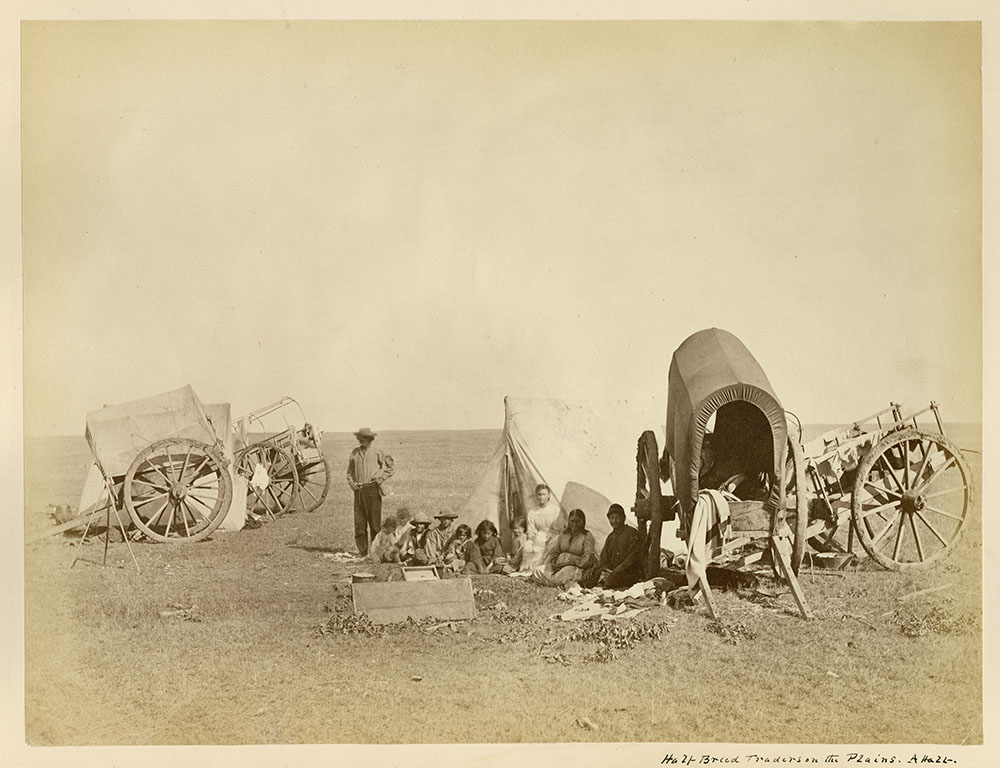
The Métis economy rested on the fur trade and the buffalo hunt. Métis men worked as voyageurs, traders, guides and interpreters, moving furs and goods across the continent, while the great communal buffalo hunts supplied meat and, above all, pemmican, the concentrated food that fuelled the fur trade.
The distinctive Red River cart, with its high wheels and all-wooden construction, carried Métis goods across the plains, and the York boat moved cargo along the rivers. This life of hunting, trading and transport, poised between the First Nations and European worlds, defined the old Métis way.
Society and Community

Métis society was organised around extended families, the hunt and the parish, combining First Nations kinship with the institutions of the fur-trade world. The buffalo hunt itself was governed by strict rules and elected captains, an early form of Métis self-government on the plains.
The towering figure of Métis history is Louis Riel, who led his people in the Red River Resistance of 1869 to 1870, securing the creation of the province of Manitoba, and again in the North-West Resistance of 1885. His leadership, and his execution by the Canadian government, made him a lasting symbol of the Métis nation and its struggle for recognition.
Religion and Belief

The great majority of Métis are Roman Catholic, a heritage of their French forebears and of the missions that served the Red River and the plains. The cathedral of Saint Boniface, across the river from Winnipeg, stands as a historic centre of Métis Catholicism.
Métis faith blended Catholic devotion with elements drawn from their First Nations heritage, and the church was central to community life, marking the seasons and the rites of the life cycle. Religious festivals and pilgrimages remain important occasions in Métis communities.
Traditions

The most iconic Métis tradition is the ceinture fléchée, the brightly coloured finger-woven arrow sash worn about the waist, which became a badge of Métis identity. Equally distinctive is Métis music, above all the fiddle, and the lively step-dancing known as jigging, of which the Red River Jig is the most famous.
These traditions blend French, Scottish and First Nations elements into something wholly Métis, and they remain central to community gatherings. Through fiddle and dance, the sash and the old songs, the Métis express and celebrate their distinctive heritage.
Crafts

The Métis are celebrated for their beadwork, so renowned for its floral designs that other peoples called them the Flower Beadwork People. Métis women decorated clothing, moccasins, gloves, bags and saddle gear with intricate flowers and vines in glass beads and silk thread.
Alongside beadwork the Métis produced fine finger-woven sashes, quillwork, leatherwork and the building of carts and boats. This craftwork, blending European floral motifs with Indigenous techniques, is among the most admired of the northern plains and a proud marker of Métis culture.
Food

Métis food reflects the life of the hunt and the trade. The staple was pemmican, made of dried and pounded buffalo meat mixed with fat and berries, a nourishing and portable food that sustained the fur brigades across the continent.
Bannock, a simple bread cooked over a fire or in a pan, became a beloved everyday food, shared with the wider Indigenous world, while the buffalo hunt provided fresh and dried meat, and fish, game, berries and garden produce rounded out the diet. These foods remain part of Métis identity and gatherings.
Festivals
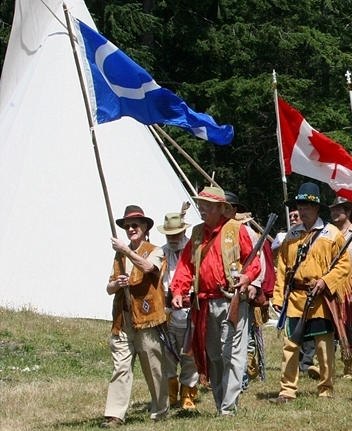
Métis communal life is marked by festivals and gatherings that celebrate their culture, from fiddle and jigging contests to the display of the sash, beadwork and traditional dress. Events such as the Back to Batoche days draw Métis from across the homeland to honour their heritage and history.
These gatherings feature music, dance, food and the retelling of the Métis story, above all the memory of the Red River and Batoche. They reaffirm the bonds of the Métis nation and pass its traditions to new generations.
History
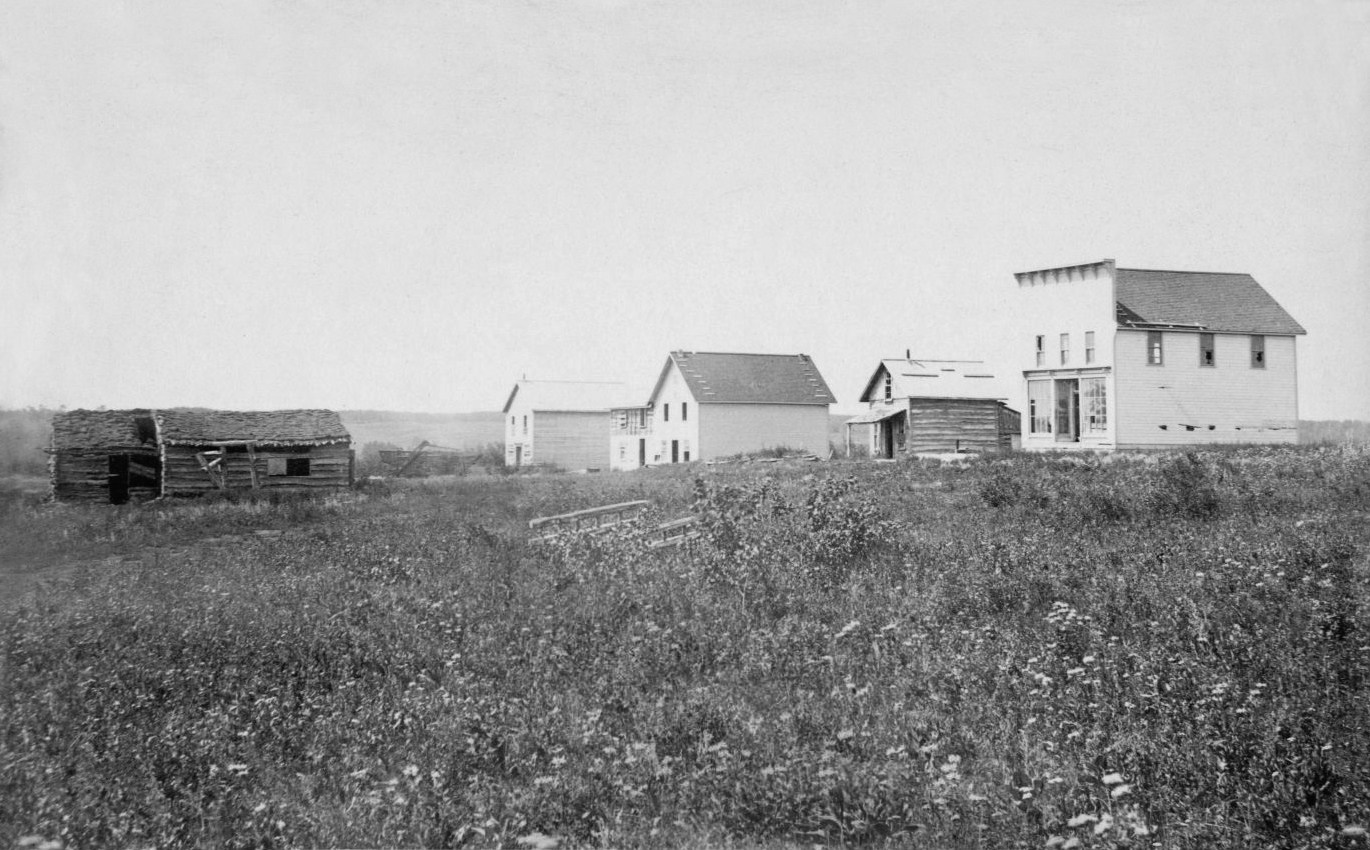
The Métis emerged as a distinct nation on the Red River in the early nineteenth century, asserting their rights as buffalo hunters and traders. When Canada moved to annex the North-West in 1869, the Métis under Louis Riel resisted, and their action led to the creation of Manitoba in 1870, though many Métis were subsequently displaced westward.
In 1885 the Métis and their allies rose again in the North-West Resistance, defeated at Batoche, after which Riel was hanged. For decades afterward the Métis were marginalised and their nationhood denied, until, after long struggle, they were recognised in Canada’s constitution in 1982 as one of the country’s Aboriginal peoples.
Today

Today the Métis are a vibrant and growing people, numbering several hundred thousand across the Canadian West and beyond, recognised as one of Canada’s Indigenous nations. They are represented by their own governments and organisations, and have won important recognition of their rights through the courts.
Métis fiddle music, jigging, beadwork and the sash flourish anew, and the memory of Louis Riel, now honoured as a founder of Manitoba, stands at the centre of Métis pride. Rooted in the Red River and the fur trade, the Métis carry their distinctive heritage confidently into the modern world.
Related Peoples of the Region
- Garifuna: The Shipwreck That Became a Nation
- Miskito: The Coast That Crowned Its Own Kings
- Taino: The People Declared Extinct Who Never Left
- Guna: Islanders Who Govern Their Own Corner of Panama
- Inside the Haudenosaunee Confederacy and Its Great Law of Peace
- The Nation That Never Surrendered: Inside Seminole Country
- Muscogee Creek Towns, Councils, and the Long Road to Oklahoma
- Ojibwe Anishinaabe Life Around the Great Lakes and Wild Rice Waters
More Peoples of the World
- A Fifth of Humanity, the Story of the Han Chinese
- How the Maori Sailed Across the Pacific to Reach New Zealand
- Zulu of the Green Hills and Their Kingdom Forged by Shaka
- The People Who Never Vanished, the Story of the Maya
- Long Before the Arabs Came, North Africa Belonged to the Amazigh
- The People Who Emerged Into This World, the Story of the Navajo
- Meet the Ainu, an Indigenous People at Japan’s Northern Edge
You May Like
The Damara, an Ancient People of Namibia