From the deserts of Rajasthan and the plains of Gujarat to the high pastures of the western Himalaya, live the Gujjars, one of the great pastoral communities of the subcontinent. Herders of buffalo, cattle, sheep, and goats, and in many places settled farmers, they are an ancient and widely dispersed people whose name is written into the very map of India, above all in the state of Gujarat.
Heirs to the medieval Gurjaras and their empire, keepers of the great epic of the folk hero Devnarayan, and famous above all for the transhumant herders of the mountains who move their flocks between plain and high pasture with the seasons, the Gujjars combine an ancient heritage with a living pastoral tradition. This article traces their origins, language, homeland, society, religion, and traditions, and the story of the herders of northern India.
The Gujjars on Film
Contents
- Origins
- The Name
- The Language
- The Homeland
- The Old Way of Life
- Society and Community
- Religion and Belief
- Traditions
- Crafts
- Food
- Festivals
- History
- Today
Origins

The Gujjars, also spelled Gurjar, are a large pastoral and agricultural community spread across northern and western India and into Pakistan, from Rajasthan and Gujarat to Haryana, Himachal Pradesh, Jammu and Kashmir, and Uttar Pradesh. Traditionally herders of buffalo, cattle, sheep, and goats, and in many areas settled cultivators, they are an ancient and widely dispersed people whose name is written into the geography of the subcontinent, above all in the state of Gujarat.
The Gujjars are an old community, associated in history with the Gurjara peoples who rose to prominence in the early medieval period and gave their name to Gujarat and to other places across the northwest. Traditionally pastoralists, some of them migratory, moving their herds between the plains and the mountain pastures with the seasons, and others long settled as farmers, the Gujjars are found across a vast area and are divided, like the Jats with whom they are often compared, among the Hindu, Muslim, and Sikh faiths. Their pastoral heritage, their wide dispersion, and their ancient name are the marks of this distinctive people.
The Name

The name Gujjar, or Gurjar, is of ancient origin and is connected to the Gurjaras of early medieval history, a people or confederation who rose to power in northwestern India and whose name was given to the land of Gujarat (“the country of the Gurjaras”) and survives in place-names such as Gujranwala and Gujar Khan across the northwest. The origin of the name itself is debated, but its antiquity and its imprint on the map are clear.
As an identity, Gujjar denotes this pastoral and agricultural community, dispersed across a wide area and divided by religion into Hindu, Muslim, and Sikh, but sharing a common name, a common pastoral heritage, and a consciousness of a shared origin and history. The community is divided into numerous clans (gotras), and in different regions holds different official classifications, as a scheduled tribe in some states and other categories elsewhere. Despite their wide dispersion and religious divisions, the Gujjars retain a strong sense of common identity, rooted in their ancient name, their herding traditions, and their shared heritage.
The Language
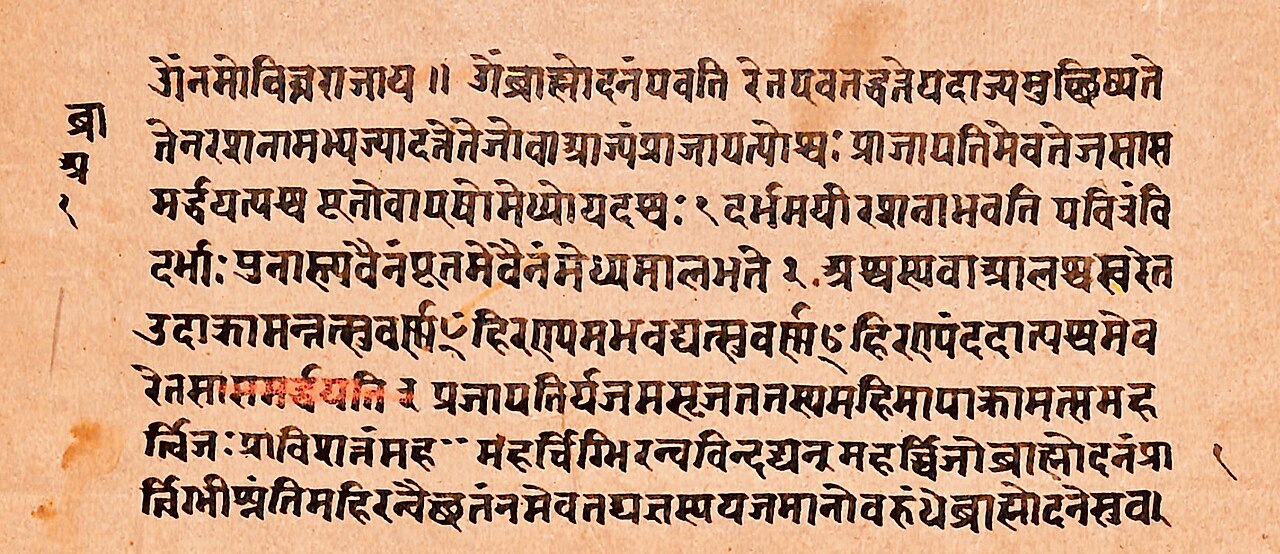
The Gujjars speak the regional languages of the areas in which they live, according to their wide dispersion: the Rajasthani dialects in Rajasthan, Gujarati in Gujarat, Haryanvi and Hindi in Haryana and the plains, the Pahari and Gojri languages in the hills of Himachal and Jammu and Kashmir, and so on. Among the migratory Gujjars of the mountains, above all, a distinctive language, Gojri, is spoken, a form of speech related to Rajasthani and carried by the community in its migrations.
Gojri, the language most particularly associated with the Gujjars, above all the Muslim Gujjars and Bakarwals of the western Himalaya, is an Indo-Aryan tongue that preserves the community’s distinct identity across the regions through which they move, and there are efforts to promote and preserve it. Written, where written, in the Perso-Arabic or Devanagari script according to region and religion, the Gujjar languages carry the folk traditions, songs, and lore of a pastoral people. This linguistic pattern, combining the regional languages with the distinctive Gojri of the herding communities, reflects both the wide dispersion and the shared heritage of the Gujjars.
The Homeland

The Gujjars have no single homeland but are dispersed across a vast region of northern and western India and Pakistan, from the deserts and plains of Rajasthan and the plains of Gujarat, Haryana, and Uttar Pradesh to the hills and high pastures of Himachal Pradesh and Jammu and Kashmir. This wide distribution reflects their pastoral heritage and their historic movements, and the community is at home in environments as varied as the desert, the plain, and the high mountain.
For the migratory Gujjars of the western Himalaya, above all, the homeland is defined by the seasonal round of transhumance, moving with their herds of buffalo, sheep, and goats from the winter grazing of the lower hills and plains to the rich summer pastures of the high mountain meadows, and back again, in a way of life bound to the mountains and the changing seasons. For the settled Gujjars, the villages and farmlands of the plains are home. This dispersion across desert, plain, and mountain, and the transhumant life of the herders, defines the varied homeland of the Gujjar people.
The Old Way of Life

The traditional life of the Gujjars is above all that of the pastoralist, for the community is famous as a people of herders, keepers of buffalo, cattle, sheep, and goats, and their pastoral heritage is central to their identity. Many Gujjars, above all in the plains, kept buffalo and cattle and were renowned as dairymen, supplying milk and dairy produce, while others, above all in the mountains, herded sheep and goats.
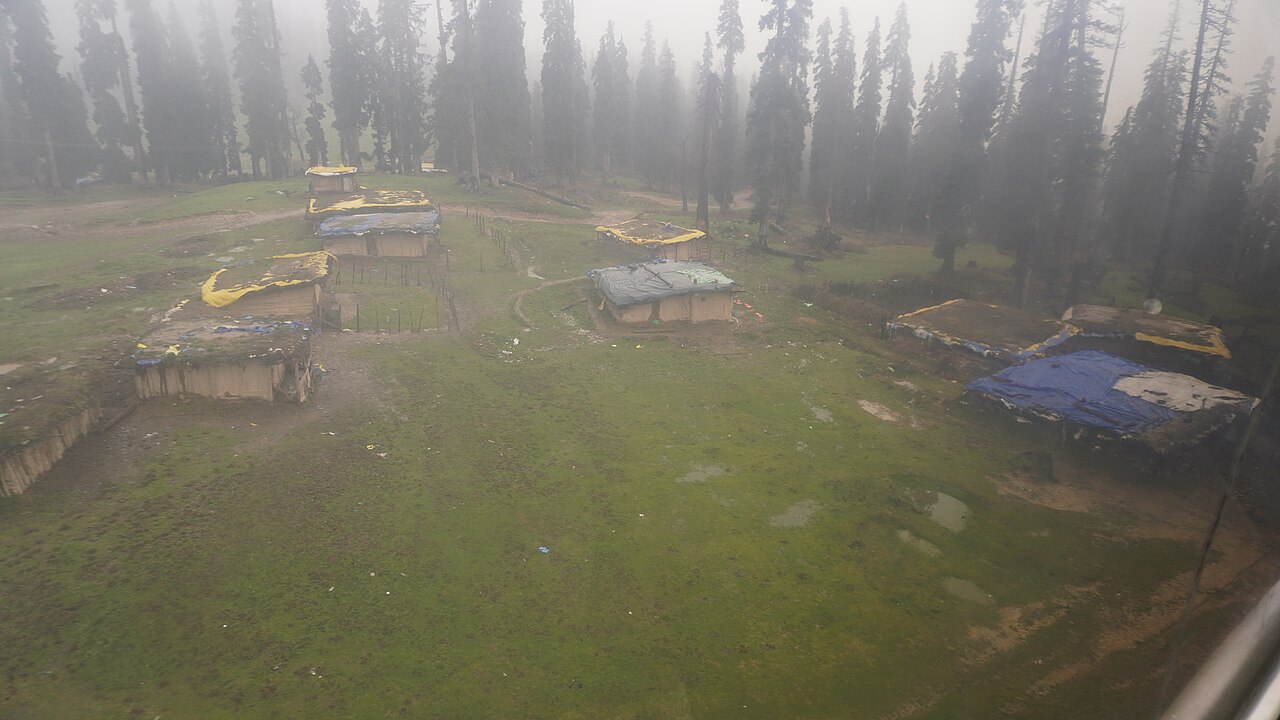
The most distinctive form of this pastoral life is the transhumance of the mountain Gujjars and the related Bakarwals of the western Himalaya, who migrate with their herds between the lowlands and the high pastures with the seasons, living a semi-nomadic life in temporary dwellings and moving along established routes, one of the great traditions of pastoral migration in the subcontinent. Alongside herding, many Gujjars are also settled cultivators, and the community combines the pastoral and the agricultural. This life of herding, dairying, and, for many, transhumant migration, together with settled farming, forms the traditional basis of Gujjar society.
Society and Community
Gujjar society is organised around the clan (gotra), the extended family, and, for the migratory communities, the herding group, and is marked by strong clan solidarity, attachment to the herds and the pastoral way of life, and a consciousness of common descent. The clan regulates marriage and identity, and among the migratory Gujjars the organisation of the seasonal migration and the management of the herds shape social life.
Like other communities of the region, the Gujjars are divided by religion, into Hindu, Muslim, and Sikh, the division following broadly the regional pattern, yet they retain a strong common identity. The community has often occupied a position between the dominant landed communities and the poorer groups, and in modern times has been active in seeking recognition, rights, and, in various states, tribal or other special status. Women play an important role in the pastoral and domestic economy. Bound by clan, family, and a shared pastoral heritage, and dispersed yet conscious of common identity, Gujjar society preserves the character of an ancient herding people.
Religion and Belief

The Gujjars are divided among the great religions of the region, with Hindu Gujjars in Rajasthan, Gujarat, Haryana, Himachal, and the plains, Muslim Gujjars above all in the western Himalaya of Jammu and Kashmir and in Pakistan, and Sikh Gujjars in the Punjab, so that the community, like the Jats, spans three faiths while retaining a common identity. This religious diversity is a striking feature of the Gujjars.
The religious life of the Gujjars, whether Hindu, Muslim, or Sikh, is coloured by the folk traditions of a pastoral people and by the veneration of local deities, saints, and heroes characteristic of the countryside and the mountains. The Hindu Gujjars worship the gods of Hinduism and their village and clan deities, and revere pastoral and folk heroes such as Devnarayan, a deified figure of great importance to the Gujjars of Rajasthan; the Muslim Gujjars follow Islam, often with the veneration of Sufi saints; and the Sikh Gujjars the Sikh faith. This division among three religions, combined with a shared reverence for pastoral folk heroes and local deities, characterises Gujjar religious life.
Traditions
The traditions of the Gujjars are those of a pastoral people, expressed in their folk music, song, dance, and the customs of the herding and rural life. The community has a rich tradition of folk song and ballad, above all the great epic of Devnarayan, the deified folk hero of the Rajasthan Gujjars, sung and recited in a tradition of remarkable length and richness, along with the songs of the herders, the migrations, and the seasons.
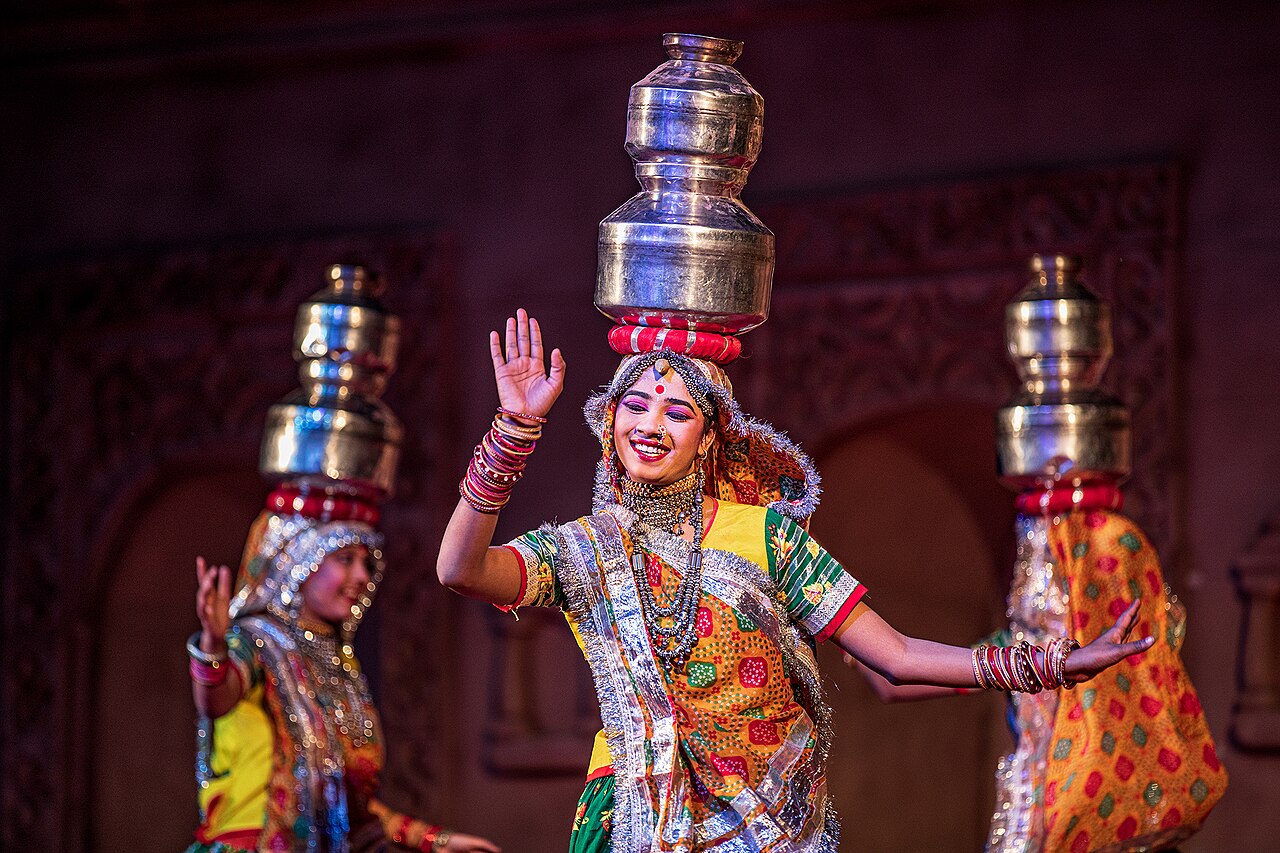
The migratory life of the mountain Gujjars, with its seasonal movements, its temporary camps, and its intimate knowledge of the pastures and routes, is itself a great cultural tradition, and the customs surrounding the herds, marriage, and the life-cycle mark the community’s life. Folk dances, distinctive dress and ornament, above all among the colourful Bakarwal and mountain Gujjar women, and the fairs and gatherings of the pastoral calendar are further expressions of Gujjar tradition. Through these traditions of song, above all the epic of Devnarayan, and of the pastoral and migratory life, the Gujjars express their distinctive culture.
Crafts

The material culture and crafts of the Gujjars reflect their pastoral and rural way of life, centred on the herds and the domestic economy. The dairying for which the community is famous involves the making of milk products, butter and ghee, and the vessels and implements of the dairy, and the migratory Gujjars craft the tents and temporary dwellings, the gear for the herds and the migration, and the equipment of a mobile pastoral life.
The Gujjars also make the ornaments and the distinctive dress and jewellery worn by the women, above all among the mountain and Bakarwal communities, whose colourful attire and silver ornaments are striking, and the domestic objects of the pastoral household. In the settled communities, the crafts of a farming people, and in all, the working of wool from the flocks, complement these. The material culture is generally practical and suited to a pastoral, and often mobile, way of life rather than elaborate. These crafts, tied to the herds, the dairy, and the pastoral household, reflect the way of life and the traditions of the Gujjar people.
Food

Gujjar cuisine reflects the community’s pastoral heritage, centred above all on dairy, for the Gujjars are famous as herders and dairymen, and milk and its products, curd, buttermilk, butter, and ghee, hold a central place in their diet. The abundant dairy of the herds, whether of the buffalo of the plains or the sheep and goats of the mountains, is the mainstay of the Gujjar table.
Alongside dairy, the Gujjars eat the grains, above all wheat and maize, and the pulses and vegetables of their regions, in the hearty rural style of the northwest and the mountains, and, among many, the meat of their flocks. The maize breads and dairy dishes of the mountain Gujjars, and the wheat and dairy fare of the plains, reflect the environments in which the community lives. Simple, robust food suited to a pastoral and rural life, rich above all in the dairy for which the community is renowned, makes up the Gujjar table. This cuisine, centred on the produce of the herds, reflects the pastoral economy and traditions of the Gujjar people.
Festivals

Festivals fill the Gujjar year, blending the religious observances of the community’s various faiths with the seasonal festivals of a pastoral and rural people. For the Hindu Gujjars, above all in Rajasthan, the worship and festivals of the folk hero Devnarayan are of central importance, celebrated with the singing of his epic and with fairs and gatherings, and the festivals of Hinduism, tied to the seasons and the agricultural and pastoral year, are observed.
The migratory Gujjars mark the great turning-points of their pastoral year, the departure for the high pastures in spring and the return in autumn, with their own observances, and the fairs and gatherings held along the migration routes and in the herding country are important occasions of trade, festivity, and community. The Muslim Gujjars observe the festivals of Islam, and the Sikh Gujjars those of the Sikh faith. Through these festivals, religious and pastoral, above all the worship of Devnarayan among the Rajasthan Gujjars and the seasonal observances of the herders, the Gujjars express their faith and their pastoral culture.
History

The history of the Gujjars reaches back to the early medieval period, when the Gurjaras rose to prominence in northwestern India, giving their name to Gujarat and other regions and associated with the powerful Gurjara-Pratihara empire that ruled much of northern India between the eighth and eleventh centuries, one of the great powers of early medieval India. This ancient prominence, and the imprint of the Gurjara name on the geography of the subcontinent, are the foundation of Gujjar historical consciousness.
Over the following centuries the Gujjars, as a pastoral and agricultural people, spread across the northwest, and while some settled and rose to landed prominence, many continued their herding and transhumant way of life. Under British and later rule, the Gujjars, like other pastoral and mobile peoples, sometimes suffered stigmatisation and pressure on their way of life, including, for some, classification under the colonial Criminal Tribes Act, a grievous injustice. In independent India the Gujjars have sought recognition, rights, and special status, and have been active in movements for these ends. This history, from the ancient Gurjaras and their empire to a widely dispersed pastoral people asserting its identity, is central to the Gujjar experience.
Today

Today the Gujjars are a large and widely dispersed community across northern and western India and Pakistan, numbering many millions, and combining, according to region, the pastoral, the agricultural, and, increasingly, urban and modern occupations. In the western Himalaya, the migratory Gujjars and Bakarwals continue their remarkable transhumant way of life, herding their flocks between the plains and the high pastures, though this life faces growing pressures; in the plains and settled areas, many Gujjars are farmers, dairymen, and, increasingly, engaged in the wider economy and public life.
The community faces the challenges of the modern era, including the pressures on pastoralism and the mountain way of life, questions of land, forest, and grazing rights, marginalisation in some areas, and the demand for recognition and special status, over which the Gujjars have been prominent in agitation in several states. Yet the community retains a strong sense of its identity, rooted in its ancient name, its pastoral heritage, its clan solidarity, and its distinctive traditions, above all the epic of Devnarayan and the transhumance of the mountains. Heirs to the ancient Gurjaras and to a proud pastoral heritage, the Gujjars carry their distinctive identity into the modern age.
Related Peoples of the Region
- The Banjara, the Caravan People of India
- The Siddi, India’s People of African Descent
- The Andamanese, Ancient Islanders of the Bay of Bengal
- The Nicobarese, Island People of the Bay of Bengal
- The Sikhs, the Disciples of the Gurus
- The Parsis, Zoroastrians of India
- The Anglo-Indians, a People Between Two Worlds
- The Jats, Farmers and Warriors of the Northwest
More Peoples of the World
- A Fifth of Humanity, the Story of the Han Chinese
- How the Maori Sailed Across the Pacific to Reach New Zealand
- Zulu of the Green Hills and Their Kingdom Forged by Shaka
- The People Who Never Vanished, the Story of the Maya
- Long Before the Arabs Came, North Africa Belonged to the Amazigh
- The People Who Emerged Into This World, the Story of the Navajo
- Meet the Ainu, an Indigenous People at Japan’s Northern Edge
You May Like
The Damara, an Ancient People of Namibia