High in the rain-soaked mountains of western Panama lives a people who quietly make up one of the largest indigenous nations in Central America. The Ngäbe have farmed these steep slopes, paddled these rivers, and spoken their own Chibchan tongue for far longer than the modern country around them has existed. Often overlooked by outsiders who reduced them to a borrowed label, they have in recent decades reclaimed their name, won a self-governing homeland, and stood firm against projects that threatened their land.
This is a portrait of who the Ngäbe are: where they come from, how they live, what they believe, and how they are shaping their future between the shelter of their mountains and the pull of the wider world. It follows the thread of a community that has survived on the margins and turned that survival into a claim for recognition on its own terms.
Contents
- Deep Roots in the Isthmus Between Two Continents
- What It Means to Be Called Ngäbe
- A Chibchan Tongue That Keeps Its Own Grammar
- Mountains, Rainforest, and a Region of Their Own
- Farming the Slopes and Traveling by River
- Family Networks and the Work of Living Together
- Belief Between Spirits, Prophets, and the Forest
- Songs, Games, and the Rhythms of Community Life
- Bags, Beadwork, and the Famous Ngäbe Dress
- Cacao, Root Crops, and the Taste of the Highlands
- Gatherings That Turn a Season Into a Celebration
- Resistance, Neglect, and a Long Road to Recognition
- Between the Comarca and the Wider World
Deep Roots in the Isthmus Between Two Continents
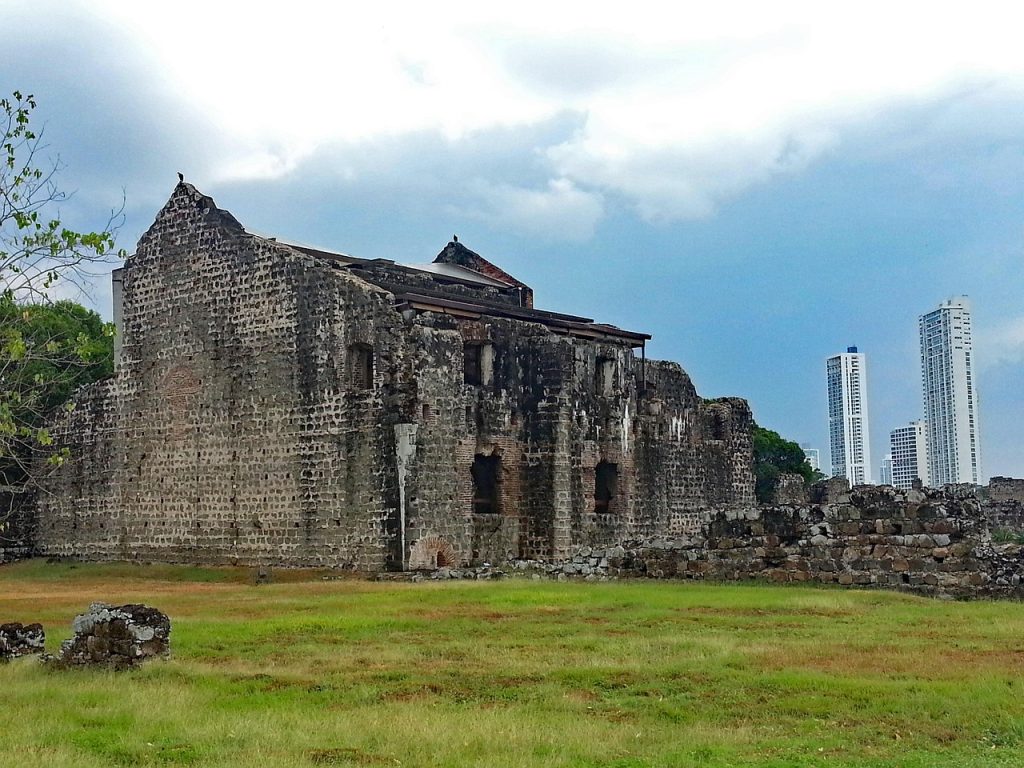
Long before Panama became a nation stitched together by a famous canal, the western half of the isthmus belonged to farming and foraging communities whose descendants still live there today. The Ngäbe trace their presence back thousands of years, to a period when the land bridge between North and South America was a corridor of movement, trade, and slow cultural blending. Archaeological finds of grinding stones, ceramics, and gold ornaments in the highlands of Chiriquí and Bocas del Toro point to societies that were settled, skilled, and deeply tied to the mountains and rivers around them.
Scholars group the Ngäbe within the broad Chibchan world, a family of peoples whose languages and customs once stretched from Honduras down into Colombia. That connection matters because it places the Ngäbe not as an isolated pocket but as part of a wider human story that curved across the narrowest part of the Americas. Their ancestors were neither the great empire builders of Mexico nor the Andes, yet they developed a durable way of life suited to rugged terrain, heavy rainfall, and thin mountain soils.
What survives from those early centuries is less a list of kings and battles than a pattern of adaptation. Families cleared small plots, moved when the land tired, and returned to fertile valleys generation after generation. The Ngäbe present is built on that quiet inheritance, a continuity that colonial records barely noticed and that outsiders often underestimated until the people themselves insisted on being counted.
It helps to picture the isthmus not as a barrier but as a meeting place. Peoples, plants, and ideas moved along it in both directions, and the Ngäbe emerged from that long mingling as a distinct community rooted firmly in the western highlands. Their deep past is measured less in monuments than in the persistence of a way of living that outlasted empires on either side of them.

What It Means to Be Called Ngäbe
For much of the colonial and early republican era, outsiders lumped the people of western Panama under the label Guaymí, a term applied loosely and often carelessly to several communities. The word stuck in official documents, maps, and anthropology books, even though the people it described did not always recognize themselves in it. In recent decades the community has pushed back, asking to be known by the name they use for themselves.
That name is Ngäbe, meaning simply the people in their own tongue. It is sometimes paired with Buglé, a neighboring group who share territory and history but speak a distinct language. The joint phrase Ngäbe-Buglé now appears in the name of their self-governing region, a small but meaningful correction that puts identity back in the hands of those who carry it.
Names carry weight here. Choosing Ngäbe over Guaymí was not a matter of spelling but of dignity, a way of saying that the people define themselves rather than accepting a label handed down by strangers. Visitors who take the trouble to use the right word are usually met with a warmth that reflects how much the distinction matters.
Language change reflects this shift in respect. Where official forms once printed only Guaymí, many now carry Ngäbe, and a generation of young people has grown up insisting on the term without apology. The change may look small on paper, yet it marks a wider movement of indigenous Panamanians reclaiming the authority to describe themselves.
A Chibchan Tongue That Keeps Its Own Grammar
The Ngäbe speak Ngäbere, a language that belongs to the Chibchan family rather than to any of the better known groupings of the Americas. It is not a dialect of Spanish and it is not closely related to the Maya languages further north; it stands on its own branch, with sounds, tones, and sentence structures that can surprise a newcomer. For linguists it is a valuable window into a family that once spread widely and now survives in scattered communities.
Ngäbere remains very much alive. Tens of thousands of people speak it at home, in markets, and in community meetings, and children still grow up hearing it before they encounter Spanish in school. This everyday vitality sets the Ngäbe apart from many indigenous groups whose languages have faded to a handful of elders. Where the tongue lives, so does a whole way of naming plants, weather, kinship, and land.
The language does face pressure. Spanish dominates the wider economy, schooling, and media, and young people who migrate for work often live in settings where Ngäbere is rarely heard. Bilingual education programs and community radio have become quiet tools of survival, helping the language move from the household into classrooms and airwaves without losing its footing at home.
Because Ngäbere carries knowledge that exists nowhere else, its survival is also the survival of a distinct way of understanding the world. Words for particular soils, rains, plants, and social ties encode centuries of observation. When elders speak, they pass on a living archive, which is why the community treats the language as something to be defended rather than merely preserved.
Efforts to write Ngäbere have grown as well, with dictionaries, primers, and religious texts helping to give the spoken language a stable written form. A written standard does not replace daily speech, but it opens doors into schools, offices, and printed media where indigenous languages were once shut out entirely.
Mountains, Rainforest, and a Region of Their Own
The Ngäbe homeland spreads across the highlands and Caribbean slopes of western Panama, a landscape of steep ridges, cloud forest, fast rivers, and drenching rain. Much of it now falls within the Comarca Ngäbe-Buglé, a self-administered territory created in 1997 after years of organizing and negotiation. The comarca gives the people a legally recognized space where their own authorities hold real say over land and local affairs.
This terrain shapes daily life in obvious ways. Roads are few and often rough, so footpaths and river crossings still carry much of the traffic between scattered hamlets. Homes sit dispersed across the slopes rather than clustered in dense villages, each family close to its fields and water. The rhythm of planting and harvest follows the wet and dry seasons that sweep across the isthmus.
Beyond the comarca, many Ngäbe also live in surrounding provinces such as Chiriquí and Bocas del Toro, sometimes on land that overlaps with plantations and protected forests. This spread means the community straddles a boundary between recognized autonomy and the pressures of the wider Panamanian economy, a tension that runs through much of their modern experience.
Living across this divide gives the Ngäbe a double view of Panama. Inside the comarca they experience a degree of self-rule; outside it they meet the full force of markets, plantations, and state projects. Holding both realities at once has become part of what it means to be Ngäbe in the present day.
Water runs through the whole story of this homeland. The same rivers that irrigate fields and carry canoes also draw the interest of energy companies, making control over them a recurring flashpoint. For the Ngäbe, defending a river is rarely only about water; it is about the survival of the life built along its banks.

Farming the Slopes and Traveling by River
The traditional Ngäbe economy rests on shifting cultivation, the patient work of clearing a plot, planting it for a few seasons, and letting it rest while the family moves on to fresh ground. Maize, beans, rice, root crops, and bananas form the backbone of the diet, grown on hillsides that would defeat heavier machinery. This method, often misread by outsiders as wasteful, is in fact a careful response to fragile tropical soils.
Rivers have long served as roads. Dugout canoes carry people and goods along the waterways of the Caribbean lowlands, linking inland families to coastal trade. In earlier times such travel connected the Ngäbe to wider exchange networks, moving cacao, salt, and craft goods between the highlands and the sea. The canoe remains a familiar sight where roads still cannot reach.
Cattle, chickens, and small-scale hunting and fishing round out the household economy. Wealth was traditionally measured less in cash than in land, livestock, and the strength of family ties. Even as wage labor has entered the picture, this older logic of self-provisioning still anchors life in many communities, offering a cushion when outside money grows scarce.
This blend of subsistence and cash is not a contradiction so much as a strategy. Families move between growing their own food and earning wages, leaning on whichever offers more security in a given season. The old skills of farming and river travel remain a foundation that steadies people when the modern economy proves unreliable.

Family Networks and the Work of Living Together
Ngäbe society is built around extended families and the webs of obligation that connect them. Households often include several generations, and cooperation between kin is the engine that clears fields, raises houses, and carries people through illness or hardship. Decisions that affect a community are typically talked through until a broad agreement emerges rather than imposed from above.
Leadership traditionally rested with respected elders and figures whose authority came from knowledge, generosity, and the trust of their neighbors. With the creation of the comarca, this older pattern now sits alongside elected councils and regional authorities, producing a layered system in which customary respect and formal politics both play a part. The balance between the two is not always smooth, but it keeps decision-making close to the people.
Women hold a central place in this social fabric. They manage households, tend crops, raise children, and increasingly lead in community organizing and craft cooperatives. The bright, distinctive dresses many Ngäbe women wear are themselves a statement of belonging, marking identity in markets and towns where indigenous people have not always been welcomed.
Kinship also travels. When Ngäbe families migrate for work, the ties of obligation follow them, so that relatives host newcomers, share information about jobs, and send help back home. In this way the social networks forged in mountain hamlets stretch into coffee farms and city neighborhoods far from the comarca.
Belief Between Spirits, Prophets, and the Forest
Older Ngäbe belief centered on a living landscape, where rivers, mountains, animals, and unseen spirits were part of a moral order that people had to respect. Healers and ritual specialists mediated between the human world and these forces, treating illness as something that could arise from broken relationships as much as from physical causes. Much of this worldview persists beneath the surface of daily life.
A striking feature of Ngäbe religious history is the rise of prophetic movements that blended indigenous ideas with Christian elements. The best known is the Mama Tata tradition, which emerged in the twentieth century around a young woman said to have received divine messages. It gave the community its own religious language, one shaped by their own visionaries rather than by outside missionaries alone.
Today many Ngäbe are Christian, belonging to Catholic and various evangelical churches, yet the older sense of a spiritually charged natural world has not vanished. For many people the two coexist, so that a prayer in church and a wariness of certain forest places belong to the same life. This layering of belief is common across the region and gives Ngäbe faith its particular texture.
The prophetic tradition gave the Ngäbe a rare gift, a religious movement authored from within their own community. That origin helps explain its lasting power, since it spoke to their experience of the land, of pressure from outside, and of the hope for renewal in language and imagery that were unmistakably their own.

Songs, Games, and the Rhythms of Community Life
Ngäbe tradition lives in gatherings that mix work, competition, and celebration. The best known is the balsería, a ritual contest in which men throw balsa sticks at the legs of opponents in a test of skill, endurance, and bravery. Far more than a game, it is an occasion for whole communities to come together, renew alliances, arrange marriages, and settle the social accounts of the season.
Music and storytelling weave through these events. Songs carry history, humor, and courtship, and older forms of chant preserve memories that were never written down. Body paint, feathers, and special dress mark the seriousness of ceremonial days, turning ordinary people into participants in something older than any of them.
Everyday tradition is quieter but no less real. It shows in the way food is shared, in the respect shown to elders, and in the expectation that a household in need will be helped by its neighbors. These small habits of reciprocity form the true backbone of Ngäbe culture, holding communities together across scattered mountain terrain.
These customs are not frozen. Younger Ngäbe adapt them, carrying songs onto community radio and staging cultural events that speak to a new audience. The core impulse, though, stays the same: to gather, to compete and celebrate, and to remind everyone present of the ties that bind a scattered people into one.
Bags, Beadwork, and the Famous Ngäbe Dress
The most celebrated Ngäbe craft is the chácara, a strong netted bag woven from plant fibers and often dyed in earthy colors. Made mainly by women, these bags are both practical and beautiful, used to carry everything from harvested crops to babies. Their looped construction is a skill passed from mother to daughter, and fine examples are prized well beyond the comarca.
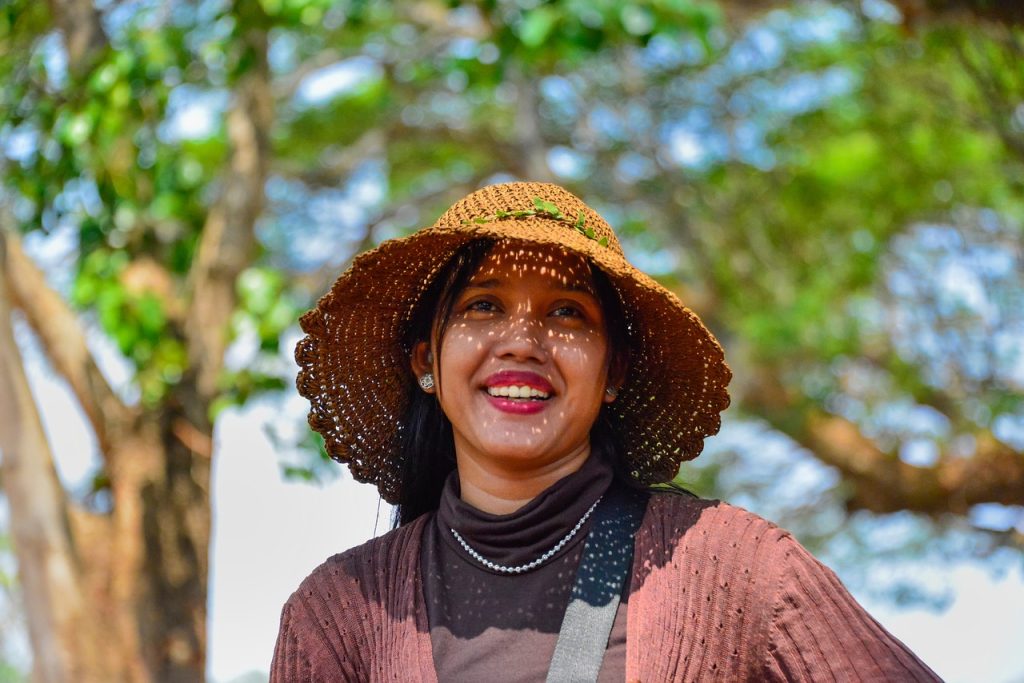
Equally recognizable is the nagua, the long, brightly colored dress worn by Ngäbe women, decorated with bold geometric appliqué in contrasting shades. The patterns are not random; they carry aesthetic rules and a sense of belonging, and a well-made dress is a source of real pride. Beadwork collars known as chaquira add another layer of color and craft to festive dress.
These crafts have taken on new roles in a cash economy. Cooperatives now sell bags, beadwork, and clothing to visitors and city buyers, turning inherited skill into modest income. That shift brings both opportunity and risk, as demand can encourage the work while also pulling it toward whatever outsiders happen to want.
Craft also carries memory. In the patterns of a nagua or the loops of a chácara, women repeat designs learned from earlier generations, so that each finished piece is both an object and a link in a chain. Selling that work to outsiders is a way of keeping the skill alive while asserting a proud, visible identity.

Cacao, Root Crops, and the Taste of the Highlands
Ngäbe cooking grows straight out of the land they farm. Boiled and roasted root crops, plantains, rice, beans, and maize form the everyday base, filling and suited to hard physical work. Dishes are generally simple and unfussy, built around what the fields and forest provide rather than around elaborate preparation.
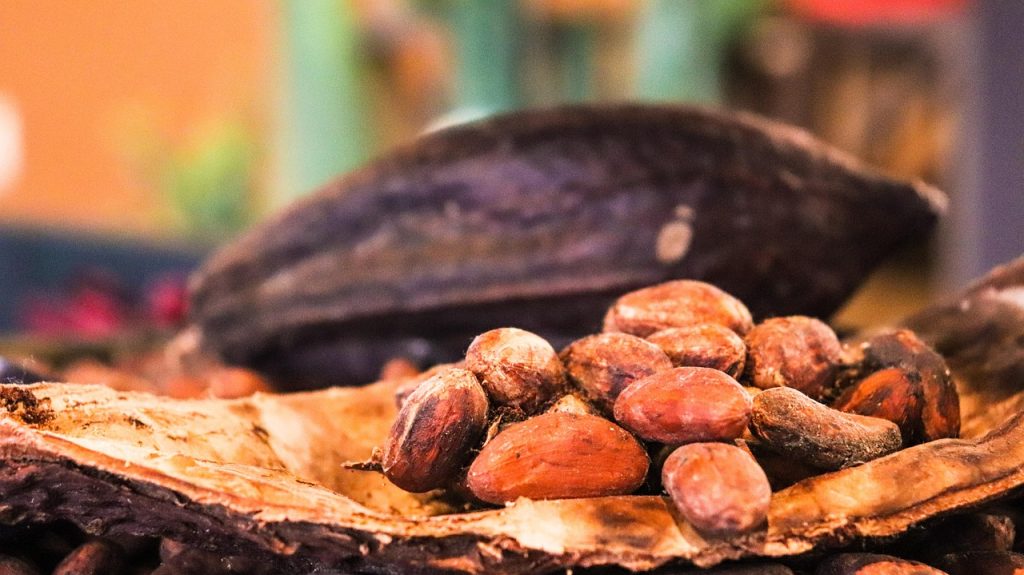
Cacao holds a special place. Western Panama has a long history of cacao cultivation, and the Ngäbe have grown it both for their own use and for trade. Prepared as a thick, sometimes lightly spiced drink, cacao carries meaning beyond nutrition, appearing in moments of hospitality and ceremony as it has for centuries across this part of the Americas.
Fish from the rivers and coast, game from the forest, and fruit such as bananas and peach palm round out the diet. As with much else in Ngäbe life, food is bound up with sharing; a good harvest or a successful hunt is an occasion to feed kin and neighbors, reinforcing the ties that keep a dispersed community whole.
Sharing food is finally a way of doing politics in miniature. Who is fed, and how generously, expresses respect and obligation, and a household known for its hospitality earns standing among its neighbors. In this sense even a simple meal of roots and cacao carries the weight of Ngäbe social life.
Gatherings That Turn a Season Into a Celebration
The Ngäbe calendar is punctuated by gatherings that draw families down from scattered ridges into shared celebration. The balsería stands at the center, a multi-day event of contest, feasting, music, and courtship that once helped knit alliances across a wide region. It remains the great social occasion, even as its scale and frequency have changed with modern life.
Religious festivals have joined the older cycle. Christian holidays, comarca anniversaries, and community assemblies now bring people together in ways that mix devotion, politics, and simple sociability. For migrant workers who spend much of the year away on plantations, these gatherings are a chance to return home and remember where they belong.
What ties these celebrations together is their role in renewal. They are moments when a dispersed people becomes visibly one, when disputes can be aired and eased, marriages arranged, and identity reaffirmed through dress, food, and song. In a landscape that keeps families apart most of the year, the festival is the thread that pulls them back together.
For those who spend most of the year laboring far away, the return for a festival can feel like stepping back into a truer version of themselves. The gathering restores relationships that distance has stretched, and it sends people back to work carrying a renewed sense of who they are and where they belong.

Resistance, Neglect, and a Long Road to Recognition
The Ngäbe were never fully conquered in the way that peoples nearer the Spanish centers were. The rugged terrain of western Panama and the dispersed pattern of settlement made them hard to subdue and easy to overlook. For centuries they lived on the margins of colonial and then national attention, largely governing their own affairs while the state focused elsewhere.
That marginality had a cost. As Panama developed around its canal and coastal cities, the Ngäbe highlands received little in the way of roads, schools, or clinics, and their land was repeatedly eyed for plantations, mining, and hydroelectric projects. Encounters with these outside forces often brought loss rather than benefit, feeding a deep wariness of promises made by distant authorities.
The turning point came through organizing. Decades of persistent effort led to the creation of the Comarca Ngäbe-Buglé in 1997, and later to high-profile protests against mining and dam projects that threatened their rivers and land. These struggles put the Ngäbe on the national map as a people willing to stand up for their territory, and they reshaped how Panama talks about indigenous rights.
The lesson many Ngäbe draw from this history is that recognition was never granted freely; it was won. Each concession, from the comarca to the halting of certain projects, followed pressure applied by an organized community. That memory shapes how they approach new promises, with a mix of hope and hard-earned caution.
Between the Comarca and the Wider World
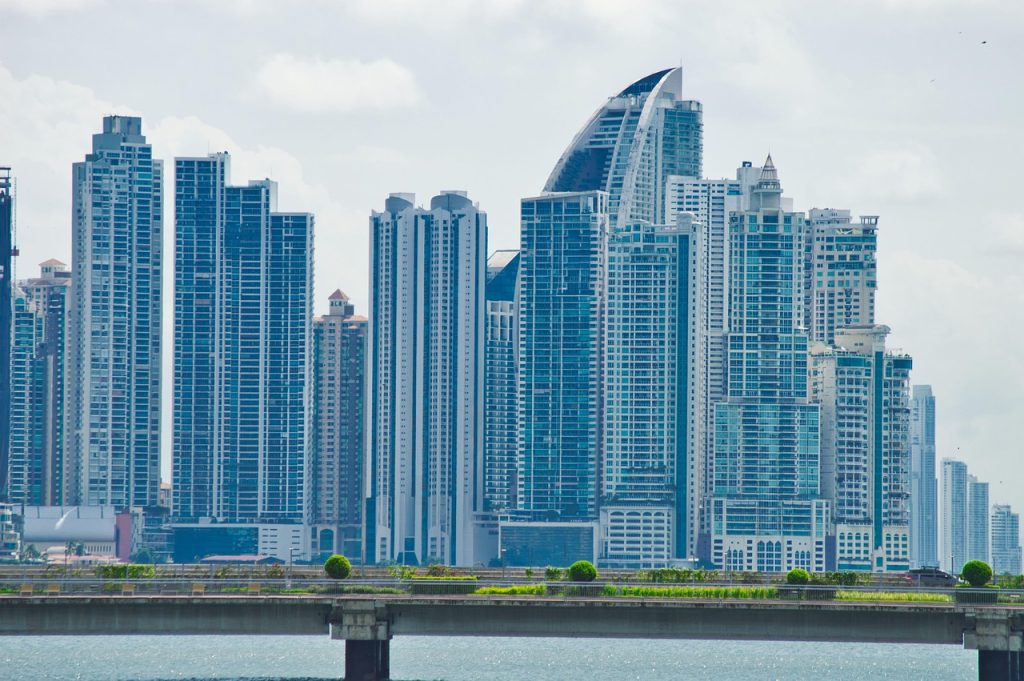
Today the Ngäbe are among the largest indigenous peoples of Panama, numbering in the hundreds of thousands. Their comarca gives them a measure of self-rule rare in the region, yet it sits inside a country whose economy pulls constantly at its edges. Many families move seasonally to coffee farms and cities for wages, living between the mountains they call home and the labor markets that pay in cash.
The challenges are real. Poverty rates in the comarca are high, services remain thin, and conflicts over mining, dams, and land continue to flare. Young people face a hard choice between staying in communities with few paid opportunities and leaving for work that can erode their language and ties. These pressures test the resilience that has carried the people this far.
Yet the Ngäbe today are also assertive and visible in ways earlier generations were not. They defend their territory in courts and on the roads, run bilingual schools and radio, sell their crafts to a wider world, and insist on the name and dignity that are rightly theirs. Their story is not a relic but an ongoing negotiation between an old way of life and a changing isthmus.
Seen from the outside, the Ngäbe can look caught between worlds, but from within their story reads more like an active negotiation. They choose which parts of modern life to take up and which to resist, defending land and language while engaging the wider country on their own terms. It is a difficult balance, and it is very much theirs to strike.
What comes next will depend heavily on the choices of the young. Whether they can build livelihoods that let them stay, or return with new skills to strengthen their communities, may decide how the Ngäbe world looks a generation from now. For now they carry forward a hard-won confidence that their voice belongs in Panama’s future.
Related Peoples of the Region
- Meꞌphaa Speakers of the Guerrero Mountains and a Language That Stands Alone
- Garifuna Drummers and Cassava Bakers of the Central American Caribbean Coast
- Lenca Potters and River Defenders of the Honduran and Salvadoran Highlands
- Chorti Maya, Living Heirs of Copan in the Central American Borderlands
- Chuj Maya, Weavers and Maize Farmers of Guatemala’s Cuchumatanes Highlands
- Q’anjob’al Maya, a Highland People Who Reached from the Cuchumatanes to America
You May Like
The Damara, an Ancient People of Namibia