On the fertile, volcano-studded island of Java live the Javanese, the largest ethnic group of Indonesia and one of the largest peoples on earth. Builders of Borobudur and Prambanan and heirs to the empire of Majapahit, they created one of the most refined civilisations of Southeast Asia.
Theirs is a heritage of shadow-puppet epics and shimmering gamelan music, of intricate batik and the sacred keris, of court refinement and a subtle ethic of harmony, all bound to Islam blended with older ways. To know the Javanese is to meet a people at the very heart of Indonesia.
Java on Film
Contents
- Origins
- The Name
- The Language
- The Homeland
- The Old Way of Life
- Society and Community
- Religion and Belief
- Traditions
- Crafts
- Food
- Festivals
- History
- Today
Origins

The Javanese are the largest ethnic group of Indonesia and one of the largest in the world, native to the central and eastern parts of the island of Java. Austronesian in origin, they built a succession of great civilisations whose monuments, the vast temples of Borobudur and Prambanan, still astonish visitors today.
From the early Hindu-Buddhist kingdoms of Mataram, which raised those temples in the eighth and ninth centuries, through the mighty empire of Majapahit, to the Islamic sultanates of later times, the Javanese have long been at the centre of the region’s history. Their culture, refined in the courts of central Java, became one of the most sophisticated in Southeast Asia.
The Name

The Javanese, or Wong Jawa, take their name from their island, Java, the most populous island on earth. Their identity is centred on the heartland of central and eastern Java, above all the court cities of Yogyakarta and Surakarta, where the refined traditions of the palace, or kraton, are preserved.
Though the island of Java is home to other peoples too, such as the Sundanese, it is the Javanese proper who give the island and much of the nation their cultural stamp. Their language and customs have shaped Indonesia as a whole.
The Language

The Javanese language is an Austronesian tongue spoken by some ninety million people, one of the most widely spoken languages in the world without being a national language. It is famous for its elaborate system of speech levels, in which different vocabularies are used according to the status and relationship of those speaking.
Written traditionally in the graceful Javanese script, and possessing a vast literature of poetry, chronicle, and mysticism, the language embodies the refinement prized in Javanese culture. Indonesian, based on Malay, serves as the national language, but Javanese remains deeply rooted in home and community.
The Homeland

The Javanese homeland is the fertile heart of the island of Java, a land of volcanoes, terraced rice fields, and dense population in the tropical zone between the Indian Ocean and the Java Sea. The rich volcanic soil, watered by the monsoon, makes Java one of the most productive agricultural regions on earth.
The great volcanoes, such as Merapi and Bromo, both give and threaten life, their ash enriching the fields while their eruptions bring danger. Around the court cities of central Java and along the crowded plains, the Javanese have built a civilisation of rice and refinement.
The Old Way of Life

For most of their history the Javanese were rice farmers, working the terraced and irrigated fields of the fertile volcanic lowlands in one of the most intensive farming systems in the world. The village, with its rice fields, communal cooperation, and shared ritual, was the foundation of society.
Life followed the rhythm of the rice cycle and the Javanese calendar, and the values of harmony, cooperation, and refinement shaped village and court alike. Above the villages stood the courts of the sultans, centres of a highly developed aristocratic culture.
Society and Community

Javanese society places great emphasis on harmony, refinement, and the avoidance of open conflict, values expressed in the concepts of rukun, or social harmony, and of proper, restrained conduct. The elaborate speech levels of the language reflect a keen sense of hierarchy and courtesy.
The court cities of Yogyakarta and Surakarta, with their sultans and refined palace culture, remain touchstones of Javanese identity. The family, the village community, and a subtle etiquette of respect and self-control govern social life.
Religion and Belief

The great majority of Javanese are Muslims, Islam having spread across Java from the fifteenth century through the work of the nine revered saints, the Wali Songo, and the mosque of Demak was among its first great centres. Yet Javanese Islam is often blended with older Hindu-Buddhist and animist elements in the syncretic tradition known as kejawen.
This distinctive Javanese spirituality, rich in mysticism and the veneration of ancestors and sacred places, coexists with more orthodox Islam. Small communities of Hindus, Christians, and followers of Javanese belief add to the religious landscape of the island.
Traditions
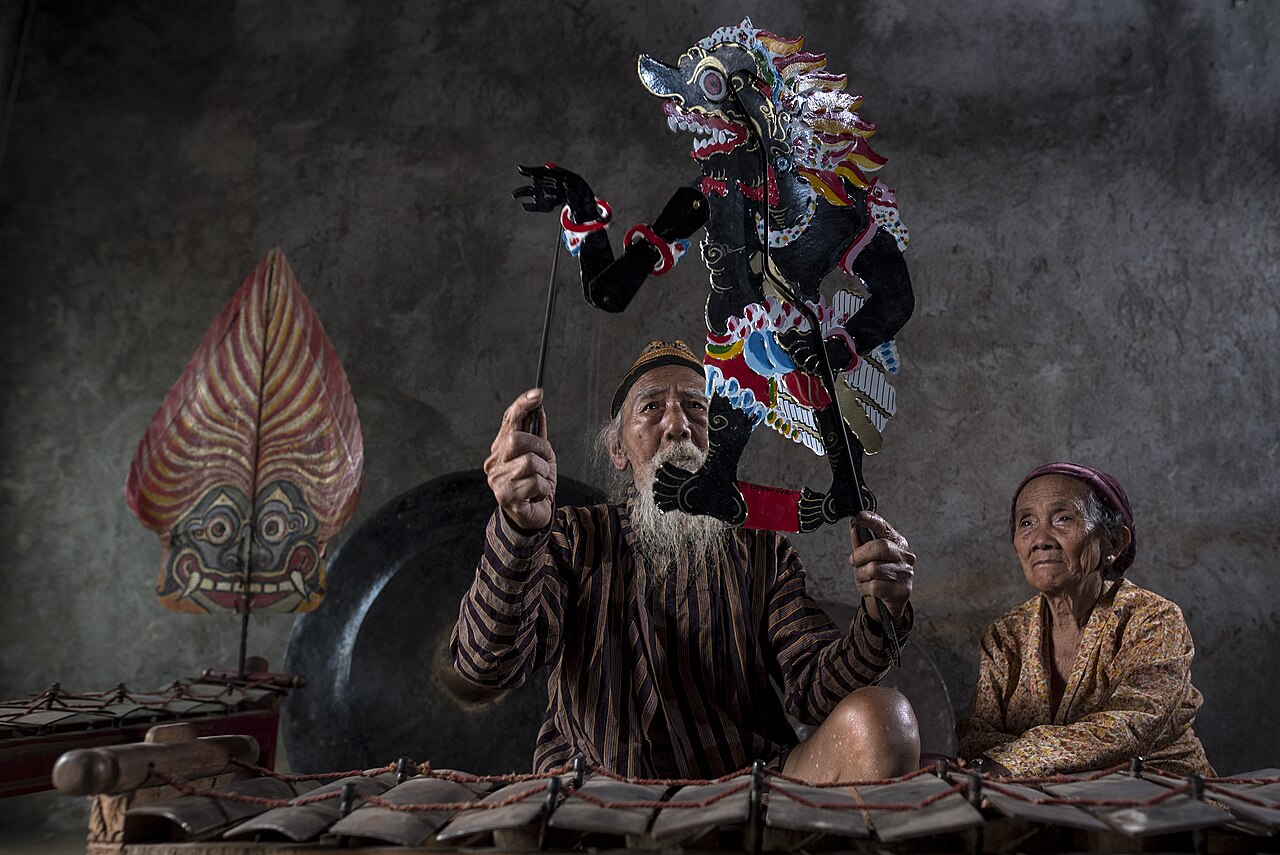
Javanese tradition is among the most refined in Asia, centred on the arts of the court. The shadow-puppet theatre of wayang kulit, in which intricately carved leather puppets enact the Hindu epics through the night to the music of the gamelan, is the supreme Javanese art. The gamelan orchestra, of gongs, metallophones, and drums, produces a shimmering music unlike any other.
Refined court dance, the making and honouring of the sacred keris dagger, and the elaborate ceremonies of the palace and the life-cycle all express Javanese culture. Wayang, gamelan, and batik together form the heart of the tradition.
Crafts
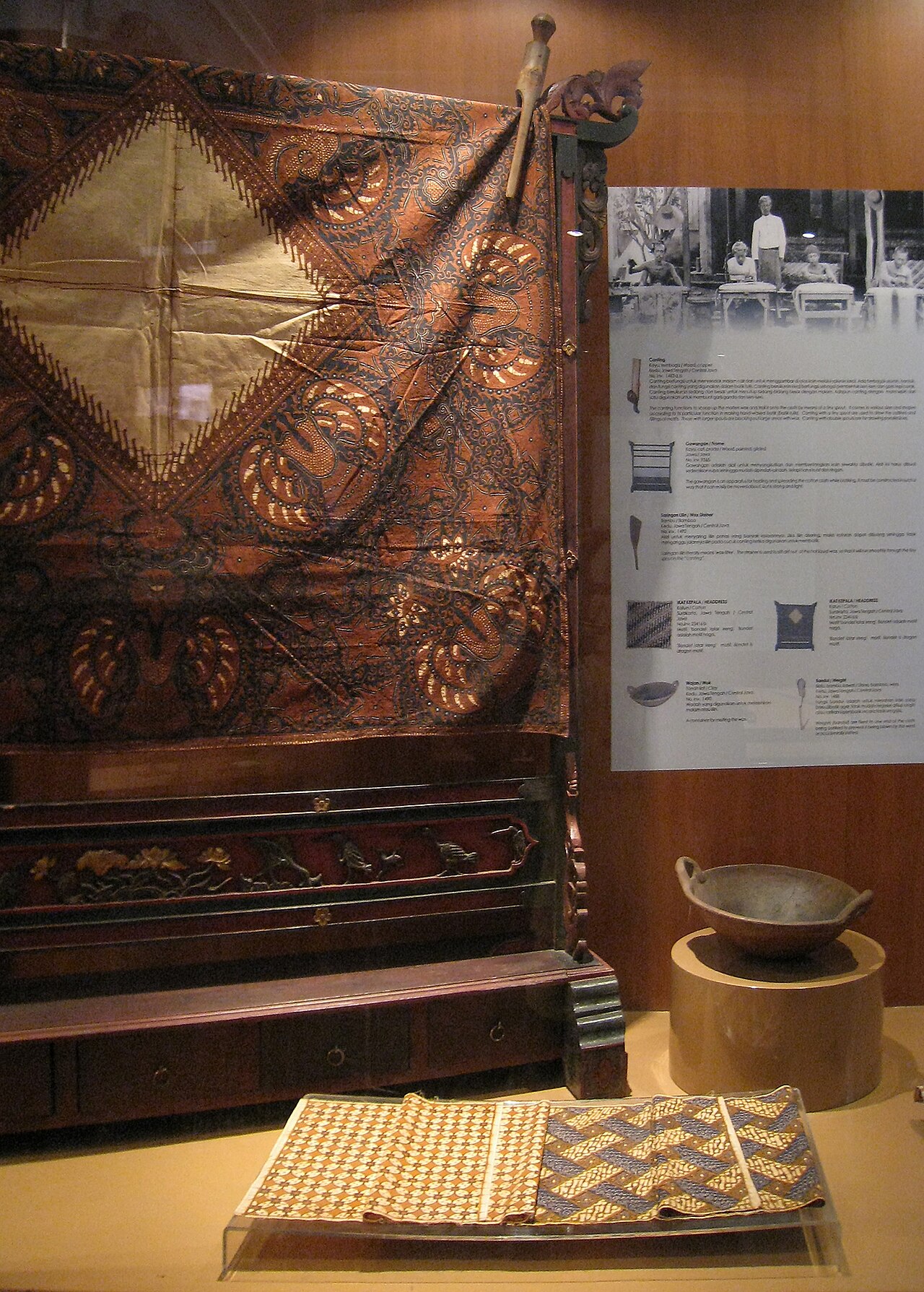
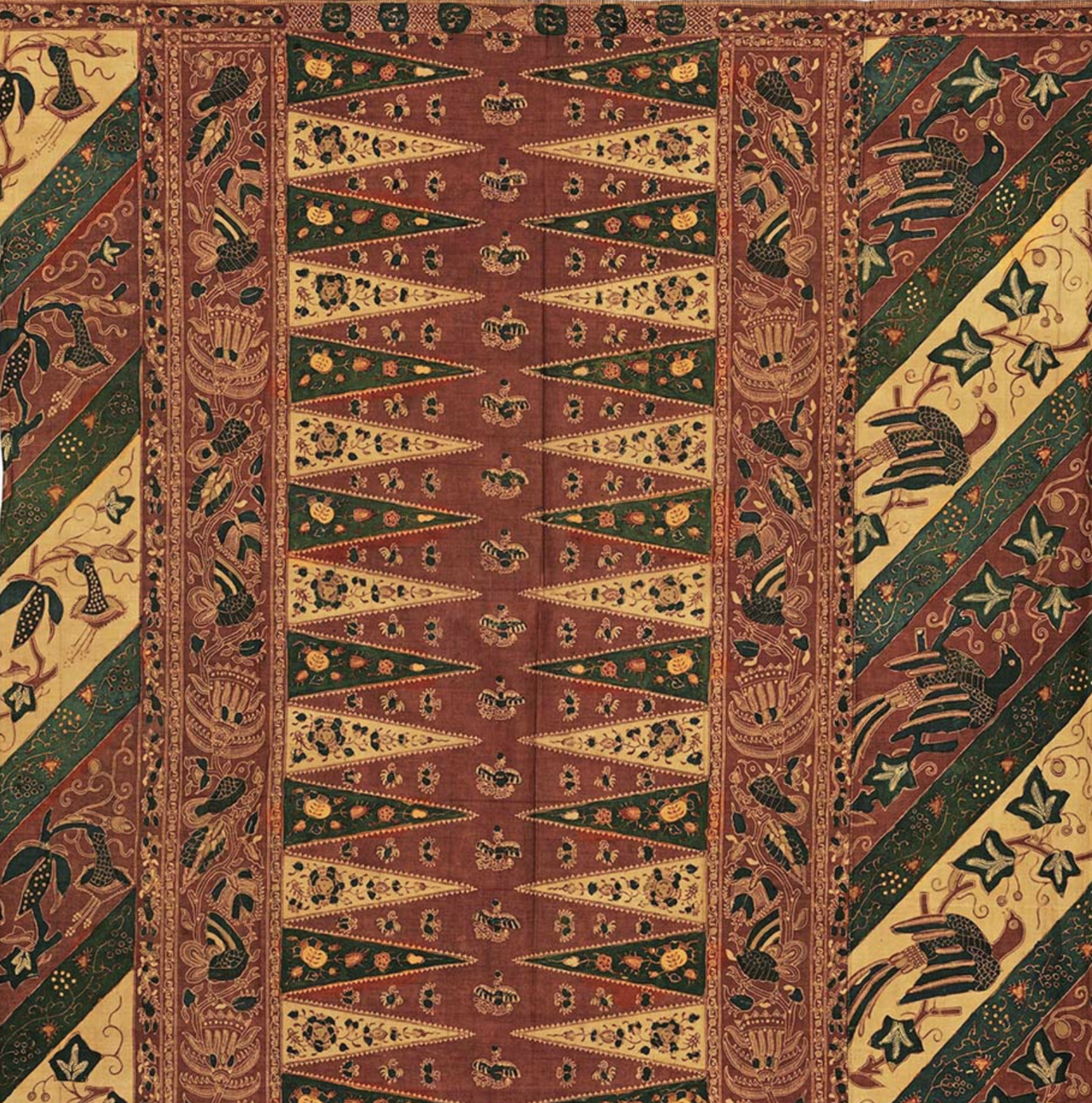
The most celebrated Javanese craft is batik, the art of decorating cloth by drawing patterns in wax before dyeing, producing intricate designs rich with meaning; central Javanese batik is regarded as the finest of all and is recognised as a treasure of world heritage. Certain patterns were once reserved for royalty.
The forging of the keris, the wavy-bladed dagger regarded as a spiritual object, the carving of the wayang puppets, and fine woodwork, silverwork, and gamelan-making all belong to Javanese craft. These arts, refined in the service of the courts, remain living traditions.
Food
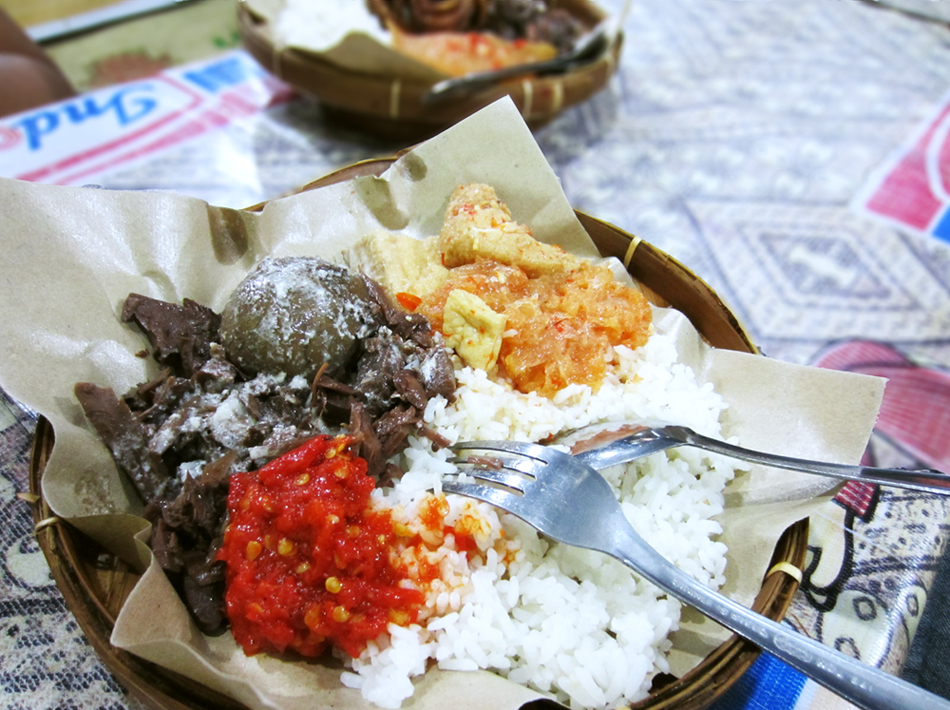
Javanese cuisine tends to be sweeter and more subtle than the fiery food of Sumatra, making generous use of palm sugar, soy sauce, and coconut. Central Javanese dishes such as gudeg, a sweet stew of young jackfruit, are famous, along with the peanut-sauced vegetable salad gado-gado and countless rice dishes.
Tempeh and tofu, fermented soybean products that originated in Java, are staples eaten across Indonesia and beyond, and street food of every kind fills the towns. Rice, with an array of savoury and sweet accompaniments, lies at the heart of the Javanese meal.
Festivals
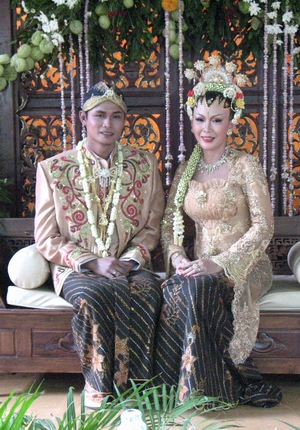
The Javanese year blends Islamic festivals with older court and village ceremonies. The great palace ritual of Sekaten, held at the courts of Yogyakarta and Surakarta to mark the Prophet’s birthday, features ancient gamelan and a mountain of offerings shared with the crowd. Village slametan feasts mark every important occasion with communal prayer and food.
Weddings, with their elaborate ritual, dress, and gamelan, are among the great celebrations of Javanese life, and the Islamic Eids are observed with devotion and the mass return of migrants to their home villages. Through these festivals the Javanese express their blend of faith, court tradition, and communal harmony.
History
From the temple-building kingdoms of Mataram to the great maritime empire of Majapahit, which in the fourteenth century claimed influence across the archipelago, the Javanese built powerful states at the centre of the region. The coming of Islam gave rise to the sultanates of Demak, Mataram, and their successors.
Dutch colonial rule, established over centuries, made Java the heart of the Netherlands East Indies and the centre of the struggle for Indonesian independence, won in 1945. Since independence the Javanese, as the largest people of the new nation, have played a dominant role in its politics and life.
Today
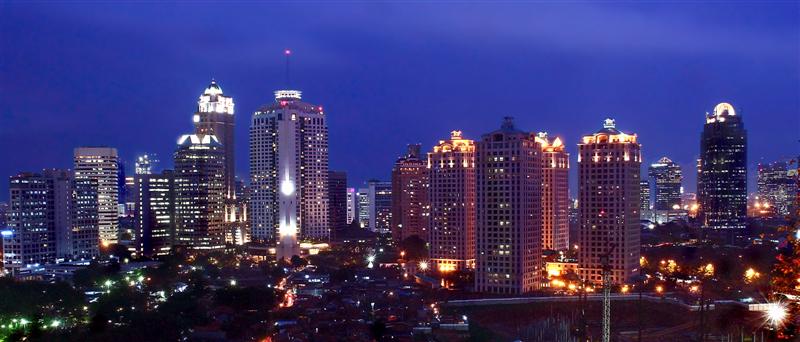
Today the Javanese number over a hundred million, by far the largest ethnic group of Indonesia and a dominant presence in its government, military, and culture, with communities also spread by transmigration across the archipelago and abroad. Java itself is the crowded, bustling heart of the nation, home to the capital Jakarta.
Modern Javanese life blends the deep refinement of court tradition, the syncretic spirituality of kejawen, and devout Islam with the energy of one of Asia’s most populous and dynamic societies. Their wayang, their gamelan, their batik, and their subtle ethic of harmony continue to define one of the great peoples of the world.
Related Peoples of the Region
More Peoples of the World
You May Like
The Damara, an Ancient People of Namibia