In the landlocked heart of Southeast Asia, along the great river Mekong, live the Lao, a Tai people and close kin of the Thai. Devout Buddhists and growers of sticky rice, they built the medieval kingdom of Lan Xang, the land of a million elephants, and made their river cities centres of gentle Buddhist civilisation.
Theirs is a heritage of golden stupas and dawn alms-rounds, of the buzzing khaen mouth-organ and the wrist-tying baci, all bound to the Mekong and the rhythms of the rice year. To know the Lao is to meet one of the quieter and warmest peoples of Southeast Asia.
Laos on Film
Contents
- Origins
- The Name
- The Language
- The Homeland
- The Old Way of Life
- Society and Community
- Religion and Belief
- Traditions
- Crafts
- Food
- Festivals
- History
- Today
Origins
The Lao are the majority people of Laos, a landlocked country of mountains and river valleys in the heart of mainland Southeast Asia. They are a Tai people, closely related to the Thai of Thailand and the Shan of Myanmar, and share with them a language, a Buddhist faith, and a common origin.
The Lao are descended from the Tai peoples who spread southward into the region over the medieval centuries, settling the valley of the Mekong. In the fourteenth century they founded the kingdom of Lan Xang, the land of a million elephants, which for centuries united the Lao and made Luang Prabang and later Vientiane great centres of Buddhist civilisation.
The Name

The Lao take their name from their people and their kingdom, and their land is Laos, the country of the Lao. Their historic realm, Lan Xang, meaning a million elephants, expressed the power and grandeur of the medieval Lao state.
Closely akin to the Thai and to the Isan people of northeastern Thailand, who are also Lao by descent, the Lao of Laos are bound together by their language, their Theravada Buddhism, and the great river Mekong that runs through their homeland.
The Language

The Lao language belongs to the Tai family and is very close to Thai, especially to the Isan dialect of northeastern Thailand, so that Lao and Thai speakers can largely understand one another. It is a tonal language written in the Lao script, a graceful alphabet related to Thai and derived ultimately from Indian models.
Enriched by Pali and Sanskrit through Buddhism, Lao has a tradition of religious and literary writing preserved in palm-leaf manuscripts kept in the monasteries. The language is central to Lao identity and unites the peoples of the country.
The Homeland

The Lao homeland is Laos, a mountainous, landlocked country threaded by the Mekong River, which forms much of its border and waters its valleys. Most Lao live in the lowlands along the Mekong and its tributaries, where the river plains are given over to rice, while forested mountains rise on either side.
The Mekong is the lifeblood of the country, a highway for boats and a source of fish and water for the rice fields. Vientiane, the capital, and Luang Prabang, the old royal city, both lie on its banks, at the heart of the Lao world.
The Old Way of Life

For most of their history the Lao were rice farmers, and above all growers of glutinous or sticky rice, the staple that defines their cuisine and sets them apart from many neighbours. Villages of wooden houses raised on stilts clustered along the rivers and around the Buddhist temple.
Fishing the Mekong and its tributaries, growing rice in the valleys, and gathering the produce of the forest sustained the traditional Lao economy. Life followed the rhythm of the rice cycle and the Buddhist calendar, with the temple at the centre of the village.
Society and Community

Lao society traditionally centred on the village, the family, and the Buddhist temple, in a relatively relaxed and egalitarian culture. The monastery held a central place, and it was customary for young men to spend time as monks, an honoured part of growing up.
The Lao are known for an easygoing approach to life, often summed up in the phrase for taking things calmly and enjoying the moment. Respect for elders and monks, hospitality, and the bonds of village and family shape the values of Lao life.
Religion and Belief

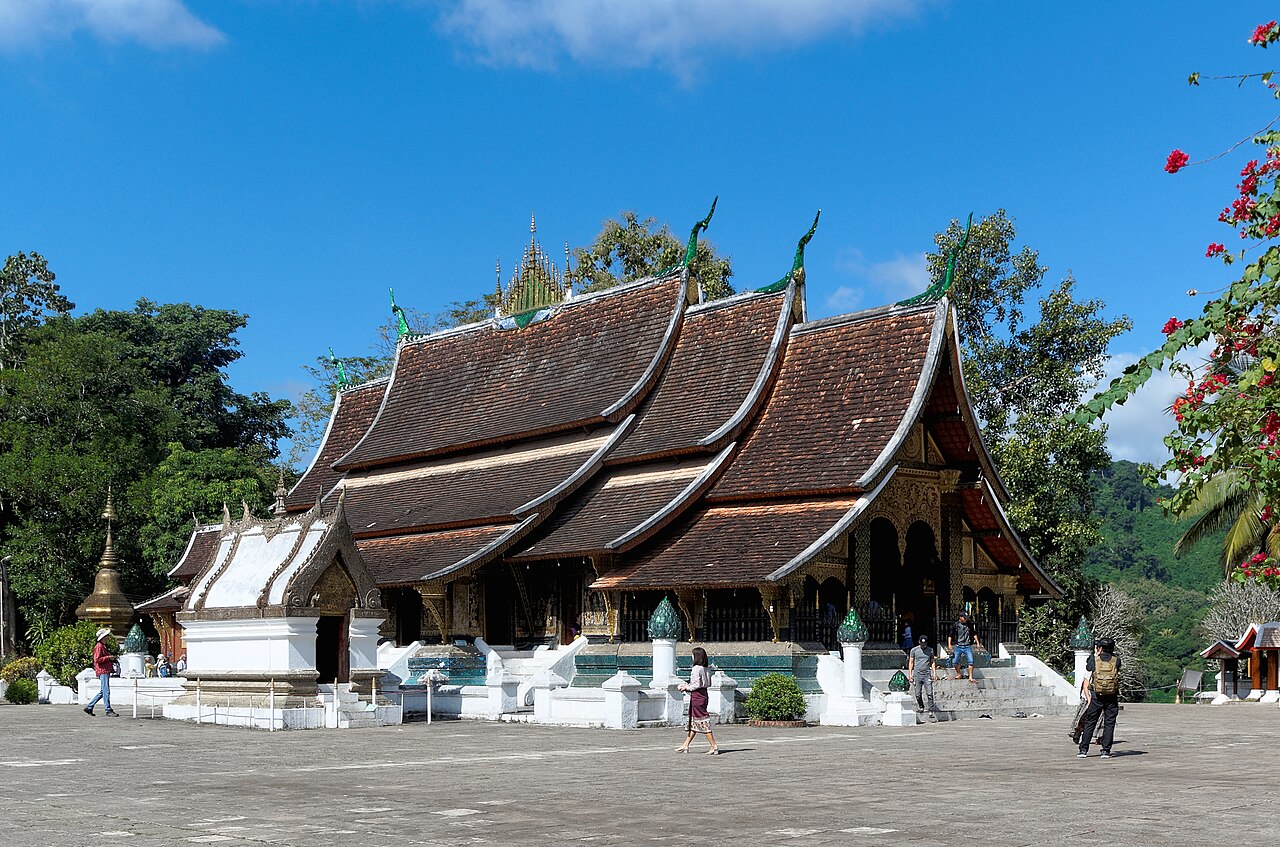
The Lao are overwhelmingly Theravada Buddhists, and Buddhism is central to their culture and daily life. Temples with their tiered roofs stand in every town and village, and the daily giving of alms to monks, seen most famously in the dawn procession at Luang Prabang, is a defining image of the country.
Merit-making, the support of the monkhood, and the great Buddhist festivals structure Lao religious life. Older beliefs in spirits, or phi, survive alongside Buddhism, honoured in shrines and in the important baci ceremony, in which threads are tied around the wrists to bind the soul and bring good fortune.
Traditions

The heart of Lao musical tradition is the khaen, a bamboo mouth-organ whose reedy, buzzing sound accompanies the sung poetry of lam, the call-and-response singing beloved across the Lao world. Music, dance, and the recitation of verse are central to celebration.
The baci ceremony, with its wrist-tying and blessings, marks the great occasions of life, from birth and marriage to welcome and farewell. Traditional dress, the woven sinh skirt worn by women, and the customs of Buddhist life all express Lao identity.
Crafts

The Lao are celebrated weavers, and Lao silk and cotton textiles, woven in intricate patterns often rich with symbolic meaning, are among the finest crafts of Southeast Asia. The woven sinh, the tube skirt worn by Lao women, displays the weaver’s art in its patterned hem.
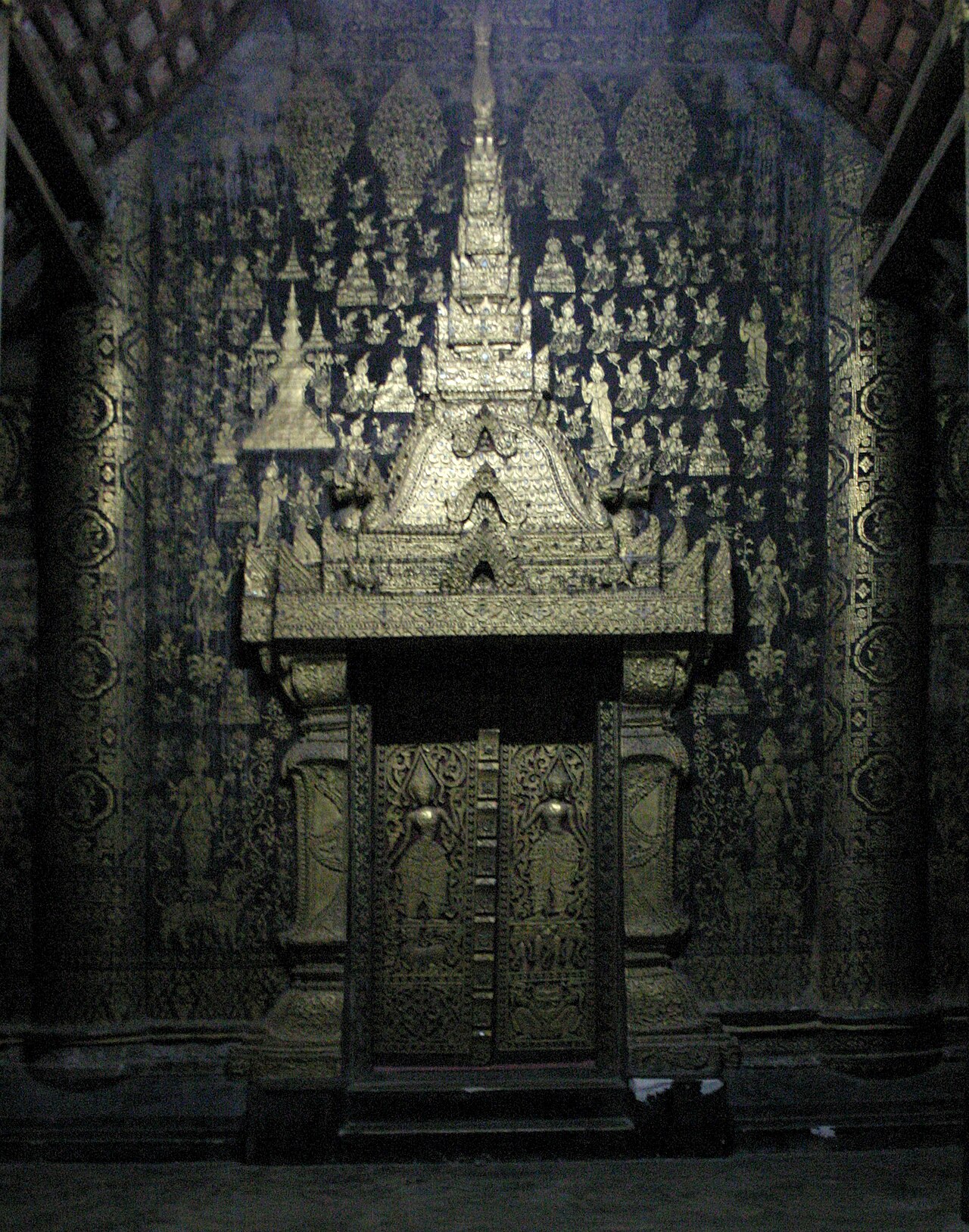
Silverwork, basketry, wood carving, and the decoration of temples all belong to Lao material culture, much of it developed in the service of Buddhism and daily village life. Weaving in particular remains a living tradition and a source of pride.
Food

Lao cuisine is built around sticky rice, eaten with the hands and rolled into balls to scoop up other dishes, a habit so central that the Lao sometimes call themselves the children of sticky rice. Bold, fresh, and often fiery, the food makes generous use of chilli, lime, fish sauce, and fresh herbs.
The national dish is laap, a spicy minced-meat salad, eaten with sticky rice and, very often, green papaya salad. Grilled fish and meat, bamboo-shoot soups, and river fish fill the Lao table, and food is shared communally in a spirit of warm hospitality.
Festivals
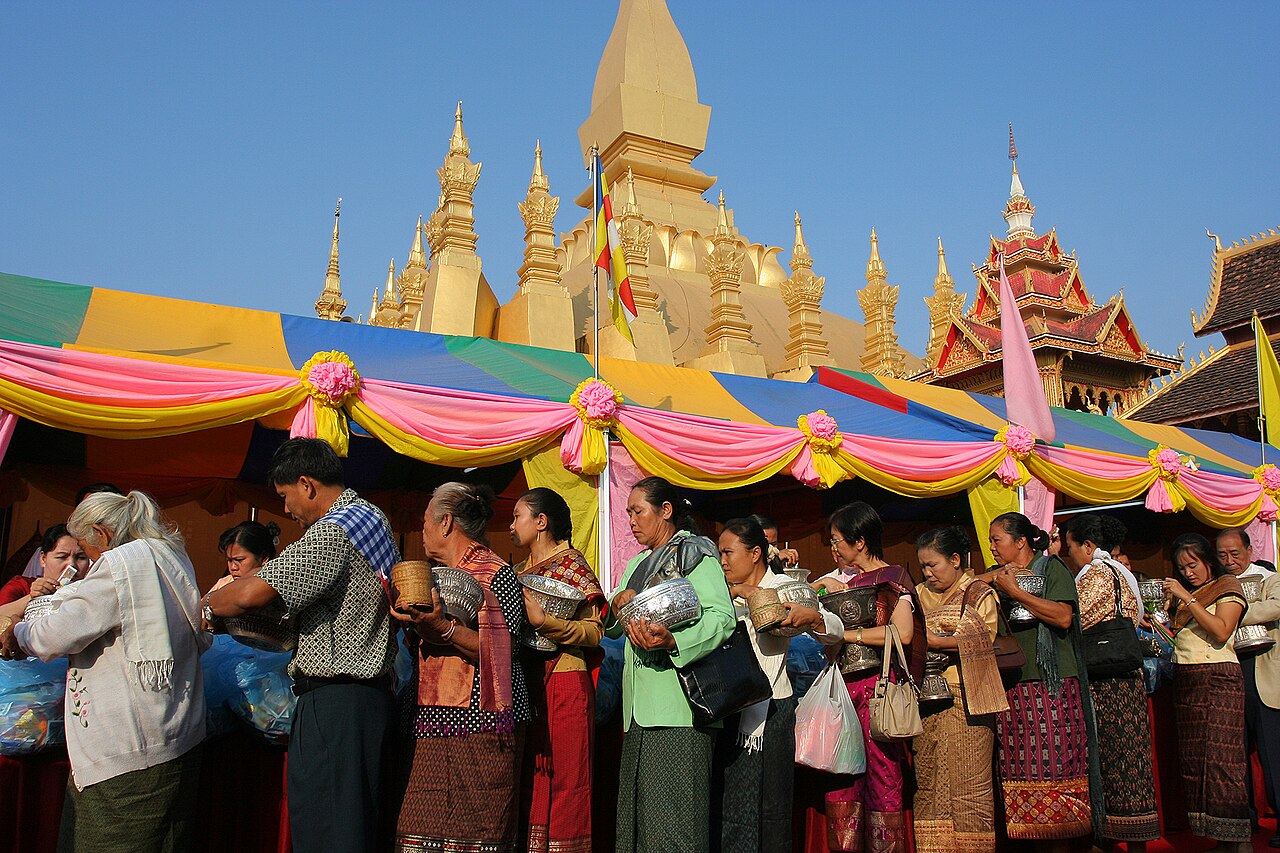
The great national festival of the Lao is Boun That Luang, held at the golden stupa of Vientiane, when tens of thousands gather for processions, offerings, and celebration in the country’s most important religious event. The Lao New Year in April, like the Thai Songkran, is marked by the joyous splashing of water.
Boat races on the Mekong, the rocket festival that calls for rain, and the many temple fairs fill the calendar with devotion and festivity. Through these celebrations the Lao express the deep bond between their people, their faith, and their river.
History
The kingdom of Lan Xang, founded in the fourteenth century, united the Lao for some three hundred years before splitting into rival kingdoms and falling under Siamese domination. In the late nineteenth century the Lao lands were absorbed into French Indochina, and Laos became a French colony.
Independence in the mid-twentieth century was followed by the devastation of the Indochina wars, in which Laos became the most heavily bombed country per head in history. In 1975 a communist movement, the Pathet Lao, took power and abolished the monarchy, establishing the one-party state that governs the country today.
Today
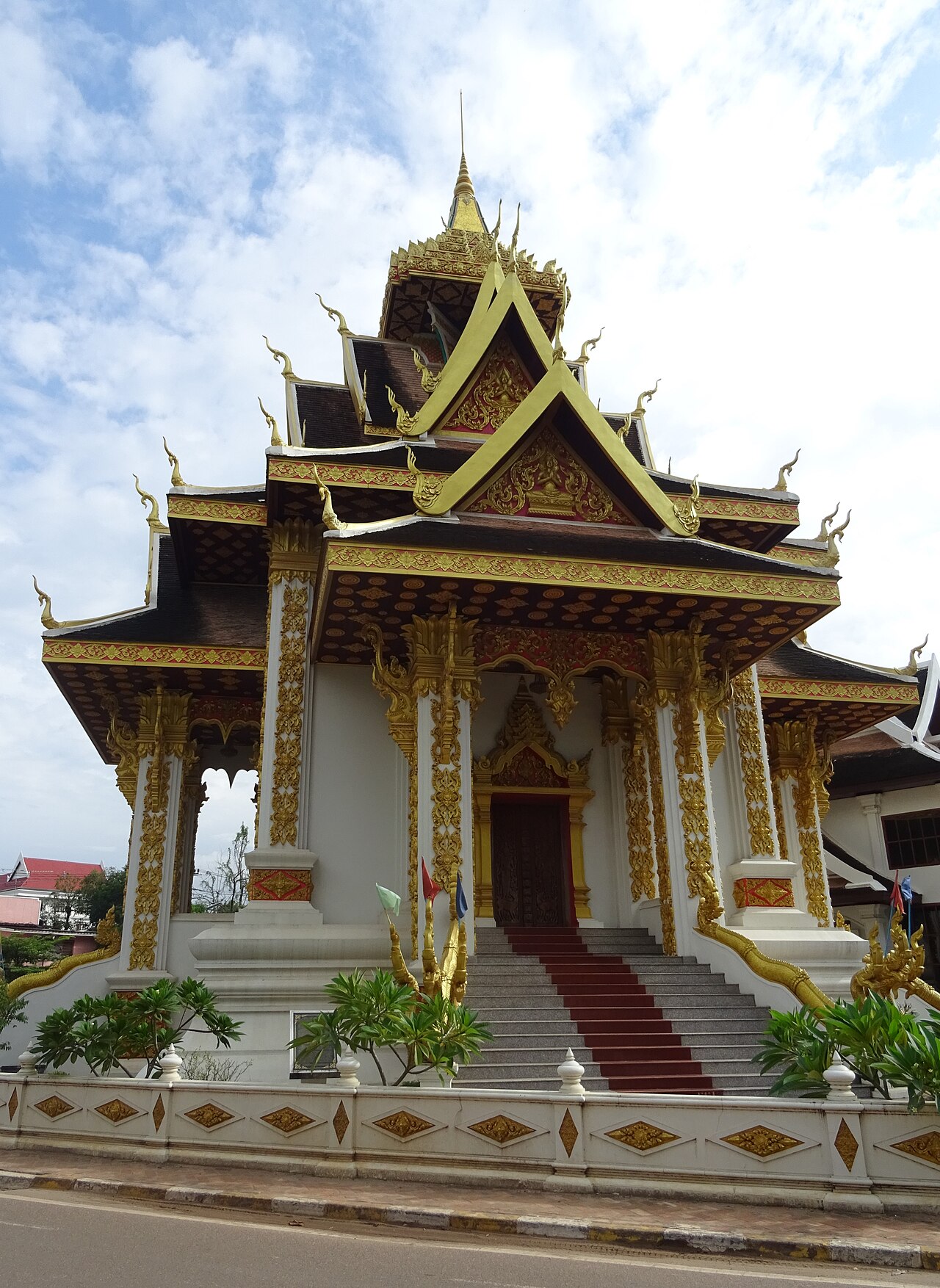
Today the Lao form the majority of the roughly seven million people of Laos, alongside many upland minority peoples. Most still live along the Mekong and its tributaries, farming rice, while the towns grow and the country slowly develops, aided by its rivers, forests, and hydropower.
Modern Laos remains one of the quieter and less developed corners of Southeast Asia, its life still shaped by Buddhism, the Mekong, and the rhythms of the rice-growing year. The Lao language, the sound of the khaen, and the golden stupa of That Luang continue to define one of the region’s gentle and enduring peoples.
Related Peoples of the Region
More Peoples of the World
You May Like
The Damara, an Ancient People of Namibia