In the heart of the Indochinese peninsula, around the great lake of the Tonle Sap, live the Khmer, the people of Cambodia and the heirs to one of the mightiest civilisations Asia has known. Builders of Angkor, the largest religious monument on earth, they created an empire that once ruled much of the region.
Theirs is a heritage of soaring temples and celestial apsara dancers, of rice and fish drawn from the rhythm of the waters, shadowed by the horror of the Khmer Rouge genocide from which they have slowly risen. To know the Khmer is to trace the long story of Angkor and its resilient people.
Cambodia on Film
Contents
- Origins
- The Name
- The Language
- The Homeland
- The Old Way of Life
- Society and Community
- Religion and Belief
- Traditions
- Crafts
- Food
- Festivals
- History
- Today
Origins
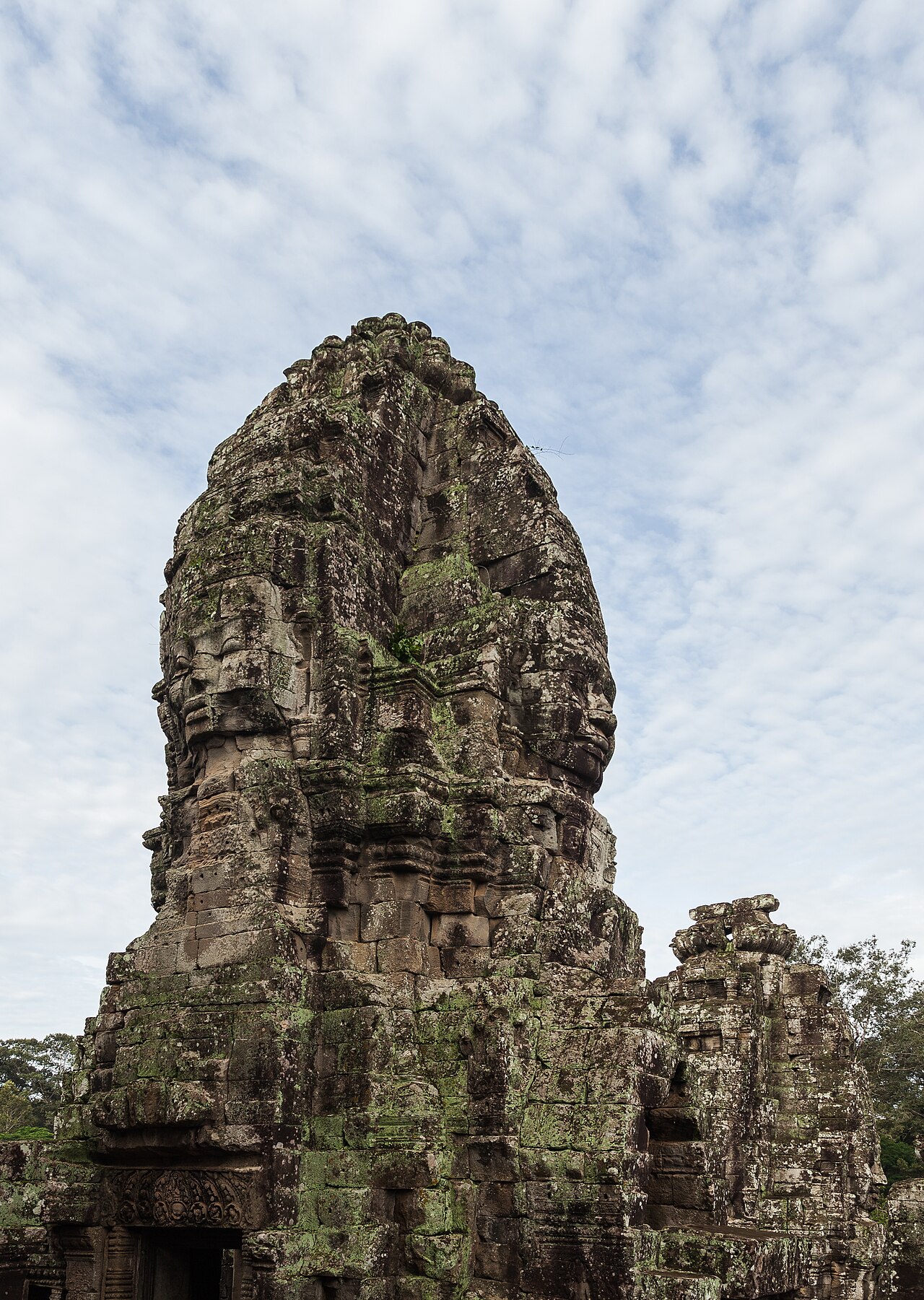
The Khmer are the people of Cambodia, one of the oldest and most storied nations of Southeast Asia. Speaking an Austroasiatic language quite distinct from the Tai and Vietnamese tongues around them, they built one of the greatest civilisations the region has known, whose monuments still astonish the world.
The Khmer trace their civilisation back some two thousand years, through the early states of Funan and Chenla to the mighty Khmer Empire of Angkor, which from the ninth to the fifteenth century dominated much of mainland Southeast Asia. At its height the empire raised the vast temple-city of Angkor, the largest religious complex ever built.
The Name
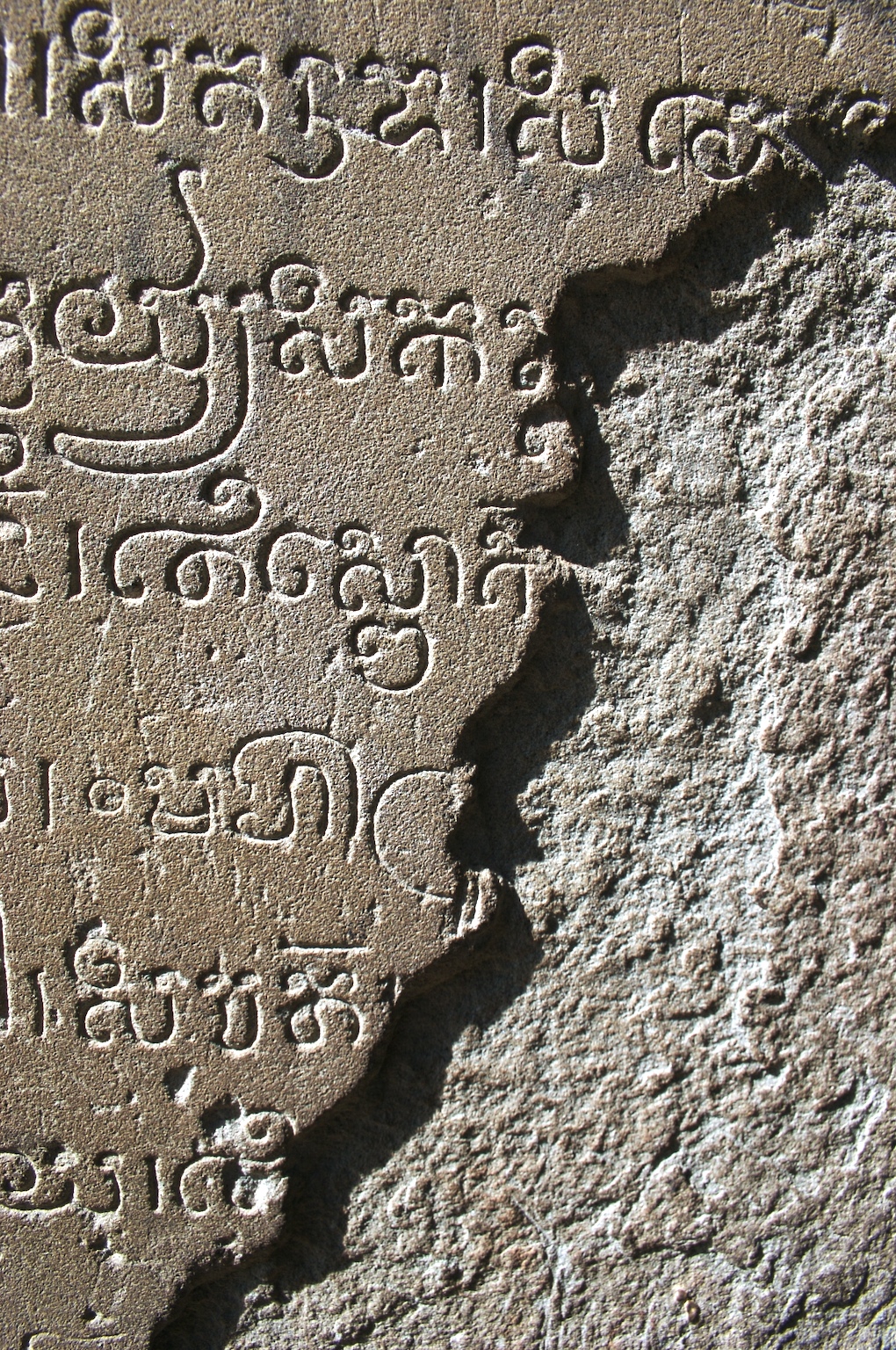
The Khmer take their name from their people, and their language and country are known by the same name; Cambodia itself derives from Kambuja, an ancient name for the Khmer land. The people are the direct heirs of the builders of Angkor, and their identity is deeply tied to that golden age.
Through centuries of decline and foreign domination, the memory of Angkor sustained Khmer pride, and the great temple of Angkor Wat became the very symbol of the nation, appearing on the Cambodian flag. To be Khmer is to belong to this ancient and resilient people.
The Language
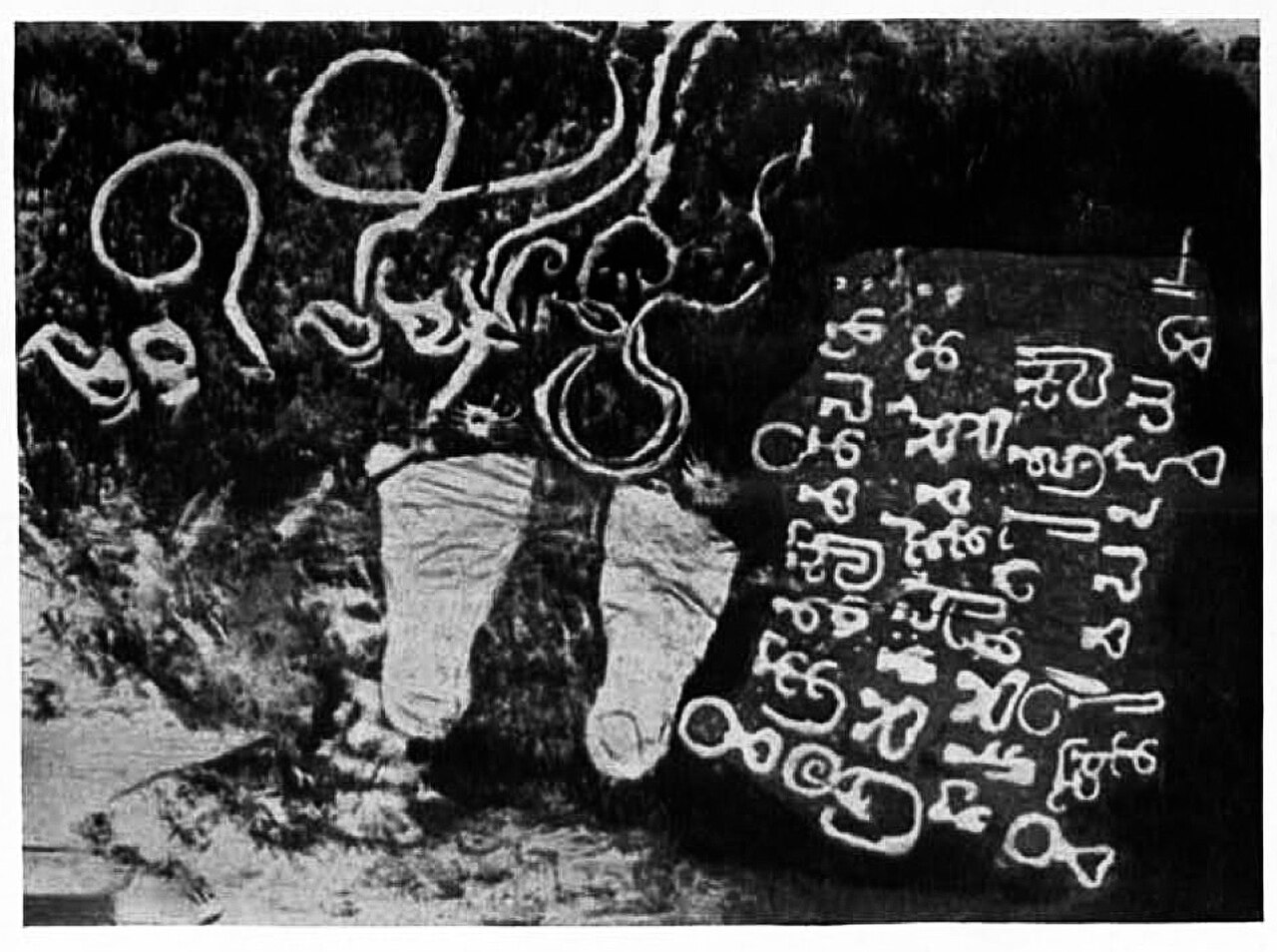
The Khmer language belongs to the Austroasiatic family, related to Vietnamese and to the Mon language of Myanmar, and quite distinct from the tonal Tai languages of its neighbours. Unusually for the region, it is not tonal, and it is written in the elegant Khmer script, derived from ancient Indian models.
The Khmer script, among the oldest in Southeast Asia, was carried by Khmer influence to the Thai and Lao, who based their own scripts upon it. Enriched by Sanskrit and Pali through Hinduism and Buddhism, Khmer has a long literary heritage and is the national language of Cambodia.
The Homeland
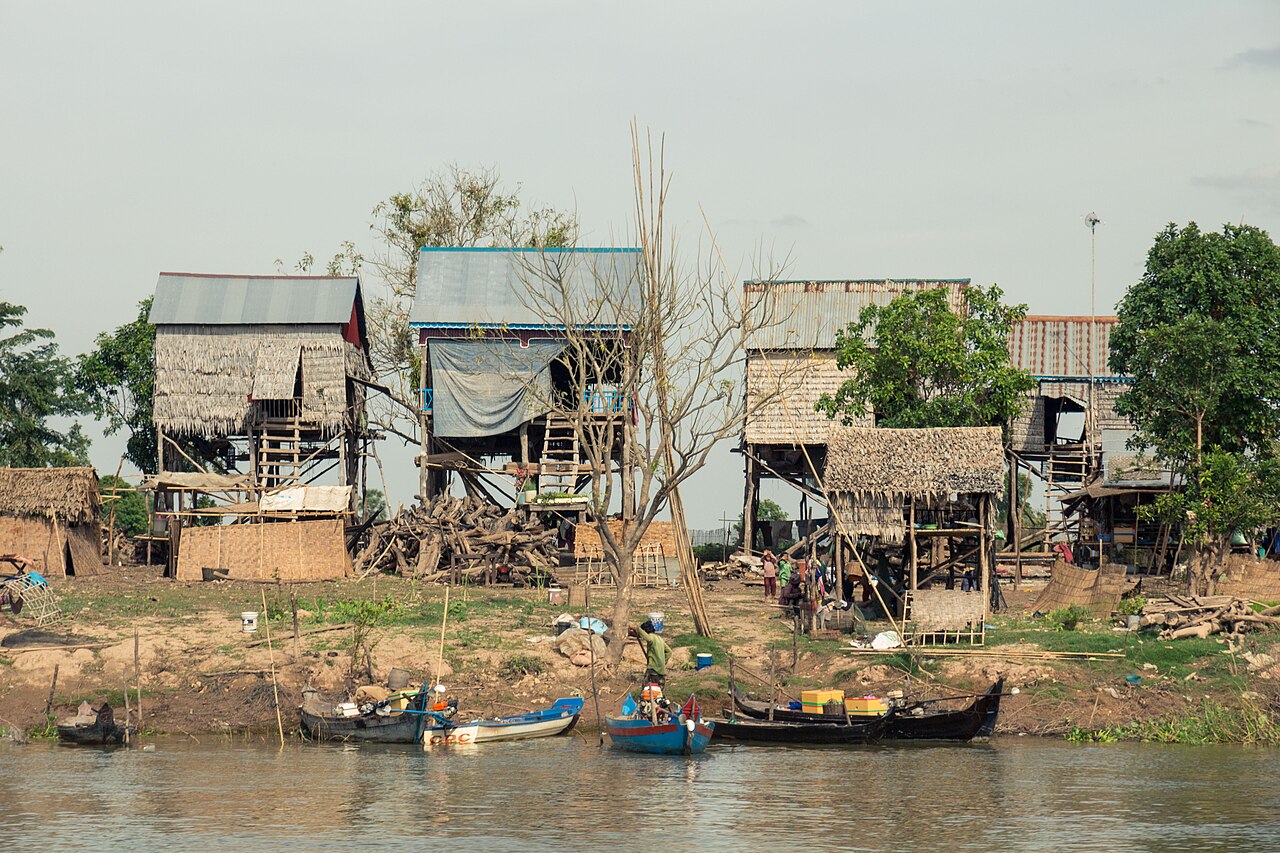
The Khmer homeland is Cambodia, a land at the heart of the Indochinese peninsula, centred on the basin of the Mekong River and the great lake of the Tonle Sap. The Tonle Sap, which swells enormously in the rainy season, is one of the richest freshwater fisheries on earth and has fed the Khmer for millennia.
The fertile central plain, watered by the Mekong and the lake, is the heartland of Khmer rice farming, ringed by forested hills and reaching south to the sea. On the floodplains and around the lake, villages of stilt houses rise above the seasonal waters.
The Old Way of Life
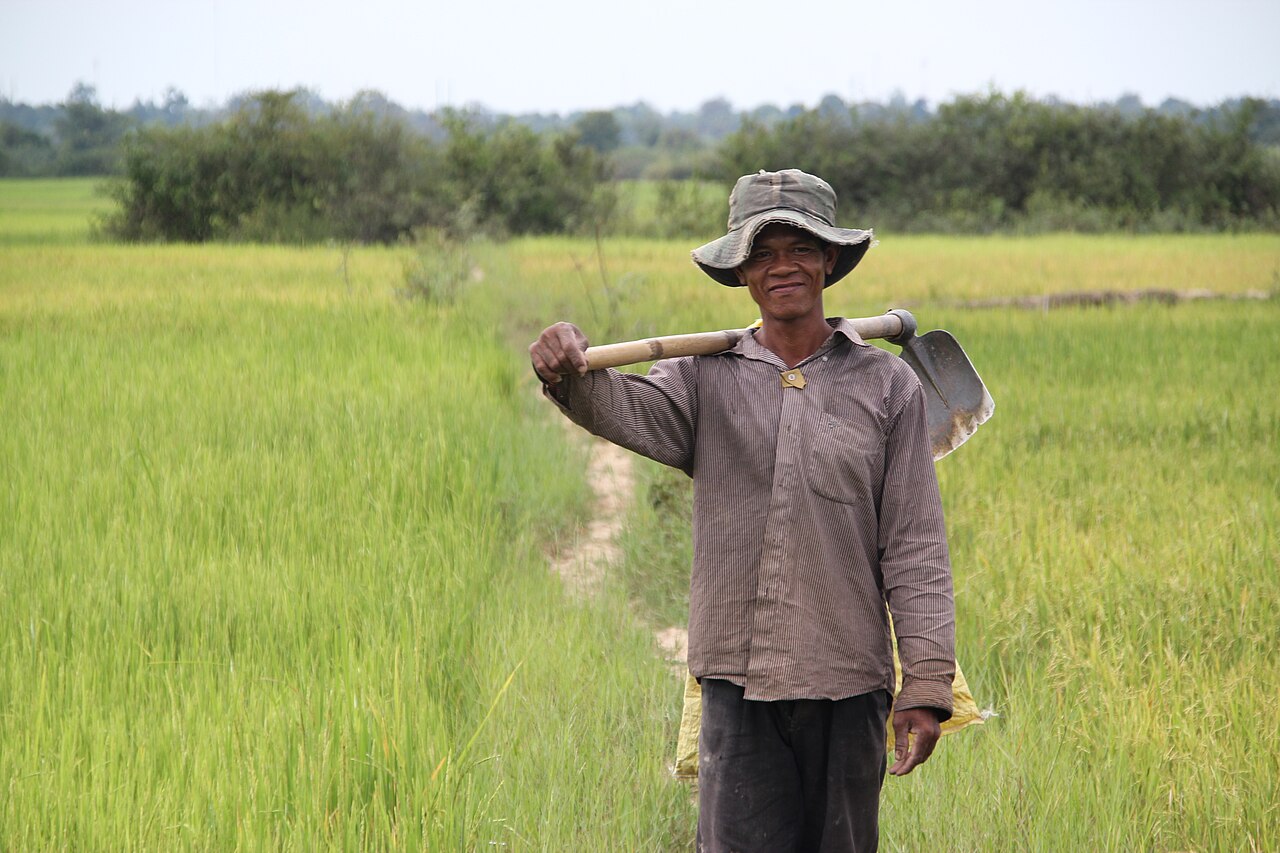
For most of their history the Khmer were rice farmers and fishermen, growing rice on the floodplains and harvesting the extraordinary bounty of fish from the Tonle Sap and the Mekong. The rise and fall of the waters governed the rhythm of life, and the ancient empire built vast reservoirs and canals to control them.
Village life centred on the rice field, the water, and the Buddhist temple, with houses raised on stilts against the floods. Fishing, rice-growing, and the produce of the forest sustained a way of life shaped by the great river and lake.
Society and Community
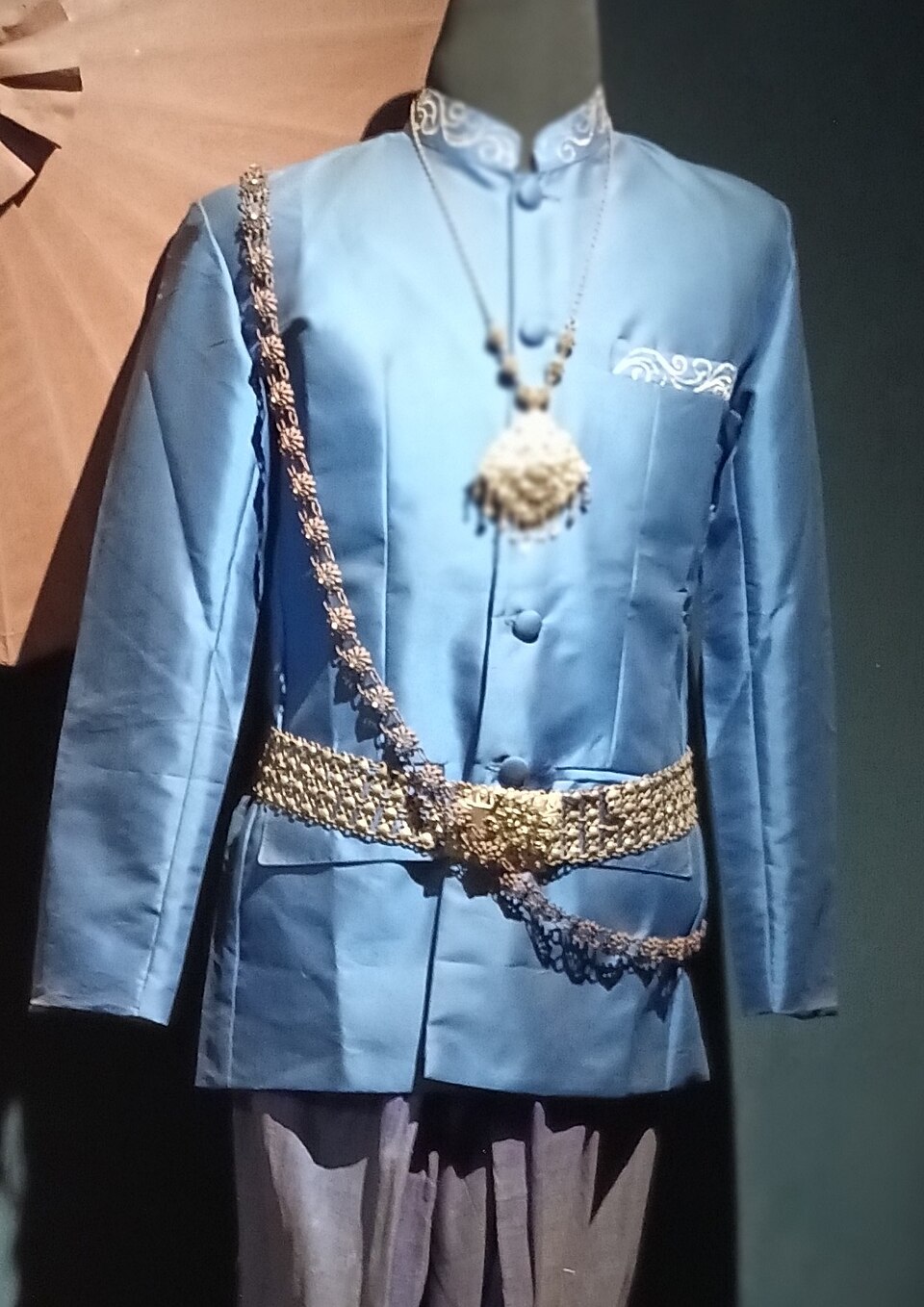
Khmer society traditionally centred on the village, the family, and the Buddhist temple, or wat, which served as school, meeting place, and centre of religious life. Above the villages stood the monarchy, an institution of great antiquity and reverence, and a Buddhist clergy held in high esteem.
Respect for elders, monks, and the king, and the values of Buddhism shape Khmer social life. The horrors of the twentieth century tore at the fabric of this society, but family, village, and faith have remained the foundations on which the Khmer have rebuilt.
Religion and Belief
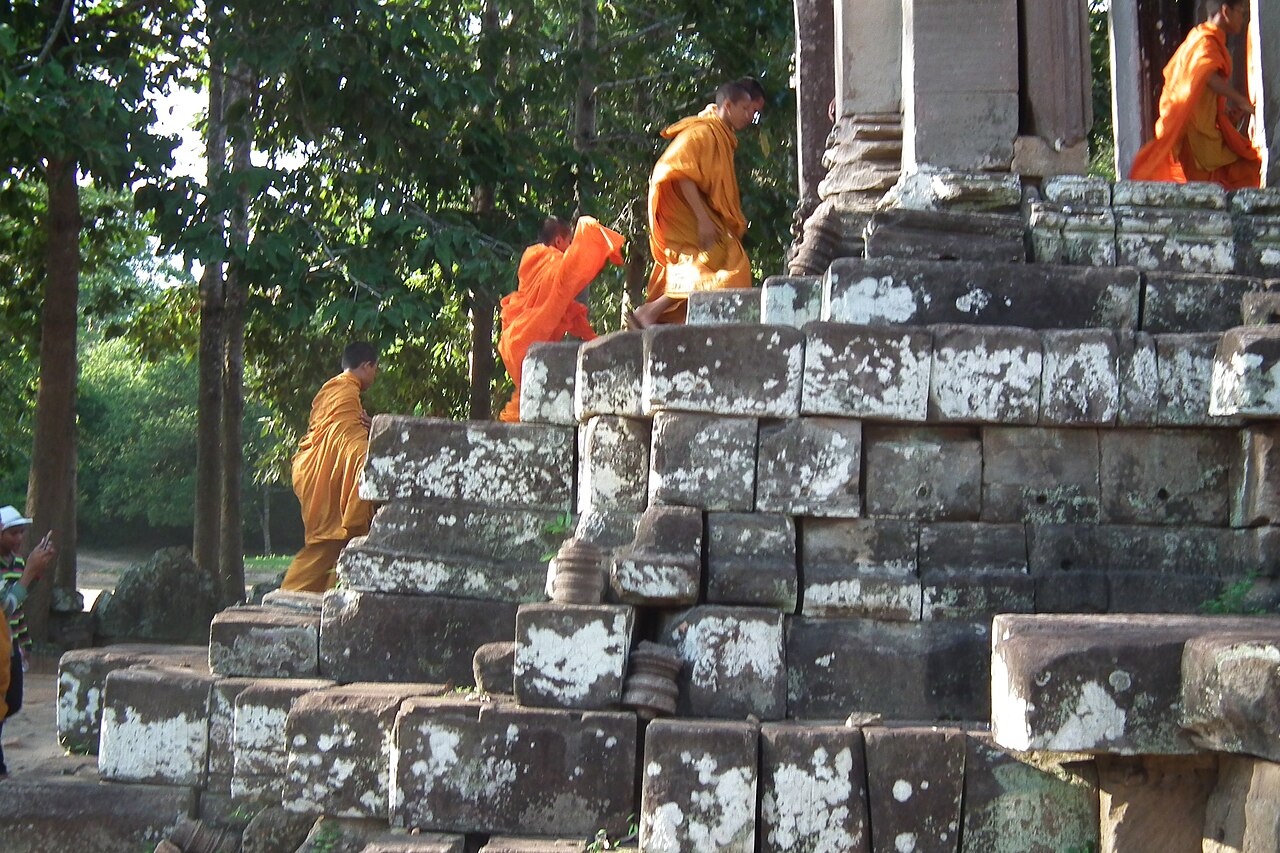
The Khmer are overwhelmingly Theravada Buddhists, and Buddhism is central to their culture and daily life, with temples in every village and the monkhood held in deep respect. It is customary for young men to spend time as monks, and merit-making and the Buddhist festivals structure the year.
Yet the Khmer past is also profoundly Hindu, for the builders of Angkor worshipped Shiva and Vishnu before the kingdom turned to Buddhism, and the temples bear witness to both faiths. Older beliefs in spirits, honoured alongside Buddhism, complete the rich religious world of the Khmer.
Traditions
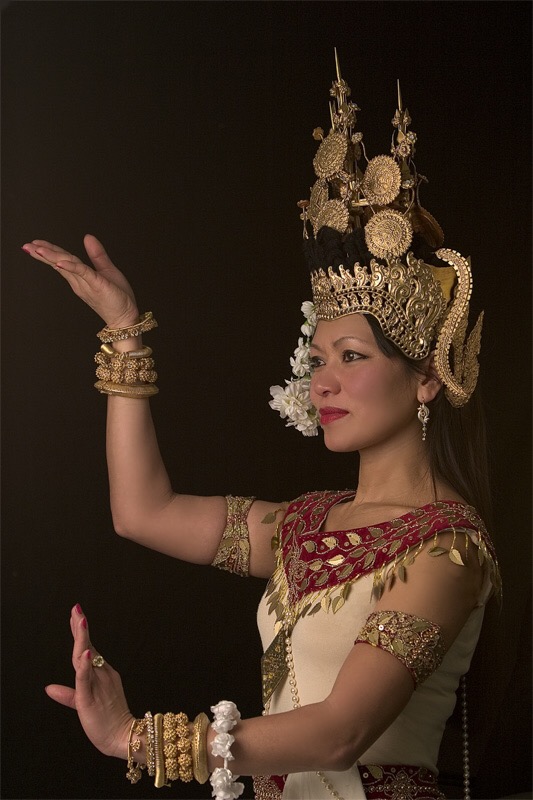
The most exquisite Khmer tradition is the classical dance, above all the apsara dance, whose graceful, stylised movements and golden costumes recall the celestial dancers carved on the walls of Angkor. Shadow puppetry, court music, and the recitation of the Reamker, the Khmer version of the Ramayana, are treasured arts.
The customs surrounding Buddhist life, the ceremonies of marriage and death, and the great communal festivals mark the Khmer year. These traditions, many of them nearly destroyed in the twentieth century, have been carefully revived as a matter of national pride.
Crafts
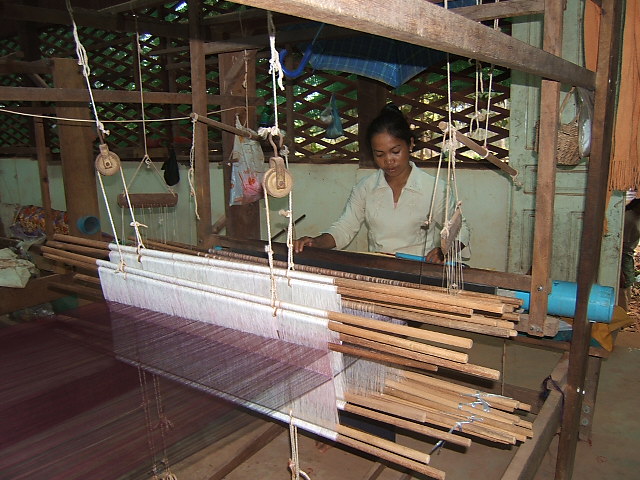
The Khmer are heirs to a great artistic tradition, seen at its height in the stone carving of Angkor, whose reliefs and statues rank among the masterpieces of world art. Silk weaving, in intricate patterned textiles, remains a celebrated craft, along with silverwork, stone and wood carving, and the making of religious objects.
Traditional crafts suffered terribly in the upheavals of the twentieth century, when many artisans perished, but they have been revived through dedicated effort. The carving, weaving, and metalwork of the Khmer carry forward the legacy of Angkor.
Food

Khmer cuisine is subtle and fragrant, less fiery than that of some neighbours and built on rice, fish, and fresh herbs. The national dish is fish amok, a delicate curry of fish steamed with coconut and the aromatic paste kroeung until it sets like a mousse, often served in a banana-leaf cup.
Freshwater fish from the Tonle Sap, the pungent fermented fish paste prahok, sour soups, and rice in every form fill the Khmer table. Food is central to family and festival, and the cuisine reflects the abundance of the great lake and river.
Festivals
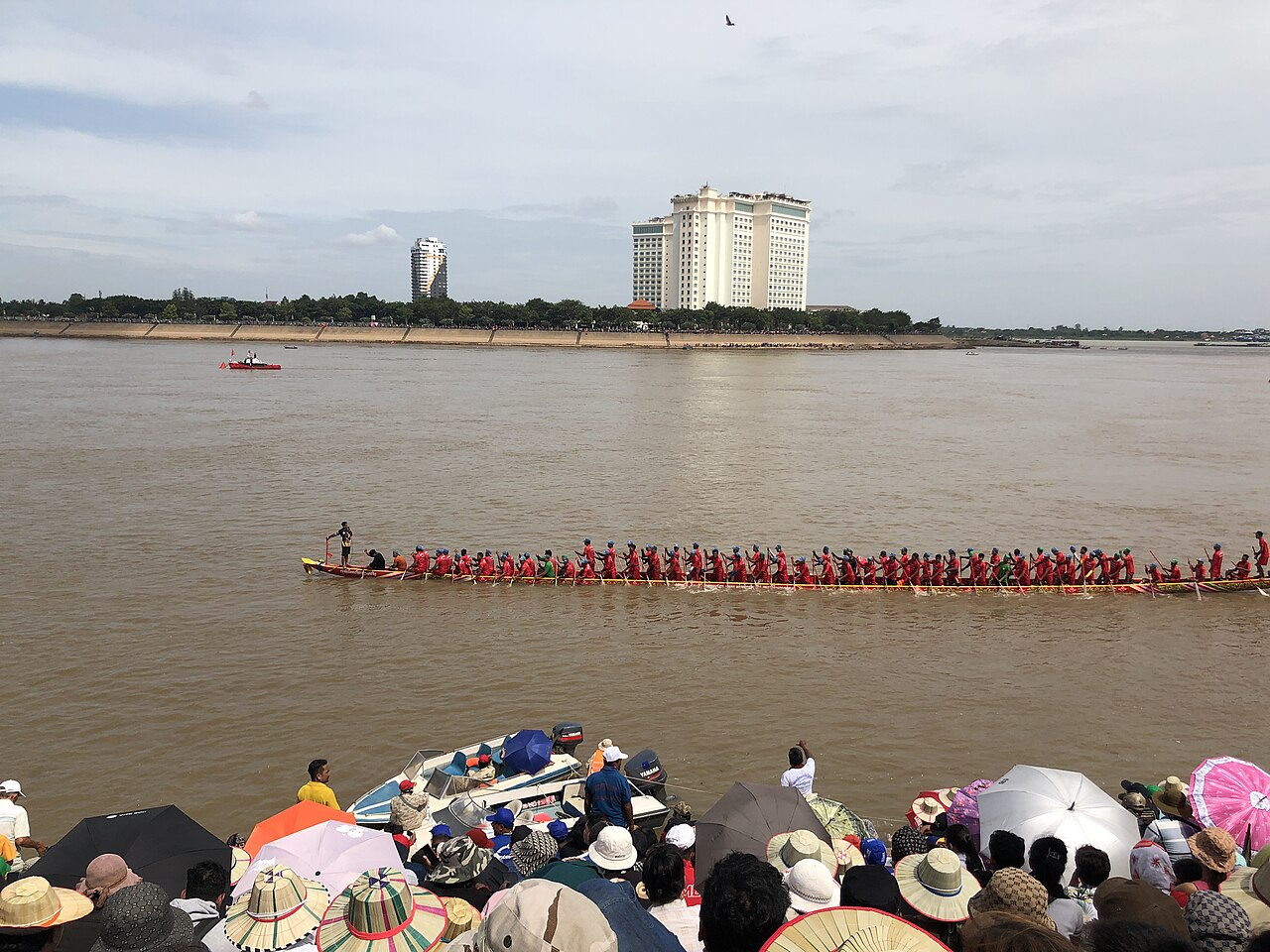
The great festivals of the Khmer follow the Buddhist calendar and the rhythm of the waters. The Khmer New Year in April brings games, temple visits, and family celebration, while Pchum Ben, the festival of the ancestors, sees the living make offerings to the dead. The Water Festival, Bon Om Touk, celebrates the reversal of the Tonle Sap’s flow with spectacular boat races on the river at Phnom Penh.
Temple fairs, Buddhist holy days, and the ceremonies of the royal court fill the calendar with devotion and festivity. Through these celebrations the Khmer express the deep bond between their people, their faith, and their land of water.
History
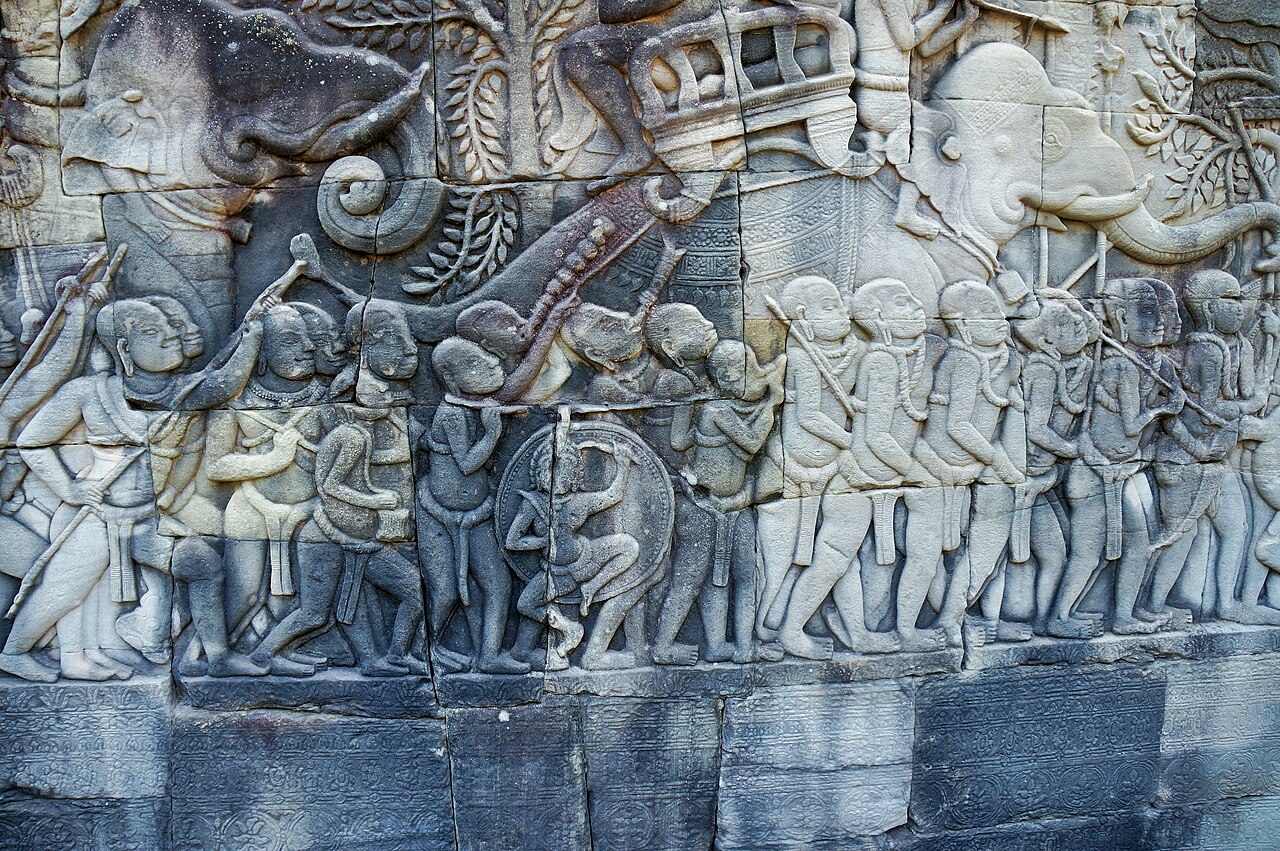
The Khmer Empire of Angkor was the dominant power of mainland Southeast Asia for six centuries, its god-kings building the greatest temples of the age before the empire declined and its capital was abandoned. The following centuries brought weakness and domination by powerful Thai and Vietnamese neighbours, and in the nineteenth century Cambodia became a French protectorate.
Independence in 1953 was followed by the most terrible chapter in Khmer history, when the Khmer Rouge seized power in 1975 and, in less than four years, caused the deaths of perhaps two million people through execution, starvation, and forced labour. The country has spent the decades since recovering from this genocide.
Today
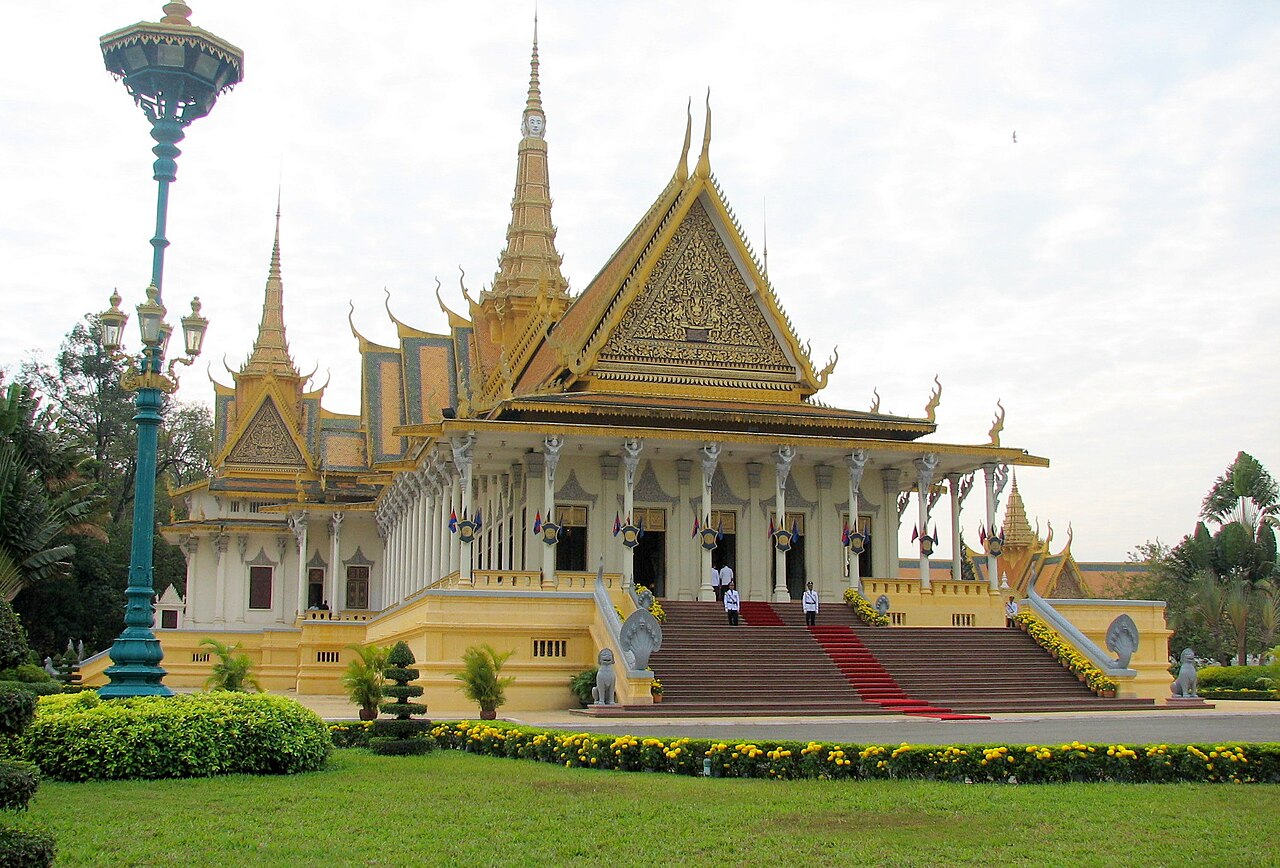
Today the Khmer number around fifteen million, the overwhelming majority of Cambodia’s population. Since the horrors of the Khmer Rouge and the years of war that followed, the country has slowly rebuilt, its economy growing through agriculture, garments, and a tourism industry drawn above all by the temples of Angkor.
Modern Khmer life blends the deep scars of recent history with a determined revival of tradition, faith, and art. Their ancient language, their Buddhist devotion, their classical dance, and above all the enduring glory of Angkor continue to define one of Southeast Asia’s greatest peoples.
Related Peoples of the Region
More Peoples of the World
You May Like
The Damara, an Ancient People of Namibia