The San, also called Bushmen or, in Botswana, Basarwa, are the indigenous hunter-gatherers of southern Africa, the oldest inhabitants of the region and among the most ancient peoples on earth. Numbering perhaps a hundred thousand, scattered across Botswana, Namibia, South Africa and neighbouring lands, they descend from the peoples who inhabited southern Africa for tens of thousands of years before all others.Carrying some of the oldest human lineages, speaking click languages of great antiquity, and famous for their rock art, their skilled hunting with the poison arrow and their trance-dance healing, the San are a people of extraordinary depth, though long dispossessed and marginalised. This article traces their origins, languages, homeland, foraging life and the customs that continue to define them.
The San on Film
Contents
- Origins
- The Name
- The Language
- The Homeland
- The Old Way of Life
- Society and Community
- Religion and Belief
- Traditions
- Crafts
- Food
- Festivals
- History
- Today
Origins

The San, also called Bushmen or, in Botswana, Basarwa, are the indigenous hunter-gatherers of southern Africa, the oldest inhabitants of the region and among the most ancient peoples on earth. Numbering perhaps a hundred thousand, scattered across Botswana, Namibia, South Africa, Angola and neighbouring lands, they are the descendants of the peoples who inhabited southern Africa for tens of thousands of years before all others.
Genetic studies place the San among the very oldest human lineages, and their rock art, spread across the mountains and caves of southern Africa, is a record of thousands of years of their presence. Hunters of game with the bow and the poison arrow, gatherers of the plants of the bush, and famous for their trance-dance healing and their profound relationship with the natural world, the San are a people of extraordinary antiquity and cultural depth.
The Name
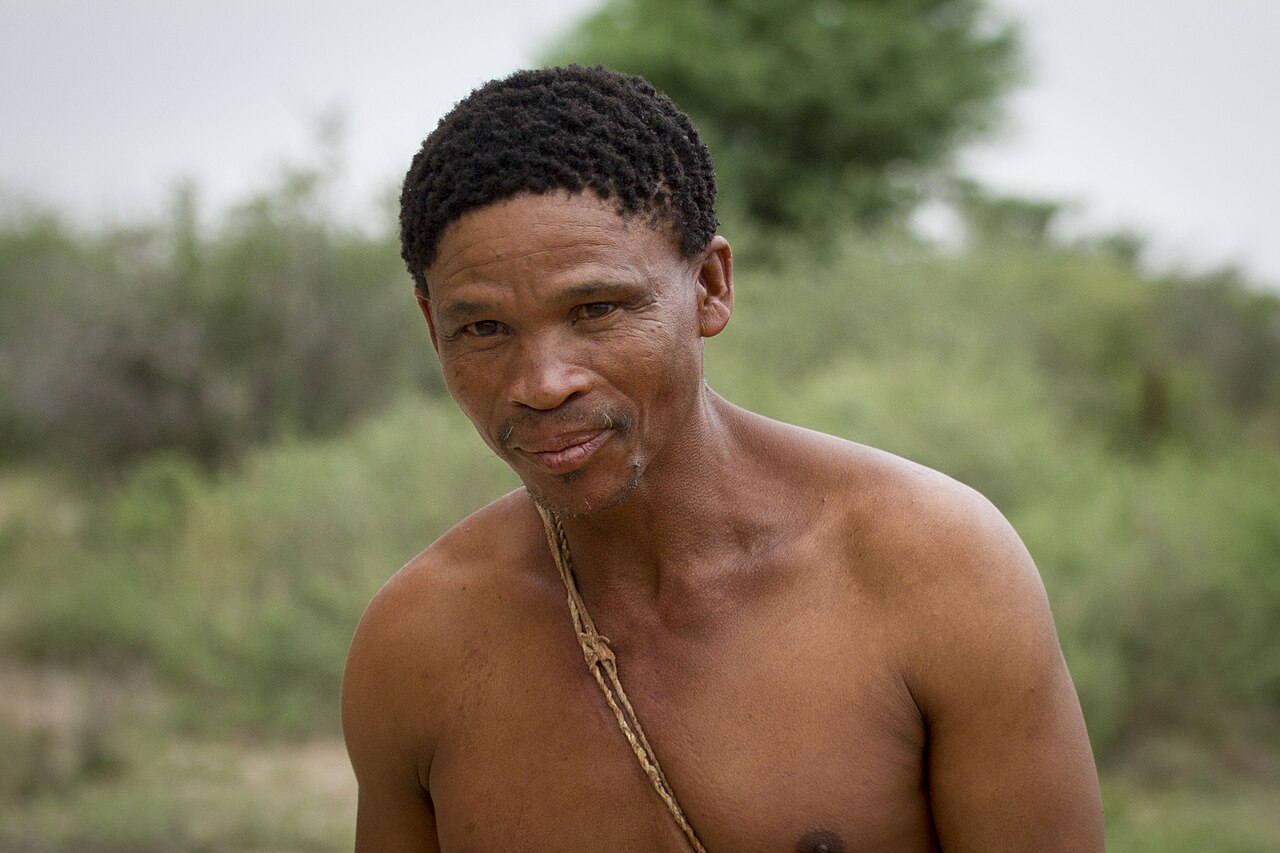
The people are known by several names: San, a term from the Khoikhoi; Bushmen, an old colonial name still sometimes used; and Basarwa in Botswana. They call themselves by the names of their particular groups, such as the Juǀʼhoansi, the ǃXóõ, the Naro and many others, for they are not a single people but a number of related groups.
What unites them is their descent from the ancient hunter-gatherers of southern Africa, their click languages and their way of life. The names San and Bushmen both carry difficulties, but they denote the indigenous foraging peoples of the region, heirs to one of the oldest ways of life on earth.
The Language
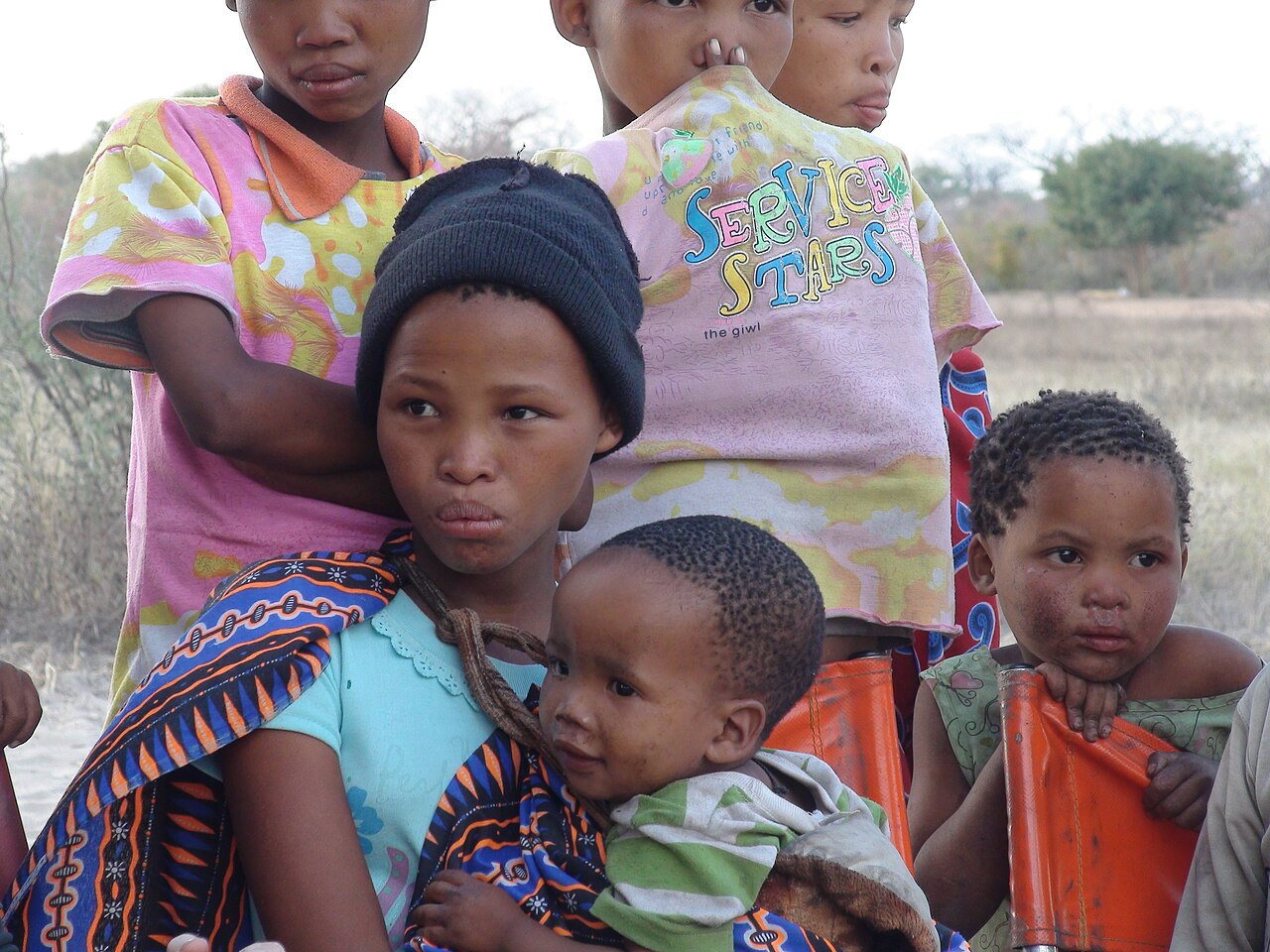
The San speak a number of Khoisan languages, famous for their click consonants, which are among the most complex and ancient languages known and which fall into several distinct families, not all related to one another. The diversity of the San languages, some of them now spoken by only a few people, reflects the great antiquity of the people.
These click languages, and the knowledge and oral traditions they carry, are a precious survival, but many are endangered, as the San are drawn into the languages of their neighbours. Efforts are being made to record and preserve them, for they are a unique window into the deep history of human language and of the San themselves.
The Homeland
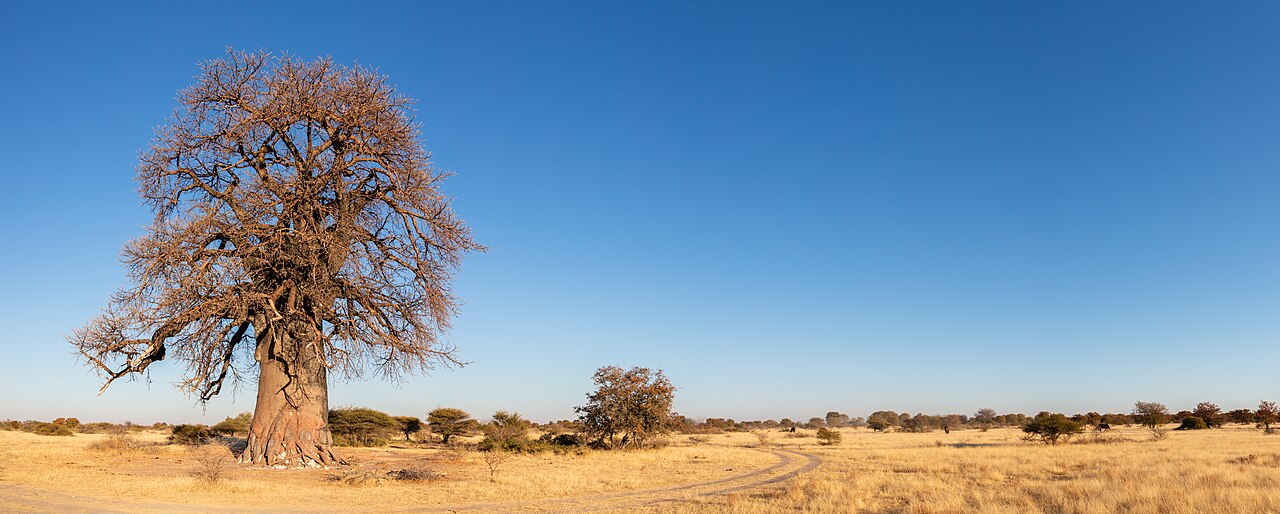
The San homeland is, above all, the Kalahari, the vast semi-desert of sand and scrub that spreads across Botswana, Namibia and beyond, though in the past the San ranged across the whole of southern Africa, from the Cape to the mountains and the coast. Driven from the better lands by farming and herding peoples and by European settlement, the surviving San were left largely in the harsh country of the Kalahari.
The Kalahari, dry and demanding, with its scattered pans, its seasonal plants and its game, shaped the foraging life of the San, who knew intimately its waterholes, its plants and its animals. This ancient homeland, from which they drew a living where others could not, remains the heart of the San world, though much of it has now been lost to them.
The Old Way of Life
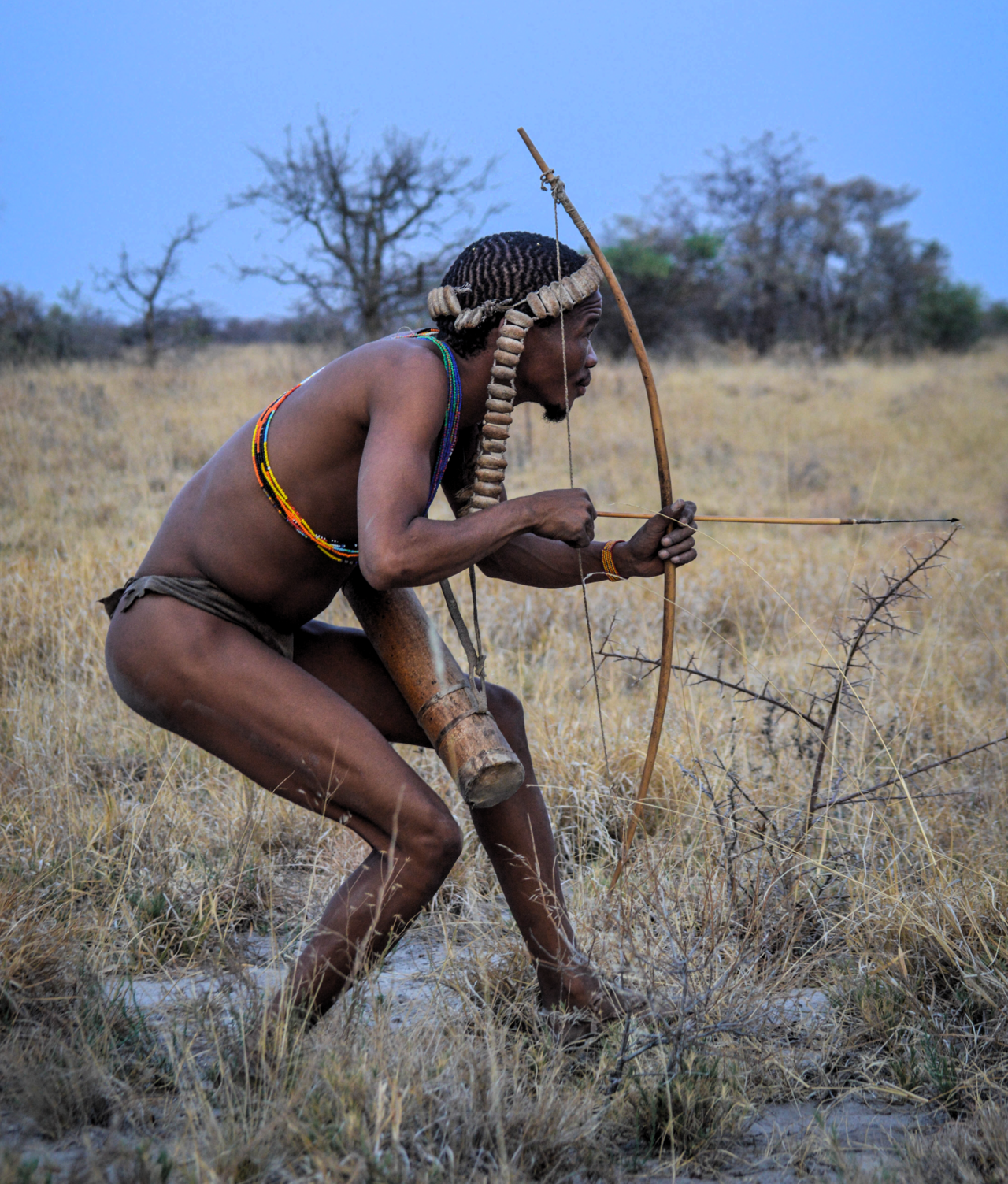
The San lived by hunting and gathering, without farming or herds, in one of the purest surviving examples of the way of life that was once universal to humankind. The men hunted game, from small animals to large antelope, with bows and arrows tipped with a poison made from beetle larvae, tracking their prey with unrivalled skill across the sand.
The women and children gathered the roots, tubers, nuts, berries and melons that made up the greater part of the diet, and knew the plants of the bush intimately. The tsamma melon and other plants provided water in the dry Kalahari. The San carried little, moved with the seasons and the game, and lived in small, mobile bands, in a way of life finely adapted to drawing sustenance from a harsh land.
Society and Community
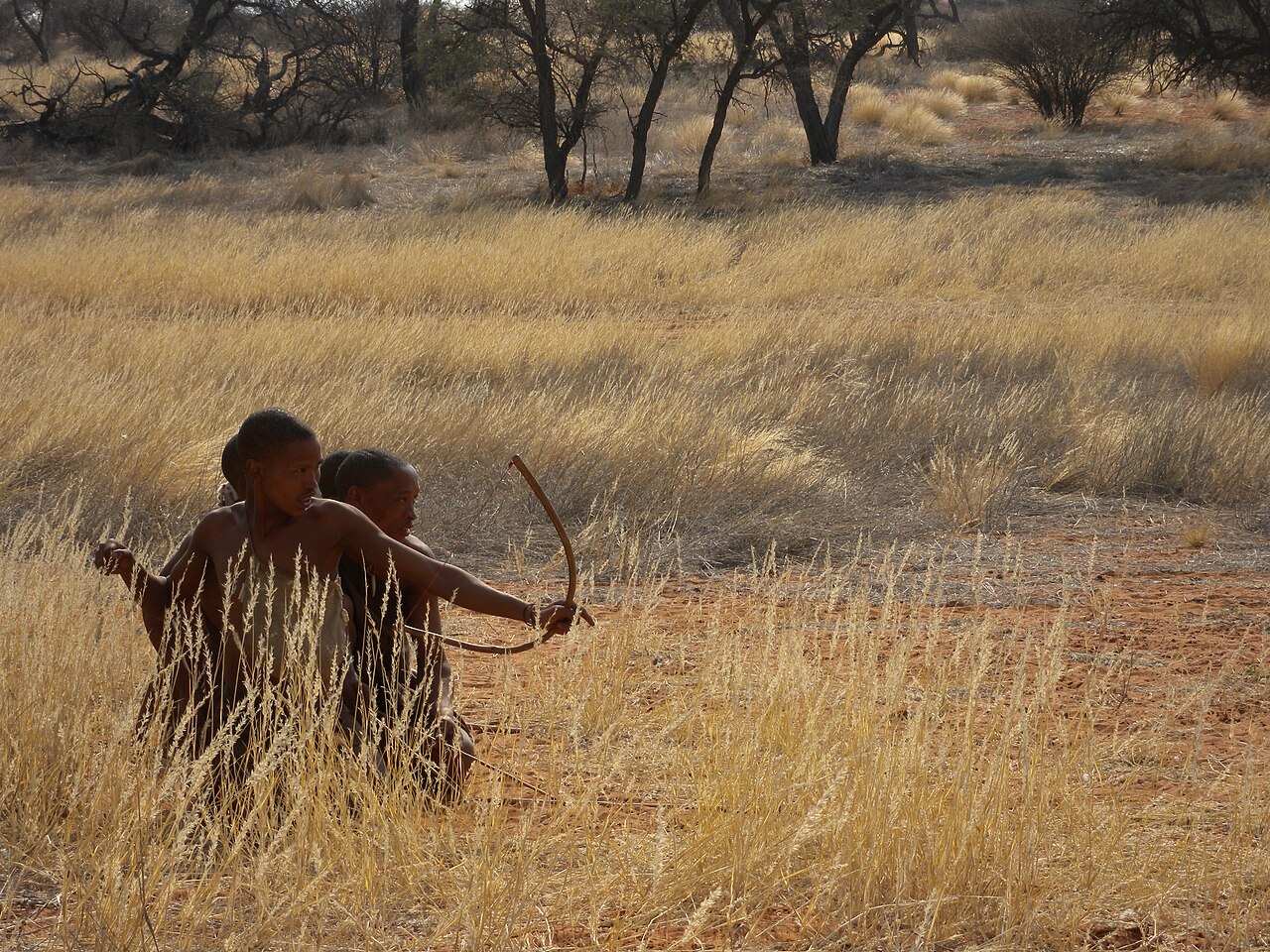
San society is famously egalitarian, without chiefs, headmen or any formal hierarchy, and without the accumulation of wealth or power. People lived in small, fluid bands whose membership changed as families came and went, and decisions were reached by discussion and consensus, with a strong ethic of sharing that spread food and possessions through the group.
Sharing, above all the sharing of meat from a large kill, was a sacred obligation, and any tendency to boast or to dominate was firmly checked. Kinship, marriage and the ties of the band ordered social life, and both men and women enjoyed considerable autonomy. This absence of hierarchy and possession, characteristic of foraging peoples, gave San society a striking freedom and equality.
Religion and Belief

San religion is centred on a relationship with the natural and spirit world of great depth and subtlety, on a creator and trickster figure, and above all on the healing trance dance. In this, the great religious ceremony of the San, the people gather at night around the fire, the women clapping and singing while the men dance, and the healers enter a trance in which they are believed to draw out sickness and to travel to the spirit world.
The eland and other animals held deep spiritual meaning, and the rock art of the San is filled with images of the trance dance, the eland and the spirit world. The healers, and the power they harness in the trance, are central to the religious and social life of the community, and the trance dance remains one of the most profound of all San traditions.
Traditions
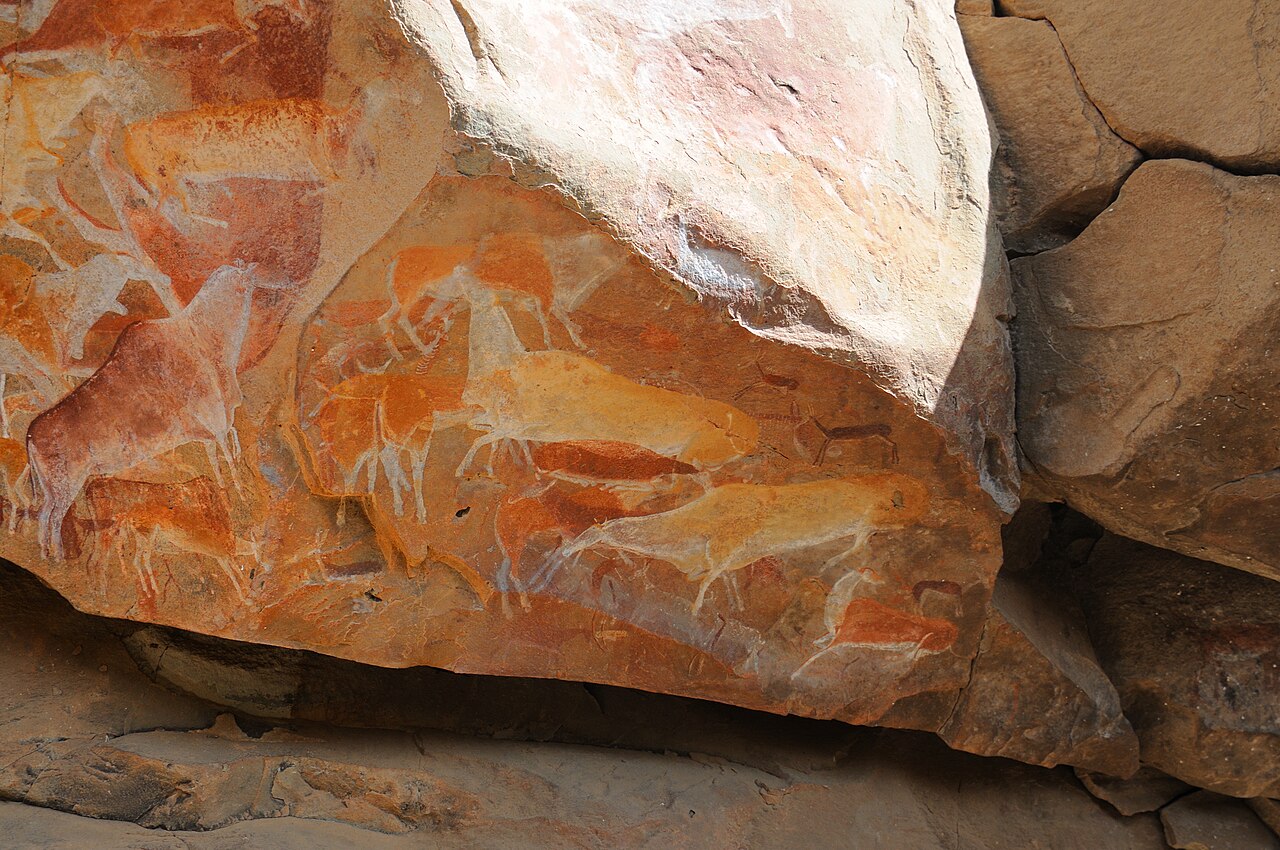
The traditions of the San are those of a foraging people of great antiquity. The skills of hunting and tracking, the knowledge of the plants and the animals, and the making of the bows, arrows and simple tools of the band are passed from parent to child. The trance dance, the sharing of food and the egalitarian customs of the band are at the heart of San life.
Above all, the San are famous for their rock art, the paintings and engravings, spread across the mountains and caves of southern Africa, that record the eland, the trance dance and the spirit world in images of extraordinary beauty and antiquity, some many thousands of years old. Storytelling, song and the profound knowledge of the natural world carry the culture and the wisdom of the people.
Crafts
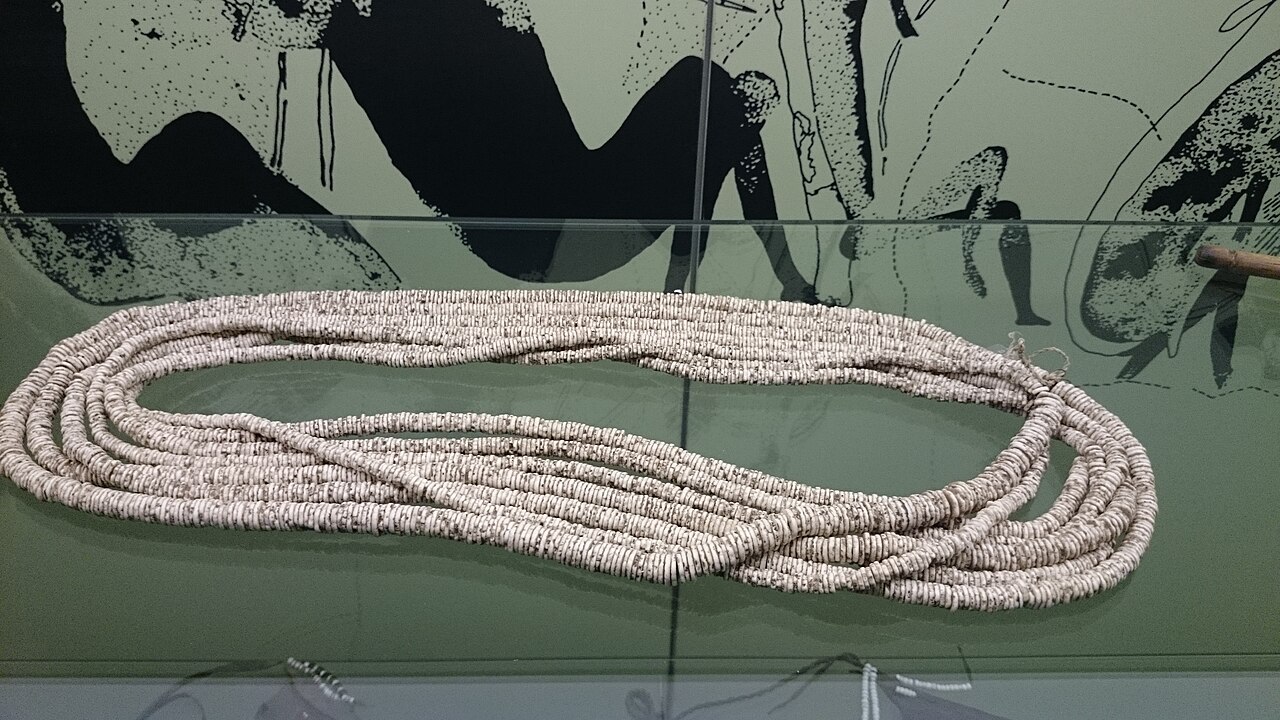
San craftsmanship is spare and suited to a mobile foraging life. The people make the bows and the arrows, tipped with poison, on which the hunt depends, and the digging sticks, carrying nets, bags and containers of hide, ostrich eggshell and plant fibre used in gathering and daily life. The ostrich eggshell, used as a water container and cut into beads, is central to San material culture.
The women string the ostrich-eggshell beads into the necklaces, headbands and ornaments for which the San are known, and make the leatherwork and the simple furnishings of the camp. Owning little and carrying less, the San make only what a mobile life requires, and their crafts, above all the ostrich-eggshell beadwork, reflect the elegance and economy of a foraging culture.
Food

The diet of the San is drawn entirely from the wild and is famous for its variety and its adaptation to a harsh land. Gathered plant foods, roots, tubers, nuts, berries and melons, make up the greater part of the diet, with the mongongo nut and the tsamma melon especially important, the melon providing water as well as food in the dry Kalahari.
Game, hunted with the poison arrow, provides meat, shared according to strict custom, and honey, eggs and small creatures add to the diet. The San know and use a vast range of wild foods, and their knowledge of the plants of the bush is encyclopaedic. This foraged diet, drawn from an intimate knowledge of a difficult land, sustained the San through the ages.
Festivals
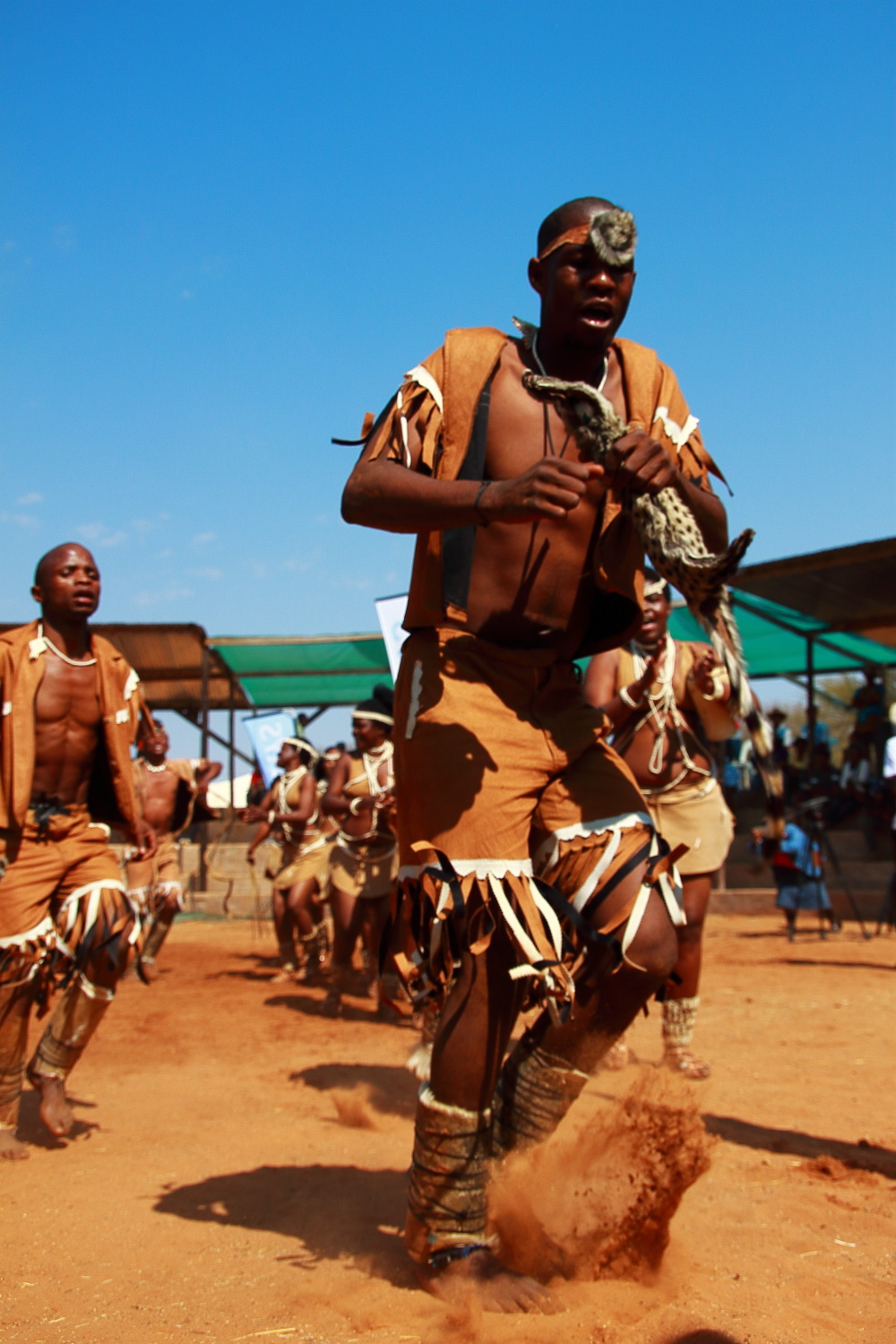
Festive and communal life among the San centres on the trance dance and on the sharing of food. The great healing dances, held around the fire at night, are the high points of communal life, occasions of religion, healing and togetherness, in which the whole band takes part through the night. The bringing in of a large animal is itself an occasion for feasting and sharing.
Without a calendar of fixed festivals, San celebration arises from the rhythms of the foraging life, the gathering of the band and the healing dance. Song, dance, storytelling and the sharing of the fire fill the nights, and the trance dance in particular binds the community in a shared religious and social experience that is the heart of San festivity.
History

The San are the oldest inhabitants of southern Africa, and their ancestors lived across the whole region for tens of thousands of years, leaving their record in the rock art of the mountains and caves. From perhaps two thousand years ago, the coming of the Khoikhoi herders and, later, the Bantu-speaking farmers, and then European settlement from the seventeenth century, drove the San from the better lands.
In the colonial period the San were hunted, killed and dispossessed on a terrible scale, above all in the Cape, and the surviving groups were pushed into the Kalahari and other marginal lands. In modern times the San have continued to suffer dispossession, as at the Central Kalahari Game Reserve in Botswana, and marginalisation, even as their antiquity and their culture have drawn worldwide attention and efforts to defend their rights.
Today
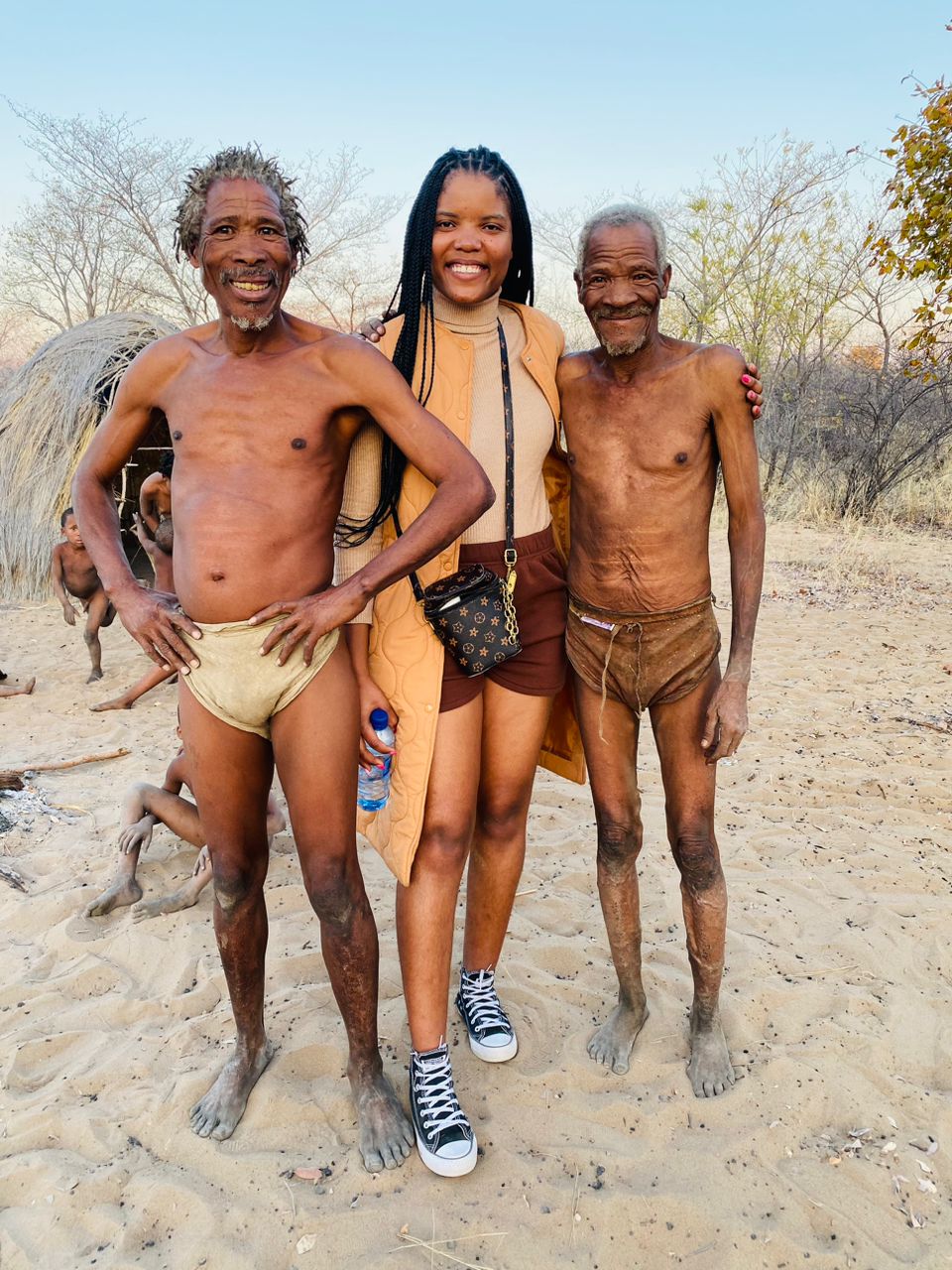
Today the San number perhaps a hundred thousand, scattered across Botswana, Namibia, South Africa, Angola and neighbouring lands, and few now live wholly by hunting and gathering. Dispossessed of much of their land, and often living in poverty on the margins of farming and herding societies, or resettled away from their ancestral country, the San face great challenges to their way of life and their identity.
Yet the San have drawn worldwide attention as the oldest inhabitants of southern Africa and as a living link to humanity’s deep past, and organisations work to secure their land rights and to preserve their languages and knowledge. Heirs to one of the oldest ways of life and one of the greatest artistic traditions on earth, the San carry an irreplaceable heritage into an uncertain future.
Related Peoples of the Region
- The Riffians, the Berber Warriors of the Rif
- The Shilha, the Berbers of the Souss and the Atlas
- The Sahrawi, the People of the Western Sahara
- The Venda, the People of the Sacred Lakes of Limpopo
- The Tsonga, the Shangaan of the Southeastern Lowveld
- The Herero, the Cattle Herders of Namibia
- The Ovambo, the Largest People of Namibia
- The Nama, the Khoekhoe Herders of the Dry South
More Peoples of the World
- A Fifth of Humanity, the Story of the Han Chinese
- How the Maori Sailed Across the Pacific to Reach New Zealand
- Zulu of the Green Hills and Their Kingdom Forged by Shaka
- The People Who Never Vanished, the Story of the Maya
- Long Before the Arabs Came, North Africa Belonged to the Amazigh
- The People Who Emerged Into This World, the Story of the Navajo
- Meet the Ainu, an Indigenous People at Japan’s Northern Edge
You May Like

The Damara, an Ancient People of Namibia



