The Ovambo, or Owambo, who call themselves the Aawambo, are the largest ethnic group in Namibia, about half the population, with communities also in southern Angola. Numbering some millions, they are settled agropastoralists of the well-watered flatlands of the far north, growers of pearl millet and keepers of cattle, and have been the driving force of modern Namibian politics.Historically organised into several matrilineal kingdoms in the region long known as Ovamboland, the Ovambo were reached early by Lutheran missions and are today largely Christian, and they led the long struggle for Namibian independence. This article traces their origins, language, homeland, farming life and the customs that continue to define them.
The Ovambo on Film
Contents
- Origins
- The Name
- The Language
- The Homeland
- The Old Way of Life
- Society and Community
- Religion and Belief
- Traditions
- Crafts
- Food
- Festivals
- History
- Today
Origins
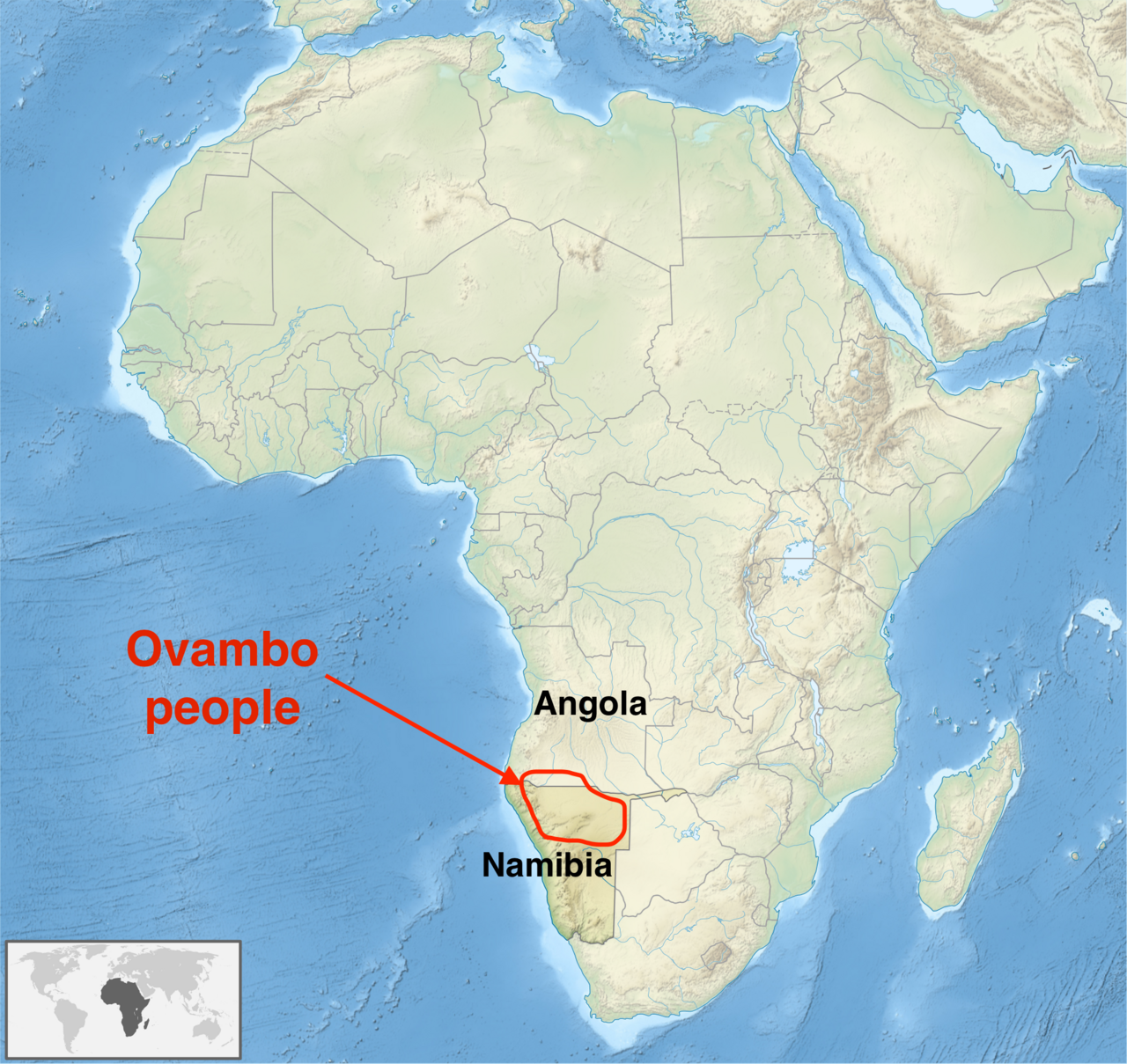
The Ovambo, or Owambo, who call themselves the Aawambo, are the largest ethnic group in Namibia, making up about half the population of the country, with communities also in southern Angola. Numbering some millions, they are settled agropastoralists of the well-watered flatlands of the far north, and have been the driving force of modern Namibian politics.
The Ovambo are made up of a number of related groups, historically organised into several kingdoms, such as Ondonga and Uukwanyama, in the region long known as Ovamboland. Farmers of pearl millet and keepers of cattle, matrilineal in descent, and prominent above all in the struggle for Namibian independence, the Ovambo are the central people of the modern Namibian nation.
The Name

The people call themselves the Aawambo, and are known as the Ovambo or Owambo, and their language Oshiwambo. They are made up of several subgroups, each associated with one of the old kingdoms, including the Ndonga, the Kwanyama, the Ngandjera, the Kwambi and others, who share the language and much of the culture.
Their identity is bound up with the northern flatlands, with millet farming and cattle, and, in modern times, with their prominence in the Namibian nation. The name Ovambo denotes the largest and most influential people of Namibia, a cluster of related communities united by language, culture and their homeland in the far north.
The Language

The Ovambo speak Oshiwambo, a Bantu language of the Niger-Congo family, made up of several closely related dialects corresponding to the old kingdoms, of which Oshindonga and Oshikwanyama are the most widely used and written. It is by far the most widely spoken language in Namibia.
Rich in the songs, praise-poetry and lore of the kingdoms and the farming life, Oshiwambo is vigorous in daily life, in the churches and in the media. English is the official language of Namibia, and Afrikaans is also known from the colonial past, but Oshiwambo is the everyday language of the north and of a large part of the nation, and a central marker of Ovambo identity.
The Homeland

The Ovambo homeland is the far north of Namibia and the adjoining part of southern Angola, a flat, densely populated plain of sandy soils, seasonal watercourses and shallow pans, which floods in the rainy season into a network of channels. This well-watered flatland, unusually fertile and populous for Namibia, supported a dense farming population.
The seasonal flooding, the oshanas, brought water, fish and the renewal of the land, and shaped the farming and the settlement of the Ovambo. Centred on towns such as Oshakati and Ondangwa, and stretching across the border into Angola, the northern flatland, densely settled and intensively farmed, is the heart of the Ovambo world.
The Old Way of Life
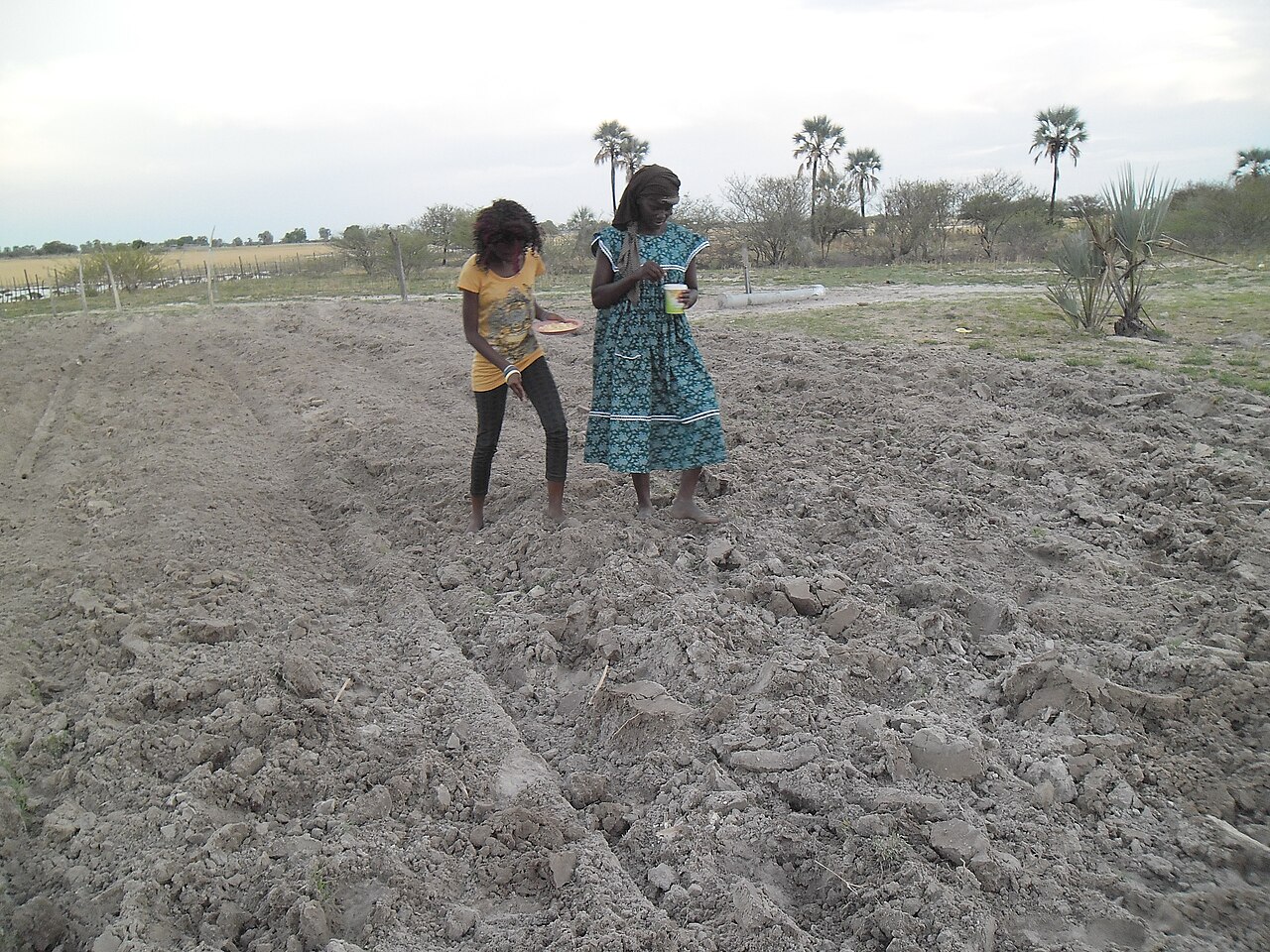
The Ovambo are agropastoralists, and the foundation of their agriculture is pearl millet, called mahangu, grown across the northern flatland and made into the porridge that is the staple food. Around the millet they grow sorghum, beans, melons and other crops, and they keep cattle, which are central to wealth, marriage and status, as well as goats and other livestock.
The seasonal floods bring fish, an important addition to the diet, trapped in the oshanas as the waters recede. The dense population of the flatland was supported by this combination of intensive millet farming, cattle-keeping and fishing. In modern times labour migration, to the mines and towns of central and southern Namibia and South Africa, became central to the economy, but millet and cattle remain the foundation of Ovambo life.
Society and Community

Ovambo society is matrilineal, with descent, inheritance and succession traced through the mother’s line, and was traditionally organised into several kingdoms, each ruled by a king and a court, with a hierarchy of headmen and officials. The kings held political and ritual authority, and the kingdoms were the framework of Ovambo political life.
Below the level of the kingdoms, the matrilineage and the homestead, the large fenced family compound, were the core of daily life. Cattle, central to wealth and marriage, and the bonds of the matrilineage ordered social relations. The kings, the headmen and the councils governed, and marriage, kinship and the customs of the homestead ordered the life of the Ovambo, in a densely settled and well-organised society.
Religion and Belief
Traditional Ovambo religion recognised a high god, Kalunga, the creator and source of life, and honoured the ancestors, whose spirits watched over the living, and it was bound up with the sacred character of the kings and the fertility of the land and the herds. Ritual and sacrifice, and the ceremonies of the kingship, sought the favour of the divine and the ancestors.
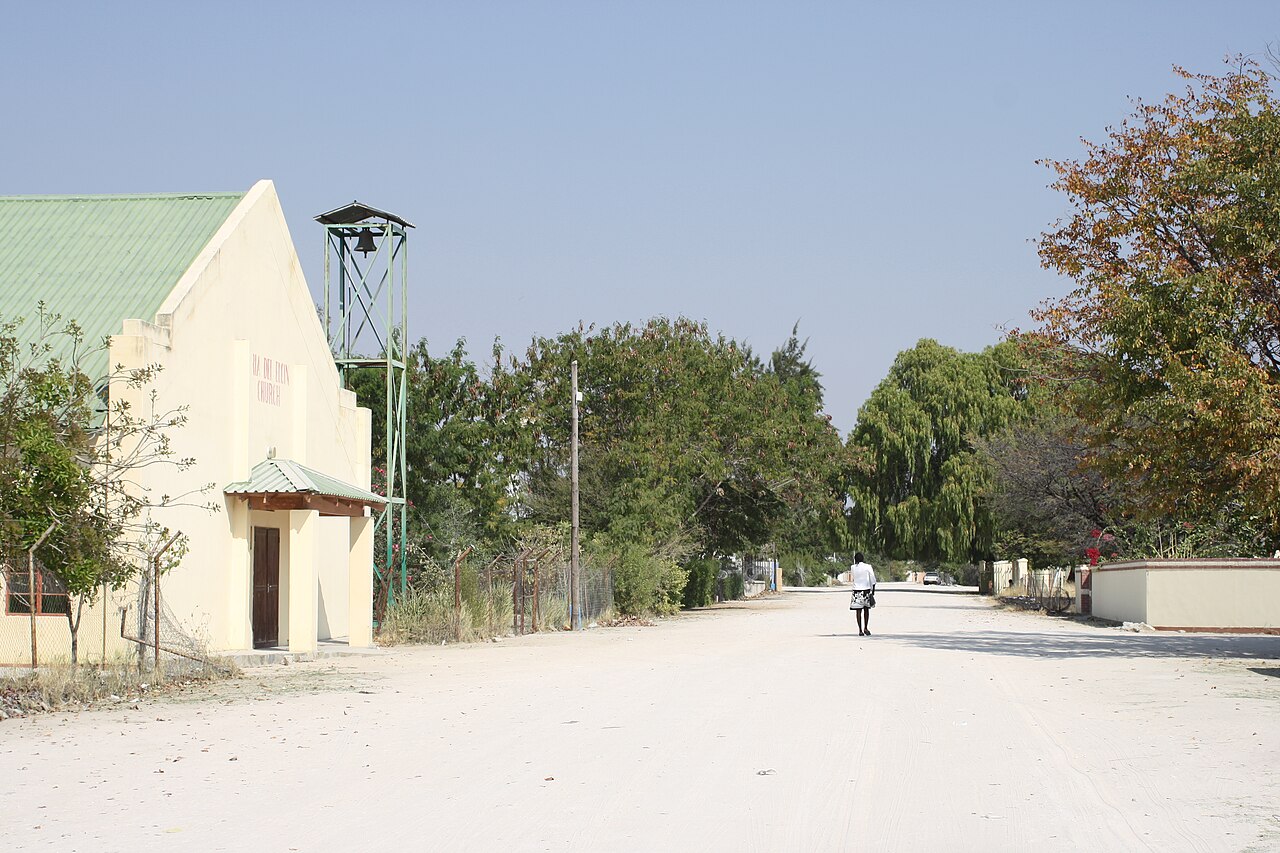
Diviners and healers dealt with misfortune and the spirits. From the late nineteenth century Christian missions, above all Finnish and German Lutheran, spread widely and deeply in Ovamboland, and today the great majority of Ovambo are Christian, with the Lutheran church especially strong. Yet older ideas about Kalunga, the ancestors and the powers of the land persist within and alongside the Christian faith.
Traditions
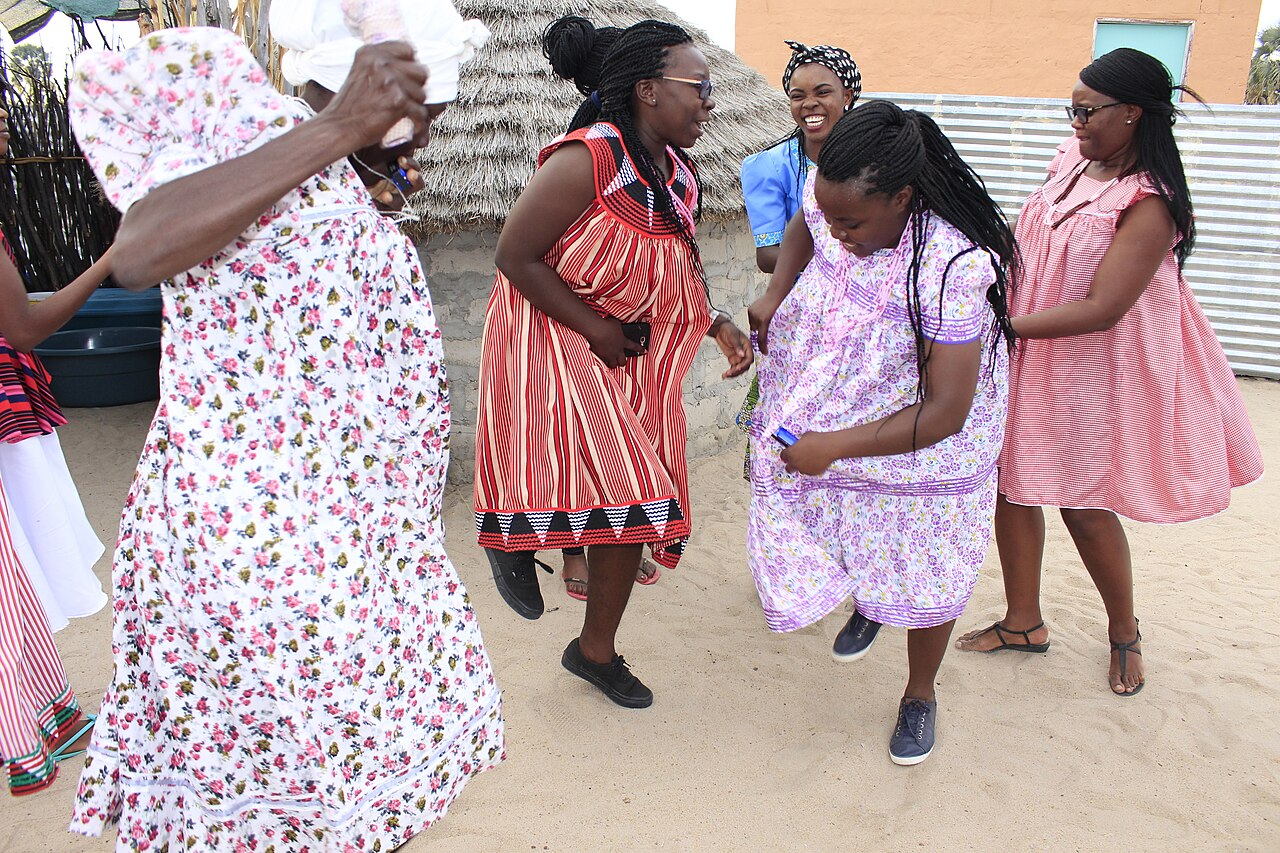
The traditions of the Ovambo are bound up with millet, cattle, the kingdoms and the matrilineage. The ceremonies of the kingship, the rites of passage, above all the elaborate female initiation and the great weddings, and the customs of the harvest and the homestead order and enrich the life of the people. The initiation of girls and the celebration of marriage are especially important.
Music, drumming, song and dance accompany celebration and ceremony, and the Ovambo are known for their choral singing and their lively weddings. The making of millet beer and the drink oshikundu, and the customs of hospitality, mark social life. Storytelling, praise-poetry and the customs of the kingdoms and the matrilineage preserve the values and identity of the people.
Crafts

Ovambo craftsmanship served a farming and cattle-keeping society. The people were skilled ironworkers, and the smiths, an honoured group, forged the knives, spears, hoes and tools for which the Ovambo were known, and which they traded widely; the copper and iron of the region supported this metalwork. Basketry, above all the making of the fine woven baskets used for winnowing and storing millet, was a valued craft of the women.
Pottery, woodwork, including the carving of vessels and household goods, and leatherwork added to the material culture, and the building of the large fenced homesteads, with their maze of enclosures and granaries, called for its own skills. These crafts, from ironworking to basketry, reflect the settled farming life of the Ovambo and their reputation as skilled artisans.
Food
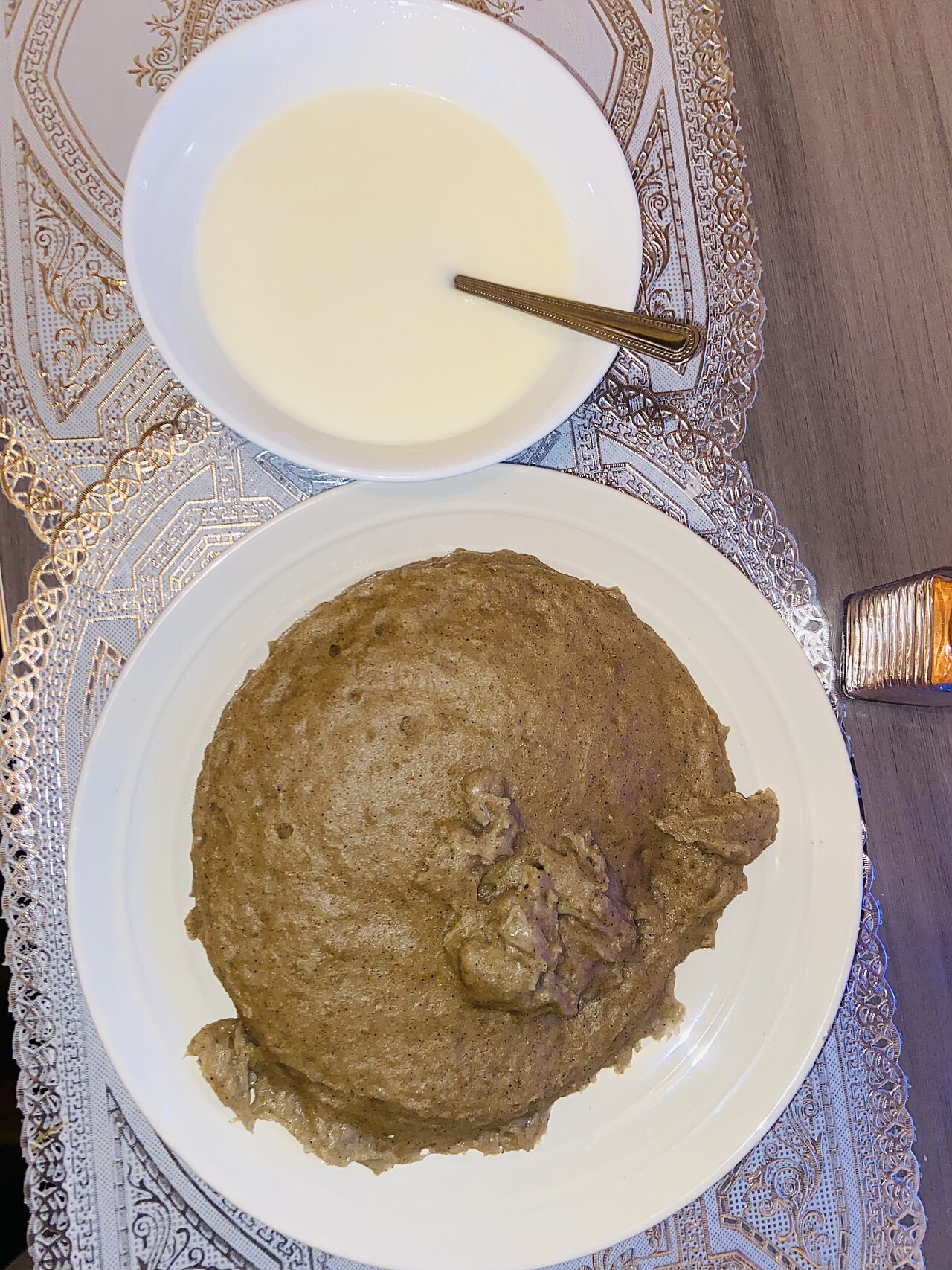
The staple food of the Ovambo is mahangu, pearl millet, ground and cooked into the stiff porridge known as oshifima, eaten with relishes and stews of vegetables, meat, fish or the wild spinach and greens of the region. The porridge is the centre of nearly every meal, dipped into the accompanying sauce by hand.
Fish from the seasonal oshanas, meat and milk from the cattle, beans, melons and the fruit of the marula tree, from which an oil and a drink are made, add to the diet. Millet beer and the light drink oshikundu, made from millet, are important in hospitality. Drawn above all from mahangu, and supplemented by fish, meat and the produce of the land, Ovambo cooking reflects the farming life of the northern flatland.
Festivals
Festive life among the Ovambo centres on the ceremonies of the kingdoms, the milestones of the life cycle and, today, the festivals of Christianity. Weddings, in particular, are great and elaborate occasions, lasting days and gathering the community for feasting, singing and dance, and the female initiation ceremonies were, and among some remain, major celebrations.
The ceremonies of the kings and the harvest, and the Christian festivals, bring communities together for music, singing and feasting, and the choral singing for which the Ovambo are known fills the churches and the celebrations. Millet beer and oshikundu flow at gatherings. Today the Christian festivals and the great weddings, with their singing and feasting, remain the heart of Ovambo festivity.
History

The Ovambo settled the northern flatland over past centuries, coming from the north, and built their several kingdoms, farming millet and herding cattle in one of the more densely populated regions of the area. The kingdoms traded with their neighbours and, later, with European traders, and were reached by Finnish and German missionaries in the later nineteenth century.
Under German and then South African colonial rule, Ovamboland was governed apart, and its people were drawn in large numbers into the migrant-labour system that supplied the mines and farms of the south. This experience, and the harshness of South African rule, made the Ovambo the backbone of the liberation movement SWAPO and of the long struggle that led to Namibian independence in 1990, in which they played the leading part.
Today
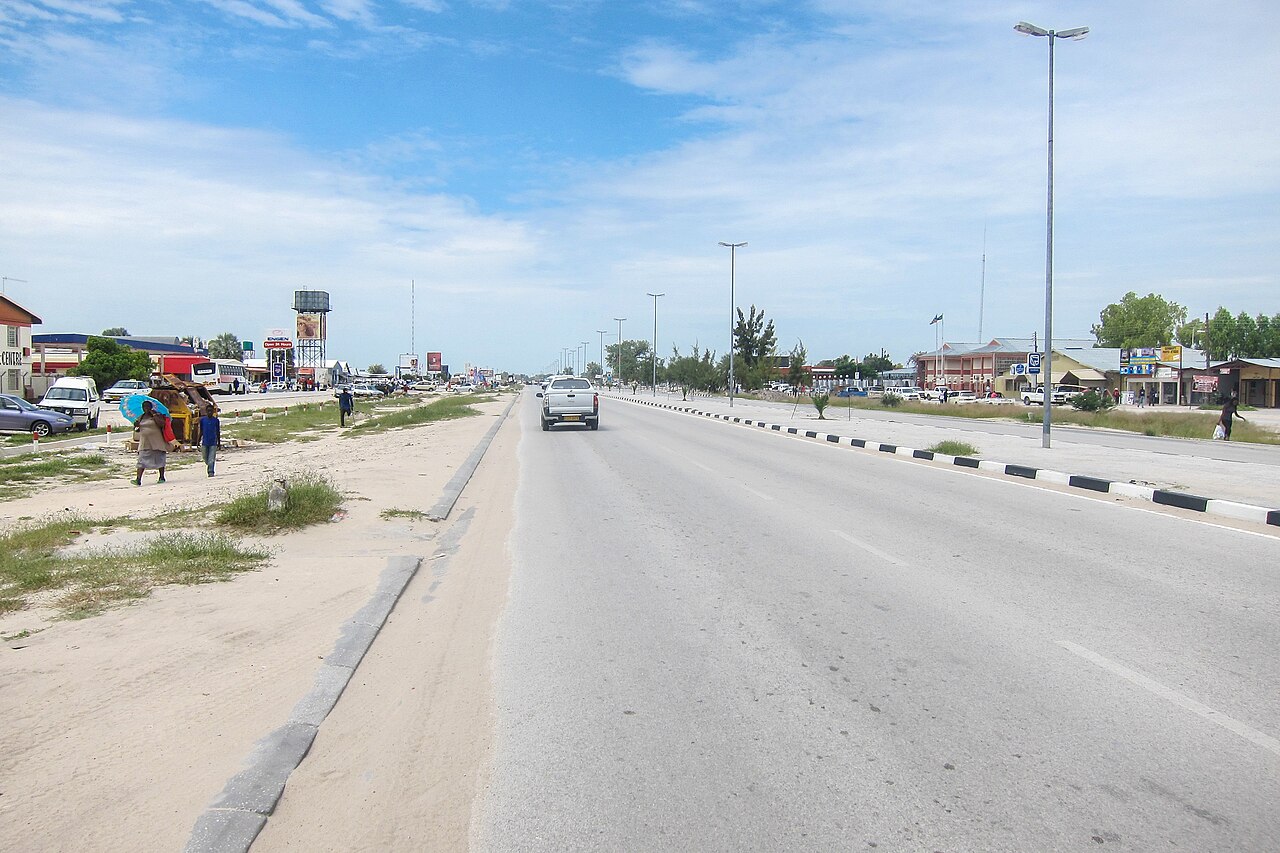
Today the Ovambo are the largest people of Namibia, some half of the nation, concentrated in the north around Oshakati and Ondangwa but present throughout the country and prominent in its politics, government and economy. Millet farming and cattle-keeping continue in the north, alongside migrant labour, business and the growth of the northern towns.
Having led the struggle for independence, the Ovambo have been central to the political life of independent Namibia, and their language and culture are strongly present in the nation. Proud of their kingdoms, their millet and cattle, their Christian faith and their leading role in the birth of the nation, the Ovambo carry their heritage into the life of modern Namibia.
Related Peoples of the Region
- The Susu, the Traders of the Guinean Coast
- The Kabyle, the Berbers of the Algerian Mountains
- The Riffians, the Berber Warriors of the Rif
- The Shilha, the Berbers of the Souss and the Atlas
- The Sahrawi, the People of the Western Sahara
- The Venda, the People of the Sacred Lakes of Limpopo
- The Tsonga, the Shangaan of the Southeastern Lowveld
- The Herero, the Cattle Herders of Namibia
More Peoples of the World
- A Fifth of Humanity, the Story of the Han Chinese
- How the Maori Sailed Across the Pacific to Reach New Zealand
- Zulu of the Green Hills and Their Kingdom Forged by Shaka
- The People Who Never Vanished, the Story of the Maya
- Long Before the Arabs Came, North Africa Belonged to the Amazigh
- The People Who Emerged Into This World, the Story of the Navajo
- Meet the Ainu, an Indigenous People at Japan’s Northern Edge
You May Like

The Damara, an Ancient People of Namibia



