The Herero are a Bantu people of Namibia, with communities also in Botswana and Angola, one of the notable pastoral peoples of southern Africa. Numbering some hundreds of thousands, they are cattle-herders of the central Namibian grasslands, famous for their devotion to their cattle, their striking dress and their tragic history under German colonial rule.Best known for the long Victorian-style dresses and horn-shaped headdresses their women adopted from the missionaries and made a proud emblem of identity, and for the genocide inflicted on them by German forces in 1904, the first genocide of the twentieth century, the Herero are a proud and resilient people of the plains. This article traces their origins, language, homeland, cattle-keeping life and the customs that continue to define them.
The Herero on Film
Contents
- Origins
- The Name
- The Language
- The Homeland
- The Old Way of Life
- Society and Community
- Religion and Belief
- Traditions
- Crafts
- Food
- Festivals
- History
- Today
Origins
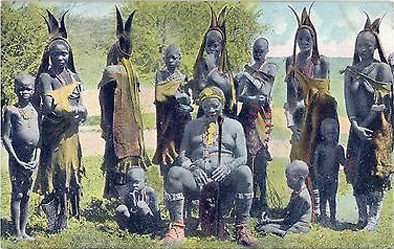
The Herero are a Bantu people of Namibia, with communities also in Botswana and Angola, one of the notable pastoral peoples of southern Africa. Numbering some hundreds of thousands, they are cattle-herders of the central Namibian grasslands, famous for their devotion to their cattle, their striking dress and their tragic history under German colonial rule.
The Herero are best known to the outside world for two things: the distinctive long, full Victorian-style dresses and horn-shaped headdresses worn by their women, adopted from the missionaries and made a proud emblem of Herero identity, and the terrible genocide inflicted upon them by German colonial forces in the early twentieth century, the first genocide of that century. Proud, cattle-keeping and resilient, the Herero are a people of the Namibian plains.
The Name

The people call themselves the Ovaherero, or Herero, and their language Otjiherero. They are made up of several related groups, including the Herero proper of central Namibia, the Mbanderu, and the closely related Himba of the northwest, who share the language and much of the culture.
Their identity is bound up with cattle, with the holy fire and the ancestors, and, in modern times, with the memory of the genocide and the distinctive dress of the women. The name Herero denotes a people proud of their pastoral heritage, their cattle and their endurance through one of the great tragedies of colonial history.
The Language
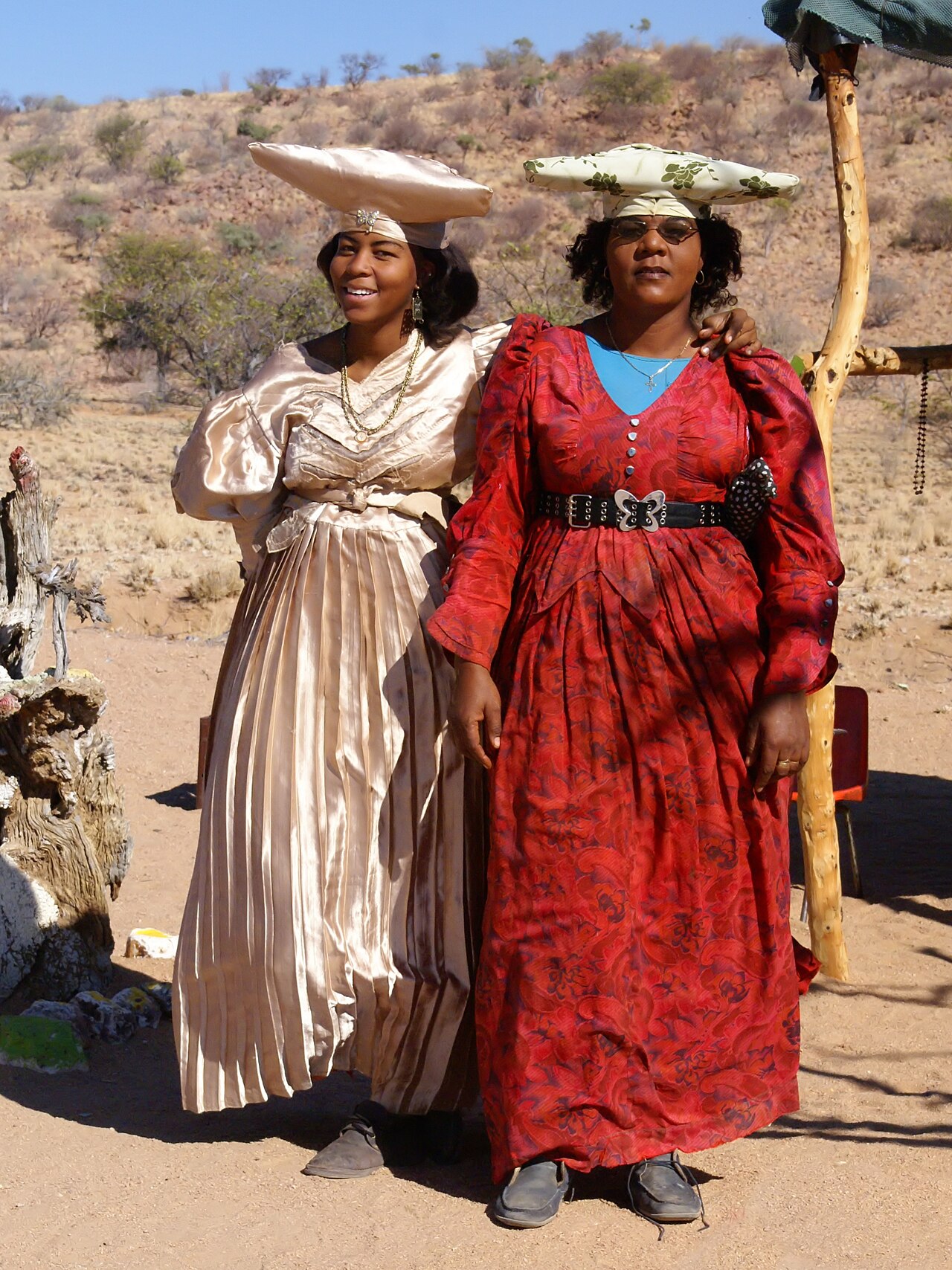
The Herero speak Otjiherero, a Bantu language of the Niger-Congo family, spoken across central Namibia and in the neighbouring lands, and shared, in its own dialect, with the Himba of the northwest. It is one of the main languages of Namibia.
Rich in the praise-poetry of cattle and the lore of the ancestors and the holy fire, Otjiherero remains vigorous in daily life. English is the official language of Namibia, and Afrikaans and German are also known from the colonial past, but Otjiherero is the everyday language of the Herero and a central marker of their identity.
The Homeland
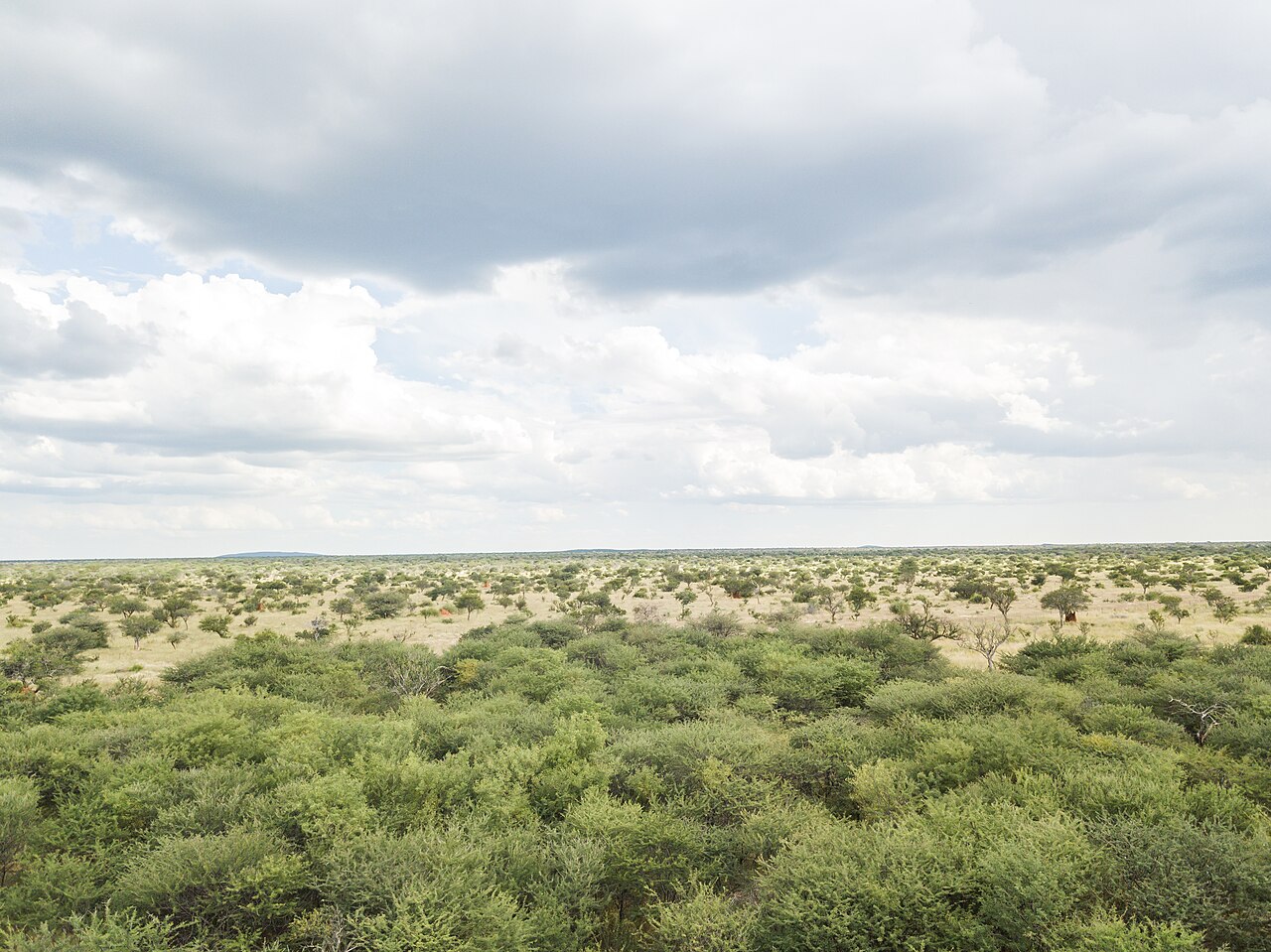
The Herero homeland is the central grassland of Namibia, a semi-arid country of savanna, bush and open plains, together with parts of the northwest and the lands into which they were scattered. It is a dry land, suited above all to the grazing of cattle, and the availability of pasture and water shaped the movements and the life of the people.
The central plateau around Okahandja and the surrounding country, and the areas into which the Herero fled and were driven, form the heart of the Herero world. This grassland country, harsh but grazable, shaped the pastoral life of the Herero, and the towns such as Okahandja, with its graves of the chiefs, remain sacred to the people.
The Old Way of Life
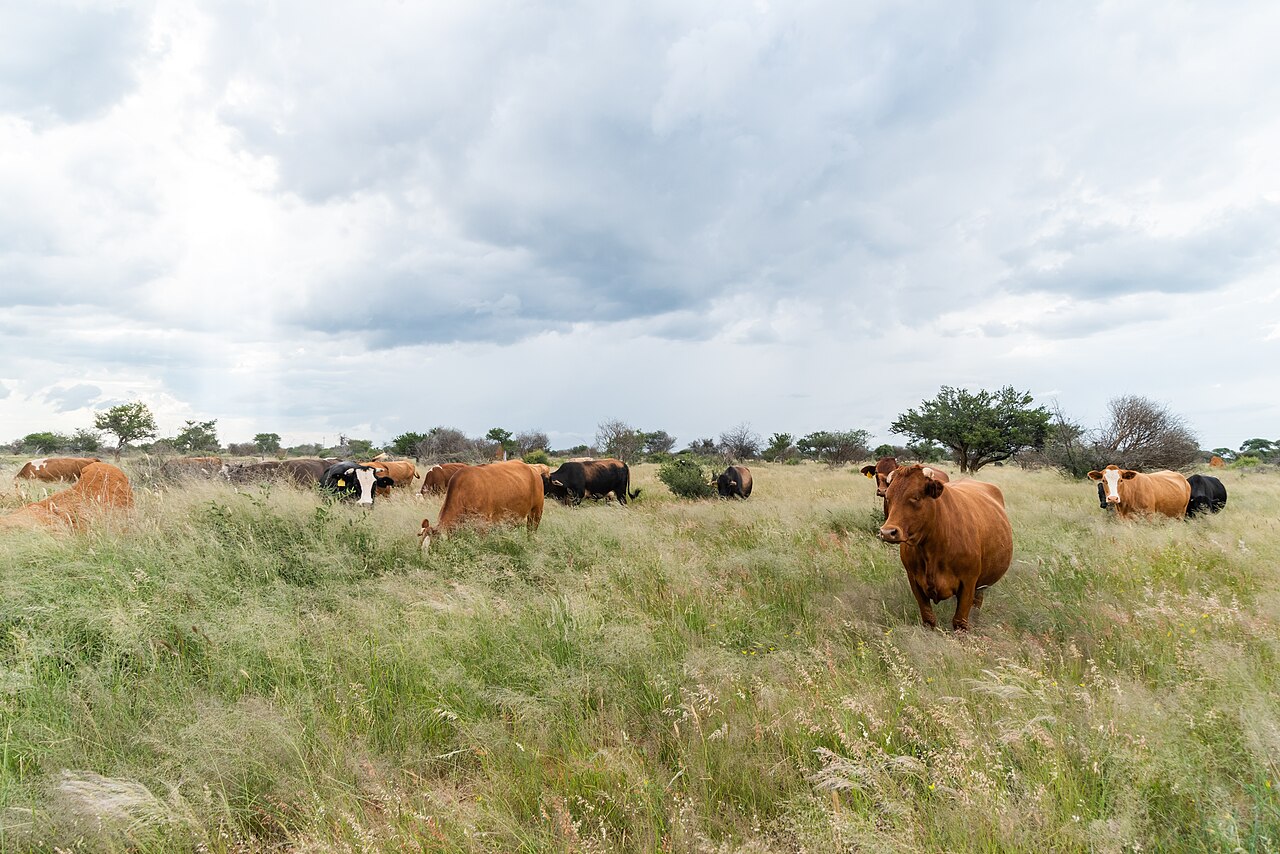
The Herero are, above all, cattle-herders, and cattle are the centre of their life, their wealth, their religion and their identity. They herded great herds across the grasslands, moving in search of pasture and water, and measured wealth, status and the bonds of kinship in cattle. Milk was the staple food, and the beauty and number of a family’s cattle were its pride.
Around the cattle the Herero kept sheep and goats and, where possible, cultivated a little, but it was the herd that defined their way of life. Cattle were central to marriage, to ritual and to the cult of the ancestors, and the loss of their cattle in the colonial wars was a catastrophe for the people. Cattle-keeping, and in modern times other work, sustained the Herero.
Society and Community
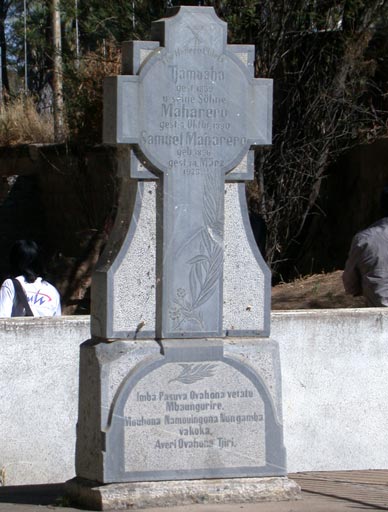
Herero society is organised through a distinctive double system of descent, in which a person belongs both to a patrilineal group, the oruzo, associated with the holy fire and the sacred cattle, and to a matrilineal group, the eanda, associated with the inheritance of ordinary cattle and wealth. This dual descent, unusual and much studied, orders inheritance, ritual and social relations.
Chiefs and headmen, with their councils of elders, governed the people, and the graves of the great chiefs at Okahandja are places of pilgrimage. The holy fire, tended by the head of the oruzo, links the living to the ancestors. Marriage, the bonds of the two descent groups, and the customs of cattle and the fire ordered the life of the Herero.
Religion and Belief
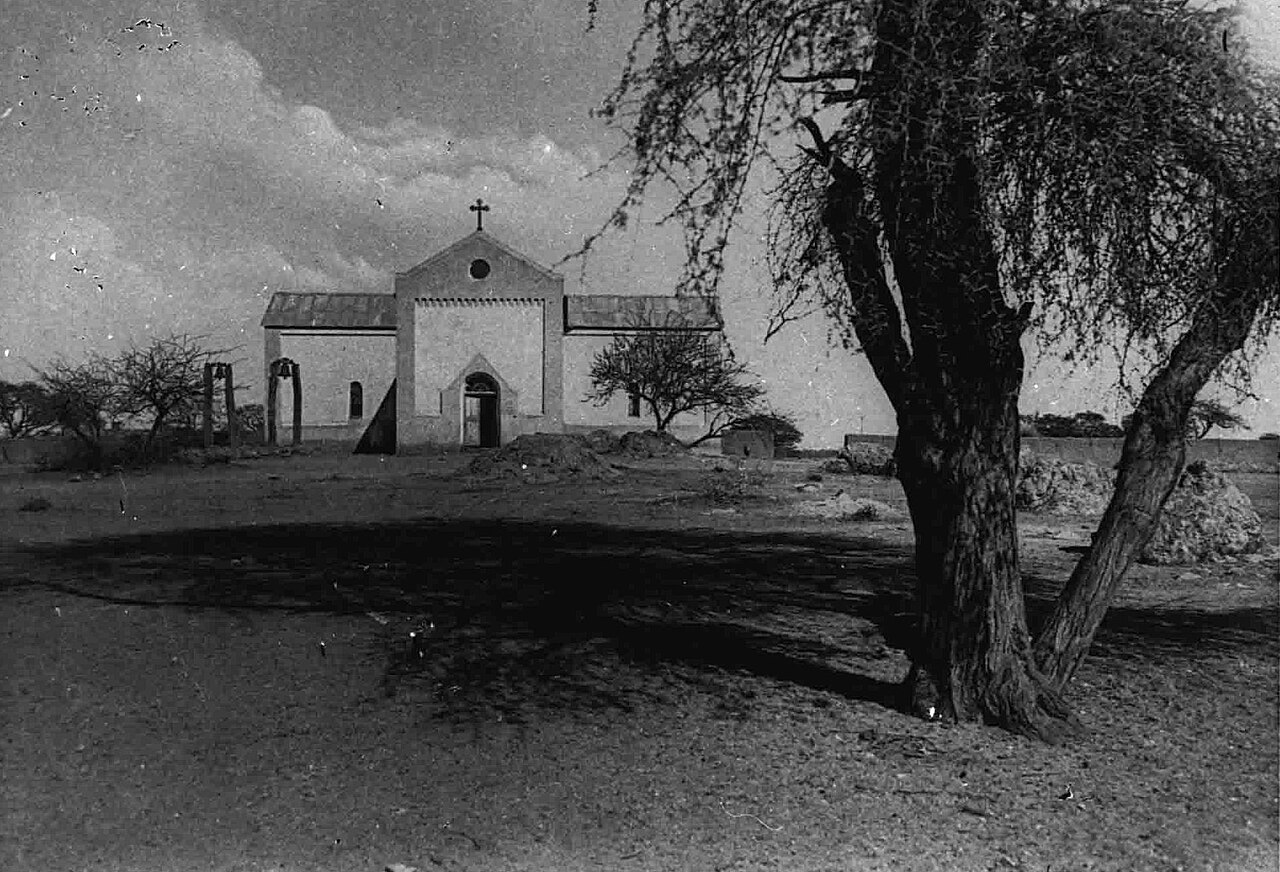
Traditional Herero religion centres on a creator, Ndjambi, and, above all, on the veneration of the ancestors, mediated through the holy fire, the okuruwo, which burns at the homestead of the head of each patrilineal group and links the living to the dead. The tending of the fire, and the rituals performed at it, are at the heart of Herero religious life.
The ancestors are approached and honoured at the holy fire and the sacred cattle, and their favour is sought for the wellbeing of the people and the herds. Christianity spread among the Herero through the missions, and many are now Christian, but the reverence for the ancestors and the holy fire remains strong, and the two often coexist in the religious life of the people.
Traditions
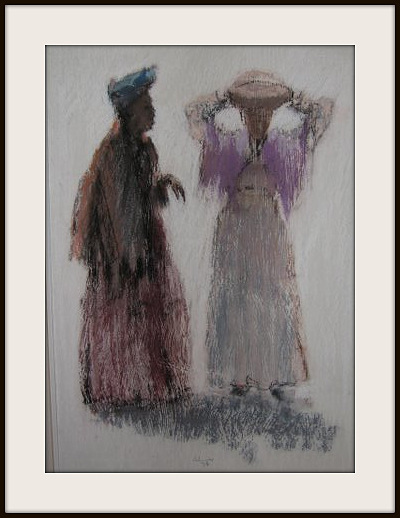
The traditions of the Herero are bound up with cattle, the ancestors and the holy fire, and, in modern times, with the distinctive dress of the women. The women wear the long, full dresses, made of many metres of cloth, and the otjikaiva, the horn-shaped headdress that recalls the horns of the cattle, an emblem of identity adopted from the dress of the missionaries and made wholly Herero.
The commemoration of the chiefs and the ancestors, above all at the graves of Okahandja, and the ceremonies of the holy fire and of cattle, are the great traditions of the people. Music, praise-poetry and the customs of the homestead order and enrich the life of the Herero, and the dress of the women and the memory of the ancestors give their culture its distinctive character.
Crafts
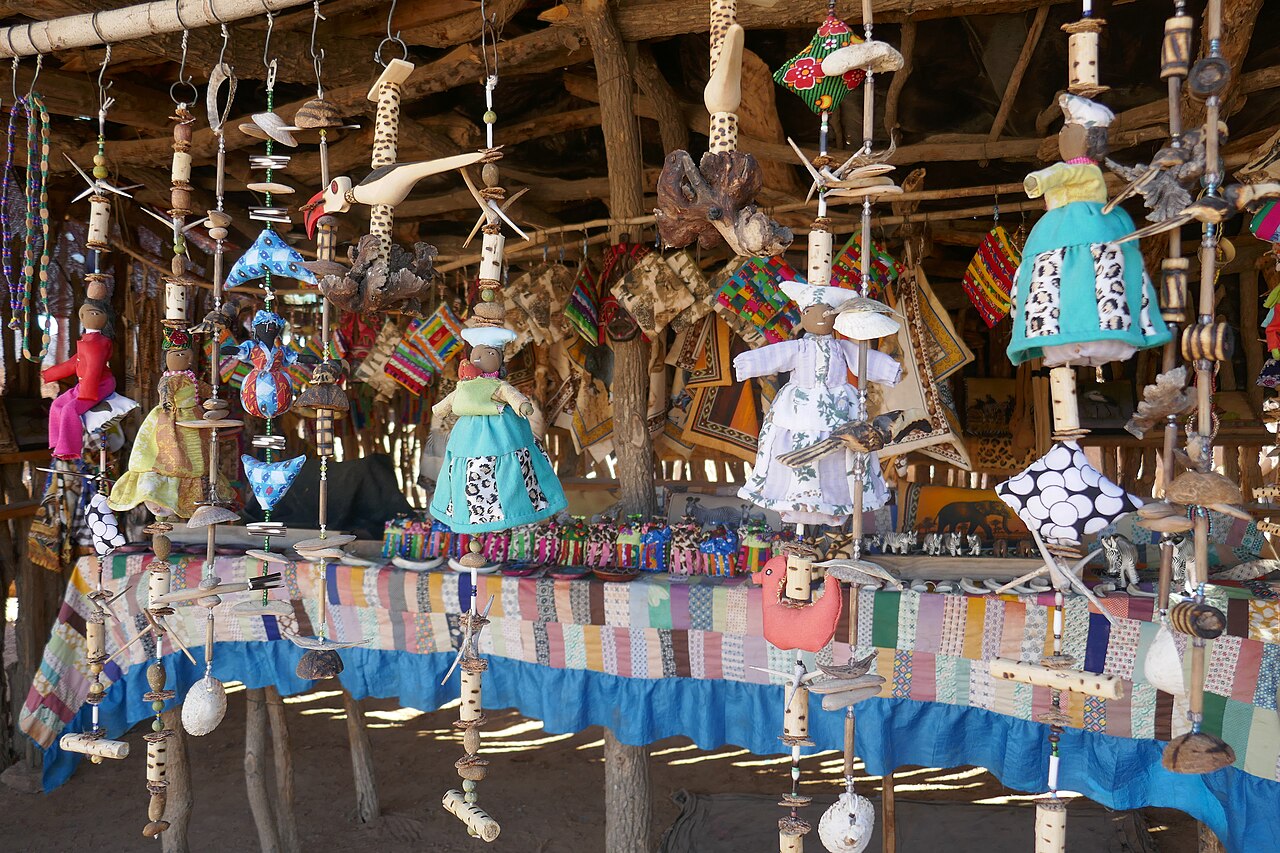
Herero craftsmanship served a pastoral society. The women make the leather garments, the ornaments and, in modern times, the elaborate dresses and headdresses that have become the emblem of the people, and craft the containers, vessels and furnishings of the homestead. Leatherwork, for clothing, bags and the gear of the cattle, was an important skill.
The Herero make jewellery and ornament, and, in recent times, the making of dolls dressed in the traditional costume has become a popular craft for sale. The making of the objects of the holy fire and the cattle, and the goods of daily life, reflects a material culture centred on cattle and, now, on the famous dress. These crafts express the pastoral heritage and the strong identity of the Herero.
Food

The staple food of the Herero was, traditionally, the milk of their cattle, drunk fresh or soured, the essential food of a pastoral people, supplemented by meat on occasions of ceremony and by a little grain. Sour milk in particular was the mainstay of the diet, prepared and stored with care.
In modern times maize meal, cooked into the stiff porridge known across the region as pap, has become the staple, eaten with relishes and stews, and the diet has broadened with settled life and the market. Milk and meat from the cattle remain valued and central to hospitality and ceremony. The pastoral origins of Herero cooking, based on milk and meat, still shape the food culture of the people.
Festivals
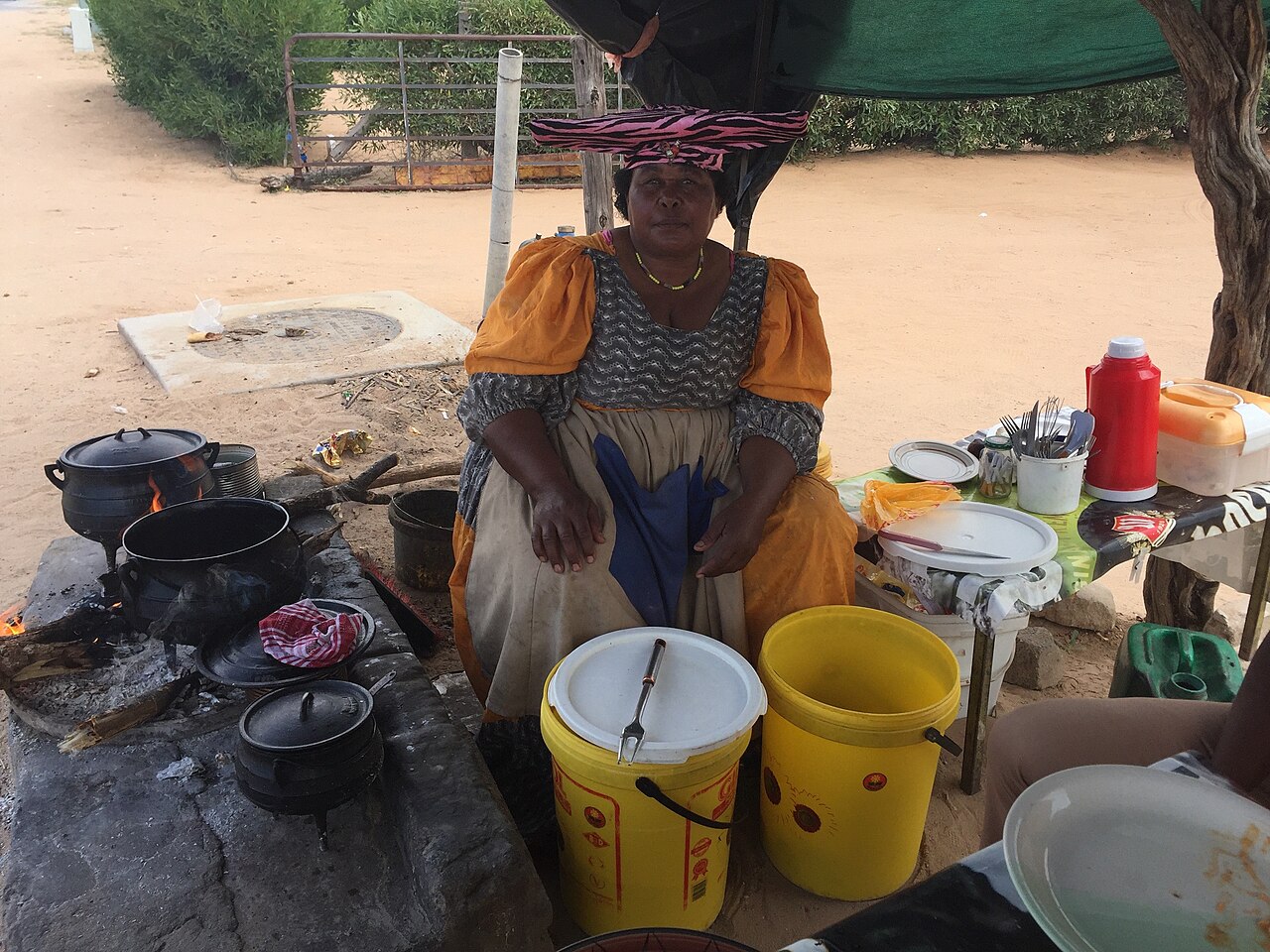
Festive life among the Herero centres on the commemoration of the chiefs and the ancestors and on the ceremonies of the holy fire and cattle. The most famous occasions are the annual gatherings at Okahandja, above all the great commemorations at the graves of the chiefs, when the Herero, in their finest dress and organised into uniformed regiments, march in solemn and colourful procession to honour their ancestors and their history.
These commemorations, held by the different Herero groups in their distinctive colours, are the great festivals of the people, occasions of pride, memory and identity. Weddings, the ceremonies of the holy fire, and the celebrations of the life cycle also bring communities together. Today these gatherings, with their dress, their regiments and their memory of the past, remain the unmistakable heart of Herero festivity.
History

The Herero migrated into what is now Namibia over past centuries, herding their cattle across the grasslands and contending with the Nama and other peoples for pasture and water. In the nineteenth century they built up powerful chiefdoms under leaders such as Maharero, and came into contact with traders, missionaries and, from the 1880s, German colonial rule.
In 1904 the Herero rose against the German colonisers, who responded with a war of extermination: driven into the desert, shot, and imprisoned in camps, some eighty per cent of the Herero perished in what is now recognised as the first genocide of the twentieth century. The survivors were scattered and dispossessed. Through the following decades of German and then South African rule, the Herero preserved their identity, and after Namibian independence in 1990 they took their place as one of the peoples of the nation, still seeking recognition and redress for the genocide.
Today

Today the Herero number some hundreds of thousands in Namibia, with communities in Botswana and Angola, and remain proud cattle-keepers and a distinctive presence in the life of the nation. Cattle-herding continues on the central grasslands, alongside work in the towns and cities, and the annual commemorations at Okahandja gather the people in their finest dress.
The struggle for recognition and reparations for the genocide has brought the Herero and their history to world attention, and Germany has in recent years acknowledged the crimes of the colonial past. Proud of their cattle, their holy fire and their striking dress, and resilient after one of the great tragedies of colonial history, the Herero carry their distinctive identity into modern Namibia.
Related Peoples of the Region
- The Jola, the Rice Farmers of the Casamance
- The Susu, the Traders of the Guinean Coast
- The Kabyle, the Berbers of the Algerian Mountains
- The Riffians, the Berber Warriors of the Rif
- The Shilha, the Berbers of the Souss and the Atlas
- The Sahrawi, the People of the Western Sahara
- The Venda, the People of the Sacred Lakes of Limpopo
- The Tsonga, the Shangaan of the Southeastern Lowveld
More Peoples of the World
- A Fifth of Humanity, the Story of the Han Chinese
- How the Maori Sailed Across the Pacific to Reach New Zealand
- Zulu of the Green Hills and Their Kingdom Forged by Shaka
- The People Who Never Vanished, the Story of the Maya
- Long Before the Arabs Came, North Africa Belonged to the Amazigh
- The People Who Emerged Into This World, the Story of the Navajo
- Meet the Ainu, an Indigenous People at Japan’s Northern Edge
You May Like

The Damara, an Ancient People of Namibia



