The Samburu are a Nilotic pastoral people of north-central Kenya, close kin to the Maasai with whom they share the Maa language and a common heritage of cattle-keeping. Numbering several hundred thousand, they herd cattle, camels, goats and sheep across the semi-arid savanna and hills stretching north from Mount Kenya towards the deserts of the far north.Renowned for the ochre-dyed hair of their warriors, the brilliant bead collars of their women and the leaping dances of the morans, the Samburu have preserved much of the traditional way of life that their Maasai relatives have partly set aside. This article traces their origins, language, homeland, age-set society and the customs that continue to define them.
The Samburu on Film
Contents
- Origins
- The Name
- The Language
- The Homeland
- The Old Way of Life
- Society and Community
- Religion and Belief
- Traditions
- Crafts
- Food
- Festivals
- History
- Today
Origins
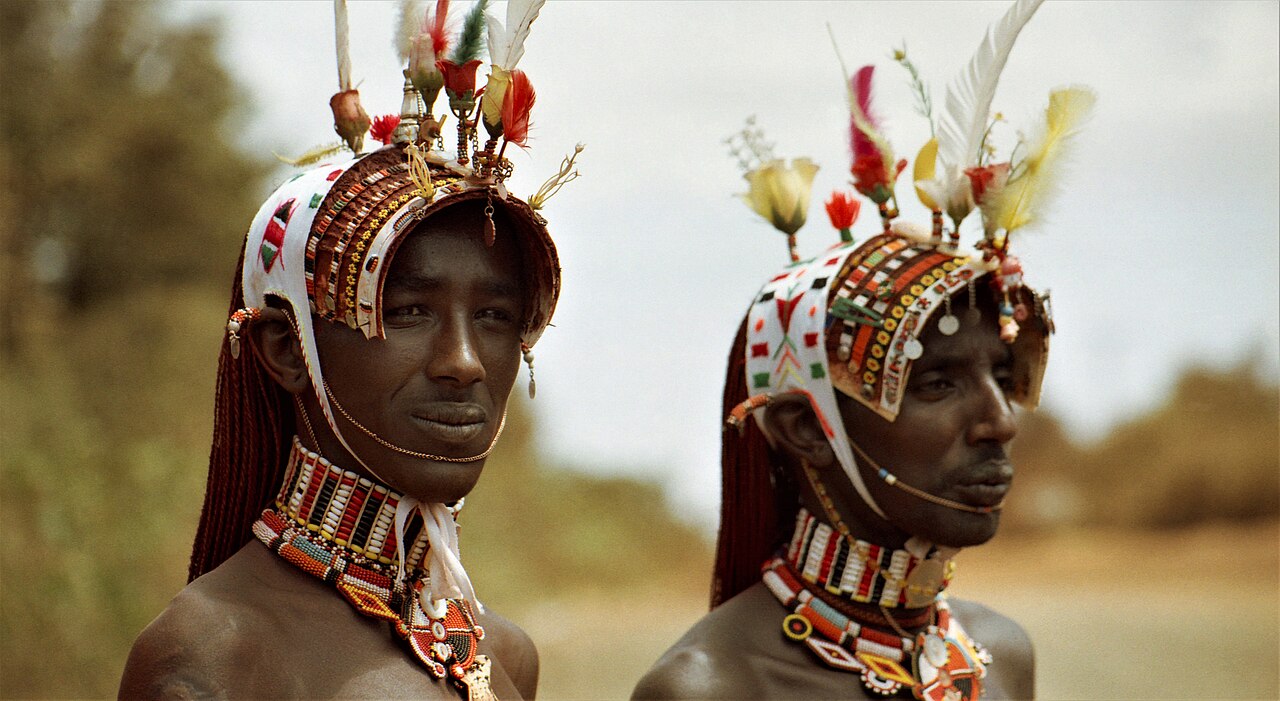
The Samburu are a Nilotic pastoral people of north-central Kenya, close kin to the Maasai with whom they share the Maa language and a common cattle-keeping heritage. Their traditions tell of a southward migration of Maa-speaking peoples down the Rift Valley, in the course of which the Samburu branched off and settled the dry uplands and plains north of Mount Kenya.
Semi-nomadic herders of cattle, camels, goats and sheep, the Samburu adapted to a harsh, semi-arid country and remained comparatively isolated, preserving many of the customs that their Maasai relatives to the south have partly set aside. This has given them a reputation as one of the most tradition-minded of Kenya’s peoples.
The Name
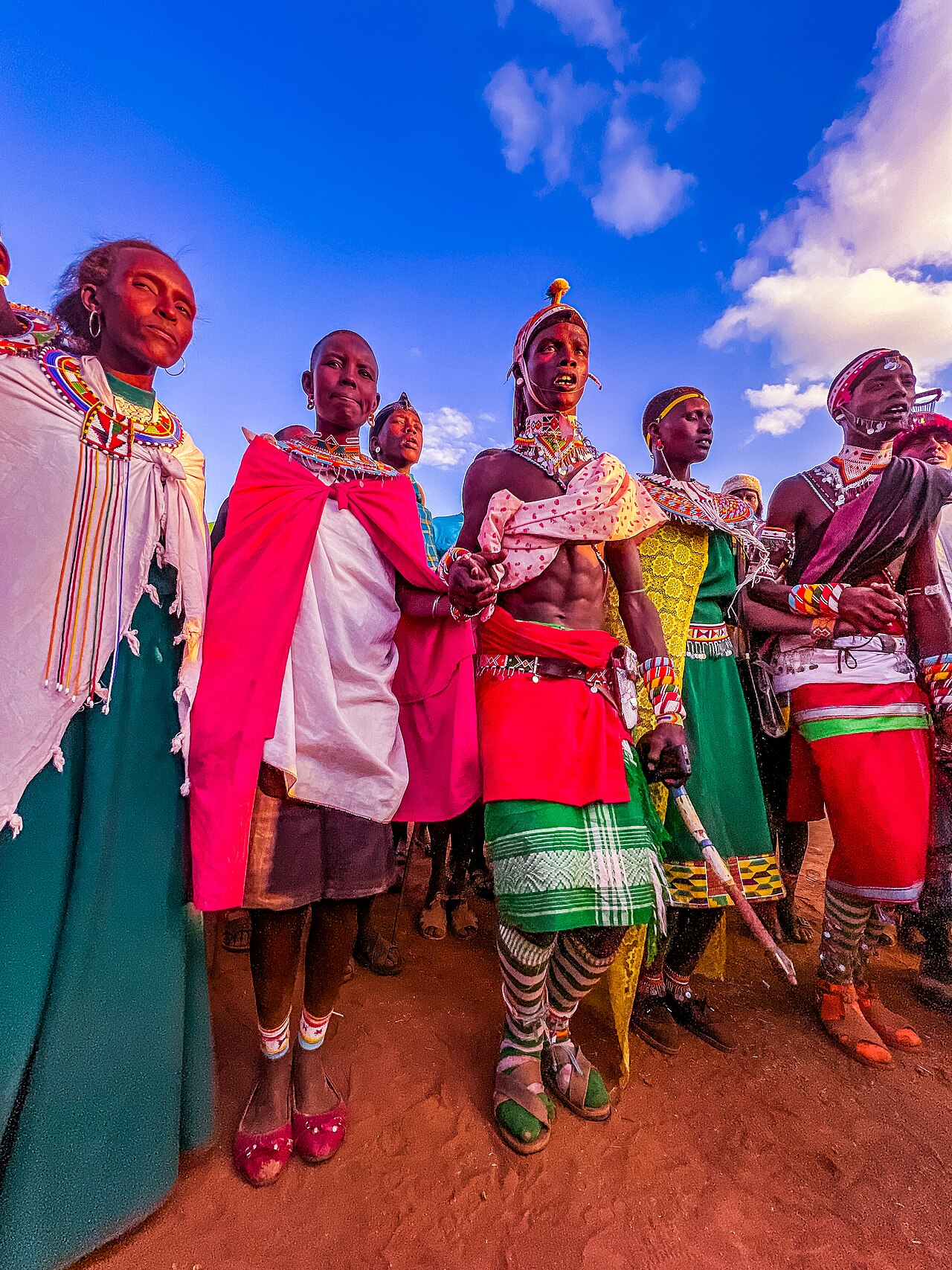
The name Samburu is thought to derive from the Maa word for the leather bag, the samburr, that the people carried, though the Samburu often call themselves the Lokop or Loikop. A single person may be spoken of as a Samburu, and the people as a whole share a strong common identity as Maa-speaking herders of the north.
Their neighbours and the wider world know them as the Samburu, and the name has been given to the county and the famous national reserve of their homeland. Whatever the origin of the word, it now stands for a distinct and proud pastoral nation.
The Language

The Samburu speak a dialect of Maa, the Eastern Nilotic language they share with the Maasai, and speakers of the two are able to understand one another with ease. The language binds the Samburu to their southern kin while marking them out from the Cushitic and other peoples who surround them in the north.
Maa is a language rich in the vocabulary of cattle, colour and the land, and it carries a large body of oral poetry, praise-song and genealogy. Alongside Swahili and English, it remains the everyday tongue of the Samburu and a central pillar of their identity.
The Homeland

The Samburu homeland lies in the semi-arid country of north-central Kenya, a land of open savanna, scattered acacia, dry riverbeds and rugged hills stretching north from the foot of Mount Kenya towards Lake Turkana. Rainfall is low and uncertain, and drought is a recurring danger that shapes the movement of people and herds.
Much of this country is famous for its wildlife, and the Samburu National Reserve along the Ewaso Ng’iro river draws visitors to see elephants, lions and the distinctive dry-country animals of the north. For the Samburu, however, the land is above all pasture, its scattered grazing and water read with the practised eye of the herder.
The Old Way of Life
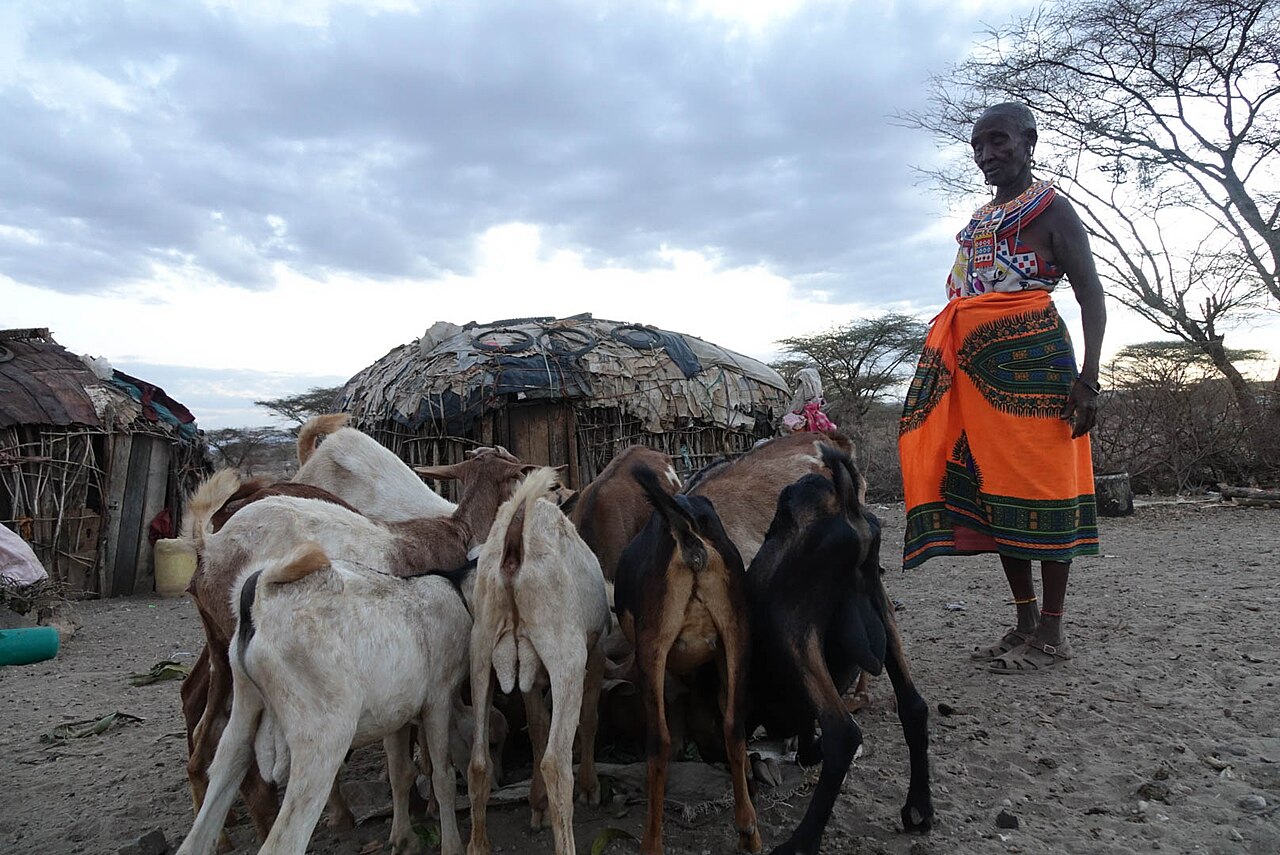
Samburu life is built around livestock. Cattle are the most treasured, the measure of wealth and the centre of ritual, but camels, goats and sheep are also kept, better able to survive the dry seasons when the grass fails. The herds provide milk, blood and meat, and their exchange underlies marriage and the ties between families.
The Samburu move with their animals in search of pasture and water, living in settlements of low huts enclosed by thorn fences that can be abandoned and rebuilt as the herds require. Theirs is a mobile life finely tuned to a difficult land, in which the wellbeing of the cattle and the wellbeing of the people are one and the same.
Society and Community

Samburu society is famously organised by age. Boys pass through circumcision into the celebrated grade of the moran, or warrior, spending years as young men charged with defending the herds and living apart before graduating, in time, into junior and then senior elderhood. This age-set system orders the life of every man and gives the society its rhythm.
Authority rests with the elders, whose blessings and curses carry great weight and who govern through discussion and consensus. Descent is traced through the male line into clans and lineages, and marriage, sealed by the transfer of cattle, binds these groups together. Women hold their own recognised roles and are the makers of the beadwork and the builders of the homes.
Religion and Belief
The Samburu recognise a single god, Nkai or Ngai, at once the creator and the power dwelling in the sky, the mountains and the life-giving rain. In a land of uncertain rainfall, prayer and sacrifice to Nkai are of the greatest importance, and blessings sought from god and from the elders accompany every significant undertaking.
Ritual specialists and diviners, and the powerful role of the elders in blessing and cursing, mediate between the people and the unseen. Ceremonies mark the great transitions of life, above all the initiations that carry boys into warriorhood and men into elderhood. Christianity has spread through missions, but the old faith in Nkai remains deeply rooted.
Traditions

The Samburu are renowned for their beauty of dress and adornment. Warriors wear their long hair in ochre-dyed styles and decorate themselves with beads, while women wear broad, brilliantly coloured bead collars and ornaments that rise around the neck and shoulders. Colour and beadwork carry meaning, marking age, status and the stages of life.
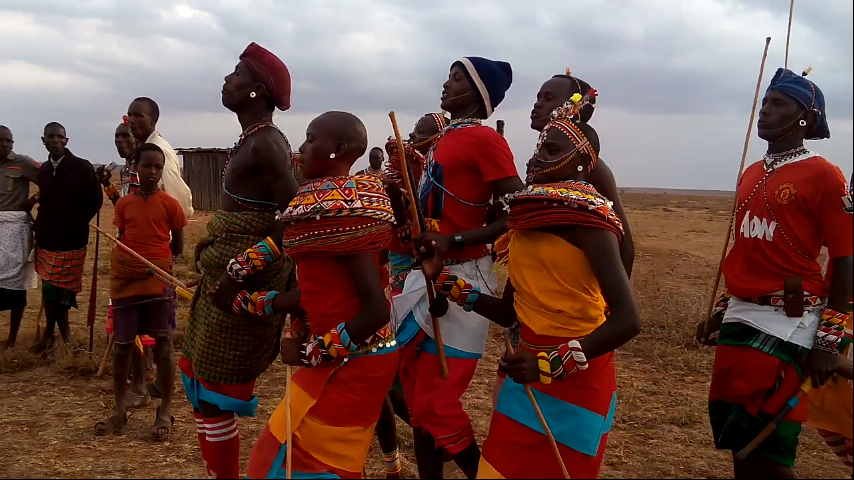
Song and dance are central to Samburu tradition, above all the singing and the leaping dance of the morans, performed without drums to rhythmic chant and the shaking of the body. Ceremonies of initiation, marriage and blessing gather the community for days of celebration, and oral poetry and praise-song preserve the memory and values of the people.
Crafts

Beadwork is the signature craft of the Samburu, worked above all by the women, who string and layer countless coloured beads into the collars, headbands and ornaments that adorn every member of the community. The colours and patterns are not merely decorative but carry meaning, expressing identity, status and belonging.
Beyond beadwork the Samburu make the practical goods of a mobile pastoral life: leather garments and containers, gourds and vessels for milk, wooden clubs, spears and the stools and neck-rests of the men. Every object is portable and finely made, suited to a people whose homes and belongings move with the herds.
Food

The traditional diet of the Samburu comes chiefly from their animals: milk, drunk fresh or soured, together with blood drawn from living cattle and, at times of ceremony or need, meat. This pastoral fare is lean and nourishing, sustaining the people through the long dry seasons when other food is scarce.
In harder times blood and milk are mixed for strength, and wild roots, berries and bought grain fill out the diet. Meat is eaten above all at ceremonies, when animals are slaughtered and shared according to custom. It is a cuisine of the herd, shaped by the demands of a dry and unpredictable land.
Festivals

Festive life among the Samburu revolves around the great ceremonies of the age-set system: the circumcisions that make boys into warriors, the ceremonies that raise morans into elders, and the celebrations of marriage. These occasions gather scattered families into large gatherings for days of dancing, singing, feasting and the slaughter of cattle.
Blessings, the drinking of milk and the display of finery mark these events, and the leaping dances of the morans are their unforgettable centrepiece. In recent years cultural festivals and the Maralal camel derby have added new public celebrations, but the enduring festivals of the Samburu remain those tied to the passages of life and the fortunes of the herd.
History

The Samburu, remote in the dry north, long remained beyond the reach of outside powers, and like their neighbours they came under British control only in the early twentieth century, when the northern frontier of Kenya was brought under colonial administration. Even then the region was governed lightly and kept apart as a closed district.
Through the colonial period and into independence the Samburu homeland remained marginal, its people continuing their pastoral life with relatively little change. In recent decades tourism drawn by the national reserves, together with schools, roads and new pressures on land and water, has begun to connect the Samburu more closely to the wider currents of Kenyan life.
Today

Today the Samburu number several hundred thousand and remain, for the most part, a pastoral people, herding cattle, camels and goats across the semi-arid north much as their ancestors did. Recurrent drought, competition over grazing and water, and the challenges of a changing climate continue to test their resilience.
At the same time tourism, education and the growth of the town of Maralal are bringing new opportunities and new strains. Admired for the beauty of their dress and the strength of their traditions, the Samburu carry into the present a proud heritage of the herd, the age-set and the vivid beadwork for which they are known.
Related Peoples of the Region
- The Fon, Heirs of the Kingdom of Dahomey
- The Dinka, Cattle-Keepers of the Nile
- The Nuer, the Free Cattle-Keepers of the Nile
- The Kalenjin, the Running People of the Rift Valley
- The Kamba, the Traders and Carvers of Ukambani
- The Luhya, the Drummers and Farmers of Western Kenya
- The Gusii, the Soapstone Carvers of the Kenyan Highlands
- The Turkana, the Herders of the Jade Sea
More Peoples of the World
- A Fifth of Humanity, the Story of the Han Chinese
- How the Maori Sailed Across the Pacific to Reach New Zealand
- Zulu of the Green Hills and Their Kingdom Forged by Shaka
- The People Who Never Vanished, the Story of the Maya
- Long Before the Arabs Came, North Africa Belonged to the Amazigh
- The People Who Emerged Into This World, the Story of the Navajo
- Meet the Ainu, an Indigenous People at Japan’s Northern Edge
You May Like

The Sidama, the Ensete Farmers of Southern Ethiopia


