The Gusii, who call themselves the Abagusii and are widely known as the Kisii, are a Bantu-speaking people of the highlands of southwestern Kenya, concentrated in the counties of Kisii and Nyamira east of Lake Victoria. Numbering more than two million, they occupy one of the greenest, most fertile and most densely settled corners of the country.Renowned above all for the soft, coloured soapstone that their carvers of Tabaka shape into sculptures sold around the world, the Abagusii combine a heritage of intensive highland farming with a strong tradition of craft, music and learning. This article traces their origins, language, homeland, old way of life and the customs that continue to define them.
The Gusii on Film
Contents
- Origins
- The Name
- The Language
- The Homeland
- The Old Way of Life
- Society and Community
- Religion and Belief
- Traditions
- Crafts
- Food
- Festivals
- History
- Today
Origins

The Gusii, who call themselves the Abagusii and are widely known as the Kisii, are a Bantu-speaking people of the highlands of southwestern Kenya. Their traditions trace a long migration in which their ancestors moved south and east from the Lake Victoria region, eventually climbing into the cool, fertile hills where they settled and multiplied.
Surrounded by Luo, Kipsigis and Maasai neighbours with whom they often clashed over cattle and land, the Abagusii consolidated in their highland stronghold and developed a strongly distinct identity. Today they are concentrated in the counties of Kisii and Nyamira, forming one of the more populous communities of the region.
The Name

In their own language the people are the Abagusii, a single person is an Omogusii, and the language is Ekegusii. The more familiar name Kisii, used for the people, their language and their principal town, comes from the same root by way of Swahili and colonial usage.
The prefixes aba-, omo- and eke- follow the regular Bantu pattern marking the people, the individual and the language. Whether called Gusii or Kisii, the community maintains a firm sense of itself as a single people rooted in its highland home.
The Language
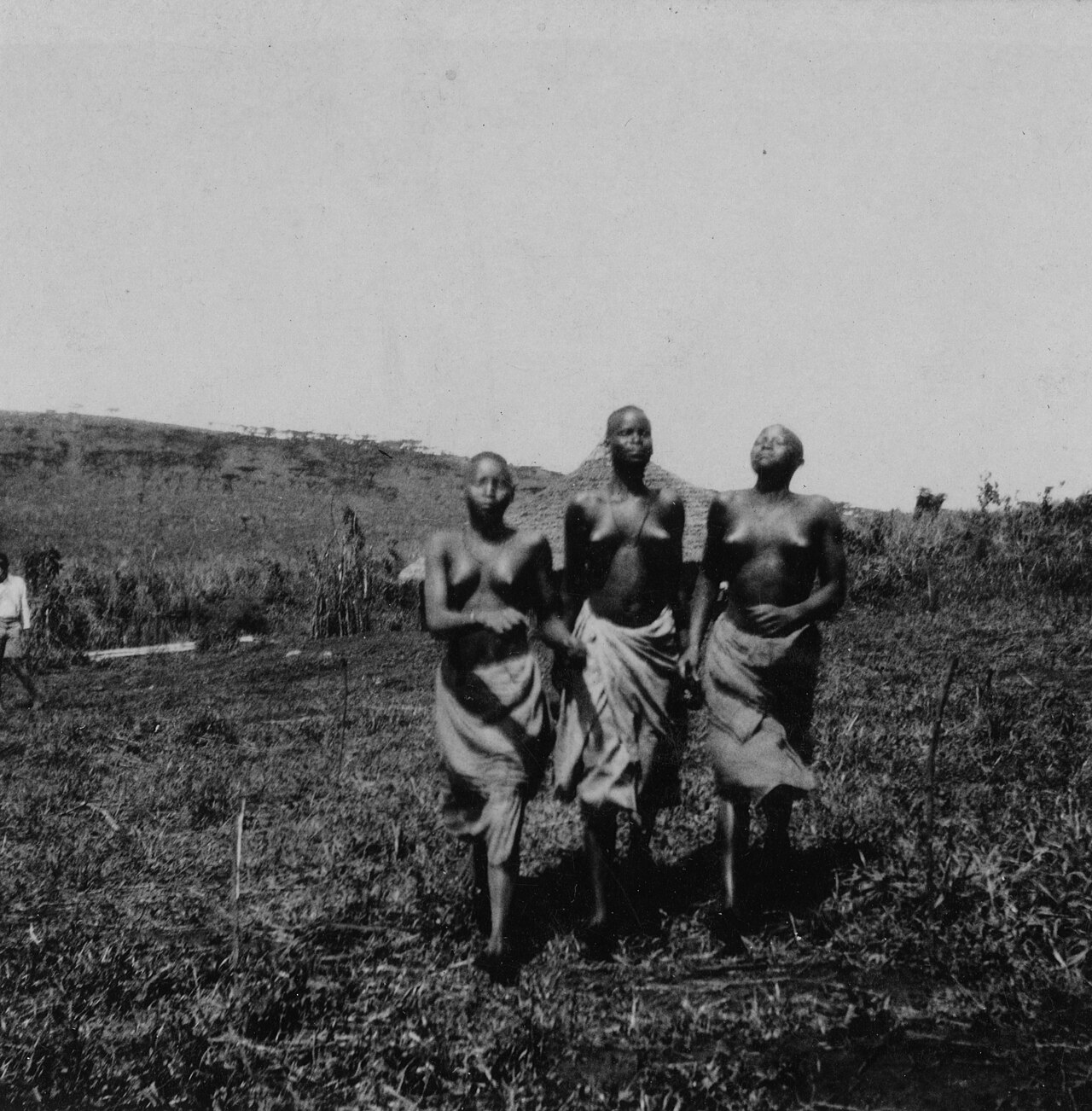
Ekegusii is a Bantu language spoken by well over two million people in the Kisii highlands. Though surrounded by the very different languages of the Luo and the Kalenjin, it has remained vigorous, sustained by the density and cohesion of the Gusii population and by its use in homes, markets, churches and local media.
The language is rich in proverbs and oral lore, and it preserves a distinctive vocabulary tied to farming, kinship and ritual. Alongside Swahili and English, Ekegusii continues to be the everyday tongue of the highlands and a central marker of Gusii identity.
The Homeland

The Gusii homeland lies in the high, well-watered hills east of Lake Victoria, one of the greenest and most productive parts of Kenya. Rising to over two thousand metres, the country enjoys reliable rainfall, rich volcanic soils and a cool climate well suited to bananas, maize, tea and coffee.
This fertility made the highlands able to support a dense rural population, and Gusiiland is among the most crowded farming regions in the country. The pressure of people on a limited and much-loved land has long been a defining feature of Gusii life, encouraging intensive cultivation of every available slope.
The Old Way of Life

The Abagusii were traditionally settled farmers and cattle-keepers, combining the cultivation of finger millet, sorghum and bananas with the herding of cattle, sheep and goats. Livestock were central to wealth, to marriage payments and to the standing of a family, while grain and bananas provided the daily food.
Farming was organised around the homestead and the extended family, with land held and inherited through the male line. The demands of a hilly, densely settled country encouraged careful husbandry of the soil, and in modern times tea and coffee have been added as valuable cash crops to the older subsistence base.
Society and Community

Gusii society was organised into clans tracing descent from common ancestors, grouped into larger divisions and living in dispersed homesteads across the ridges. There was no single chief over all the people; authority lay with elders and with respected men whose judgement settled disputes and guided the affairs of the neighbourhood.
Age and generation ordered social life, and initiation, including circumcision for boys and a corresponding rite for girls, marked the passage to adulthood. Marriage, sealed by the transfer of cattle as bridewealth, bound clans together, and cooperation among kin and neighbours underpinned the work of farming and building.
Religion and Belief

Traditional Gusii religion centred on a creator god, Engoro, the source of life and the ultimate power behind the world. Below this high god lay a lively concern with the spirits of the ancestors, the ebirecha, who watched over their descendants and whose anger, if neglected, was thought to bring illness and misfortune.
Diviners and healers, the abanyamoriogi, played an important part in explaining affliction and prescribing remedies, and beliefs about witchcraft were strong. Christian missions took firm hold in the highlands from the early twentieth century, and today the great majority of Gusii are Christian, while older ideas about ancestors and unseen forces persist beneath the surface.
Traditions

The Abagusii are known above all for their soapstone carving, a craft centred on the quarries of Tabaka where a soft, coloured stone is dug and worked into bowls, figures and ornaments. This art has grown into a livelihood for many families and has carried the name of Kisii to markets far beyond Kenya.
Music, dance and a rich body of oral literature are other cherished traditions, performed at weddings, initiations and communal gatherings. Rites of passage, especially the ceremonies of initiation, remain important occasions, marking the stages of life with instruction, celebration and the reaffirmation of custom.
Crafts

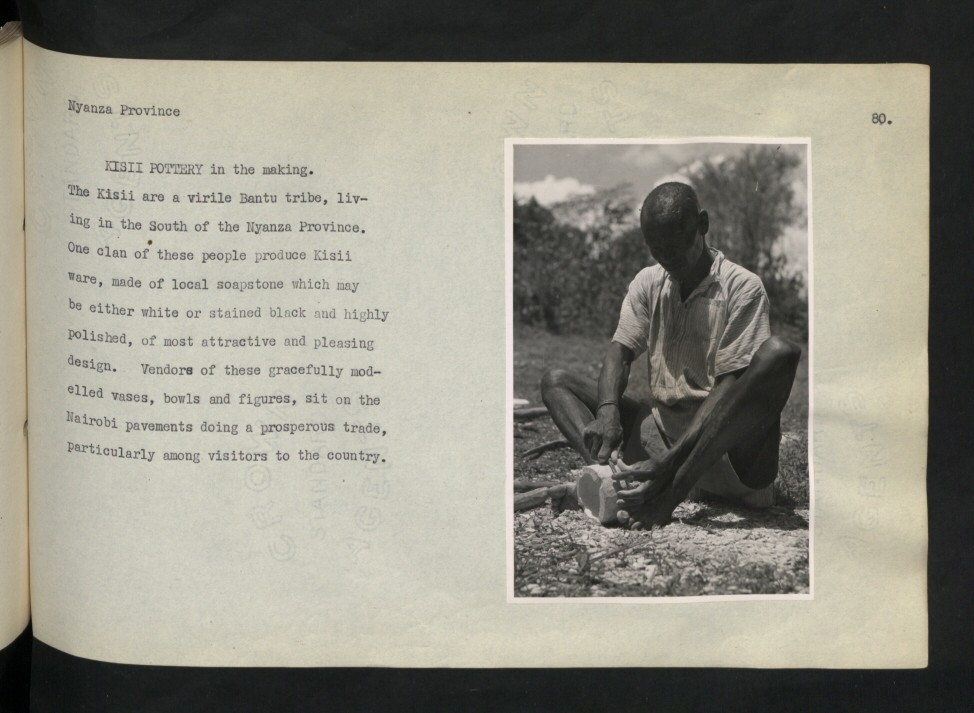
The signature craft of the Gusii is the carving of soapstone, or kisii stone, quarried at Tabaka and shaped by hand into a great variety of sculptures and household objects. Softly coloured and easily worked, the stone has made Gusii carvers famous, and their pieces are sold across Kenya and exported around the world.
Beyond soapstone the Abagusii practised the everyday crafts of a farming people, making baskets, pottery and iron tools, and building the granaries and homesteads of the ridge-top settlements. The soapstone industry, however, remains their most distinctive contribution to the material culture of Kenya.
Food

The staple food of the Gusii is obokima, a stiff porridge of maize or millet flour that corresponds to the ugali eaten across Kenya, served with vegetables, meat or sour milk. Finger millet, long the traditional grain, remains valued for porridge and for its use in ceremony.
Bananas, grown abundantly in the highlands, are another important food, and the diet is filled out with beans, leafy greens and, on special occasions, chicken and other meat. Simple, filling and drawn from the produce of the hills, Gusii cooking reflects the farming abundance of their well-watered land.
Festivals
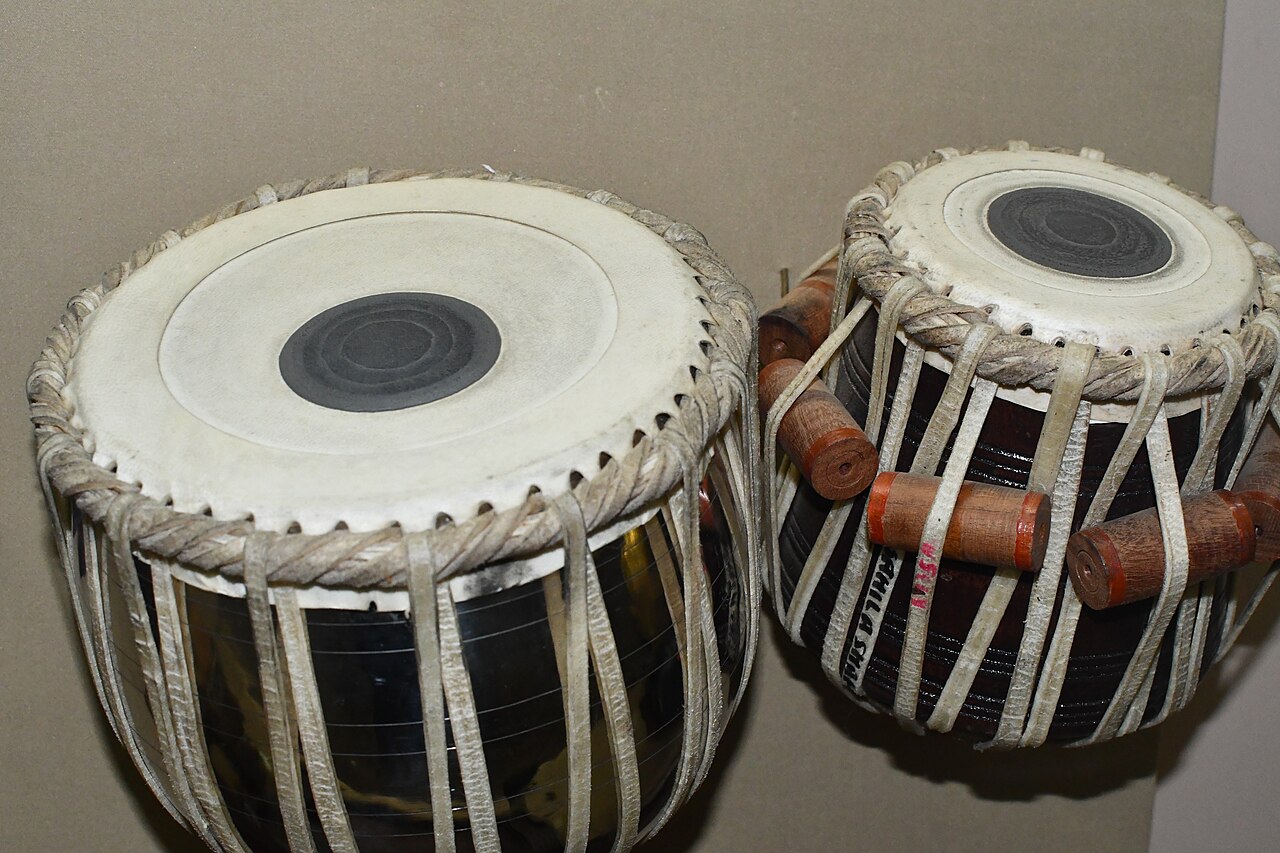
Festive life among the Abagusii gathered around the events of the farming year and the milestones of the life cycle. Harvests, weddings, and above all the seasons of initiation, brought communities together for feasting, music and dance, when the bonds of clan and neighbourhood were renewed and the young were welcomed into adult society.
Song, drumming and dance lay at the heart of these gatherings, accompanied by traditional instruments and the performance of praise and proverb. Today Christian festivals and national holidays join the older celebrations, and cultural groups keep the music and dance of the highlands alive at public events.
History
Before colonial rule the Abagusii lived in a cluster of clans without any overall ruler, defending their highland home against Luo and Kipsigis raiders. When the British extended their control over the region in the early twentieth century, the Gusii resisted, and the killing of a colonial officer and later punitive expeditions marked their entry into the colonial order.
Under British rule Gusiiland was drawn into the cash economy through tea and coffee, and mission schools spread rapidly. The people took eagerly to education and by independence in 1963 had become a populous and prominent community, well represented in the professions, business and the public life of modern Kenya.
Today

Today the Abagusii are one of Kenya’s larger communities, numbering more than two million and known for their high level of education and their prominence in the professions and business. Their highland home remains intensely farmed, producing tea, coffee, bananas and maize on smallholdings worked by a dense rural population.
The soapstone carvers of Tabaka continue to supply markets at home and abroad, and Ekegusii remains the vigorous everyday language of the hills. Balancing the crowding of their beloved highlands with migration to the towns, the Gusii carry a heritage of farming, craft and learning into contemporary Kenyan life.
Related Peoples of the Region
- A Small Mountain Nation That Paid Everything for Freedom, the Story of the Chechens
- Long Before the Arabs Came, North Africa Belonged to the Amazigh
- The Fon, Heirs of the Kingdom of Dahomey
- The Dinka, Cattle-Keepers of the Nile
- The Nuer, the Free Cattle-Keepers of the Nile
- The Kalenjin, the Running People of the Rift Valley
- The Kamba, the Traders and Carvers of Ukambani
- The Luhya, the Drummers and Farmers of Western Kenya
More Peoples of the World
- A Fifth of Humanity, the Story of the Han Chinese
- How the Maori Sailed Across the Pacific to Reach New Zealand
- Zulu of the Green Hills and Their Kingdom Forged by Shaka
- The People Who Never Vanished, the Story of the Maya
- Long Before the Arabs Came, North Africa Belonged to the Amazigh
- The People Who Emerged Into This World, the Story of the Navajo
- Meet the Ainu, an Indigenous People at Japan’s Northern Edge
You May Like
The Hutu, the Farmers of the Land of a Thousand Hills


