The Hadza, or Hadzabe, are a small people of north-central Tanzania who live by hunting and gathering around the shores of Lake Eyasi. Numbering only around a thousand, they are among the last full-time foragers in Africa, living without farming, herding or permanent villages much as their ancestors have for many thousands of years.Carrying one of the most ancient and distinct human lineages on earth, and speaking a unique click language unrelated to any other, the Hadza embody a way of life of great antiquity: egalitarian, mobile and drawn directly from the wild, from honey and game to baobab fruit and wild tubers. This article traces their origins, language, homeland, foraging life and the customs that continue to define them.
The Hadza on Film
Contents
- Origins
- The Name
- The Language
- The Homeland
- The Old Way of Life
- Society and Community
- Religion and Belief
- Traditions
- Crafts
- Food
- Festivals
- History
- Today
Origins

The Hadza, or Hadzabe, are a small people of north-central Tanzania who live around the shores of Lake Eyasi, in the shadow of the Great Rift Valley. Numbering only around a thousand, they are among the last full-time hunter-gatherers in Africa, living much as their ancestors did without farming, herding or permanent villages.
Genetic studies suggest that the Hadza represent one of the oldest and most distinct human lineages on earth, descended from populations that have inhabited East Africa for tens of thousands of years. Their language, their way of life and their very antiquity make them a subject of great interest to scientists and a people of extraordinary cultural importance.
The Name
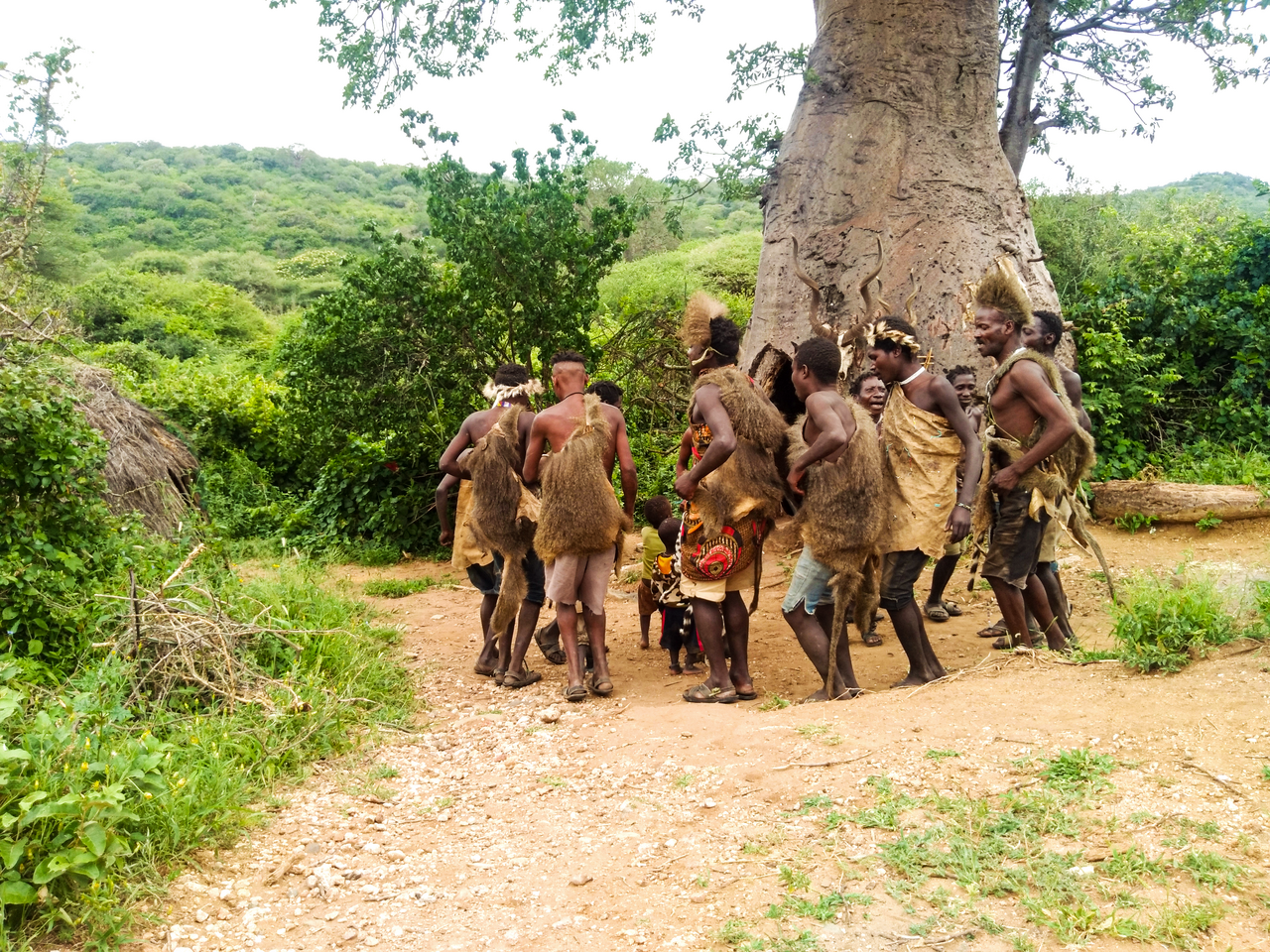
The people call themselves the Hadza or Hadzabe, and their language is Hadzane. They have long been known to their farming and herding neighbours by various names, but they identify simply as the Hadza, the people of the Eyasi region.
Unlike almost all their neighbours, the Hadza are not a Bantu or Nilotic people but a distinct group whose origins lie deep in the prehistory of Africa. Their small numbers and their unique way of life set them apart, and the name Hadza has come to stand for one of the world’s last surviving foraging societies.
The Language

The Hadza speak Hadzane, a language famous for its click consonants and generally regarded as a language isolate, unrelated to any other tongue now spoken. Once grouped with the click languages of southern Africa, it is now thought to stand alone, a linguistic survival as ancient as the people themselves.
Hadzane is spoken by nearly all the Hadza and remains vigorous within the community, though Swahili is increasingly known through contact with outsiders. The survival of this unique language, tied to a foraging way of life, is of great value to the understanding of human linguistic history.
The Homeland

The Hadza homeland is the dry, thorn-scrub country around Lake Eyasi, a shallow, salty lake in a branch of the Rift Valley in north-central Tanzania. It is a land of savanna, rocky hills, baobab trees and seasonal watercourses, rich in game and wild plant foods but harsh and often dry.
This environment, close to the famous fossil sites of the region, has supported foraging peoples for a very long time. The Hadza know their country intimately, reading the movements of animals, the ripening of fruits and the sources of water, and moving their camps through it in tune with the seasons and the availability of food.
The Old Way of Life

The Hadza live by hunting and gathering, without crops or domestic animals. Men hunt game, from small animals to large antelope and even, in the past, the largest beasts, using powerful bows and arrows tipped with poison, and they are famous for gathering wild honey, often guided to the bees’ nests by a bird, the honeyguide.
Women and children gather the tubers, berries, baobab fruit and other plant foods that make up much of the diet. The Hadza carry few possessions, build simple grass shelters, and move camp readily as food is exhausted or game moves on. Theirs is a mobile, flexible life, finely adapted to drawing sustenance directly from the wild.
Society and Community

Hadza society is famously egalitarian, without chiefs, headmen or any formal hierarchy, and without the age-sets or lineages that order many African peoples. People live in small, fluid camps whose membership changes constantly as families come and go, and decisions are reached by discussion rather than by the authority of leaders.
Food is widely shared, and no one accumulates wealth or power over others. Marriage is informal and easily dissolved, and both men and women enjoy considerable autonomy. This absence of hierarchy and possession, long characteristic of foraging peoples, gives Hadza society a striking freedom and flexibility.
Religion and Belief

The Hadza have no organised religion, no priests and no elaborate body of doctrine, but they recognise the sun, called Haine or Ishoko, and the moon as powerful presences, and they hold beliefs about spirits and the dead. Their most important ritual is the epeme dance, performed by men on moonless nights, which carries deep significance for the community.
The Hadza do not practise ancestor worship in the manner of their farming neighbours, and their relationship to the unseen is direct and unmediated. Their beliefs, like their society, are simple, flexible and free of hierarchy, bound up with the sun, the moon and the rhythms of the foraging life.
Traditions

Hadza traditions are those of a foraging people: the skills of hunting and tracking, the gathering of honey and wild plants, and the making of the bows, arrows and simple tools of the camp. Knowledge of the land, the animals and the plants is passed from parent to child through daily life rather than through formal instruction.
The great communal tradition is the epeme dance, performed at night, and the sharing of meat and honey that binds the camp together. Storytelling, song and the easy sociability of the camp fireside carry the memory and values of the people, in a culture that prizes equality, sharing and freedom above all.
Crafts
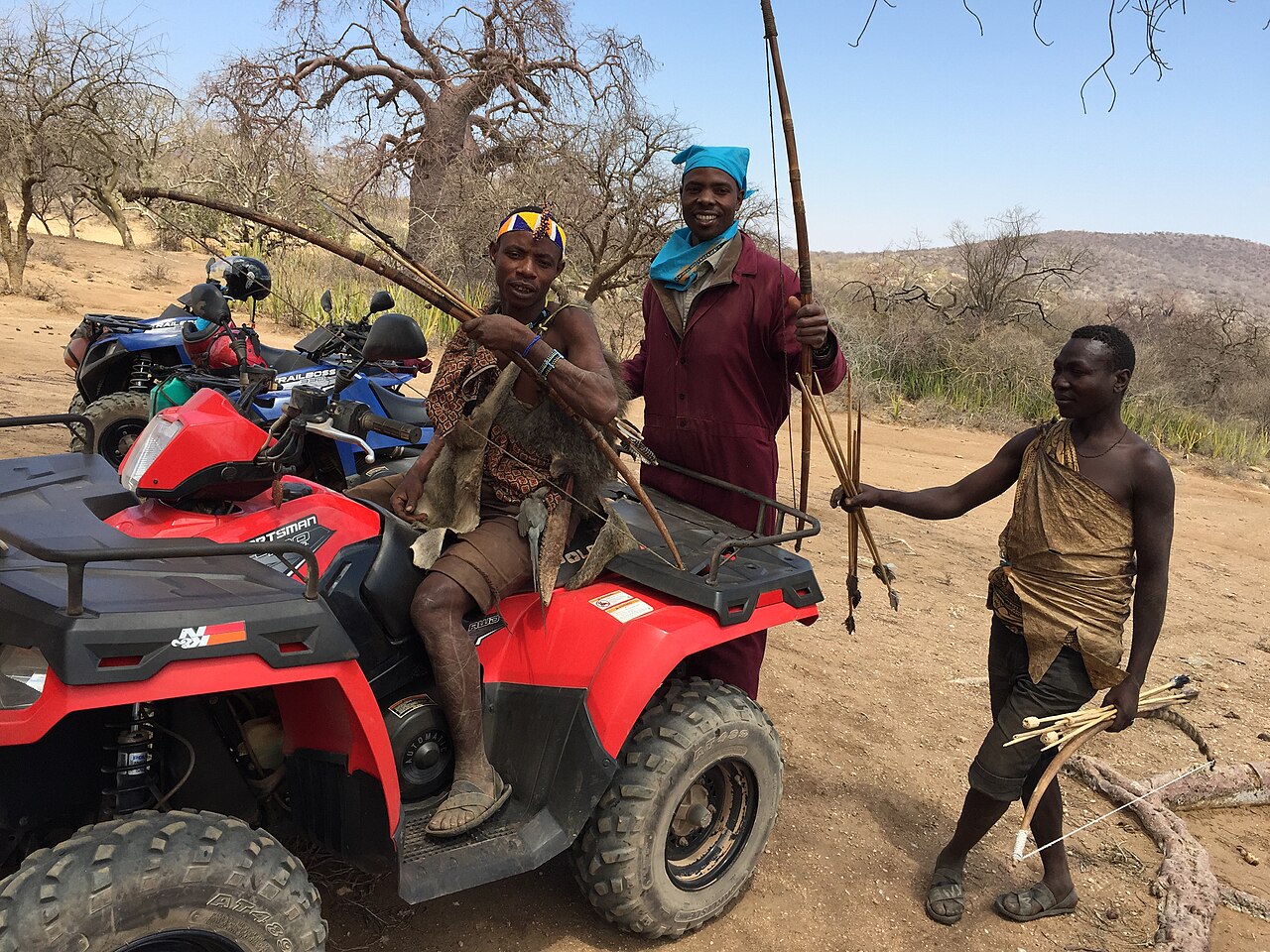
The Hadza make only what a mobile foraging life requires, and their material culture is spare and practical. The most important craft is the making of bows and arrows, the arrows tipped with iron or bone and smeared with poison prepared from certain plants, weapons on which the hunt depends.
Beyond these the Hadza make digging sticks for tubers, containers of gourd and hide, simple beadwork and ornaments, and the grass shelters of their camps. They obtain iron for arrowheads through trade with neighbouring peoples. Owning little and carrying less, the Hadza embody a way of life in which few possessions are needed and nothing is hoarded.
Food

The Hadza diet is drawn entirely from the wild and is famous for its variety and healthfulness. Honey, prized above all other foods, is gathered from wild bees; game provides meat; and tubers, roots, berries and the fruit and seeds of the baobab supply the bulk of the plant food gathered by women.
What is eaten changes with the seasons, as different fruits ripen and game moves, and the Hadza draw on an intimate knowledge of dozens of wild foods. This foraged diet, rich in fibre and free of processed food, has drawn the attention of scientists studying human nutrition and the health of the gut.
Festivals

Festive and communal life among the Hadza centres on the sharing of food and on the epeme dance, performed by the men on dark, moonless nights, when the camp gathers in ritual celebration. The bringing in of a large animal or a rich haul of honey is itself an occasion for feasting and sociability.
Without a calendar of fixed festivals, Hadza celebration arises naturally from the rhythms of the foraging life and the gathering of the camp around the fire. Song, dance and storytelling fill the nights, and the easy, egalitarian sociability of the community is itself a kind of continual, unforced festivity.
History

The Hadza have lived by foraging around Lake Eyasi for a very long time, and their ancestors were probably among the earliest inhabitants of the region. For most of their history they had only limited contact with the farming and herding peoples who settled around them, trading for iron and occasionally intermarrying but keeping to their own way of life.
In the colonial and modern periods the Hadza have come under increasing pressure as farmers, herders and conservation schemes have encroached on their land and its game. Repeated attempts by governments and missions to settle them into farming villages have largely failed, and the Hadza have clung, against great odds, to their foraging independence.
Today

Today the Hadza number only around a thousand or so, and perhaps only a few hundred still live primarily by hunting and gathering. Loss of land, the decline of game, and pressure from farming, herding and tourism threaten the foraging way of life that has sustained them for millennia.
At the same time the Hadza have attracted worldwide attention as one of the last hunter-gatherer peoples and as a living link to humanity’s deep past, and efforts have been made to secure their land rights. Balancing the pressures of the modern world with their ancient freedom, the Hadza carry an irreplaceable heritage into an uncertain future.
Related Peoples of the Region
- The Gusii, the Soapstone Carvers of the Kenyan Highlands
- The Turkana, the Herders of the Jade Sea
- The Samburu, the Butterfly People of Northern Kenya
- The Chagga, the Coffee Farmers of Kilimanjaro
- The Sukuma, Tanzania’s Largest People and Their Dancing Societies
- The Sukuma, Tanzania’s Largest People and Their Dancing Societies
- The Nyamwezi, the Caravan Traders of Central Tanzania
- The Makonde, the Blackwood Sculptors of the Ruvuma
More Peoples of the World
- A Fifth of Humanity, the Story of the Han Chinese
- How the Maori Sailed Across the Pacific to Reach New Zealand
- Zulu of the Green Hills and Their Kingdom Forged by Shaka
- The People Who Never Vanished, the Story of the Maya
- Long Before the Arabs Came, North Africa Belonged to the Amazigh
- The People Who Emerged Into This World, the Story of the Navajo
- Meet the Ainu, an Indigenous People at Japan’s Northern Edge
You May Like
The Damara, an Ancient People of Namibia