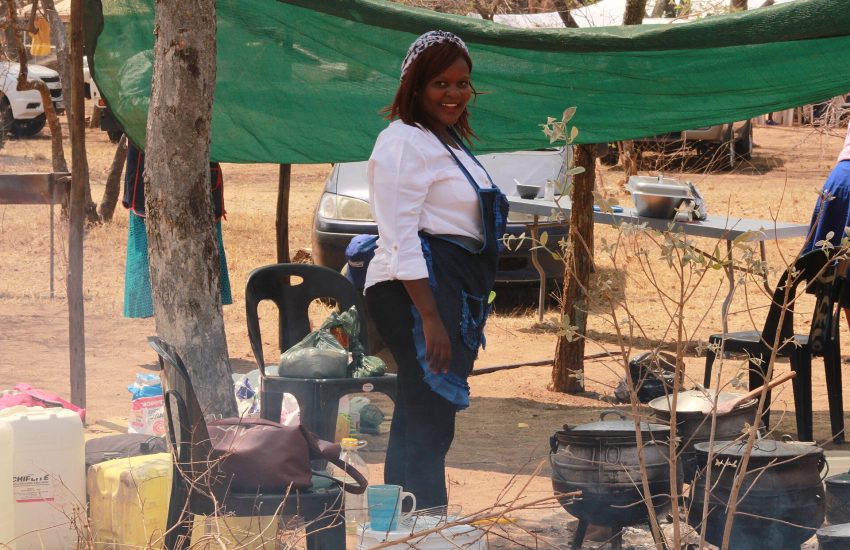
The Nyamwezi are a Bantu-speaking people of the central plateau of Tanzania, historically among the greatest trading nations of East Africa. Numbering well over a million and centred on the town of Tabora, they are close kin to the Sukuma and share the wooded plateau country of the interior, where their name is often translated as the people of the moon.From the eighteenth century the Nyamwezi became the porters and caravan leaders who carried the ivory and trade goods of the interior to the Indian Ocean coast, and in the nineteenth century the great leader Mirambo built a powerful state astride the trade routes. This article traces their origins, language, homeland, trading life and the customs that continue to define them.
The Nyamwezi on Film
Contents
- Origins
- The Name
- The Language
- The Homeland
- The Old Way of Life
- Society and Community
- Religion and Belief
- Traditions
- Crafts
- Food
- Festivals
- History
- Today
Origins

The Nyamwezi are a Bantu-speaking people of the central plateau of Tanzania, historically one of the most important trading nations of East Africa. Their name, often translated as the people of the moon, was given to them by coastal peoples and refers to the direction of the west, from which they came to the markets of the Indian Ocean coast.
Closely related to the Sukuma to their north, the Nyamwezi emerged as a cluster of clans and chiefdoms on the wooded plateau around Tabora. From the eighteenth century onwards they turned increasingly to long-distance trade, and it was as porters, caravan leaders and traders that they made their mark on the history of the region.
The Name
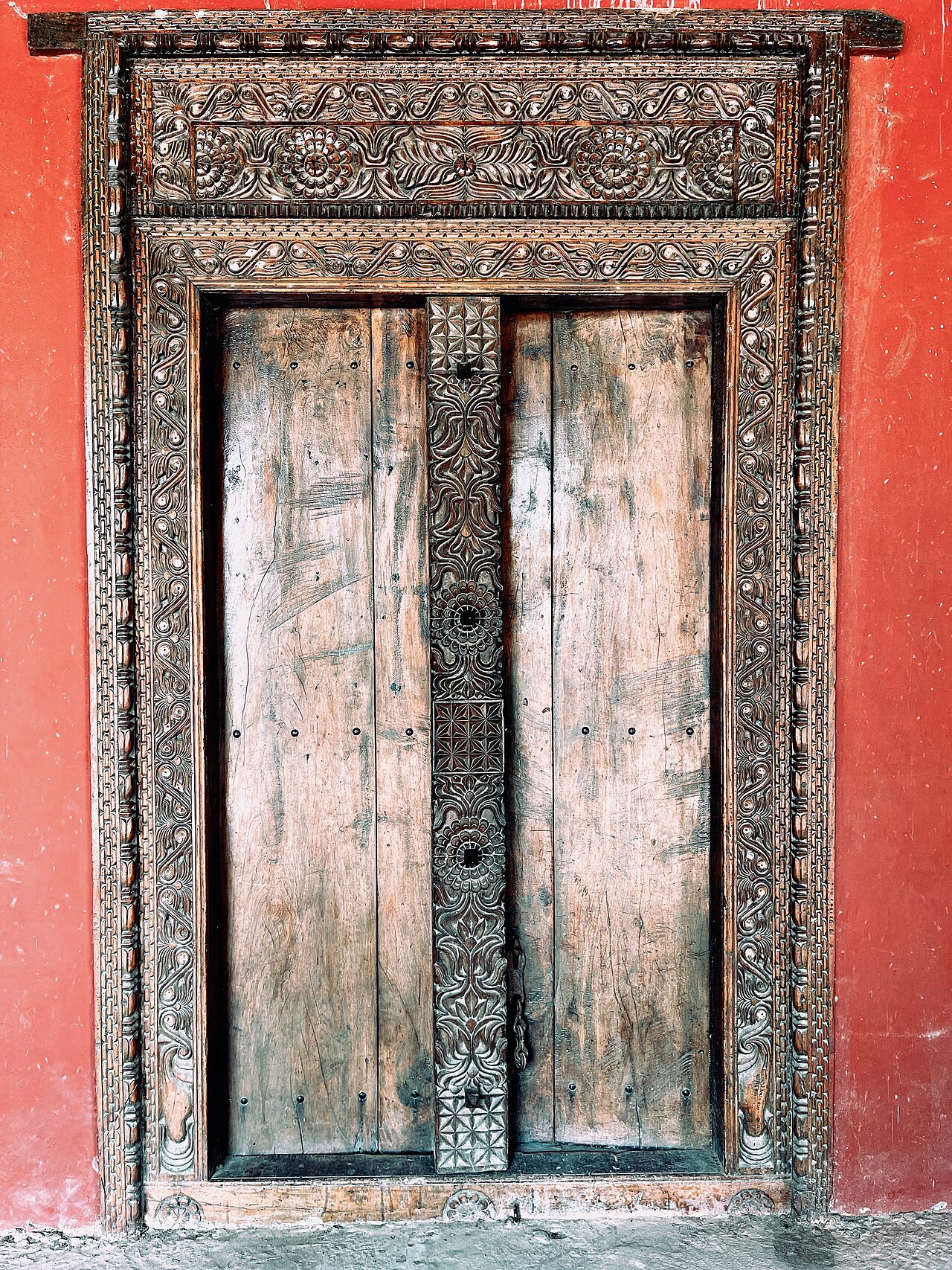
The people call themselves the Wanyamwezi, a single person being a Mnyamwezi and the language Kinyamwezi. The name Nyamwezi, meaning people of the moon or of the west, was applied to them by the coastal Swahili and came to cover a number of related groups of the central plateau who shared a common speech and way of life.
Like the Sukuma, the Nyamwezi were never a single unified kingdom but a collection of chiefdoms, and their sense of common identity grew partly from their shared role in the caravan trade and partly from the experiences of colonial and modern times. The name now stands for the peoples of the Unyamwezi plateau.
The Language

The Nyamwezi speak Kinyamwezi, a Bantu language very closely related to Kisukuma, so that the two peoples can understand one another with ease. It is spoken across the central plateau and has long served as a language of trade, carried far along the caravan routes by Nyamwezi porters.
Swahili, the national language of Tanzania, is now used for education and wider communication, but Kinyamwezi remains the everyday tongue of the plateau, rich in the vocabulary of farming, trade and the ceremonies of chiefship. It preserves the songs, proverbs and oral history of a people once at the crossroads of East African commerce.
The Homeland

The Nyamwezi homeland, Unyamwezi, lies on the broad central plateau of Tanzania, a country of open miombo woodland, grassland and scattered granite hills, centred on the town of Tabora. The land is drier and less fertile than the well-watered highlands to the east, and rainfall can be uncertain.
This position at the centre of the country, roughly midway between the coast and the great lakes, made Unyamwezi a natural hub of trade routes in the nineteenth century. Tabora grew into the most important inland town of East Africa, a meeting point of caravans where Arab, Swahili and Nyamwezi traders gathered.
The Old Way of Life

The Nyamwezi were traditionally farmers and herders, cultivating sorghum, millet and later maize and tobacco, and keeping cattle, goats and sheep where the land and the threat of disease allowed. But what set them apart was their deep involvement in long-distance trade, which became central to their way of life.
From boyhood many Nyamwezi men spent long periods away as porters and traders, carrying ivory, salt, copper and trade goods on foot between the interior and the coast. This caravan trade brought wealth, wide experience and outside contacts, and made the Nyamwezi famous throughout East Africa as the carriers of its commerce.
Society and Community

Nyamwezi society was organised into numerous small chiefdoms, each ruled by a chief, the Ntemi, whose office united political and ritual authority and who governed with the aid of councillors and officials. Below the chiefs, society rested on clans and lineages and on the ties of kinship and neighbourhood among the farming and trading homesteads.
The demands of the caravan trade fostered strong forms of association and leadership, and ambitious men could rise through success in commerce and war. In the later nineteenth century the great leader Mirambo built a powerful state by welding together many chiefdoms, controlling the trade routes and challenging both rivals and outsiders.
Religion and Belief
Traditional Nyamwezi religion combined belief in a distant creator god with a close and constant concern for the spirits of the ancestors, who were honoured with offerings and consulted in times of difficulty. The wellbeing of the living was held to depend on right relations with these ancestral powers.
Diviners, healers and ritual specialists interpreted misfortune and provided protective medicine, and beliefs about spirits, blessing and witchcraft were strong. Spirit-possession cults and secret societies also had their place. Christianity and Islam, the latter carried along the trade routes, have since spread widely, but older beliefs about ancestors and unseen forces remain influential.
Traditions

The traditions of the Nyamwezi were shaped by both farming and the caravan life. Rites of passage marked the stages of life, and the installation of chiefs was surrounded by elaborate ritual reflecting the sacred character of the Ntemi. Secret societies and associations, including those tied to healing and to the dance, played an important part in social life.
Music, drumming and dance accompanied festivals, ceremonies and the return of caravans, and the Nyamwezi shared in the vigorous dance traditions of the central plateau. Storytelling, proverbs and oral history preserved the memory of the great caravans, the deeds of leaders like Mirambo, and the values of the people.
Crafts
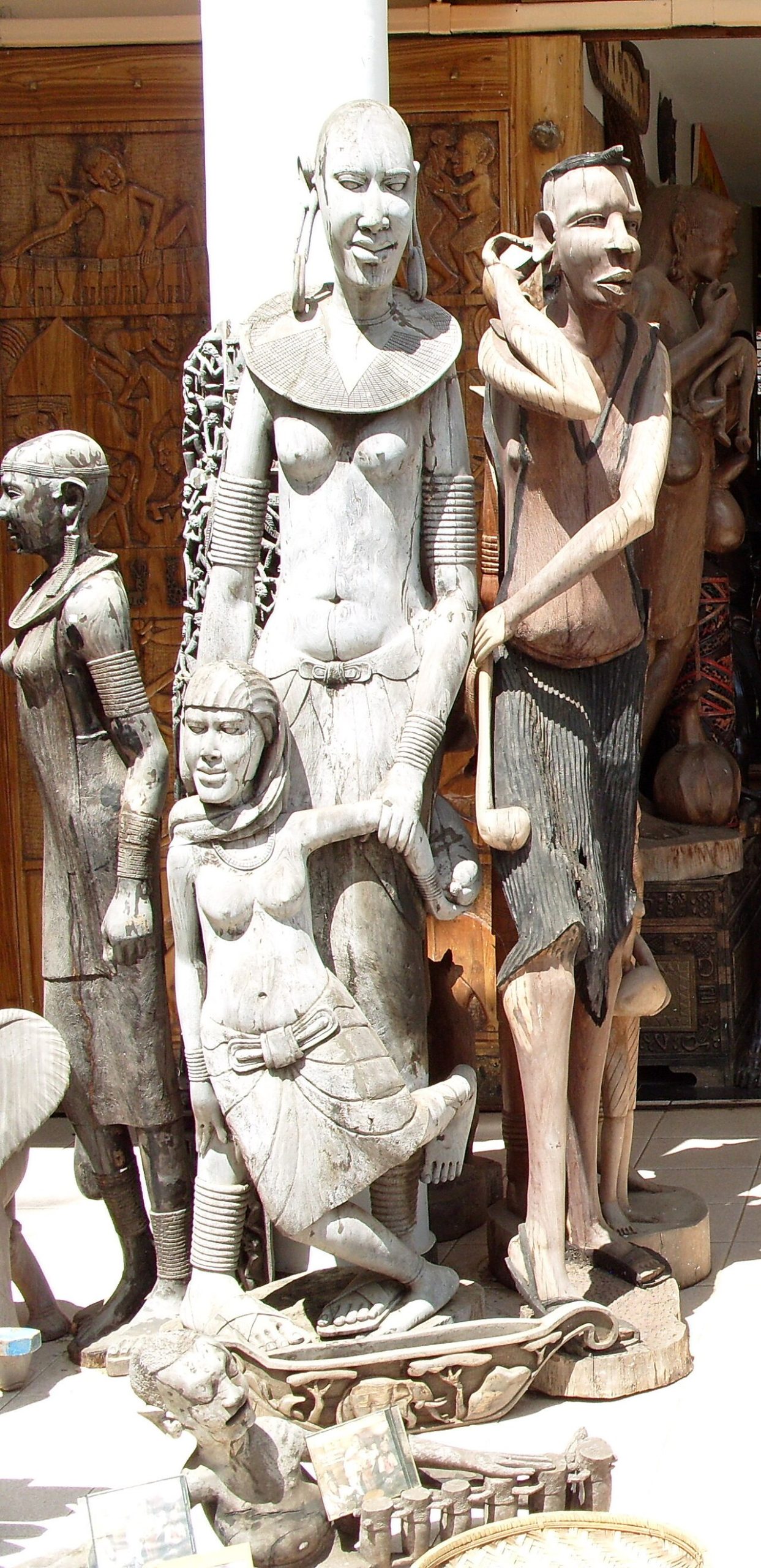
Nyamwezi craftsmanship reflected a society of farmers, herders and traders. Ironworkers forged hoes, weapons and the distinctive iron currencies used in exchange, and their skill made metal goods an important item of the trade. Households made baskets, pottery and the wooden vessels and stools of daily life.
Drums and instruments were fashioned for the dances and ceremonies of the plateau, and leather, gourds and fibre were worked into the containers and equipment needed for both farming and the long journeys of the caravans. These practical crafts served a people whose lives combined the settled work of the fields with the mobility of trade.
Food

The staple food of the Nyamwezi is ugali, the stiff porridge made from sorghum, millet or maize flour, eaten with vegetables, meat or sour milk. Leafy green relishes, including the mucilaginous mlenda, together with beans and pulses, accompany the daily meal on the plateau.
Milk and meat from the herds add to the diet where livestock can be kept, and the long history of trade brought a variety of goods to the markets of Tabora. Simple and filling, drawn from the grains of a sometimes difficult land, Nyamwezi cooking reflects a farming people long accustomed to both plenty and scarcity.
Festivals

Festive life among the Nyamwezi gathered around the events of the farming year, the ceremonies of chiefship and the milestones of the life cycle. The return of the great caravans was itself an occasion for celebration, as men came home with goods, stories and wealth from distant lands.
Weddings, initiations and the installation of chiefs brought communities together for feasting, music and dance, with drumming and song at their heart. Today national holidays and religious festivals join the older celebrations, and the dance traditions of the central plateau continue to give Nyamwezi gatherings their energy and colour.
History
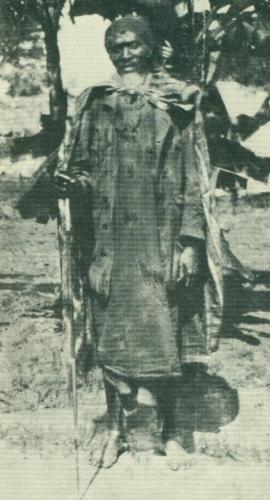
In the nineteenth century Unyamwezi stood at the centre of the East African caravan trade, and its people grew famous as the porters and traders who linked the interior with the coast. The town of Tabora became the greatest inland market of the region, visited by explorers such as Burton, Speke and Livingstone.
This era reached its height under Mirambo, who between the 1860s and 1880s built a powerful state controlling the trade routes and fielding formidable armies. After his death and the coming of German colonial rule, the chiefdoms were subdued and the caravan trade declined, but the Nyamwezi remained a numerous and influential people through the colonial period and into independent Tanzania.
Today

Today the Nyamwezi are among the larger peoples of Tanzania, numbering well over a million and living across the central regions around Tabora. Farming, herding and the growing of tobacco and other crops sustain the rural economy of the plateau, while many Nyamwezi have moved into the towns and into national life.
The great days of the caravans are long past, but the memory of that trading heritage, and of leaders like Mirambo, remains a source of pride. Combining the settled life of the plateau with a long tradition of enterprise and mobility, the Nyamwezi carry their distinctive history into modern Tanzanian society.
Related Peoples of the Region
- The Kamba, the Traders and Carvers of Ukambani
- The Luhya, the Drummers and Farmers of Western Kenya
- The Gusii, the Soapstone Carvers of the Kenyan Highlands
- The Turkana, the Herders of the Jade Sea
- The Samburu, the Butterfly People of Northern Kenya
- The Chagga, the Coffee Farmers of Kilimanjaro
- The Sukuma, Tanzania’s Largest People and Their Dancing Societies
- The Sukuma, Tanzania’s Largest People and Their Dancing Societies
More Peoples of the World
- A Fifth of Humanity, the Story of the Han Chinese
- How the Maori Sailed Across the Pacific to Reach New Zealand
- Zulu of the Green Hills and Their Kingdom Forged by Shaka
- The People Who Never Vanished, the Story of the Maya
- Long Before the Arabs Came, North Africa Belonged to the Amazigh
- The People Who Emerged Into This World, the Story of the Navajo
- Meet the Ainu, an Indigenous People at Japan’s Northern Edge
You May Like
The Damara, an Ancient People of Namibia