The Hamar, or Hamer, are an agropastoral people of the lower Omo Valley in the far south of Ethiopia, near the borders with Kenya and South Sudan. Numbering some tens of thousands, they are one of the many distinct peoples of this remote and culturally rich region, celebrated for the vivid beauty of their dress and the drama of their ceremonies.Herders of cattle and goats and growers of sorghum, the Hamar have preserved a strongly traditional way of life, famous above all for the bull-jumping initiation by which young men enter adulthood and for the ochre-dressed hair and beaded adornment of their women. This article traces their origins, language, homeland, pastoral life and the customs that continue to define them.
The Hamar on Film
Contents
- Origins
- The Name
- The Language
- The Homeland
- The Old Way of Life
- Society and Community
- Religion and Belief
- Traditions
- Crafts
- Food
- Festivals
- History
- Today
Origins
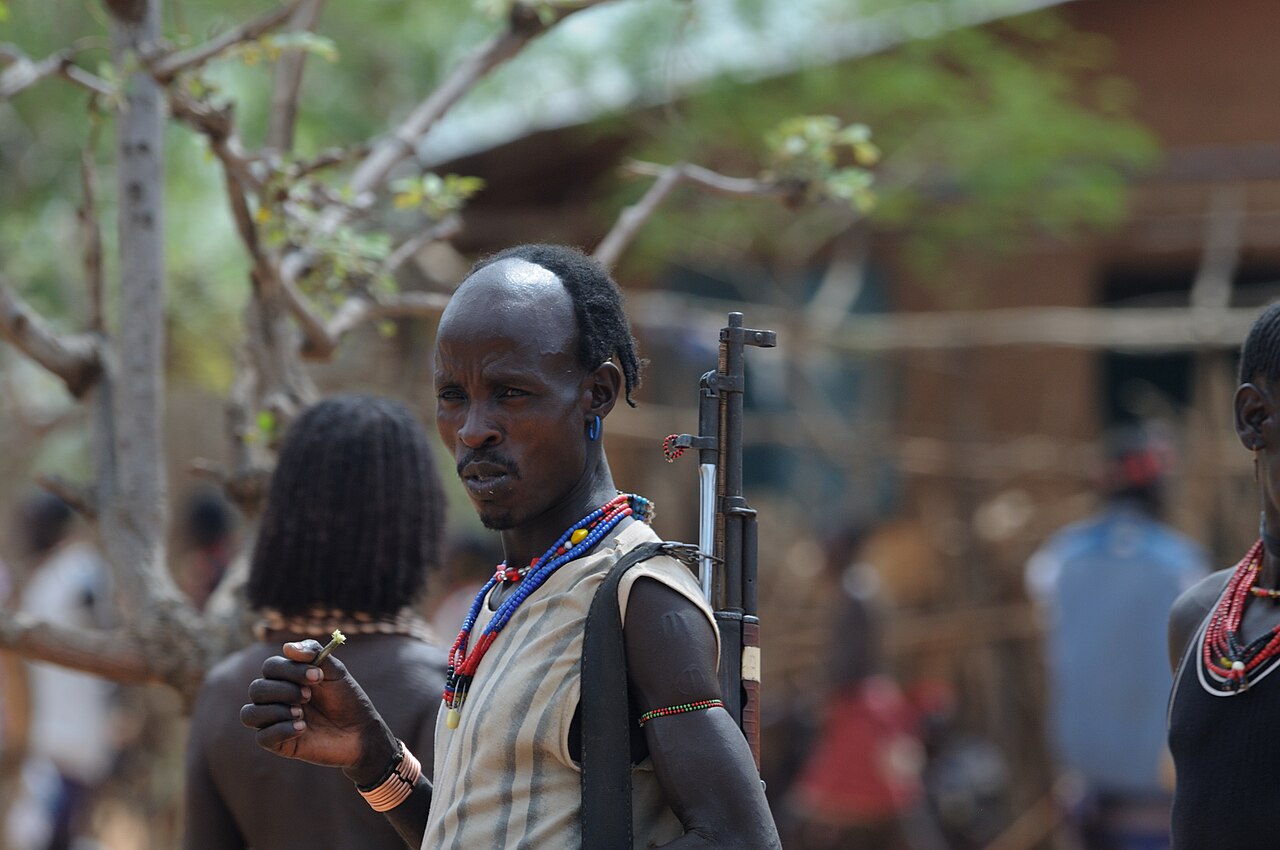
The Hamar, or Hamer, are an agropastoral people of the lower Omo Valley in the far south of Ethiopia, in the South Omo Zone near the borders with Kenya and South Sudan. Numbering some tens of thousands, they are one of the many distinct peoples of this remote and culturally rich region, celebrated for the vivid beauty of their dress and the drama of their ceremonies.
The Hamar herd cattle and goats and cultivate sorghum and other crops in a hot, dry land of savanna and bush. Living far from the highland centres of Ethiopia, they have preserved a strongly traditional way of life, and their bull-jumping initiation and the striking adornment of their women have made them among the best known of the Omo Valley peoples.
The Name

The people are called the Hamar or Hamer, and their language by the same name. They are one of a cluster of related peoples in the lower Omo region, sharing customs and, in part, language with neighbours such as the Banna and the Bashada.
Living in a corner of Ethiopia long remote from the state, the Hamar maintained a distinct identity centred on cattle, ceremony and the adornment of the body. The name Hamar has come to stand, for outsiders, for the culture of bull-jumping and ochre-dressed hair that draws visitors to the Omo Valley, but for the people themselves it denotes a proud and self-sufficient community of the southern lowlands.
The Language

The Hamar speak the Hamar language, an Omotic tongue of the Afro-Asiatic family, related to the languages of neighbouring peoples of the lower Omo such as the Banna and Karo. It is the everyday speech of the people and remains strong in their remote homeland.
As one of the Omotic languages, Hamar belongs to a group found only in southwestern Ethiopia, among the most distinctive parts of the African language map. Amharic, the national language, is little used in daily life in this remote region, and the Hamar language continues to carry the songs, ritual and oral traditions of the people.
The Homeland

The Hamar homeland is the hot, semi-arid country of the lower Omo Valley, a land of savanna, thorn bush, dry riverbeds and scattered hills east of the Omo River. Rainfall is low and unreliable, and the people depend on both their herds and their crops to survive in a challenging environment.
This remote region, far from the highlands and long difficult of access, is one of the most culturally diverse in Africa, home to many distinct peoples living side by side. For the Hamar it is a land known intimately, its pastures, water sources and cultivable patches read with the practised eye of herders and farmers who have long made a living from it.
The Old Way of Life

The Hamar are agropastoralists, combining the herding of cattle and goats with the cultivation of sorghum, maize and other crops planted along seasonal watercourses and cleared patches of bush. Cattle are the centre of wealth, status and ritual, essential to marriage and to the great ceremonies of the people, and are cared for with deep attachment.
Herding takes the young men and the animals to distant pastures in the dry season, while the settlements tend the fields and the home herds. Beekeeping, the gathering of wild foods, and trade in cattle and goods supplement this economy. The Hamar way of life is finely balanced between the herd and the field in a land where neither alone would suffice.
Society and Community

Hamar society is organised by age and by the bonds of kinship and clan, and its defining institution is the great initiation of young men through the ceremony of bull-jumping, the ukuli bula. To pass into adulthood and gain the right to marry, a young man must run across the backs of a line of cattle, and the ceremony, surrounded by ritual and celebration, marks his entry into the ranks of the men.
Bound up with this initiation is the custom in which female relatives of the initiate ask to be whipped by the young men as a sign of devotion and solidarity, bearing the scars with pride. Elders hold authority through their control of ritual and blessing, and marriage, sealed by the transfer of cattle, links families and clans across the country.
Religion and Belief

Traditional Hamar religion centres on a supreme power and on the concept of barjo, a notion of fortune, blessing and the right order of things, which rituals and ceremonies seek to secure and maintain. The ancestors and the spirits are honoured, and the wellbeing of people, cattle and crops is held to depend on keeping barjo in balance.
Ritual specialists and elders, through blessing, sacrifice and the observance of custom, mediate between the people and these unseen powers, and the great ceremonies such as the bull-jumping have a deeply religious character. Little touched by Christianity or Islam in their remote homeland, the Hamar have largely retained their traditional beliefs and the rituals that order their world.
Traditions

The traditions of the Hamar are famous for their beauty and drama. The women are celebrated for their elaborate hairstyles, in which the hair is dressed with red ochre and butter into thick, gleaming ringlets, and for their adornment with beads, iron torcs and goatskin garments decorated with cowrie shells. Both men and women practise body decoration and scarification.
The great tradition is the bull-jumping initiation, with its accompanying dances, whipping and celebration, one of the most striking ceremonies in Africa. Song, dance and the ritual of the ceremonies mark the passages of life, and the oral traditions and the customs of cattle, marriage and initiation preserve the values and identity of the people.
Crafts

Hamar craftsmanship serves a pastoral and farming life and a culture of striking personal adornment. The women make and wear the beadwork, the iron and copper ornaments, and the decorated goatskin garments for which they are known, and they craft the calabashes, containers and household goods of daily use.
Men make the wooden stools and headrests that they carry with them, the spears and, in the past, the weapons of the herder and hunter. The dressing of hair and the decoration of the body are themselves refined arts. These crafts, tied to herding, farming and the adornment of the person, reflect a people for whom beauty and ceremony are central to life.
Food

The diet of the Hamar is drawn from their herds and their fields. Milk from cattle and goats, and at times blood drawn from living animals, provide the pastoral foods, while sorghum, grown along the watercourses, is ground and cooked into porridge and flat cakes and brewed into beer. Maize and other crops, and honey from beekeeping, add to the diet.
Wild fruits, roots and game gathered from the bush help see the people through the dry season, when milk and crops may be scarce. Meat is eaten above all at ceremonies, when cattle are slaughtered and shared according to custom. Lean and resourceful, Hamar cooking reflects a people drawing their living from herd, field and bush in a demanding land.
Festivals

Festive life among the Hamar centres on the great ceremonies of the life cycle, above all the bull-jumping initiations, which gather families and neighbours for days of ritual, dancing, whipping, feasting and celebration. Weddings, and the ceremonies surrounding cattle and the ancestors, are also occasions of gathering and rejoicing.
Dance, song and the display of finery and adornment are central to these events, and the coming together of a scattered people for a bull-jumping or a wedding is a significant social occasion. Bound up with cattle, initiation and the securing of barjo, the festivals of the Hamar express the values and vitality of their traditional society.
History

The Hamar have long inhabited the lower Omo Valley, one of the most remote and least governed parts of Ethiopia, and for much of their history they had little contact with the highland state or the outside world. Their pastoral and farming life, their ceremonies and their independence continued little changed across the generations.
Incorporated in name into the Ethiopian state, the Hamar remained on its margins, and only in recent decades have roads, administration, tourism and development schemes reached the region. Large projects on the Omo River and pressures on land and grazing now pose serious challenges to their way of life, even as the outside world has become increasingly fascinated by their culture.
Today
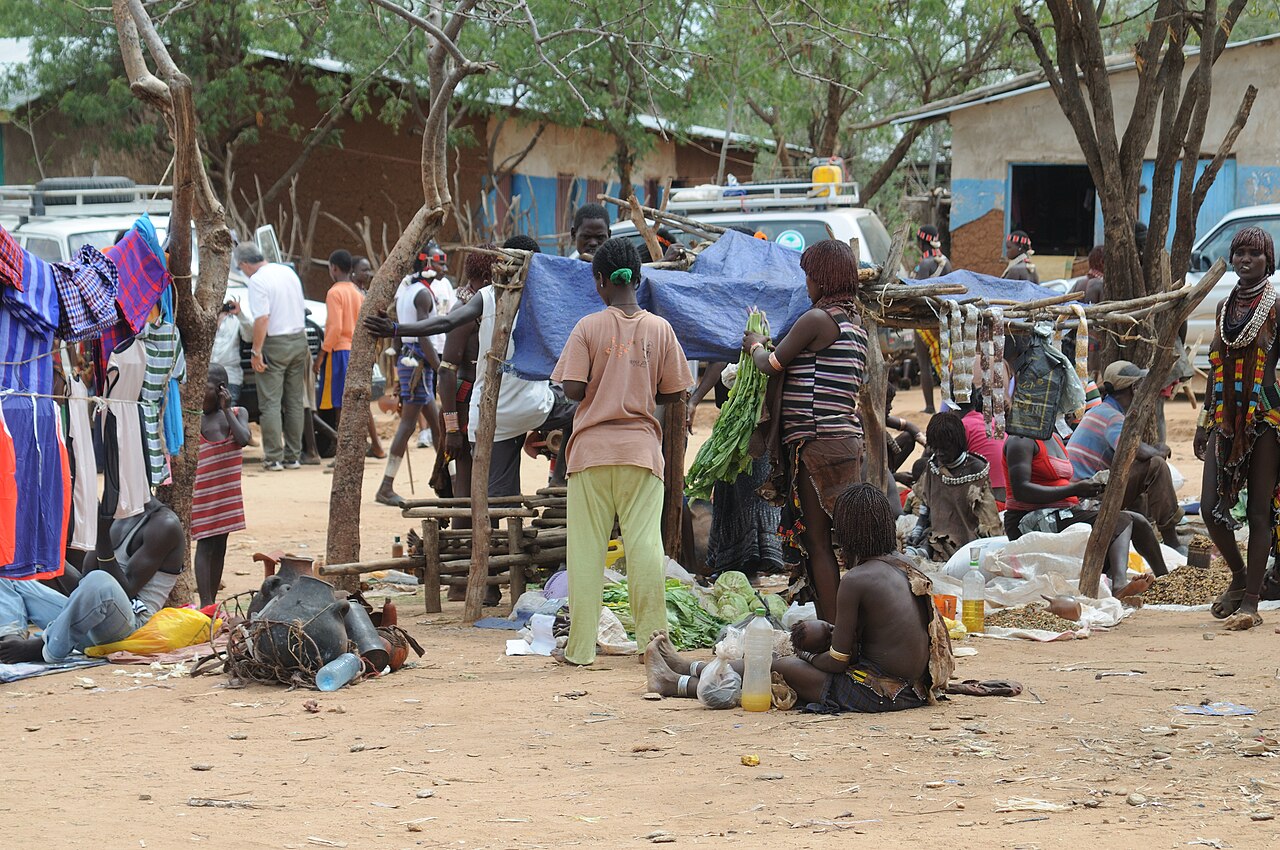
Today the Hamar number some tens of thousands and remain, in large part, a traditional agropastoral people, herding cattle and goats and cultivating sorghum in the lower Omo Valley. Their bull-jumping ceremonies and the beauty of their adornment continue as before, even as tourism brings visitors, and roads, schools and development bring change to the region.
Large dam and plantation projects on the Omo River, and growing pressure on land and water, threaten the pastoral basis of their life and have become a source of concern. Proud of their cattle, their ceremonies and their striking traditions, the Hamar face the challenge of preserving their way of life in one of Africa’s most rapidly changing frontiers.
Related Peoples of the Region
- The Acholi, the Luo People of Northern Uganda
- The Karamojong, the Cattle Herders of Karamoja
- The Hutu, the Farmers of the Land of a Thousand Hills
- The Tutsi, the Cattle Aristocracy of the Great Lakes
- The Afar, the Salt Caravaneers of the Danakil
- The Sidama, the Ensete Farmers of Southern Ethiopia
- The Gurage, the Enset Farmers and Traders of Ethiopia
- The Wolayta, the Kingdom Farmers of Southern Ethiopia
More Peoples of the World
- A Fifth of Humanity, the Story of the Han Chinese
- How the Maori Sailed Across the Pacific to Reach New Zealand
- Zulu of the Green Hills and Their Kingdom Forged by Shaka
- The People Who Never Vanished, the Story of the Maya
- Long Before the Arabs Came, North Africa Belonged to the Amazigh
- The People Who Emerged Into This World, the Story of the Navajo
- Meet the Ainu, an Indigenous People at Japan’s Northern Edge
You May Like
The Damara, an Ancient People of Namibia