On the small tropical island of Bali, amid volcanoes and cascading rice terraces, live the Balinese, a Hindu people set apart in the worlds most populous Muslim nation. Heirs to the Hindu-Buddhist civilisation of old Java, they created a culture in which religion, art, and daily life are woven inseparably together.
Theirs is a heritage of thousands of temples and daily offerings, of legong and barong dance, of the subak rice terraces and the island-wide silence of Nyepi. To know the Balinese is to enter one of the most ritually rich and artistically vibrant cultures on earth.
Bali on Film
Contents
- Origins
- The Name
- The Language
- The Homeland
- The Old Way of Life
- Society and Community
- Religion and Belief
- Traditions
- Crafts
- Food
- Festivals
- History
- Today
Origins
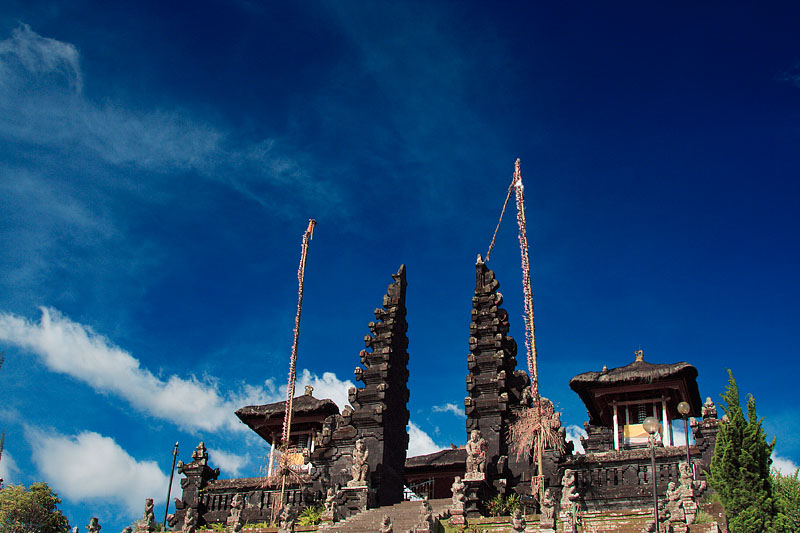
The Balinese are the people of the island of Bali in Indonesia, celebrated the world over for their unique Hindu culture, their arts, and the beauty of their homeland. An Austronesian people, they are unusual in the archipelago for holding to Hinduism in a nation that is overwhelmingly Muslim.
Bali’s culture is heir to the Hindu-Buddhist civilisation that once dominated Java, for when the great Javanese empire of Majapahit fell to Islam in the sixteenth century, its priests, nobles, and artists are said to have fled to Bali. There they preserved and enriched a Hindu civilisation that had already taken deep root on the island.
The Name

The Balinese, or Wong Bali, take their name from their island. Their identity is bound above all to their religion, the distinctive Balinese Hinduism that shapes every aspect of life, and to the elaborate ritual and art that flow from it.
To be Balinese is to belong to this island of temples and offerings, of rice terraces and dance, set apart from the surrounding Muslim world by faith and custom. It is a culture in which religion, community, and art are inseparably woven together.
The Language

The Balinese language is an Austronesian tongue, related to Javanese and the other languages of the archipelago, and, like them, marked by levels of speech that reflect status and courtesy. It carries a rich oral and written literature of myth, chronicle, and religious teaching.
Traditionally the Balinese wrote on lontar, palm-leaf manuscripts inscribed in the Balinese script, preserving sacred texts, poetry, and lore. Indonesian serves as the national language, but Balinese remains central to ritual, art, and daily life on the island.
The Homeland

The Balinese homeland is the small tropical island of Bali, a land of volcanoes, crater lakes, forests, and above all the spectacular terraced rice fields that climb its slopes. The sacred mountain of Agung, an active volcano, towers over the island and orients Balinese life, for the Balinese reckon direction by whether a place lies toward the mountain or the sea.
Every element of the landscape, the volcanoes, the lakes that feed the rice, the sea, is woven into Balinese religion and identity. The island’s beauty, fed by fertile volcanic soil and a benign climate, has made it famous around the world.
The Old Way of Life

For most of their history the Balinese were rice farmers, and rice cultivation lies at the very heart of the culture. The island’s rice terraces are watered by the subak, a remarkable cooperative irrigation system managed by farmers’ associations and bound up with the temples and the religion, recognised as a treasure of world heritage.
Village life was organised around the temple, the irrigation society, and a complex web of communal obligations. The growing of rice, the rhythm of the ritual calendar, and the duties of village and temple shaped the traditional Balinese world.
Society and Community
Balinese society is intricately organised around the village, the temple, and a web of community associations, above all the banjar, the neighbourhood council that governs communal life, and the subak that manages the rice. Life is a constant round of collective ritual and mutual obligation.
A system of castes, inherited from Hindu tradition, orders society, though most Balinese belong to the commoner majority. The making of daily offerings, participation in temple festivals, and the duties of the banjar bind the Balinese into one of the most communal and ritually active cultures on earth.
Religion and Belief

Balinese Hinduism, known as Agama Hindu Dharma, is the heart of Balinese life, a distinctive faith blending Indian Hinduism with Buddhism and older indigenous beliefs in ancestors and spirits. The island is said to hold thousands of temples, and offerings are made daily to gods, ancestors, and demons alike.
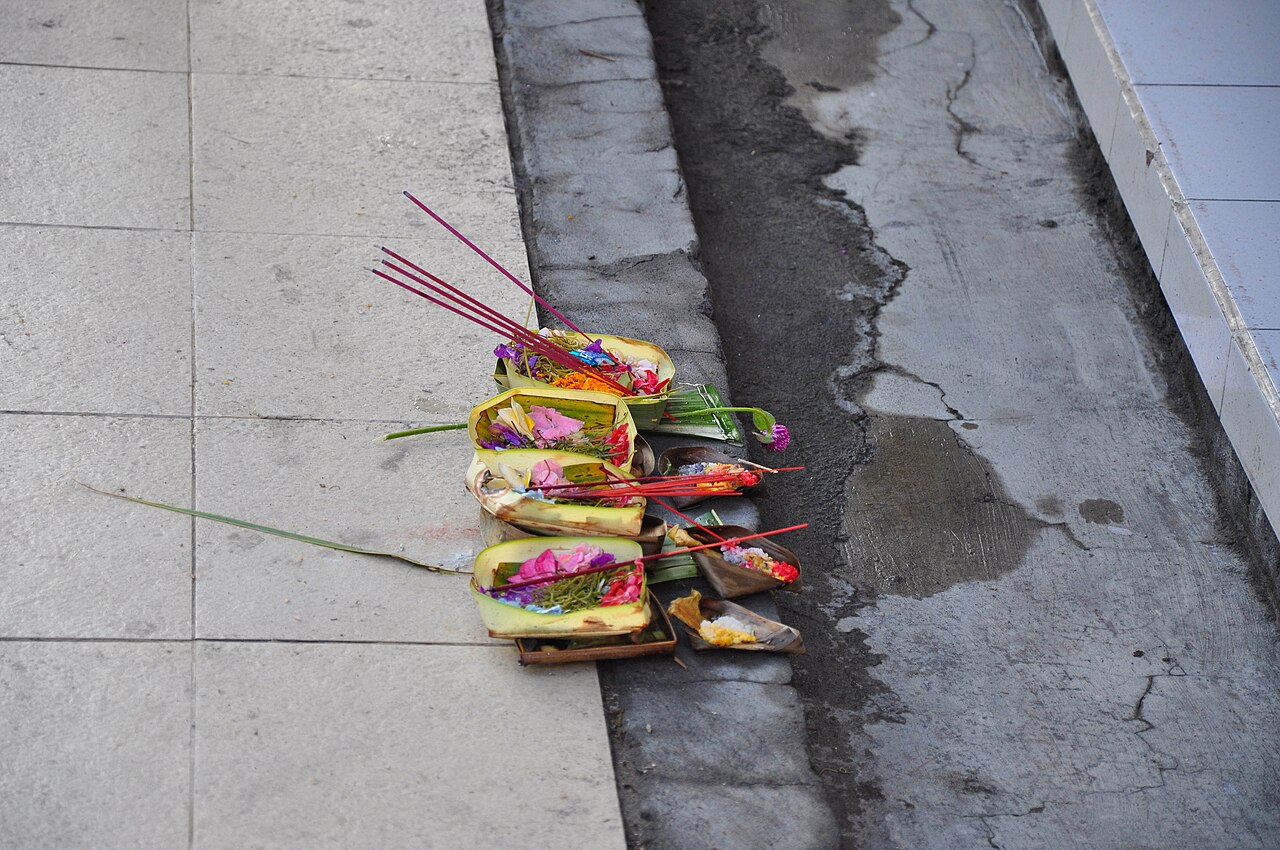
The Balinese believe in maintaining a cosmic balance between the forces of order and chaos, expressed in constant ritual, from the tiny woven canang sari offering placed each morning to the great temple festivals. Religion, art, and daily life are so intertwined that the Balinese are said to make no distinction between them.
Traditions
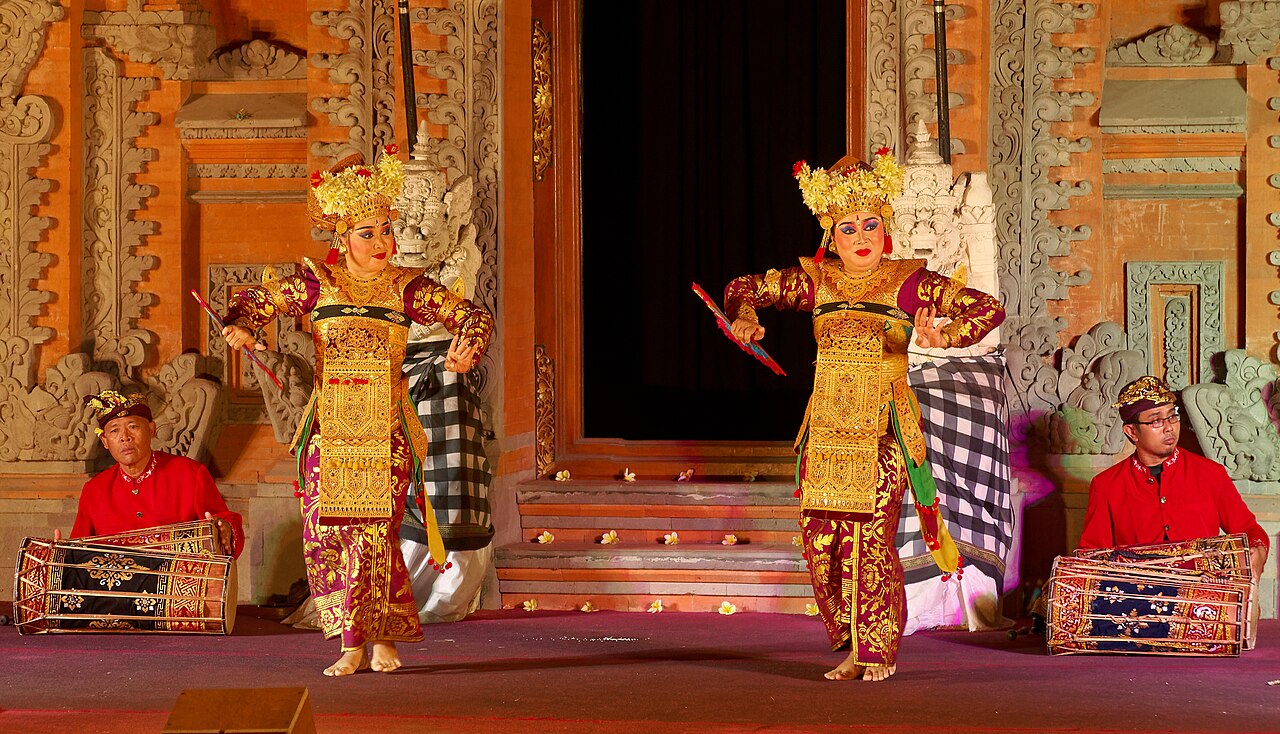
Balinese tradition is a dazzling world of dance, music, and drama, performed as offerings to the gods. Classical dances such as the graceful legong, the dramatic barong, in which a mythical beast battles the witch Rangda, and the fire-lit kecak are famous worldwide. The shimmering gamelan orchestra accompanies them all.
The making of daily offerings, the elaborate rituals of the temple calendar, and the great ceremonies of the life-cycle, above all the spectacular cremations, fill Balinese life. Art and ritual are so central that nearly every Balinese is in some way an artist, dancer, or musician.
Crafts

Bali is one of the great craft centres of Asia, its villages famous each for a particular art: wood carving, stone carving, painting, silver and goldsmithing, and weaving. Balinese carvers produce everything from temple statuary to fine figurines, and the painters of Ubud are renowned.
The weaving of songket and the sacred double-ikat geringsing cloth, the making of offerings and temple decorations, and the crafting of masks and puppets all belong to Balinese art. This extraordinary concentration of craftsmanship, much of it in the service of religion, is central to the island’s fame.
Food

Balinese cuisine is rich and aromatic, built on rice, pork, chicken, seafood, and a complex spice paste called base genep. Unusually for Indonesia, the Hindu Balinese eat pork freely, and the spit-roasted suckling pig, babi guling, is a celebrated festive dish.
Lawar, a mix of vegetables, meat, and spices, satay, and an array of dishes flavoured with lemongrass, turmeric, chilli, and shrimp paste fill the Balinese table. Much of the food is tied to ritual, prepared communally for the temple feasts and ceremonies.
Festivals

The Balinese calendar is a near-constant round of festivals. Galungan celebrates the victory of order over chaos, when the streets are lined with tall decorated bamboo poles called penjor and the ancestors are believed to return; it ends ten days later with Kuningan. Every temple holds its own anniversary festival, or odalan.
Most striking of all is Nyepi, the Balinese new year, a day of total silence and stillness across the whole island, preceded by nights of parading giant demon effigies, the ogoh-ogoh, to drive away evil. Through this ceaseless cycle of festivals, the Balinese sustain the balance of their world.
History

Bali’s Hindu civilisation deepened after the fall of Majapahit, and the island came to be ruled by a number of rival kingdoms. Dutch colonial conquest came late and brutally, culminating in the puputan of the early twentieth century, when Balinese royal courts marched to their deaths rather than surrender.
In the twentieth century Bali became famous among Western artists and travellers as an island paradise, and after Indonesian independence it developed into one of the world’s great tourist destinations. This fame has brought prosperity but also pressure on the island’s land, water, and culture.
Today

Today the Balinese number around four million on their island, still overwhelmingly Hindu and still intensely devoted to the ritual and art that define them, even as Bali has become one of the most visited places on earth. Tourism has transformed the economy, bringing both wealth and strain.
Modern Balinese balance the pressures of mass tourism and development with an extraordinary commitment to their religion and traditions, which remain vibrantly alive. Their temples, their dances, their offerings, and their unique Hindu faith continue to make the Balinese one of the most distinctive peoples of Asia.
Related Peoples of the Region
- The Vietnamese
- The Hmong
- The Malays
- The Acehnese
- The Batak
- The Minangkabau
- The Javanese
- The Sundanese
More Peoples of the World
You May Like
The Damara, an Ancient People of Namibia