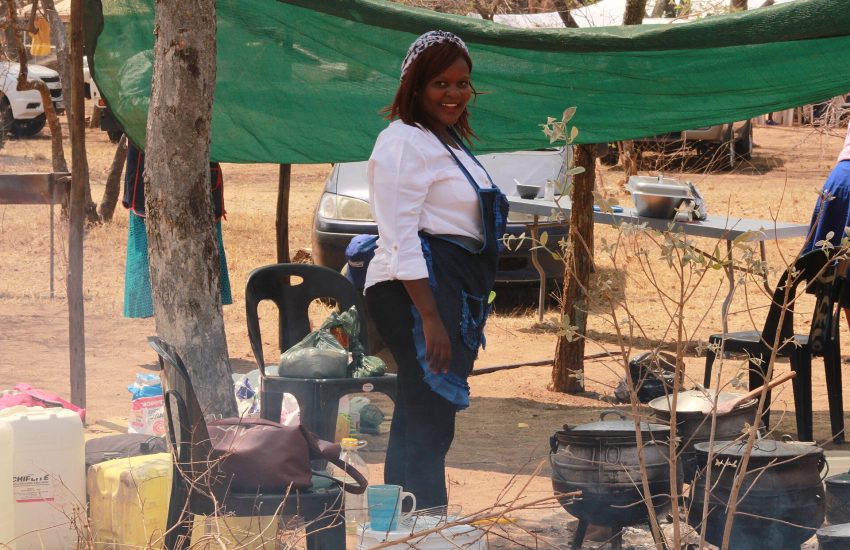
The Baoulé are the largest ethnic group in Côte d’Ivoire, an Akan people of the centre of the country numbering some four million or more. Farmers of the forest and savanna edge, they are famous for their exquisite art, their gold and their prominent place in the modern Ivorian nation.The Baoulé trace their origin to a celebrated migration under Queen Abla Pokou, who led a section of the Ashanti westward and, according to legend, sacrificed her son to cross a river. Matrilineal, prosperous cocoa farmers and heirs to the first president of Côte d’Ivoire, the Baoulé are renowned for their portrait masks, spirit figures and goli dance. This article traces their origins, language, homeland, farming life and the customs that continue to define them.
The Baoulé on Film
Contents
- Origins
- The Name
- The Language
- The Homeland
- The Old Way of Life
- Society and Community
- Religion and Belief
- Traditions
- Crafts
- Food
- Festivals
- History
- Today
Origins

The Baoulé are the largest ethnic group in Côte d’Ivoire, an Akan people of the centre of the country numbering some four million or more. Farmers of the forest and savanna edge, they are famous for their art, their gold and their prominent place in the life of the modern Ivorian nation.
The Baoulé trace their origin to a celebrated migration in the eighteenth century, when, according to tradition, Queen Abla Pokou led a section of the Ashanti westward from what is now Ghana, sacrificing her own son to cross a river, and founded the Baoulé people in their new land. Akan in language and culture, and matrilineal in descent, the Baoulé built a prosperous society of farmers, traders and artists in the heart of Côte d’Ivoire.
The Name

The people call themselves the Baoulé, a name said to derive from the words of Queen Pokou at the sacrifice of her son, and their language by the same name. They are an Akan people, related to the Ashanti and the other Akan of Ghana, from whom they separated in the great migration.
Their identity is bound up with the legend of Pokou, with their Akan heritage and with their central place in Côte d’Ivoire. The name Baoulé denotes a people proud of their origin story, their art and their prominence in the modern nation, of which they are the largest ethnic group.
The Language
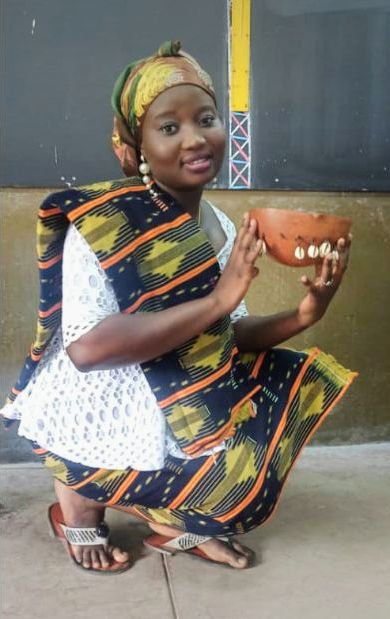
The Baoulé speak Baoulé, a language of the Akan, or Tano, group within the Kwa branch of the Niger-Congo family, closely related to the Ashanti Twi and the other Akan languages of Ghana. It is one of the major languages of Côte d’Ivoire, widely spoken in the centre of the country.
Rich in the traditions and proverbs of the Akan world and in the lore of the migration and the founding of the people, the Baoulé language remains vigorous in daily life. French, the official language of Côte d’Ivoire, is widely used, but Baoulé remains the everyday tongue of the people and a central marker of their identity.
The Homeland
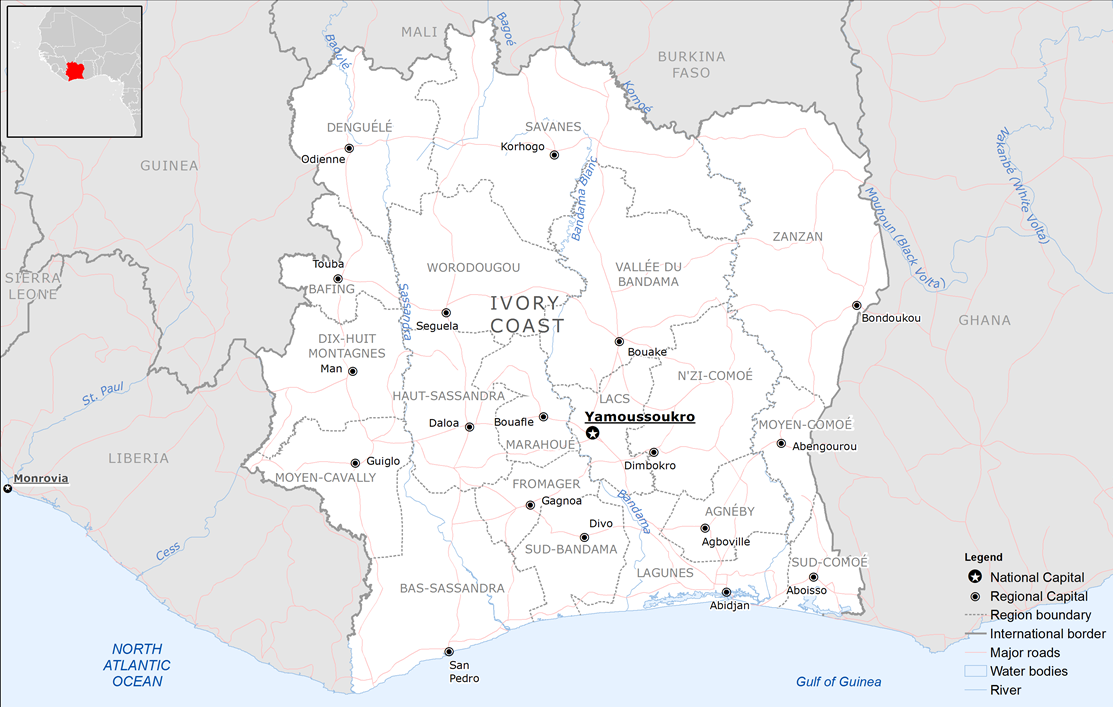
The Baoulé homeland is the centre of Côte d’Ivoire, a region of transition between the forest of the south and the savanna of the north, a land of wooded grassland, farmland, rivers and forest patches. The mixed environment suited the farming of both forest crops, such as yams and later cocoa, and the grains of the savanna.
This central position, at the crossroads of the country, and the productivity of the land, made the Baoulé region prosperous and populous, and gave rise to towns such as Bouaké and, in the modern era, Yamoussoukro, the political capital. The forest-savanna country of the centre, well farmed and well placed, remains the heart of the Baoulé world.
The Old Way of Life
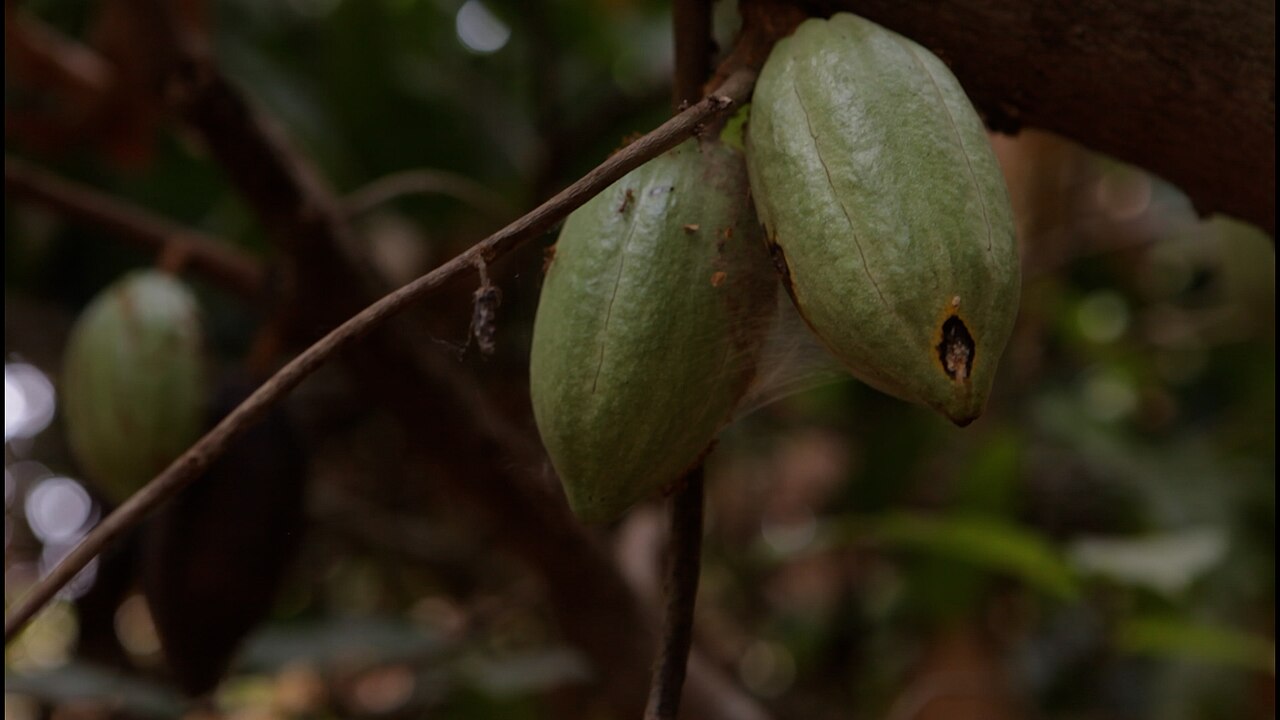
The Baoulé are farmers, cultivating yams, the prestigious staple, together with plantains, cassava, maize and a range of other crops, and, since the colonial period, they became major growers of cocoa and coffee, the cash crops that made Côte d’Ivoire prosperous. Their industrious farming and their success with cocoa gave the Baoulé wealth and influence.
In the past the Baoulé also worked and traded gold, weighed out with the famous brass gold-weights of the Akan world, and they traded with their neighbours and beyond. Farming, above all of yams and cocoa, supplemented by trade and craft, sustained the Baoulé economy and underpinned their prominence in the agriculture of Côte d’Ivoire.
Society and Community

Baoulé society is matrilineal, with descent, inheritance and succession traced through the mother’s line, a pattern shared with the other Akan peoples. Traditionally the Baoulé were organised into chiefdoms and villages, governed by chiefs and elders, though their political organisation was less centralised than that of the Ashanti from whom they came.
The chief, the elders and the councils ordered political life, and the matrilineage was the core of social organisation. The Baoulé also had a strong ethic of individual enterprise and a fluid, adaptable society. Marriage, the bonds of the matrilineage, and the customs of the village governed daily life, in a prosperous and industrious Akan community.
Religion and Belief
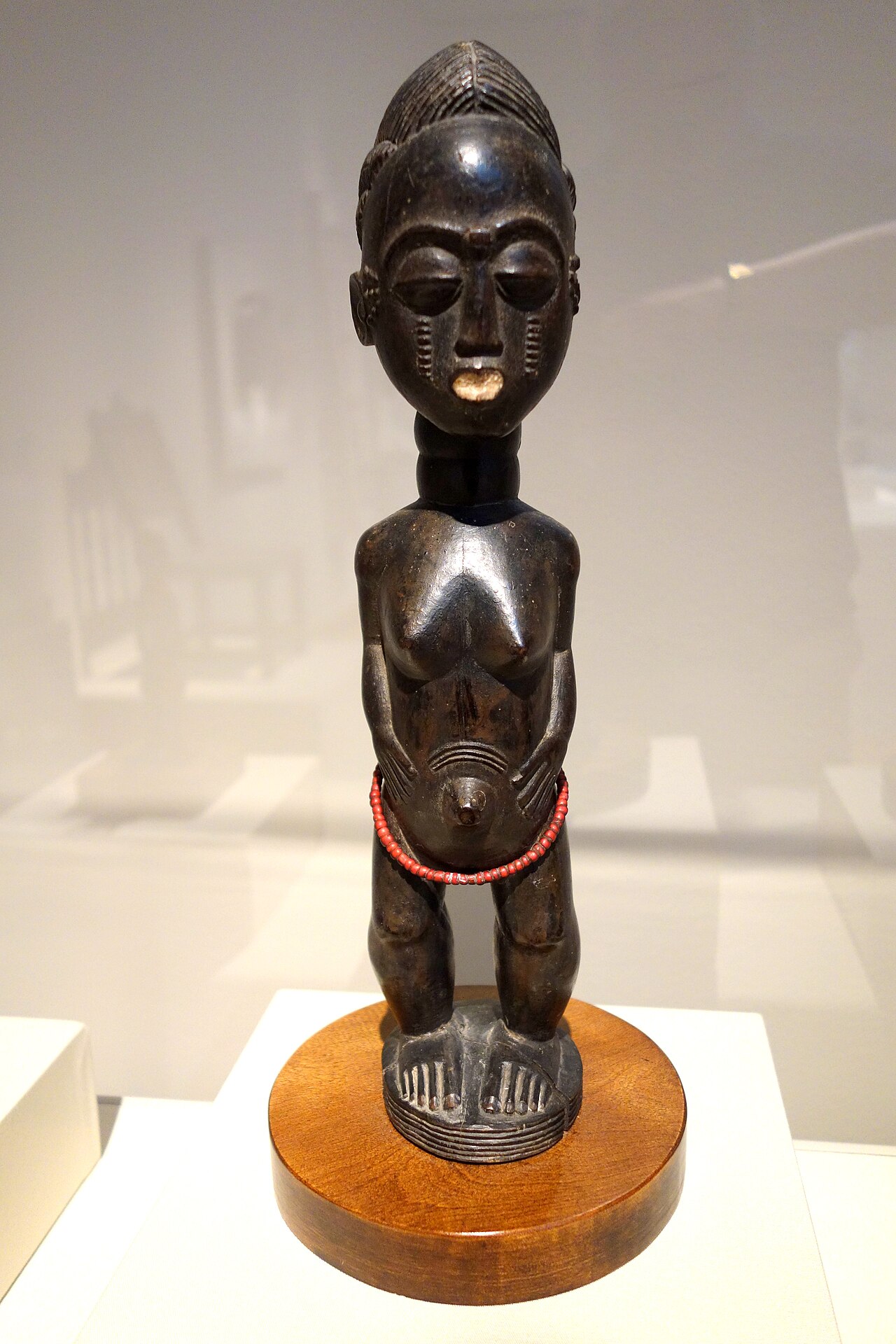
Traditional Baoulé religion recognised a distant creator, and a world of spirits and ancestors, and it is famous for two distinctive beliefs. The Baoulé held that each person had, before birth, a partner in the other world, the blolo bian for a woman and the blolo bla for a man, the spirit-spouse, to whom carved figures were dedicated to secure harmony and wellbeing.
They also honoured nature spirits, the asie usu, embodied in carved figures and masks, and venerated the ancestors. Diviners and priests dealt with misfortune and the unseen. Christianity has since spread widely among the Baoulé, and many are Christian, but the beliefs in the spirit-spouse, the nature spirits and the ancestors have left a deep mark on their culture and their famous art.
Traditions
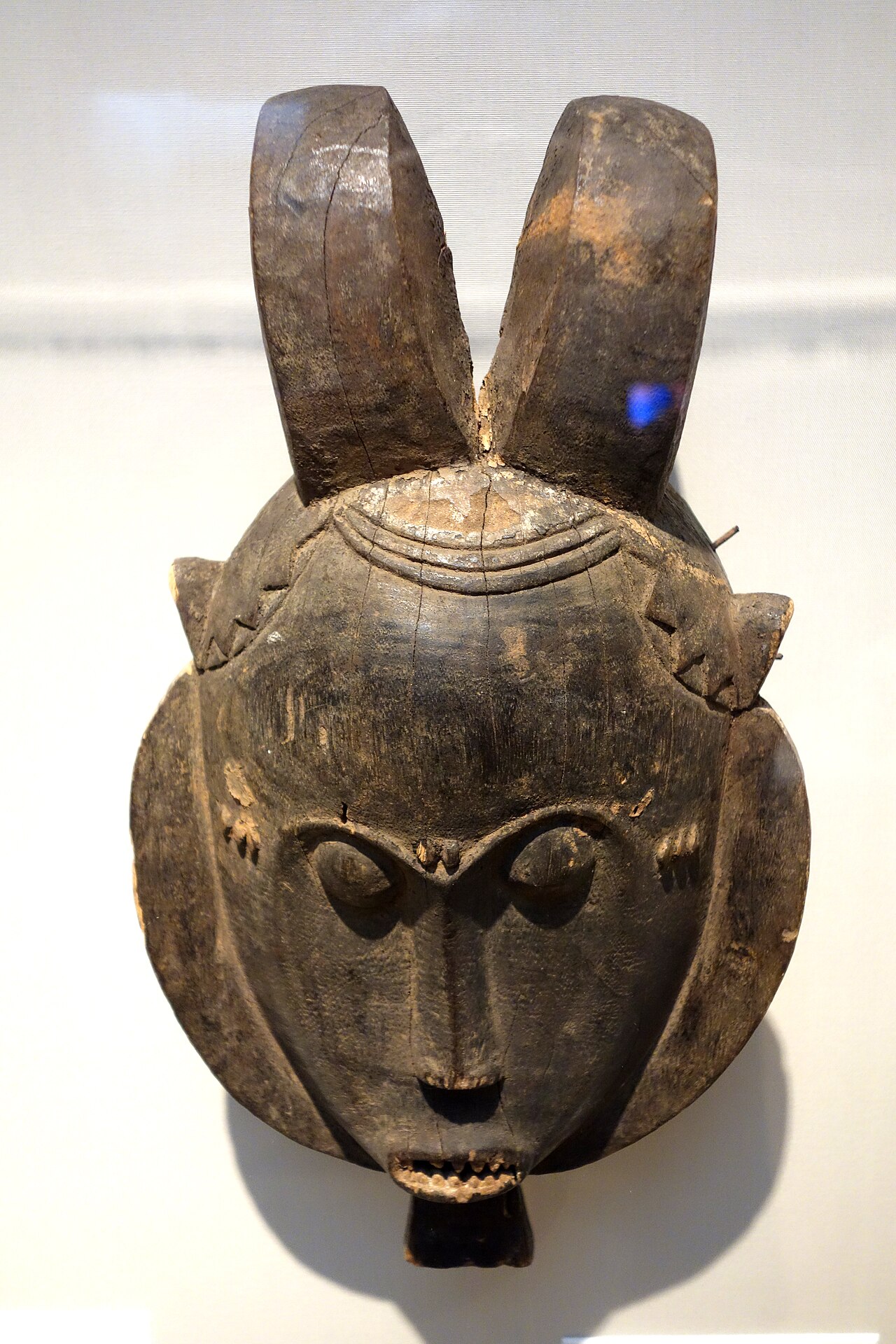
The traditions of the Baoulé are inseparable from their art. The carving of the spirit-spouse figures and the nature-spirit figures, and of the celebrated portrait masks that idealise the features of a particular person, are among the supreme achievements of African sculpture. The goli masquerade, a lively dance of masks introduced from neighbouring peoples, is a favourite at festivals.
The ceremonies of the life cycle, the funerals of the great, and the festivals of the community are occasions for masked dance, music and the display of gold and finery. Music, drumming and dance accompany celebration, and oral tradition preserves the legend of Pokou and the history of the people. Art, masking and the culture of gold give Baoulé tradition its distinctive richness.
Crafts

The Baoulé are among the greatest artists of Africa, and their carving is world-famous. The spirit-spouse figures, the nature-spirit figures and, above all, the refined portrait masks, subtle and idealised, are treasures of African art, admired and collected around the world. The carving of heddle-pulleys, doors, stools and other objects reflects a pervasive artistic sensibility.
The Baoulé are also heirs to the Akan tradition of gold-working, producing gold jewellery and ornaments and the brass gold-weights used to measure gold dust, cast in the lost-wax technique in a great variety of forms. Weaving, including the fine kita cloth, and pottery and other crafts add to a material culture of exceptional artistic richness.
Food

The staple food of the Baoulé is the yam, the prestigious crop of the forest edge, boiled and pounded into foutou, a smooth, stretchy dough eaten with rich sauces, or prepared in other ways. Plantains, cassava, maize and rice add to the diet, and foutou with a variety of sauces is central to Baoulé and Ivorian cooking.
The famous Ivorian dishes, from foutou with aubergine or groundnut sauce to the fermented cassava couscous attiéké, are enjoyed among the Baoulé, and meat, fish and a range of vegetables and seasonings enrich the food. Drawn above all from the yam, and shared with the wider cuisine of Côte d’Ivoire, Baoulé cooking reflects the agricultural richness of the centre of the country.
Festivals

Festive life among the Baoulé is tied to the milestones of the life cycle, the ceremonies of the chiefdoms and the festivals of the community. Funerals of the great, in particular, are major occasions, bringing out the masks and gathering the community for masked dance, music and feasting, and the goli masquerade is a favourite at celebrations of every kind.
Drumming, song and dance accompany these events, and the display of gold, fine cloth and finery marks the standing of families and individuals. Today Christian festivals and national holidays join the older celebrations, and cultural events keep the masked dances and the traditions of the people alive. Whatever the occasion, art, music and the display of wealth give Baoulé festivity its character.
History

The Baoulé were founded, according to tradition, in the eighteenth century when Queen Abla Pokou led a section of the Ashanti westward across the Comoé river into what is now central Côte d’Ivoire, sacrificing her son to cross the water. There they settled among and absorbed earlier inhabitants and grew into a numerous and prosperous people.
Under French colonial rule the Baoulé region was drawn into the cocoa and coffee economy that made Côte d’Ivoire one of the richest colonies in West Africa, and the Baoulé prospered as planters. At independence in 1960 the Baoulé leader Félix Houphouët-Boigny became the first president of Côte d’Ivoire, and the Baoulé rose to a position of great prominence in the politics and economy of the nation.
Today

Today the Baoulé number some four million or more and are the largest people of Côte d’Ivoire, prominent in the farming, business, politics and public life of the nation, with their heartland in the centre around Bouaké and Yamoussoukro. Cocoa and coffee growing, in which they were pioneers, remains important, alongside food farming and other activities.
The art of the Baoulé, their portrait masks, spirit figures and gold, has made their name famous throughout the world, and the legend of Queen Pokou remains a cherished national story. Proud of their Akan heritage, their art and their prominence in the nation, and heirs to its first president, the Baoulé carry their rich and distinctive culture into modern Côte d’Ivoire.
Related Peoples of the Region
- The Edo, the People of Benin and the Bronze Casters
- The Nupe, the Craftsmen of the Niger Valley
- The Mende, the Rice Farmers and Mask Dancers of Sierra Leone
- The Temne, the Rice Farmers of Northern Sierra Leone
- The Kru, the Seafarers of the West African Coast
- The Kpelle, the Rice Farmers of the Liberian Forest
- The Vai, the People Who Invented Their Own Writing
- The Senufo, the Master Carvers of the Savanna
More Peoples of the World
- A Fifth of Humanity, the Story of the Han Chinese
- How the Maori Sailed Across the Pacific to Reach New Zealand
- Zulu of the Green Hills and Their Kingdom Forged by Shaka
- The People Who Never Vanished, the Story of the Maya
- Long Before the Arabs Came, North Africa Belonged to the Amazigh
- The People Who Emerged Into This World, the Story of the Navajo
- Meet the Ainu, an Indigenous People at Japan’s Northern Edge
You May Like
The Damara, an Ancient People of Namibia