Picture a stretch of the Zravshan valley in what is now western Tajikistan, a wide river plain hemmed in by mountains, the kind of place you might drive past today without a second glance. Now wind the clock back roughly six thousand years. On that plain, people were laying out mudbrick houses, firing pottery in kilns, smelting copper, and trading turquoise and lapis lazuli across distances that should have been impossible for a supposedly simple farming community. This is Sarazm, and it is one of the oldest towns in Central Asia, a place that quietly upends a lot of what we assume about who built the first complex societies and where.
I find Sarazm fascinating precisely because it does not fit the tidy map most of us carry in our heads. When we think of early civilization, we picture Mesopotamia, the Nile, the Indus, maybe the Yellow River. Central Asia rarely gets a mention, and when it does it is usually as a corridor, a place things passed through on their way somewhere more important. Sarazm refuses that role. It was a destination, a producer, a hub in its own right, and it was doing all of this while much of the world was still figuring out the basics.
- Where on earth is Sarazm?
- A chance find in a farmer’s field
- Just how old is it?
- What the town actually looked like
- Metalworkers before their time
- Lapis, turquoise and a very long reach
- A crossroads of worlds
- Daily life on the plain
- Why did everyone leave?
- What’s in the name
- Reading a site with no writing
- The long shadow it casts
- Standing at Sarazm today
- Why Sarazm still matters
Where on earth is Sarazm?
Let us get our bearings first, because geography is the whole story here. Sarazm sits near the modern town of Panjakent in the Sughd region of Tajikistan, close to the border with Uzbekistan and not far from Samarkand. The site rests on the left bank of the Zravshan, a river that flows down out of the Pamir-Alay ranges and eventually loses itself in the deserts to the west. That river is the reason a settlement could exist here at all. It carried snowmelt down from the high country, watered the fields, and gave people a reliable thread of life running through an otherwise dry landscape.
But look a little wider and you start to see why the location was so clever. Sarazm sat at a meeting point of very different worlds. To the south lay the great river civilizations and the mineral-rich highlands of Afghanistan. To the north and east stretched the vast steppe, home to herders and, later, horse-riding cultures. To the west were the settled farming lands of the Iranian plateau and beyond. Sarazm was parked right where these zones overlapped, which turned out to be exactly the right place to become rich.
A chance find in a farmer’s field
The story of how we know about Sarazm at all has a lovely accidental quality to it. In the mid-1970s, a local farmer working the land here turned up an ancient copper dagger. That object made its way to archaeologists, and in 1976 a researcher named Abdullojon Isakov began the excavations that would slowly reveal the scale of what lay beneath the fields. What looked like ordinary farmland turned out to be sitting on top of a settlement that had been abandoned and buried for thousands of years.
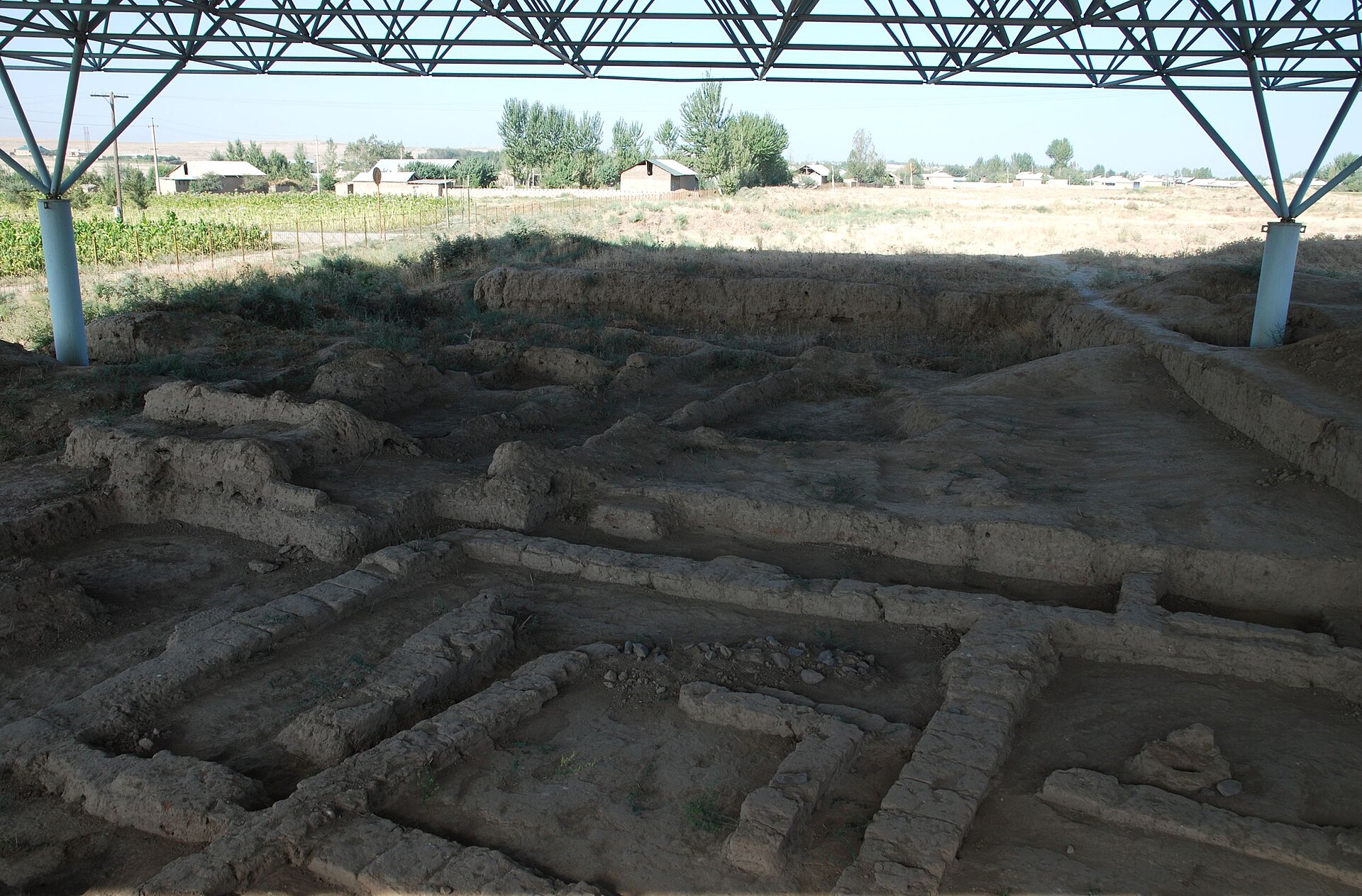
Digging here has continued, on and off, ever since, with teams from Tajikistan, France, and elsewhere gradually piecing the place together. And the more they dug, the clearer it became that this was no small farming hamlet. Sarazm sprawled across a substantial area, with different neighborhoods given over to different jobs, monumental buildings, workshops, and the unmistakable signs of a community that was organized, connected, and doing rather well for itself. In 2010 the site was inscribed as a UNESCO World Heritage Site, a recognition that it belongs in the conversation about humanity’s earliest urban experiments.
Just how old is it?
Here is where Sarazm really makes you sit up. The earliest layers of the settlement date back to around the late fifth millennium BCE, roughly 3500 BCE and possibly earlier, with the town flourishing through the fourth and into the third millennium BCE. That means people were living and working here for well over a thousand years, and the beginnings of the place reach back close to five and a half thousand years from today.
To put that in perspective, Sarazm was already an established community around the time the first cities of Mesopotamia were hitting their stride, and it predates a good number of the more famous ancient sites people can name off the top of their heads. It sits in the same broad era as the earliest phases of the Indus cities and the pyramid age in Egypt, yet it grew up in a region that most textbooks skip over entirely. That combination of great age and unexpected location is a big part of why specialists get so animated about it.
What strikes me is how the dates keep pushing the story of Central Asian settlement backwards. For a long time the assumption was that this region only really developed complex, town-scale life quite late, borrowing it wholesale from neighbors. Sarazm suggests the picture was far more interesting: a homegrown community, in place early, that grew into a genuine node of production and exchange on its own terms.
What the town actually looked like
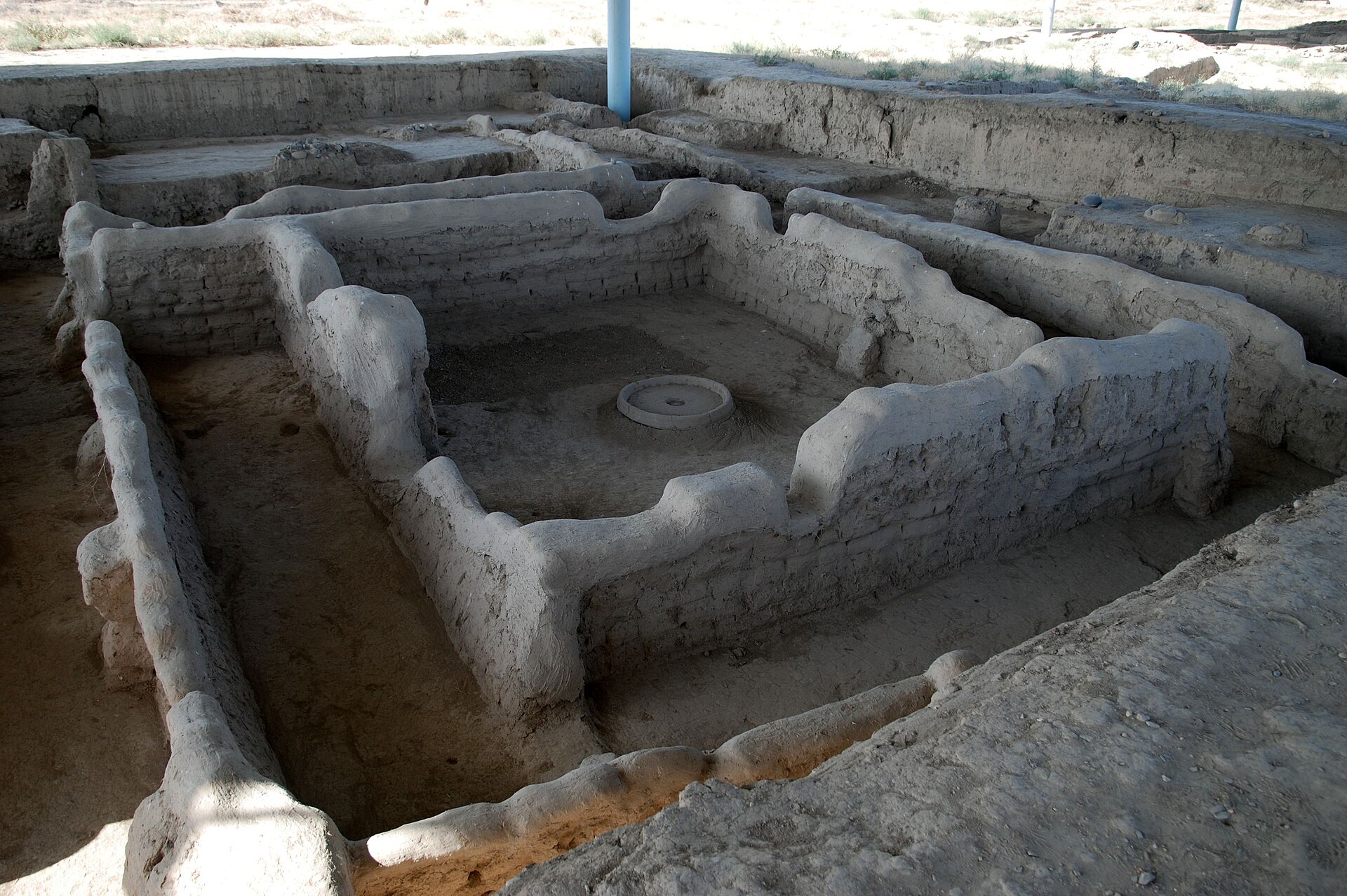
Walk through the excavated remains and you get a real sense of a planned, lived-in place rather than a random scatter of huts. The buildings were made of mudbrick and packed earth, the standard toolkit of the ancient world in this part of Asia, arranged into rectangular rooms and larger complexes. Some structures were clearly domestic, ordinary homes with hearths and storage. Others were far grander.
Excavators uncovered what look like monumental buildings, including a large structure that has been interpreted as a temple or ceremonial center, with a central altar or fireplace. There were also buildings that seem to have served communal or administrative functions. In other words, this was a community with a public life, with spaces set aside for gathering, ritual, and whatever passed for governance. That is a big deal. It signals a society that had moved beyond simple subsistence into something more layered, with shared institutions and a sense of collective identity.
One detail I love is how the town changed over time. Sarazm was not a single frozen snapshot but a living settlement that was built, rebuilt, expanded, and reorganized across many generations. Walls went up and came down, neighborhoods shifted their function, and the community adapted as its fortunes rose and its connections widened. When you stand among the low earthen walls today, you are looking at a palimpsest, layer upon layer of human decisions stretching across a thousand years.
Metalworkers before their time
If there is one thing that makes Sarazm truly special, it is metal. Remember, the whole site came to light because a farmer found a copper dagger. That was a hint of what was to come. Sarazm turns out to have been a serious center of metallurgy at a startlingly early date, working copper and, over time, experimenting with the alloys that would define the Bronze Age.
The people here were not just using metal objects that arrived from elsewhere; they were making them. Archaeologists have found crucibles, moulds, slag, and the other telltale debris of on-site smelting and casting. They produced tools, weapons, and ornaments, and they did so with real skill. This matters because metalworking is not a casual hobby. It demands know-how, access to ores, fuel, specialized workers, and a community wealthy enough to support people who spend their days at the furnace rather than in the fields. Sarazm had all of that.
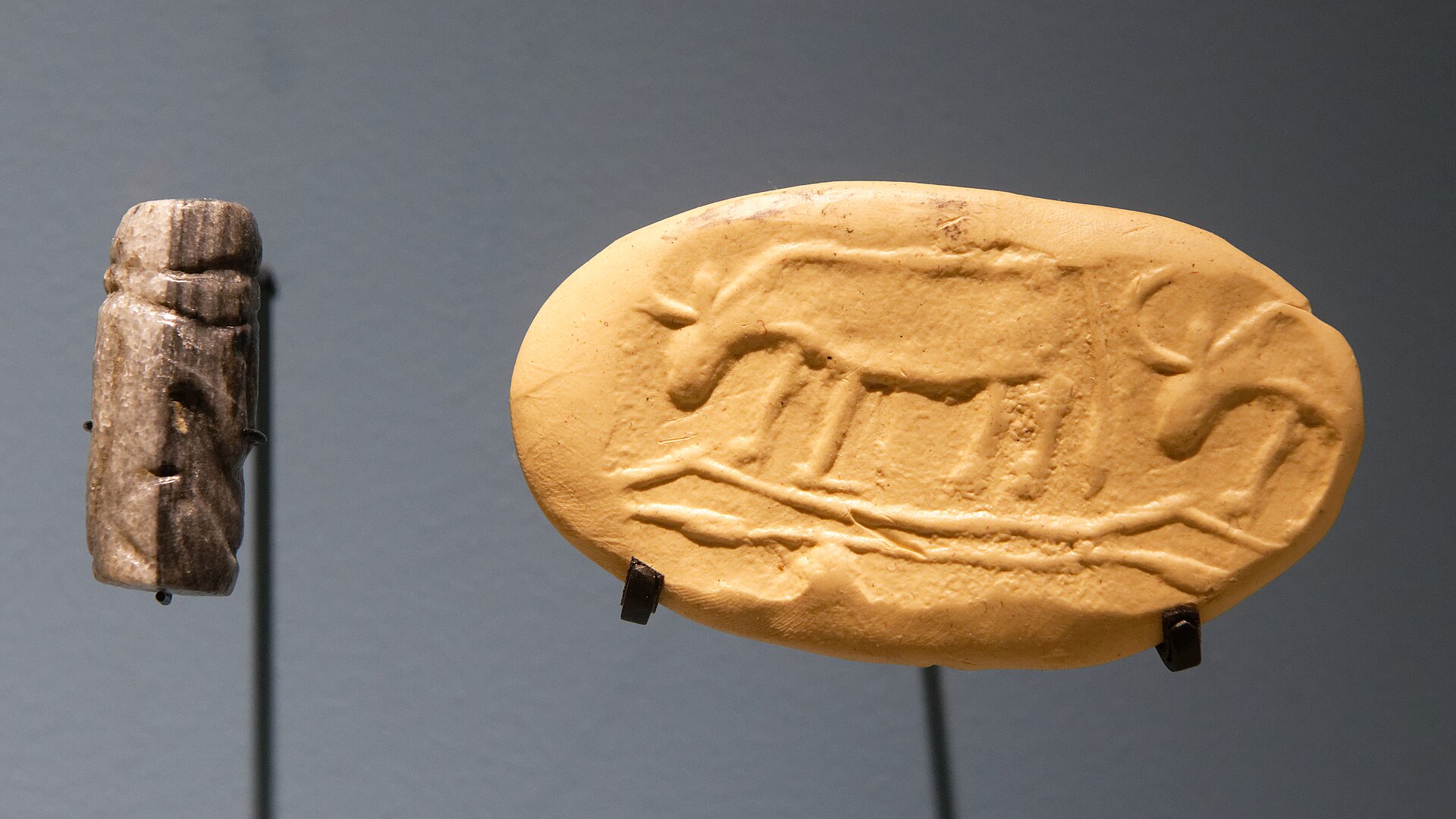
The presence of a thriving metal industry also tells us Sarazm was plugged into wider networks of raw materials and ideas. Copper ores had to come from somewhere, and the technical knowledge of alloying spread through contact between communities. Sarazm sat at the receiving and transmitting end of these currents, absorbing techniques and, very likely, passing them along. It was a workshop for the wider region, not a passive consumer.
Lapis, turquoise and a very long reach
Now for my favorite part of the Sarazm story: the trade. When you look at the objects that came out of the ground here, you realize this modest-looking valley town was reaching across breathtaking distances. Beads and ornaments turned up made from lapis lazuli, that deep blue stone beloved of the ancient world, along with turquoise, carnelian, and shells.
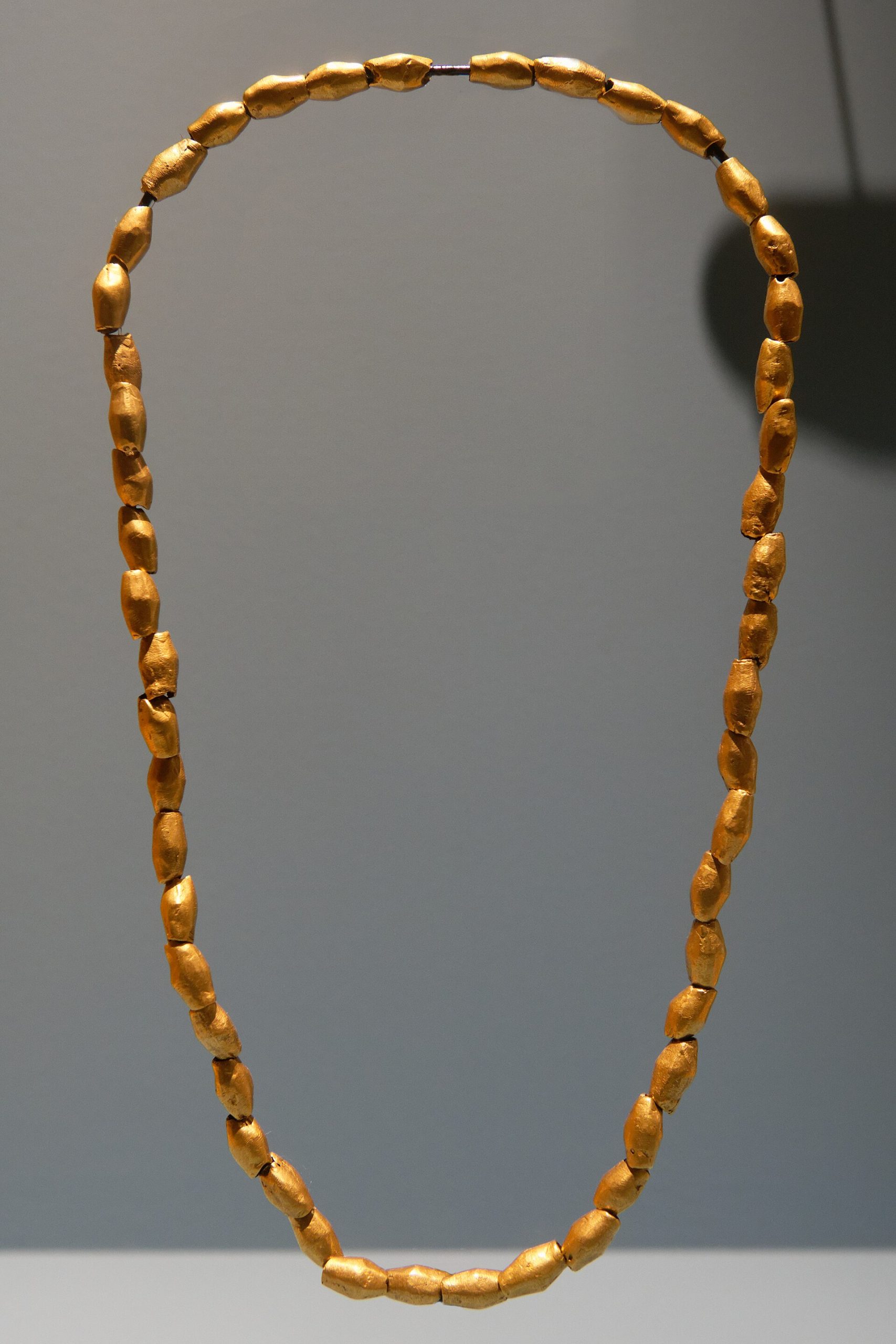
Think about where those materials had to come from. The finest lapis lazuli in the ancient world was mined in the mountains of Badakhshan, in what is now northeastern Afghanistan, and Sarazm was one of the points through which that precious blue stone moved out into the wider world. Turquoise likely came from sources to the north and west. Shells meant contact, direct or through middlemen, with distant coasts. Carnelian pointed south toward the lands of the Indus. Sarazm was gathering, working, and passing on materials from a genuinely continental web of connections.
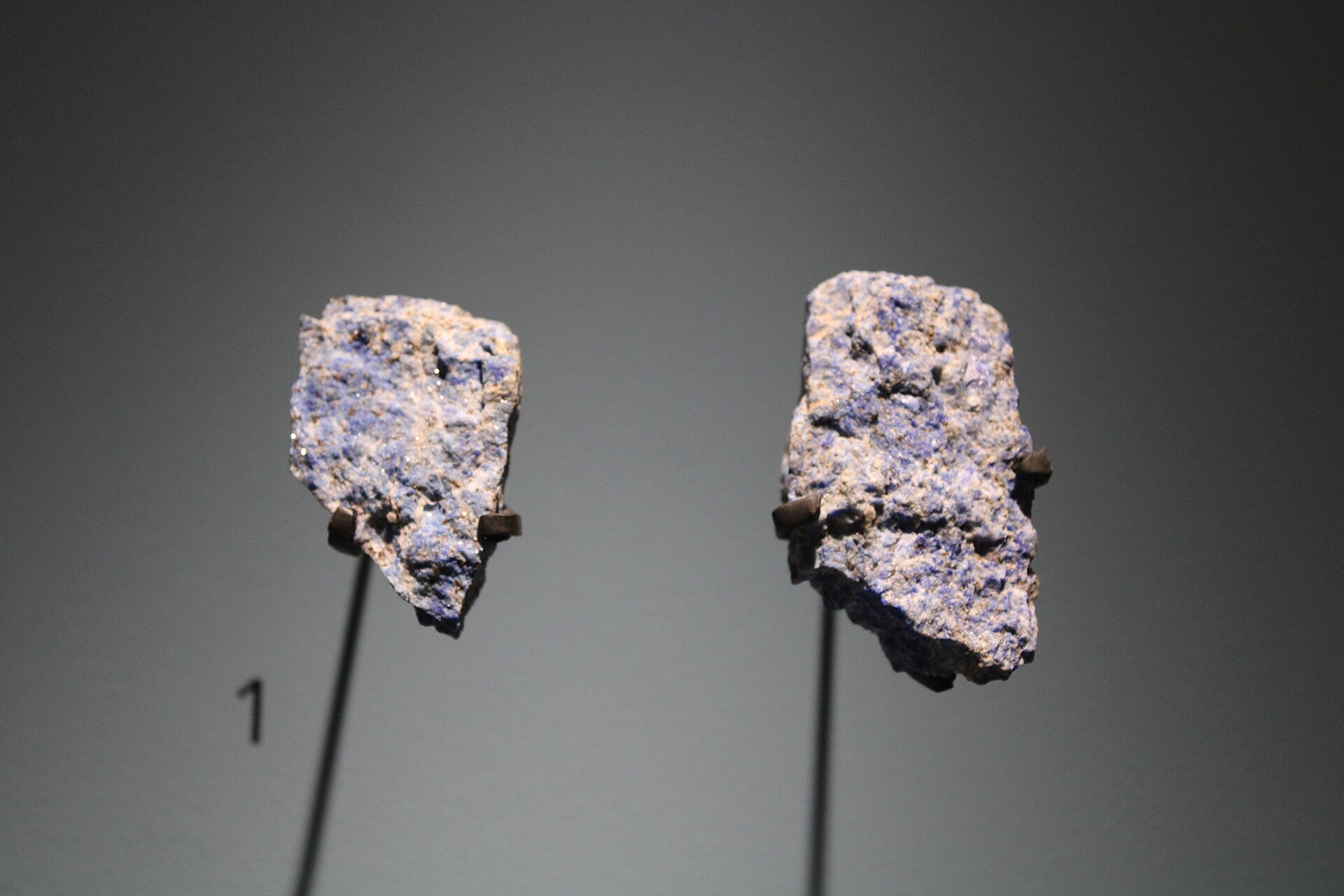
This is what earns Sarazm its reputation as a proto-urban trading hub. It was not simply feeding itself off the land. It was producing goods, importing raw materials, adding value through craftsmanship, and sending finished ornaments and knowledge back out along the routes. In a very real sense, Sarazm was doing the kind of thing we associate with the Silk Road, thousands of years before the Silk Road as we know it existed. The instinct to trade across mountains and deserts was already there, humming away in the Zravshan valley.
A crossroads of worlds
What excites archaeologists about Sarazm is not just that it traded, but the sheer variety of cultural worlds it touched. Look closely at the pottery, the tools, and the ornaments, and you see influences pulling in from several directions at once. There are echoes of the settled farming cultures of the Iranian plateau and Turkmenistan to the southwest. There are hints of contact with the steppe peoples to the north. There are links reaching toward the Indus and toward the mineral highlands of Afghanistan.
Sarazm sat in the seam between the world of settled farmers and the world of mobile herders, between south and north, between the great river valleys and the open steppe. That in-between position made it a natural meeting place, a spot where goods, techniques, and probably people from very different backgrounds came together. Communities like this, perched on cultural boundaries, often become surprisingly innovative precisely because they are exposed to so many different ways of doing things.
I think that is the deeper lesson of Sarazm. Civilization did not spread out neatly from a handful of famous cradles like ripples in a pond. It bubbled up in many places, including places we tend to overlook, wherever the right mix of resources, connections, and human ingenuity happened to come together. The Zravshan valley had that mix, and the people there ran with it.
Daily life on the plain
It is easy to get swept up in the exotic trade goods and forget that Sarazm was, first and foremost, a place where ordinary people lived ordinary lives. So what was daily life actually like on this plain five thousand years ago?
Farming was the backbone. The people here grew grain in the fields watered by the Zravshan and its channels, and they kept animals, sheep, goats, and cattle among them. The river’s reliability was everything; it let a large community stay put in one place for generations rather than moving on in search of fresh land. Around this agricultural base clustered the specialists: the metalworkers at their furnaces, the potters at their kilns, the bead-makers grinding and drilling stone into ornaments, the builders raising and repairing the mudbrick walls.
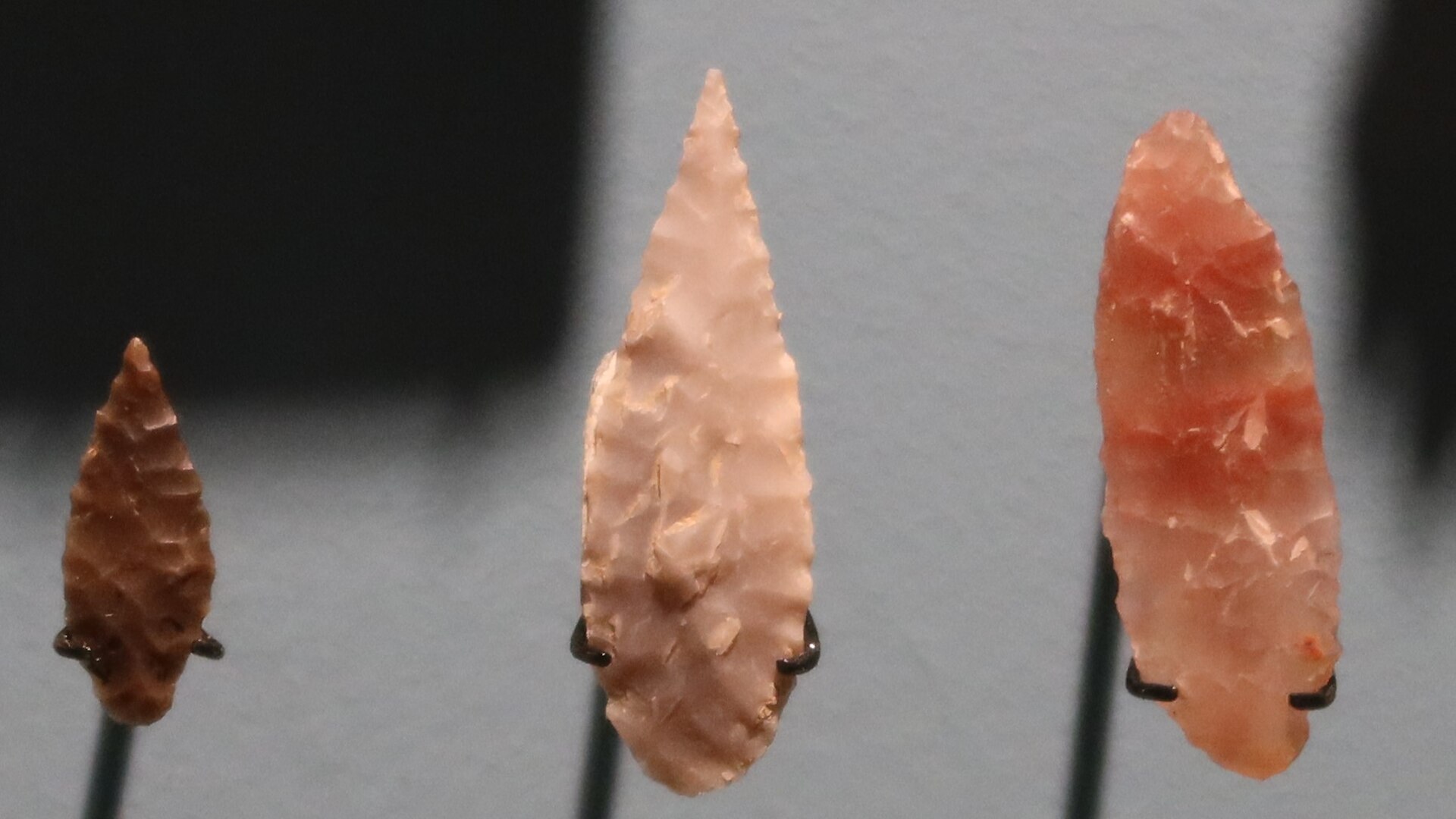
I find it striking that stone tools did not simply vanish once metal arrived. Beautifully knapped flint arrowheads have been found here, showing that older skills persisted right alongside the shiny new technology. That is how real life works, of course. Change is messy and gradual; people hold on to what works even as they adopt what is new. A hunter in the fields around Sarazm might carry a flint-tipped arrow while his neighbor cast copper in a workshop a few streets away.
There is also evidence about how the people of Sarazm treated their dead, including burials with grave goods that reflect the same rich material world seen in the settlement. Ornaments, tools, and pottery accompanied people into death, hinting at beliefs about an afterlife and at social distinctions between individuals. The graves quietly confirm what the buildings suggest: this was a society with structure, with some people evidently enjoying more status and wealth than others.
Why did everyone leave?
Every great settlement story eventually reaches the same haunting question, and Sarazm is no exception. After more than a thousand years of life, the town was gradually abandoned, probably around the middle to later part of the third millennium BCE. The furnaces went cold, the workshops fell silent, and the mudbrick walls slowly melted back into the earth until only fields remained.
Why? As with so many ancient sites, we do not have a single clean answer, only a set of plausible pressures. Environmental change is a leading suspect. Rivers shift their courses, water tables drop, and climate swings can quietly undermine the agricultural base that a large settlement depends on. If the Zravshan changed its behavior or the local climate turned drier, the delicate balance that let Sarazm thrive could have tipped.
Shifts in trade may have played a part too. If the networks that fed Sarazm’s wealth rerouted themselves, or if new centers rose to intercept the flow of lapis and turquoise, the town could have lost the economic engine that made it special. And the broader movements of peoples across Central Asia in this period, as steppe cultures expanded and new powers emerged, would have reshaped the whole landscape of connections that Sarazm depended on. Most likely it was some combination of these forces, working together over generations, that drew the town’s long story to a close.
Why Sarazm still matters
So why should any of us care about a ruined town on a river plain in Tajikistan? Because Sarazm gently but firmly corrects a story we have been telling ourselves for too long. The idea that a few special regions invented civilization and everyone else simply copied them does not survive contact with places like this. Here was an early, sophisticated, connected community growing up in a corner of the world that the grand narratives usually ignore.
Sarazm shows us the roots of the trans-Asian trade that would, thousands of years later, blossom into the Silk Road. It shows us that metallurgy, urban planning, monumental building, and long-distance exchange emerged in more places, and earlier, than we once believed. And it shows us that the mountains and valleys of Central Asia were not an empty corridor but a homeland, full of people making, trading, worshipping, and building lives of real complexity.
When I picture Sarazm now, I do not see a dusty archaeological plan. I see smoke rising from copper furnaces, strings of blue lapis beads changing hands, farmers coming in from the fields, and a community that reached across a continent from a quiet valley in the heart of Asia. For a place that most people have never heard of, it has an awful lot to teach us about how human beings first learned to build a wider world.
What’s in the name, and what came before
The name Sarazm is often translated as something like “where the land begins” or “the beginning of the earth,” a phrase that feels almost poetically appropriate for a place that sits so near the start of Central Asia’s settled history. Whether or not the ancient inhabitants would have recognized that meaning, it captures the way the site marks a threshold. On one side lies the older world of small, scattered farming villages and mobile herders; on the other, the emerging world of towns, workshops, and long-distance trade. Sarazm stands right on that line.
It did not spring up from nothing, of course. The Zravshan valley and the broader region had been home to farming and herding communities for a long time before Sarazm reached its peak. What makes the site remarkable is the way it concentrated and amplified those earlier ways of life, pulling people, skills, and resources together into something denser and more organized than anything that had come before in this particular corner of the world. In that sense Sarazm is less a sudden invention than a coming-of-age, the moment a region’s slow accumulation of know-how tipped over into genuine town life.
That gradual quality is one of the things I appreciate most about it. There is a temptation to treat early towns as if they burst into being fully formed, but the reality on the ground is almost always slower and more human. People built on what their parents and grandparents had figured out, added their own improvements, and passed the whole bundle on. Sarazm is a monument to that patient, generational process rather than to any single dramatic leap.
Reading a site with no writing
One challenge that hangs over everything we say about Sarazm is that its people left us no written records. Unlike the Mesopotamians with their clay tablets, the inhabitants of the Zravshan valley did not set down their names, their laws, or their stories in any script we can read. Everything we know, we have had to coax out of the physical remains: the shape of the buildings, the scatter of tools, the chemistry of the metal, the far-off origins of the beads.
This is where modern archaeology really shows its power. By studying the composition of copper artifacts, researchers can start to trace where the ore came from. By identifying the mineral sources of lapis, turquoise, and carnelian, they can map out the trade routes that fed the town. By examining seeds, animal bones, and soil, they can reconstruct what people ate and how they farmed. Layer by layer, the mute evidence is coaxed into telling a surprisingly detailed story, even without a single written word.
It also means our understanding of Sarazm is still growing and occasionally shifting. Each new excavation season, each fresh scientific technique, adds detail or nudges the picture in a new direction. That is not a weakness; it is the honest nature of the work. When you read about Sarazm, you are reading a story that is still being written, one careful trowel-scrape at a time.
The long shadow Sarazm casts
It is worth stepping back to appreciate just how much Sarazm anticipates. The blend of settled farming, specialized craft production, monumental architecture, social hierarchy, and long-distance trade that we see here is, in miniature, the recipe for urban civilization everywhere. That this recipe was being cooked up in Central Asia so early tells us the ingredients were more widely available than the old textbooks suggested.
There is also a direct thread connecting Sarazm to what came after in the region. The metalworking traditions, the trade in precious stones, and the networks linking the mountains to the plains all fed into the later Bronze Age cultures of Central Asia, including the remarkable Bactria-Margiana complex that would flourish in the centuries after Sarazm faded. In that light, Sarazm reads like an early chapter in a much longer regional saga, a foundation stone for developments that would ripple outward for millennia.
And for modern Tajikistan, Sarazm carries a special weight. It is a tangible link to a deep past, proof that this land was a cradle of innovation and connection long before the more famous empires and Silk Road cities rose. Its inscription on the World Heritage list was, in part, a recognition of that identity, a way of saying that the story of civilization has important roots right here, in a valley that the wider world has too often overlooked.
Standing at Sarazm today
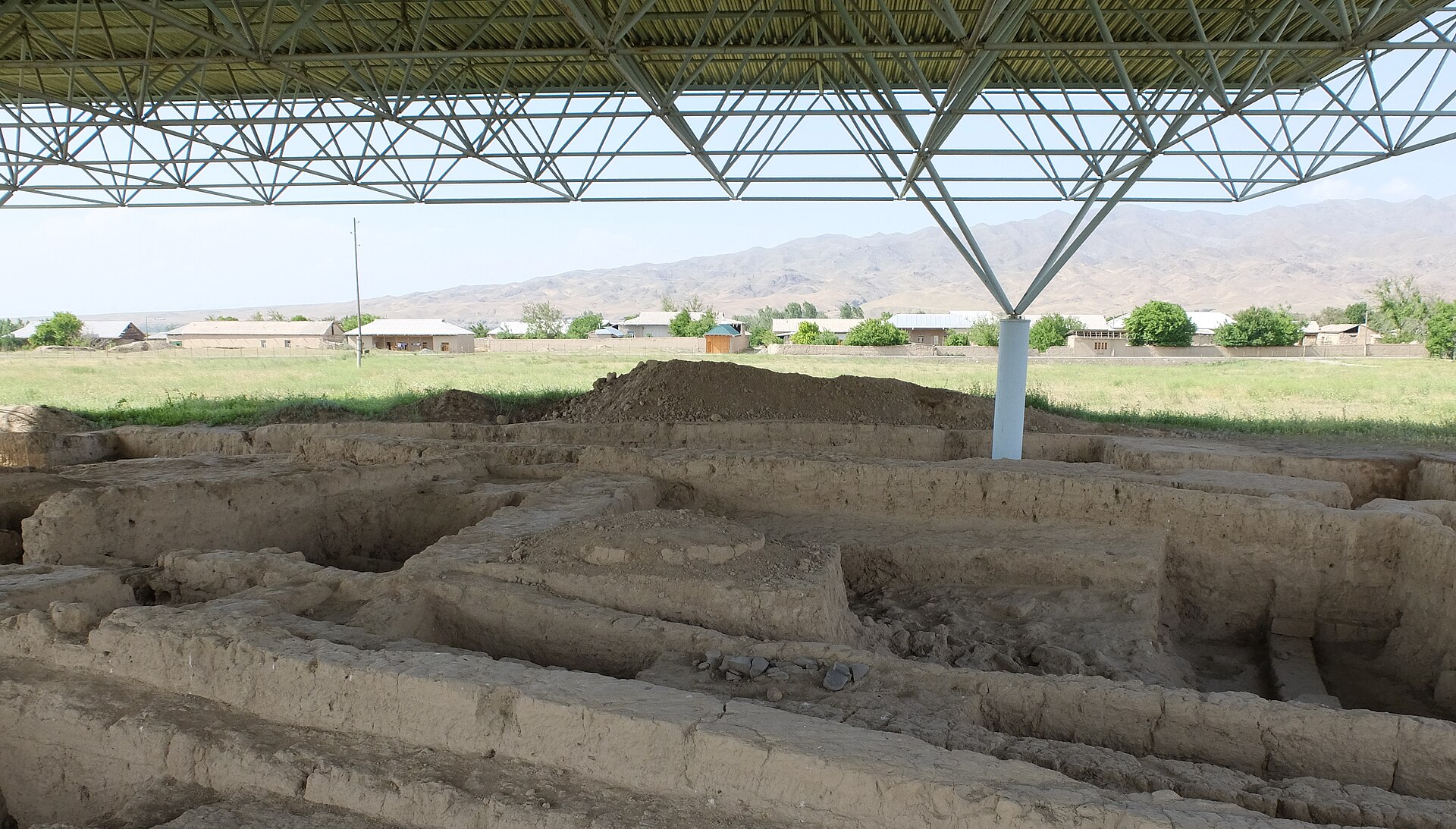
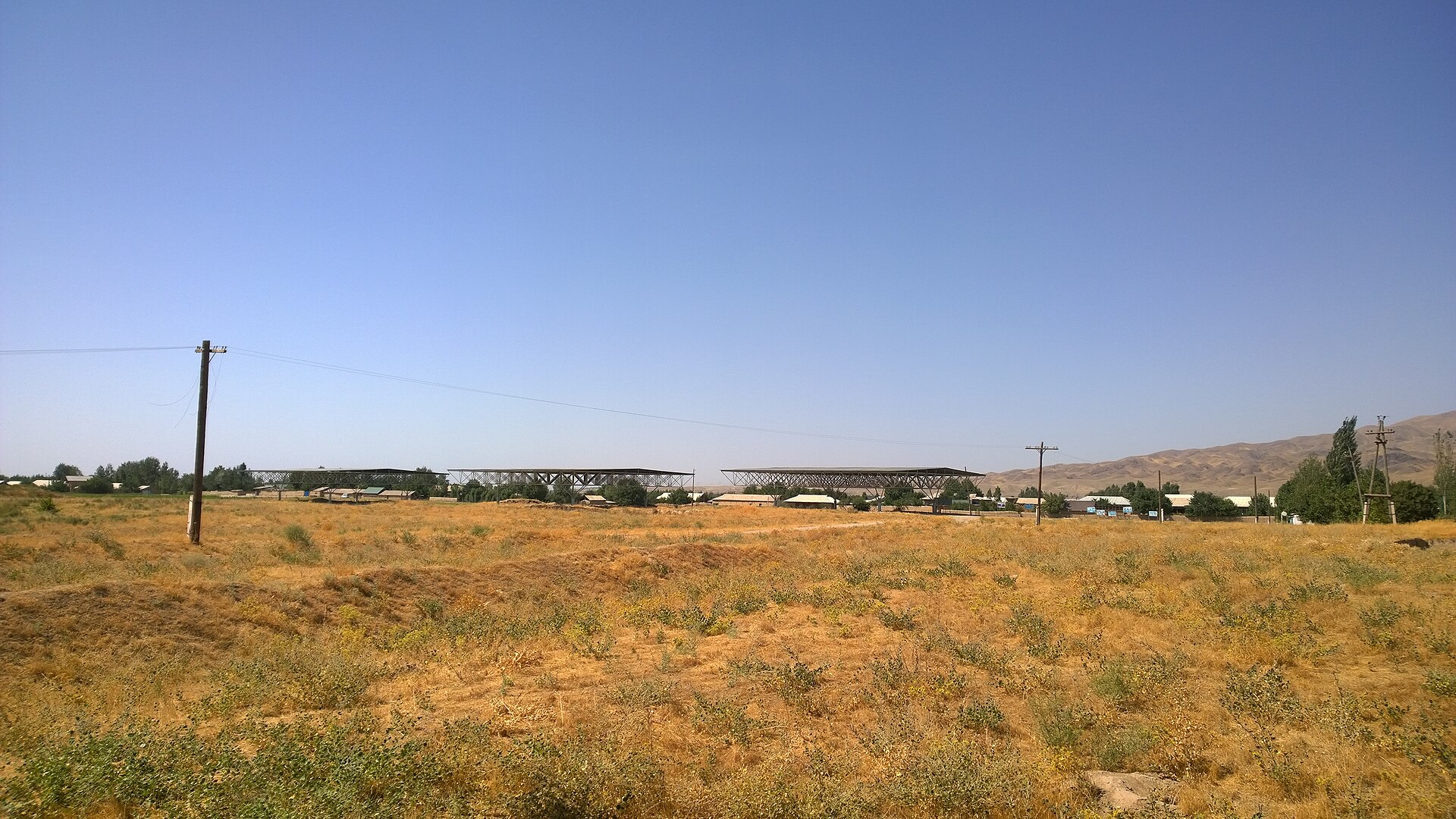
If you ever find yourself in the Sughd region of Tajikistan, Sarazm is a genuinely moving place to visit, though it asks a little imagination of you. There are no soaring walls or dramatic ruins to gasp at from a distance. What you see instead are the low, excavated foundations of mudbrick buildings, sheltered in places beneath protective roofs to keep the fragile earth from washing away in the rain. It is quiet, spread across the valley floor, with the mountains standing guard on the horizon just as they did when the town was alive.
That quietness is part of the charm. Where a crowded, famous monument can feel almost too rehearsed, Sarazm lets you slow down and think. You can trace the outline of a house with your eye, imagine the furnace that once glowed in a nearby workshop, and picture the strings of blue beads that were made and traded here. The site’s museum and the finds recovered over decades of digging help fill in the human detail, putting faces, or at least objects, to the abstract idea of a five-thousand-year-old community.
Visiting also drives home just how much of the past lies hidden in plain sight. For thousands of years, this was simply farmland. People planted and harvested above a buried town without any inkling of what lay beneath their feet, until one dagger turned up and changed everything. It makes you wonder how many other Sarazms are still out there, dozing under fields and pastures, waiting for a chance find and a curious archaeologist to wake them up.
If Sarazm has left you curious about the other places where people first learned to live together at scale, there is a whole trail of them to follow. You could drift back to the very beginning with the temple builders of Göbekli Tepe and their astonishing cousins at Karahan Tepe, or step into the crowded rooms of Çatalhöyük, the town with no streets. The trading instinct that made Sarazm rich echoes through Uruk, where writing was born, and across the mudbrick cities of the Indus at Mohenjo-daro and Dholavira, which tamed the desert with water. For more stone-and-water wizardry there is Liangzhu in China and, on the far side of the world, Caral in the Peruvian desert. If it is walls and origins you are after, wander to Jericho and its ancient wall; if it is monuments to the sky, try Stonehenge and Newgrange, built to catch the solstice. The stone temples of Malta and the snug houses of Skara Brae show the same urge in northern climes, while the palace at Knossos carries it into legend. And for the sheer variety of what early people pulled off, do not miss the painted caves of Lascaux and Chauvet, the reef city of Nan Madol, the sensory theatre of Chavín de Huántar, the sprawling mega-settlements of Cucuteni-Trypillia, the carved warriors of Cerro Sechín, and the great earthworks of Poverty Point. Each one is a different answer to the same very human question of how we learned to build a world together. While you are here, it is well worth stepping even further back in time to Mehrgarh, the 9,000-year-old village in Pakistan where South Asia learned to farm. It is also worth heading north to Tell Brak, the Syrian mound that may rewrite where cities began. You might also step back a few centuries to Aşıklı Höyük, the 10,000-year-old village that came before Çatalhöyük. You might also love the story of Jiahu, the 9,000-year-old Chinese village whose bone flutes still play. You might also love the story of Chankillo, the 2,300-year-old Peruvian towers that form the Americas’ oldest solar observatory. You can follow the same deep-time trail to Kalibangan, the Indus town that preserves the world’s oldest ploughed field. The same deep past reaches Brittany at the Cairn of Barnenez, a colossal stone tomb older than the pyramids. Deep-time Europe continues at Vinča, the Danube culture whose signs may be the continent’s oldest writing. The megalithic wonders continue at Gavrinis, a Breton passage tomb carved almost entirely with swirling stone art. The story reaches Iberia at Los Millares, one of western Europe’s first fortified towns. And if you want to see how early this whole impulse began, the burial mounds of Bougon, raised around 4800 BC, are older than almost anything else in this series. For a stone circle that predates almost everything else, don’t miss the Almendres Cromlech in Portugal, raised around 6000 BC. For temples so old they were once thought built by giants, visit Ġgantija on the Maltese island of Gozo. And for the greatest hoard of Neolithic art in Europe, visit Knowth, the carved passage tomb hidden beside Newgrange. For the most exquisitely carved of all the ancient Maltese temples, explore Tarxien, a masterpiece of prehistoric art. For a temple that turns sunlight into a calendar, visit Mnajdra, aligned with the equinox and solstice sun on Malta’s coast. On the cliffs of Malta, the temple of Ħaġar Qim tells a strikingly similar story of stone and devotion. In Ireland’s Boyne Valley, the quiet mound of Dowth tells a strikingly similar tale of stone and the setting sun. In Brittany, the thousand standing stones of Carnac tell a strikingly similar story of stone and devotion. Far out in the Hebrides, the ring of Callanish tells a strikingly similar story of stone and sky. In a quiet Corsican valley, the carved stone warriors of Filitosa tell a strikingly different chapter of the same deep past. On a Swedish clifftop, the great stone ship of Ale’s Stones carries the same ancient impulse out toward the sea.
You May Like
Norse Explorers Reached Canada 500 Years Before Columbus


4 thoughts on “Sarazm: The 5,500-Year-Old Town in Tajikistan That Rewrites Central Asia’s Past”