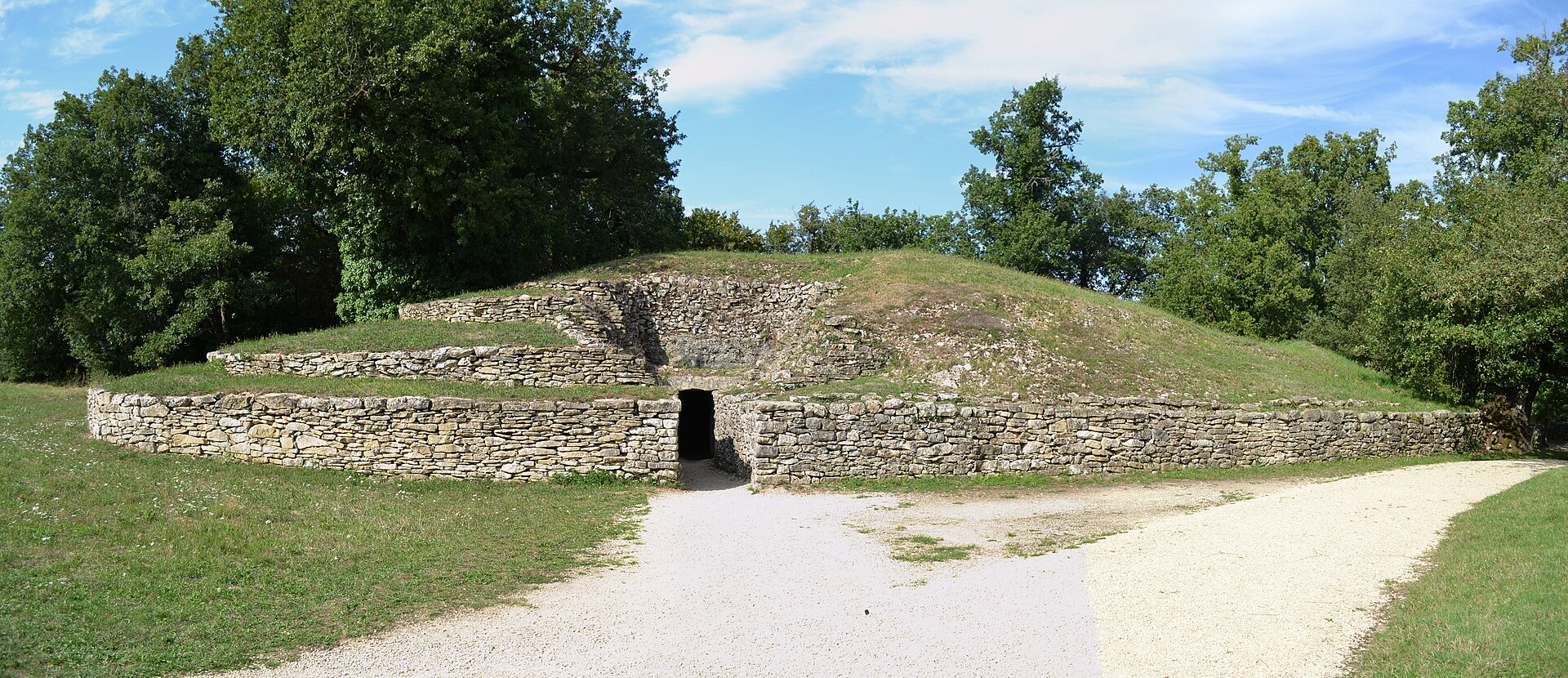
There is a quiet valley in western France, tucked into the countryside of Deux-Sèvres, where a cluster of grassy mounds sits so calmly in the fields that you could walk past them and assume they were just old hills. They are not hills. They are among the oldest surviving buildings anywhere on Earth, and some of them were raised before the first stone was ever set at the great Egyptian pyramids. This is Bougon, and it has always struck me as one of those places that rearranges your sense of time the moment you understand what you are actually looking at.
I want to walk you through Bougon the way I wish someone had walked me through it the first time: slowly, without jargon, and with a genuine sense of wonder about the people who built it. Because the real story here is not really about stones at all. It is about a farming community, thousands of years ago, deciding that their dead deserved monuments that would outlast everything they knew.
- What Bougon actually is
- Just how old these mounds are
- The people who built them
- Inside the burial chambers
- How you move stones that heavy
- What was found inside
- Why they went to all this trouble
- Why Bougon still matters
- Reading it in its landscape
- A monument used and reused
- How it came back into the light
- Among the world’s first monuments
- What it feels like to stand there
- From first farms to first monuments
- The quiet genius of the builders
- Monuments as machines for remembering
- How much we nearly lost
- Death, ritual, and the living
- Living with a sense of deep time
- What it teaches us about ourselves
What Bougon actually is
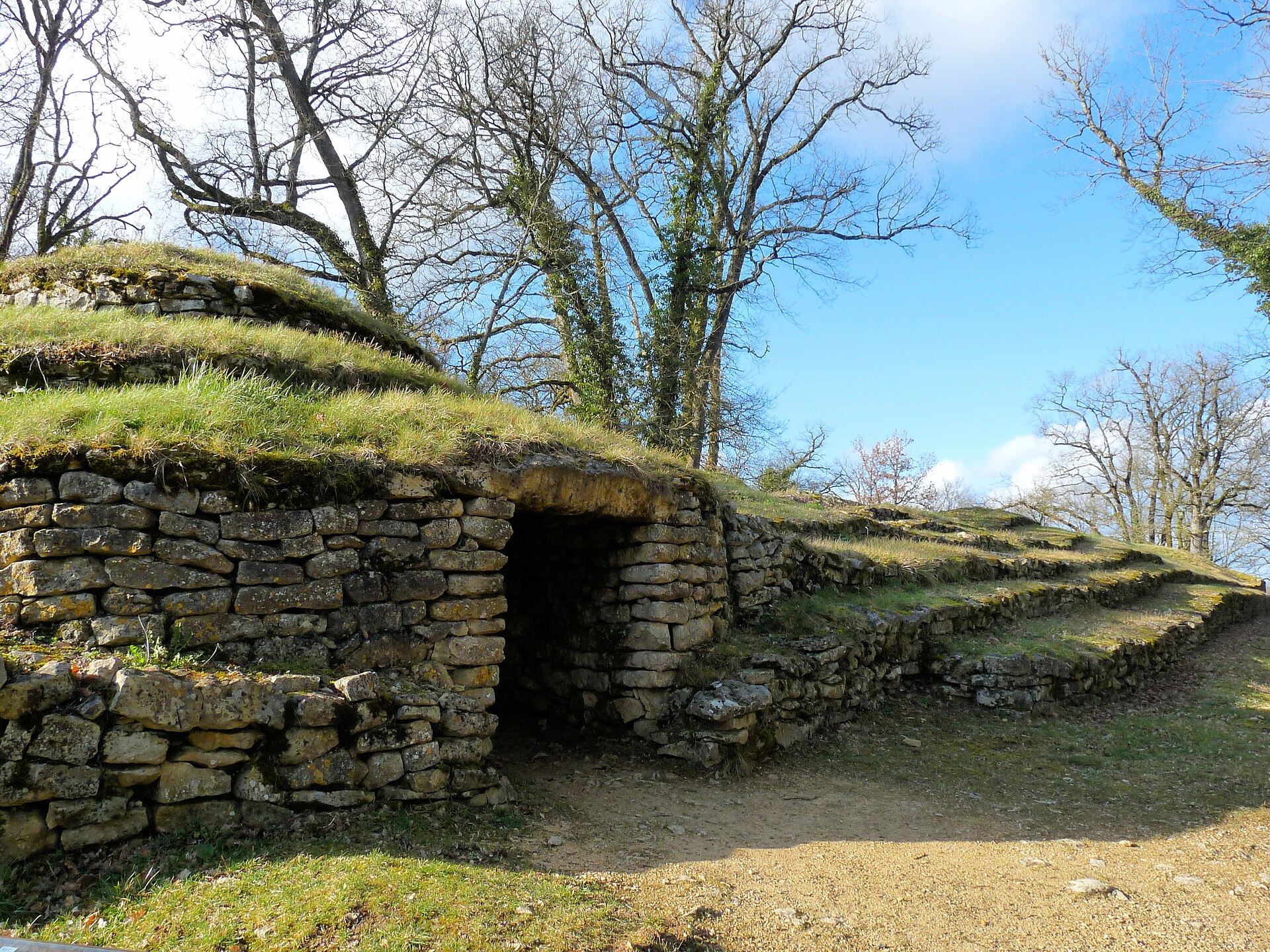
Bougon is a necropolis, a small landscape of the dead, made up of several separate mounds that archaeologists label with plain letters: Tumulus A, B, C, E, and F. Each mound is really a covering of earth and stone piled over one or more stone chambers. A “tumulus,” if the word is new to you, is simply a mound raised over a grave, and here we have a whole family of them clustered within a few hundred metres of one another.
What makes Bougon special is not any single mound but the fact that they were built and reused across a span of nearly two thousand years. This was not a one-off burial. It was a place people kept coming back to, generation after generation, adding, rebuilding, and reburying, until the site itself became a kind of ancestral anchor in the landscape.
Just how old these mounds are
Here is the part that always stops people. The earliest structures at Bougon go back to roughly 4800 BC. Let that settle for a second. That is around six thousand eight hundred years ago, older than Stonehenge, older than the pyramids, older than writing, older than the wheel in this part of the world.
When we talk about the “oldest” monuments, we are usually reaching for a handful of famous names. Bougon rarely makes that list in popular conversation, and honestly that feels like an oversight. These builders were among the very first anywhere to think in terms of permanent stone architecture for the dead, and they did it early enough that calling them pioneers barely does them justice.
The people who built them
The communities behind Bougon were Neolithic farmers. They grew crops, kept animals, made pottery, and lived in small settlements scattered across the region. They were not a grand centralized state with armies of labourers. They were villagers, and that is exactly what makes the scale of what they built so moving to me.
Think about what it takes for a modest farming community to commit to a project like this. You need surplus food so people can spend days hauling stone instead of tending fields. You need organisation, someone deciding where slabs go and in what order. And you need a shared belief strong enough to justify the whole effort. These monuments are, in a very real sense, frozen social agreements.
Inside the burial chambers
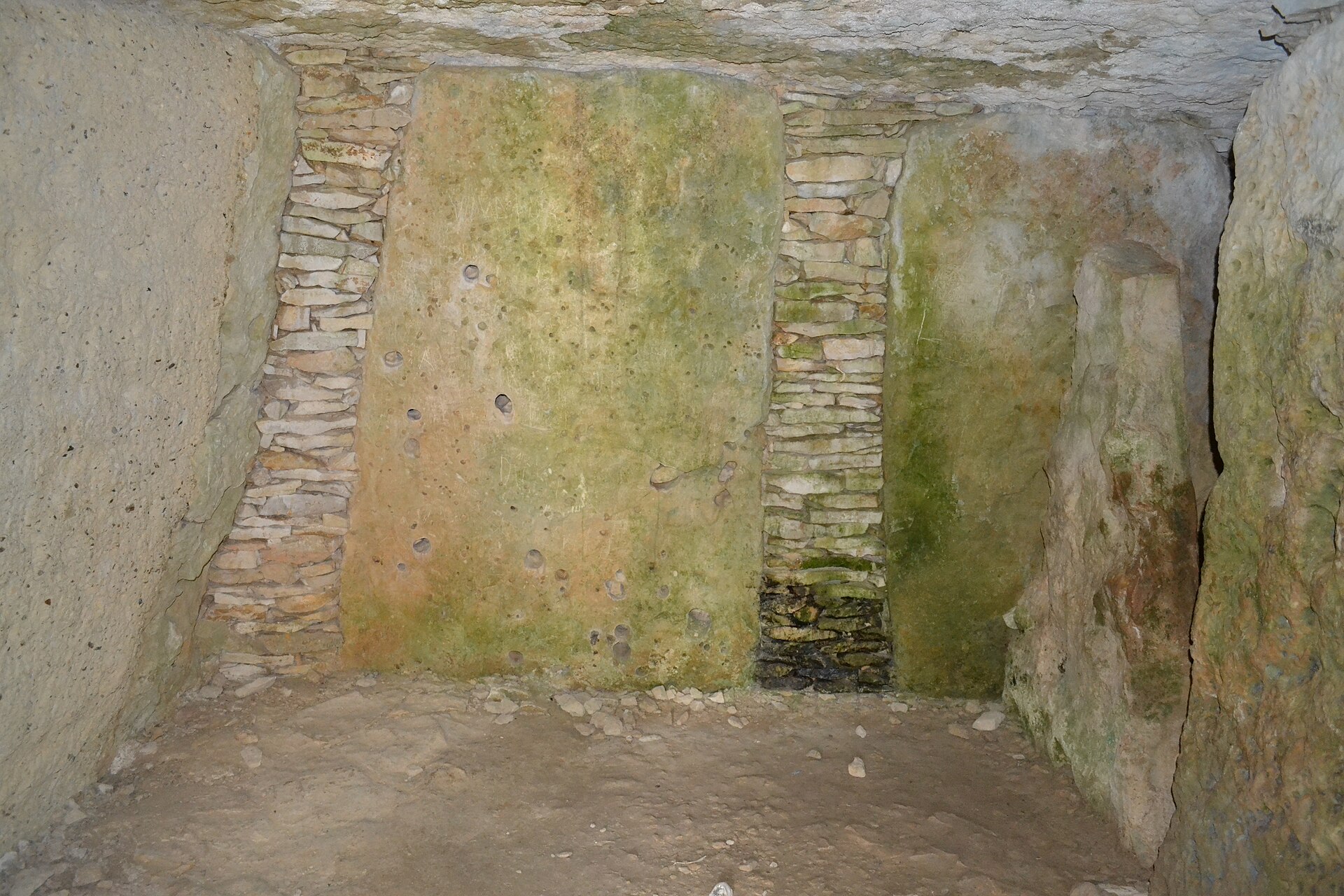
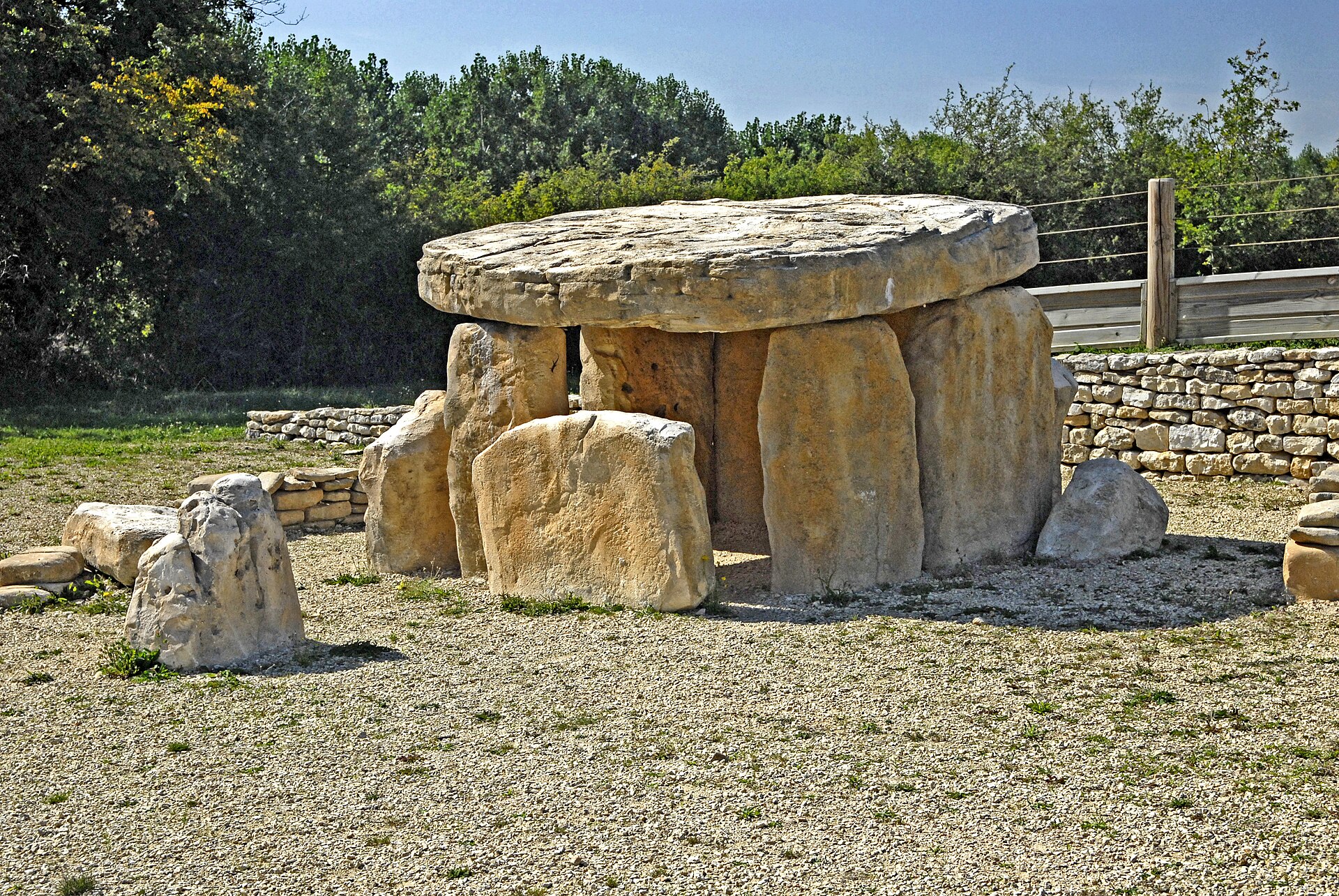
Peel back the earth of a Bougon mound and you find chambers built from massive stone slabs, walls of upright stones roofed by even heavier capstones. Some are reached through a passage, a low stone corridor you would have to stoop or crawl through to enter. Stepping inside one, even a reconstruction, gives you an odd, weighty feeling, like the air itself is older.
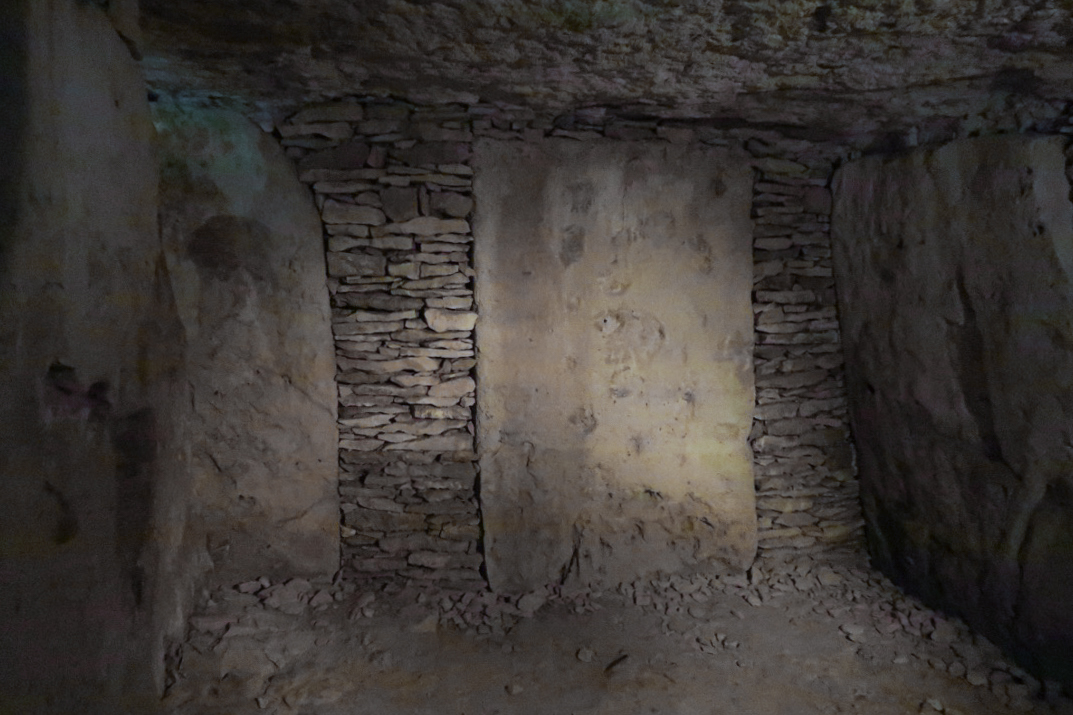
These were not single graves. Chambers held the remains of many individuals, added over long periods. People were placed inside, and later others joined them, sometimes with older bones pushed aside to make room. It was less a tomb in our modern sense and more a communal resting place, a stone house shared by the ancestors of a whole community.
How you move stones that heavy
The obvious question, standing in front of any megalith, is simply: how? Some of the capstones at sites like this weigh dozens of tonnes. There were no cranes, no metal tools, no draft animals harnessed the way we would later use them. And yet up they went.
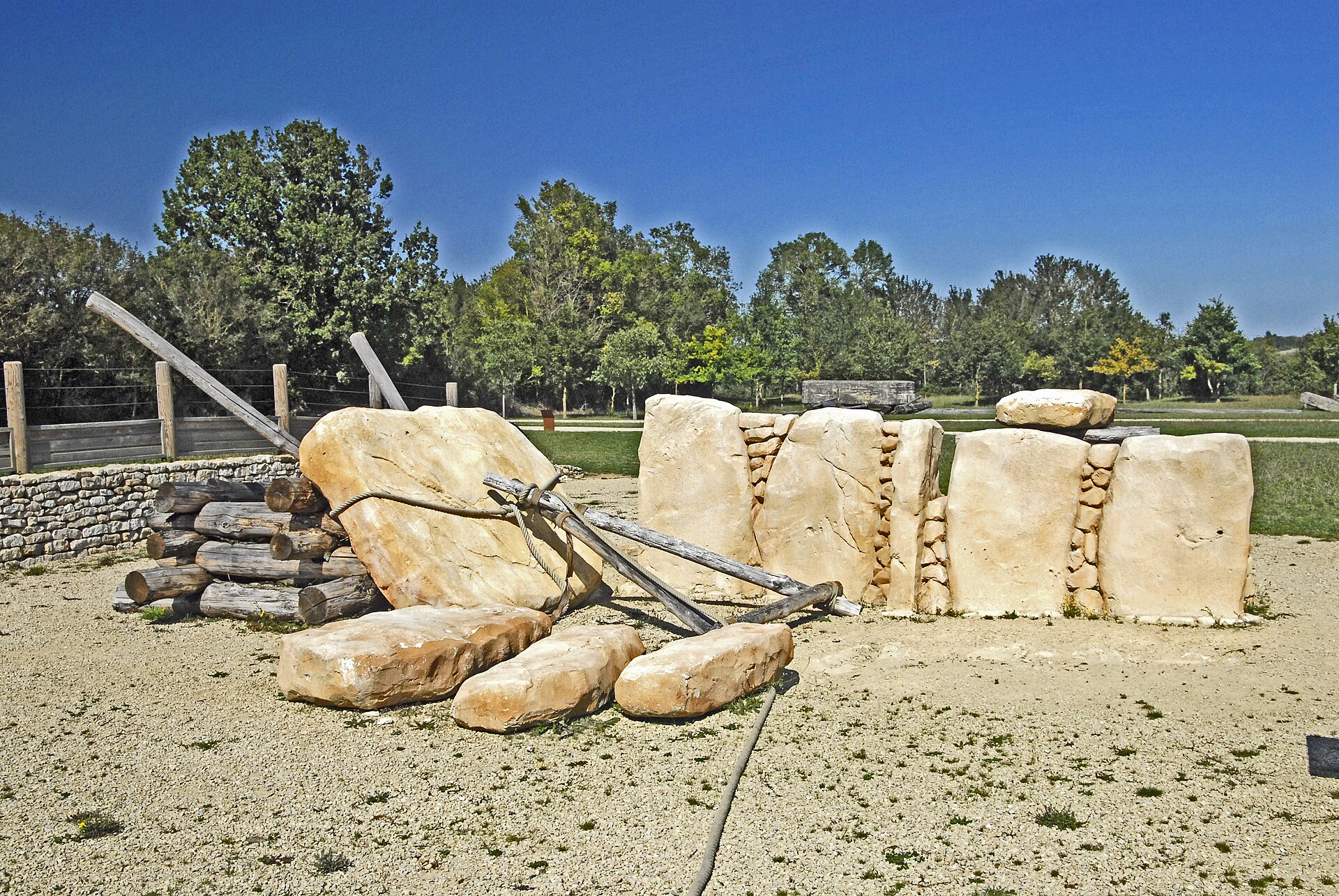
The honest answer is a combination of clever, patient engineering: wooden levers, log rollers, earthen ramps, and a great many hands pulling together. Experiments at Bougon itself have shown that a large stone can be moved by a coordinated group using nothing but ropes, timber, and determination. It is not magic. It is people, working in rhythm, refusing to give up on something they believed mattered.
What was found inside
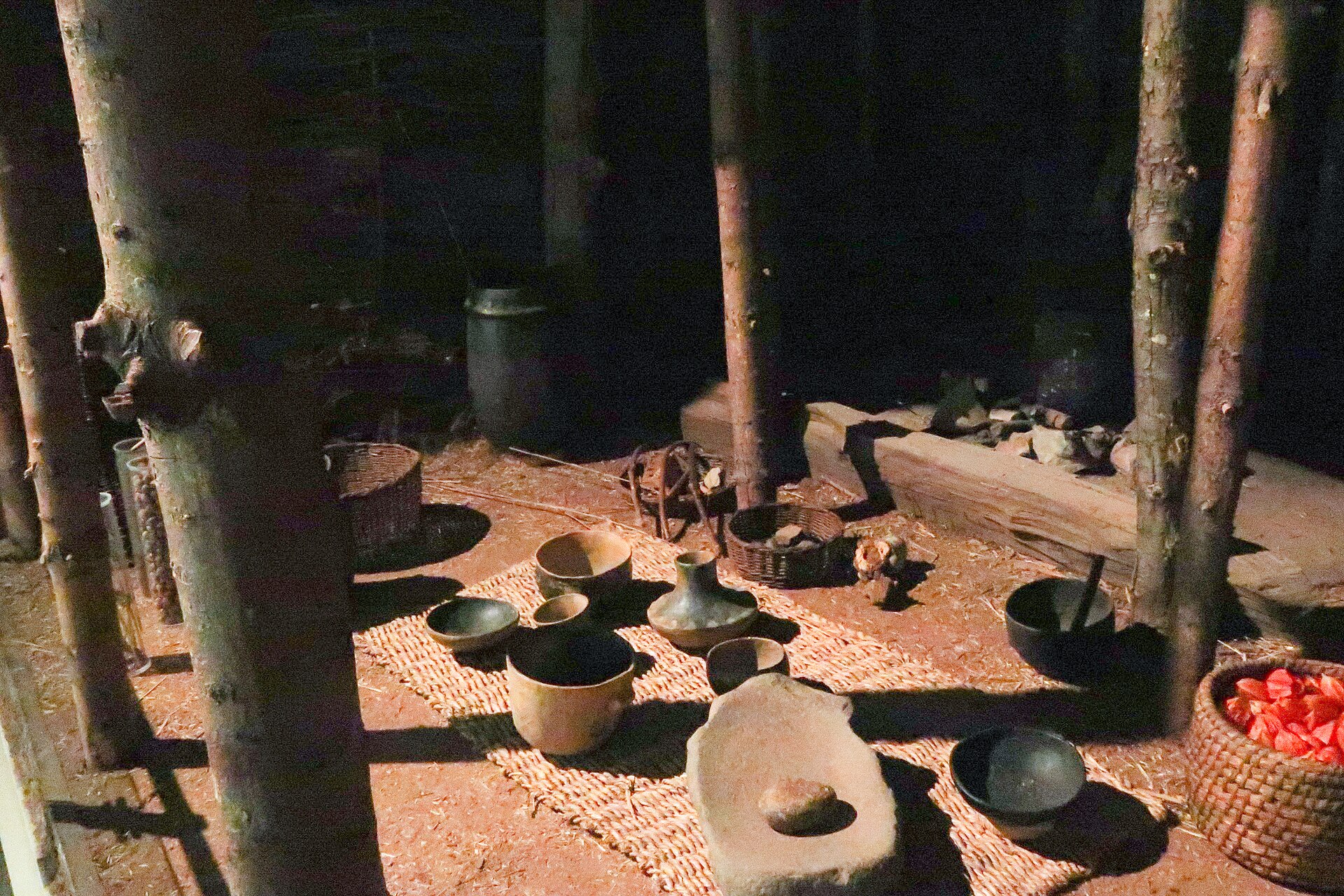
Excavations at Bougon turned up more than bones. There were pots, tools of flint and polished stone, and personal ornaments, the small, human things people chose to leave with their dead. Pottery in particular helps archaeologists trace which generations used a chamber and how burial customs shifted over the centuries.
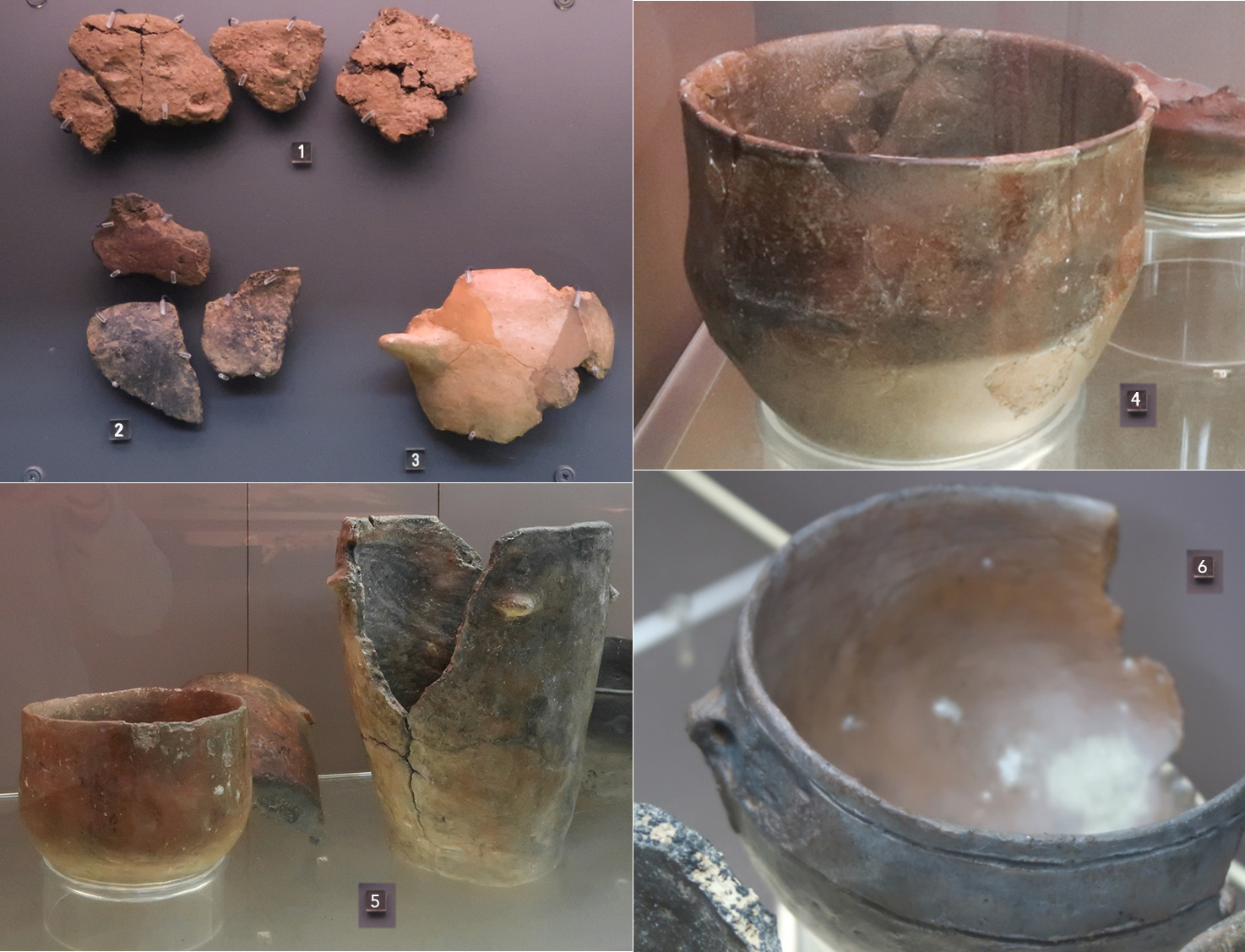
Objects like these are quietly powerful. A single pot tells you someone shaped clay with their hands, fired it, used it, and finally decided it belonged with a person they had lost. Across thousands of years, that gesture still reads clearly. It is grief and care, expressed in materials, and it survives when almost everything else about these people has vanished.
Why they went to all this trouble
We cannot ask them, so we interpret. A monument like Bougon likely did several jobs at once. It honoured the dead. It marked territory, a visible claim that said “our ancestors are here, so this land is ours.” And it gave the living a fixed place to gather, remember, and reaffirm who they were as a community.
There is something deeply relatable in that. We still build memorials, still visit graves, still want somewhere permanent to hold our memory of the people we loved. Bougon is that same impulse, just carried out in stone by people who had only recently learned to farm. The technology changed. The need did not.
Why Bougon still matters
Bougon matters because it quietly rewrites the timeline in our heads. It shows that monumental architecture did not begin with grand civilisations and god-kings. It began earlier, with ordinary farming communities who decided their dead were worth extraordinary effort.
It also matters because it survived. Standing among these mounds today, you are standing where people stood nearly seven thousand years ago for reasons we still feel in our own bones. That continuity, across an almost unimaginable gulf of time, is the real treasure at Bougon.
Reading Bougon in its landscape
One thing I find easy to forget when I look at photographs is that a monument like Bougon was never meant to be seen in isolation. It sat inside a lived-in landscape of fields, paths, settlements, and other markers. To the people who built it, walking toward these mounds meant passing familiar places, remembering who had died and when, and feeling the weight of continuity with every step.
The mounds were almost certainly meant to be visible, deliberately placed so that they stood out against the surrounding land. A monument you cannot see does not do the social work of reminding everyone whose ancestors rest there. Height and mass were not accidents. They were the whole point, a way of writing memory into the shape of the earth itself.
When you start to think this way, the individual stones matter less than the overall gesture. Bougon is a statement addressed to the future, and remarkably, we are the future it was speaking to. We just took nearly seven millennia to arrive and finally listen.
A monument used and reused
What genuinely fascinates me about Bougon is that it was not built once and forgotten. Over its long life, chambers were opened and closed, mounds were enlarged, and new burials were added to old structures. People inherited these monuments the way we might inherit a family home, and they kept adapting them to their needs.
This pattern of reuse tells us something important about how these communities thought about time and belonging. The dead were not sealed away and abandoned. They remained part of the community, revisited and rehoused, their monuments maintained across dozens of human lifetimes. Continuity, not novelty, was the value being expressed.
It also makes the archaeology beautifully complicated. A single chamber can hold traces of many different periods, layered like the pages of a book that was written by many hands over many centuries. Untangling those layers is painstaking work, but it is how we recover the long, patient rhythm of the place.
How Bougon came back into the light
Like many ancient sites, Bougon drifted out of memory and then back into it. The mounds were investigated in the nineteenth century, when early antiquarians first recognised that these were something extraordinary rather than natural rises in the ground. Later, more careful excavations revealed the true depth of the site’s age and complexity.
Today Bougon is a protected site with a museum that helps visitors make sense of what they are seeing. That matters, because a bare mound in a field can be almost impossible to read without context. The reconstructions and displays turn a puzzling lump of earth back into what it once was: a deliberate, meaningful piece of human architecture.
There is a lesson in that rediscovery. So much of the deep past sits quietly around us, unrecognised, until someone looks closely enough to ask the right questions. Bougon spent thousands of years as an anonymous set of hills. It took curiosity to turn it back into history.
Bougon among the world’s first monuments
It helps to place Bougon in company. Around the same broad era, communities in other parts of the world were also beginning to build on a scale that outlasted them. The impulse to raise something permanent seems to have surfaced independently in many places, which suggests it answers something deep in how human societies work.
What Bougon adds to that global story is its early date and its long duration. It is not the biggest or the most famous monument of the ancient world, but it is one of the oldest, and it kept doing its job for an astonishingly long time. In the grand family album of humanity’s first architecture, Bougon is one of the elder relatives everyone should know.
Comparing sites like this is not about ranking them. It is about noticing a shared human pattern: settle down, farm, build community, and then build something that says “we were here” in a language even time struggles to erase.
What it feels like to stand there
If you ever get the chance to walk among the Bougon mounds, I would encourage you to slow right down. Let the scale sink in. Run your eyes along a capstone and try to picture the crowd of people who once strained on ropes to lift it. Stand at the mouth of a passage and imagine ducking inside to lay a loved one to rest.
These are not just archaeological features. They are the visible remains of grief, hope, effort, and belief, all bound up in stone and earth. That is what turns a visit into something more than sightseeing. You are not looking at old rocks. You are meeting people, across an almost unthinkable distance of time, on the common ground of caring for the dead.
Every time I sit with a place like this, I come away with the same quiet thought: we are far more connected to the ancient past than we usually feel. The tools change, the languages change, the beliefs change, but the wish to build something lasting for the people we love turns out to be very, very old indeed.
From first farms to first monuments
To understand why Bougon appeared when it did, it helps to zoom out to the bigger shift happening across this era. People were moving from a life of hunting and gathering to one of farming, and that change did far more than alter diets. It changed how people related to land, to time, and to one another.
Once you farm, you stay. You clear fields, plant, wait, and harvest in the same place year after year. Land stops being a route you travel through and becomes a home you defend and pass down. And once land is inherited, ancestors matter in a new way, because they are the ones who first held the ground you now stand on.
Seen through that lens, a monument like Bougon is almost a natural consequence of settling down. It is the moment a community says, in stone, that this place is theirs, that their dead are rooted here, and that their claim reaches back generations. Farming made permanence possible, and permanence made monuments meaningful.
The quiet genius of the builders
We sometimes talk about ancient people as if they were simpler than us. Standing at Bougon cures that instantly. The builders understood weight, balance, and leverage well enough to raise stones that would challenge us even with modern muscle. They planned structures that have stood, essentially intact, for the better part of seven thousand years.
Think about the knowledge embedded in a single well-built chamber. You need to choose the right stones, quarry or gather them, transport them across rough ground, shape them enough to fit, raise the uprights so they stay stable, and then lift a capstone into place without crushing anyone. Every one of those steps is a solved problem, worked out without written plans.
That is not primitive. That is engineering, passed down by word, hand, and example. The people of Bougon were experimentalists and craftsmen, and their surviving monuments are the proof of a technical tradition we can still admire today.
Monuments as machines for remembering
I like to think of places like Bougon as memory machines. A community cannot hold its whole history in living heads forever, but a monument can carry memory across generations that never met. It is a way of externalising the past, of storing “who we are and where we came from” in a form that does not die when the last person who remembers does.
That function may be the deepest reason these mounds were built. Long before writing existed here, people needed ways to keep their collective story alive. A monument on the skyline did that work. It said, wordlessly but unmistakably, that the people buried here were the foundation on which the living stood.
We still do exactly this, of course, with war memorials, gravestones, and named buildings. Bougon simply reminds us that the practice is far older than any of our institutions. The need to remember, and to build memory into the landscape, is one of the most human things there is.
How much we nearly lost
It is worth pausing on how fragile all of this is. Countless monuments from this era did not survive. They were quarried for their stone, ploughed flat for fields, or simply eroded into anonymity. The mounds we still have represent a small fraction of what once existed, which makes each surviving site more precious, not less.
Bougon came through partly by luck and partly because people eventually recognised its worth and protected it. That recognition is not guaranteed anywhere. Ancient sites survive when a community decides they are worth keeping, and vanish when they are treated as mere obstacles or raw material.
So there is a gentle responsibility woven into visiting or even reading about a place like this. We are the current custodians of a memory nearly seven thousand years old. Whether it lasts another seven thousand depends, in a quiet way, on whether we keep thinking it matters.
Death, ritual, and the living
It would be a mistake to imagine these chambers as silent, one-time burials. Everything we know suggests that placing the dead here was part of ongoing ritual life. People returned, gathered, and performed acts we can only partly reconstruct, tending the resting place of the ancestors in ways that bound the community together.
Some of what happened at these sites was probably about the dead, and some was surely about the living. Coming together to bury someone, or to honour those already buried, is a way of reaffirming who belongs, who leads, and what a community stands for. The monument was a stage as much as a tomb.
That blend of the practical and the sacred runs through the whole story of Bougon. Moving stones was engineering. Placing the dead was ritual. Gathering to do both was politics and belonging. All of it happened in the same place, which is part of why these mounds carry such a dense charge of meaning.
Living with a sense of deep time
One of the strangest and most rewarding things about studying a site like Bougon is what it does to your sense of time. We tend to measure history in centuries and think that feels ancient. Bougon quietly resets the scale. Its story spans thousands of years, and even its beginnings sit almost unimaginably far back.
Sitting with that can be humbling in the best way. The worries that fill our days shrink a little against a monument that has watched nearly seven thousand years pass. And yet the people who built it were not so different from us. They loved, grieved, planned, and hoped, and they wanted to leave something behind.
That is the gift of deep-time places. They stretch your imagination backward until you can almost feel the continuity of human life, one generation handing the world to the next, all the way from those first farmers to you, reading this now. Bougon is a rope thrown across that distance, and it still holds.
What Bougon teaches us about ourselves
When I step back from all the dates and stones, the thing that stays with me about Bougon is how recognisable its builders are. They were not mythical figures. They were farmers who buried their dead with care, marked their land, and worked together on projects far bigger than any one person could manage. In other words, they were us, just earlier.
That recognition matters because it collapses the false distance we sometimes put between ourselves and the ancient world. We imagine “primitive” people as fundamentally other. Bougon says otherwise. The same intelligence, cooperation, and emotional depth we prize today were already fully present nearly seven thousand years ago, expressed in earth and stone instead of steel and glass.
So the mounds end up teaching us less about how different the past was and more about how continuous humanity is. Strip away the technology and the centuries, and you find the same creatures: social, mortal, and desperate to leave a mark that outlasts a single life. Bougon is that desire made visible, and it succeeded beyond anything its builders could have imagined.
There is one last image I keep returning to. Picture a group standing on these mounds long ago, at dusk, having just laid someone to rest inside the stone. The work is done, the earth is settled, and the low sun catches the top of the tumulus. They know, in whatever way people knew such things then, that this place will still be here long after they are gone. And they were right. That confidence, that reaching toward permanence, is the beating heart of Bougon, and it is why a cluster of grassy mounds in a quiet French valley can still stop a visitor in their tracks today.
If Bougon has pulled you into the deep past the way it always pulls me, there is a whole world of early human ambition waiting nearby. You could follow the megalith trail onward to Stonehenge: How and Why This Ancient Stone Circle Was Really Built, Newgrange: The 5,000-Year-Old Tomb Built to Catch the Solstice Sun, and the temples of The Megalithic Temples of Malta: Older Than the Pyramids, or step even further back to the temple hill of Göbekli Tepe: The World’s Oldest Temple and How It Rewrote History and its neighbour Karahan Tepe: The Astonishing Sister of Göbekli Tepe. The first towns tell their own story at Çatalhöyük: The 9,000-Year-Old Town With No Streets, Jericho: The World’s Oldest City and Its 10,000-Year-Old Wall, Aşıklı Höyük: The 10,000-Year-Old Village That Came Before Çatalhöyük, and Skara Brae: The 5,000-Year-Old Village Known as the Scottish Pompeii, while the great river and valley civilisations unfold at Uruk and Sumer: The First Cities and the Birth of Writing, Mohenjo-daro: The 4,500-Year-Old City That Was Centuries Ahead of Its Time, Liangzhu: The 5,000-Year-Old Water City That Rewrote China’s History, Dholavira: The 4,500-Year-Old City That Beat the Desert With Water Engineering, Tell Brak: The Syrian Mound That May Rewrite Where Cities Began, and The Cairn of Barnenez: Europe’s Colossal Stone Monument Older Than the Pyramids. Cross the oceans and you meet Caral: The 5,000-Year-Old City That Rose As the Pyramids Were Built, Chavin de Huantar: The 3,000-Year-Old Andean Temple Built to Overwhelm the Senses, Cerro Sechin: The 3,600-Year-Old Peruvian Temple Carved With Warriors and Their Victims, Poverty Point: The 3,700-Year-Old Earthworks Built by Hunter-Gatherers, Not Farmers, Chankillo: The 2,300-Year-Old Peruvian Towers That Are the Americas’ Oldest Solar Observatory, and the extraordinary Nan Madol: The Ancient City Built on a Coral Reef in the Middle of the Pacific. And for more of Europe and Asia’s deep roots, wander through The World’s Oldest Art: Inside the Painted Caves of Lascaux and Chauvet, Knossos: The 4,000-Year-Old Palace Behind the Myth of the Minotaur, Cucuteni-Trypillia: Europe’s 6,000-Year-Old Mega-Settlements That Might Be the First Cities, Sarazm: The 5,500-Year-Old Town in Tajikistan That Rewrites Central Asia’s Past, Mehrgarh: The 9,000-Year-Old Village Where South Asia Learned to Farm, Jiahu: The 9,000-Year-Old Chinese Village Whose Flutes Still Play, Kalibangan: The Indus Town With the World’s Oldest Ploughed Field, Vinča: The Danube Culture That May Have Written Before Anyone Else, Gavrinis: The 6,000-Year-Old Carved Passage They Sealed in the Dark, and Los Millares: The 5,000-Year-Old Fortified Town at the Edge of Europe. Each one is another reminder of how long we have been building things meant to outlast us. You might also love Almendres, Iberia’s greatest ring of standing stones and thousands of years older than Stonehenge. You might also love Ġgantija, among the oldest freestanding buildings anywhere on Earth. You might also love Knowth, an Irish mound covered in mysterious ancient spirals and lozenges. You might also love Tarxien, a five-thousand-year-old temple on Malta covered in spirals and animal reliefs. You might also love Mnajdra, a five-thousand-year-old Maltese temple perched above the sea and tuned to the rising sun. If this drew you in, the Maltese temple of Ħaġar Qim, older than the pyramids, is well worth your time. If this drew you in, the forgotten passage tomb of Dowth is well worth seeking out. If this drew you in, the vast alignments of Carnac, older than the pyramids, are well worth your time. If this drew you in, the ancient stone circle of Callanish on the Isle of Lewis is well worth seeking out. If this drew you in, the statue-menhirs of Filitosa in Corsica are well worth seeking out. If this drew you in, the stone ship of Ale’s Stones in southern Sweden is well worth seeking out.
You May Like
Norse Explorers Reached Canada 500 Years Before Columbus


2 thoughts on “Bougon: The 7,000-Year-Old Burial Mounds Older Than the Pyramids”