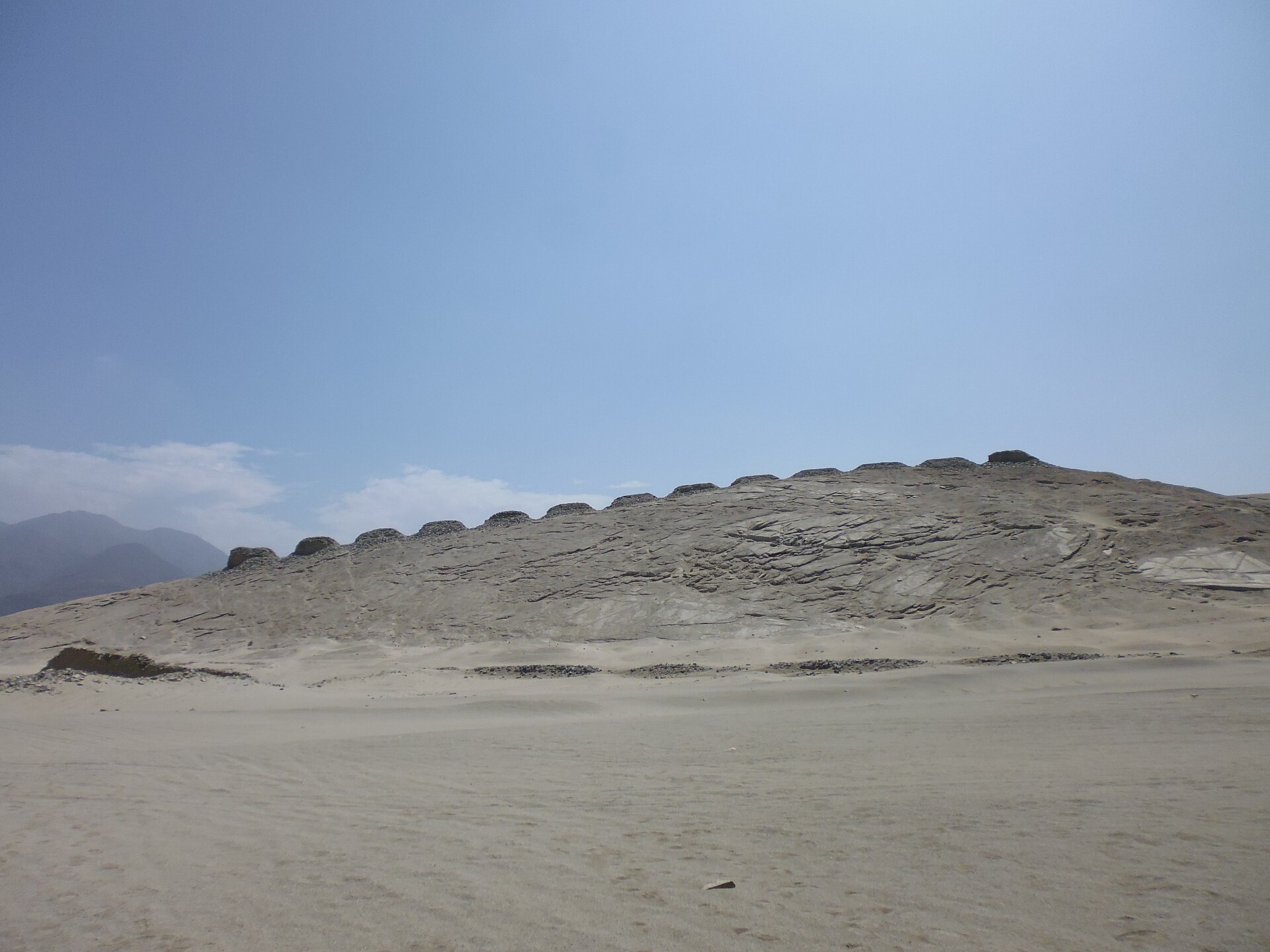
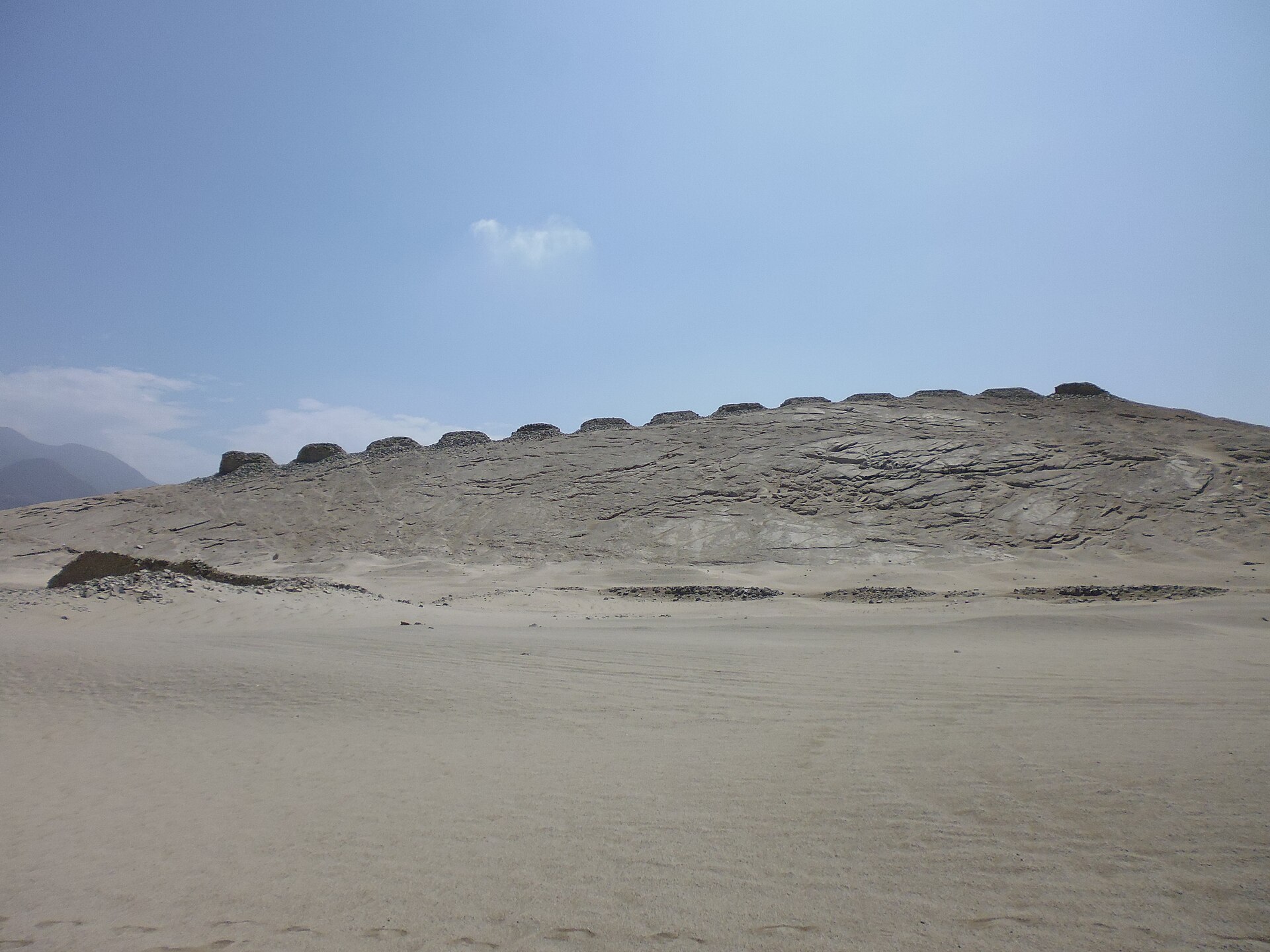
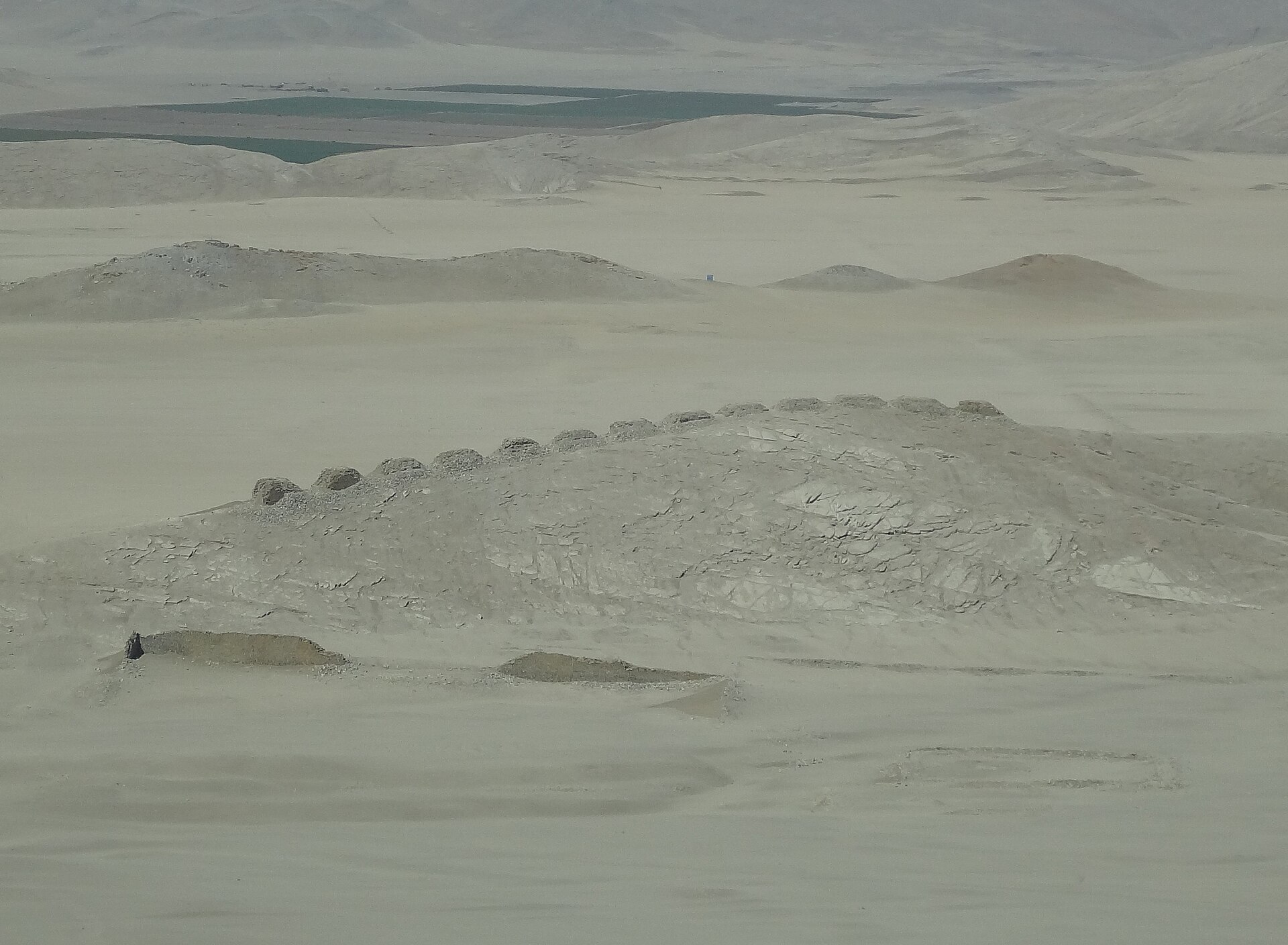
Out in the coastal desert of Peru, in the dry valley of the Casma river, there is a line of thirteen stone towers marching along a low ridge like the teeth of some enormous comb. From a distance they look almost decorative, a curious row of humps against the pale hills. But these towers are one of the most extraordinary scientific instruments of the ancient world. Together they form a solar observatory, a giant calendar written in stone, and they are the oldest structure of their kind in the Americas. This is Chankillo, and it rewrites what we thought we knew about early astronomy in the New World and about the deep scientific curiosity of the ancient Andes.
What makes Chankillo so thrilling is that it is not just a temple or a fortress or a tomb, though it has elements of all of these. It is a working device for tracking the sun through the year, built more than two thousand years ago by a people we still know surprisingly little about. Standing in the right spot at dawn or dusk, an ancient observer could watch the sun rise or set against these towers and read the calendar off the horizon itself. It is a breathtaking marriage of astronomy, architecture, and ritual, and it truly deserves to be far more famous than it currently is.
Where is Chankillo?
Chankillo lies in the Casma-Sechin river basin on the north-central coast of Peru, a region of stark desert cut through by green river valleys. This is the same broad area that gave us the ancient temple of Cerro Sechín with its carved warriors, and it is one of the great cradles of early civilization in the Andes. The Peruvian coast is one of the driest places on earth, and that aridity, harsh as it is, has helped preserve ancient sites in remarkable condition.
The complex sits in an open desert landscape with clear horizons in every direction, and that is no coincidence. To build a solar observatory, you need an unobstructed view of the horizon where the sun rises and sets, and the site was chosen precisely for its sweeping sightlines. The people who built Chankillo read the sky against the land, and this spot gave them the clear, uncluttered horizon they needed to do it with precision.
How old is it?
Chankillo dates to around the fourth century BCE, roughly 2,300 years ago, built by a culture of the late Early Horizon period in Andean prehistory. That makes it astonishingly old for such a sophisticated astronomical instrument. It was tracking the sun with real precision centuries before many of the more famous observatories of the ancient world, and long before the rise of the later Andean civilizations like the Inca, who are often, wrongly, imagined to be the source of all such achievements.
This early date matters enormously. It shows that sophisticated, systematic sky-watching was happening in the Americas thousands of years ago, developed entirely independently of the Old World. The people of Chankillo owed nothing to Babylonian or Egyptian astronomy; they worked out their solar science from scratch, through patient observation of their own skies. Chankillo is proof that the human drive to understand and track the heavens is universal, springing up wherever people looked long enough at the sun and stars.
The Thirteen Towers
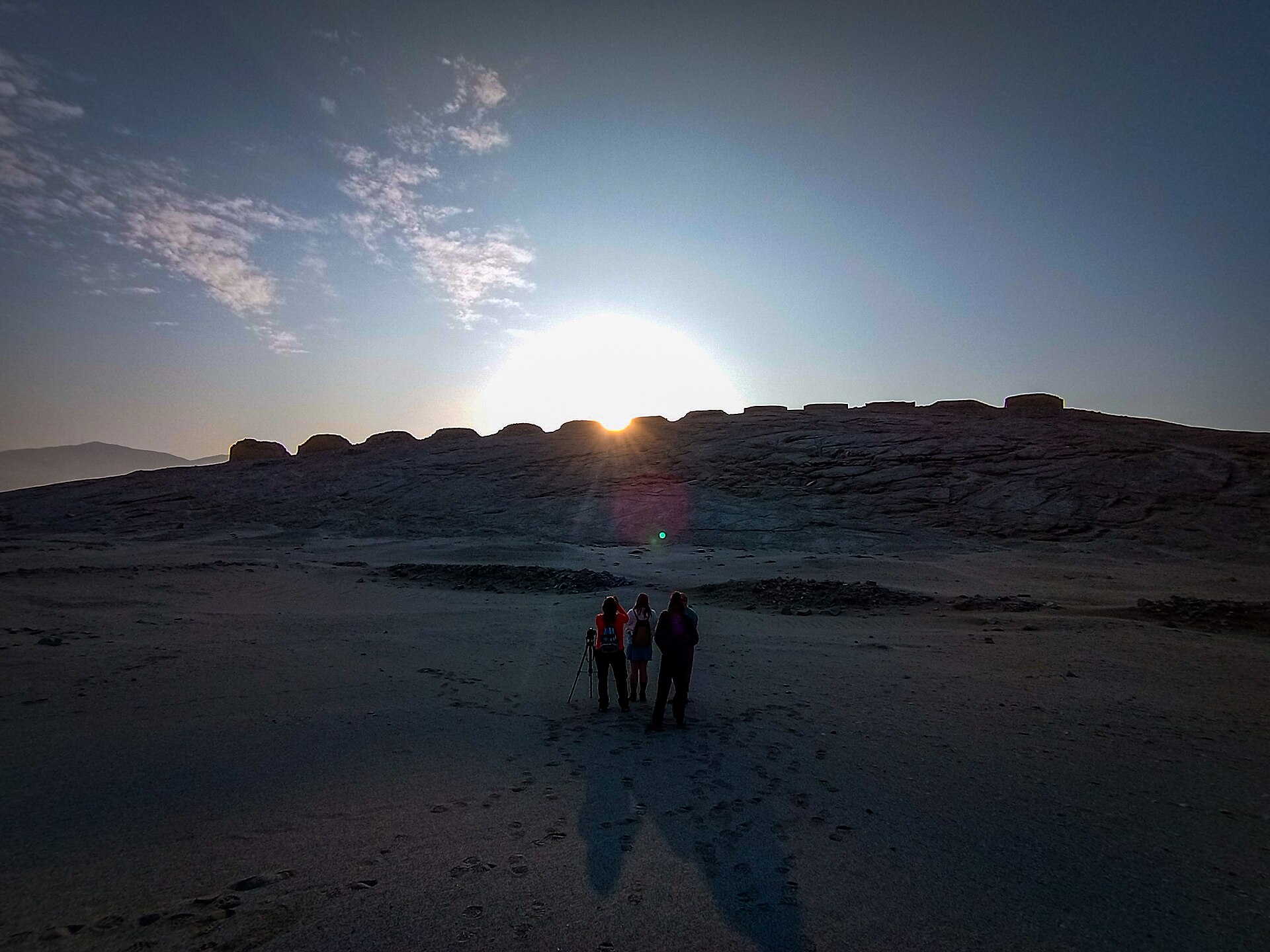
The heart of Chankillo is the line of thirteen towers running north to south along a ridge. Each tower is a solid, roughly rectangular construction of stone and mortar, and between each pair of towers is a gap. Seen from the right vantage point, the towers and the gaps between them create a kind of toothed, artificial horizon, a series of steps and notches against the sky. It is this jagged, deliberately constructed skyline that turns the whole ridge into a calendar.
The genius of the design lies in that spacing. Over the course of a year, the point on the horizon where the sun rises and sets shifts steadily back and forth, reaching its northern extreme at one solstice and its southern extreme at the other, passing through the equinoxes in between. The thirteen towers are arranged so that, viewed from special observing points, the rising or setting sun moves along the row from one end to the other and back again over the course of the year. By noting which tower the sun rose or set against, an observer could tell what time of year it was, to within a couple of days.
In effect, the builders divided the sun’s annual journey along the horizon into a series of segments marked by the towers, creating a horizon calendar of remarkable accuracy. It is a beautifully simple and elegant solution to the problem of tracking the year, using nothing but stone, careful placement, and a deep understanding of the sun’s motion. There is a real intellectual grandeur to it.
Reading the sun off the horizon
To use the observatory, you did not stand among the towers themselves. Instead, there were special observing points to the east and west of the ridge, and it was from these spots that the calendar could be read. From the western observing point, you watched the sun rise against the towers; from the eastern one, you watched it set. As the year turned, the sun’s rising and setting positions crept along the line of towers, and the position on any given day told you where you were in the annual cycle.
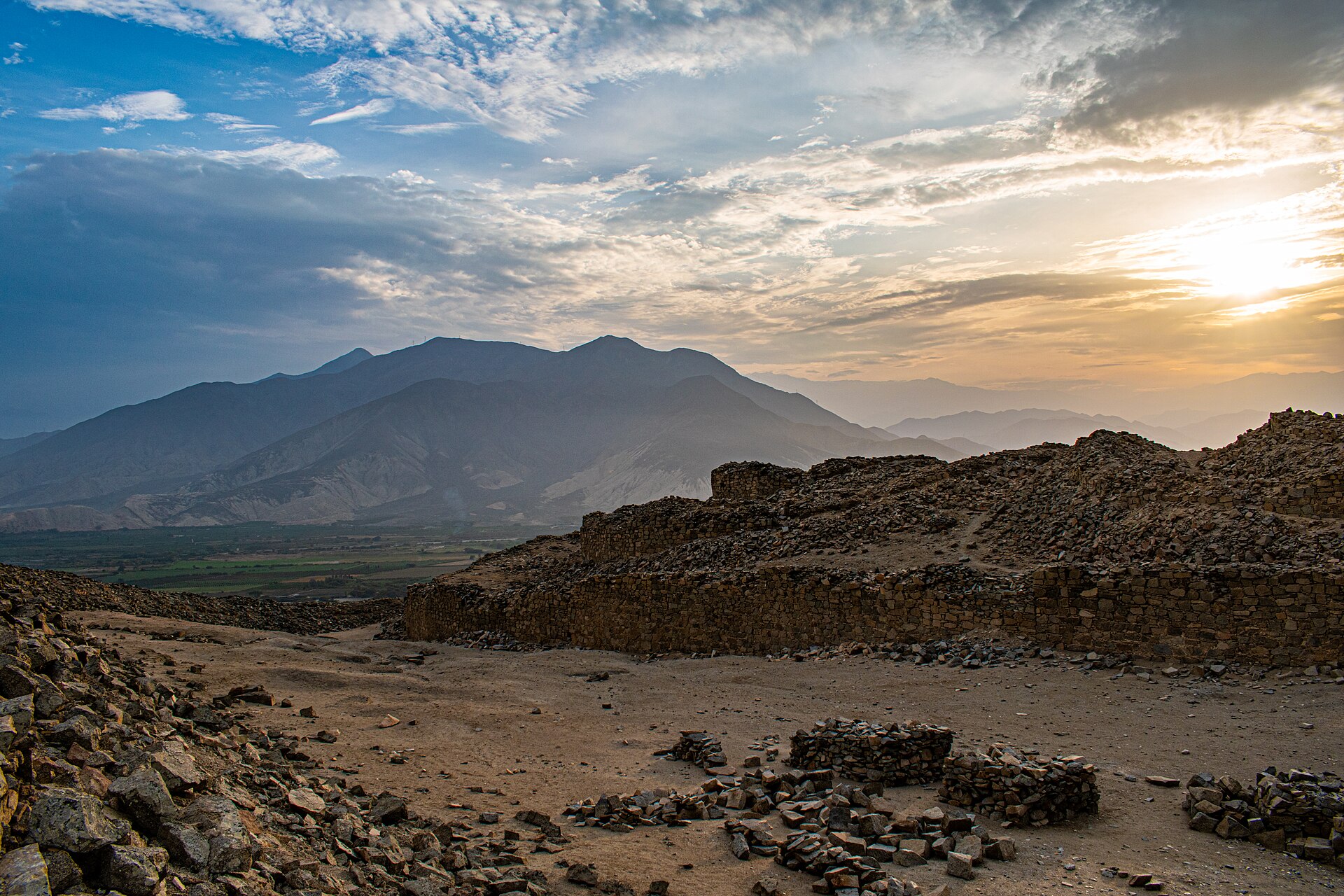
At the two solstices, the sun rose or set at the very ends of the tower line, at its northern and southern limits. At the equinoxes, it aligned with the middle of the row. And every day in between, it marked out its steady progress along the horizon, tower by tower. An experienced observer could stand at the observing point and, with a single glance at the dawn or dusk sun, know the date with real confidence. It was a public, monumental clock for the year, readable by anyone who understood its logic.
What I find so wonderful about this is how it turns the entire landscape into an instrument. There are no dials, no moving parts, no fragile mechanisms. There is only the unchanging sun, the fixed towers, and the observing point, working together in a system that would keep perfect time for as long as the towers stood and the sun kept rising. It is astronomy at the scale of the horizon, elegant and enduring.
A cult of the sun
Chankillo was almost certainly more than a practical calendar. The precision of the solar alignments, combined with the ceremonial character of the wider site, strongly suggests that the sun itself was an object of worship here, and that the observatory was bound up with religion and ritual. Tracking the sun was not just about knowing when to plant crops; it was about connecting with a powerful cosmic force, perhaps a solar deity whose journey across the sky governed the rhythms of life.
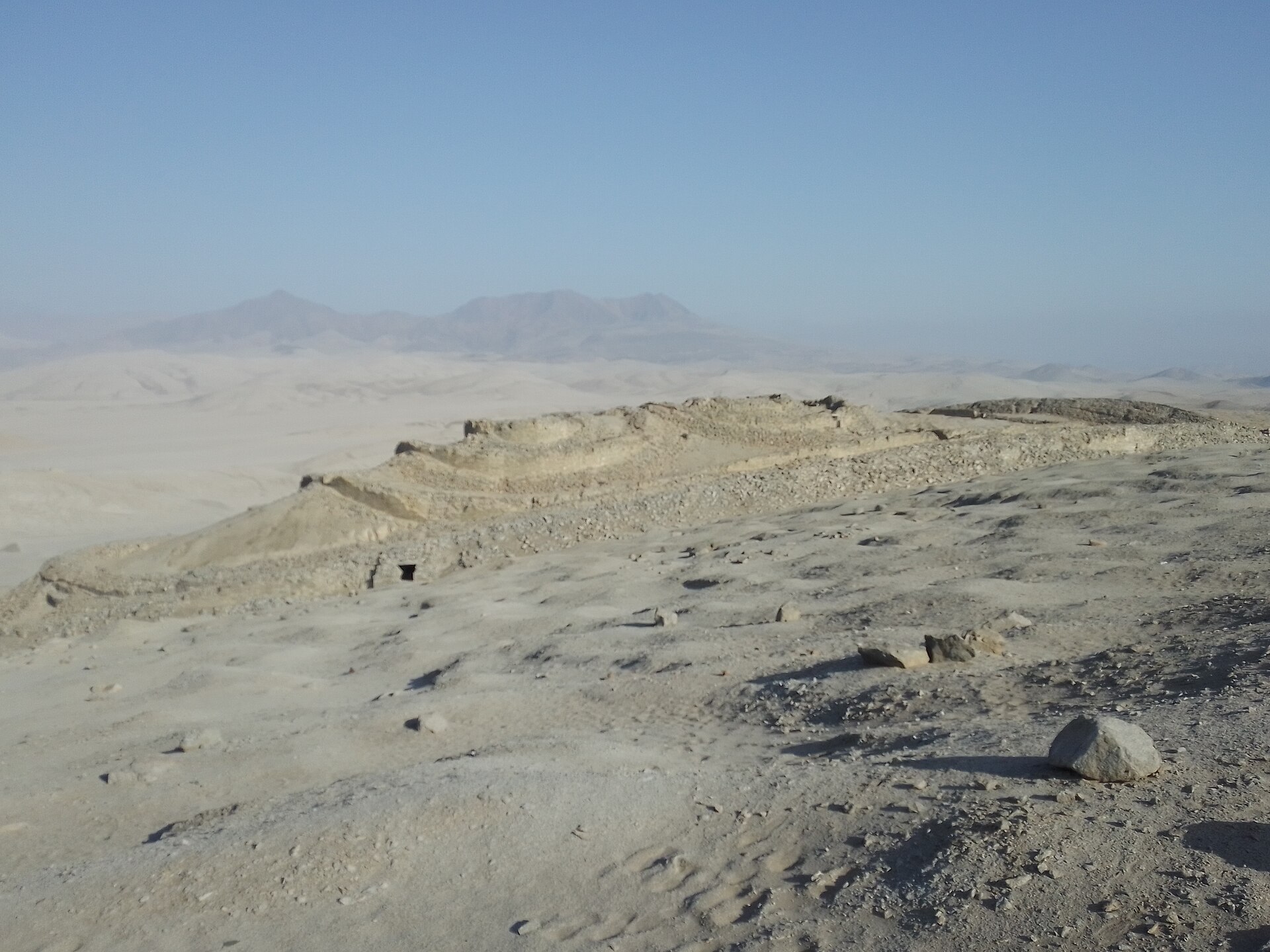
Sun worship would later become central to Andean religion, most famously among the Inca, who revered the sun god Inti and whose emperors claimed descent from him. Chankillo shows that this deep Andean reverence for the sun had roots stretching back many centuries before the Inca, into the early cultures of the coast. The observatory may have been a stage for solar ceremonies, where rituals were timed to the sun’s position and where the rising or setting sun against a particular tower marked a sacred moment in the calendar.
Imagine the scene at a solstice dawn: worshippers gathered at the observing point, watching in hushed anticipation as the sun edged toward the endmost tower, its arrival marking a turning point in the year and, perhaps, a moment of profound religious significance. Astronomy and faith were not separate here; they were fused into a single grand expression of a people’s relationship with the cosmos.
The fortified temple
The towers are the most famous part of Chankillo, but the site is larger and more complex than the observatory alone. Crowning a nearby hill is an imposing structure often called the fortified temple, a heavily walled complex with thick concentric walls, restricted gateways, and a commanding position over the surrounding land. With its massive defenses, it certainly looks like a fortress, and it may have served a defensive role, but its interior and character also point to ceremonial and religious functions.
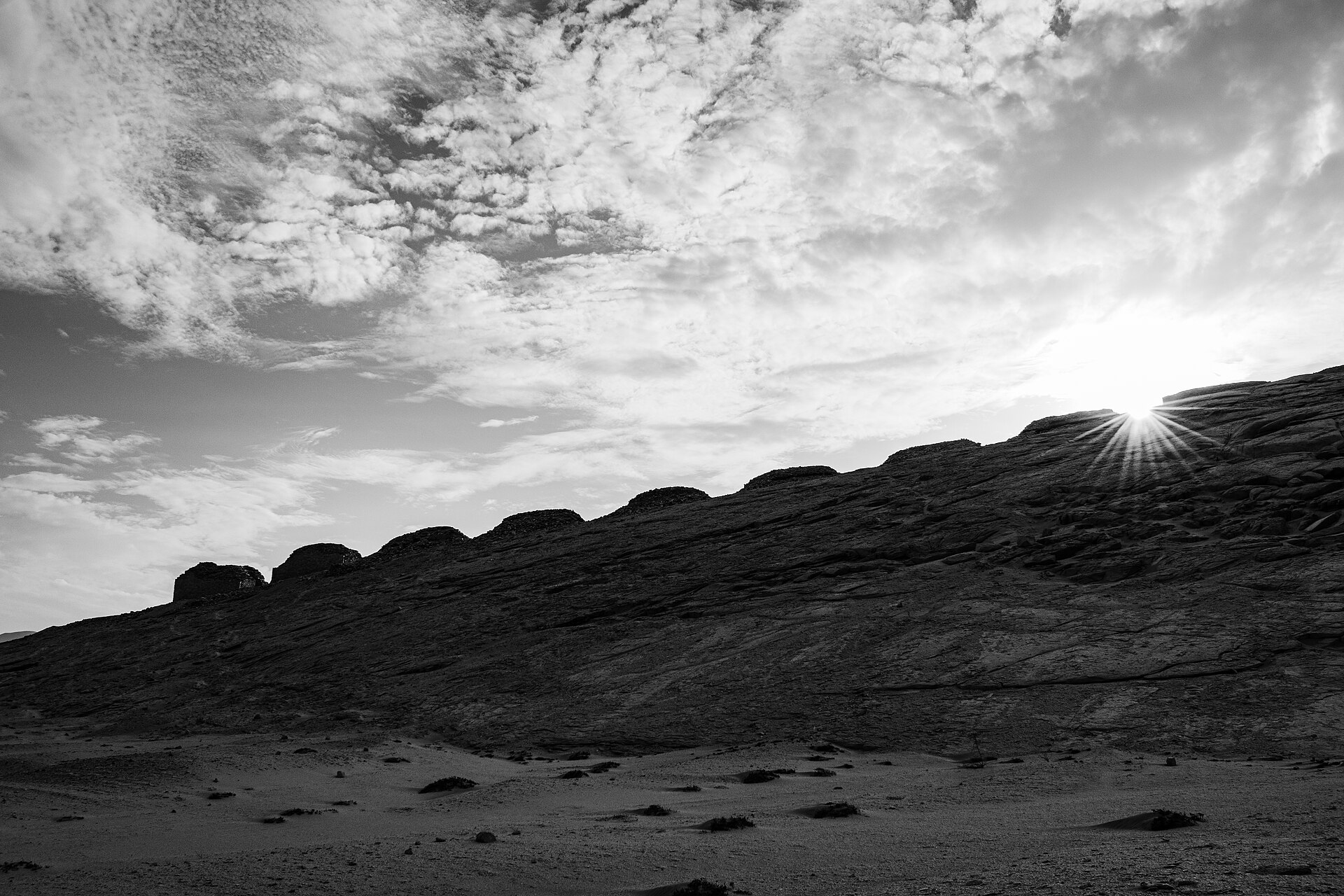
This blend of the martial and the sacred is intriguing. The thick walls and controlled access suggest a place of power and exclusivity, whether that power was military, religious, or both. Perhaps it was a stronghold in troubled times, perhaps a temple whose sanctity was protected by its walls, or perhaps a seat of authority for the elite who controlled the observatory and its all-important calendar. The truth may be that these functions blurred together, as they so often did in the ancient world, where control of the sacred was itself a form of political power.
Together with the observatory, the fortified temple and the other buildings and plazas of the site make up a substantial ceremonial center. Chankillo was not an isolated instrument but the focus of a whole complex, a place where astronomy, religion, and authority came together. People gathered here, worshipped here, and organized their year around the readings taken from the towers.
Who built it?
Here is one of the tantalizing things about Chankillo: we do not entirely know who built it. The culture responsible flourished on the Peruvian coast in the last few centuries BCE, but it left no written records, and it does not have a familiar name in the way the Inca or the Maya do. These were the people of the Casma valley in the late Early Horizon, heirs to a long Andean tradition of monumental building that stretched back to sites like Caral and Sechín.
What we can say is that they were sophisticated, organized, and deeply knowledgeable about the sky. Building an accurate solar observatory requires generations of careful observation to work out the sun’s pattern, followed by the engineering skill to translate that knowledge into precisely placed towers. It also requires a society organized enough to marshal the labor and resources for such a project. The anonymous people of Chankillo had all of this: patient astronomers, skilled builders, and a social order capable of great collective undertakings.
That we do not even have a name for them makes their achievement all the more poignant. Here was a people advanced enough to build one of the world’s oldest solar observatories, yet largely lost to history, remembered now mainly through the silent towers they left on a desert ridge. Chankillo is their monument, a testament to a forgotten culture’s remarkable understanding of the heavens.
Why build a solar calendar?
It is worth asking why an ancient people would go to such enormous trouble to track the sun so precisely. The most practical answer is agriculture. In a farming society, especially one in a challenging desert environment dependent on seasonal river flows, knowing the time of year is vital. A reliable calendar tells you when to plant, when to expect the rivers to swell, and when to harvest. An accurate solar calendar like Chankillo’s would have been an invaluable tool for managing the agricultural year.
But the practical explanation only goes so far. You do not need thirteen monumental stone towers and a fortified temple simply to know when to plant your crops; simpler methods would do. The grandeur of Chankillo points to deeper motives: religion, ritual, and power. Controlling the calendar meant controlling the timing of festivals and ceremonies, and by extension holding a kind of authority over the community’s relationship with the sun and the cosmos. Whoever could read the towers held a powerful form of knowledge.
So Chankillo was probably all of these things at once: a practical calendar, a religious monument, and an instrument of authority. This bundling together of the useful, the sacred, and the political is deeply characteristic of the ancient world, where the person who could predict the sun’s movements was at once scientist, priest, and ruler. In its towers we see knowledge, faith, and power fused into stone.
Rediscovering a masterpiece
Although the ruins of Chankillo had been known to travelers and antiquarians for a long time, and the fortified temple in particular had attracted attention, the true purpose of the Thirteen Towers was only firmly established relatively recently. For years the towers were something of a puzzle. It was detailed archaeological and astronomical study in the twenty-first century that confirmed, beyond reasonable doubt, that they functioned as a solar observatory, matching the positions of the towers against the sun’s movements with striking precision.
That confirmation transformed Chankillo’s reputation, revealing it as the oldest known solar observatory in the Americas and one of the most important archaeoastronomical sites in the world. In recognition of its extraordinary significance, the Chankillo complex was later inscribed as a UNESCO World Heritage Site, cementing its place among humanity’s great scientific and cultural achievements. A row of towers that had puzzled observers for generations was finally understood for the masterpiece it is.
There is a lesson in this about how much remains to be discovered, even at sites we think we know. The stones of Chankillo had stood in plain sight for over two thousand years, yet their true meaning was only recently unlocked. It makes you wonder how many other ancient wonders are still waiting for us to look at them the right way and finally grasp what their builders intended.
Why Chankillo matters
So why does Chankillo deserve a place among the world’s great ancient sites? Because it is the oldest known solar observatory in the Americas, a working astronomical instrument built more than two thousand years ago by a people who developed their sky-science entirely on their own. It stands as proof that the human urge to understand the heavens is universal, arising independently in the New World just as it did in the Old.
It also reveals the sophistication of early Andean civilization, so often overshadowed by the later, more famous Inca. Long before the Inca revered their sun god, the anonymous builders of Chankillo were tracking the sun with monumental precision, fusing astronomy, religion, and power into a single grand complex. And it reminds us, through its recent rediscovery, that the ancient world still holds secrets, that even a row of towers standing in the open desert can guard a profound mystery for millennia.
When I picture Chankillo now, I see the thirteen towers dark against a brightening sky, a crowd gathered at the observing point, and the first sliver of the solstice sun blazing up beside the endmost tower, exactly where the ancient astronomers knew it would. Across more than two thousand years, their careful science still works, the sun still rises where they said it would, and their silent towers still keep perfect time. For a forgotten people in a desert valley, it is an immortality of a kind, written in stone and sunlight.
Just how accurate was it?
One of the things that most impresses me about Chankillo is the sheer accuracy of the whole system. This was not a rough seasonal marker that only worked at the solstices. The thirteen towers, with the gaps between them, divided the sun’s yearly journey along the horizon finely enough that an observer could pin down the date to within just a day or two at many times of the year. For an instrument built with stone and mortar over two thousand years ago, that is a genuinely remarkable level of precision.
Achieving this took more than good building. It required the builders to have already mapped the sun’s behavior in detail, knowing exactly where on the horizon it would rise and set on any given day, and then to design and position the towers to match. That means years, probably generations, of patient observation preceded the construction, as astronomers watched the sun’s slow dance along the horizon and gradually understood its rhythm. The towers are the final, monumental expression of a long tradition of careful sky-watching.
It is worth pausing on what this tells us about the people who built it. They were not casual observers glancing at the sky now and then. They were dedicated, systematic students of the heavens, accumulating knowledge across lifetimes and encoding it in architecture. In their patient, empirical approach, watching, recording, and building on what came before, there is something we might recognize as the very spirit of science, flourishing in a desert valley thousands of years before the word existed.
Astronomy written on the land
There is a particular beauty to the way Chankillo works with its landscape rather than against it. Many ancient monuments impose themselves on their surroundings, dominating the view. Chankillo does something subtler: it uses the natural horizon and the movement of the sun, adding just the thirteen towers needed to turn the whole scene into a calendar. The instrument is not really the towers alone; it is the towers, the observing points, the horizon, and the sun, all working together as one grand system spread across the land and sky.
This way of thinking, treating the landscape and the heavens as parts of a single integrated whole, runs deep in Andean culture. Mountains, the sun, the stars, and the land were not separate from human life but bound up with it, sacred and meaningful. Chankillo expresses this worldview perfectly. To read its calendar, you had to place yourself precisely within the landscape, at the right observing point, and look out at the horizon where earth and sky met. Human, land, and cosmos were joined in the act of observation itself.
I find this deeply appealing. In our world of screens and devices, there is something wonderful about an instrument that asks you to stand still in a specific place, at a specific time, and simply watch the sun meet the land. Chankillo is astronomy at its most elemental and most human, a reminder that the greatest observatory of all is the sky above us, and that our ancestors read it with an attention and devotion we would do well to remember.
Chankillo among the world’s observatories
It is illuminating to place Chankillo alongside the other great astronomical monuments of the ancient world. Many cultures built structures aligned to the sun, marking the solstices and equinoxes with impressive precision. Yet Chankillo does something distinctive. Rather than aligning a single monument to a couple of key moments in the year, it uses a whole series of towers to track the sun continuously across the entire year, functioning less like a marker and more like a true observatory with a graduated scale.
That continuous, fine-grained tracking is part of what makes Chankillo so special. It is not just saying “this is midsummer” or “this is midwinter”; it is capable of reading out the date across the whole solar year. In this respect it stands as one of the most sophisticated solar instruments of the ancient world, remarkable not only for its age and its New World setting but for the ambition and completeness of its design.
Seeing Chankillo in this global company also underlines a beautiful truth. All around the world, in wildly different cultures with no contact between them, human beings looked up, studied the sun and stars, and built monuments to capture what they learned. From the stone circles of Europe to the pyramids of Egypt to the towers of the Peruvian desert, the same deep curiosity drove people to read the heavens. Chankillo is the Americas’ magnificent contribution to that universal human story, a reminder that the wonder of the night and day sky belongs to all of us.
Standing among the towers today
Visiting Chankillo today is a quietly awe-inspiring experience. The desert setting is stark and beautiful, the horizons wide and clear, and the thirteen towers still stand along their ridge much as they have for over two thousand years. There is little of the crush and clamor that surrounds the world’s most famous ruins; instead there is space, silence, and the vast Peruvian sky, exactly the conditions the ancient observers needed and, in a sense, exactly the conditions in which the site is best appreciated.
To get the full effect, you would want to be there at dawn, standing near one of the observing points as the sky lightens. As the sun climbs toward the horizon and blazes up beside one of the towers, you experience, across more than two thousand years, exactly what the ancient astronomers built the place to show. In that moment the abstract idea of a solar observatory becomes vivid and real, and you feel a direct kinship with the people who once gathered here to watch the same sun rise against the same stones.
Now protected as a World Heritage Site, Chankillo is at last receiving the recognition and care it deserves. It stands as a monument not only to an ancient people’s astronomical genius but to the enduring human passion for understanding our place in the cosmos. If you ever have the chance to stand among its towers at sunrise, take it. You will be participating in one of the oldest scientific rituals in the Americas, reading the turning of the year off the horizon exactly as it was meant to be read.
Few places collapse the distance between us and the deep past so completely: the same sun, the same stones, the same clear horizon, and the same very human wish to know where we stand in the great cycle of the year.
It is, in the end, a place where science and reverence meet, and where the ancient sky still speaks to anyone willing to stand quietly and watch.
If Chankillo has you looking at the ancient world with fresh wonder, there is a whole constellation of other sites to explore. Right nearby in the same Peruvian valleys lie the carved warriors of Cerro Sechín and the older desert city of Caral, while the great temple of Chavín de Huántar completes the Andean picture. For more monuments aligned to the sky, nothing beats Stonehenge and Newgrange, and the ancient temples of Göbekli Tepe and Karahan Tepe push the story back further still. If cities are your passion, explore Uruk, Tell Brak, Mohenjo-daro, Dholavira, Liangzhu and Sarazm. For the first villages and farmers, visit Çatalhöyük, Aşıklı Höyük, Mehrgarh, Jericho and the musical village of Jiahu. And for sheer variety, do not miss the temples of Malta, the village of Skara Brae, the palace of Knossos, the painted caves of Lascaux and Chauvet, the reef city of Nan Madol, the settlements of Cucuteni-Trypillia, and the earthworks of Poverty Point. Each one adds another star to the vast, glittering map of how humanity first came to understand its world. You can follow the same deep-time trail to Kalibangan, the Indus town that preserves the world’s oldest ploughed field. The same deep past reaches Brittany at the Cairn of Barnenez, a colossal stone tomb older than the pyramids. Deep-time Europe continues at Vinča, the Danube culture whose signs may be the continent’s oldest writing. The megalithic wonders continue at Gavrinis, a Breton passage tomb carved almost entirely with swirling stone art. The story reaches Iberia at Los Millares, one of western Europe’s first fortified towns. And if you want to see how early this whole impulse began, the burial mounds of Bougon, raised around 4800 BC, are older than almost anything else in this series. For a stone circle that predates almost everything else, don’t miss the Almendres Cromlech in Portugal, raised around 6000 BC. For temples so old they were once thought built by giants, visit Ġgantija on the Maltese island of Gozo. And for the greatest hoard of Neolithic art in Europe, visit Knowth, the carved passage tomb hidden beside Newgrange. For the most exquisitely carved of all the ancient Maltese temples, explore Tarxien, a masterpiece of prehistoric art. For a temple that turns sunlight into a calendar, visit Mnajdra, aligned with the equinox and solstice sun on Malta’s coast. On the cliffs of Malta, the temple of Ħaġar Qim tells a strikingly similar story of stone and devotion. In Ireland’s Boyne Valley, the quiet mound of Dowth tells a strikingly similar tale of stone and the setting sun. In Brittany, the thousand standing stones of Carnac tell a strikingly similar story of stone and devotion. Far out in the Hebrides, the ring of Callanish tells a strikingly similar story of stone and sky. In a quiet Corsican valley, the carved stone warriors of Filitosa tell a strikingly different chapter of the same deep past. On a Swedish clifftop, the great stone ship of Ale’s Stones carries the same ancient impulse out toward the sea.
You May Like
Norse Explorers Reached Canada 500 Years Before Columbus