On a windswept headland on the north coast of Brittany, looking out over the sea, there is a long, low mound of stacked stone that most people drive past without a second glance. It looks a little like a natural ridge, or perhaps an old field wall gone gigantically wrong. It is neither. This is the Cairn of Barnenez, and it is one of the oldest and largest man-made structures anywhere in Europe, raised by farming communities around 4800 BCE, which makes it older than the Egyptian pyramids by well over two thousand years.
I find Barnenez almost impossible to get my head around, and I mean that as a compliment. We are used to thinking of monumental architecture as something that came with kings and cities and writing. Yet here is a colossal stone monument, seventy metres long and containing a dozen separate burial chambers, built by people who had no metal, no writing, and no cities, at a time when much of the world was still learning to farm. It quietly upends the tidy story of how civilization is supposed to have unfolded.
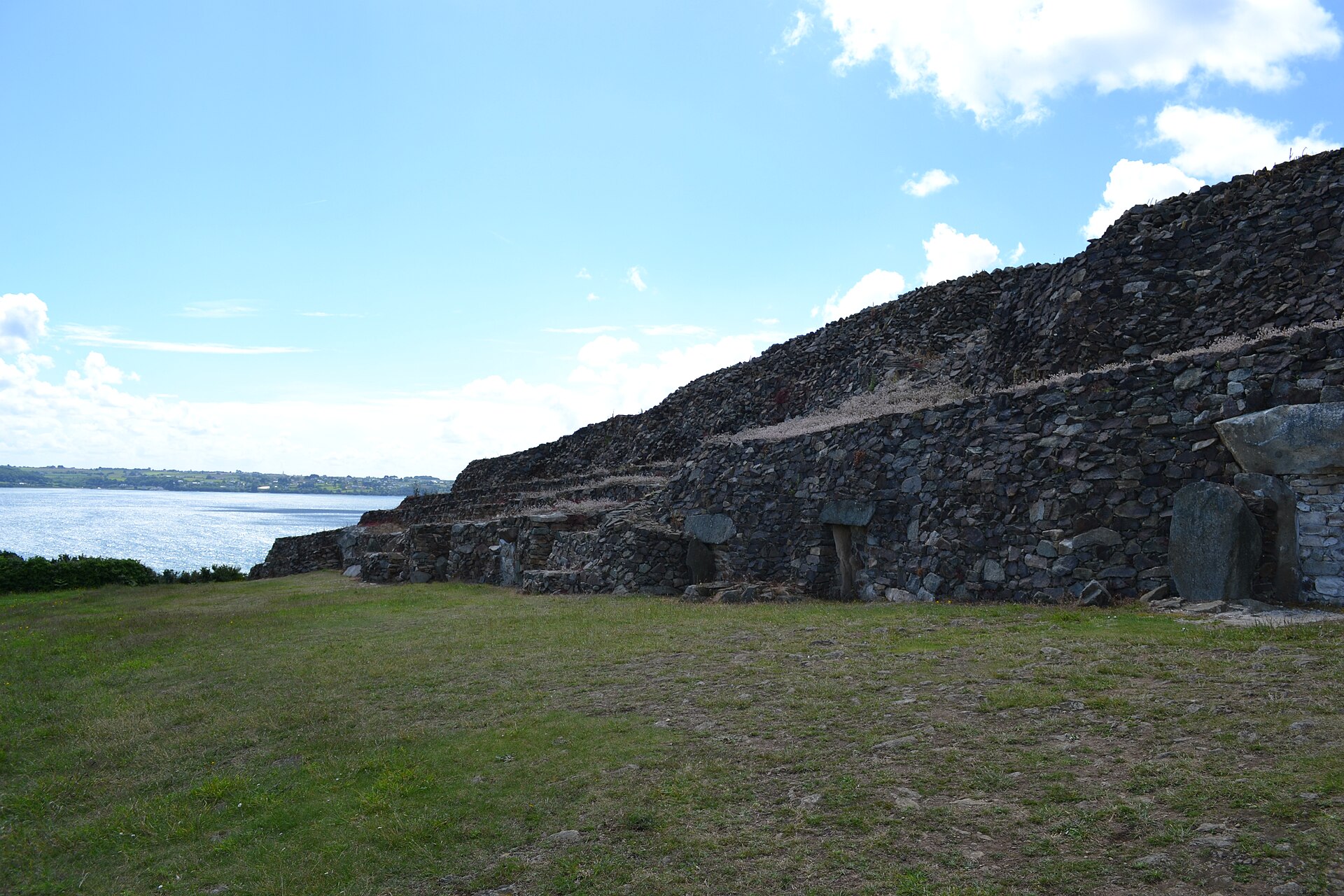
- What exactly is Barnenez?
- Just how old is it, really?
- Two cairns in one: the story in the stone
- Inside the passage graves
- How you build a mountain of stone by hand
- The carvings in the dark
- The quarry that nearly destroyed it
- Why would anyone build this?
- Why Barnenez matters
- Standing before the cairn today
- A monument by the sea
- How we pin down the dates
- The tradition Barnenez began
- Older than the pyramids, and then some
- Barnenez by the numbers
- The people behind the stones
- What the cairn asks of us
What exactly is Barnenez?
Barnenez is a cairn, which is really just a very grand word for a carefully built mound of stones. But calling it a mound undersells it badly. Imagine a long, stepped structure of drystone masonry, some seventy-five metres from end to end, up to about twenty-five metres wide, and originally standing several metres high, all built without a scrap of mortar. Inside this enormous mass of stone run eleven separate passages, each leading to its own burial chamber.
Those passages and chambers are the whole point. Barnenez is what archaeologists call a passage grave: a stone corridor running in from the edge of the cairn to a chamber deep inside, where the dead were placed. Multiply that by eleven, pack them side by side into one gigantic communal monument, and you have something genuinely without parallel for its age. It is less a single tomb than an entire prehistoric mausoleum, a whole community of the dead housed under one vast roof of stone.
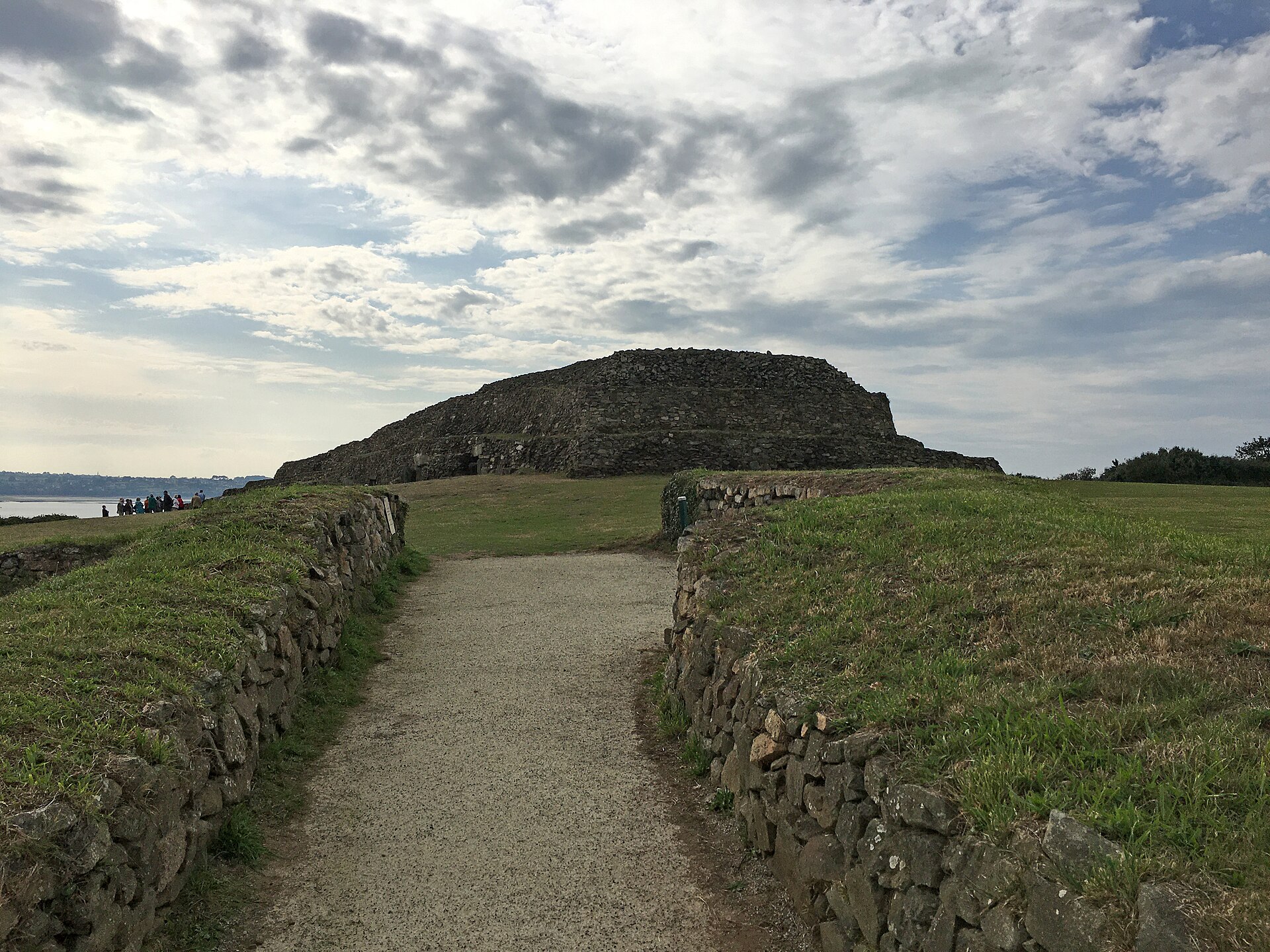
What strikes me most is the sheer ambition of the thing. This was not a quick burial pit scratched into the earth. It was a permanent, monumental statement, built to last and built to be seen, on a prominent ridge overlooking the sea. The people who raised it clearly meant it to endure, and nearly seven thousand years later, it still does.
Just how old is it, really?
The dates are the part that stops people in their tracks. Radiocarbon dating places the earliest part of Barnenez at around 4800 BCE, deep in the Neolithic, the age when people across this part of Europe were adopting farming. To put that in perspective, Barnenez was already ancient when the first stones of Stonehenge were raised, and it predates the Great Pyramid of Giza by more than two millennia.
Numbers on that scale are hard to feel, so let me try it another way. If you stood at Barnenez on the day it was finished and looked forward in time, you would have to wait longer for the pyramids to appear than the entire span separating those pyramids from us today. The gulf of time between the cairn and Egypt’s pharaohs is deeper than the gulf between the pharaohs and the modern world. That is how far back this monument reaches.
This is why Barnenez has sometimes been called a prehistoric Parthenon, a phrase coined by the archaeologist who saved it. The nickname is not about the style, which could hardly be more different, but about the significance: this is a masterpiece of early architecture, a foundational monument, standing near the very beginning of Europe’s long love affair with building in stone.
Two cairns in one: the story in the stone
One of the most fascinating things about Barnenez is that it was not built all at once. Careful study of the masonry has shown that there are really two cairns here, welded into a single structure. There is an earlier, primary cairn built of a distinctive local dolerite stone, containing the oldest chambers, and then a later extension, built of a different stone, added onto it to enlarge the monument and house more burials.
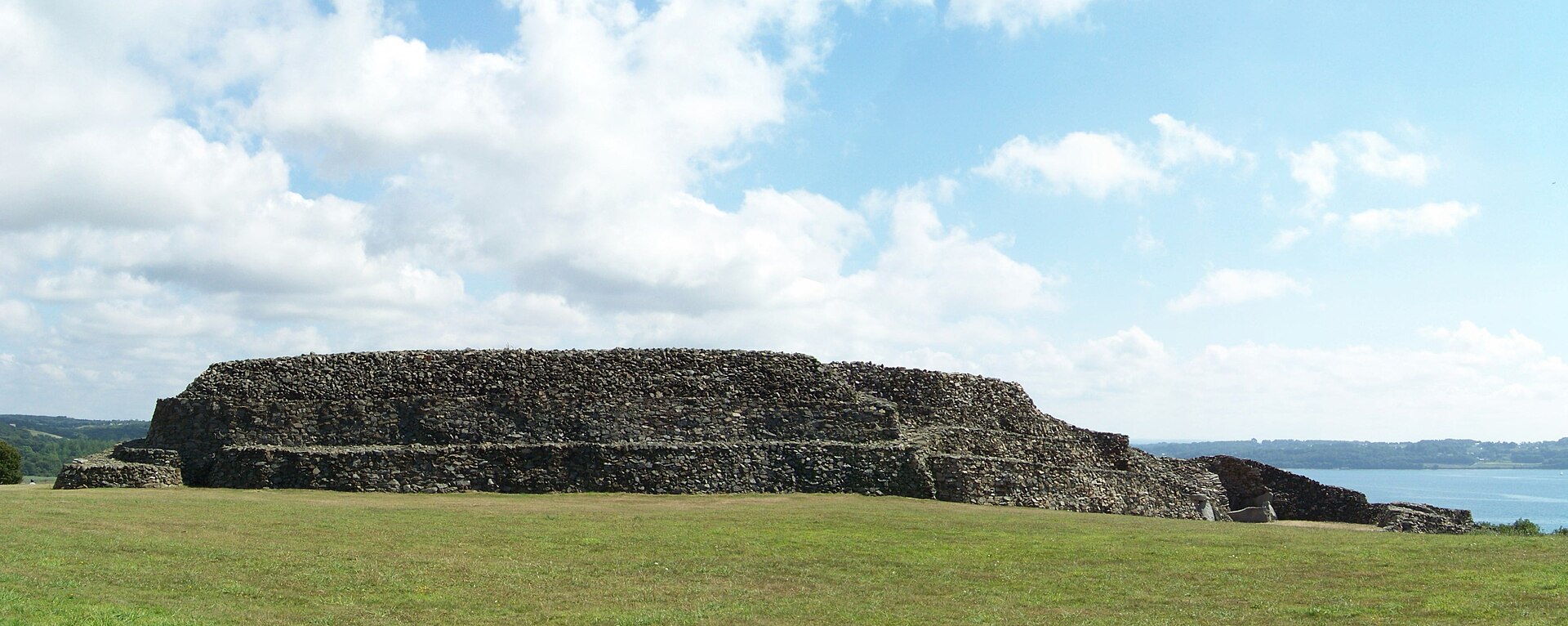
You can actually see the join. The two phases used different rock, laid in slightly different ways, so the seam between the old cairn and its extension is visible to anyone who knows to look for it. It is a wonderful thing, because it means the monument grew over time, generation after generation adding to it, extending it, and reusing it, rather than springing up finished in a single burst of effort.
That layered history changes how I read the place. Barnenez is not a snapshot of one moment; it is a monument that stayed alive and in use across centuries, cared for and expanded by successive communities. It was a fixed point in their world, a place they kept returning to and kept investing in, which tells you how much it mattered to them.
Inside the passage graves
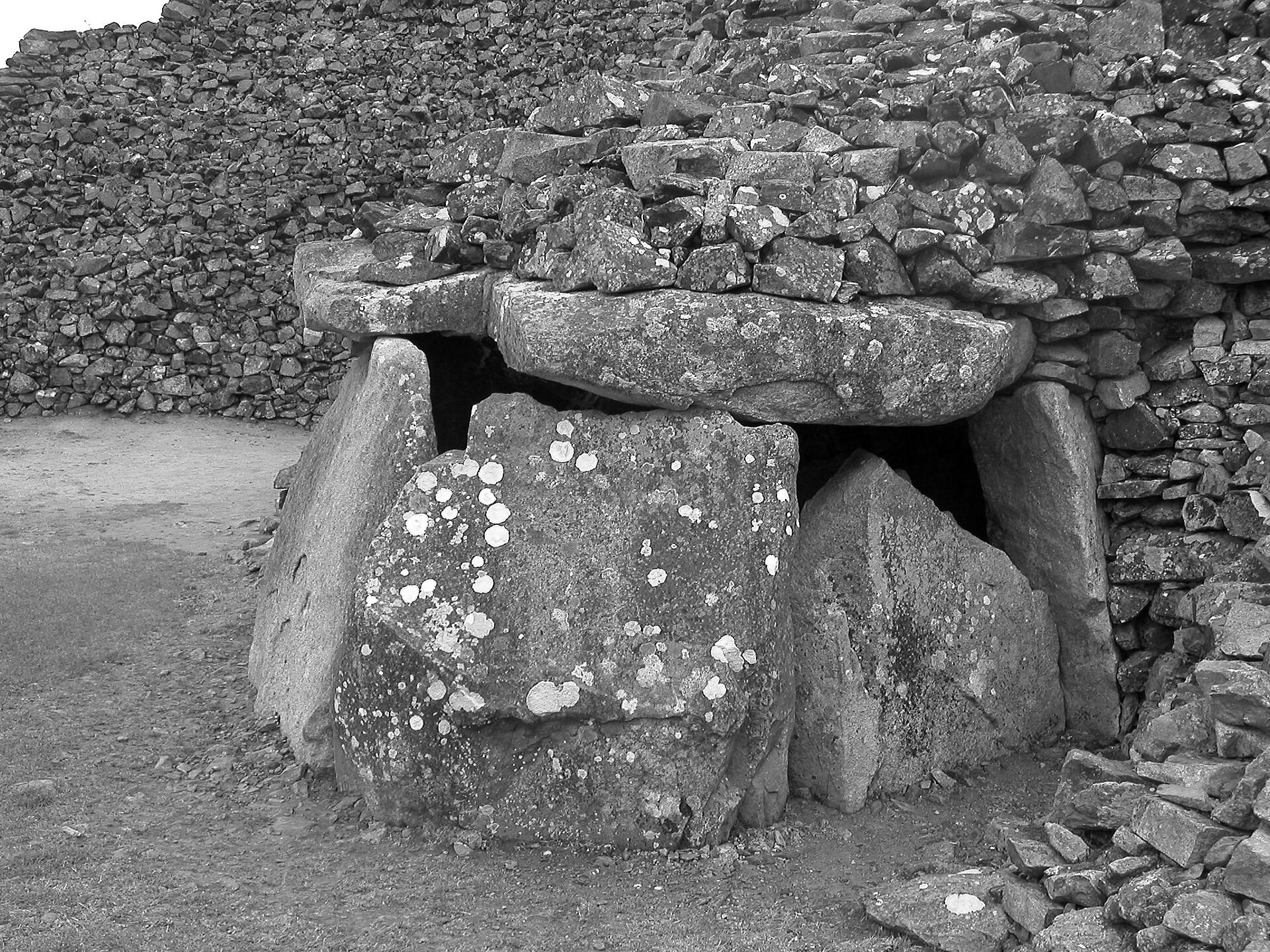
The eleven chambers are the heart of Barnenez. Each is reached by walking, or these days crouching, down a low stone passage that runs in from the southern face of the cairn. The passages are lined and roofed with slabs, and they open into chambers where the community placed their dead, along with grave goods, over long periods of use.
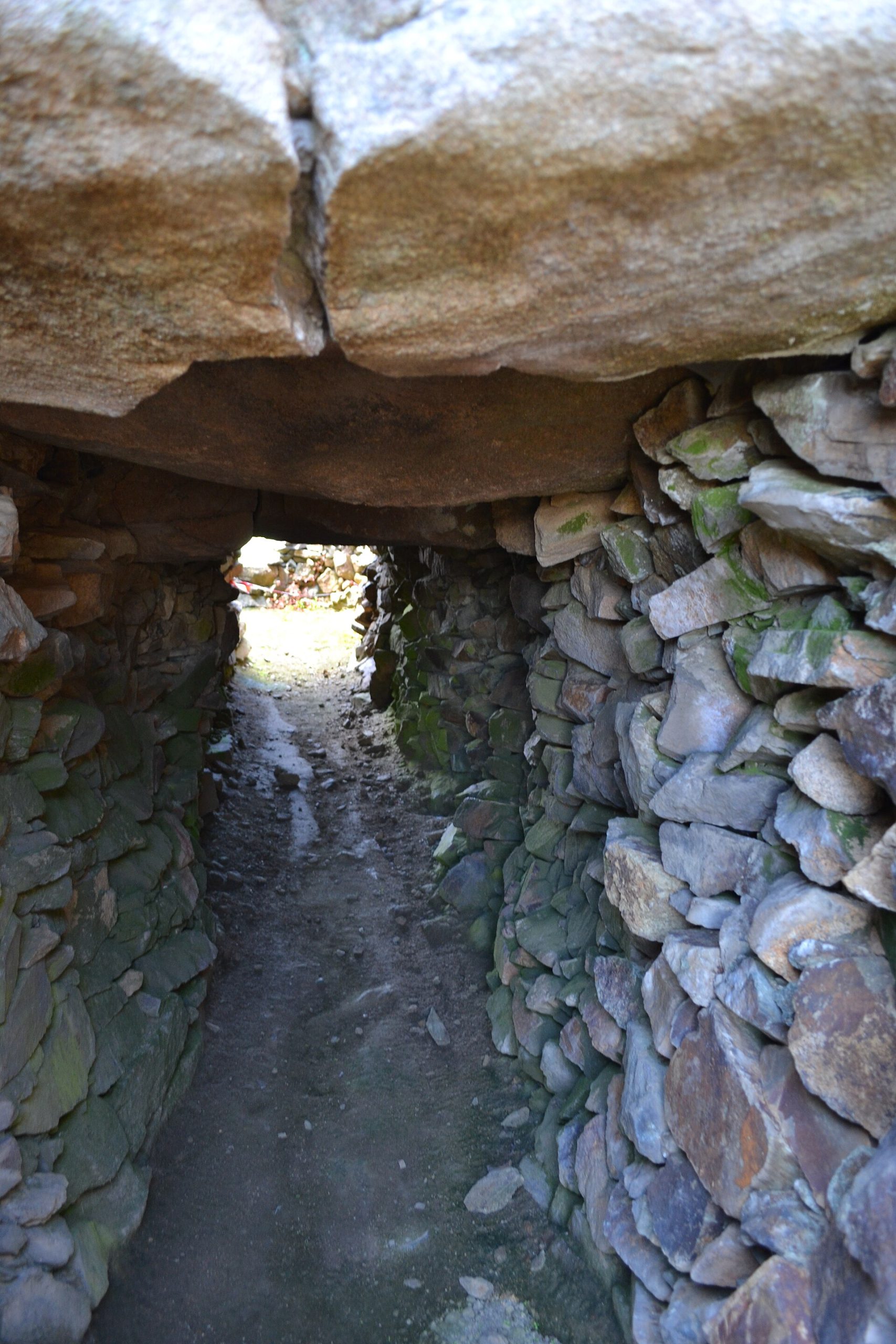
Several of the chambers are built using a technique that I find genuinely impressive for its age: corbelling. Instead of capping the chamber with a single huge flat stone, the builders laid courses of stone that each project a little further inward than the one below, gradually closing the space until it forms a beehive-shaped vault. This is sophisticated engineering, achieved entirely by eye and experience, thousands of years before anyone wrote down a rule of construction.
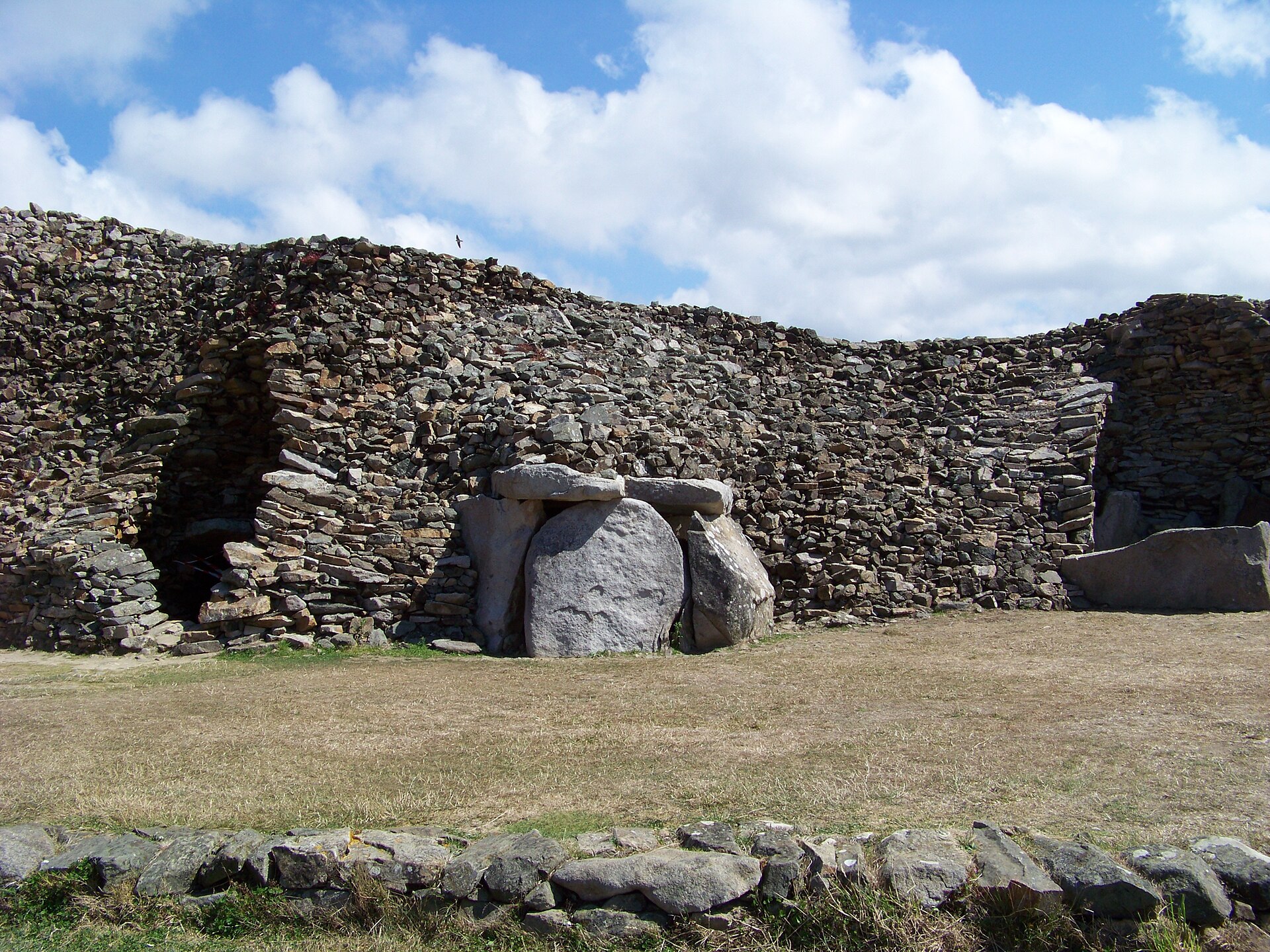
Standing at the mouth of one of these passages, even now, you feel the pull of the dark interior and the weight of the stone overhead. These were not casual spaces. They were carefully constructed rooms for the dead, deep inside a mountain of rock, designed to be approached, entered, and revisited. The care lavished on them tells you these were people with a deep and formal relationship to their ancestors.
How you build a mountain of stone by hand
It is worth pausing on the raw effort involved, because it is staggering. Barnenez contains something on the order of thousands of tonnes of stone, every piece of it quarried, carried, and placed by human muscle. There were no wheels in use here, no draft animals hauling loads, no metal tools to dress the rock. There were just people, ropes, timber, and an enormous shared determination.
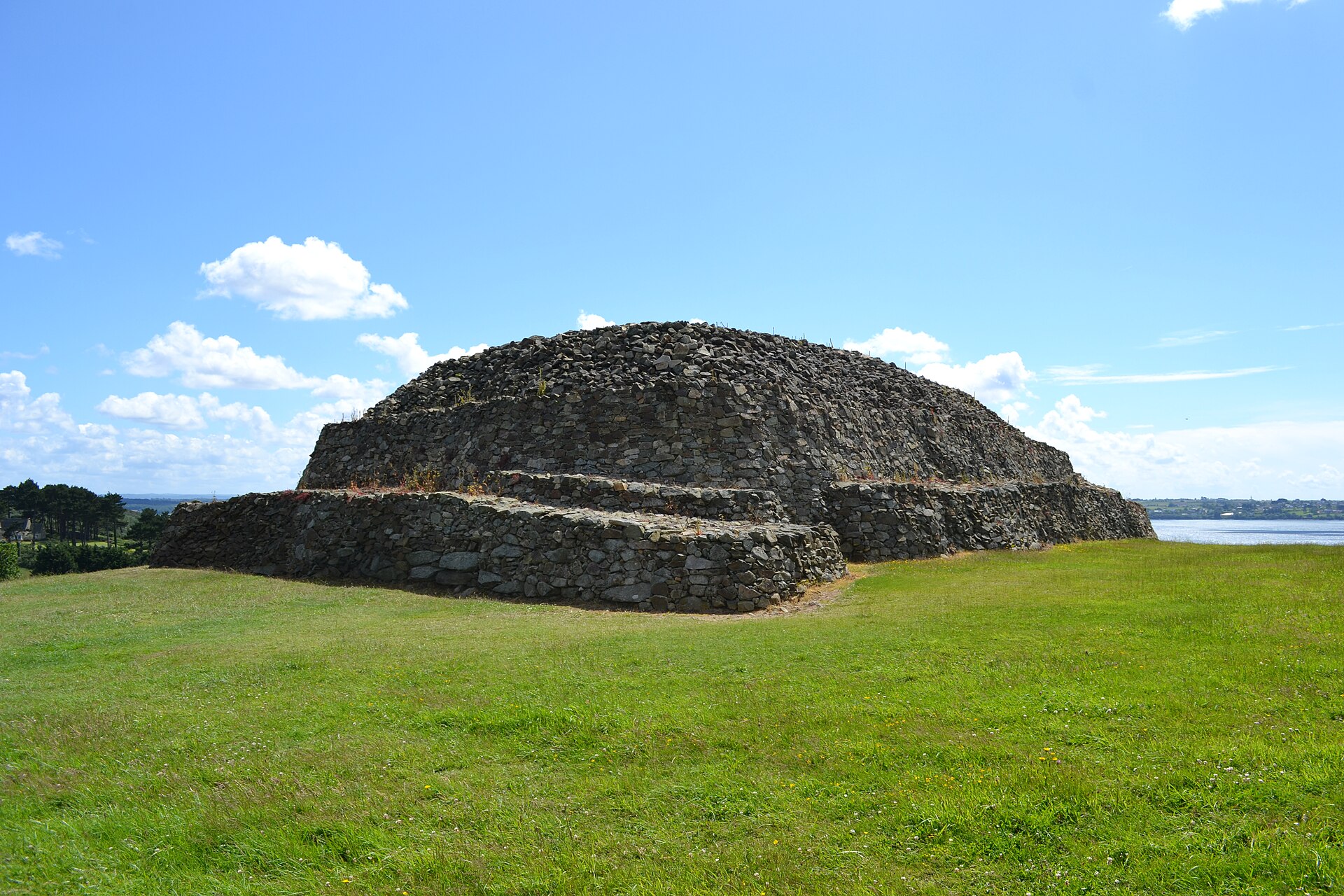
Think about what that requires. Someone had to organize the quarrying of the stone, the movement of it up onto the ridge, the skilled laying of the drystone walls, the roofing of the chambers, and the feeding and coordinating of the workforce, probably across many years and more than one generation. This is not the work of a handful of families. It implies a community that could plan, cooperate, and sustain a huge collective project over the long term.
That, to me, is the real revelation of Barnenez. We tend to assume that this kind of organized, monumental labour needs a centralized state with rulers barking orders. Yet here it is, achieved by Neolithic farming communities with none of that apparatus. The cairn is proof that people could pull together to build something colossal long before anyone invented kings to make them do it.
The carvings in the dark
Barnenez is not just bare stone. Hidden within some of the chambers are engravings pecked into the rock: symbols that recur across the megalithic art of this region, including forms often described as axes, bows, wavy lines, and a repeated U-shaped or horned motif that scholars sometimes link to an ancestral or protective figure. What they meant to the builders we can only guess.
I try to resist the urge to decode these carvings too confidently. We do not have their language or their myths, and it is easy to project our own ideas onto a few abstract shapes. But the very presence of deliberate art, placed inside dark chambers meant for the dead, tells us something important: these spaces were charged with meaning. They were decorated, marked, made special, not just functional holes for bodies.
There is something moving about carvings made to be seen mostly in darkness, by torchlight, by people performing rites we will never fully understand. They are messages that were never really meant for us, and yet here we are, seven thousand years later, straining to read them. That gap between their world and ours is part of what makes standing inside Barnenez so haunting.
The quarry that nearly destroyed it
Barnenez very nearly did not survive into our time, and the story of its near-destruction is grimly instructive. In the mid-twentieth century, before the site was properly understood or protected, the cairn was treated as a convenient source of building stone. Contractors began quarrying into it, biting a great chunk out of one end of the monument to feed a road-building project.
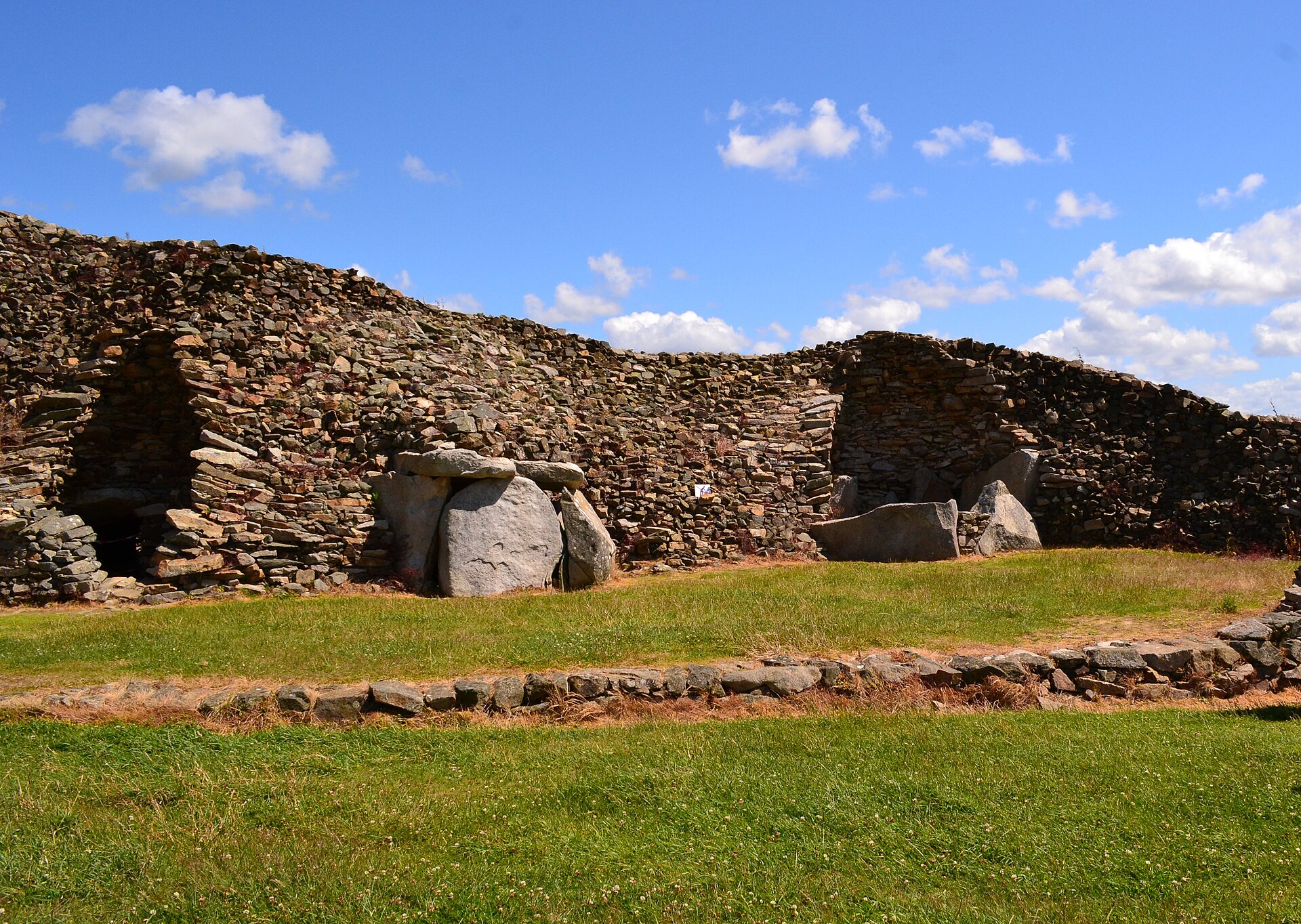
The quarrying was a catastrophe, but it produced one strange, accidental gift. By slicing straight through the cairn, the machinery cut it open like a cross-section through a cake, exposing the hidden chambers inside and revealing the structure of the monument in a way that would otherwise never have been visible. It was this dramatic exposure that finally alerted archaeologists to just how extraordinary the site was.
Excavation and protection followed, led by the archaeologist Pierre-Roland Giot, who studied and stabilized the monument and gave it the affectionate nickname of a prehistoric Parthenon. So Barnenez stands today partly because it was almost destroyed. That accidental wound in its flank is now one of the most informative things about it, a reminder of how close we came to grinding one of Europe’s oldest masterpieces into roadbed.
Why would anyone build this?
The obvious question is why. Why would a community of early farmers pour so much of their limited time and energy into a giant house for the dead? There is no single certain answer, but a few threads seem convincing to me when woven together.
Part of it is surely about the ancestors. A monumental communal tomb, built to last and returned to over generations, is a powerful way of asserting that a people belong to a place, that their forebears are literally rooted in the land. In a world where farming had tied communities to particular territories, a great visible monument on a prominent ridge was a way of saying, plainly and permanently, this land is ours because our dead are here.
Part of it may also be about the living. Building something this vast together binds a community, forges cooperation, and creates a shared achievement that outlasts any individual. The act of construction, the shared labour and ritual, may have mattered nearly as much as the finished tomb. Barnenez was not only a place to bury the dead; it was a project that helped make a scattered farming society into a single people with a common story.
Why Barnenez matters
Barnenez matters because it forces us to rewrite our assumptions. It shows that monumental architecture, sophisticated engineering, organized labour, and formal ritual all existed in Europe thousands of years before cities, states, kings, or writing. The usual checklist we use to define civilization simply does not apply here, and yet the achievement is undeniable.
It also matters because it is a beginning. Barnenez sits near the head of the great megalithic tradition that would go on to raise standing stones, dolmens, and stone circles across Atlantic Europe for thousands of years, from Brittany’s own famous alignments to the circles of the British Isles. To stand here is to stand close to the source of one of humanity’s longest-running architectural traditions.
And it matters, finally, as a human story. Behind the tonnage of stone are ordinary people who farmed this coast, buried their dead with care, carved symbols in the dark, and built something so ambitious that it still astonishes us. Barnenez is a monument to their intelligence, their cooperation, and their refusal to let their dead simply vanish. That is worth remembering.
Standing before the cairn today
If you visit Barnenez now, you will find it protected and open, sitting on its ridge above the sea near the village of Plouezoc’h in Finistère. You can walk the length of the great stepped facade, peer into the mouths of the passages, and see the raw cross-section where the quarrying exposed the chambers. There is a modest visitor building, but the monument itself needs no dressing up.
What lingers is the combination of scale and silence. The cairn is huge, and yet the place is quiet, with the wind off the water and the long grey mass of stone stretched out along the ridge. It is easy, standing there, to feel the presence of the thousands of hands that raised it and the countless dead who were carried into its chambers over the centuries.
For me that is the enduring power of Barnenez. It is not flashy, and it does not try to be. It simply sits there, immense and patient, having outlasted almost everything, quietly insisting that people were building wonders far earlier than we like to think. Sometimes the oldest, plainest monuments are the ones that move you most.
A monument by the sea
It is worth thinking about where Barnenez was built, because the location was clearly no accident. The cairn sits on a ridge on a peninsula reaching out into the Bay of Morlaix, with wide views over the water. In the Neolithic the sea level was lower and the coastline different, but the sense of a commanding position overlooking the water would have been just as strong.
Coastal and estuary settings recur again and again in the megalithic monuments of Atlantic Europe, and that is surely telling. The sea was a highway, not a barrier, for these communities. Ideas, people, and styles of building travelled along the coasts, which helps explain why related megalithic traditions appear all down the Atlantic seaboard, from Brittany to Ireland to Iberia. Barnenez was not an isolated freak; it was part of a connected coastal world.
Placing the monument where it could be seen from the water, and where the dead could rest looking out over it, feels deliberate and meaningful. The builders chose a spot that mattered, a threshold between land and sea, and made it the permanent home of their ancestors. Landscape and monument were designed to work together.
How we pin down the dates
Whenever I quote a date like 4800 BCE, it is fair to ask how anyone can possibly know. The answer at Barnenez rests mainly on radiocarbon dating of organic material found in and around the chambers, cross-checked against the styles of pottery and tools recovered during excavation, and against the sequence of the two building phases visible in the masonry.
Radiocarbon dating works because living things absorb a steady proportion of a radioactive form of carbon, which begins to decay at a known rate once they die. Measure how much is left in a scrap of charcoal or bone, and you can estimate how long ago it stopped living. It is not perfect, and the results come as ranges rather than exact years, but when many samples agree, the overall picture becomes reliable.
What I appreciate about this is how grounded it is. The great age of Barnenez is not a romantic guess; it is built from physical scraps of the ancient world, measured carefully in laboratories and checked against other evidence. Behind the awe-inspiring number is patient, unglamorous science, and that is exactly what makes the number trustworthy.
The tradition Barnenez began
Barnenez does not stand alone in its landscape. Brittany is extraordinarily rich in prehistoric monuments, from other great cairns to the famous rows of standing stones that march across the countryside further south. Barnenez sits near the very start of this tradition, one of the earliest expressions of an impulse that would keep Breton communities raising stones for thousands of years.
And the tradition did not stay in Brittany. The broad family of megalithic monuments, passage graves, dolmens, standing stones, and stone circles, spread and evolved all around the Atlantic fringe of Europe over the following millennia. When you look at a passage grave in Ireland or a stone circle in Britain, you are looking at distant cousins of the impulse that raised Barnenez near the dawn of it all.
That is why I keep coming back to the idea of Barnenez as a beginning. It is not just an old monument; it is close to the root of an entire architectural language that shaped the prehistoric landscapes of half a continent. To understand where Europe’s standing stones come from, you have to start with places like this.
The people behind the stones
It is easy to talk about Barnenez as an engineering feat and forget that it was made by living people with faces, families, and fears. We know frustratingly little about them directly, but the monument itself lets us infer a surprising amount about the kind of society they must have been.
They were farmers, growing crops and keeping animals on this Breton coast, settled enough in the land to invest years in a permanent monument. They were organized, able to coordinate large numbers of people over long periods without the machinery of a state. They were skilled, capable of quarrying, hauling, and precisely stacking thousands of tonnes of stone and vaulting chambers by eye. And they were spiritual, marking their tombs with carvings and returning to them across generations.
Put those inferences together and a picture emerges of a confident, cooperative, deeply rooted community, one with a strong sense of its own past and a determination to make that past visible in the landscape. We may never know their names or hear their language, but through Barnenez we can still sense the shape of the society that built it.
What the cairn asks of us
Every time I sit with the facts of Barnenez, I come away with the same feeling: a healthy humility about how much we underestimate the deep past. It is tempting to imagine prehistoric people as simple, as if farming and stone tools meant limited minds. Barnenez flatly refuses that idea. This is the work of people every bit as clever, ambitious, and cooperative as we are.
The cairn also asks us to think about permanence. The people who built it wanted something that would outlast them, and it has, spectacularly, surviving nearly seven thousand years, a near-destruction by quarrying, and the slow erosion of time. Very little that we build today will still be standing and meaningful in the year 8800. Barnenez has already managed the reverse of that span.
So the monument leaves me with a question rather than a tidy conclusion, which feels right. It asks how far back human greatness really reaches, and it answers, quietly and massively, further than you think. That is the best kind of thing an ancient place can do: not just inform you, but genuinely change the scale of your imagination.
Barnenez by the numbers
Sometimes it helps to gather the raw figures in one place, because each of them is astonishing on its own. Barnenez stretches roughly seventy-five metres in length and reaches up to about twenty-five metres in width, a footprint larger than many a modern building. It holds eleven separate passages and chambers, each a complete tomb in its own right, all packed into one continuous monument.
It was raised in at least two major phases, the earlier around 4800 BCE and the extension somewhat later, using different stone for each. The whole thing is drystone, built without mortar, and represents thousands of tonnes of quarried and hand-placed rock. And it has stood, in one form or another, for close to seven thousand years, surviving into an age of satellites and skyscrapers.
Line those numbers up and the scale of the achievement really lands. This was one of the largest structures on the planet when it was built, produced by a society without metal, writing, or cities. There is nothing modest about Barnenez except its fame, and that, I think, is exactly the injustice worth correcting.
Older than the pyramids, and then some
The comparison with Egypt is worth dwelling on, because it reframes everything. We are trained to treat the pyramids as the ultimate symbol of ancient monumental building, the yardstick against which age and ambition are measured. Barnenez quietly moves that yardstick. It was already standing, already old, already sacred, well over two thousand years before the first pyramid rose from the desert.
That does not diminish Egypt; it enlarges our sense of the human past. It tells us that the urge to build big, to house the dead in permanent stone, to organize whole communities around a shared monument, is far older and far more widespread than the famous examples suggest. Barnenez is one of the earliest surviving expressions of an impulse that clearly runs very deep in our species.
So the next time someone points to the pyramids as the beginning of monumental architecture, I think of this long grey cairn on a Breton headland, older by millennia, built by farmers without kings, and I smile. The real story starts earlier, and it starts in places like this.
When people ask me which ancient site changed how I think most, Barnenez is always near the top of the list, precisely because so few have heard of it. Its obscurity is undeserved, and the more time you spend with it, the clearer that becomes.
Barnenez is one chapter in a much bigger human story, and every other site in this series throws its own light back on it. If the sheer age here astonishes you, older still are the great carved pillars of Göbekli Tepe and its sister site Karahan Tepe, the walled town of Jericho, the painted caves of Lascaux and Chauvet, and the farming villages of Çatalhöyük, Aşıklı Höyük, Mehrgarh and Jiahu. If it is the megalithic architecture that grips you, walk on to the great circle at Stonehenge, the solstice tomb of Newgrange, the temples of Malta, the stone village of Skara Brae, and the mega-settlements of Cucuteni-Trypillia. For the first cities and planned towns that rose elsewhere in the same broad age, see Uruk and Sumer, Mohenjo-daro, Dholavira, Kalibangan, Liangzhu, Sarazm and Tell Brak. And across the wider ancient world you can meet the palace of Knossos, the reef-built city of Nan Madol, the pyramid city of Caral, the sensory temple of Chavín de Huántar, the carved warriors of Cerro Sechín, the hunter-gatherer earthworks of Poverty Point, and the solar towers of Chankillo. Each one is another way of asking the same question Barnenez asks: how far back does human ambition really go? Don’t miss Vinča, whose nine-metre mound holds a thousand years of European prehistory. Don’t miss Gavrinis, the 6,000-year-old carved passage tomb on a drowned Breton island. Don’t miss Los Millares, the 5,000-year-old Copper Age stronghold of Almería. It pairs beautifully with the story of Bougon, where farming communities built stone tombs nearly seven thousand years ago. The same ancient impulse echoes at the Almendres Cromlech, one of the oldest megalithic monuments in all of Europe. The same ancient ambition rises at the Ġgantija temples, raised on Gozo around 3600 BC. The same deep past unfolds at Knowth, a great Boyne Valley tomb with two passages and a ring of smaller mounds. The same ancient devotion shines at the Tarxien temples, home to a colossal statue and remarkable carvings. The same ancient sky-watching shines at Mnajdra, whose stones catch the sun at the turning points of the year. For another chapter in the same deep past, visit Ħaġar Qim, Malta’s great cliff-top temple. For another chapter in the same ancient story, visit Dowth, the overlooked third mound of the Boyne. For another chapter in the same deep past, wander the endless rows of Carnac in western France. For another chapter in the same deep past, visit Callanish, Scotland’s great circle at the edge of the sea. For another face of prehistory, visit Filitosa, where ancient stone figures still watch over the hills. For another face of the ancient world, visit Ale’s Stones, Scandinavia’s great ship traced in standing boulders.
You May Like
The Bardo, a Palace of the Beys Filled With Roman Mosaics


2 thoughts on “The Cairn of Barnenez: Europe’s Colossal Stone Monument Older Than the Pyramids”