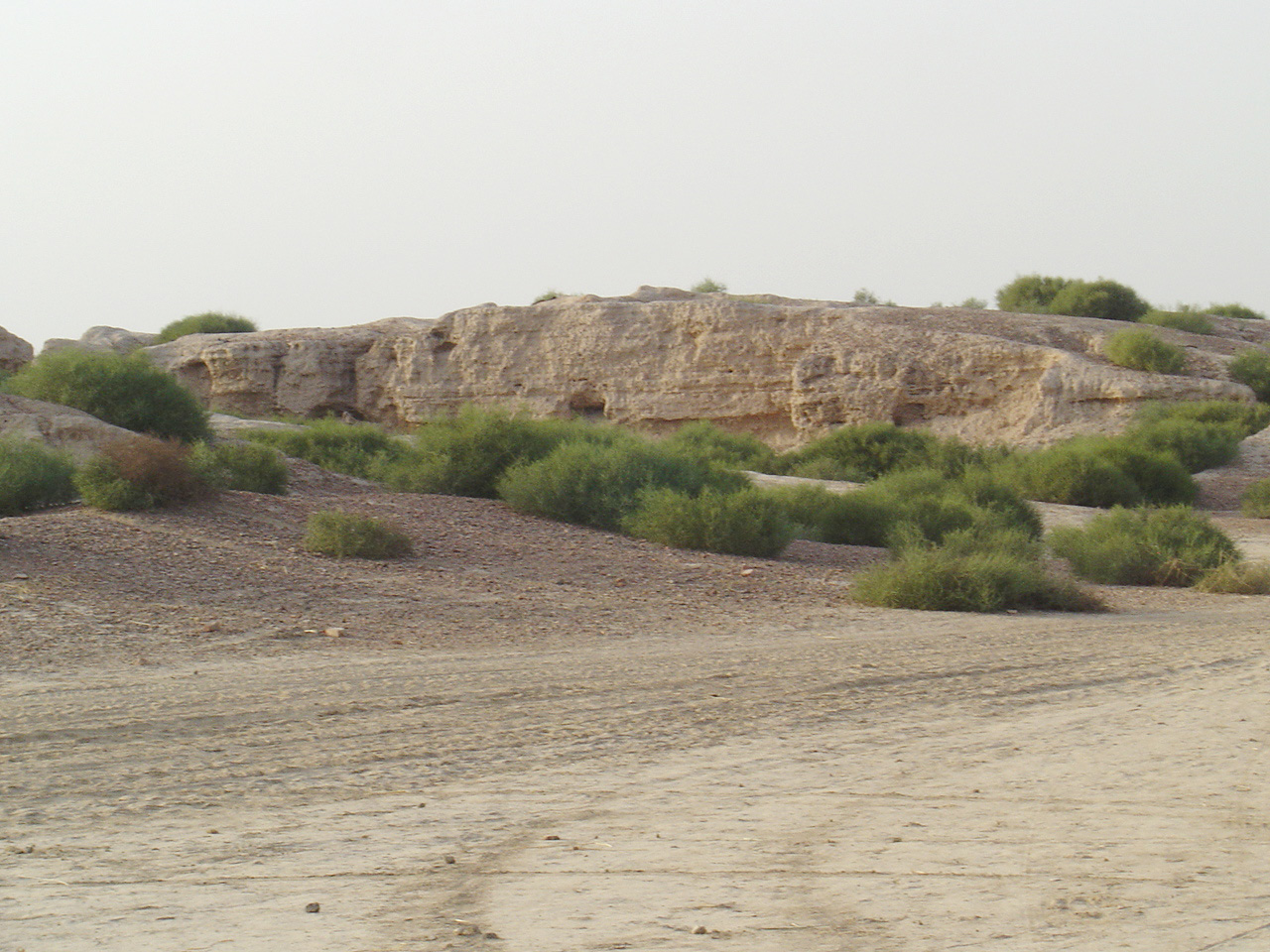
There is a spot in the flat, dusty north of Rajasthan where two low mounds sit beside a dry riverbed, and if you did not know what you were looking at you would walk right past them. No soaring walls, no famous statues, nothing that shouts for attention. Yet the ground under your feet at Kalibangan holds one of the most quietly astonishing records in all of South Asia: a town that was lived in before the great Indus cities rose, rebuilt on the same spot after an earthquake, and left behind the earliest ploughed field anyone has ever found.
I keep coming back to Kalibangan precisely because it is so understated. It does not try to dazzle you. Instead it rewards patience. Spend a little time with what the excavators pulled out of these mounds and you start to see an ordinary community going about its business five thousand years ago, laying out streets, worrying about their harvest, kindling small ritual fires, and carrying on after the land itself shook them off their feet. This is the story I want to walk you through.
- Where Kalibangan is, and why the river matters
- How a lost town came back to light
- Two towns, two mounds, one earthquake
- The oldest ploughed field on Earth
- Streets, bricks and a town that thought in grids
- The mysterious fire altars
- Pots, seals and everyday craft
- The night the ground moved
- When the water walked away
- Why Kalibangan still matters
- Standing on the mounds today
- A day in the life on the river plain
- How we know how old it really is
- Kalibangan in the wider Indus world
- What the black bangles remember
Where Kalibangan is, and why the river matters
Kalibangan sits in Hanumangarh district in the northern corner of Rajasthan, in a landscape that today feels dry and half-forgotten. The name itself is a clue to its past: it comes from local words meaning “black bangles,” a reference to the countless broken bits of dark terracotta bangles that villagers kept turning up in the soil long before any archaeologist arrived. People had been walking over the debris of a vanished town for generations without quite realizing what it was.
The single most important thing to understand about this place is the river. Kalibangan grew up on the banks of the Ghaggar, a watercourse that is seasonal and feeble now but was once a broad, reliable river running down from the hills. Many researchers connect this ancient river system with the Sarasvati described in early Indian texts. Whatever we call it, the water was the reason a town could exist here at all. When you look at the mounds you are really looking at a place that made a bargain with a river, and the whole arc of its life follows what the river did.
That dependence on a single river gives Kalibangan a particular emotional weight for me. It is a settlement built on a promise that water made and, eventually, broke. The people here prospered as long as the Ghaggar behaved, and their story bends and finally ends as the river changed its course and faded. Few ancient sites tie the fate of a community so directly to a line of blue on a map.
How a lost town came back to light
The mounds first caught scholarly attention in the closing years of the nineteenth century, when the Italian scholar Luigi Pio Tessitori, working in Rajasthan on old manuscripts and folklore, noticed the ruins and sensed they were far older than anyone assumed. He did some early digging and suspected he was standing on something prehistoric, but he died young and the full significance of the place slipped away again for decades.
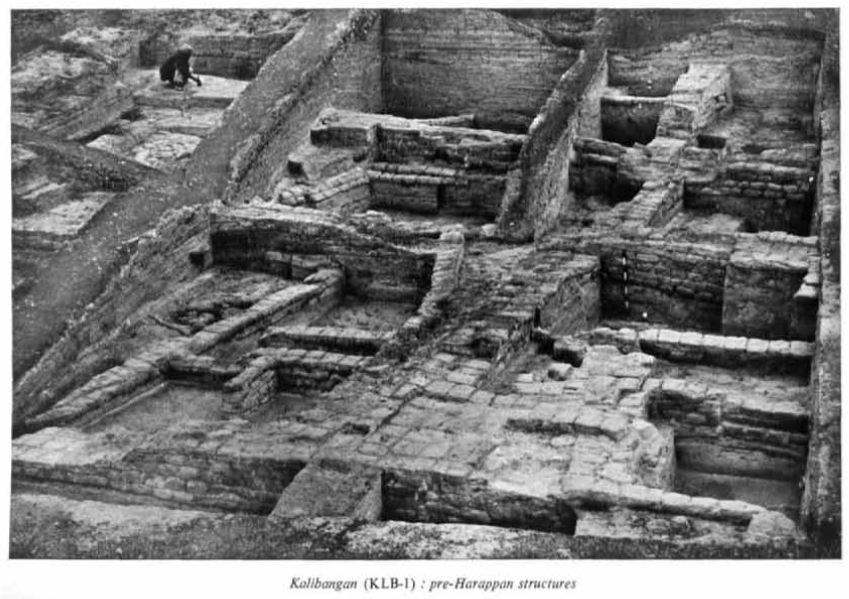
It was only after India became independent that Kalibangan was properly excavated, in a long campaign led by the Archaeological Survey of India through the 1960s. Season after season, teams peeled back the layers of the two mounds and slowly reconstructed a town that had been dead for four thousand years. What they found turned Kalibangan from an obscure heap of bangle fragments into one of the key sites for understanding the whole Indus, or Harappan, world.
I find it moving that the town was, in a sense, rediscovered by ordinary curiosity first. Long before the trained diggers arrived, it was farmers and shepherds noticing the black bangles, the odd brick, the strange smoothness of certain fields, who kept the memory of the place alive in local talk. The scientists came later to give names and dates to something the land had never entirely hidden.
Two towns, two mounds, one earthquake
Kalibangan is really two settlements stacked in time, and this is the first thing that makes it special. The earlier one, which archaeologists call the pre-Harappan or early Harappan phase, was a modest fortified town built by people who already knew how to make standardized mudbricks and lay out enclosed spaces. They lived here for centuries, farming the river plain and slowly building up the mound with the debris of daily life.
Then something dramatic happened. The evidence in the ground points to an earthquake that damaged the early town badly enough to end that phase of occupation. After a gap, people returned and built a new, larger, more clearly planned settlement on the same ground, the mature Harappan town, contemporary with the great cities of Mohenjo-daro and Harappa. So at Kalibangan you can literally see the transition from an early river community to a full member of one of the ancient world’s first urban civilizations, with a seismic disaster wedged in between.
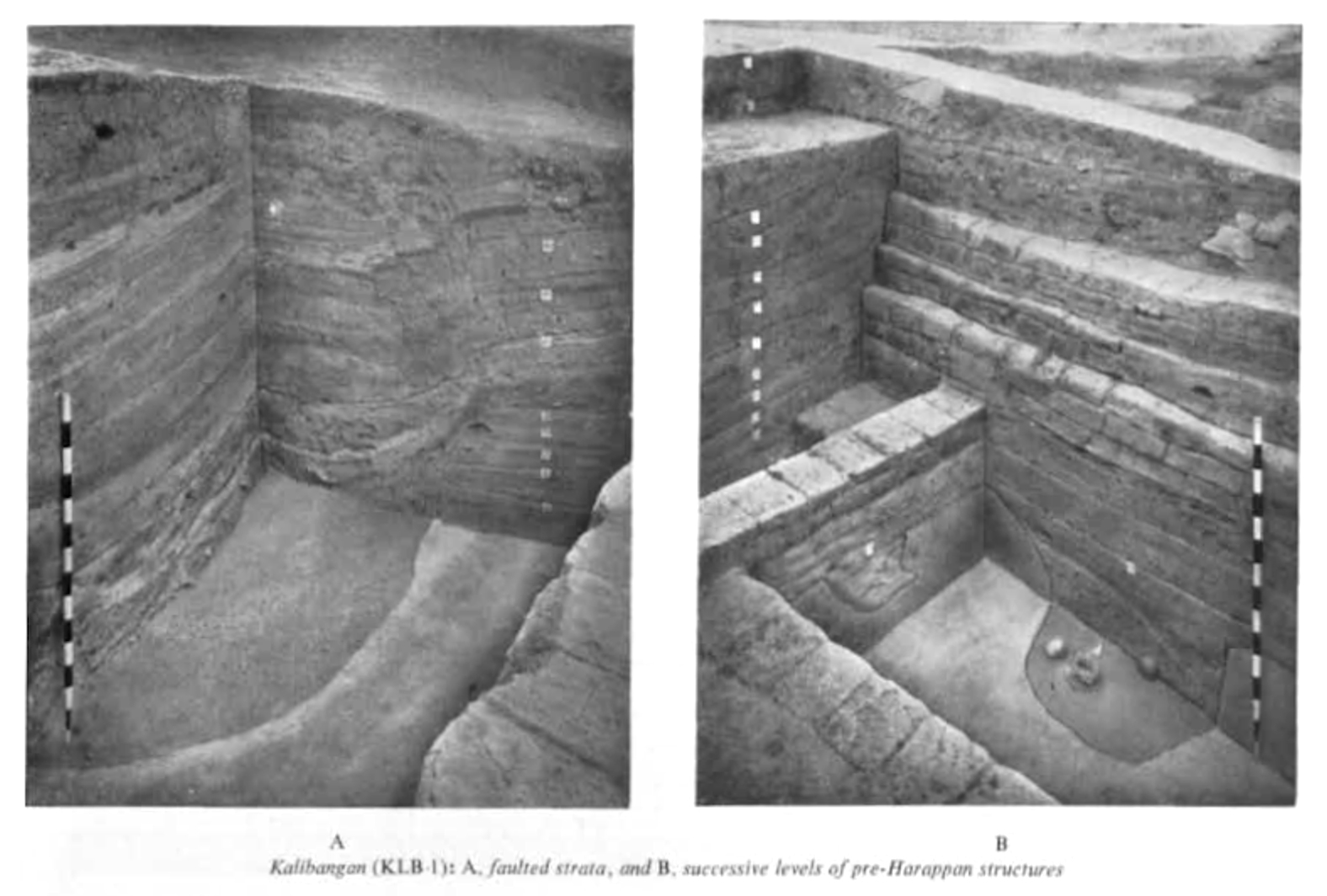
That layered biography is why the mounds are worth reading slowly. Cut a section into the mound and each band of soil is a chapter: the early town, the destruction, the pause, the rebuilding, the mature city, and finally the abandonment. Not many places let you watch an entire community be knocked down and choose to start again, all preserved in the same few metres of earth.
The oldest ploughed field on Earth
If Kalibangan is famous for one thing among archaeologists, it is a field. Just outside the early settlement, excavators uncovered a patch of ground crisscrossed by a grid of shallow furrows, the unmistakable marks left by a plough dragged across the soil. It is the earliest evidence of a ploughed field found anywhere in the world, dating to the pre-Harappan phase, well before 2800 BCE.
What makes it so evocative is the pattern. The furrows run in two directions, one set widely spaced and the other set closer together and crossing them at right angles. Farmers in the same region still plough their fields in almost exactly this way today, planting a tall crop in the wide rows and a shorter crop in the narrow ones, so that both share the field without shading each other out. In other words, a farming technique you can watch in Rajasthan right now was already being used on this very spot around five thousand years ago.
I do not think there is a more human artefact in all of Kalibangan than that scratched grid of dirt. It is not a temple or a treasure. It is just the ground where someone grew their food, and the fact that it survived at all, and that the method has quietly passed down through two hundred generations of farmers, gives me a kind of vertigo. Continuity like that is rare and precious.
Streets, bricks and a town that thought in grids
The mature Harappan town at Kalibangan follows the template you see across the Indus world, and it is a template worth admiring. The settlement was divided into two walled parts: a higher, fortified citadel on the western mound and a larger lower town to the east where most people lived and worked. Streets ran in straight lines and crossed at right angles, carving the town into neat blocks, and houses were built of standardized mudbricks made to consistent proportions.
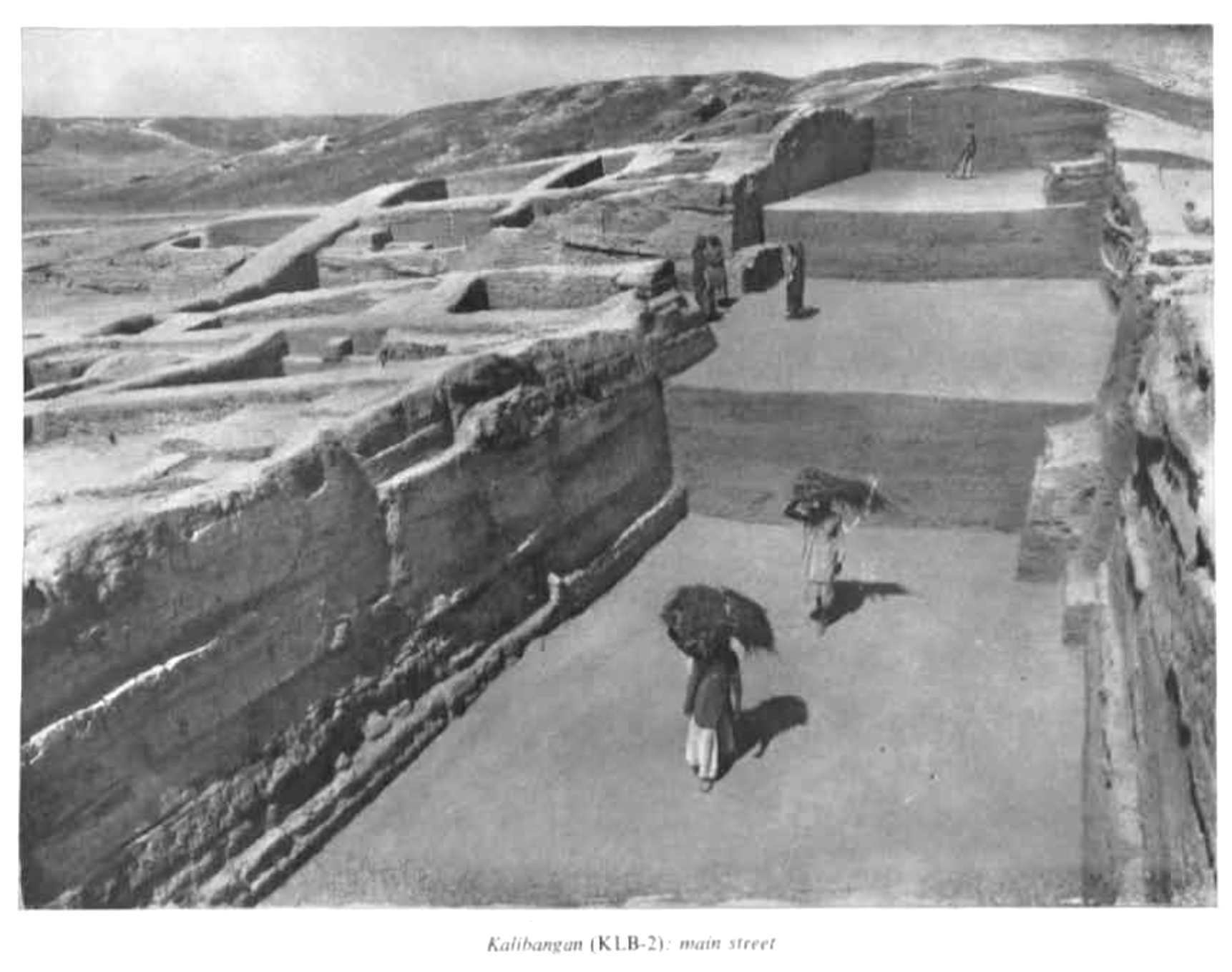
That obsession with the grid and the standard brick tells you something about how these people thought. Somebody, somewhere, had agreed on the right size for a brick and the right way to lay out a street, and that agreement held across a town and indeed across a civilization spread over an enormous area. This was not a place that grew by accident, house by house; it was planned, and the plan was shared.
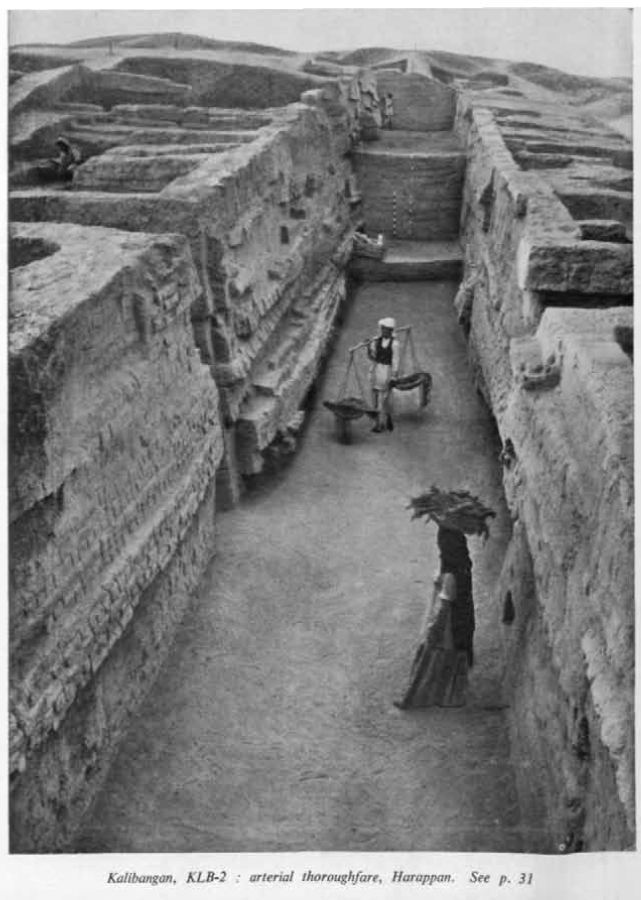
Walking the exposed lanes today, even reduced to knee-high stubs of wall, you can feel the discipline of it. The main thoroughfares are generous and straight, the side lanes branch off at clean angles, and the whole thing has the calm logic of a place designed by people who valued order. It is easy to forget how radical that idea was when almost everywhere else humans were still building tangled, organic villages.
The mysterious fire altars
One of the most intriguing discoveries at Kalibangan is a series of what the excavators called fire altars: rows of small rectangular pits, lined with clay, each containing ash, charcoal and a curious upright clay stele or a set of terracotta cakes. They turned up both on the citadel, arranged in a formal row on a raised platform, and inside ordinary houses in the lower town.
Nobody can say for certain what rituals these pits served, and that uncertainty is part of their fascination. They look for all the world like places where small fires were kindled deliberately, again and again, as part of some ceremony. The fact that they appear both in a grand public setting and in private homes suggests a practice woven into daily life at every level, from the town’s leaders down to individual families gathered around a hearth of their own.
I try not to over-interpret them, because it is tempting to read our own ideas of worship back into a set of ashy pits. But there is something quietly powerful about the thought of people here lighting ritual fires, in public and in private, as a normal rhythm of life. It hints at a shared inner world, a set of beliefs and gestures, that we can glimpse only through the burnt residue left in the clay.
Pots, seals and everyday craft
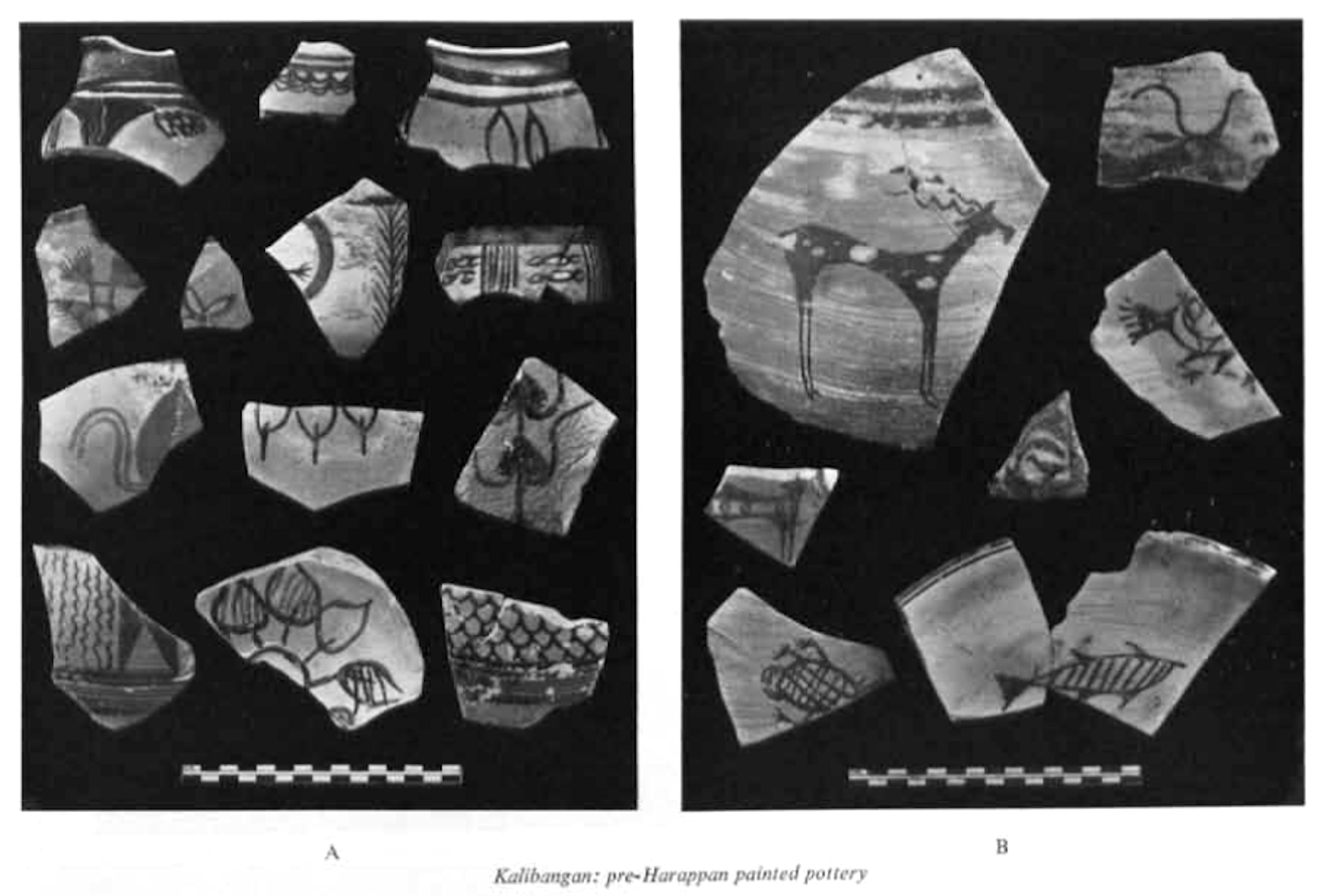
The objects that came out of Kalibangan bring the townspeople closer than any wall or street ever could. The pre-Harappan levels produced beautiful painted pottery, sturdy and confident, decorated with bold geometric bands, loops and stylized natural motifs in dark paint over a reddish surface. This is not tentative early work; it is the product of potters who had thoroughly mastered their craft generations before the mature cities arose.
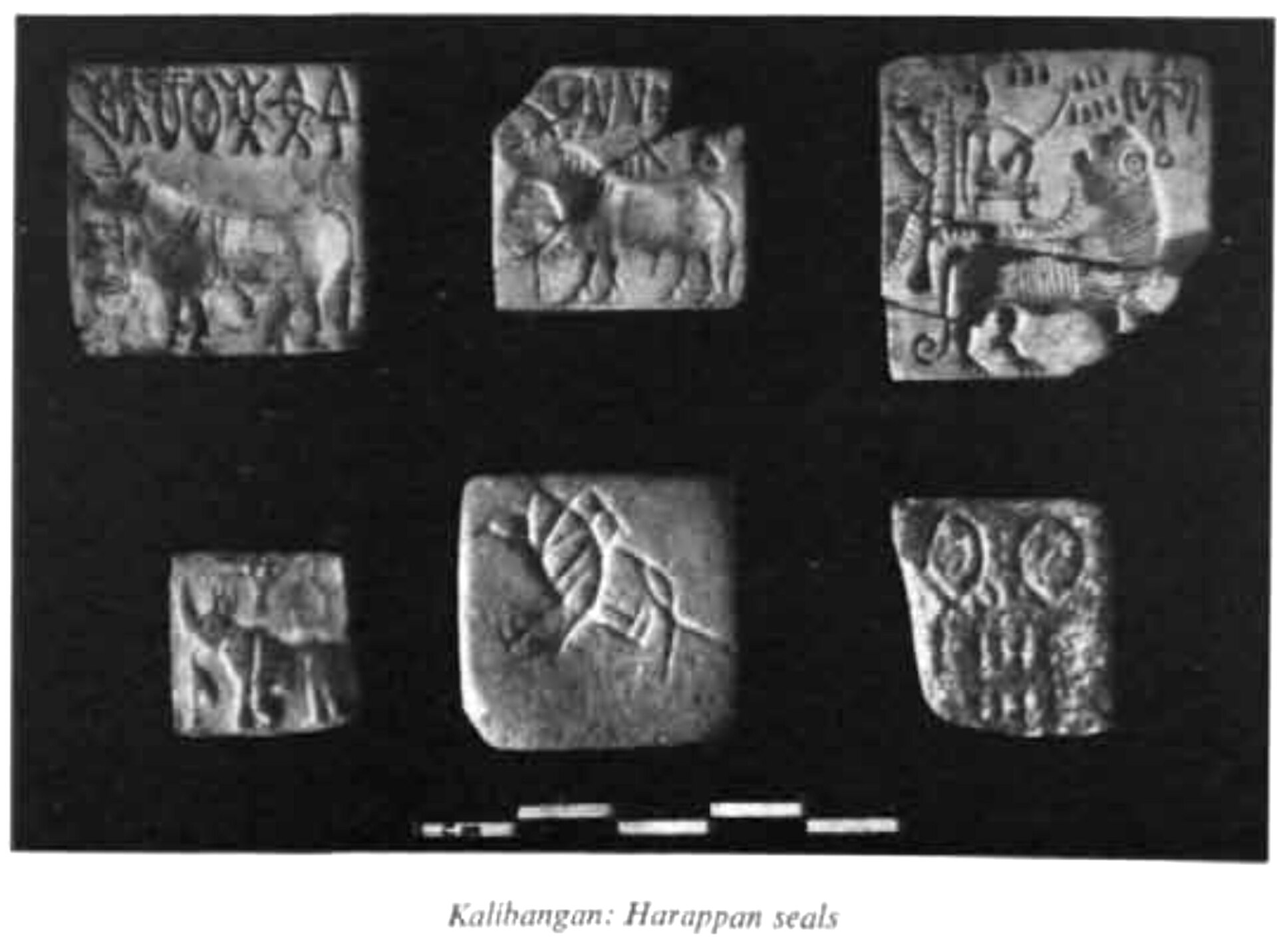
From the mature Harappan town came the small carved seals that are the signature artefact of the whole Indus civilization. Cut from stone and engraved with animals and with the still-undeciphered Indus script, these seals were probably used to mark ownership or to stamp goods, and they connect Kalibangan to a trading and administrative network that stretched across the entire Indus region and beyond.
Holding the idea of these objects together in your mind, the painted pots and the tiny seals, you get a rounded sense of the place: a town with a deep local tradition of craft that then plugged into a much larger world of trade and shared symbols. Kalibangan was both proudly itself and unmistakably part of something bigger, and its everyday things prove it.
The night the ground moved
Let me linger on that earthquake, because it may be the single most remarkable thing archaeology has recovered here. In the early town, excavators found walls that had been displaced, cracks running through the ground, and building levels disturbed in a way that is very hard to explain except by seismic shaking. If the interpretation holds, Kalibangan preserves what could be the earliest archaeologically recorded earthquake in the world.
Think about what that means on a human level. One day this was a functioning town, with families in their houses and food in their fields, and then the earth heaved and cracked their walls and ended a way of life that had lasted for centuries. The people who survived faced a decision every community fears: stay and rebuild on ground that had already betrayed them, or leave for good.
What gets me is that, after a gap, they came back. The mature Harappan town rose on the same mound, bigger and more carefully planned than before. There is a stubborn optimism in that choice, a refusal to let the land have the last word. Kalibangan is, among everything else, a monument to the very human decision to rebuild.
When the water walked away
In the end, though, it was not the earth that finished Kalibangan but the water. Around the early second millennium BCE the mature town was abandoned, and the most convincing explanation is that the Ghaggar river, the lifeline that had made everything possible, changed its course and dried up. Without a dependable river there was no way to farm the plain or sustain a town, and so the people drifted away to wherever the water had gone.
There is no dramatic destruction layer for this ending, no ash of conquest or sudden catastrophe. The town simply emptied out as the environment turned against it, slowly and undramatically, which is in some ways sadder than a violent end. The houses were left, the streets fell quiet, the wind and the dust moved in, and the black bangles began their long wait in the soil.
Kalibangan’s fate is a preview of a story that would play out across the whole Indus world. The great cities did not fall to armies; they faded as rivers shifted and climate dried, and their populations dispersed into smaller communities. Standing on these mounds, you are looking at an early, intimate example of how an entire civilization can be undone not by war but by water quietly changing its mind.
Why Kalibangan still matters
It would be easy to file Kalibangan away as a minor Indus site, overshadowed by the fame of Mohenjo-daro. That would be a mistake. This town gives us things the bigger cities cannot: the earliest ploughed field in the world, the earliest good candidate for a recorded earthquake, a clear stratigraphic sequence from an early town through disaster to a mature Harappan city, and those haunting rows of fire altars. Few sites pack so many firsts into two modest mounds.
More than that, Kalibangan humanizes the Indus civilization. The great cities can feel almost too perfect, too planned, as if built by faceless engineers. Here, with the ploughed field and the household fire pits and the earthquake and the rebuilding, you meet the people: farmers and families making a living, honouring their beliefs, and coping with disaster on a river plain that gave and then took away.
That is why I think Kalibangan deserves a place alongside the celebrated names. It is not the grandest ancient site, but it may be one of the most eloquent, because it speaks so clearly about the ordinary business of being human in deep antiquity: growing food, laying out a home, keeping faith, surviving catastrophe, and finally letting go when the land can no longer hold you.
Standing on the mounds today
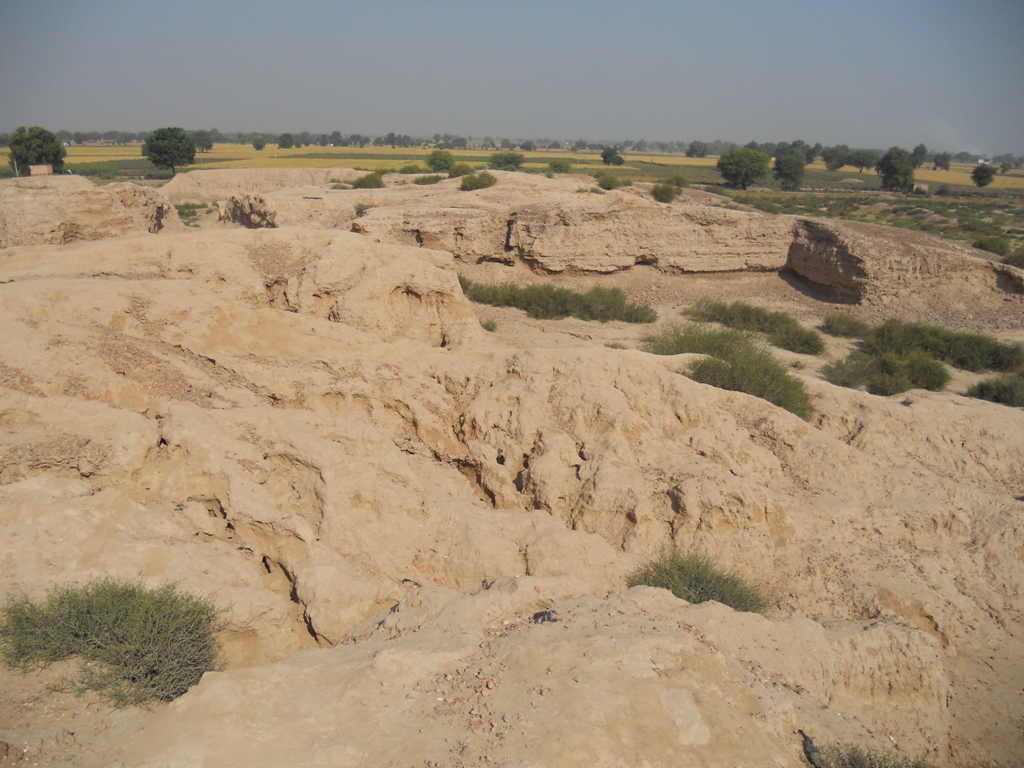
If you make the journey to Kalibangan now, you will find a protected archaeological area, a small museum, and the two low mounds themselves, their excavated walls exposed under the wide Rajasthan sky. It is not a crowded, ticketed spectacle. On most days you can have the place almost to yourself, which is exactly the right way to meet it.
Walk the straight lanes of the lower town, look out over the citadel mound, and try to picture the river that used to run nearby, and it all quietly comes to life. The order of the streets, the discipline of the bricks, the ghost of the ploughed field beyond the wall: these are not spectacular, but they are honest, and they let you stand for a moment inside the ordinary world of five thousand years ago.
For me that is the enduring gift of Kalibangan. It does not overwhelm you and it does not need to. It simply lays out, plainly and truthfully, the life of a town that farmed a river, survived an earthquake, worshipped by firelight, and finally surrendered to the drought. Sometimes the quietest ruins have the most to say.
How we know how old it really is
Whenever I tell people that Kalibangan’s ploughed field predates 2800 BCE, the natural question is: how can anyone possibly know that? The answer is the patient, unglamorous work of stratigraphy and radiocarbon dating. Each layer of the mound sits above the one before it, so the deeper you dig, the further back in time you travel, and organic scraps like charcoal and grain trapped in those layers can be dated in the laboratory.
The excavators cross-checked those dates against the styles of pottery and the sequence of building phases, and against comparable sites elsewhere in the Indus world. When several independent lines of evidence agree, you can be reasonably confident about the chronology. It is a slow way to read time, but it is honest, and it is why we can speak about Kalibangan’s early and mature phases with real assurance rather than guesswork.
I mention all this because the numbers can start to feel abstract. Behind every date is a physical scrap of the ancient world, a fleck of burnt wood or a grain of barley, that some careful hand lifted from the soil. The chronology is not conjured out of thin air; it is built, painstakingly, from the debris the townspeople left behind.
Kalibangan in the wider Indus world
It helps to place Kalibangan on the bigger map. The Indus or Harappan civilization was one of the ancient world’s three great early urban traditions, alongside Mesopotamia and Egypt, and it stretched across a vast territory of what is now Pakistan and northwestern India. Its cities shared a striking uniformity: the same standardized bricks, the same weights and measures, the same grid-planned layouts, the same enigmatic script on their seals.
Kalibangan was one node in this enormous network, a provincial town rather than a first-rank metropolis, and that is exactly what makes it useful. The famous cities show us the civilization at its grandest, but a place like Kalibangan shows us how those shared standards played out in an ordinary settlement on the eastern edge of the Harappan world. The template held here just as it did at the great centres, which tells us how deep and consistent the shared culture ran.
Seeing Kalibangan as part of that web changes how you read it. The straight streets and standard bricks are not just local choices; they are the local expression of an idea that bound together hundreds of communities across a huge region. To stand on this mound is to stand at one small, honest window onto one of humanity’s earliest experiments in living together at scale.
What the black bangles remember
There is a poetry in the fact that this whole town is named for its rubbish, for the broken bangles that littered the ground. Those little rings of fired clay were the cheap ornaments of everyday people, worn and snapped and discarded, and yet it was they, more than any monument, that kept the memory of the place alive until the archaeologists came.
That feels right to me. Kalibangan was never a town of god-kings and gold; it was a town of farmers and potters and families, and it is fitting that its most enduring signature is a humble personal trinket. The grand sites give us the ambitions of ancient elites. Kalibangan gives us the texture of ordinary lives, right down to the bangles someone slipped onto a wrist and eventually left in the dust.
When I picture the place, that is what stays with me: not a ruler or a temple, but the sense of countless small, unremembered people who lived here, farmed here, feared the shaking ground here, and finally moved on. The black bangles are their fingerprints. The mounds are what is left of their world, and they still have a great deal to tell anyone willing to listen.
A day in the life on the river plain
It is worth pausing to imagine an ordinary day here, because that is ultimately what all this evidence adds up to. Picture the town waking under a hard, bright sky, the smoke of cooking fires rising from the flat mudbrick roofs, and the sound of grinding stones as households prepared the day’s grain. Beyond the wall, farmers would already be walking out to the fields we know they ploughed in that neat crossing grid.
Down in the lower town, potters would be shaping and painting the sturdy wares that survive in such quantity, while traders checked goods stamped with the little carved seals. Somewhere, in a house or on the citadel platform, a small ritual fire might be kindled in one of those clay-lined pits, a quiet gesture of belief folded into the working day. None of this was extraordinary to the people doing it. It was simply life.
And that, in the end, is what I love about reconstructing a place like this. The excavations do not just recover walls and pots; done with imagination, they recover a rhythm, a texture, a sense of what it felt like to be alive on this river plain five thousand years ago. The furrows, the bricks, the bangles and the ash all point back to the same thing: real people, filling their days much as we fill ours, in a world that was already old when history began to be written down.
Every time I revisit the site in my mind, a new detail surfaces that I had underrated before. That is the mark of a place with genuine depth, and Kalibangan has it in abundance despite its modest appearance.
Kalibangan is one stop on a much longer walk through humanity’s deepest past, and each place along the way lights up the others. If the river-bound fate here moved you, you might feel it again at Dholavira, the desert Indus city that fought back against drought with sheer water engineering, or at Mohenjo-daro, the great planned metropolis Kalibangan shared its world with. The story of South Asian farming that begins in these furrows reaches back even further at Mehrgarh, where the region first learned to grow its food. To watch other early towns invent order out of nothing, wander over to Çatalhöyük and its streetless huddle of houses, its even older forerunner Aşıklı Höyük, and the world’s first true cities at Uruk and Sumer. For settlements that, like this one, sprang up along a single generous river or valley, see Liangzhu in China, Jiahu with its playable flutes, Sarazm in Tajikistan, and Tell Brak in Syria. If it is the sheer age of Kalibangan that grips you, older still are Göbekli Tepe, its sister site Karahan Tepe, the walled town of Jericho, and the painted caves of Lascaux and Chauvet. Europe offers its own answers in the megalithic temples of Malta, the solstice tomb of Newgrange, the great circle at Stonehenge, the frozen village of Skara Brae, and the vast mega-settlements of Cucuteni-Trypillia. And across the wider ancient world you can meet the labyrinthine palace of Knossos, the reef-built city of Nan Madol, the pyramid city of Caral, the sensory temple of Chavín de Huántar, the carved warriors of Cerro Sechín, the hunter-gatherer earthworks of Poverty Point, and the ancient solar towers of Chankillo. Every one of them is another window onto the same restless, inventive species we belong to. For a monument raised by farmers without kings or writing, visit the Cairn of Barnenez in Brittany. For a Neolithic society with fine pottery, copper, and mysterious signs, visit Vinča on the Danube. For one of prehistory’s greatest artworks, step into Gavrinis, whose engraved passage was sealed in the dark for millennia. For an early walled town with copper workshops and sun-facing tombs, visit Los Millares in Spain. For a monument even the pyramids came late to, take a look at the tumuli of Bougon in western France. You might also love Almendres, Iberia’s greatest ring of standing stones and thousands of years older than Stonehenge. You might also love Ġgantija, among the oldest freestanding buildings anywhere on Earth. You might also love Knowth, an Irish mound covered in mysterious ancient spirals and lozenges. You might also love Tarxien, a five-thousand-year-old temple on Malta covered in spirals and animal reliefs. You might also love Mnajdra, a five-thousand-year-old Maltese temple perched above the sea and tuned to the rising sun. If this drew you in, the Maltese temple of Ħaġar Qim, older than the pyramids, is well worth your time. If this drew you in, the forgotten passage tomb of Dowth is well worth seeking out. If this drew you in, the vast alignments of Carnac, older than the pyramids, are well worth your time. If this drew you in, the ancient stone circle of Callanish on the Isle of Lewis is well worth seeking out. If this drew you in, the statue-menhirs of Filitosa in Corsica are well worth seeking out. If this drew you in, the stone ship of Ale’s Stones in southern Sweden is well worth seeking out.
You May Like
The Bardo, a Palace of the Beys Filled With Roman Mosaics


4 thoughts on “Kalibangan: The Indus Town With the World’s Oldest Ploughed Field”