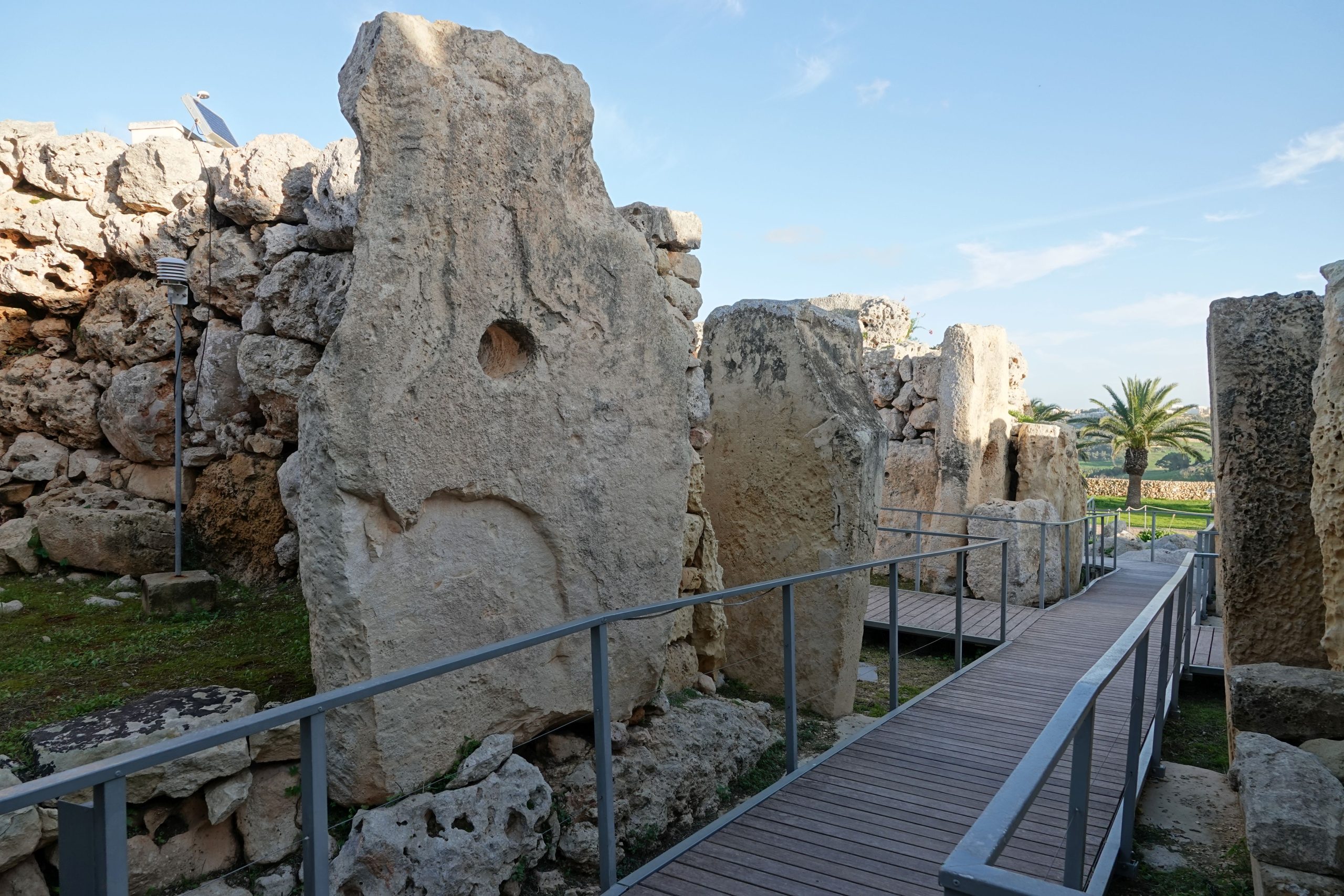
Here’s a fact that tends to short-circuit people’s sense of history. On a small Mediterranean island, there are stone temples so old that when their builders were heaving multi-ton blocks into place, the Egyptian pyramids did not yet exist. Stonehenge wasn’t even a hole in the ground. These are the megalithic temples of Malta, and the oldest of them, Ġgantija, was raised around 3600 BC. They are widely considered the oldest free-standing stone monuments on Earth, and almost nobody outside Malta has heard of them. Let’s fix that, because the story here is genuinely jaw-dropping.
In this article:
Temples older than the pyramids
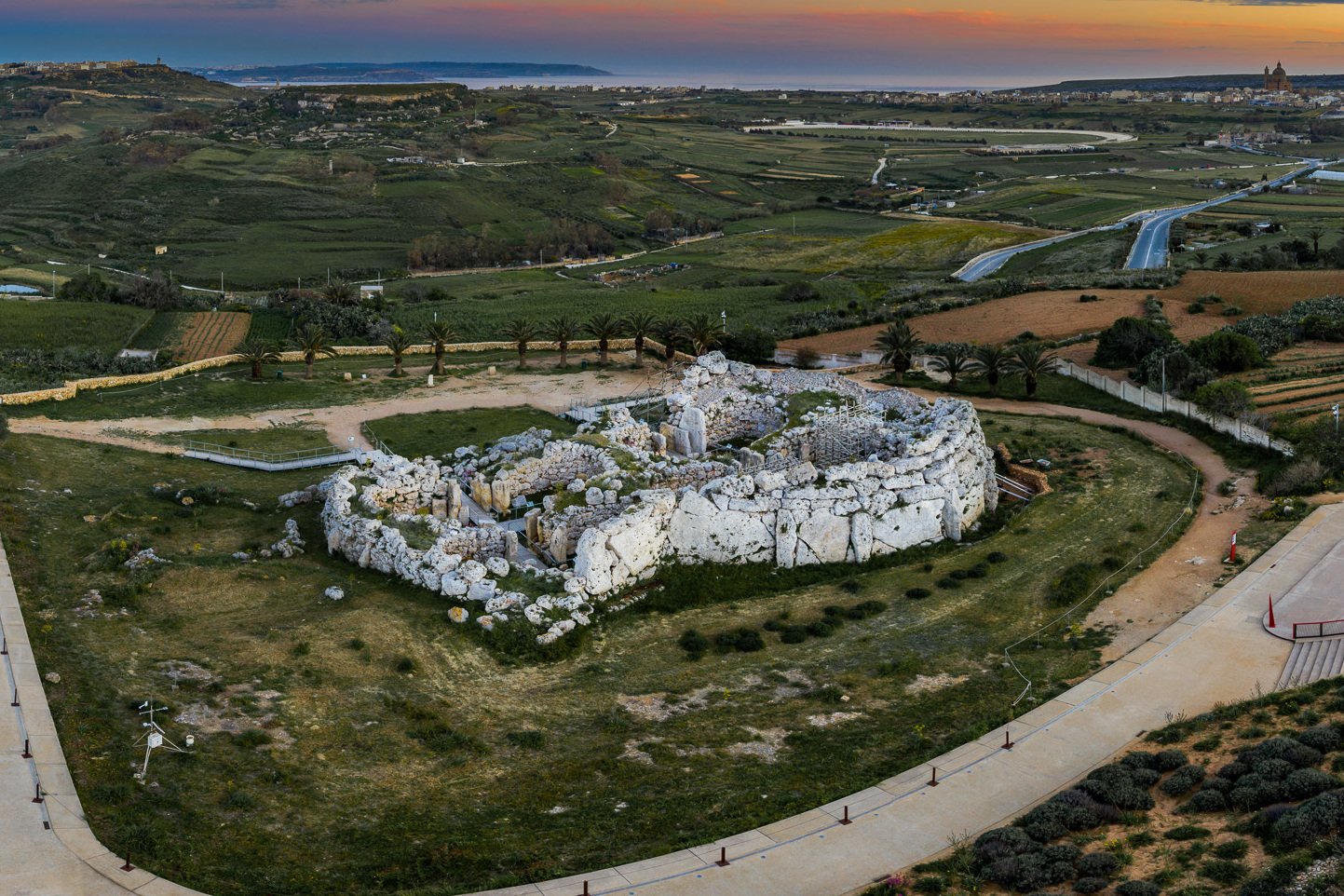
Malta is a tiny country, a cluster of islands south of Sicily, and yet packed onto it are a whole family of prehistoric temples built between roughly 3600 and 2500 BC. The most famous include Ġgantija on the island of Gozo, plus Ħaġar Qim, Mnajdra, and Tarxien on the main island. Several of them together form a UNESCO World Heritage Site, recognized as a unique chapter in the human story.
To get the timeline straight in your head: Ġgantija went up around five and a half thousand years ago. That makes it older than the Great Pyramid of Giza by roughly a thousand years, and older than Stonehenge’s great stone circle by even more. When you stand among these walls, you are standing inside some of the earliest large stone architecture anywhere on the planet. People built these before the wheel was in common use on the islands, before metal tools, using stone, bone, rope, and astonishing collective effort.
Why the locals blamed giants
The name Ġgantija comes from the Maltese word for giant, and it’s easy to see why. Some of the stones in these temples are colossal, with certain blocks weighing well over fifty tons and standing several meters tall. For centuries, local people simply could not imagine ordinary humans lifting such things, so the folklore explanation was that a race of giants had built them. One legend even told of a giantess who raised the whole temple while carrying a child on her shoulder.
It’s a charming story, and you can understand the instinct. But the truth is, as always, more impressive than the myth. There were no giants. There were communities of Neolithic farmers who, through planning, cooperation, levers, rollers, and sheer determination, moved and stacked stones that look impossible to budge. The real giants were human ingenuity and teamwork. That, to me, is a far better story than any fairy tale.
A surprisingly sophisticated design
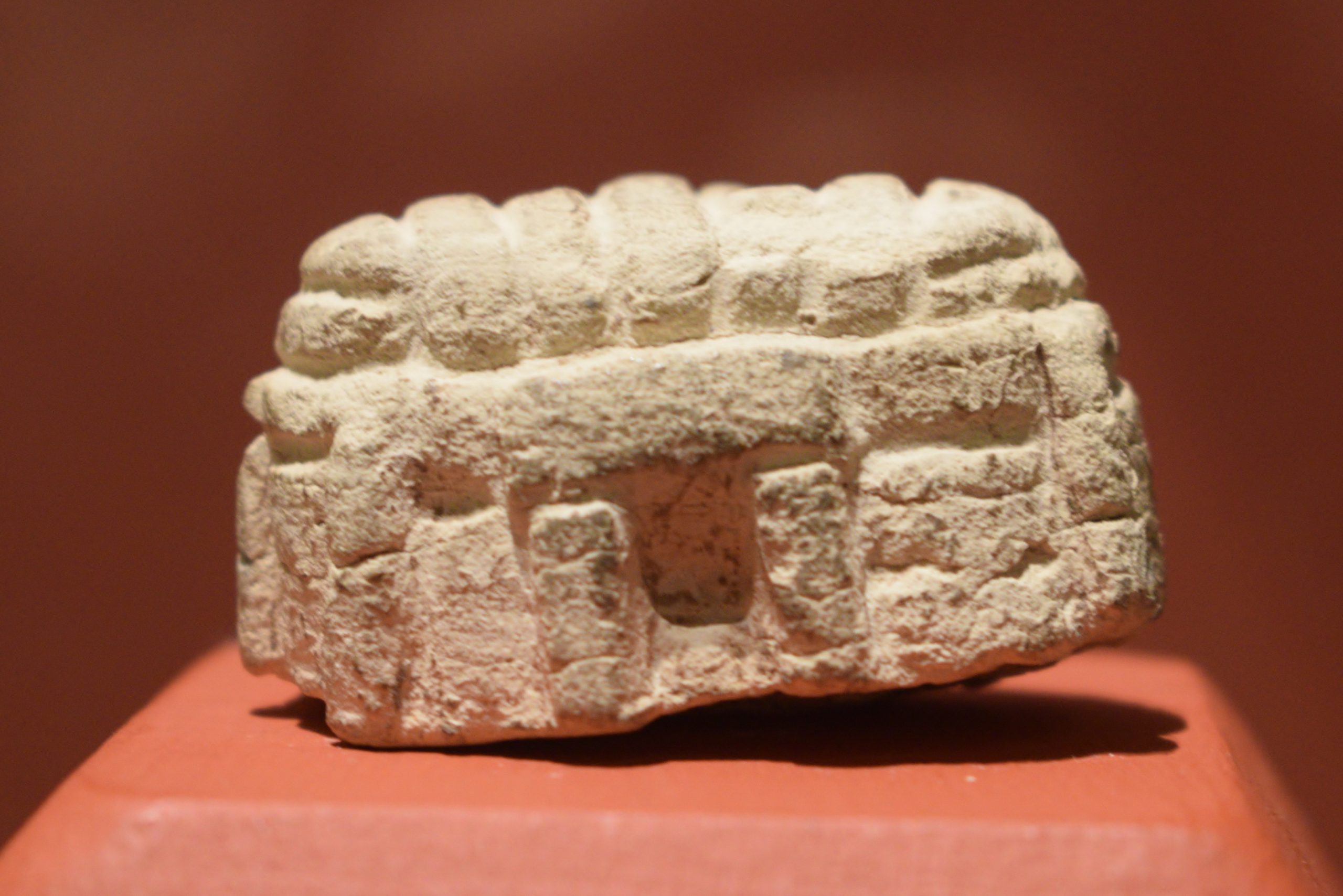
These weren’t crude piles of rock. The Maltese temples have a thoughtful, recognizable architecture. They were typically built on a clover-leaf or lobed plan, with a central corridor opening into rounded chambers, or apses, on either side. You entered through a grand doorway in a concave facade, passed along the passage, and moved between semi-private rooms, almost like progressing deeper into a sacred space, room by room.
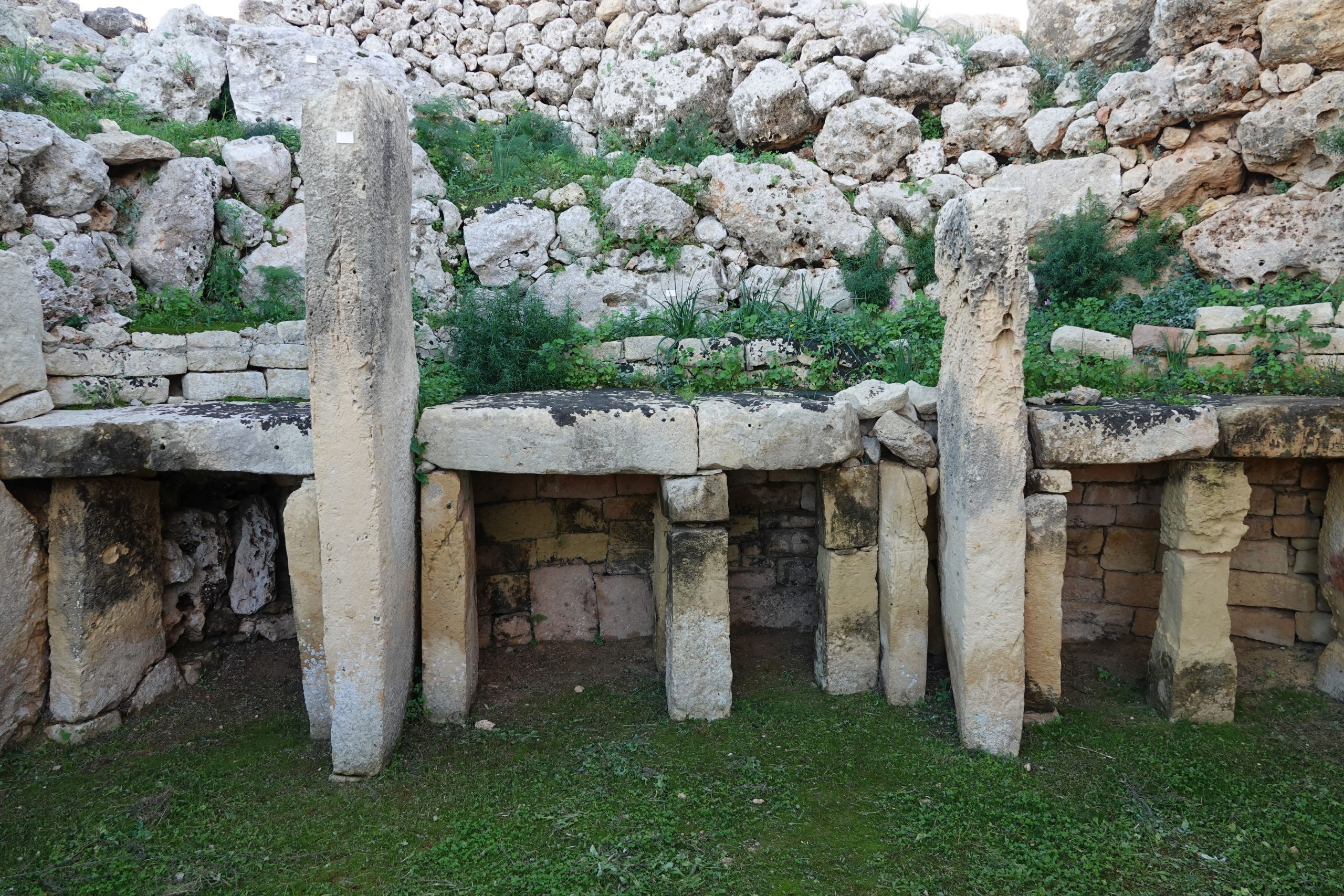
The builders shaped huge upright slabs, called orthostats, for the walls, and capped spaces with horizontal blocks. Inside, archaeologists have found carved stone altars, decorative spirals, niches, and even what look like libation holes for pouring offerings. Some temples show clever stonework like “porthole” doorways, single slabs with a rectangular opening cut clean through them. This is architecture with intention and a developed style, refined across many generations and many separate temples.
Built with the heavens in mind
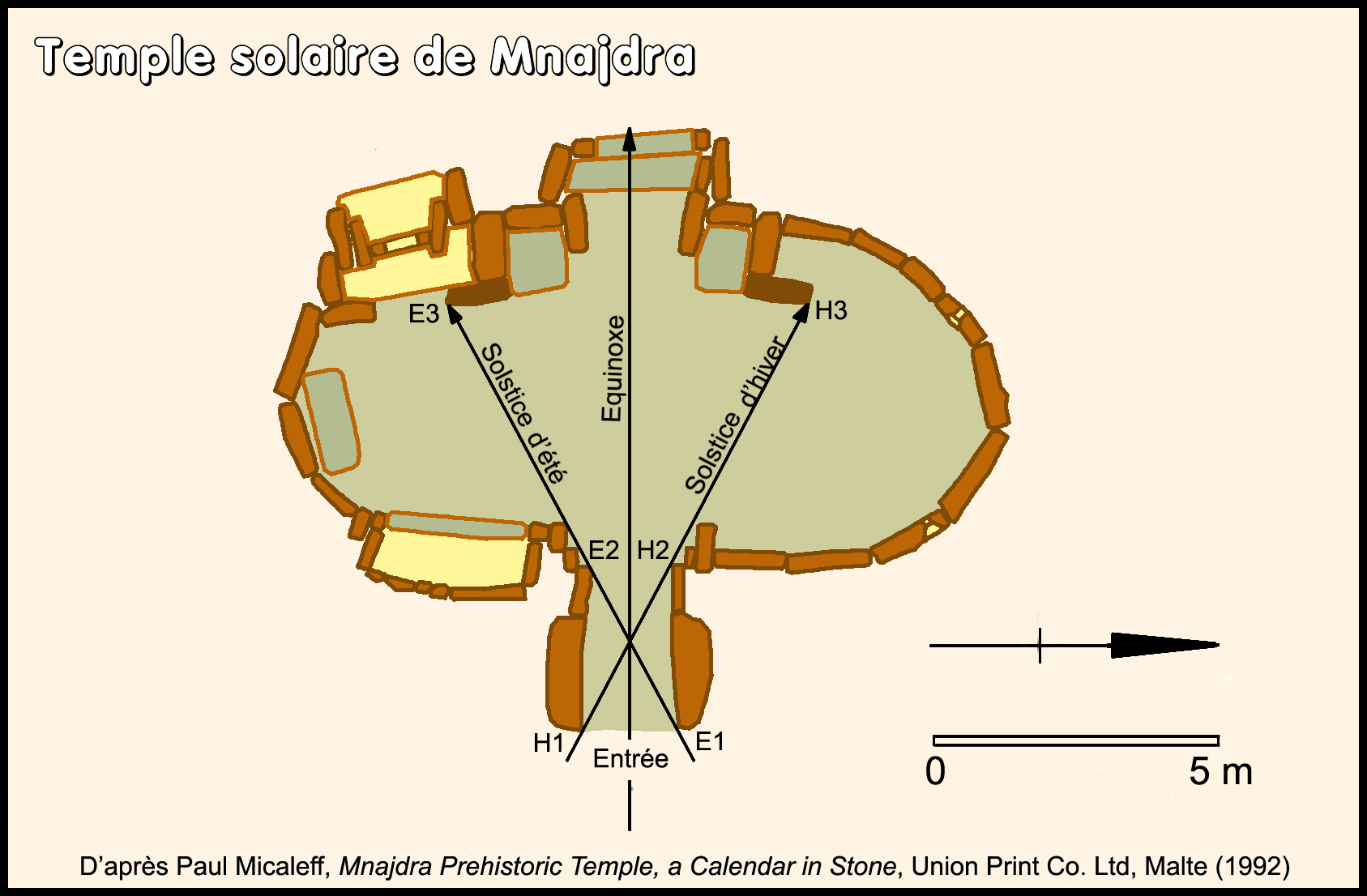
Like so many of the world’s oldest sacred sites, the Maltese temples seem to have been deliberately aligned with the sun. At Mnajdra in particular, the temples are positioned so that the rising sun marks key moments of the year. On the spring and autumn equinoxes, sunlight streams straight through the main doorway along the central axis. On the summer and winter solstices, the dawn light strikes the edges of specific stones inside.
That alignment tells us something profound about the people who built these places. They watched the sky carefully, tracked the turning seasons, and cared enough about those rhythms to bake them into stone. For a farming society, the cycle of the year was everything, and marking it precisely was both practical and deeply spiritual. Five and a half thousand years later, the sun still finds its mark through these doorways, exactly as the builders intended.
Who were the temple people?
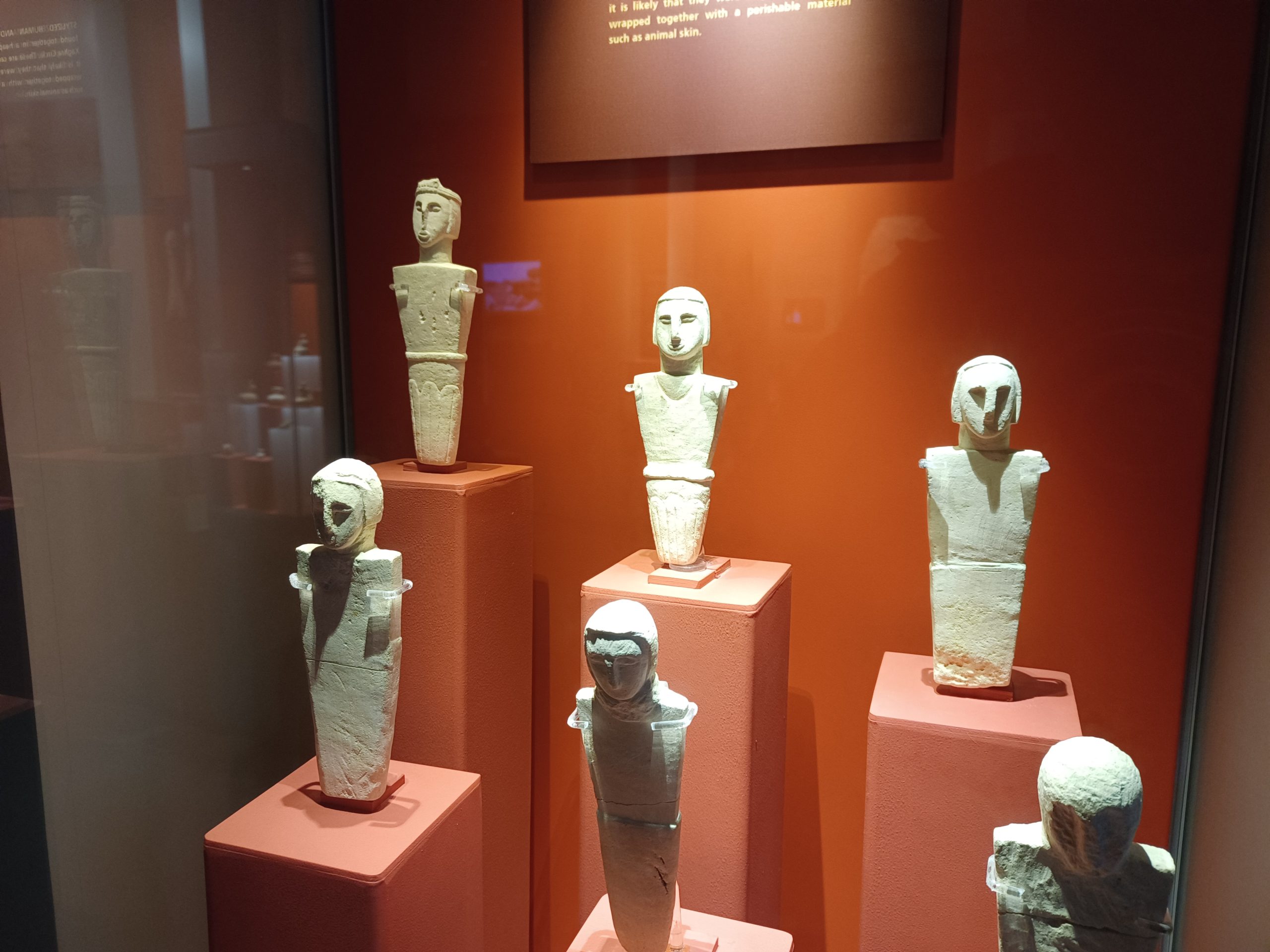
The society that built these temples flourished on Malta for over a thousand years, and they left behind more than architecture. They carved remarkable art, including the famous “fat lady” figures, rounded human statues often interpreted as symbols of fertility, abundance, or a mother goddess. One tiny, exquisitely carved sleeping figure, known as the Sleeping Lady, is one of the treasures of prehistoric art. They clearly had a rich spiritual world, with rituals that may have involved offerings, feasting, and possibly animal sacrifice, judging by the altars and bones found inside.
And then, mysteriously, this whole temple-building culture seems to have faded away or collapsed around 2500 BC. We’re not entirely sure why. Theories range from environmental strain and the exhaustion of resources on a small island, to social upheaval, to the arrival of new peoples. After such an extraordinary flowering of monument-building, the temples fell silent. It’s a haunting reminder that even the most impressive societies can be fragile, especially on a small and finite island.
How did they move such giant stones?
This is the question that hangs over every megalithic site, and Malta is no exception. How did people without metal tools or draft animals in any serious numbers shift blocks weighing dozens of tons? The honest answer is that we reconstruct it from clues rather than instructions, but the methods were almost certainly beautifully simple.
One striking piece of evidence sits right at some of the temples: spherical stone balls. Many researchers think these were used as rollers, laid in tracks so the heavy blocks could be rolled across them like a primitive ball-bearing system. Add wooden levers to tip and lift the stones, ramps of packed earth to raise them, and teams of people pulling on ropes in coordination, and the seemingly impossible becomes merely very, very hard work. It would have taken organization, leadership, and a community willing to commit serious time and muscle. But it was achievable by determined humans, and that’s exactly what makes it so impressive. No giants required, just an entire society pulling together, quite literally.
The underground temple of the dead
No account of prehistoric Malta is complete without mentioning its most spine-tingling site, the Ħal Saflieni Hypogeum. This is an entire temple carved downwards into the living rock, a vast multi-level underground complex of chambers, passages, and halls cut by hand with stone tools. It served as a sanctuary and, on an enormous scale, a burial place. The remains of thousands of people were found within it.
The Hypogeum is famous for one chamber in particular, often called the “Oracle Room,” which has remarkable acoustic properties. A voice spoken in a certain pitch resonates and echoes through the whole space in a way that must have been overwhelming by torchlight. Whether the builders engineered this on purpose or discovered it by happy accident, the effect would have made rituals there feel genuinely otherworldly. It’s so fragile that visitor numbers are now strictly limited to protect it.
Why Malta’s temples deserve to be famous
What gets me about the Maltese temples is how thoroughly they overturn our lazy assumptions. We tend to picture the dawn of monumental architecture happening in Egypt or Mesopotamia, the big, familiar names. But here, on a couple of small Mediterranean islands, ordinary farming communities were raising sophisticated stone temples a full thousand years earlier, aligning them to the sun, decorating them with art, and carving entire sanctuaries down into the bedrock.
They did it without giants, without magic, without lost technology. Just people, working together with patience and vision across many lifetimes, building something far bigger than any individual could ever need. The temples of Malta are proof that the human drive to create the monumental and the sacred wasn’t born in one place and spread outward. It welled up independently, again and again, wherever people gathered and dreamed. And on Malta, they dreamed in stone, earlier than almost anyone, anywhere.
Related reading on this site: This article is part of a series on the world’s oldest sites and discoveries. You might also enjoy Göbekli Tepe, the world’s oldest temple, Stonehenge, Newgrange, Jericho, Çatalhöyük, and the world’s oldest cave paintings. See also Skara Brae, the Scottish Pompeii. And discover Uruk and Sumer, the first cities and the birth of writing. Also explore Karahan Tepe, the sister of Göbekli Tepe. Browse more under Ancient History and Archaeology.
See also: Mohenjo-daro: The 4,500-Year-Old City That Was Centuries Ahead of Its Time.
See also: Liangzhu: The 5,000-Year-Old Water City That Rewrote China’s History.
And on the far side of the world, you can meet Caral, the oldest city in the Americas, which rose in the Peruvian desert at the very same time as the pyramids of Egypt.
And on the island of Crete you can explore Knossos, the Minoan palace behind the myth of the Minotaur, the labyrinthine home of Europe’s first great civilization.
And out in the salt deserts of India, you can discover Dholavira, the Indus city that beat the desert with water engineering.
For a place that stretches the imagination even further, there’s Nan Madol, an entire city built on a coral reef in the open ocean. You might also descend into Chavin de Huantar, an Andean temple of dark galleries and roaring water. You might also explore Cucuteni-Trypillia, the vast planned towns that burned themselves down every few generations. You might also visit Cerro Sechin, whose ancient walls are lined with carved warriors and dismembered bodies. You might also explore Poverty Point, where hunter-gatherers built enormous ridges and mounds without farming. For a look at how far these instincts reached into the heart of Asia, take a detour to Sarazm, one of Central Asia’s oldest towns. For a glimpse of where this whole way of life began, don’t miss Mehrgarh, one of the oldest farming villages in South Asia. For a fresh twist on the birth of the city, don’t miss Tell Brak in northern Mesopotamia and its haunting eye idols. For an even earlier chapter of settled life, don’t miss Aşıklı Höyük in Cappadocia. For a different kind of ancient wonder, don’t miss Jiahu in China and its playable Neolithic flutes. For ancient sky-watching at its finest, don’t miss Chankillo in Peru and its thirteen solar towers. For another quiet Indus settlement with an outsized story, wander over to Kalibangan and its record-breaking ploughed field. For a monument raised by farmers without kings or writing, visit the Cairn of Barnenez in Brittany. For a Neolithic society with fine pottery, copper, and mysterious signs, visit Vinča on the Danube. For one of prehistory’s greatest artworks, step into Gavrinis, whose engraved passage was sealed in the dark for millennia. For an early walled town with copper workshops and sun-facing tombs, visit Los Millares in Spain. For a monument even the pyramids came late to, take a look at the tumuli of Bougon in western France. You might also love Almendres, Iberia’s greatest ring of standing stones and thousands of years older than Stonehenge. You might also love Ġgantija, among the oldest freestanding buildings anywhere on Earth. You might also love Knowth, an Irish mound covered in mysterious ancient spirals and lozenges. You might also love Tarxien, a five-thousand-year-old temple on Malta covered in spirals and animal reliefs. You might also love Mnajdra, a five-thousand-year-old Maltese temple perched above the sea and tuned to the rising sun. If this drew you in, the Maltese temple of Ħaġar Qim, older than the pyramids, is well worth your time. If this drew you in, the forgotten passage tomb of Dowth is well worth seeking out. If this drew you in, the vast alignments of Carnac, older than the pyramids, are well worth your time. If this drew you in, the ancient stone circle of Callanish on the Isle of Lewis is well worth seeking out. If this drew you in, the statue-menhirs of Filitosa in Corsica are well worth seeking out. If this drew you in, the stone ship of Ale’s Stones in southern Sweden is well worth seeking out.
You May Like
The Bardo, a Palace of the Beys Filled With Roman Mosaics


8 thoughts on “The Megalithic Temples of Malta: Older Than the Pyramids”