There’s a ring of giant stones standing on a grassy plain in southern England that has been quietly puzzling people for about five thousand years. You’ve seen it on postcards, in films, on the covers of a hundred books about mysteries. And yet, for all its fame, Stonehenge still hangs onto its secrets. Who hauled these stones here? How? And, the question that really gnaws at you when you stand in front of it: why? Let’s walk around it together and sort out what we actually know from what we only like to imagine.
In this article:
What you’re actually looking at
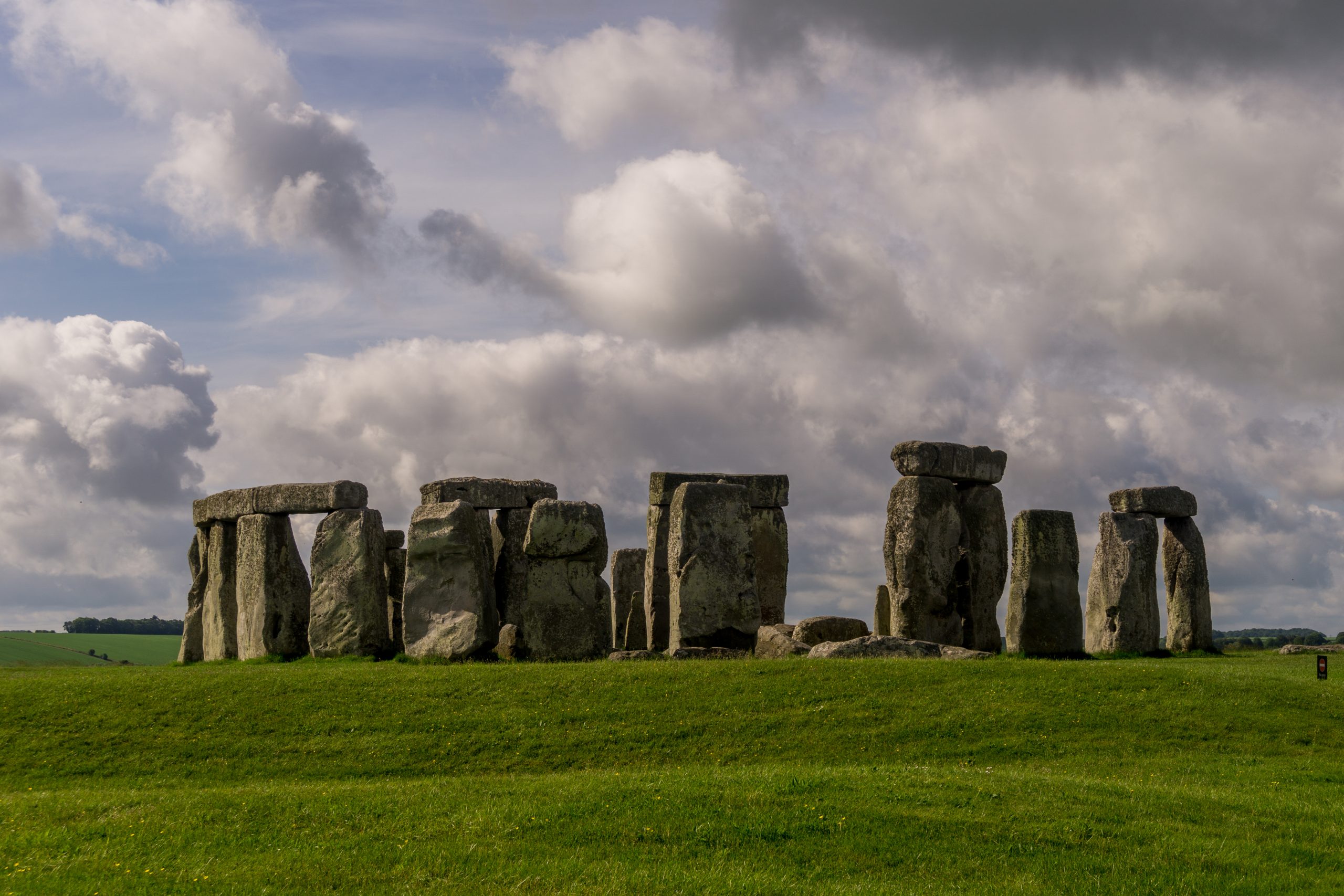
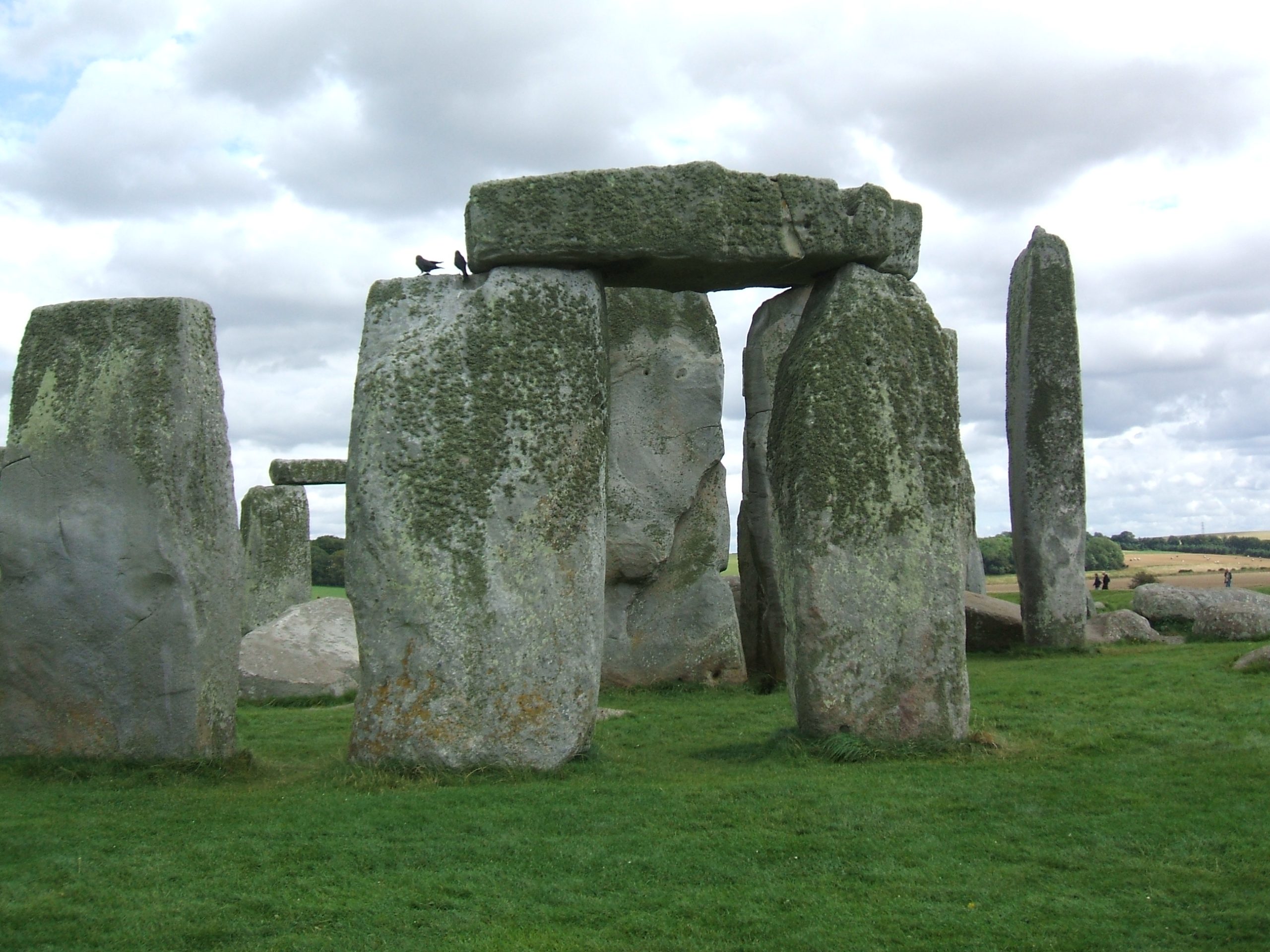
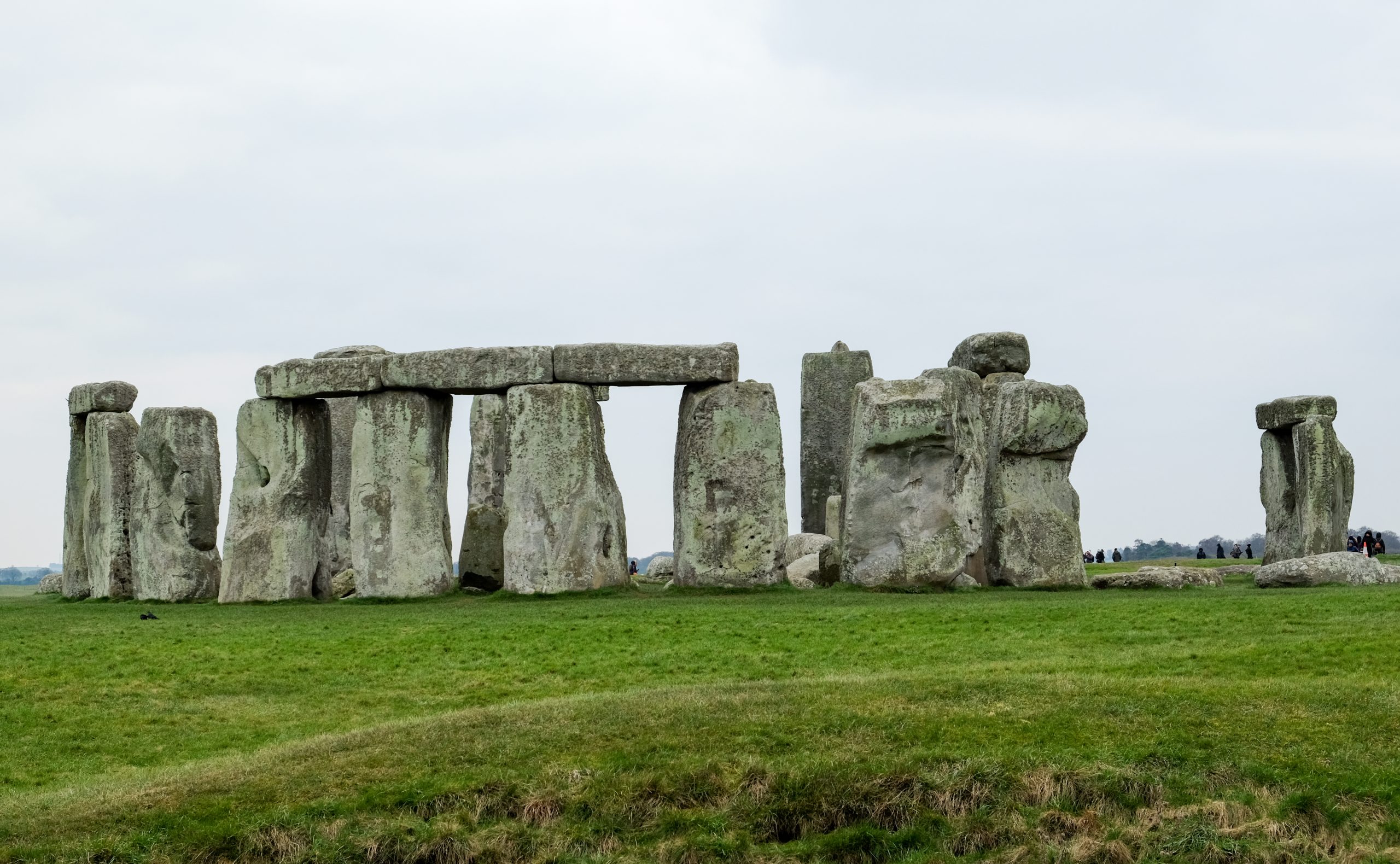
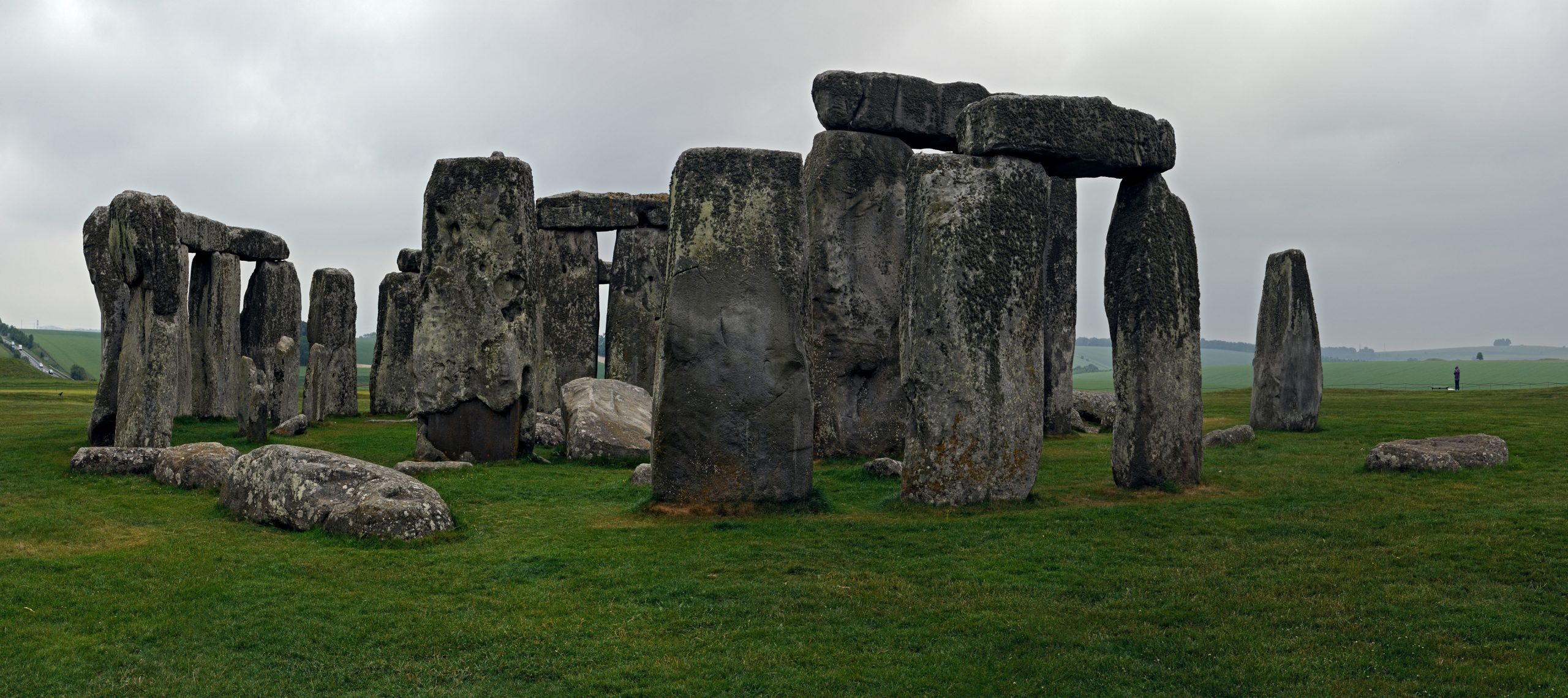
Stonehenge sits on Salisbury Plain in Wiltshire, and what survives today is the weathered skeleton of something that was once far more complete. At its heart stand the sarsens, the truly massive upright stones, some weighing around twenty-five tons, capped by horizontal lintels that were lifted up and slotted into place. The lintels are the clever bit. They were shaped with joints, almost like carpentry done in stone, curved to follow the circle and locked with peg-and-hole connections so they wouldn’t slide off. Whoever built this wasn’t just stacking rocks. They were engineering.
Inside the outer ring there’s a horseshoe of even bigger paired stones with their own lintels, called trilithons. And scattered among the giants are the smaller “bluestones,” which look modest by comparison but turn out to be the most travelled and arguably the most astonishing part of the whole monument. We’ll get to those, because their story is genuinely wild.
When was it built? (It took longer than you think)
One of the most common misunderstandings about Stonehenge is that it was a single project, raised in one go. In reality it was built and rebuilt in stages over many centuries, starting around five thousand years ago. The earliest phase wasn’t stones at all but a circular ditch and bank, an earthwork enclosure, dug around 3000 BC. The big sarsens came later, roughly around 2500 BC. So when people picture “the builders of Stonehenge,” they’re really picturing many generations of people, working on and reshaping the same sacred spot across a span of time longer than the gap between us and the Roman Empire.
To give you an anchor: by the time the great sarsen circle went up, the Egyptian pyramids were either already built or going up around the same era. And if you’ve read about Göbekli Tepe in Turkey, keep this in mind. Those Turkish pillars were already ancient ruins, buried and forgotten, by the time the first ditch at Stonehenge was even dug. The deep past has a deep past of its own.
The travelling bluestones
Here’s the detail that always stops people cold. The smaller bluestones at Stonehenge didn’t come from anywhere nearby. Geologists have traced them to the Preseli Hills in west Wales, roughly two hundred and forty kilometers away. We’re talking about stones weighing two to four tons each, somehow moved across an enormous distance, by people without wheels in any practical sense, without horses, without metal tools, using rope, timber, sweat, and an almost unbelievable amount of determination.
Why drag stones that far when there was perfectly good rock much closer? Nobody fully knows, and that’s part of what makes it gripping. Some researchers think the bluestones were already sacred in Wales, perhaps part of an earlier stone circle that was dismantled and carried east to be reassembled, almost like moving the heart of one holy place into another. Whatever the reason, the effort tells you something profound. These weren’t just building materials. They mattered enough to move mountains, almost literally, across the breadth of a country.
How did they move and raise the stones?
Without written records, we’re left with educated reconstruction. The huge local sarsens probably came from around twenty-five kilometers north, an area called the Marlborough Downs. The likeliest method involved dragging them on wooden sledges, possibly over greased timber tracks or rollers, with teams of dozens or even hundreds of people pulling together. Raising a standing stone meant digging a pit, tipping the stone in, and levering it upright, then packing the base. Getting those lintels up on top, several meters in the air, may have used timber scaffolding or earthen ramps.
None of it was magic, despite the legends. It was planning, cooperation, and a community willing to pour years of collective labor into something that produced no food, no shelter, no obvious practical return. That, to me, is the real marvel. Not aliens, not lost technology, just people choosing together to make something that mattered to them.
It’s also worth saying that experiments back this up. Modern teams have repeatedly tested these methods, moving multi-ton replica stones on timber sledges and rollers with surprisingly modest numbers of volunteers. The results consistently show that with rope, wood, leverage, and coordination, ordinary people really could have done this. The myths about impossible technology tend to dissolve the moment someone actually tries the simple methods and finds that they work.
So why did they build it?
This is where honesty matters more than a tidy answer. We don’t know for certain, and anyone who tells you they do is selling something. But we have strong clues, and most of them point at the sky and at the dead.
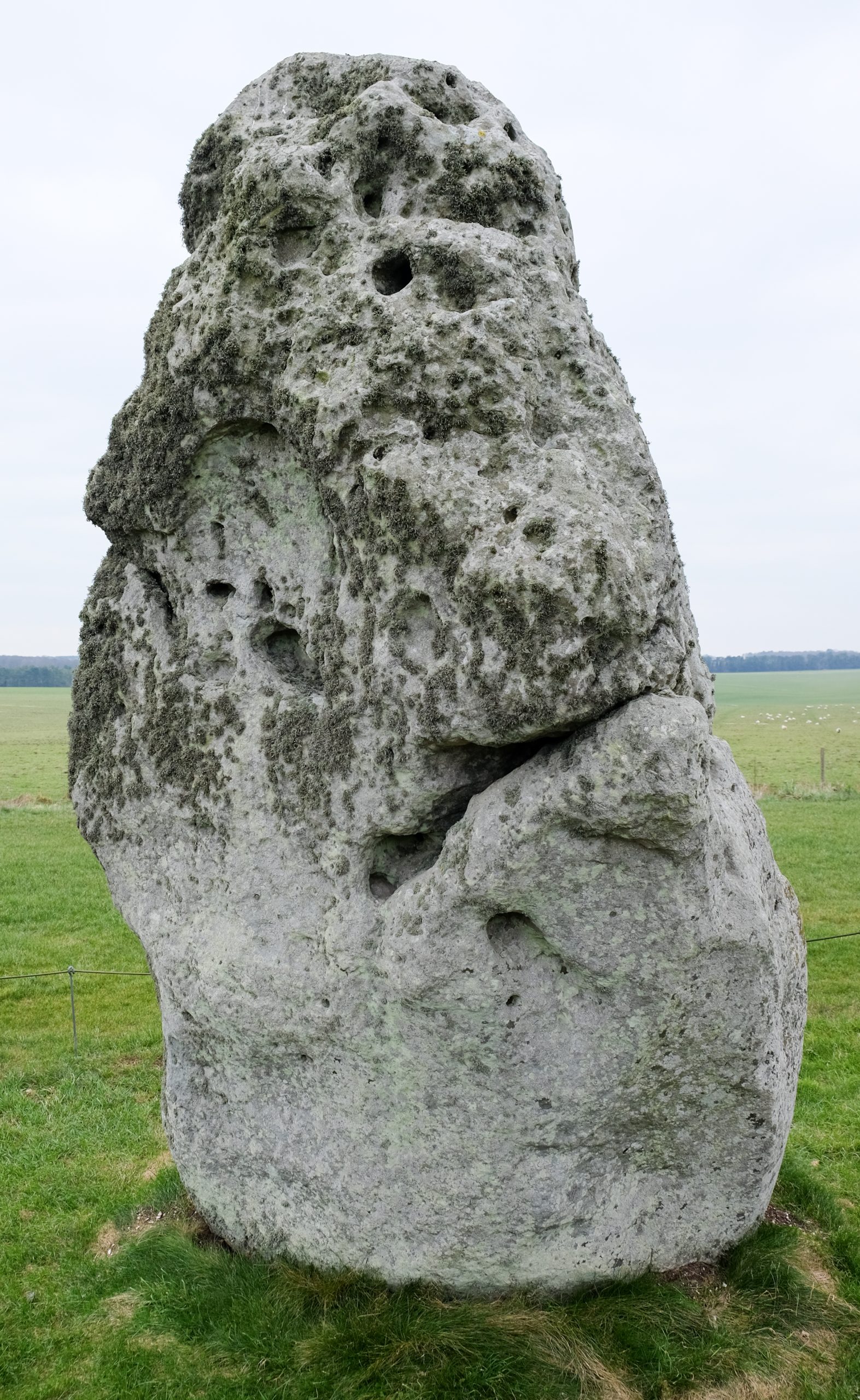
The most solid clue is astronomical. Stonehenge is aligned with the movements of the sun. Stand in the center on the morning of the summer solstice and the sun rises near the Heel Stone, the outlying stone that sits apart from the main circle. Look the other way on the winter solstice and the setting sun lines up too. For a farming people utterly dependent on the seasons, marking the turning points of the year wasn’t trivia, it was survival and meaning rolled into one. The longest and shortest days were moments worth gathering for.
The other big clue is death. The land around Stonehenge is dotted with burial mounds, and excavations have found cremated human remains at the site itself, some among the earliest features. For a long stretch of its life, Stonehenge seems to have been one of the largest burial grounds of its time in Britain. So the picture that emerges is of a place tied to the cycle of the seasons and the cycle of life and death, a vast gathering point where communities came together, honored their ancestors, and watched the heavens turn. Part temple, part calendar, part cemetery, part meeting place. Probably all of these at once, and changing meaning across the centuries.
Clearing up a few myths
Because Stonehenge is so famous, it’s collected more than its share of nonsense, so let’s gently tidy up. It was not built by the Druids. The Druids were Celtic priests who came along thousands of years later, when Stonehenge was already incredibly old, so the popular image of robed Druids constructing it is simply off by millennia. It wasn’t built by a lost super-civilization or by visitors from space, claims that, frankly, do a disservice to the actual humans who achieved this. And while there’s genuine, careful astronomy built into it, it was not some hyper-precise ancient computer. It was a profound, deliberate monument made by Neolithic and Bronze Age people who were every bit as intelligent and capable as we are.
Stonehenge today
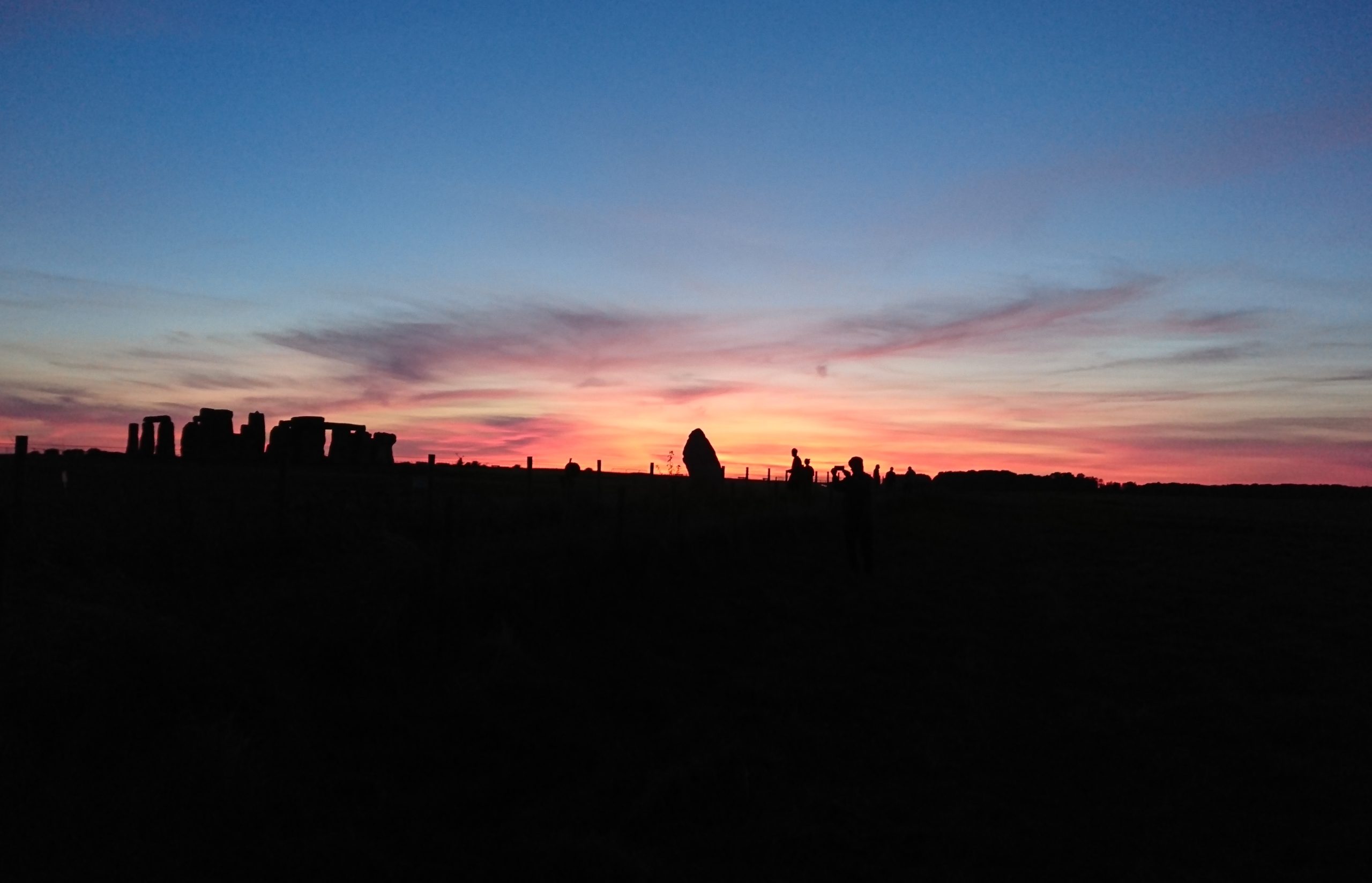
Stonehenge became a UNESCO World Heritage Site in 1986, together with the wider prehistoric landscape around it, including nearby Avebury. Today it draws well over a million visitors a year, and on the summer solstice thousands still gather to watch the sunrise through the stones, just as people did thousands of years ago, which is a kind of unbroken thread that gives me goosebumps. There’s a visitor center, a respectful viewing path, and ongoing research that keeps adding new chapters, from buried timber circles nearby to fresh studies on exactly where the stones came from.
What stays with me about Stonehenge isn’t the mystery, even though I love a good mystery. It’s the persistence. Generation after generation kept returning to this one patch of grass, kept digging, kept hauling, kept rebuilding, kept burying their dead and greeting the solstice sun. They poured themselves into a place not because they had to, but because it meant something. Five thousand years later we’re still standing in that same spot, squinting at the same sunrise, asking the same questions. That continuity, across an almost unimaginable gulf of time, might be the most human thing about it.
More than a circle: the wider landscape
One thing that’s easy to miss when you only see the famous stone circle in photos is that Stonehenge was never meant to stand alone. It sat at the center of a sprawling ceremonial landscape. There was a long earthwork avenue connecting it toward the nearby River Avon, hinting that people may have processed to the monument on foot, perhaps as part of journeys or festivals timed to the seasons. A couple of kilometers away lay Durrington Walls, a huge settlement where the builders may well have lived, feasted, and celebrated, with evidence of enormous midwinter gatherings and roasted pig dinners.
So the truer image isn’t a lonely ring of stones on an empty plain. It’s a busy, living landscape, full of paths and timber structures and homes and burial mounds, with Stonehenge as the great stone centerpiece of it all. That changes how you picture the place. Less eerie monument, more bustling sacred capital of its world, alive with people, smoke, song, and ceremony across the seasons.
Related reading on this site: This is part of a series on the world’s oldest sites. Don’t miss Göbekli Tepe, the world’s oldest temple, Çatalhöyük, Newgrange, and browse more under Ancient History and Archaeology.
You might also like Jericho, the world’s oldest city and the world’s oldest cave paintings.
Don’t miss the megalithic temples of Malta, older than the pyramids.
See also Skara Brae, the Scottish Pompeii.
And discover Uruk and Sumer, the first cities and the birth of writing.
Also explore Karahan Tepe, the sister of Göbekli Tepe.
See also: Mohenjo-daro: The 4,500-Year-Old City That Was Centuries Ahead of Its Time.
See also: Liangzhu: The 5,000-Year-Old Water City That Rewrote China’s History.
And on the far side of the world, you can meet Caral, the oldest city in the Americas, which rose in the Peruvian desert at the very same time as the pyramids of Egypt.
And on the island of Crete you can explore Knossos, the Minoan palace behind the myth of the Minotaur, the labyrinthine home of Europe’s first great civilization.
And out in the salt deserts of India, you can discover Dholavira, the Indus city that beat the desert with water engineering.
For a place that stretches the imagination even further, there’s Nan Madol, an entire city built on a coral reef in the open ocean. You might also descend into Chavin de Huantar, an Andean temple of dark galleries and roaring water. You might also explore Cucuteni-Trypillia, the vast planned towns that burned themselves down every few generations. You might also visit Cerro Sechin, whose ancient walls are lined with carved warriors and dismembered bodies. You might also explore Poverty Point, where hunter-gatherers built enormous ridges and mounds without farming. For a look at how far these instincts reached into the heart of Asia, take a detour to Sarazm, one of Central Asia’s oldest towns. For a glimpse of where this whole way of life began, don’t miss Mehrgarh, one of the oldest farming villages in South Asia. For a fresh twist on the birth of the city, don’t miss Tell Brak in northern Mesopotamia and its haunting eye idols. For an even earlier chapter of settled life, don’t miss Aşıklı Höyük in Cappadocia. For a different kind of ancient wonder, don’t miss Jiahu in China and its playable Neolithic flutes. For ancient sky-watching at its finest, don’t miss Chankillo in Peru and its thirteen solar towers. For another quiet Indus settlement with an outsized story, wander over to Kalibangan and its record-breaking ploughed field. For a monument raised by farmers without kings or writing, visit the Cairn of Barnenez in Brittany. For a Neolithic society with fine pottery, copper, and mysterious signs, visit Vinča on the Danube. For one of prehistory’s greatest artworks, step into Gavrinis, whose engraved passage was sealed in the dark for millennia. For an early walled town with copper workshops and sun-facing tombs, visit Los Millares in Spain. For a monument even the pyramids came late to, take a look at the tumuli of Bougon in western France. You might also love Almendres, Iberia’s greatest ring of standing stones and thousands of years older than Stonehenge. You might also love Ġgantija, among the oldest freestanding buildings anywhere on Earth. You might also love Knowth, an Irish mound covered in mysterious ancient spirals and lozenges. You might also love Tarxien, a five-thousand-year-old temple on Malta covered in spirals and animal reliefs. You might also love Mnajdra, a five-thousand-year-old Maltese temple perched above the sea and tuned to the rising sun. If this drew you in, the Maltese temple of Ħaġar Qim, older than the pyramids, is well worth your time. If this drew you in, the forgotten passage tomb of Dowth is well worth seeking out. If this drew you in, the vast alignments of Carnac, older than the pyramids, are well worth your time. If this drew you in, the ancient stone circle of Callanish on the Isle of Lewis is well worth seeking out. If this drew you in, the statue-menhirs of Filitosa in Corsica are well worth seeking out. If this drew you in, the stone ship of Ale’s Stones in southern Sweden is well worth seeking out.
You May Like
Norse Explorers Reached Canada 500 Years Before Columbus


14 thoughts on “Stonehenge: How and Why This Ancient Stone Circle Was Really Built”