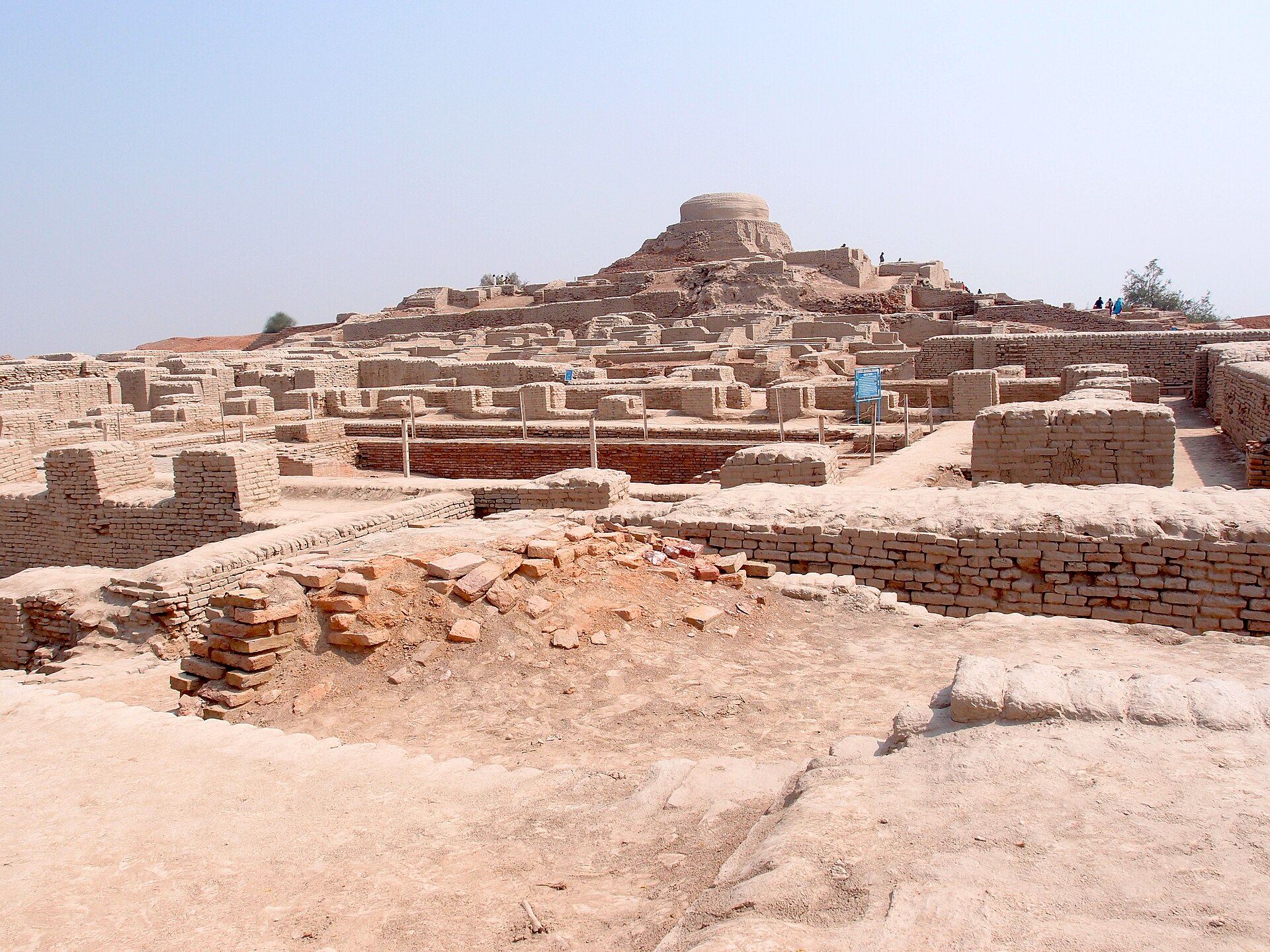
Picture this: it is roughly 2500 BCE. You are walking down a wide, straight street that runs dead-level beneath your feet. The houses on either side are made of fired brick, all of them cut to almost exactly the same size. There is a covered drain running along the edge of the road, carrying wastewater away from the homes. Somewhere nearby, a public bath the size of a small swimming pool holds clean water. There are granaries, marketplaces, workshops, and wells. And here is the part that still makes me stop and stare: nobody knew the names of the kings who ran this place, because there do not seem to have been any palaces, any throne rooms, or any towering monuments to a single ruler at all.
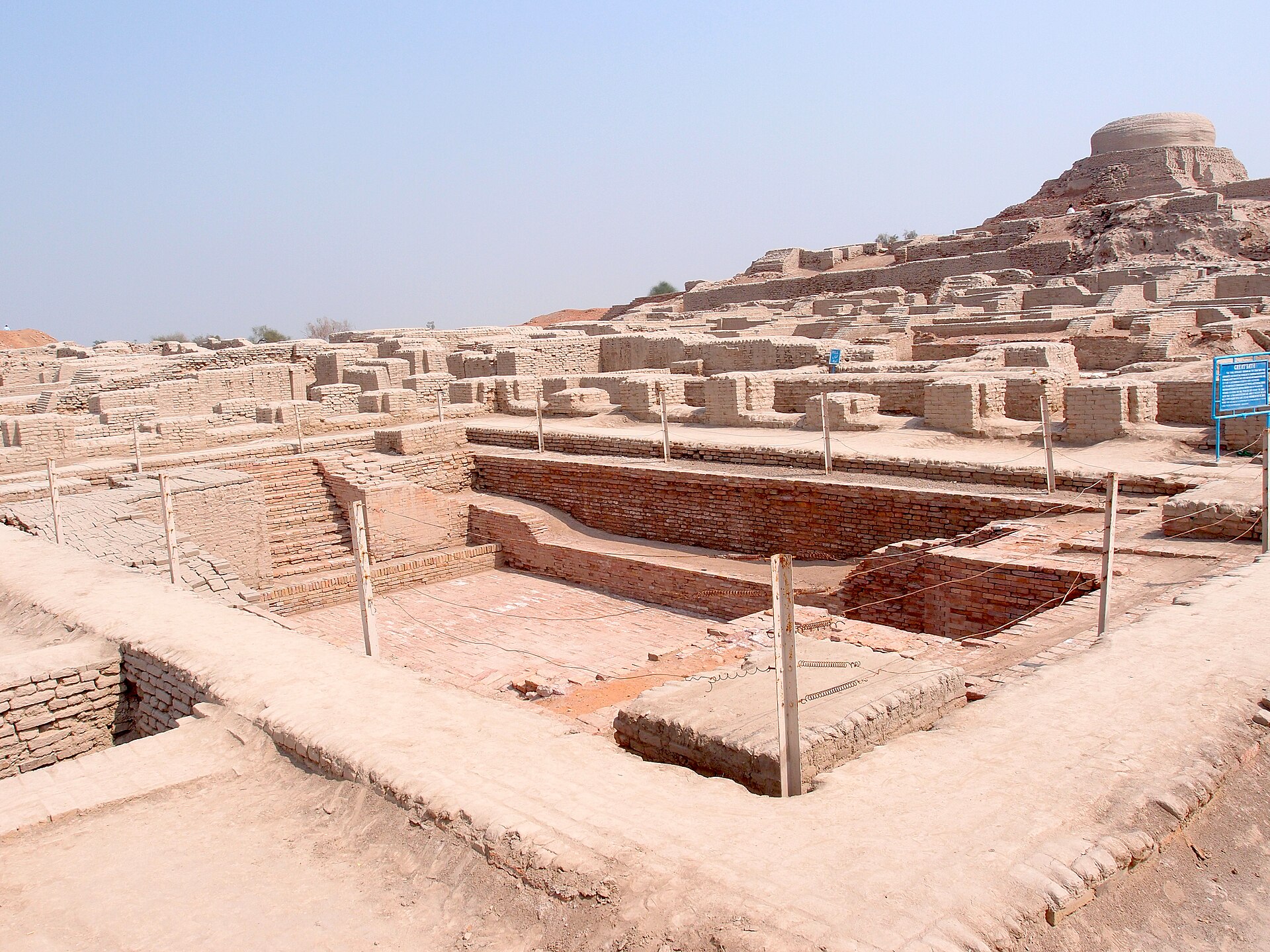
This is Mohenjo-daro, in what is now southern Pakistan, and it is one of the crown jewels of the Indus Valley Civilization. I have spent a long time reading about ancient cities, and I keep coming back to this one because it breaks so many of the rules we expect from the ancient world. We are used to pyramids built for god-kings, to temples soaked in gold, to walls covered in the boasts of conquerors. Mohenjo-daro gives us almost none of that. What it gives us instead is something quieter and, honestly, far stranger: a city that looks like it was designed by engineers who cared more about clean water and good drains than about glory.
So let us walk through it together. I want to show you what these people built, why their cities feel so weirdly modern, and why, after more than four thousand years, we still cannot read a single word they wrote down.
- Who Were the People of the Indus?
- A City Built on a Grid
- The Great Bath and a Strange Obsession With Water
- Inside Their Homes
- The Seals, the Script, and a Silence We Cannot Break
- The Priest-King Who Probably Was Not a King
- Trade, Toys, and Daily Life
- The Mystery of the Missing Army
- Weights, Measures, and an Almost Frightening Precision
- Beyond Mohenjo-daro: A Whole Network of Cities
- Why Did It All End?
- Why Mohenjo-daro Still Matters
Who Were the People of the Indus?
Let us start with the basics, because this is a civilization that most people have simply never heard of, and that always feels like a small injustice to me. When you list the great early civilizations of the world, the same names usually come up: Egypt with its pyramids, Mesopotamia with its city-states between the rivers, China along the Yellow River. The Indus Valley Civilization belongs right there beside them. At its height, around 2600 to 1900 BCE, it stretched across a vast area — bigger than ancient Egypt and Mesopotamia combined — covering parts of modern Pakistan and northwest India.
Archaeologists often call it the Harappan Civilization, after Harappa, the first of its cities to be properly excavated. But it was not just one or two cities. It was a sprawling network of hundreds of settlements, from tiny farming villages to enormous urban centers like Mohenjo-daro, Harappa, Dholavira, and Rakhigarhi. Some of these cities held tens of thousands of people. That is a serious population for the Bronze Age, and it means somebody, somewhere, was feeding, housing, and organizing a huge number of human beings without the systems of writing-heavy bureaucracy we usually associate with that scale.
And here is the thing that I find genuinely humbling. We know the pharaohs of Egypt by name. We know Sumerian kings, their wars, their hymns to the gods. We can read their grocery lists and their love poems. But the people of the Indus? We do not know what they called themselves. We do not know the name of a single one of them. Their language is lost. We are looking at one of the largest civilizations of the ancient world almost entirely through its architecture and its garbage — and somehow that turns out to be enough to fall a little bit in love with them.
A City Built on a Grid
If you have ever flown into a modern American city and looked down at the neat rectangular blocks below, you already understand the basic idea of Mohenjo-daro. The city was laid out on a grid. Streets ran roughly north-south and east-west, crossing each other at right angles, dividing the city into large blocks. This was not a town that grew up haphazardly over centuries, with lanes wandering wherever the goats happened to walk. Somebody planned this. Somebody sat down, before the first brick was laid, and decided where the roads would go.
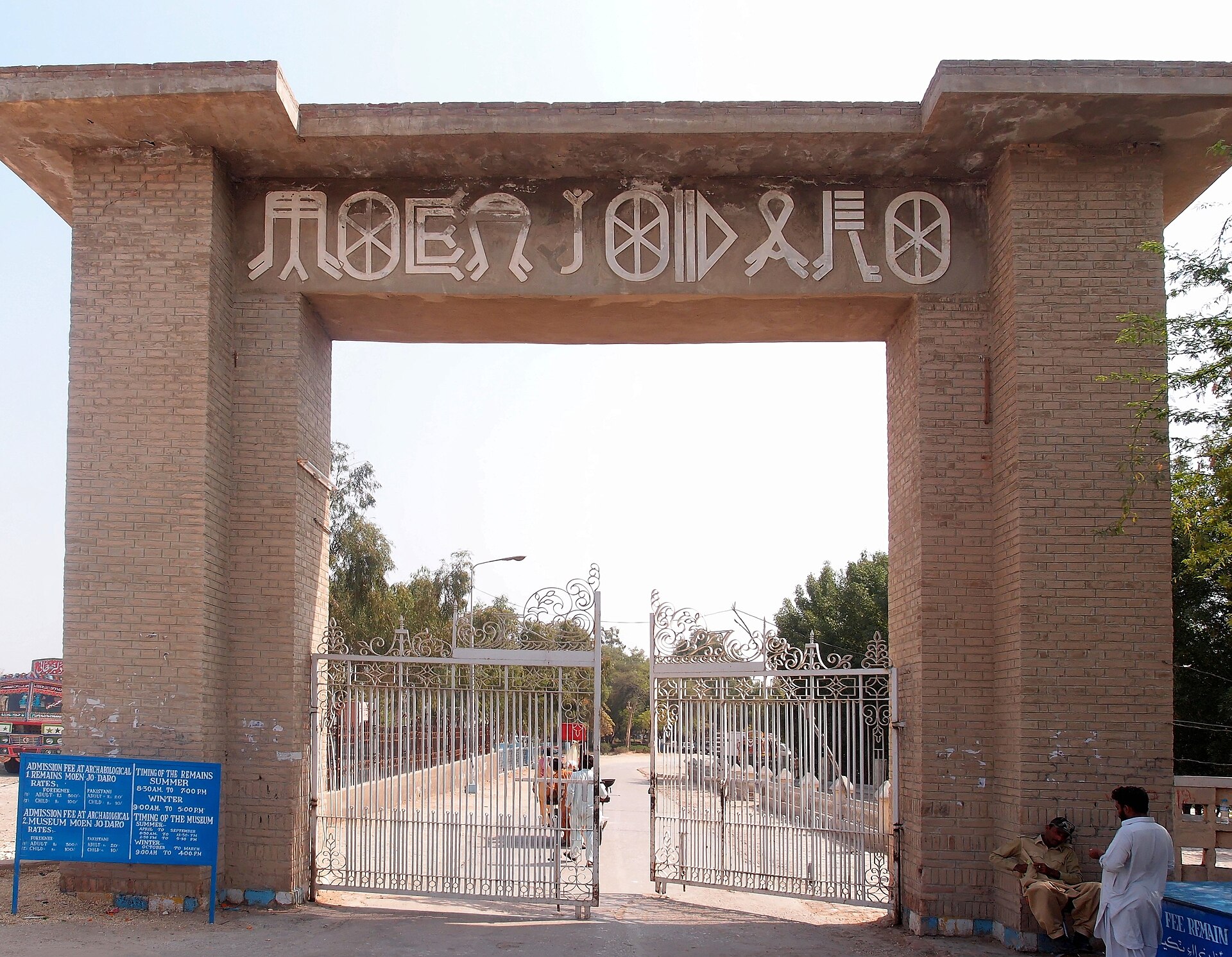
The main streets were wide — wide enough for carts to pass each other — and the smaller lanes branched off them into the residential blocks. The whole upper city sat on huge brick platforms, raised above the floodplain of the Indus River, which tells you these people had thought hard about what happens when a great river decides to spill over its banks. They were not just building houses. They were building a defense against the seasons themselves.
What really gets me is the bricks. The Harappans used baked bricks made to standardized proportions, with a ratio of roughly four to two to one in length, width, and thickness. The same ratio shows up in Mohenjo-daro and in Harappa, hundreds of kilometers apart. Think about what that implies. To have standardized bricks across an entire civilization, you need shared standards, shared measurements, and some shared understanding of how a proper city ought to be built. That is the fingerprint of a culture that valued order in a way that feels almost startlingly modern.
The Great Bath and a Strange Obsession With Water
Now we come to my favorite part of the whole site, the structure that earned Mohenjo-daro its fame: the Great Bath. It sits on the raised citadel mound, and it is exactly what it sounds like — a large, watertight pool, about twelve meters long and seven meters wide, sunk into the ground with brick steps leading down into it at either end. The brickwork was sealed with a layer of bitumen, a natural tar, to stop the water from leaking away. There were rooms around it, and a large well nearby that almost certainly fed it.
We do not know exactly what it was for, and I want to be honest about that, because there are a lot of confident claims out there that go well beyond the evidence. Most archaeologists think the Great Bath was used for some kind of ritual bathing — a public space for ceremonial cleansing, of the sort that ran deep in later South Asian traditions. But notice the careful word there: think. Nobody left us a sign that said “ritual bathing here.” We are reading the intentions of people who vanished four thousand years ago from the shape of the hole they left in the ground.
Whatever its purpose, the Great Bath tells us that water mattered to these people in a way that went beyond simple thirst. And it was not alone. Mohenjo-daro had wells scattered throughout the city — by some counts, hundreds of them — so that fresh water was never far from anyone’s door. That is an astonishing thing to find in a Bronze Age city. Most ancient towns made you trudge to a single communal source. Here, clean water was practically a public utility.
Inside Their Homes
Step off the main street and into one of the houses, and the surprises keep coming. A typical Mohenjo-daro home was built around a central courtyard, with rooms opening onto it. The outer walls facing the street were often fairly blank, which kept the dust, the noise, and the prying eyes out, and turned daily life inward toward the quiet of the courtyard. Anyone who has spent time in a hot climate will recognize the logic instantly. This is architecture that understands shade, privacy, and the value of a still pocket of air.
Many homes had their own wells. Many had bathrooms — actual bathrooms, with a sloped brick floor and a drain that carried the dirty water out of the house and into the street’s drainage system. Some houses even had what look like the remains of staircases, meaning they had a second story. These were not mud huts. They were comfortable, practical, surprisingly private family homes, built by people who clearly thought hard about how a person actually wants to live.
And then there are the drains, which I cannot stop thinking about. Running along the streets were covered drainage channels, built of brick, that carried wastewater away from the homes. There were inspection holes so the channels could be cleaned. There were soak pits where solids could settle. This is a genuine, engineered sanitation system, in a city built more than four thousand years ago. There are places in the world today that would be glad to have plumbing this thoughtful. Every time I read about those drains, I feel a strange tenderness toward whoever designed them. They cared about something deeply unglamorous, and they got it right.
The Seals, the Script, and a Silence We Cannot Break
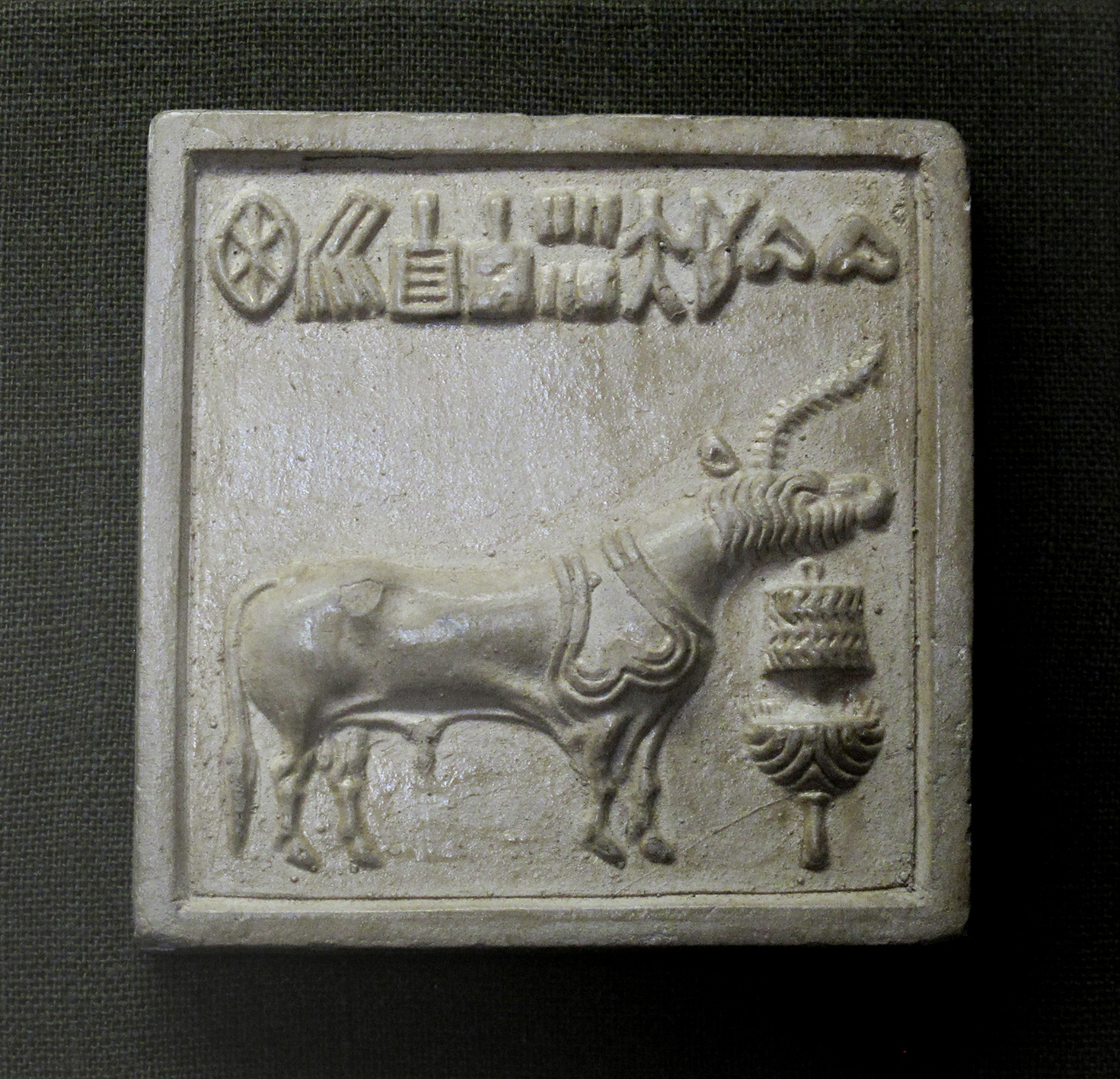
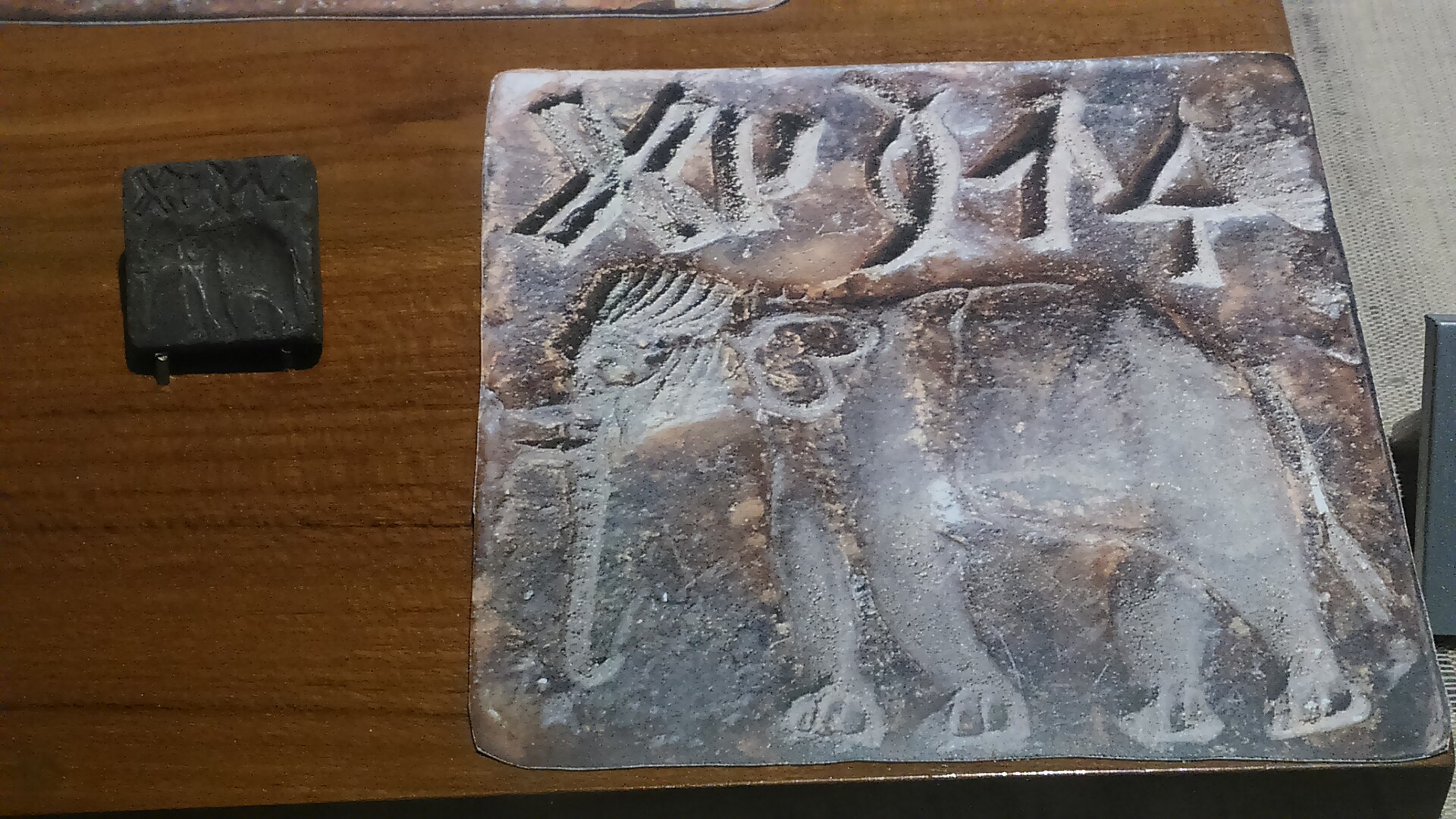
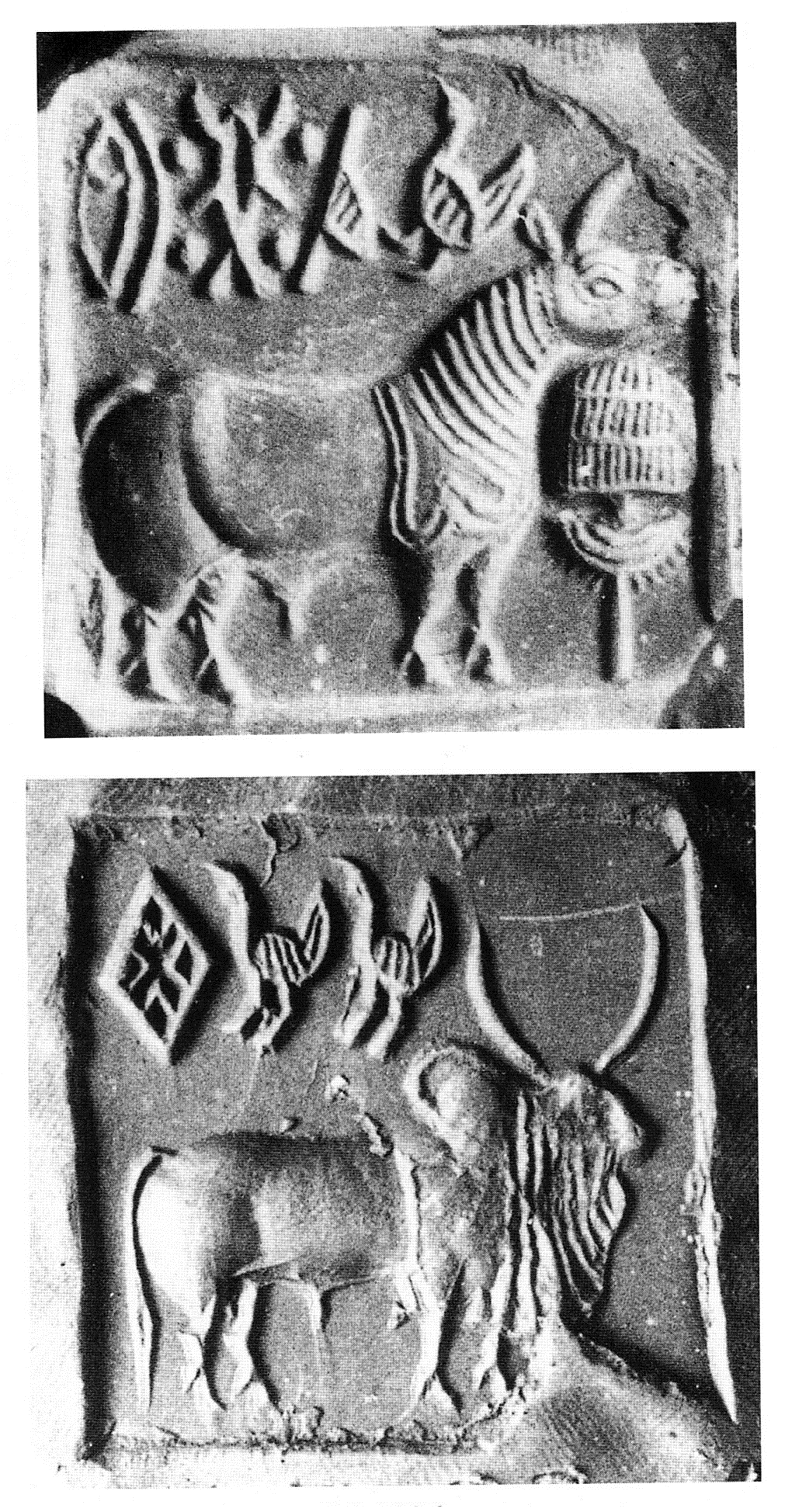
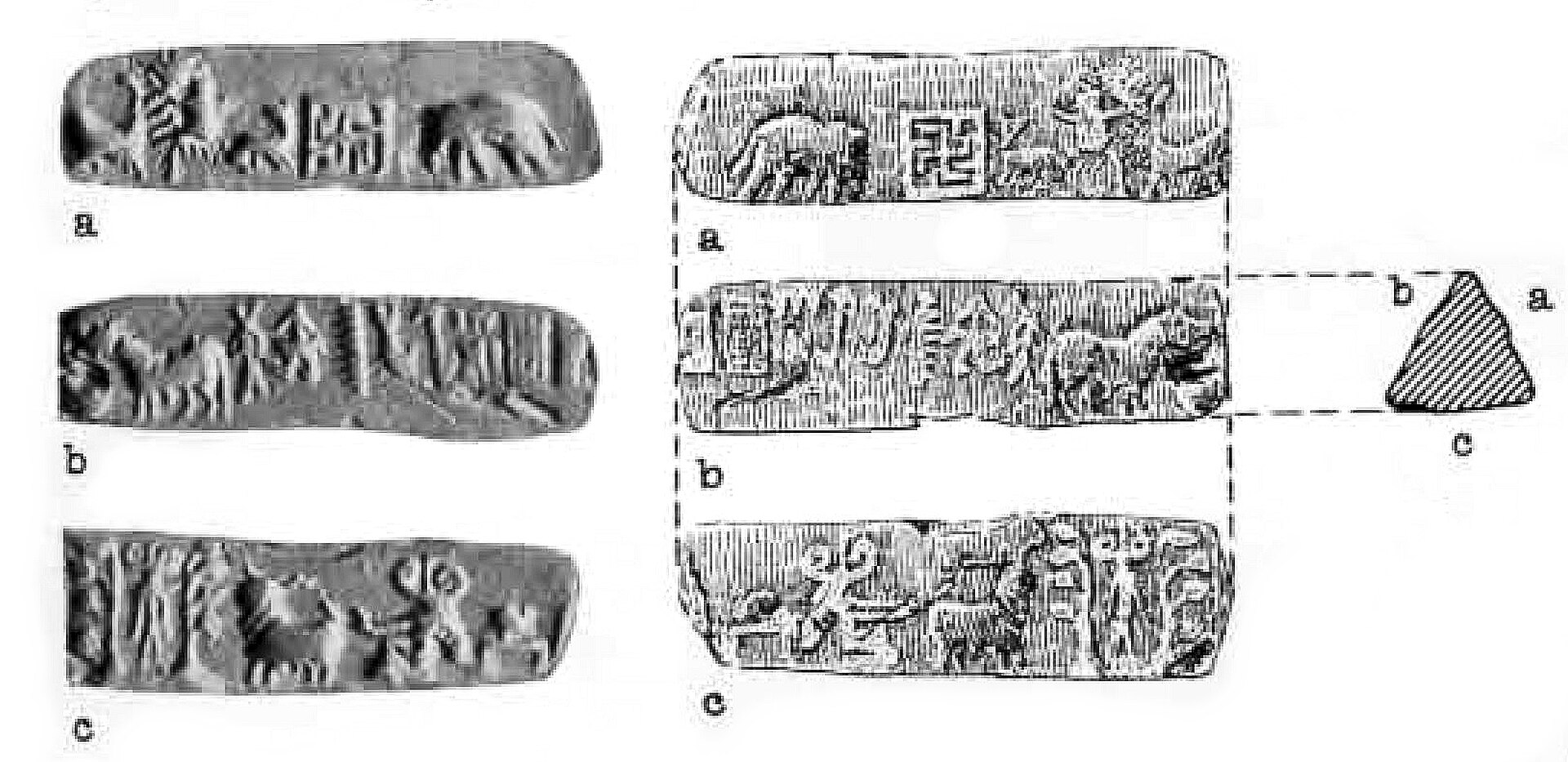
Those symbols are the heart of the mystery. The Indus people had writing, or at least something that behaves a great deal like writing. We have found hundreds of distinct signs, used over and over, often in short sequences on seals, tablets, and pottery. And after more than a century of brilliant people throwing themselves at the problem, we still cannot read a word of it.
Let me be clear about why this is so hard, because it is not for lack of trying. To crack an ancient script, you usually need one of two things. Either you need a bilingual text — something like the Rosetta Stone, where the same message appears in a known language alongside the unknown one — or you need a very large body of text so you can hunt for patterns. The Indus script gives us neither. There is no Rosetta Stone. And the inscriptions are heartbreakingly short, often just four or five signs long, the length of a name or a label rather than a sentence. There is simply not enough to work with.
So we are left in a peculiar position. We can hold one of these seals in our hand. We can see that someone carved a message into it with care. We know it meant something to them. And we cannot hear it. The voices are right there in front of us, frozen in stone, and we are deaf to them. I do not think there is anything else in archaeology quite like that feeling.
The Priest-King Who Probably Was Not a King
Among the most famous objects ever found at Mohenjo-daro is a small stone statue of a bearded man, draped in a robe decorated with a trefoil pattern, his eyes half-closed as if in deep concentration. Early archaeologists looked at his calm, commanding face and named him the Priest-King. It is a wonderful name. It is also almost certainly wrong, or at least wildly overconfident.
Here is the problem. We have no idea whether the Indus cities had priests, or kings, or priest-kings, or any of it. The name was a guess, made by people who came from a world full of priests and kings and naturally reached for the categories they already knew. But when you actually dig through Mohenjo-daro, the evidence for that kind of ruler stubbornly refuses to appear. There are no grand royal tombs stuffed with treasure. There are no palaces dripping with power. There are no giant statues of a conqueror trampling his enemies.
This is one of the deepest puzzles of the Indus world, and I love it precisely because it resists our assumptions. Somehow, these people organized enormous cities, standardized their bricks and their weights across hundreds of kilometers, ran complex trade networks, and built public works like the Great Bath — all without leaving behind the usual fingerprints of a single all-powerful ruler. Maybe power was shared among merchants or councils. Maybe it ran through religion in ways we cannot see. We genuinely do not know. The so-called Priest-King may simply be a dignified man whose real role is lost to us forever.
Trade, Toys, and Daily Life
It would be easy, looking at all those drains and grids, to imagine the Indus people as cold, austere engineers who cared only about order. But the small things they left behind tell a warmer story. They made jewelry — beads of carnelian, agate, and gold, some of them drilled with a precision that still impresses modern craftspeople. They wore bangles. They had combs and cosmetics. They played dice and board games. And they made toys.
That last one always gets me. Archaeologists have found little clay carts with wheels that actually turn, small figurines of animals, and a famous bronze statuette of a young woman, hand on hip, that we call the Dancing Girl. She stands there with an attitude that leaps across four thousand years. These were not just cogs in a sanitation system. They were parents who made toys for their children, people who liked to look nice, who gambled and danced and decorated their bodies. The grid and the drains were the frame; this was the life lived inside it.
And they traded, widely. Indus seals and beads have turned up in Mesopotamia, hundreds of kilometers away by land and sea. Mesopotamian texts speak of a distant trading land called Meluhha, which many scholars believe was the Indus region. So while the Harappans themselves stay silent, their neighbors mention them — we hear them, faintly, echoed in someone else’s writing. They exported timber, ivory, beads, and cotton. In fact, the Indus people were among the earliest in the world to spin and weave cotton, a quiet revolution in clothing that would eventually circle the globe.
The Mystery of the Missing Army
Here is something I keep turning over in my mind. When you dig through most ancient cities, you find weapons of war, and plenty of them. Swords, fortifications built clearly for defense, art that glorifies battle, mass graves from sieges and massacres. The ancient world was, by and large, a violent place, and its cities wore their armor proudly.
Mohenjo-daro is oddly quiet on this front. There are walls, yes, but many scholars think they were built more against floods than against armies. There is surprisingly little in the way of weaponry designed for warfare, little art celebrating conquest, no obvious evidence of a standing military caste lording it over everyone else. Some researchers have gone so far as to suggest that the Indus Civilization may have been unusually peaceful for its time — that it found a way to run large, prosperous cities without organizing the whole society around war.
I want to be careful here, because absence of evidence is a slippery thing, and it is possible we are simply missing something. But it is a genuinely intriguing possibility. Imagine a Bronze Age civilization that put its energy into drains and granaries and clean water rather than into conquest and kings. Whether or not that picture is entirely accurate, the fact that the evidence even allows us to ask the question makes the Indus world feel like a road not taken — a glimpse of how human society might have organized itself differently.
Weights, Measures, and an Almost Frightening Precision
I mentioned the standardized bricks earlier, but the Harappan love of precision goes a great deal further than that, and it is one of the most quietly astonishing things about them. Across the Indus cities, archaeologists keep finding small, carefully cut cubes of stone. For a while their purpose was a puzzle, until someone weighed them and noticed the pattern. They are weights — a whole system of them, following a consistent set of ratios.
The smallest weights were tiny, suited for measuring out something precious like beads or fine substances. From there the system scaled up in regular steps, with larger and larger weights for heavier goods. And here is the part that gives me goosebumps: these weights show up not just in one city but across the entire civilization, hundreds of kilometers apart, and they match. A merchant in Mohenjo-daro and a merchant in Harappa were, in effect, using the same measuring system. They had agreed, somehow, across vast distances, on what a unit of weight should be.
Think about what that requires. To standardize weights across a whole civilization, you need trust, communication, and some shared authority or convention that everyone honors. It implies markets where buyers and sellers could deal fairly because they were measuring by the same rules. It implies a society sophisticated enough to value honesty in trade and to build the tools to enforce it. We cannot read their laws, but in these humble little stone cubes, we are looking at the physical evidence of a civilization that took fairness in the marketplace seriously enough to engineer it into existence.
The same instinct shows up in their measurements of length. Markings on a few surviving objects suggest the Harappans used a consistent unit of length, divided into precise smaller increments. When you put it all together — standard bricks, standard weights, standard measures, a grid-planned city — you start to see a culture with an almost obsessive commitment to getting things to line up. They were, in the most literal sense, people who measured twice and cut once.
Beyond Mohenjo-daro: A Whole Network of Cities
It would be a mistake to let Mohenjo-daro stand in for the entire civilization, as remarkable as it is, because the Indus world was wonderfully varied. Take Dholavira, far to the south in what is now the Indian state of Gujarat. Built on an arid island between two seasonal streams, Dholavira faced a brutal challenge: how do you sustain a city in a place with so little reliable water? The Harappans answered with one of the most sophisticated water-management systems of the ancient world — a network of reservoirs, dams, and channels that captured and stored every precious drop of monsoon runoff.
Standing among the ruins of Dholavira, you can still see the great stone reservoirs cut into the ground, evidence of a community that essentially engineered its own survival in a hostile landscape. It is the same Harappan genius we saw in Mohenjo-daro’s drains and wells, only here it is turned toward the problem of scarcity rather than flood. Different city, different challenge, same deep cultural instinct: study the water, respect the water, and build accordingly.
Then there is Harappa itself, the site that gave the civilization its name, with its own granaries and workshops and cemeteries that have taught us much of what we know about how these people lived and died. And Rakhigarhi, in India, which may have been even larger than Mohenjo-daro, sprawling across a vast area and only partly excavated to this day. Each site adds another piece to the puzzle, and each reminds us that this was not a single city but an entire interconnected world, sharing bricks and weights and writing and ideas across a region the size of a small modern country.
What ties them all together is that unmistakable family resemblance. Whether you are standing in flood-prone Mohenjo-daro or thirsty Dholavira, you find the same planning, the same care, the same fingerprints of a people who believed that a city should be built thoughtfully and run well. That consistency, spread across so much land and so many years, is itself one of the great achievements of the ancient world.
Why Did It All End?
So what happened? How does a civilization this large, this organized, this successful, simply fade out of history? The honest answer is that we are still arguing about it, and the truth is probably messier than any single dramatic cause.
For a long time, there was a popular story that invading peoples swept in and destroyed the Indus cities. That idea has largely fallen out of favor; the evidence for a great invasion just is not there. The picture that most archaeologists now lean toward is slower and, in a way, sadder. Around 1900 BCE, the Indus cities began to decline. People drifted away from the great urban centers. The careful grids and drains fell into disrepair. The civilization did not so much die in a single blow as gradually unravel.
The likeliest culprits are environmental. The climate of the region appears to have shifted, with the monsoon weakening over centuries, making farming less reliable. Rivers changed their courses — and when your entire civilization is built along rivers, a river that wanders away or dries up can quietly pull the floor out from under everything. The mighty Sarasvati River described in later texts may have been one of these waterways that diminished and shifted. Add slow climate change to unpredictable rivers, and you have a recipe not for a sudden catastrophe but for a long, grinding decline that eventually emptied the cities.
The people did not vanish, of course. They moved, adapted, and merged into the cultures that came after them. Their bloodlines and some of their traditions almost certainly live on in the people of South Asia today. But the cities — the grids, the Great Bath, the standardized bricks — those were abandoned, and the desert and the river silt slowly buried them, until almost nobody remembered they had ever existed at all.
Why Mohenjo-daro Still Matters
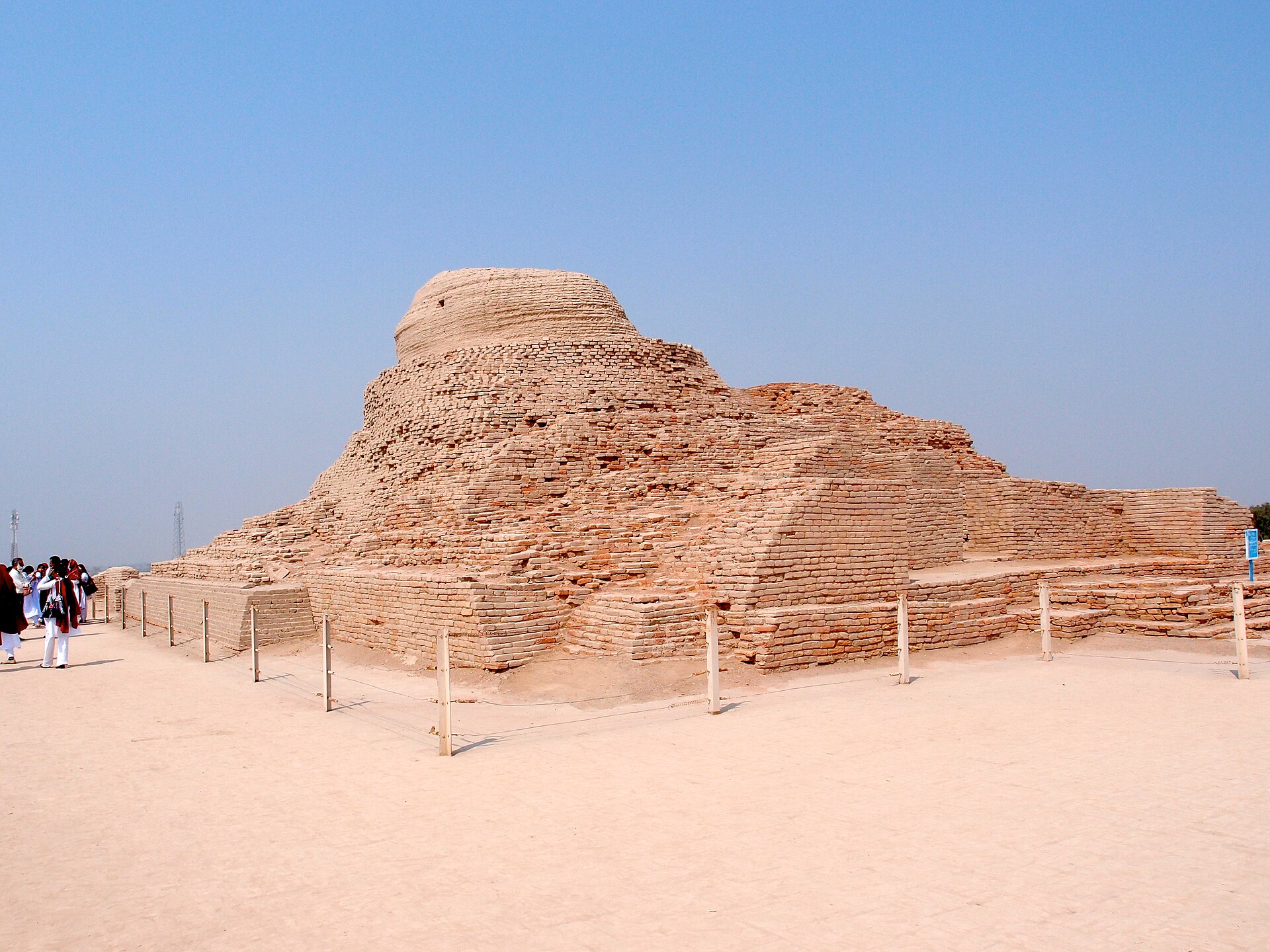
Mohenjo-daro was rediscovered in the 1920s, when archaeologists digging into a mound topped by a Buddhist stupa realized that the brick rubble beneath them was not a few centuries old, but thousands of years older than anyone had imagined. In one stroke, an entire forgotten civilization came roaring back into history. It was a discovery on the scale of finding Troy or opening the tomb of Tutankhamun, and yet it remains far less famous than it deserves to be.
I think the reason Mohenjo-daro stays with me is that it challenges the story we like to tell about the ancient world. We tend to imagine progress as a march of god-kings and conquerors, of bigger temples and grander tombs. The Indus people offer a different vision entirely: a civilization that measured its success not in monuments to power but in clean streets, fresh water, comfortable homes, and quiet order. They built for the living, not for the afterlife of a single ruler.
And they remain partly out of reach, which only deepens the spell. We can walk their streets, drink from the memory of their wells, hold their seals — and still we cannot read their words or speak their names. They are close enough to touch and just far enough to ache. Of all the ancient places I have wandered through in my reading, Mohenjo-daro is the one that most makes me wish, with a real and stubborn longing, that I could simply ask its people: who were you, and what did you call this beautiful, careful city you built?
A Quiet City, A Loud Lesson
It is easy to be dazzled by gold and giants. Mohenjo-daro asks us to be dazzled by something humbler and harder to fake: a whole society that managed to live well together. No civilization is a paradise, and we should not romanticize a place we can barely read. But there is a real and worthwhile question buried in those brick drains, and it is one worth carrying with you long after you finish reading. What if the truest mark of an advanced people is not the size of their monuments, but the care they take of one another’s most ordinary, daily needs? Four thousand years on, the engineers of Mohenjo-daro are still quietly making their case.
Related reading from our “World’s Oldest Places” series
If you enjoyed wandering through Mohenjo-daro, the rest of this series visits the other great firsts of the ancient world. Have a look at: Göbekli Tepe: The World’s Oldest Temple and How It Rewrote History, Stonehenge: How and Why This Ancient Stone Circle Was Really Built, Çatalhöyük: The 9,000-Year-Old Town With No Streets, Newgrange: The 5,000-Year-Old Tomb Built to Catch the Solstice Sun, Jericho: The World’s Oldest City and Its 10,000-Year-Old Wall, The World’s Oldest Art: Inside the Painted Caves of Lascaux and Chauvet, The Megalithic Temples of Malta: Older Than the Pyramids, Skara Brae: The 5,000-Year-Old Village Known as the Scottish Pompeii, Uruk and Sumer: The First Cities and the Birth of Writing, Karahan Tepe: The Astonishing Sister of Göbekli Tepe., Liangzhu: The 5,000-Year-Old Water City That Rewrote China’s History And on the far side of the world, you can meet Caral, the oldest city in the Americas, which rose in the Peruvian desert at the very same time as the pyramids of Egypt. And on the island of Crete you can explore Knossos, the Minoan palace behind the myth of the Minotaur, the labyrinthine home of Europe’s first great civilization. And out in the salt deserts of India, you can discover Dholavira, the Indus city that beat the desert with water engineering.
Browse more under our tags: Ancient Cities, Archaeology, and Bronze Age. And if you want to see how far that impulse to build could travel, look at Nan Madol, a stone city raised on a Pacific reef. And for a temple built to overwhelm the senses, don’t miss Chavin de Huantar, high in the Peruvian Andes. And for cities that may predate cities, don’t miss Cucuteni-Trypillia, Europe’s giant Neolithic mega-settlements. And for one of the oldest and grimmest monuments in the Americas, see Cerro Sechin, a Peruvian temple carved with warriors and their victims. And for monuments raised by foragers rather than farmers, see Poverty Point, the giant earthworks of ancient Louisiana. While you are exploring the ancient world, it is well worth wandering east to Sarazm, a five-thousand-year-old town in Tajikistan that was smelting copper and trading lapis lazuli across a continent. While you are here, it is well worth stepping even further back in time to Mehrgarh, the 9,000-year-old village in Pakistan where South Asia learned to farm. It is also worth heading north to Tell Brak, the Syrian mound that may rewrite where cities began. You might also step back a few centuries to Aşıklı Höyük, the 10,000-year-old village that came before Çatalhöyük. You might also love the story of Jiahu, the 9,000-year-old Chinese village whose bone flutes still play. You might also love the story of Chankillo, the 2,300-year-old Peruvian towers that form the Americas’ oldest solar observatory. You can follow the same deep-time trail to Kalibangan, the Indus town that preserves the world’s oldest ploughed field. The same deep past reaches Brittany at the Cairn of Barnenez, a colossal stone tomb older than the pyramids. Deep-time Europe continues at Vinča, the Danube culture whose signs may be the continent’s oldest writing. The megalithic wonders continue at Gavrinis, a Breton passage tomb carved almost entirely with swirling stone art. The story reaches Iberia at Los Millares, one of western Europe’s first fortified towns. And if you want to see how early this whole impulse began, the burial mounds of Bougon, raised around 4800 BC, are older than almost anything else in this series. For a stone circle that predates almost everything else, don’t miss the Almendres Cromlech in Portugal, raised around 6000 BC. For temples so old they were once thought built by giants, visit Ġgantija on the Maltese island of Gozo. And for the greatest hoard of Neolithic art in Europe, visit Knowth, the carved passage tomb hidden beside Newgrange. For the most exquisitely carved of all the ancient Maltese temples, explore Tarxien, a masterpiece of prehistoric art. For a temple that turns sunlight into a calendar, visit Mnajdra, aligned with the equinox and solstice sun on Malta’s coast. On the cliffs of Malta, the temple of Ħaġar Qim tells a strikingly similar story of stone and devotion. In Ireland’s Boyne Valley, the quiet mound of Dowth tells a strikingly similar tale of stone and the setting sun. In Brittany, the thousand standing stones of Carnac tell a strikingly similar story of stone and devotion. Far out in the Hebrides, the ring of Callanish tells a strikingly similar story of stone and sky. In a quiet Corsican valley, the carved stone warriors of Filitosa tell a strikingly different chapter of the same deep past. On a Swedish clifftop, the great stone ship of Ale’s Stones carries the same ancient impulse out toward the sea.
You May Like
The Bardo, a Palace of the Beys Filled With Roman Mosaics


7 thoughts on “Mohenjo-daro: The 4,500-Year-Old City That Was Centuries Ahead of Its Time”