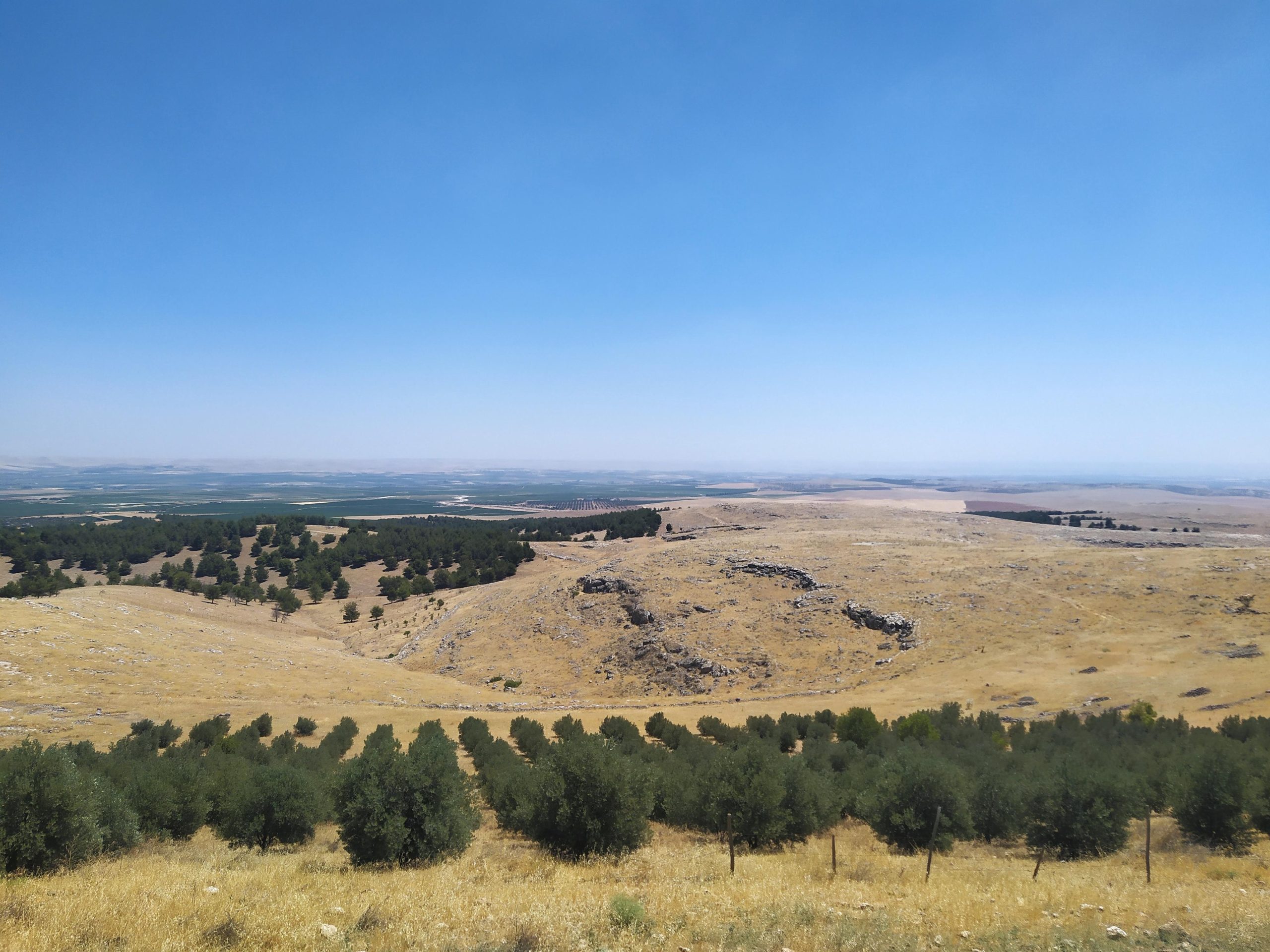
Picture this for a second. You’re standing on a dusty hilltop in southeastern Turkey, the wind carrying the smell of dry grass, and beneath your feet there are giant stone pillars that someone carved and raised about eleven and a half thousand years ago. Not eleven hundred. Eleven thousand. That’s older than writing, older than the wheel, older than the first cities, older than the pyramids by a mind-bending seven thousand years or so. Welcome to Göbekli Tepe, a place that quietly rewrote a big chunk of what we thought we knew about the human story.
For a long time the textbook version of history went something like this: first people learned to farm, then they settled down, then they built villages, and only much later, once they had spare time and surplus food, did they start putting up monuments and thinking big thoughts about gods and the cosmos. Göbekli Tepe walked into that tidy story and flipped the order around. Here was a massive ceremonial site built by people who, as far as we can tell, were still hunter-gatherers. They hadn’t tamed a single field of wheat yet. And somehow they organized themselves to quarry, carve, and raise stone pillars weighing several tons each.
In this article:
So what exactly is this place?
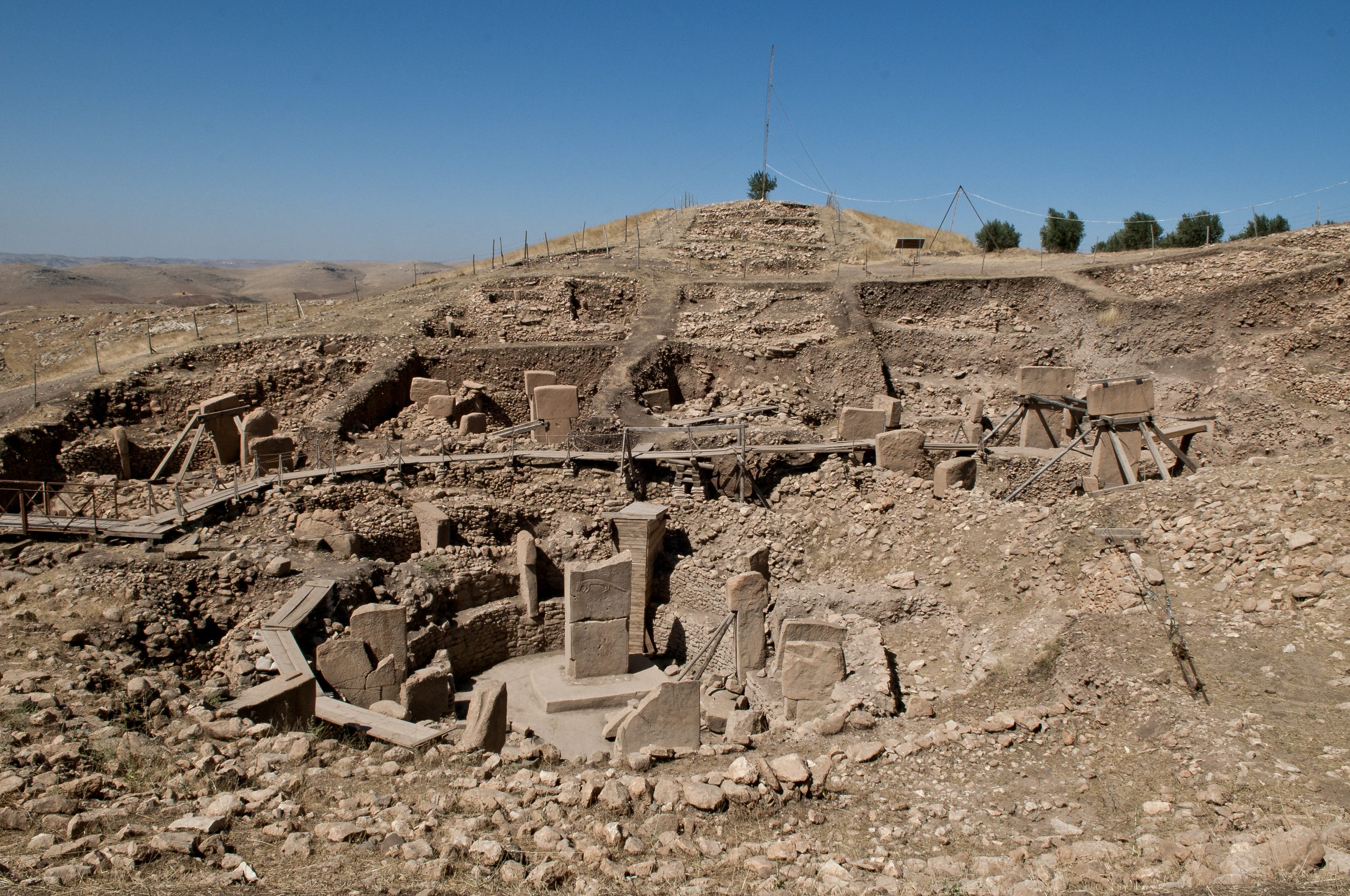
Göbekli Tepe sits on a low limestone ridge near the city of Şanlıurfa, not far from the upper reaches of the Tigris and Euphrates. The name itself means something like “potbelly hill” in Turkish, which is a wonderfully ordinary name for somewhere so extraordinary. For centuries it just looked like a hill. Local farmers knew there were odd stones poking out of the soil, and an American-led survey back in the 1960s even noted the site but wrote it off as a medieval cemetery. It took a German archaeologist named Klaus Schmidt, who started digging in 1995, to realize that those “gravestones” were actually the tips of enormous prehistoric pillars buried in the earth.
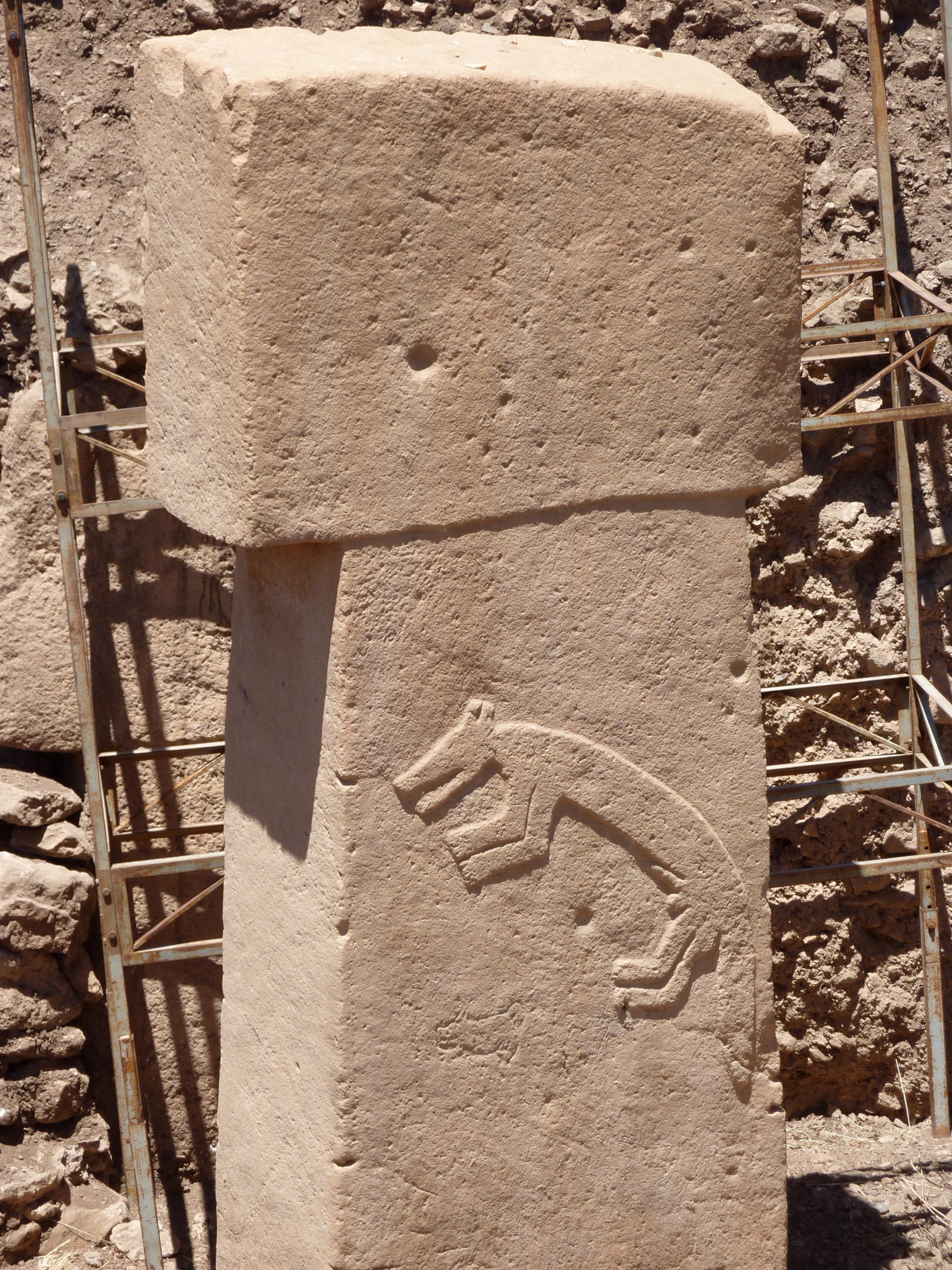
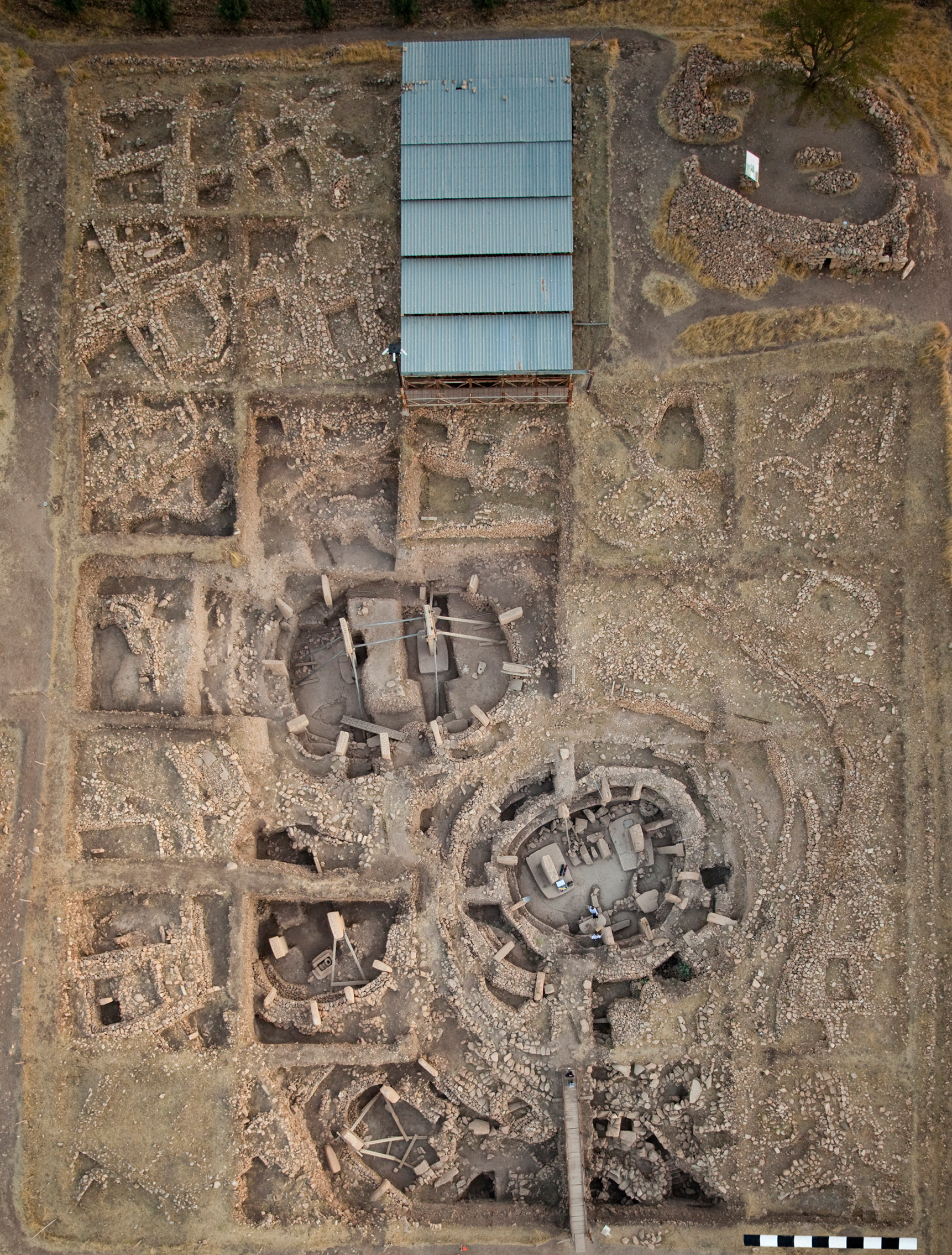
What he uncovered were big circular and oval enclosures, ringed by those famous T-shaped pillars. The tallest ones reach around five and a half meters and weigh something like ten tons. In the middle of each enclosure stand two even larger pillars, facing each other like a pair of silent guardians. And here’s the part that gives me chills every time: many of these stones aren’t blank. They’re covered in carvings of animals. Foxes, snakes, scorpions, wild boars, cranes, vultures, leopards. Some pillars even have arms and hands carved into their sides, with belts and loincloths, as if the stone itself is a stylized human figure looking out over the gathering.
Who built it, and how on earth did they manage?
This is the question that keeps people up at night. The builders were communities of hunter-gatherers living at the very end of the last Ice Age. They didn’t have metal tools, beasts of burden, pottery, or writing. They had stone tools, fire, rope, muscle, and a shared idea powerful enough to make them work together on a scale nobody thought was possible for people without farms or kings.
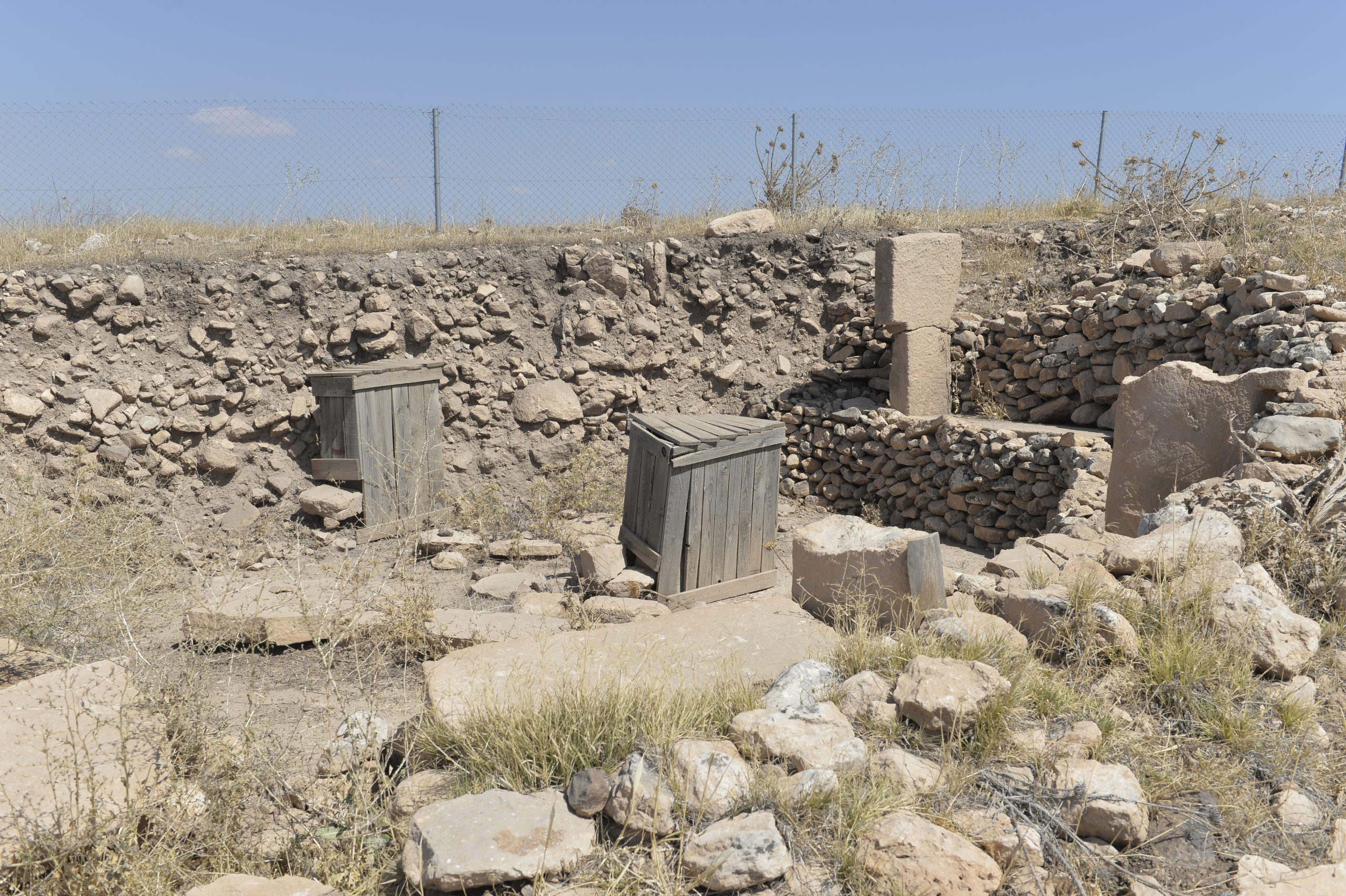
Think about what raising a single ten-ton pillar actually requires. You have to find the right limestone, carve it free from the bedrock, shape it, decorate it with reliefs, then drag it some distance and lift it upright into a socket. There’s even an unfinished pillar still lying in the quarry nearby, around seven meters long, abandoned mid-carving, possibly because it cracked. That half-finished giant is one of the most human things at the whole site, honestly. Someone, all those millennia ago, had a bad day at work and walked away from it.
Doing this once would be impressive. Doing it dozens of times, across multiple enclosures, over centuries, means a lot of people kept coming back to this hill on purpose. And feeding all those workers would have taken serious effort. Archaeologists have found mountains of gazelle and aurochs bones, plus evidence of large-scale food preparation and big stone vessels that may have held fermented drinks. In other words, the gatherings here may have involved feasting on a grand scale. Some researchers think these feasts were the glue, the social occasion that made the back-breaking communal building worth it.
Why this hill changed the story of civilization
Here’s the idea that made Göbekli Tepe famous well beyond archaeology circles. The old assumption was that agriculture came first and religion, monuments, and complex society followed. Klaus Schmidt proposed something close to the reverse. What if the urge to gather, to build something sacred together, came first, and the practical demands of feeding all those gathered people helped push communities toward farming?
It’s a genuinely provocative thought. The region around Göbekli Tepe is, not coincidentally, very close to where some of the earliest domesticated wheat in the world has been traced. So you have this stunning overlap in time and place: people building monumental gathering sites, and people taking the very first steps toward agriculture, right next door to each other. Maybe the temple, loosely speaking, helped give birth to the farm rather than the other way around. Not everyone agrees with the strong version of that claim, and the debate is very much alive, but the fact that we’re even arguing about it shows how much this site shook things up.
I should add a fair note here, because good history means staying honest. Calling it the “world’s first temple” is a nice headline, but it’s a simplification. We don’t actually know what these people believed or whether “temple” even maps onto their world. Newer work also suggests people may have lived at the site, not just visited it for rituals, which softens the pure pilgrimage-site picture a little. Archaeology is always a work in progress, and Göbekli Tepe is still very much being dug. Less than ten percent of it has been excavated, by most estimates. Most of the hill is still down there, waiting.
The animals, the symbols, and the strange buried silence
The carvings deserve their own moment. These aren’t crude scratches. They’re confident, stylized reliefs made by people with a clear visual language. Dangerous animals dominate, predators and creatures with stingers and fangs, which makes you wonder whether the imagery was about danger, death, protection, or stories we’ll never fully recover. There’s a famous pillar carved with a snarling predator, and another with a vulture that seems to be handling a round object, which some have linked to early beliefs about death and the journey of the soul. We’re guessing, of course. But it’s the kind of guessing that comes from staring at something genuinely meaningful.
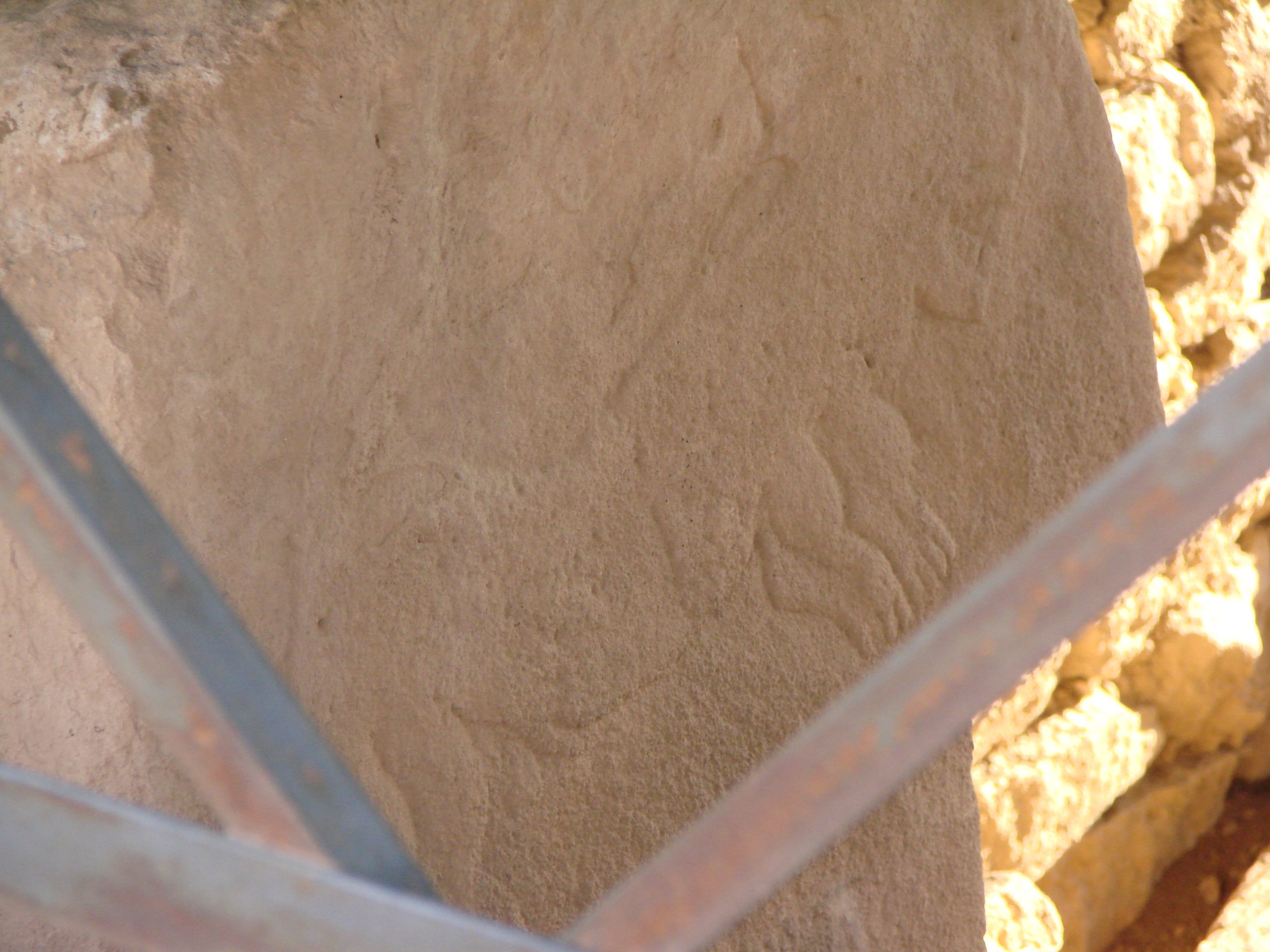
And then there’s the weirdest detail of all. At some point, the people who used Göbekli Tepe deliberately buried it. They filled the enclosures with rubble, bones, and debris, packing them up as if tucking the whole place into the earth on purpose. That intentional burial is actually part of why the site survived in such good shape, and it’s part of why we can still see those carvings so clearly today. But why they did it remains a beautiful open question. Were they retiring an old sacred space? Closing a chapter? We simply don’t know, and that not-knowing is part of the magic.
Standing there today
Göbekli Tepe became a UNESCO World Heritage Site in 2018, and there’s now an elegant protective canopy stretched over the main excavation so visitors can walk around the rim of the enclosures and look down into deep time. The nearby Şanlıurfa Archaeology Museum holds many of the finds, including a reconstructed enclosure and one of the oldest naturalistic human statues ever found. If you ever get the chance to go, do it. There’s something about being physically present, looking at marks made by hands eleven thousand years gone, that no photo really captures.
What I love most about Göbekli Tepe is how human it feels under all the mystery. People came together on a hill, dragged impossible stones, carved the animals they feared and admired, shared food and probably drink, and built something bigger than any one of them could ever use alone. They did it before farms, before cities, before history was even a word. And when they were done, they buried it with care. We may never know exactly what it meant to them. But we know it mattered enough to move mountains, more or less by hand. That’s a story worth standing in the wind for.
Putting the age into perspective
Numbers like “eleven thousand years old” can wash right over you, so let me try to make it land. When the first pillars went up at Göbekli Tepe, there were no cities anywhere on Earth. Jericho, often called one of the oldest towns in the world, was barely getting started. The last woolly mammoths were still alive on a remote island in the Arctic. Stonehenge wouldn’t be built for roughly another six thousand years, and when it finally was, Göbekli Tepe had already been buried and forgotten for ages. The Great Pyramid of Giza, which feels impossibly ancient to us, is closer in time to you reading this than it is to the people who raised these Turkish pillars. That last comparison breaks my brain a little every time.
It’s also worth remembering that Göbekli Tepe isn’t alone anymore. Since its discovery, archaeologists working across the same region have found a whole cluster of related sites with similar T-shaped pillars, places like Karahan Tepe and others, sometimes grouped together under the nickname the “Taş Tepeler,” or stone hills. So this wasn’t a one-off miracle on a single hilltop. It looks more like a whole culture, spread across the landscape, sharing a common architectural and symbolic language thousands of years before anyone wrote a word. The more we dig, the bigger and richer the picture gets.
What it teaches us about ourselves
If there’s a single takeaway from Göbekli Tepe, for me it’s a humbling one. We tend to assume that “primitive” people were simple, that big ideas and big projects belong to so-called advanced societies with cities and bureaucracies and kings. This hill says otherwise. The people who built it had no metal, no writing, no domesticated crops, and yet they were capable of long-term planning, abstract symbolism, cooperation across whole communities, and a sense of the sacred sophisticated enough to leave us guessing for decades. They were us, fully and completely. Same brains, same hands, same hunger to make meaning out of the world. The only thing separating them from us is time and a few thousand years of accumulated tools.
That’s the quiet lesson of the oldest places on Earth. They don’t just tell us what happened long ago. They remind us that the capacity for wonder, organization, art, and devotion was there from very near the beginning. Göbekli Tepe is the opening chapter of a much longer story, and it’s a chapter we’re still only beginning to read.
Related reading on this site: If ancient origins fascinate you, this article is part of a wider series. You might also enjoy Stonehenge: how and why it was really built, Çatalhöyük, and Newgrange. You might also like Jericho, the world’s oldest city and the world’s oldest cave paintings. Don’t miss the megalithic temples of Malta, older than the pyramids. See also Skara Brae, the Scottish Pompeii. And discover Uruk and Sumer, the first cities and the birth of writing. Also explore Karahan Tepe, the sister of Göbekli Tepe. You can browse more under Ancient History, Archaeology, and Neolithic.
See also: Mohenjo-daro: The 4,500-Year-Old City That Was Centuries Ahead of Its Time.
See also: Liangzhu: The 5,000-Year-Old Water City That Rewrote China’s History.
And on the far side of the world, you can meet Caral, the oldest city in the Americas, which rose in the Peruvian desert at the very same time as the pyramids of Egypt.
And on the island of Crete you can explore Knossos, the Minoan palace behind the myth of the Minotaur, the labyrinthine home of Europe’s first great civilization.
And out in the salt deserts of India, you can discover Dholavira, the Indus city that beat the desert with water engineering.
And if you want to see how far that impulse to build could travel, look at Nan Madol, a stone city raised on a Pacific reef. And for a temple built to overwhelm the senses, don’t miss Chavin de Huantar, high in the Peruvian Andes. And for cities that may predate cities, don’t miss Cucuteni-Trypillia, Europe’s giant Neolithic mega-settlements. And for one of the oldest and grimmest monuments in the Americas, see Cerro Sechin, a Peruvian temple carved with warriors and their victims. And for monuments raised by foragers rather than farmers, see Poverty Point, the giant earthworks of ancient Louisiana. While you are exploring the ancient world, it is well worth wandering east to Sarazm, a five-thousand-year-old town in Tajikistan that was smelting copper and trading lapis lazuli across a continent. While you are here, it is well worth stepping even further back in time to Mehrgarh, the 9,000-year-old village in Pakistan where South Asia learned to farm. It is also worth heading north to Tell Brak, the Syrian mound that may rewrite where cities began. You might also step back a few centuries to Aşıklı Höyük, the 10,000-year-old village that came before Çatalhöyük. You might also love the story of Jiahu, the 9,000-year-old Chinese village whose bone flutes still play. You might also love the story of Chankillo, the 2,300-year-old Peruvian towers that form the Americas’ oldest solar observatory. You can follow the same deep-time trail to Kalibangan, the Indus town that preserves the world’s oldest ploughed field. The same deep past reaches Brittany at the Cairn of Barnenez, a colossal stone tomb older than the pyramids. Deep-time Europe continues at Vinča, the Danube culture whose signs may be the continent’s oldest writing. The megalithic wonders continue at Gavrinis, a Breton passage tomb carved almost entirely with swirling stone art. The story reaches Iberia at Los Millares, one of western Europe’s first fortified towns. And if you want to see how early this whole impulse began, the burial mounds of Bougon, raised around 4800 BC, are older than almost anything else in this series. For a stone circle that predates almost everything else, don’t miss the Almendres Cromlech in Portugal, raised around 6000 BC. For temples so old they were once thought built by giants, visit Ġgantija on the Maltese island of Gozo. And for the greatest hoard of Neolithic art in Europe, visit Knowth, the carved passage tomb hidden beside Newgrange. For the most exquisitely carved of all the ancient Maltese temples, explore Tarxien, a masterpiece of prehistoric art. For a temple that turns sunlight into a calendar, visit Mnajdra, aligned with the equinox and solstice sun on Malta’s coast. On the cliffs of Malta, the temple of Ħaġar Qim tells a strikingly similar story of stone and devotion. In Ireland’s Boyne Valley, the quiet mound of Dowth tells a strikingly similar tale of stone and the setting sun. In Brittany, the thousand standing stones of Carnac tell a strikingly similar story of stone and devotion. Far out in the Hebrides, the ring of Callanish tells a strikingly similar story of stone and sky. In a quiet Corsican valley, the carved stone warriors of Filitosa tell a strikingly different chapter of the same deep past. On a Swedish clifftop, the great stone ship of Ale’s Stones carries the same ancient impulse out toward the sea.
You May Like
Mafra, the Palace a King Built From a Vow


17 thoughts on “Göbekli Tepe: The World’s Oldest Temple and How It Rewrote History”